
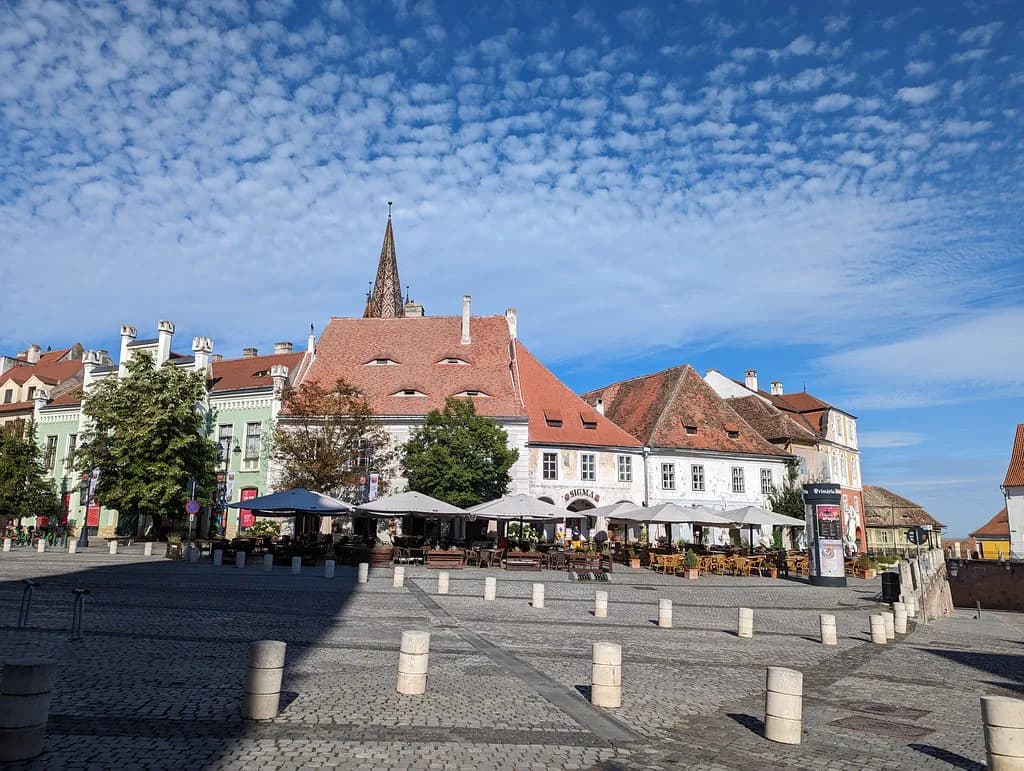
Piața Mică (Small Square), Sibiu: What to See and How Long to Allow
Allow 20 to 30 minutes on Piața Mică itself, and treat it as the hinge of a walk through old Sibiu rather than a sight you tick off. The Small Square sits between the upper town's Piața Mare and Piața Huet, so you cross it on the way down to the lower town whether or not you stop. This page covers what lines the square, how to approach it and what sits within a few minutes' walk.
Piața Mică is open public space with no ticket, gate or closing time to plan around. Your only decisions are which way to enter it and how long you linger on the arcaded side.
What Piața Mică is and where it sits
Piața Mică is the smaller of the two linked squares at the heart of Sibiu's historic centre, sitting below and to the south of Piața Mare. The city's heritage register files it in the historic centre alongside Piața Mare and Piața Huet, which is the simplest way to picture the layout: three open spaces stitched together by short passages.
The square works as a route as much as a destination. Stand at its upper edge and you can see how Piața Mare feeds into it, and how it in turn spills down towards Piața Huet and the streets of the lower town. That two-level geography explains why the square feels sloped and enclosed rather than flat and open.
For a wider look at how the square fits with the towers, churches and museums around it, our Sibiu Attractions: 12 Visitor Guides set out each sight individually. Reading those first makes the walk through Piața Mică quicker to navigate.
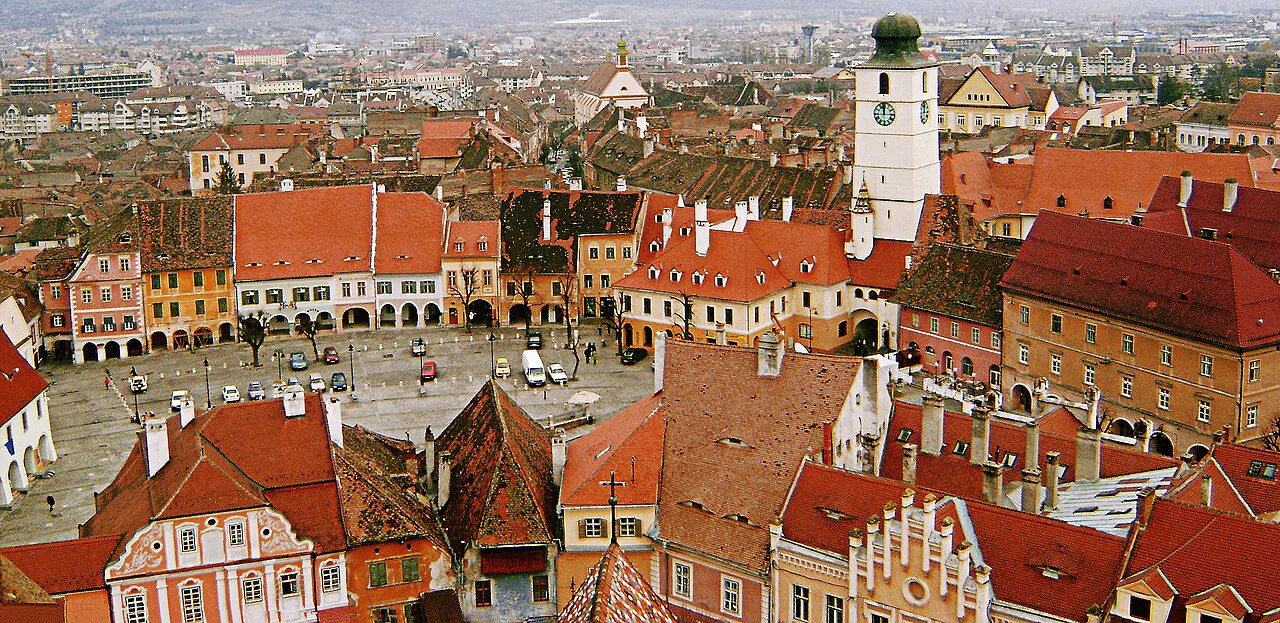

How to get there from Piața Mare
The usual approach is on foot from Piața Mare: cross the large square towards its southern corner and the street narrows into Piața Mică within a minute or two. From the square's middle, the Council Tower, Sibiu's most recognisable landmark, marks the passage between the two squares and is hard to miss as you head down.
If you are coming from the upper town's other sights, the Brukenthal National Museum sits on Piața Mare, so you can pair a gallery visit with the walk down rather than making two separate trips.
From the lower town side, you arrive from Piața Huet and the lanes below, which means you meet the square from underneath and climb through it. Either direction works; the descent from Piața Mare is the gentler introduction.
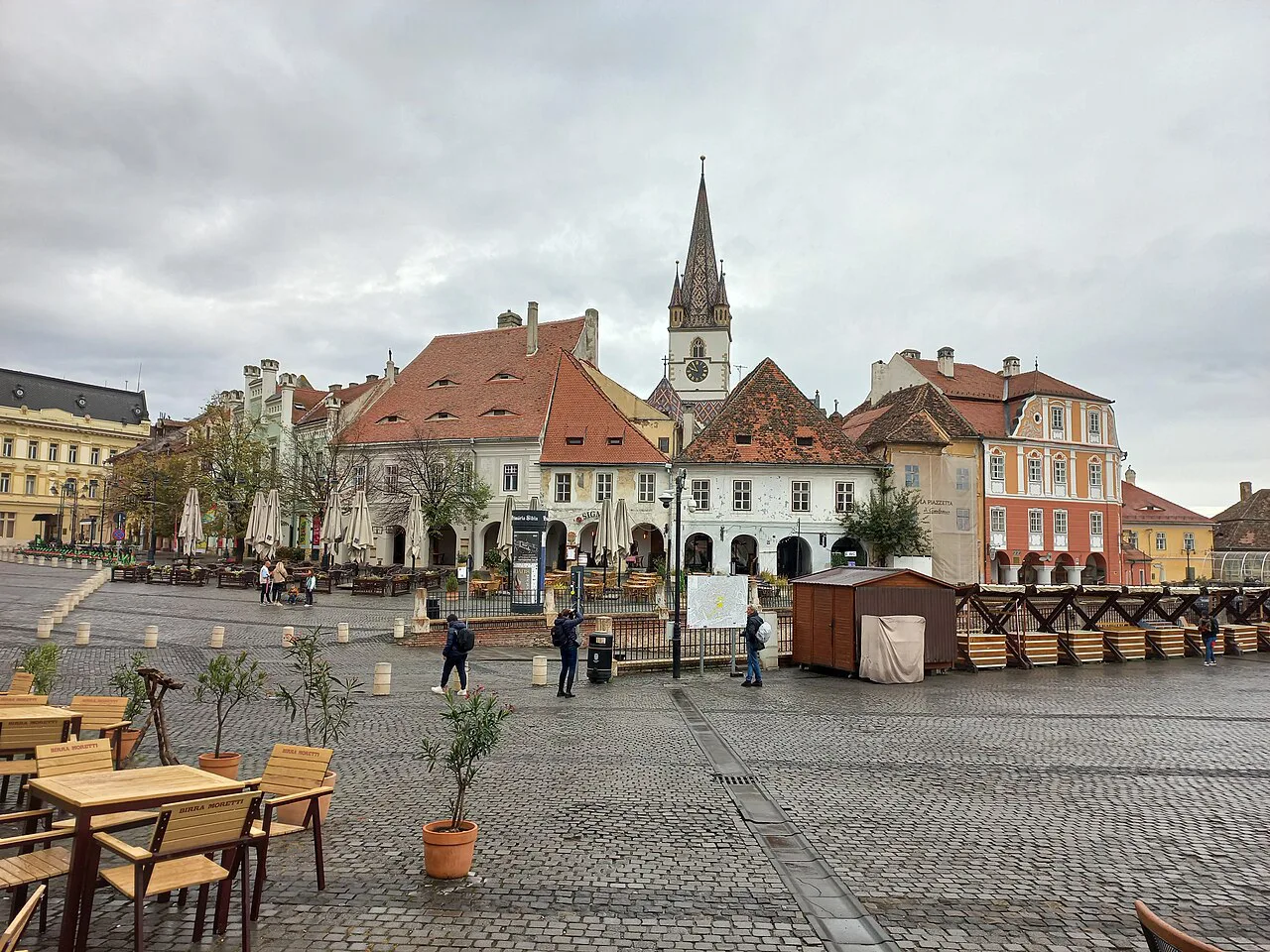

The arcaded houses and facades lining the square
The square's character comes from the tall, narrow houses packed along its edges, many with arched ground floors. The heritage listing for the building at Piața Mică nr. 9 is a useful example: a long, thin plot with a basement, ground floor and two upper floors, its ground floor opening onto Piața Mică in two arches and, on the Piața Huet side, once having had arcades.
That same building shows how the square's frontage evolved. The second floor was added in the 17th century, and a 19th-century renovation brought large windows and plaster ornament, while the gallery became a shop. In the 19th century its owner ran a clothes shop at street level, and in the interwar years a drapery traded from the same address.
Look for the roofline where two houses share a single volume: number 9's two-pitch roof reads as one block with the house next door at number 8. Details like this are what reward a slow pass along the facades rather than a photograph from the middle of the square.
Where the square leads: Piața Huet and the lower town
At its lower end, Piața Mică narrows into Piața Huet, the small square where the Bridge of Lies (Podul Minciunilor), Sibiu's iron footbridge, crosses between the upper and lower town. Crossing it puts you directly into the streets below, which is why the square is best understood as a gateway.
Beyond the bridge, the lower town's lanes run down towards the river and the older craft quarters. Piața Mică is the last flat, open space before the streets tighten, so it is a sensible place to pause and decide which lane to take.
Stair passages also link the two levels, and the square is where these routes converge. If you are climbing back up rather than walking down, the steps are steep enough that a stop on the square to catch your breath is a practical habit.
How long to allow and how to work it into an old-centre walk
Budget 20 to 30 minutes if you want to read the facades and take a few photographs, or five minutes if you are simply passing through. Most visitors cross it two or three times in a day because it sits on the natural route between the upper town's museums and the lower town's streets.
The square takes no admission fee, so it slots into a day around paid sights without affecting your budget. Build it into a loop that starts at Piața Mare, drops through Piața Mică and Piața Huet, and returns uphill via the stair passages.
Its size makes it easy to revisit: pass through in the morning when the light falls on the upper facades, then again later when the square is busier. Neither timing needs booking or forward planning.
What's nearby within a few minutes' walk
The Lutheran Cathedral in Sibiu, the city's tall Evangelical church, stands just off the route between Piața Mare and Piața Mică, so it is a natural addition before you descend.
Back on Piața Mare, the Museum of History Sibiu occupies the Casa Altemberger, and the Brukenthal collections are on the same square. Both suit a morning before you walk down through Piața Mică.
The Pharmacy Museum and the Orthodox cathedral sit within the old centre's upper streets and reward a short detour.
For a change of scale, the ASTRA Museum Sibiu spreads across the open-air site outside the old centre, best reached by taxi or bus rather than on foot. Parcul Sub Arini offers a green walk on the same side of town.
Should Piața Mică be your first stop?
Make Piața Mare your first stop and Piața Mică your second: the large square gives you the orientation, and the small one gives you the route down. Walk from Piața Mare through Piața Mică, over the Bridge of Lies and into the lower town, then climb back at your own pace.
Nothing here needs booking, so the only thing worth confirming before you go is whether any individual museum you plan to add is open on the day you visit.