
Parcul Sub Arini: Sibiu's English-Style Park

Parcul Sub Arini is Sibiu's English-style city park, 22 hectares of alleys, old trees and birdlife on the southern side of the city, beyond the old fortifications. Give it an hour for the two main alleys and the monuments along them, or half a day if you cycle the route on to Dumbrava Sibiului. This guide covers where the park sits, how to walk or ride to it, what to look for inside, and how the bike path changes what you can do with the rest of the day.
Where Parcul Sub Arini sits
The park occupies the ground between two former fortification lines, Steaua and Josephin. The municipality laid it out as an English park from 1856, with the two main alleys traced the following year and planting of alders, lime and pine begun. The city's official visitor page notes this position directly, which makes the park easy to place on a map: follow the old walls south from the centre and the green space opens out beyond them.
The stadium on the park's southern side was inaugurated in 1927, originally as the Physical Education Stadium. That end of the park is a useful marker if you are approaching from the south rather than from the centre. The city's English-language page gives the stadium's date and position, so you can orient yourself without guessing at the layout.
Plan on the current 22-hectare footprint rather than older, larger figures you may see quoted, because the park has been reworked more than once. Budget your walk around that size and it will feel like a proper park stroll rather than a day out. The tourist information centre in Piața Mare can confirm the layout if you want a paper map before setting off.

How to reach the park from the centre
The simplest approach is on foot from the old centre: head south from the fortified core and the park begins where the built streets give way to trees. The tourist information centre handles directions and sits at Str. Samuel Brukenthal nr. 2, entrance F from Piața Mare, which is a sensible first stop if you are staying near the Large Square. Allow a relaxed walk rather than a hike; the park is a city park, not a country excursion.
If you are travelling by bike, the park is already part of a leisure route: a dedicated cycle track of roughly 6 km runs from Parcul Sub Arini along Aleea Călăreților to the Dumbrava Sibiului natural park. Join it at the park end and you get a car-free line south without planning a route yourself. This is also the cleanest way to combine the park with Dumbrava Sibiului in one outing.
Public transport serves the city but the official page gives no park-specific bus stop, so check the city's local transport information before relying on a particular line. The walk from the centre stays the dependable option if you would rather not spend time on timetables. For orientation on the old town itself, the Sibiu Attractions: 12 Visitor Guides covers the squares and streets you will pass through.
What to see along the two main alleys
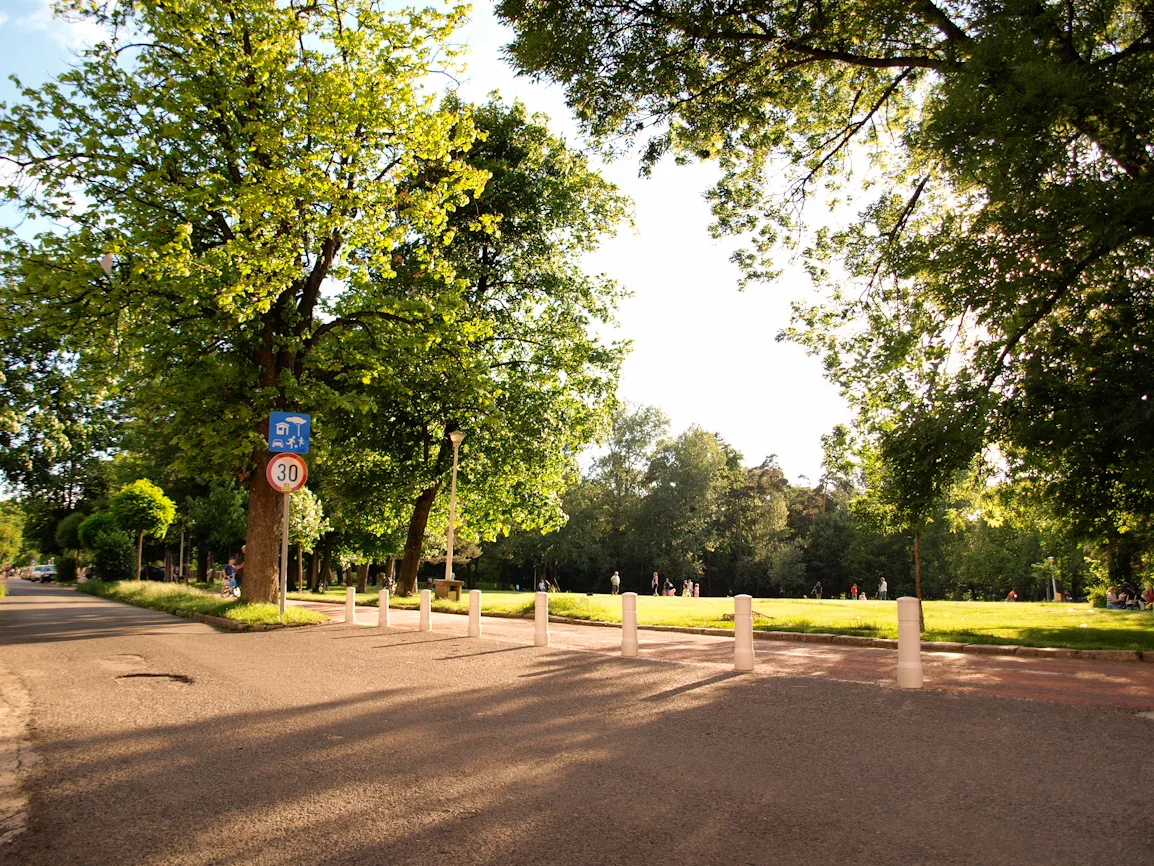
Start with the two principal alleys laid out along the former Swimming School canal and the Sevis stream in 1857 and 1858. They remain the spine of the park, and most of the monuments are found off them rather than in a single cluster. Walking both alleys end to end gives you the park's full length without detours.
The bust of the poet Mihai Eminescu, sculpted by Radu Moga, was unveiled in 1938 and is one of the park's more prominent pieces. Look also for the Szweteney Weg monument of 1893 and the stone vessel installed in 1929 for the fiftieth anniversary of the Society for the Beautification of the City. These three give the walk its punctuation, and each is described on the city's official park page.
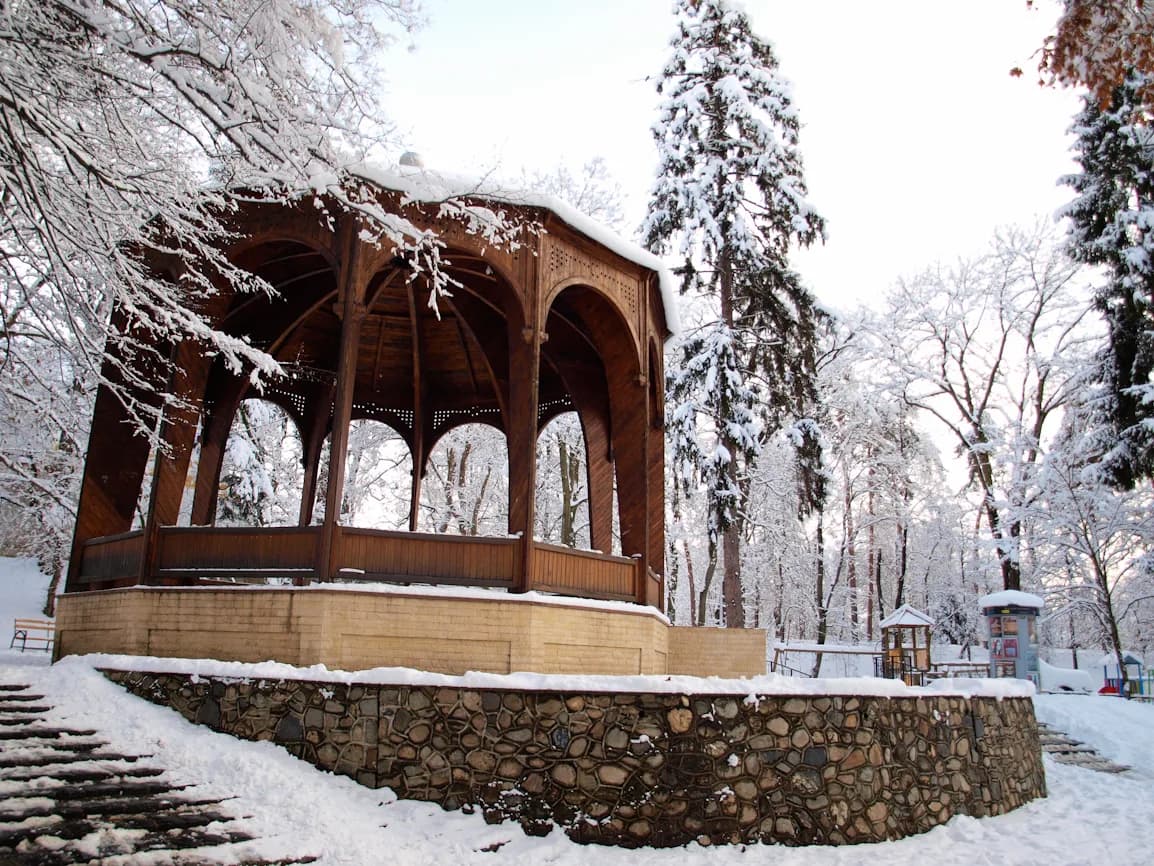
The music pavilion, rebuilt in 1979, and the ornamental fountain reconfigured in the same year sit near the flower beds and are the most obviously photogenic points. A greenhouse was built in 1883 and the first fountain placed in 1894; the present versions are the 1979 reworkings rather than the originals. That matters for expectations: you are looking at a park with genuine nineteenth-century bones and a late twentieth-century surface.
Set expectations for the paths themselves. In 1979 the main alleys were asphalted and the timber bridges over the streams were replaced with concrete ones, which is why the park reads less like the original English landscape design than its planting suggests. Knowing this before you arrive turns a possible disappointment into part of the story of the place.
Trees, birds and the character of the planting
The planting is the real reason to come. The park holds 68 tree species, 30 of them exotic and 38 native, with specimens from Japan, China, the Himalaya, Asia Minor, North America, Central America, Algeria and the Alps. Named examples include the American red oak, the silver spruce, the Austrian pine and the ginkgo. Some of the alders, Black poplars, limes and oaks are over 150 years old.
Around 95 species of birds use the park for shelter, which makes it a better spot for a quiet half-hour with binoculars than you might expect from a city green space. The same page names the exotic species from East Asia (ginkgo, tree of life, magnolia) and North America (blue spruce, tulip poplar, catalpa) as the most valuable decoratively. Walk slowly and look up rather than treating the park as a shortcut.
How long to allow and when it is busiest
An hour covers the two main alleys, the Eminescu bust, the stone vessel and the pavilion and fountain without rushing. Add another half-hour if you want to sit by the fountain or follow the older trees along the side paths, and plan a longer block if you are cycling on to Dumbrava Sibiului. The official page publishes no opening hours or admission charges for the park, so check current details with the tourist information centre before you set out.
On summer heat, the tree cover and the long alleys are the point: the park works as a shaded break from the old town's stone squares. Expect the fountain area and the main alley to be the busiest stretches on warm afternoons, with the side paths much quieter. Come earlier in the day if you want the monuments to yourself.
The park is a genuine picnic option: plenty of grass, mature shade and benches along the alleys. The city's official page names no cafés, kiosks or toilets inside the park, so treat it as a bring-your-own stop and eat before or after in the centre. That also keeps the visit simple if you are on a tight schedule.
The bike route to Dumbrava Sibiului
The 6 km leisure track is the park's best practical link to the countryside. From Parcul Sub Arini it follows Aleea Călăreților to the Dumbrava Sibiului natural park. That makes the park a natural starting point for a half-day on two wheels rather than a standalone stop, and it avoids riding on busy roads.
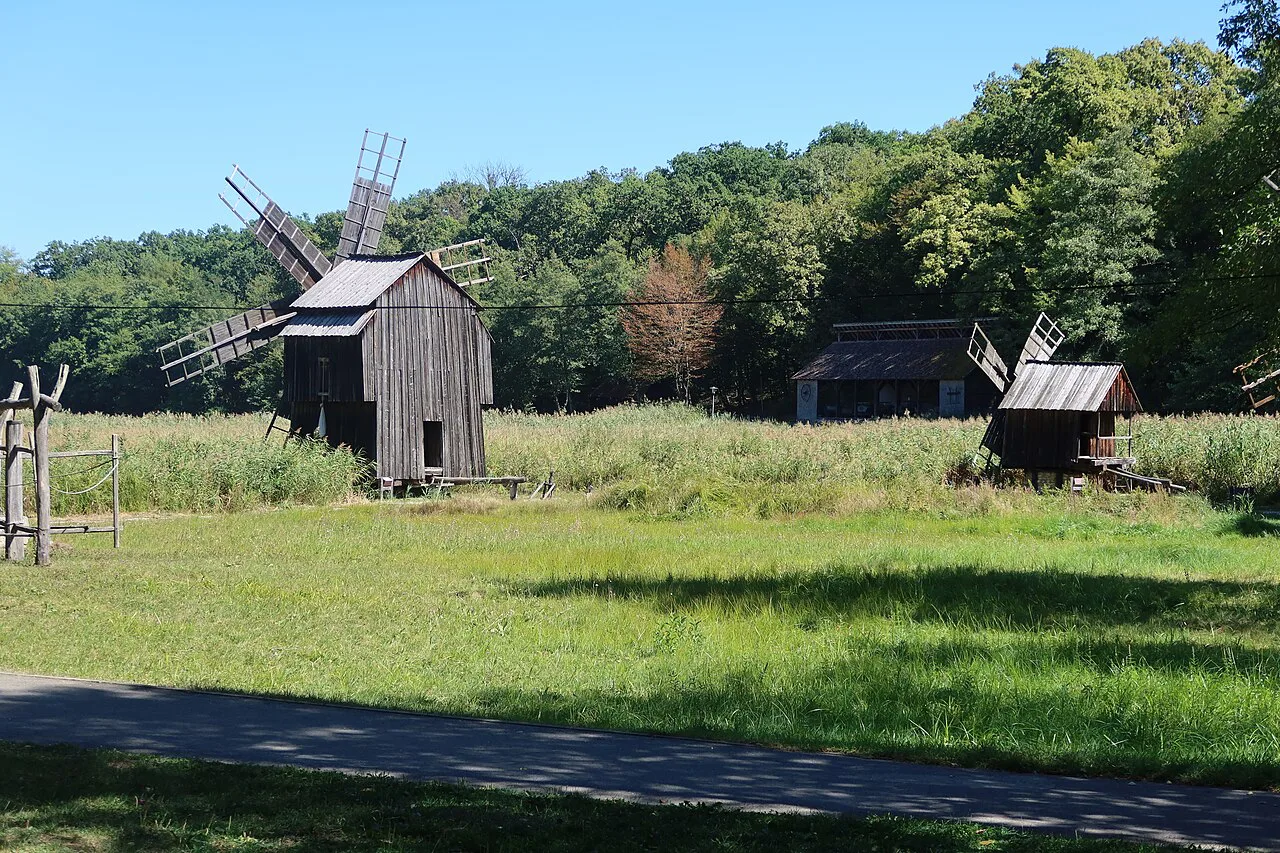
The obvious destination at the end is the ASTRA Museum of Folkloric Traditional Civilization, the open-air museum in Dumbrava Sibiului. Riding out, spending time there and riding back makes a full day, so check its opening days and ticket prices before you set off; those details change by season.
Historically the park had its own riding connection: an alley called Reitweg served as an equestrian promenade with its terminus at Dumbrava Sibiului. The cycle track now does much the same job. If you have no bike, the walk along the same corridor is still a reasonable way to link the two green spaces.

What to pair with the park in Sibiu
Back in the centre, the Bridge of Lies (Podul Minciunilor) and the surrounding squares make an easy continuation of a park morning. The bridge sits in the pedestrian core, a short walk from where you re-enter the old town from the south. Pairing it with the park gives you one green stop and one built landmark without crossing the city twice.
For a wet-weather alternative, the Brukenthal National Museum, Sibiu keeps you indoors in the Large Square with a substantial collection. It is the sensible swap if the park looks uninviting, and the two sit close enough to decide on the day. The Large Square is the natural orientation point for both.
Is Parcul Sub Arini worth an hour of your Sibiu trip?
Yes, if you want a calm, tree-filled hour within walking distance of the old centre and a sense of how Sibiu has treated its green space since the 1850s. Come for the planting, the Eminescu bust and the pavilion, and accept the asphalt and concrete of 1979 as part of the picture. Skip it only if your time in Sibiu is down to a single day and the squares and museums already fill it.
If you have a bike or a spare half-day, start here and ride the 6 km track to Dumbrava Sibiului, then spend the afternoon at the ASTRA Museum. That turns a pleasant park into the beginning of a rewarding green day out in Sibiu.