Old Princely Court, Bucharest: Ruins, Church and Vlad III
The Old Princely Court in Bucharest is a ruined Wallachian palace complex on Franceză Street, linked to Vlad III. Here is what stands there and who built it.
On this page
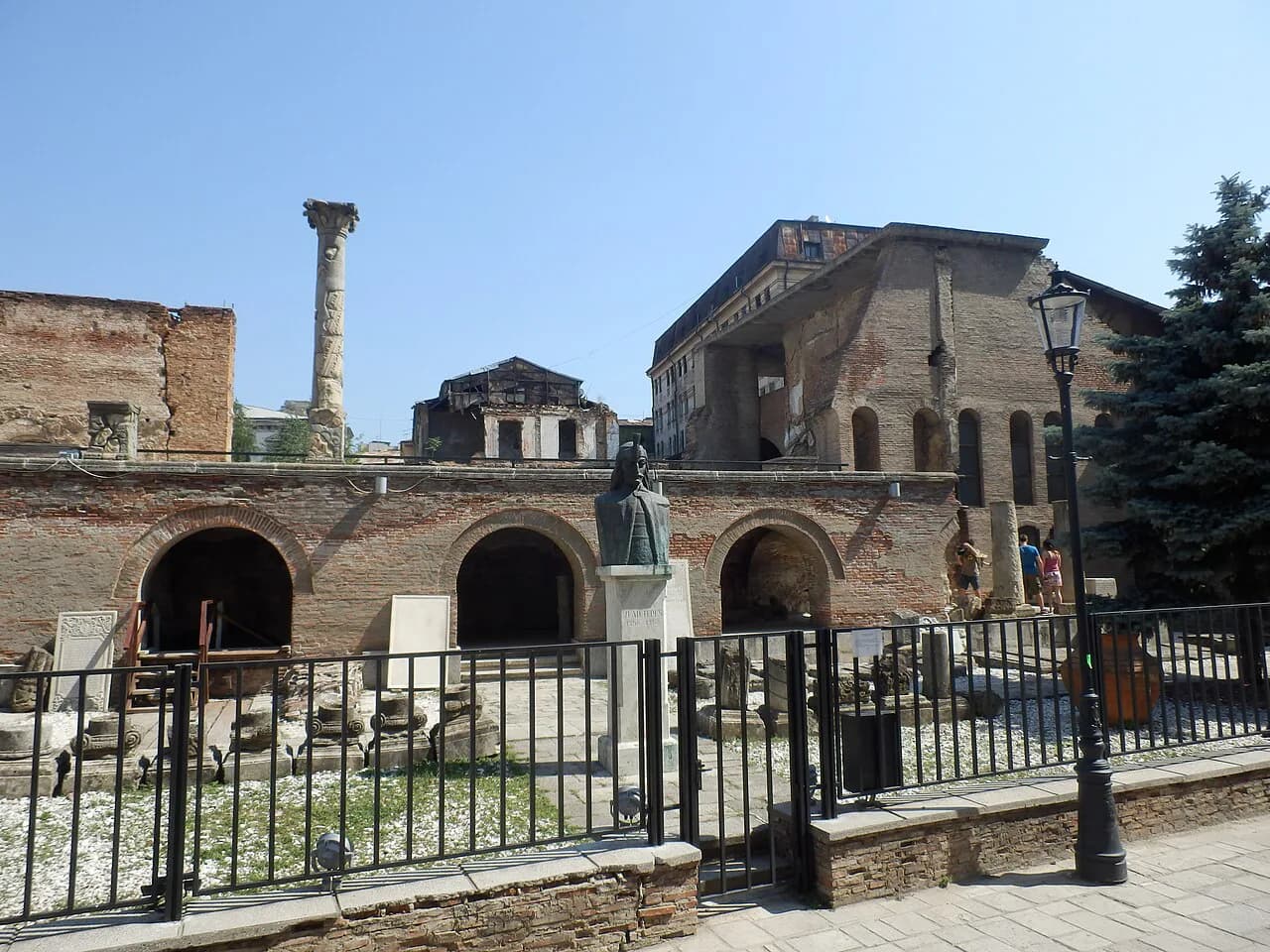
The Old Princely Court, Curtea Veche, is a small archaeological garden of ruined Wallachian palace walls on Franceză Street in Bucharest's old city, and you should plan on seeing it from the street rather than touring rooms. The complex has been closed for reconstruction, so a stop here lasts minutes and works best folded into a walk through the surrounding quarter. This guide covers what the ruins are, where exactly they sit, how Vlad III and later rulers used the site, what survives above and below ground, and the church next door that is part of the same story.
What the Old Princely Court is and where to find it
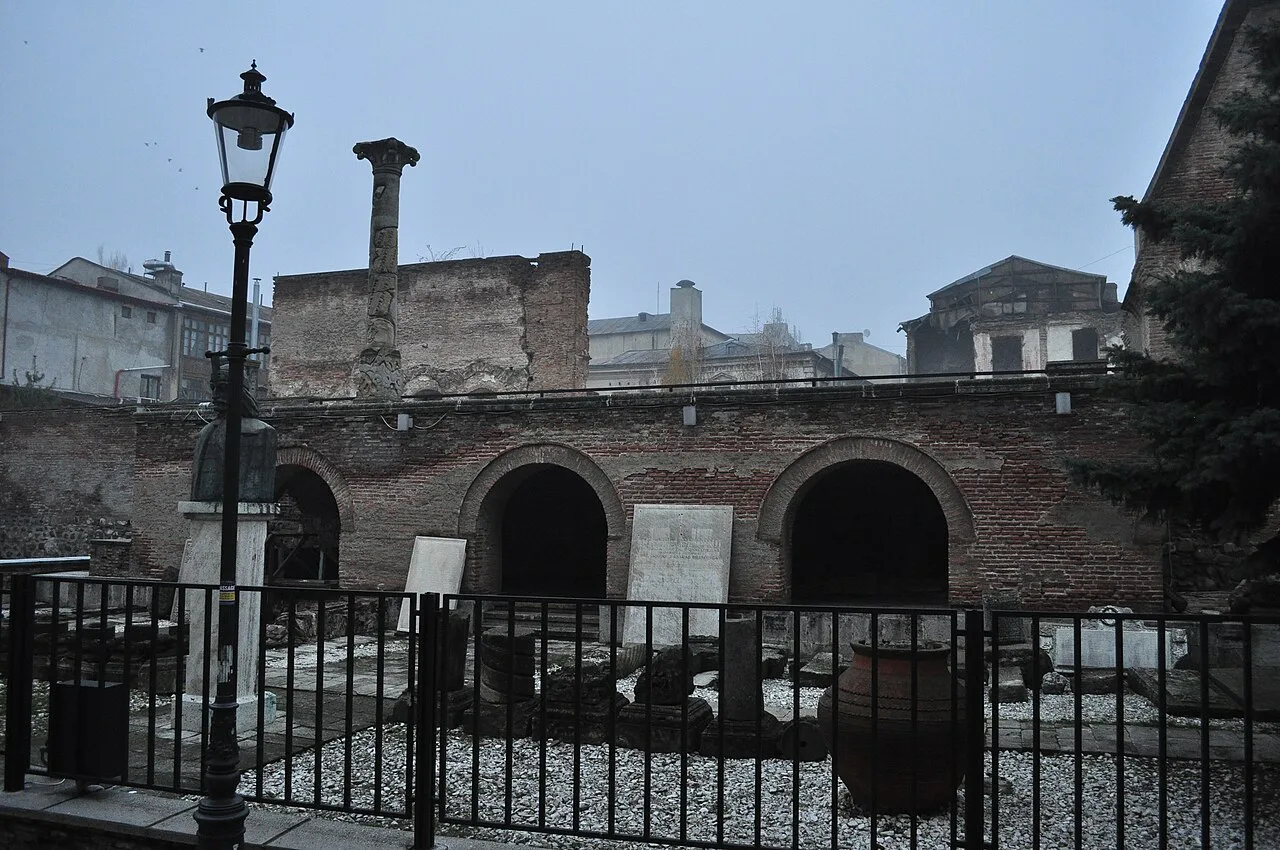
Curtea Veche sits on Franceză Street, wedged between the cafés, restaurants and ageing houses of the historic quarter rather than set back behind a formal entrance. Treat Franceză Street as your marker: walk it until you reach the broken stonework and the brick gateway, and you have arrived. The remains are those of the Voivodal Palace, the residence of the Wallachian rulers, and the courtyard around it now functions as an archaeological garden full of fallen masonry.
Why the complex matters: Bucharest as a Wallachian seat
Wallachia's early capital was at Tîrgoviște, but pressure from the Ottoman Empire along the Danube pulled the voivodes' attention south, and Bucharest grew into a major city of the principality as a result. Rulers are thought to have held court on this spot as early as the fourteenth century under Mircea the Old, before the palace became a fortress. Over the following century the town's commercial and strategic weight grew until the Wallachian rulers made the palace a permanent residence and Bucharest became the capital of the principality.

Vlad III and the fortress: the 1458 letters to Brașov
Under Vlad III, Vlad Țepeș, the complex became a major fortress from which he could project power towards Giurgiu, then held by the Ottomans. Documents from as early as 1458 show Vlad writing to the people of Brașov to ask for their services in building the fortress walls, which is the concrete link between this patch of stonework and the ruler later borrowed for fiction. Vlad was not the first Wallachian ruler to occupy the fortress, but his reign is when it took on a military role.
Radu the Beautiful, the 1473 siege and Stoker's Dracula
Vlad's brother Radu the Beautiful, not Vlad, was the ruler first associated with the fortress. During the dynastic wars of the period, the Moldavians under Ștefan the Great besieged it in 1473, aiming to overthrow Radu and put Vlad back on the Wallachian throne; Ștefan burned and razed the Bucharest fortress after his victory, and the palace was later repaired and extended. Keep this historical Vlad III apart from Bram Stoker's Count Dracula, a fictional character who never appears in the records of this site.
What survives: the archway, the column and the underground halls
The ruins were entered through a bricked archway with a small column near the entrance, a reminder of the Byzantine origins of the architectural style. Beneath the courtyard lay residences, chancelleries and reception halls, and the brickwork shows a building constructed, destroyed and rebuilt at different moments of its history. Deeper chambers are thought to extend below ground, possibly as far as the area beneath the nearby Romanian National Bank building, though those spaces were not explored.
The Buna Vestire church of 1545
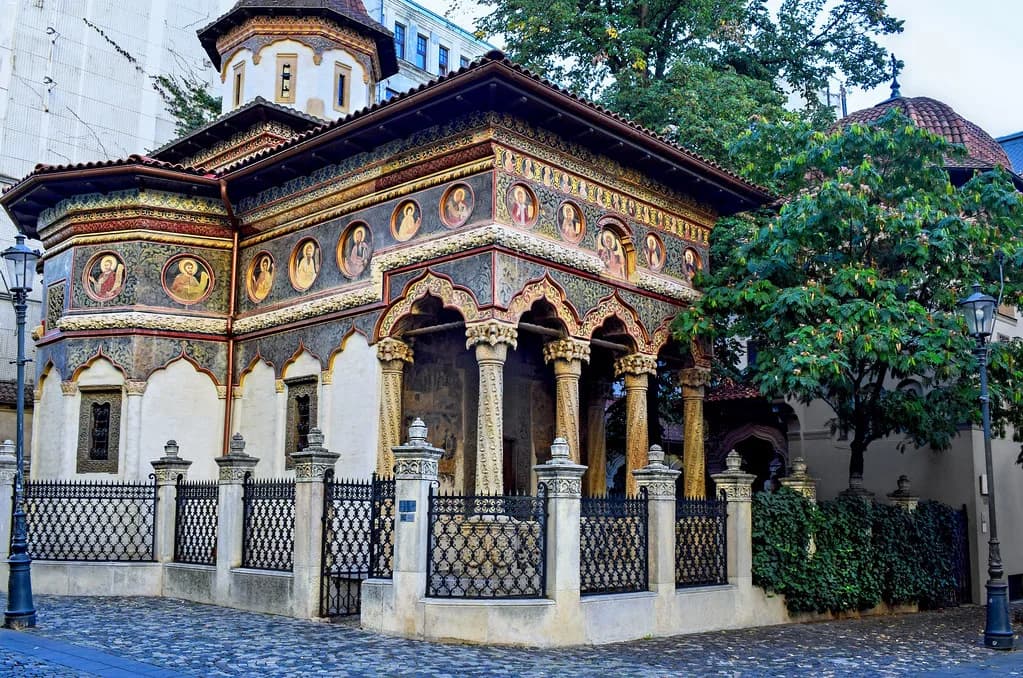
The Buna Vestire church next to the palace was built by Mircea the Shepherd in 1545 and is the oldest surviving church in the city. It combines Byzantine and Moldovan styles, much like the palatial complex itself, and the rulers of Wallachia were crowned there over the following centuries. Even after the palace fell into disuse and was abandoned by the end of the eighteenth century, the church kept its role in the ceremonial life of the principality, so it is the part of the visit that still reads as a working building rather than a ruin.
The stones and inscriptions now outdoors
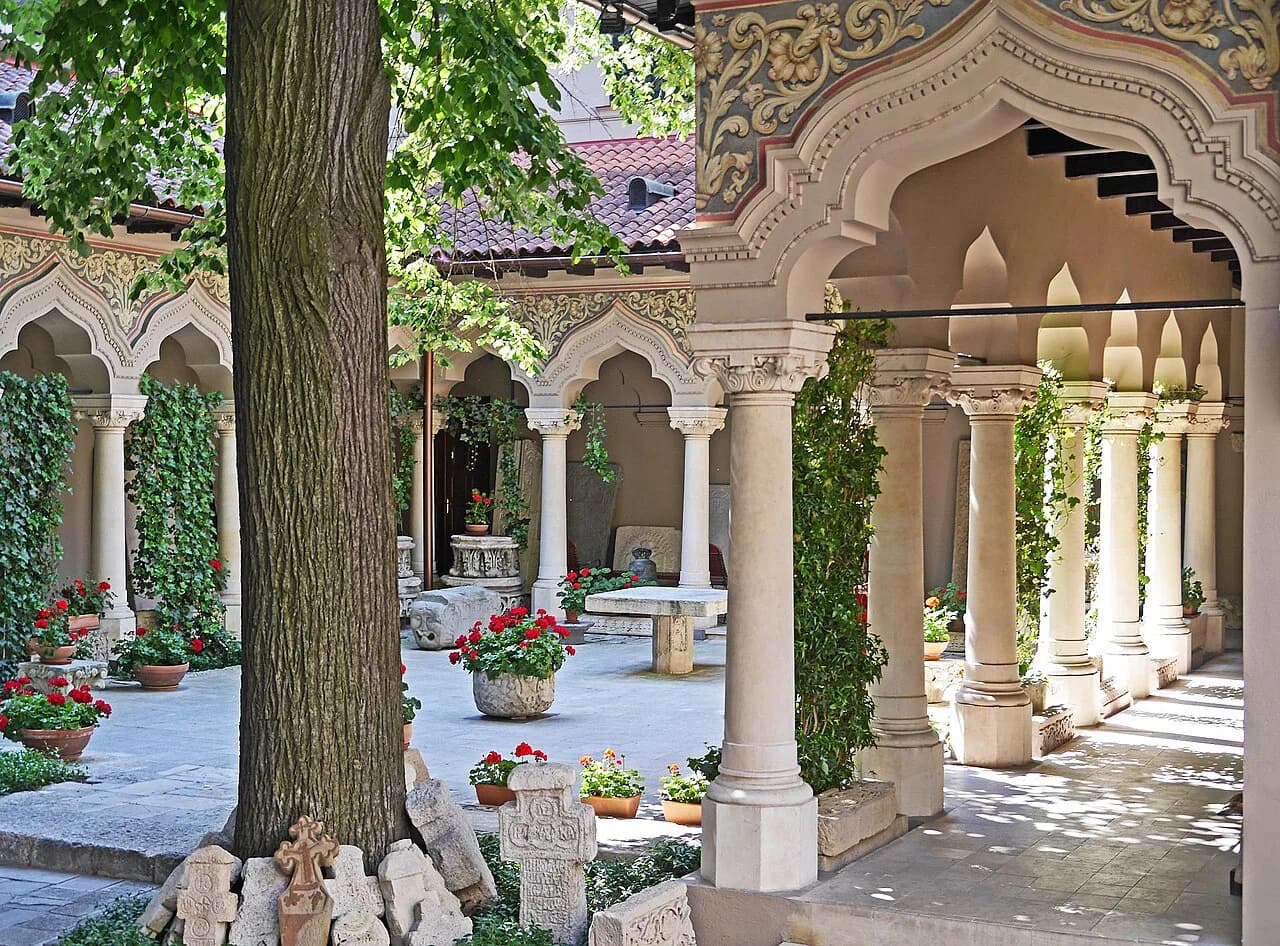
The exterior of the complex is covered in stone crosses and inscriptions, mostly in Slavonic, in medieval Romanian written in Cyrillic script, and in Greek. These carvings may once have stood inside the palace halls and were moved outdoors as the complex fell into ruin, when the exterior courtyard was functioning as a garden. Look for them on the walls around the archaeological garden rather than expecting labelled museum panels.
Can you go inside? The restoration status
The palace complex has been closed for renovations for much of the past decade and, at the time of the most detailed published account, could not be visited. The ruins were accessible a few years before that account was written, which is why photographs and older descriptions show people inside the archway and the underground chambers. The published record gives no reopening date and no ticket price, so check the current position at the site or through the city's official visitor information before making it the reason for a trip. When you reach Franceză Street, treat anything beyond the street-level view as a bonus rather than a plan.
How long to allow and how it fits with the old city on foot
Give Curtea Veche fifteen to twenty minutes at street level, plus whatever time you spend at the Buna Vestire church, and slot it into a half-day walk through the surrounding quarter. It pairs naturally with Bucharest old town, where the same streets hold the cafés and crumbling houses of the historic centre, so build the stop into a wider route rather than crossing town for it alone. The wider old town also carries the heavier sights of the centre, and a walking tour guide is a practical way to hear the street layout explained while you walk. If you are working out what else to see in the district, the guide to things to do in Bucharest covers the surrounding sights, and a Bucharest map helps you line the palace up with the streets around it.
Is the Old Princely Court worth seeking out?
Yes, if you are already walking the old city: the ruined palace, its inscriptions and the 1545 Buna Vestire church make a compact piece of Bucharest's medieval past that takes little time. It is not worth building a day around while the palace itself remains closed for reconstruction, and anyone promising an interior tour should be treated with caution. Fold it into a route through the quarter, and if Vlad III is your reason for coming, read the 1458 letters and the 1473 siege as history rather than as Dracula.
Explore more Bucharest guides
- Bucharest Cathedral
- Bucharest City Break
- Bucharest Day Tours
- Bucharest Landmarks
- Bucharest Opera
- Bucharest Palaces
- Bucharest Parks Worth Building a Day Around
- Calea Victoriei
- Castles near Bucharest
- Cărturești Carusel
- Little Paris, Bucharest
- Mogoșoaia Palace
- Museum of the Romanian Peasant
- People's Salvation Cathedral in Bucharest
Frequently Asked Questions
Is the Old Princely Court the oldest building in Bucharest?
No. The site is a ruined palace complex, and the source identifies the neighbouring Buna Vestire church, built in 1545, as the oldest surviving church in the city. Treat the palace ruins and the church as two parts of one visit rather than as a single building.
Is Curtea Veche connected to Dracula?
Only indirectly. The historical Vlad III, Vlad Țepeș, strengthened the fortress here and wrote to Brașov in 1458 about its walls, but Bram Stoker's Count Dracula is a fictional character. The vampire stories are literature; the palace is a Wallachian royal residence with a documented medieval building history.
How do I reach the Old Princely Court?
It stands on Franceză Street in Bucharest's old city, within walking distance of the surrounding historic quarter. There is no published opening hour or ticket price for the palace complex, so plan to see it from the street and check the current status on arrival.
Sources
Useful notes for your next trip
Optional updates to our guides.
You might also like
Continue reading
More guides you'll find useful