Castles in Transylvania: Which to See and How to Plan Them
Bran, Peleș, Corvin and Râșnov are the castles in Transylvania most travellers plan around. Here is what each offers and how to fit them into one trip.
On this page
Pick three castles in Transylvania rather than six: Bran Castle for the spectacle, Peleș Castle at Sinaia for a royal palace interior, and Corvin Castle at Hunedoara for Gothic architecture. If you are based in Brașov, swap Corvin for the Râșnov and Rupea citadels, which sit within easy reach of the city. This guide explains what each site actually is, separates Bram Stoker's fiction from the historical Vlad III, and shows how to group the sites by region.
The practical difference between these sites matters more than the labels. Bran and Corvin are castles in the strict sense, Peleș is a late nineteenth-century royal palace, and Râșnov, Rupea and Făgăraș are citadels built for defence rather than residence. Budget your time around that distinction, because a fortress ruin takes an hour and a guided palace interior takes considerably longer.
What counts as a castle in Transylvania
Romanian sites use castle, citadel and fortress almost interchangeably in English marketing, but the buildings themselves are different things. A castle such as Bran or Corvin was a noble residence with defensive walls, while a citadel such as Râșnov or Rupea is a walled refuge on a hill, and a fortified church such as Prejmer wraps a village congregation inside bastions. Knowing which you are paying to enter stops you arriving at a hilltop ruin expecting chandeliers.
Tour operators group these sites in telling ways. Hola Transylvania lists Bran castle alongside the medieval fortresses of Râșnov and Rupea and the fortified Transylvanian churches as one category of site, and its multi-day itineraries pair Brașov, Sighișoara and Sibiu with UNESCO-listed fortified churches. Use that grouping as a sanity check when you build your own route, because it reflects how the sites actually cluster on the ground.
Several of the strong castles sit outside the historical region of Transylvania proper. Peleș is at Sinaia in Walachia, on the Prahova valley route north from Bucharest, so treat it as a separate stop rather than a Transylvanian detour. Corvin Castle at Hunedoara is in Transylvania but far west of Brașov, which is why it rarely fits a short break based in the east.
Bran Castle: the Dracula marketing and the real Vlad III link
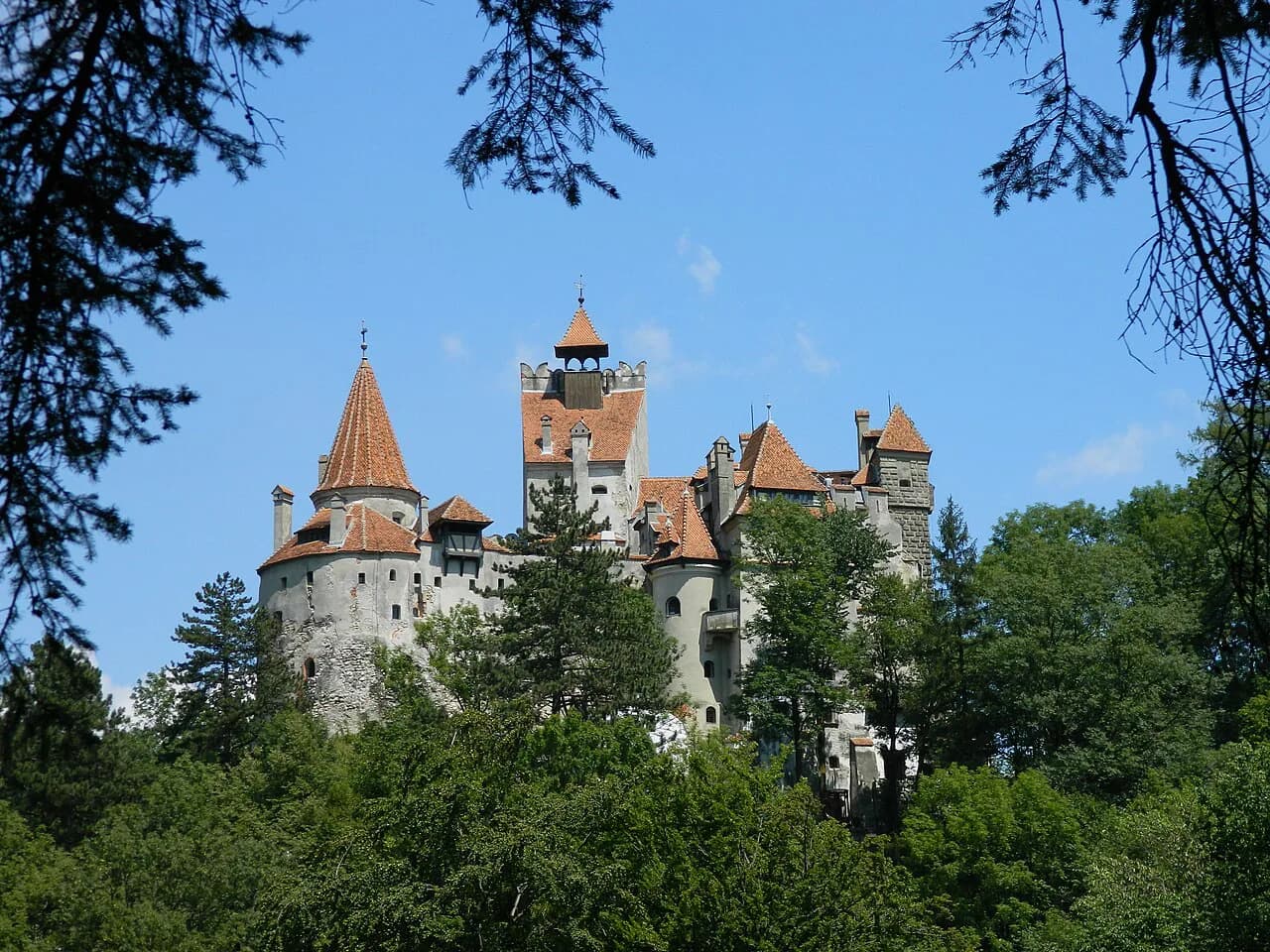
Bran Castle draws the crowds because of a marketing association with Dracula rather than anything documented in its walls. Bram Stoker placed his fictional Count in a different part of the Carpathians and never set the story at Bran, and Vlad III, the Wallachian ruler whose brutal reputation fed the legend, is not recorded as having lived there. Treat the Dracula story as separate fiction and judge the castle on its own terms.
Did Vlad the Impaler ever visit Bran Castle? There is no record of Vlad III living at Bran, and the castle's Dracula association comes from Bram Stoker's novel rather than from the historical ruler. Stoker placed his fictional Count elsewhere in the Carpathians and never set the story at Bran.
How long do you need at each castle? Allow about an hour inside Bran, longer at Peleș if you take the guided interior and walk the grounds, and around an hour at Corvin. Râșnov and Rupea are open-air citadels that take an hour or less each, plus the climb.
Can you see the castles without a car? Yes for Sinaia, where Peleș is a walk from the station, and for Bran, which has bus and tour connections from Brașov. The citadels and fortified churches are harder without a car, so a guided day tour is the practical alternative.
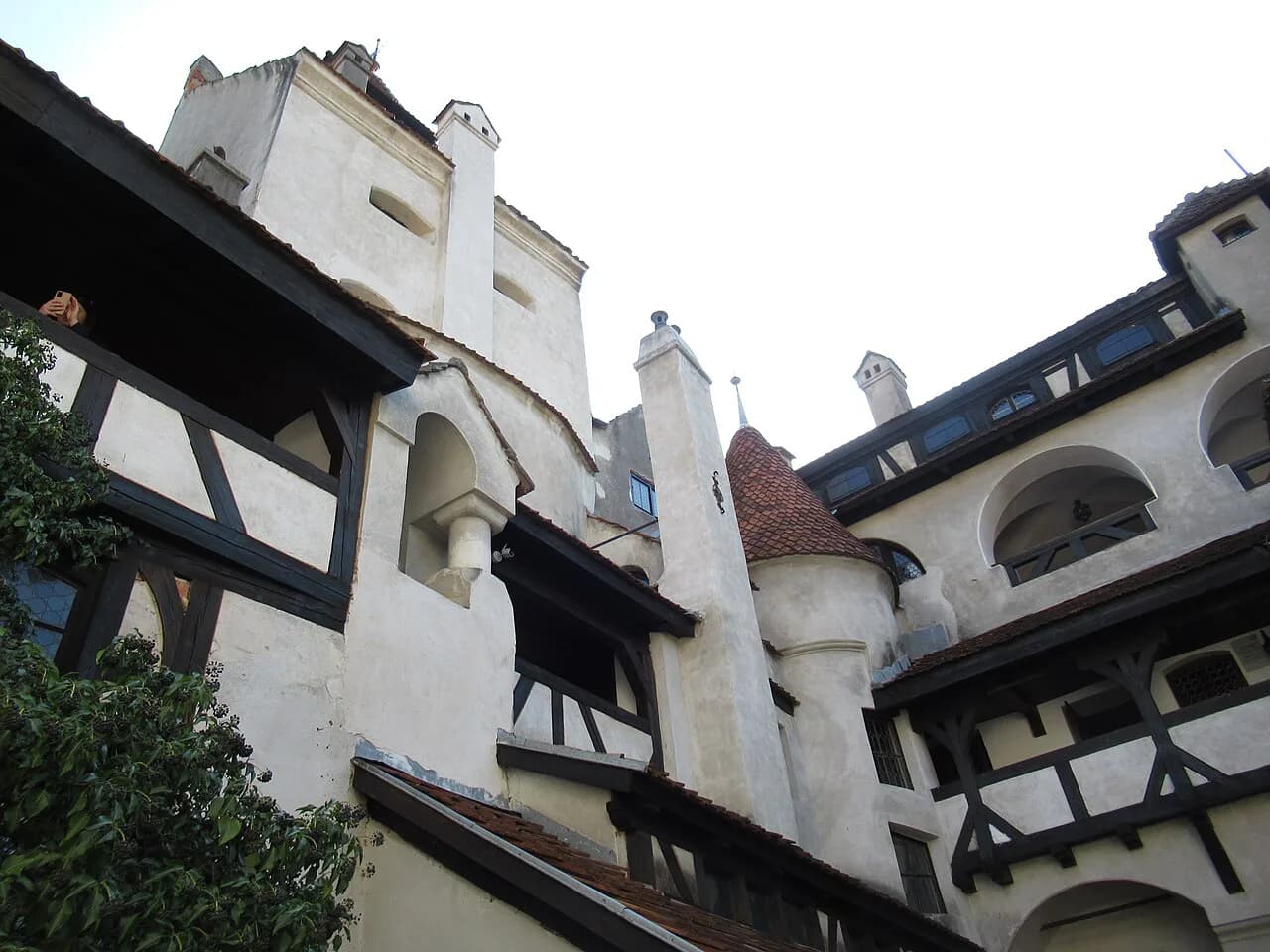
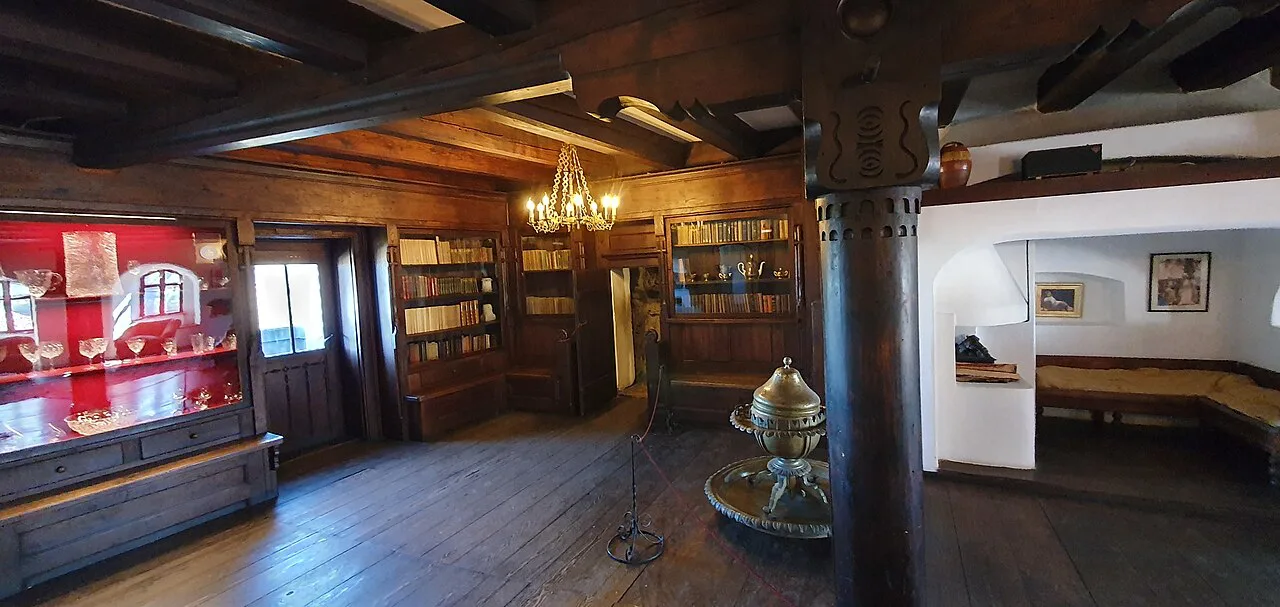
What you get is a compact medieval castle on a rock, with narrow winding stairways and small timbered rooms that fill quickly. Travellers who have written up the visit describe the interior as tight and the crowds as tiring in high season, which is the main argument for arriving at opening time or visiting outside July and August. Allow roughly an hour inside once you are through the gate.
Ticket prices and opening hours change with the season, so check them against Bran Castle's own website before you travel rather than relying on a figure from an older write-up. Bran Castle tickets are sold separately from the peasant museum and the open-air village section outside, which is worth knowing if you only want the castle itself. Booking ahead matters most at weekends and in summer, when the queue can swallow a morning.
Bran is the easiest castle to reach from Brașov, roughly half an hour by car, and it also works as a day trip from Bucharest if you accept a long day on the road. The route from Bucharest to Bran Castle passes through the Prahova valley, which means you can combine it with Peleș at Sinaia in a single long day if you leave early. Doing both in one day is possible but leaves little slack.
Peleș Castle at Sinaia: guided-only interiors and what you pay for
Peleș Castle at Sinaia is the most rewarding interior of the group. Built in a German neo-Renaissance style in the late nineteenth century at the foot of the Bucegi Mountains, it looks like the fairy-tale castle the others are sold as, and visitors who have seen all three castles commonly rate it highest. The setting is part of the appeal, so leave time for the grounds and the walk up from the town.
You cannot wander the interior on your own. Access is with a guide, the ticket price depends on how many floors you choose to see, and there is an extra charge if you want to take photographs. The exterior is free to walk around, so a stop that skips the guided tour still gives you the view and the architecture. Decide which you want before you join the queue.
Sinaia is on the main rail line between Bucharest and Brașov, so Peleș fits neatly into a train journey between the two cities rather than needing a separate excursion. The castle sits a short uphill walk or taxi ride from Sinaia station, and the same walk continues to the smaller Pelișor palace. Confirm the current floor options and camera rules at the ticket office on the day.
Corvin Castle at Hunedoara: the Gothic showpiece and how it fits a route
Corvin Castle, known in Romanian as Castelul Corvinilor, is the strongest medieval castle in the group and the one to prioritise if Gothic architecture is your reason for coming. At Hunedoara, an earlier fortress was upgraded into a Gothic stronghold, and its chambers and exterior are what travellers tend to remember. Unlike Bran, the appeal here is the building itself rather than a legend attached to it.
The catch is location. Hunedoara sits in the far west of Transylvania, a long drive from Brașov, and it works best as a stop between Sibiu and Timișoara rather than as a day trip from the eastern cities. Build it into a westward leg of your route, or accept that it doubles your driving if you are based in Brașov. Many travellers pair it with Alba Iulia on the same day.
A write-up from 2020 records opening hours running from midday on Mondays and from 9am on other days, with a closing time around 5pm, plus an adult ticket priced in euros. Treat those figures as a snapshot of that year and check the castle's own published times and lei prices before you commit a day to the detour. If you are travelling by public transport, confirm bus connections from Deva as well.
Râșnov Citadel and Rupea Citadel: quick fortress stops near Brașov
Râșnov Citadel is the pragmatic half-day from Brașov: a hilltop fortress with walls, towers and views back over the plain, reached on foot or by a short ride up. It is a citadel rather than a furnished castle, so go for the ramparts and the position rather than interiors. The climb is the main physical demand, and the wind at the top can be sharp even on a sunny day.
Rupea Citadel lies further north on the road towards Sighișoara and makes a natural stop if you are driving between Brașov and Sighișoara. It is a ruined fortress with restored walls, so an hour is usually enough. Combine the two with Bran in a single loop by car, since all three sit within about an hour of Brașov; doing the same by bus takes much longer and needs timetable checking.
Făgăraș Citadel and the Saxon fortified churches that behave like castles
Făgăraș Citadel is a moated fortress west of Brașov that functions as a museum, and it slots into a drive towards Sibiu or a detour from the Olt valley. It is fully enclosed and easier walking than the hilltop citadels, which makes it a sensible choice on a wet day. Check the museum's current opening days before you go, since regional museums often close on Mondays.
The Saxon fortified churches are the other half of this story and often more atmospheric than the castles. Prejmer, Hărman, Biertan and Viscri wrap a church inside defensive walls with storage chambers, and Viscri in particular is a village visit as much as a monument. Hola Transylvania runs a day tour from Brașov that combines Sighișoara with Viscri, which shows how the sites group; their listed starting price is in euros, so ask what it covers before booking.
These churches serve small village parishes, so opening hours can be limited and are sometimes handled by a local custodian. Ask ahead or check at the village, and carry cash for any small entry fee charged on the door. They reward a car, because bus coverage between villages is thin.
Which castles to prioritise on a short break
On a three-day break based in Brașov, choose Bran and Râșnov for one day, the Prejmer and Hărman churches for another, and keep the third for Brașov itself. Peleș fits on the train day between Brașov and Bucharest. Skip Corvin unless you are heading west, because the drive eats a full day from an eastern base and leaves you rushing the castle.
With a week, run a loop: Bucharest to Sinaia for Peleș, on to Brașov for Bran and Râșnov, north to Sighișoara via Rupea and Viscri, then west to Sibiu, Alba Iulia and Hunedoara for Corvin. That order keeps you moving in one direction rather than backtracking. If you only have one castle in you, make it Corvin for architecture or Peleș for interiors.
Bram Stoker's novel and the Vlad III story should not decide your itinerary. Neither figure lived at Bran, and the historical Vlad III ruled in Wallachia rather than Transylvania, so a castle chosen for the Dracula connection often disappoints. Choose on architecture, setting and how easily the site fits your route.
How to string castles together by region by train, bus or car
The railway does the heavy lifting between cities: Bucharest to Sinaia and Brașov, and Brașov to Sighișoara and Sibiu, are all straightforward by train. The castles themselves are mostly off the line, so the last stretch is a bus, taxi or walk. Sinaia is the exception, with Peleș reachable on foot from the station.
A car turns the citadels and fortified churches from awkward to easy, especially Râșnov, Rupea, Viscri and the Făgăraș area. If you would rather not drive, a guided day tour from Brașov removes the timetable problem at the cost of flexibility and a fixed group pace. Hola Transylvania publishes one-day tours from Brașov covering Bran and Râșnov and Prejmer, with euro starting prices, which gives you a benchmark for comparing operators.
Guided tours versus doing it yourself: cost and time trade-offs
Tours win on logistics and lose on time. A day tour from Brașov can cover Bran, Râșnov and a fortified church in one sweep without you reading a timetable, but you see each site at the group's pace and stop where the itinerary says. Independent travel costs less per site but needs a car or patience with rural buses.
For Peleș the guide is compulsory inside regardless of how you arrive, so the only tour question is transport. For Bran, Râșnov and the churches, the choice is yours. Compare tour prices against the sum of your tickets and fuel, and check what the price includes, because entry fees are often extra.
Some tours add stops that are not castles at all. The Libearty Bear Sanctuary near Zărnești appears on several Bran and Râșnov day tours, as does the Cantacuzino Castle in Bușteni on Prahova valley routes. Decide whether those additions are worth the day when you compare itineraries.
Crowds, steps and opening-day traps to plan around
Crowds concentrate at Bran in summer, and the interior rooms are small enough that a full house feels uncomfortable. Arrive for opening, book ahead, and accept that a midday visit in August is the worst option. Râșnov and Rupea absorb people better because the sites are open-air.
Steps and slopes are the second trap. Râșnov and Rupea involve climbing, Peleș involves stairs between floors, and Bran has narrow stairways that slow anyone unsteady on their feet. Check opening days before travelling, because museums and citadels in Romania can close one day a week, often Monday, and a wasted journey to a locked gate is the most common avoidable setback.
Prices are the third. Published figures in older write-ups are in euros and belong to those years, not to today's lei prices. Look up each castle's own ticket desk for current RON prices and any camera or floor supplements before you budget.
Build your castle route around one western leg
Choose Bran for spectacle, Peleș for interiors and Corvin for architecture, then arrange your trip so only one leg heads west. Everything east of Sibiu clusters tightly around Brașov, which is why a three-day break there covers Bran, Râșnov and the fortified churches without long drives.
Confirm ticket prices in lei and the opening days for each site before you book transport, since castles, citadels and village churches keep different schedules and change them by season. If you are relying on trains and buses, plan around the timetable rather than the map.
Explore more Romania guides
Frequently Asked Questions
Did Vlad the Impaler ever visit Bran Castle?
There is no record of Vlad III living at Bran, and the castle's Dracula association comes from Bram Stoker's novel rather than from the historical ruler. Stoker placed his fictional Count elsewhere in the Carpathians and never set the story at Bran. Visit for the medieval building and the setting, not for a documented Vlad connection.
How long do you need at each castle?
Allow about an hour inside Bran, longer at Peleș if you take the guided interior and walk the grounds, and around an hour at Corvin. Râșnov and Rupea are open-air citadels that take an hour or less each, plus the climb. Add travel time between sites, which is the real limit on a short break.
Can you see the castles without a car?
Yes for Sinaia, where Peleș is a walk from the station, and for Bran, which has bus and tour connections from Brașov. The citadels and fortified churches are harder without a car, so a guided day tour is the practical alternative. Check timetables before committing to a public transport day.
Sources
Useful notes for your next trip
Optional updates to our guides.
You might also like
Continue reading
More guides you'll find useful