Monasteries in Romania: Painted Churches, Etiquette and Routes
Romania's monasteries range from Bucovina's painted churches to Maramureș's wooden churches. Plan a route, time your visits and follow the dress code.
On this page
Romania's monasteries are Orthodox churches and monastic settlements, and the ones worth building a trip around are in the north: Bucovina's painted monasteries, where frescoes cover the exterior walls as well as the interior, and Maramureș's wooden churches around Săpânța. Most Orthodox churches in the country carry fine interior frescoes, but exterior painting is confined to a small group in the north, which is what makes a Bucovina circuit a distinct trip rather than a church crawl. This guide names the monasteries to prioritise, explains what you are looking at on the walls, and sets out the layout, etiquette and routing you need before you go.
Bucovina's painted monasteries: which ones to visit
The core circuit is Voroneț, Moldovița, Sucevița, Humor, Arbore and Probota, all in Bucovina in the north of the country near the Ukrainian border. Nearly two dozen churches and monasteries were illustrated during the 15th and 16th centuries, sometimes on every interior and exterior surface except the floors, since stepping on sacred images was considered disrespectful. The majority are deemed UNESCO World Heritage Sites, which is a fair guide to which ones justify the drive.
Sucevița is thought to have been the last painted monastery, built between 1582 and 1601, and its size and setting make it a natural anchor for a day. Voroneț draws attention for the shade of blue used on its exterior almost 500 years ago, which researchers still analyse; the pigment is said to come from a mineral that can only be extracted in Russia. Put those two first if you have only a day.
Moldovița, Humor, Arbore and Probota fill out a second day, and each has its own reason to stop. Arbore's exterior carries scenes from the Book of Genesis, which makes it a good primer before you reach the denser programmes elsewhere. Suceava was the main city of the medieval Moldova Principality, and its fortress walls can still be seen, so a Bucovina base gives you a town as well as the monasteries.
What to look at on a painted monastery
Sucevița's Ladder of Virtues is the panel to seek out: it shows monks and nuns at various stages on the ladder while others fall from grace, and the monastery's small museum holds further art with views from its first floor across the grounds. At Moldovița, look for the Siege of Constantinople and the Last Judgement, both finely detailed and, in places, deliberately graphic.
Is Stavropoleos monastery free? Stavropoleos is in central Bucharest rather than on the Bucovina circuit, and entry arrangements there are set by the parish. Check the current position with the church before you go rather than relying on older trip reports.
Is Romania predominantly Orthodox or Catholic? Romania is predominantly Orthodox, and the monasteries described here are Orthodox foundations. That is why the painted churches follow the Moldavian plan and why the interior layout, with the chancel reserved for the priest, differs from a Catholic church.
How many fortified churches are there in Romania? The count depends on how you define a fortified church, and the totals quoted vary by region. For Bucovina, most painted monasteries are enclosed by defensive walls built to shelter the monument and nearby villagers.
The frescoes were painted as teaching tools, not ornament. In a period when few people could read, the panels carried biblical stories to parishioners, and congregations were often illiterate, so every square centimetre of a painted surface carries meaning rather than decorative filler. That changes how you read the walls: treat each register as a page and work round the church rather than scanning for a single highlight.
Weather has shaped what survives. North-facing exterior walls have generally lost their paintings to the elements, while the other faces hold theirs, so a circuit that only photographs the entrance side misses the point. Frescoes were painted into wet plaster, giving roughly eight hours to complete each area before it set, with no chance of touching up afterwards.
How the Moldavian layout works
Most painted monasteries follow a similar plan, and knowing it lets you find your way round any of them. The exonarthex is the entrance area, always oriented west and sometimes open like a terrace, and it marks the transition from the lay world into the sacred space. Beyond it comes the pronaos, where villagers attended the liturgy, then in larger churches a burial chamber for the founder, a ruler or high noble.
The naos sits between the north and south apses and hosts the choir, and today it is where visitors and congregations attend services. The chancel faces east, is the most important room, and is accessible only to the priest, so do not expect to walk into it.
Strong fortification walls surround most of the monasteries, built to shelter both the monuments and nearby villagers in difficult times. Read them as part of the visit rather than as a boundary to pass through: they explain why the grounds feel enclosed and why the churches sit low within a defended compound.
Etiquette inside the grounds
The dress code is straightforward and worth respecting before you arrive. Men should avoid shorts and hats, while women should cover their shoulders and preferably wear trousers or long skirts; apron-style skirts can usually be borrowed on site if you turn up unprepared. Photography is allowed outside but not inside the church, to protect the frescoes, and postcards are sold if you want images of the interiors.
These are working monastic settlements with monks or nuns in residence, and the grounds are often planted and decorated with flowers and handmade textiles. Allow a few hours rather than a quick photo stop, since the churches, walls, museum at Sucevița and the grounds together fill half a day at a comfortable pace. Carrying a scarf and wearing long trousers removes the guesswork at each gate.
Bucovina beyond the monasteries
Bucovina's villages sit well away from Romania's large cities, with little industrialisation, and many households run guesthouses where owners cook for guests using local ingredients. Standards vary between pensions, so book on the strength of recent guest reviews rather than a single photograph. If you want to see the region's crafts, leave time in the villages between monastery stops instead of driving straight between gates.
Suceava's fortress walls are the obvious non-monastic stop and anchor the city's medieval role: Bucovina was the capital county of the larger Moldova Principality, with Suceava as its main city and a towering fortress whose walls survive today. The landscape around the monasteries is broad and open, which is part of why the circuit rewards a car rather than a rushed coach day.
The wooden churches of Maramureș and the Merry Cemetery at Săpânța
West of Bucovina, still along the northern border, Maramureș holds the town of Săpânța and its Merry Cemetery. The tall-spired, multi-coloured Orthodox church is surrounded by graves marked with brightly painted wooden markers that illustrate the lives of the dead, often with light-hearted epitaphs. It is a cemetery rather than a monastery, but it sits in the same northern belt of the country.
Maramureș's wooden churches are a separate tradition from Bucovina's painted masonry, and pairing the two regions gives you a northern trip with two distinct subjects. Driving between them takes the best part of a day, so plan an overnight rather than treating Săpânța as a detour from Suceava. If your interests lean towards church architecture more broadly, the Romanian Orthodox Churches guide covers the building types you will meet along the way.
Other monasteries to consider elsewhere in Romania
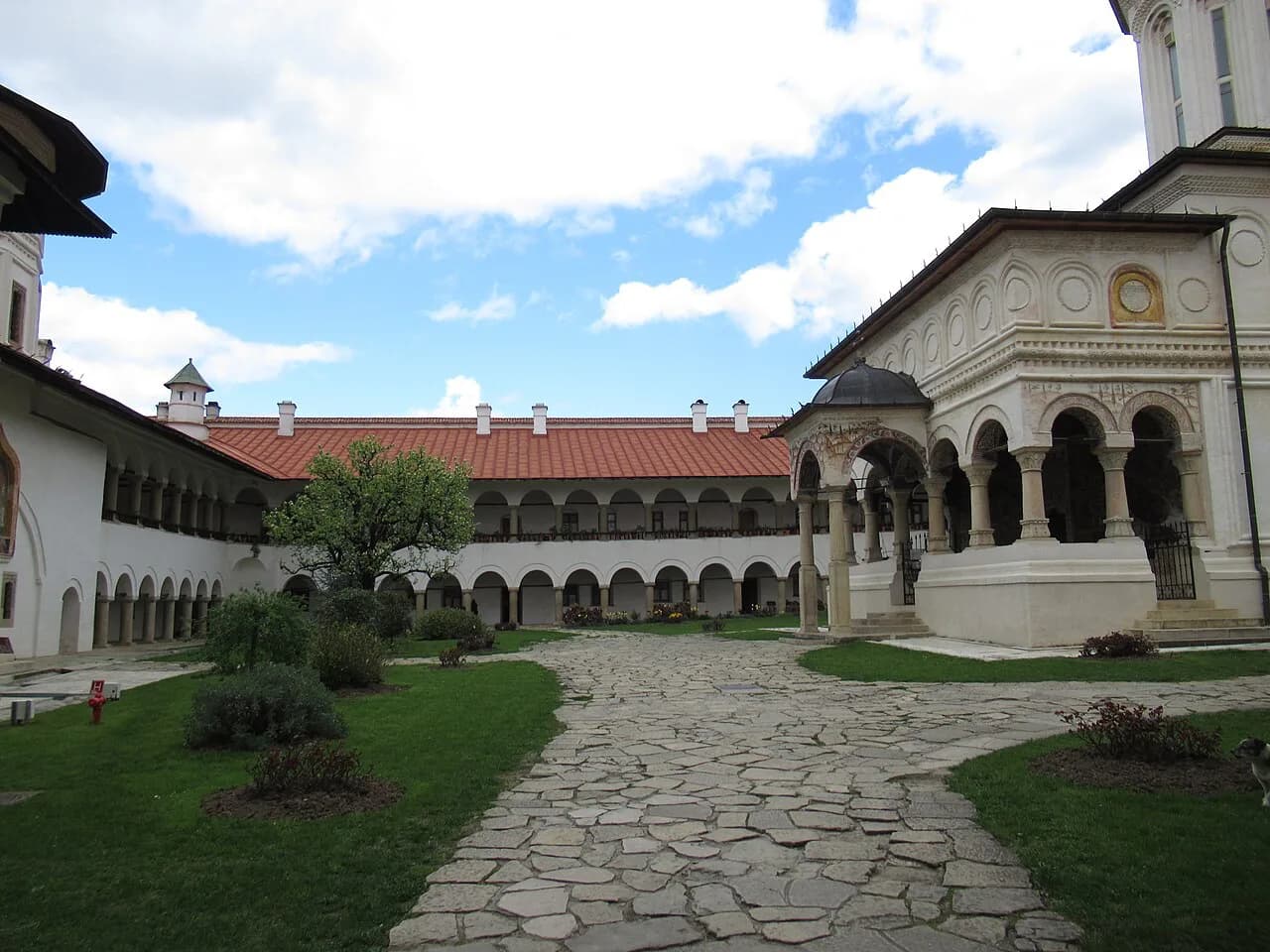
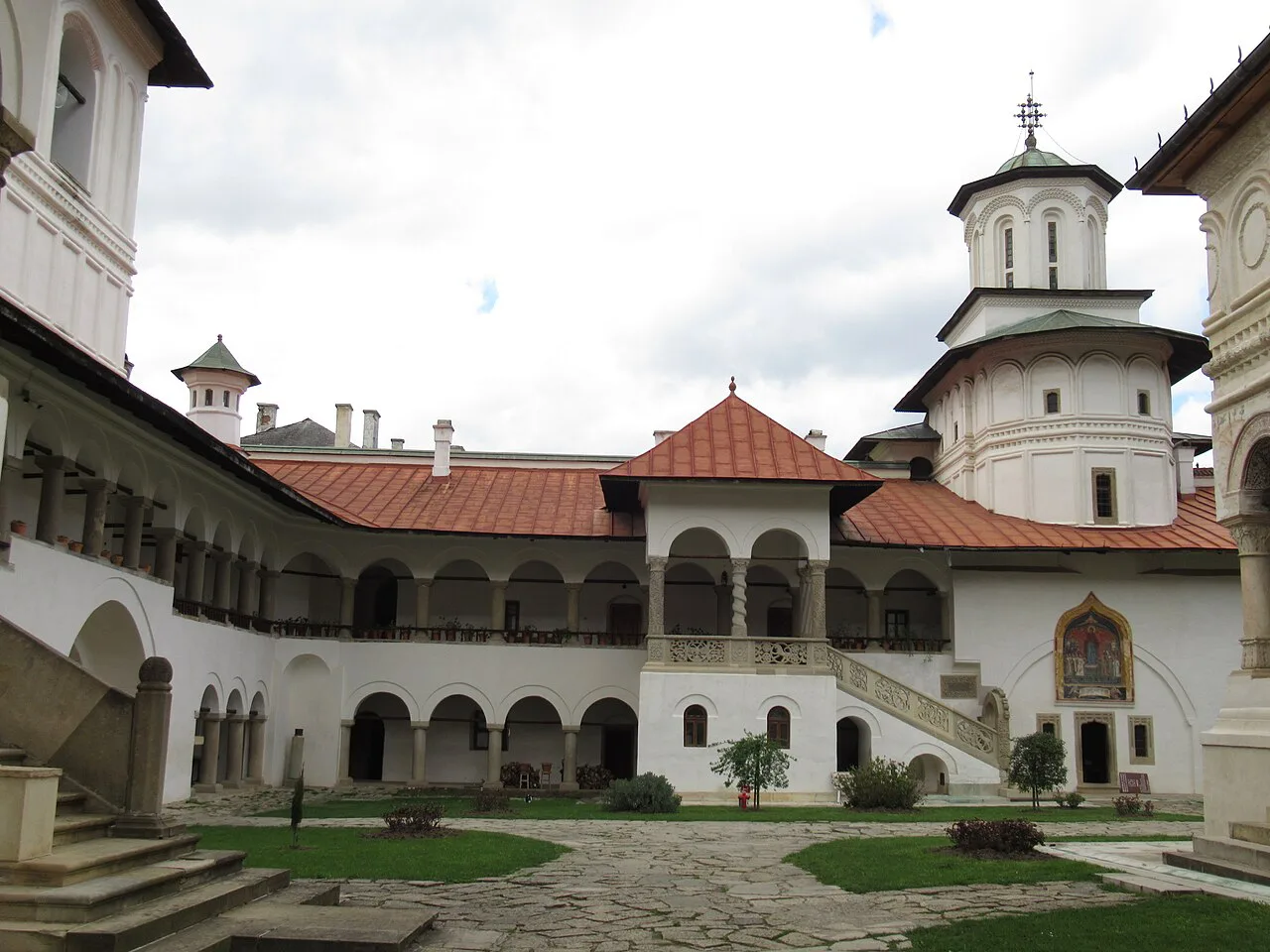
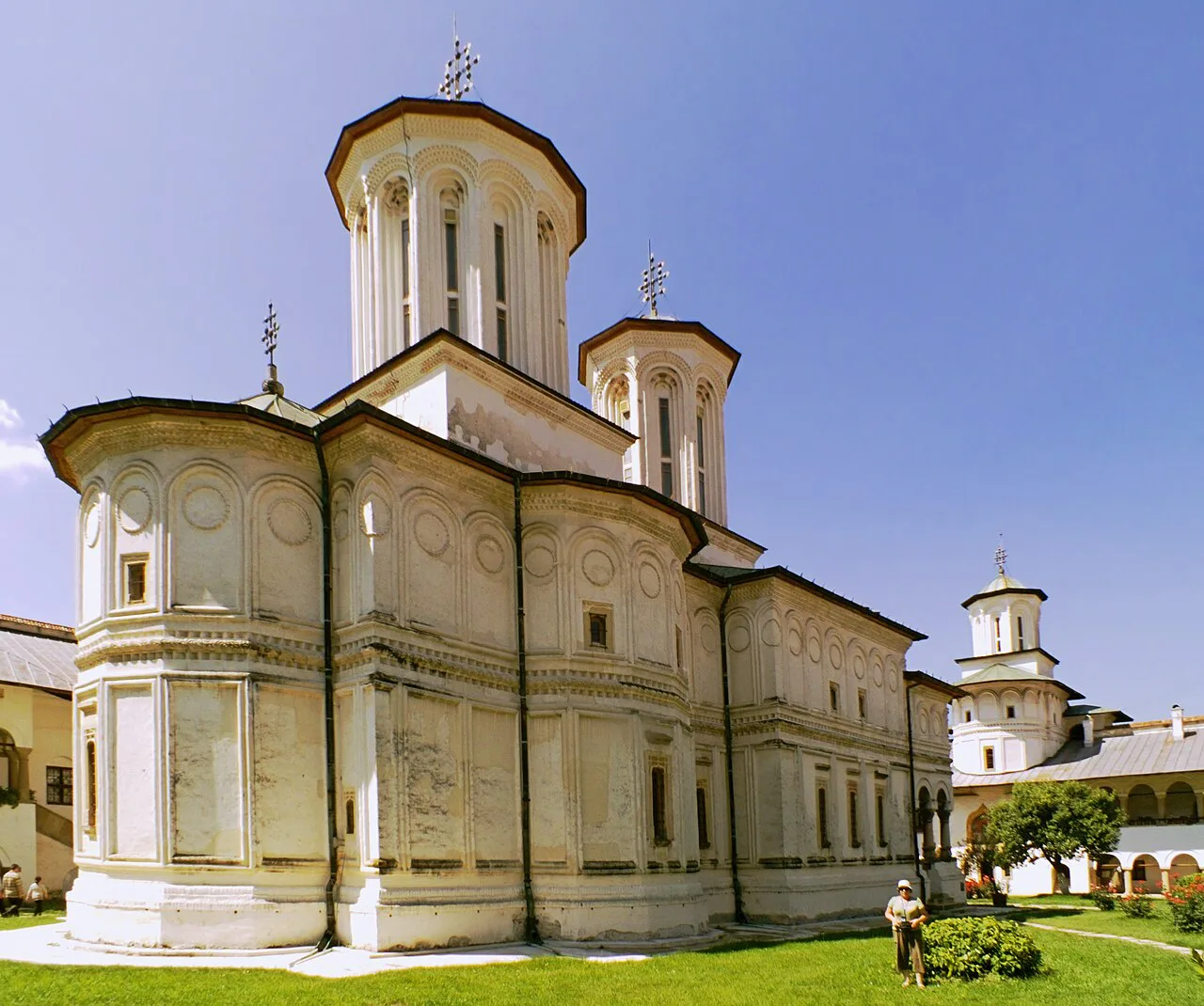
Bucovina is not the whole story. In the south, Horezu Monastery in Vâlcea County is a walled complex, and the town's potters work in a craft tradition recognised on the UNESCO Intangible Cultural Heritage Lists; the Horezu pottery workshops are a natural companion to a monastery visit. Cozia monastery sits close to the Olt valley road, founded in the era of Mircea cel Bătrân.
In the west of Oltenia, Tismana monastery sits in wooded country above the Jiu valley, reachable on a day out from Târgu Jiu. Further north in Alba County, Râmeț Monastery lies deep in the Valea Râmețului, a valley village setting that rewards the drive. Each of these works as a half-day add-on to a town-based trip rather than a destination in itself.
How to reach Bucovina's monasteries and how long you need
Base yourself in Suceava or in one of the villages between the monasteries, and travel by car or on a guided tour: the monasteries are spread across the countryside rather than clustered in a town, and public transport between them is slow. A guided tour buys you a guide who can decode the frescoes panel by panel, which is the difference between looking and understanding. Check opening days and any entry charge with the monastery or your tour operator before you commit to a circuit.
Allow a full day for Sucevița, Moldovița and Voroneț with driving and a lunch stop, a second day for Humor, Arbore and Probota, and a third if you want Suceava's fortress and the villages. Groups that try to add Maramureș to the same day end up seeing gates and car parks. Two nights in the region gives you a realistic pace.
Where monasteries fit into a wider Romania trip
Bucovina sits at the far north of the country, so treat it as a block of two or three nights rather than a day trip from Brașov or Cluj-Napoca. A workable shape is a flight or train to Suceava, a monastery circuit, then onward west to Maramureș or south towards the Carpathian Mountains and Transylvania. Building the route around the monasteries rather than adding them to a town itinerary keeps the driving sane.
If you are travelling through the south instead, Horezu and Cozia combine naturally with a route along the Olt valley, and both give a sense of how monastic architecture changes from region to region. Fitting the southern monasteries into a town-based trip keeps the driving manageable.
Which monastery circuit should you book?
Choose Bucovina if you want exterior frescoes, working monasteries and a compact circuit from Suceava, and add Maramureș only if you can give it a separate day and night. Choose the southern monasteries at Horezu and Cozia if you are already travelling the Olt valley and want a lighter monastic element to a town trip. Whichever you pick, sort out transport and confirm opening arrangements with the monastery or operator before you fix dates.
Explore more Romania guides
Frequently Asked Questions
Is Stavropoleos monastery free?
Stavropoleos is in central Bucharest rather than on the Bucovina circuit, and entry arrangements there are set by the parish. Check the current position with the church before you go rather than relying on older trip reports.
Is Romania predominantly Orthodox or Catholic?
Romania is predominantly Orthodox, and the monasteries described here are Orthodox foundations. That is why the painted churches follow the Moldavian plan and why the interior layout, with the chancel reserved for the priest, differs from a Catholic church.
How many fortified churches are there in Romania?
The count depends on how you define a fortified church, and the totals quoted vary by region. For Bucovina, most painted monasteries are enclosed by defensive walls built to shelter the monument and nearby villagers.
Sources
Useful notes for your next trip
Optional updates to our guides.
You might also like
Continue reading
More guides you'll find useful