Curtea de Argeș: Monastery, Princely Court and Transfăgărășan
Curtea de Argeș pairs the royal necropolis monastery with the ruined Princely Court and St Nicholas Church, plus a walking route and Transfăgărășan access.
On this page
Curtea de Argeș deserves a half-day, not a photo stop. The former capital of Wallachia packs two separate historic ensembles into a short, walkable centre: the episcopal monastery with its royal tombs, and the ruined Princely Court with St Nicholas Church, linked by a lime-tree-lined boulevard.
This guide covers what each stop involves, the smaller museums that fill out a visit, a short walking route, Poenari Citadel and Vidraru Dam to the north, and how the town fits a trip along the DN7C. It is written for travellers who would rather know the shape of a place before arriving than tick a list on the ground.
Why Curtea de Argeș earns a stop
Curtea de Argeș sits at the foot of the Făgăraș Mountains and was the medieval capital of the principality of Wallachia. That past is what gives the town its weight: the monuments here were built as the political and spiritual centre of a state, not as decoration for a later tourist trail. Visitors get two ensembles within walking distance of each other rather than a scattered set of ruins.
The practical value is that the town is quiet and its centre is compact enough to cover on foot in an afternoon. Treat it as a heritage stop with a mountain road attached, and the day plans itself: monastery first, Princely Court second, then decide whether the northern valley gets the rest of your time.
How the town is laid out
The centre turns on two poles. The Princely Court and the episcopal monastery stand apart from each other, joined by a boulevard lined with lime trees, so you walk between them rather than circling one walled compound. Knowing this saves the common mistake of arriving at the monastery and assuming the ruins behind the town are part of the same ticket.
Bulevardul Basarabilor is the spine most visitors end up on, running through the town's historic quarter. The Fountain of Master Manole stands opposite the monastery, which makes it an easy marker for the middle of a walk. Everything of interest to a short visit sits within a manageable radius of that boulevard.
Curtea de Argeș Monastery: twisted towers and royal tombs
The monastery is the monument most people come for. Founded in the early sixteenth century by the voivode Neagoe Basarab, its church mixes Byzantine influence with oriental motifs, and the exterior is known for its twisted towers and rich carved decoration. Look at the stonework before you go in; the carving is the part photographs flatten.
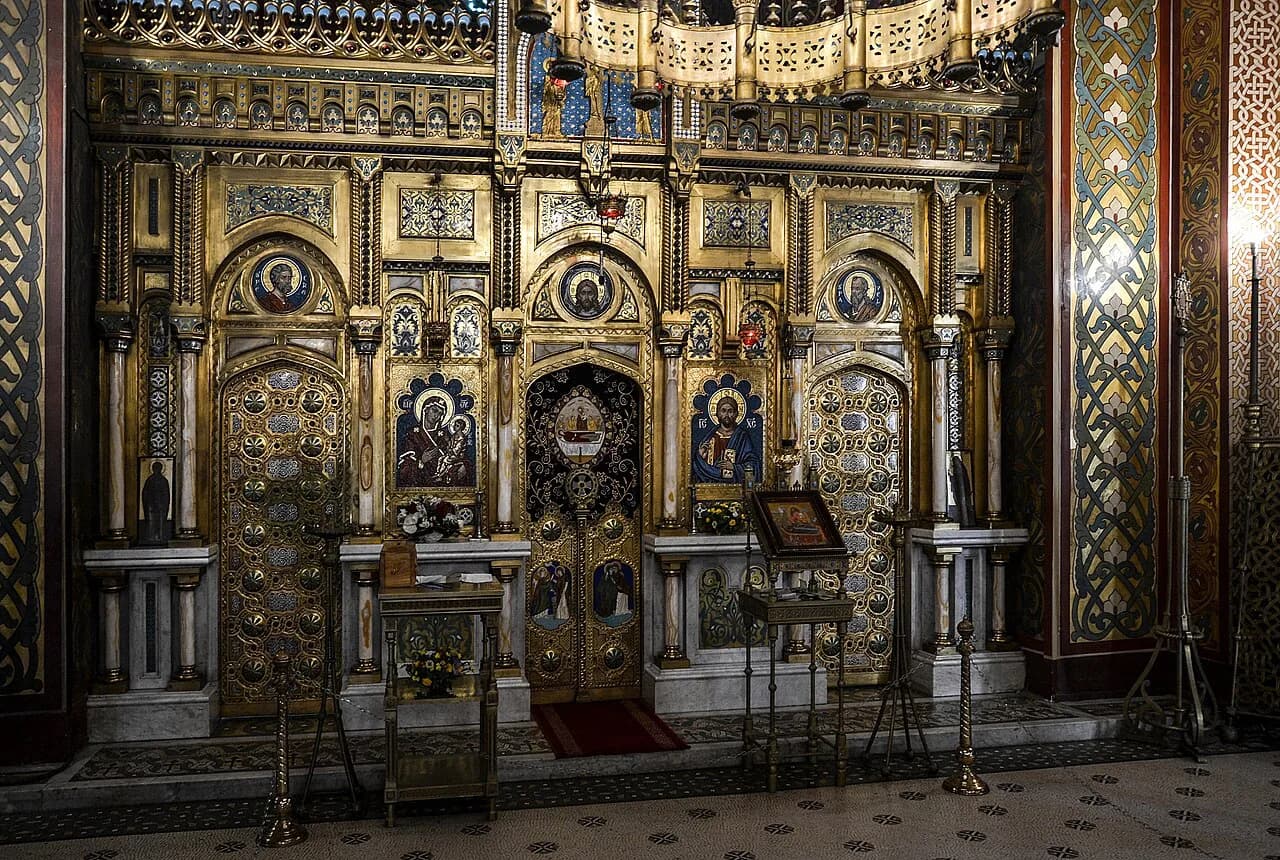
Inside, the monastery church serves as the necropolis of Romania's kings. The tombs of Carol I and Ferdinand lie here, along with those of queens Elisabeth and Marie, which gives a small-town church a national role that is easy to underestimate from the street. Budget time to read the inscriptions and take in the scale of the interior rather than treating it as a five-minute look.
The Princely Court and St Nicholas Church
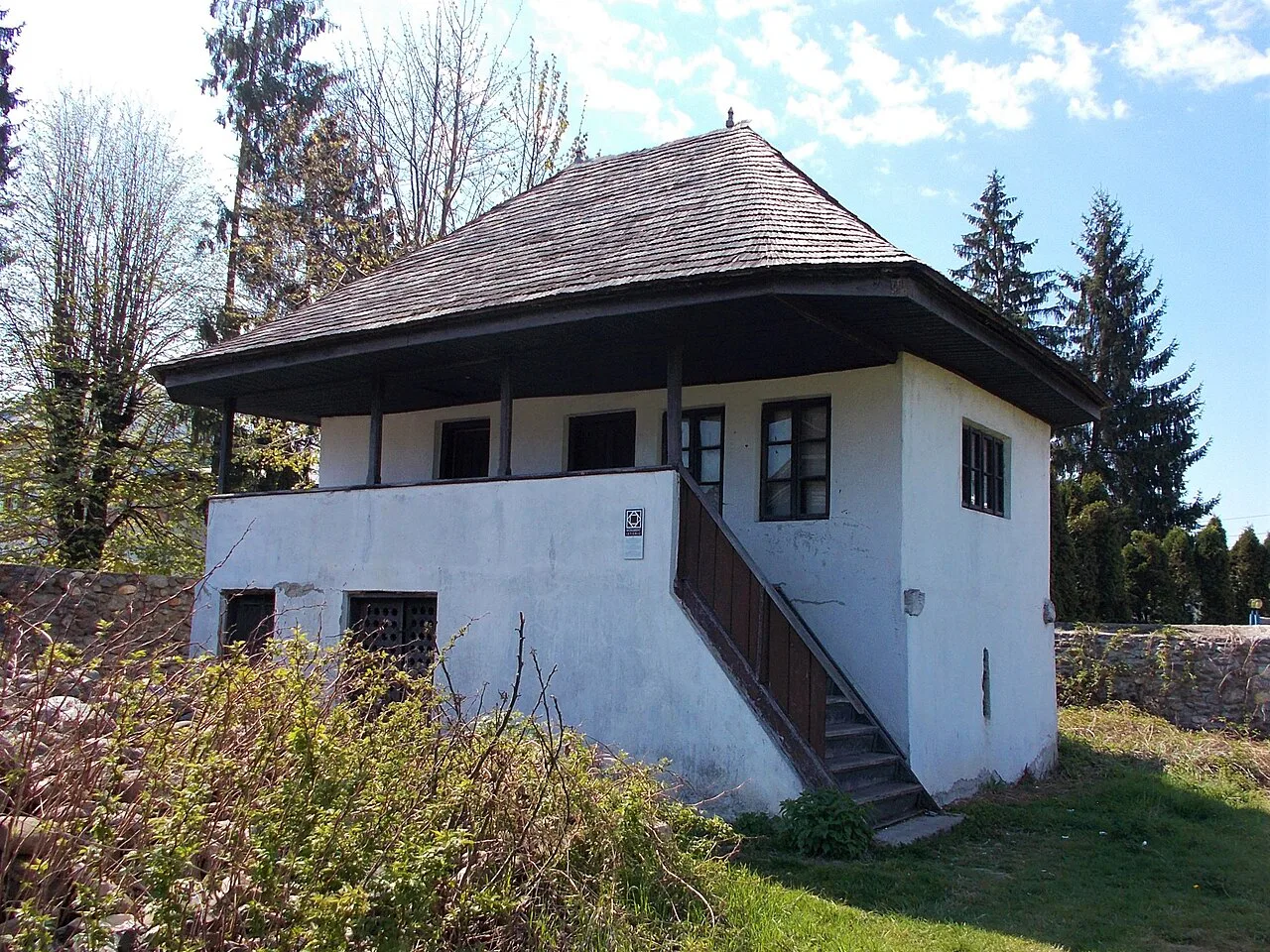
The Princely Court, Curtea Domnească, is the historic heart of the town and a separate visit from the monastery. Founded in the thirteenth century as the residence of the first princes of Wallachia, it survives as ruins, including traces of the residences of Basarab I and Neagoe Basarab. Expect foundations, walls and open ground rather than restored rooms, and plan your reading of the site accordingly.
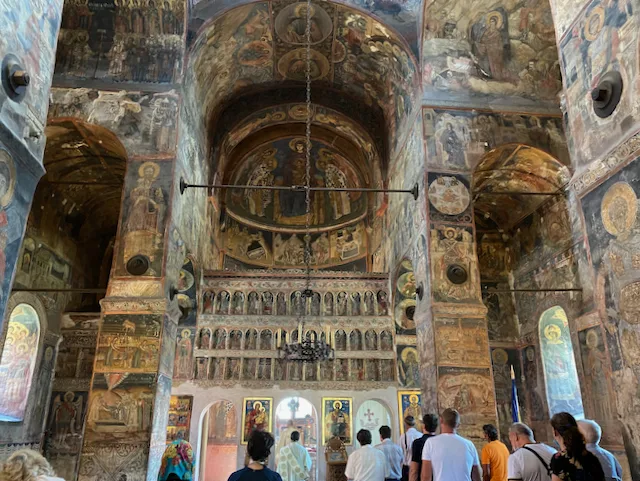
Within the ensemble stands St Nicholas Church, the town's oldest, dating from the fourteenth century. Its interior frescoes are partly worn but remain a strong example of medieval Romanian painting, so this is the one interior in town where you should allow quiet time. The pairing of ruins outside and painted walls inside is what makes the Princely Court more than a detour.
The Fountain of Master Manole
Opposite the monastery stands the Fountain of Master Manole, named for the architect of a well-known local legend. In the story, Manole had to wall his own wife in alive to finish the monastery, whose walls kept collapsing each night. The source frames this explicitly as myth, so treat the fountain as a literary landmark rather than a historical record.
Smaller museums and the ceramics tradition
Beyond the two headline ensembles, the town has a set of smaller collections worth an hour if you have it: the museum collection of the Orthodox monastery, the Municipal Museum of Curtea de Argeș and Casa Norocea. These are the stops that turn a two-hour visit into an afternoon, and they are the reason to arrive before mid-afternoon rather than late.
The town also has a ceramic tradition, and private workshops and collections, such as the Mateescu folk-craft collection, show the local craft. If you want to see something made rather than excavated, this is the part of the visit to prioritise. Check locally what is open on the day you arrive, since these are small operations rather than fixed public attractions.
A short walking route and how long to allow
Start at the monastery, see the church and its royal tombs, then cross to the Fountain of Master Manole and walk the lime-tree boulevard to the Princely Court and St Nicholas Church. Finish with whichever of the smaller museums is open, or with the ceramics collection. The route is short and flat, and the walking itself takes under half an hour.
Allow half a day for the town at an unhurried pace: roughly two hours for the two ensembles and their interiors, and the rest for the museums and a pause. If you only have an hour, do the monastery and the Princely Court and leave the collections, because those two carry the story. Arriving in the morning leaves room to push north towards Poenari or Vidraru afterwards.
Poenari Citadel: 1,480 steps and Vlad III
Poenari Citadel lies around 25 km north of town, its ruins set on a cliff above the Argeș valley. Reaching it means climbing close to 1,480 steps, which makes it a physical outing rather than a roadside photo stop. Travellers with knee trouble, small children or a tight schedule should decide before setting off, because the climb is the visit.
The citadel is associated with Vlad the Impaler, the historical figure rather than the fiction built around him later. Keep the two apart in your own head: this is a real fortress ruin with a real historical attribution, and it rewards a little reading beforehand. There is no separate drama needed to make the climb worthwhile.
Vidraru Dam and the Transfăgărășan beyond
Continue north past Poenari and the road reaches Vidraru Dam, a 166 m arch dam built in 1965 that holds back Lake Vidraru between the mountains. The lake stretches for several kilometres and the dam edge gives the view most drivers stop for. It pairs naturally with the citadel, since both sit on the same valley road out of Curtea de Argeș.
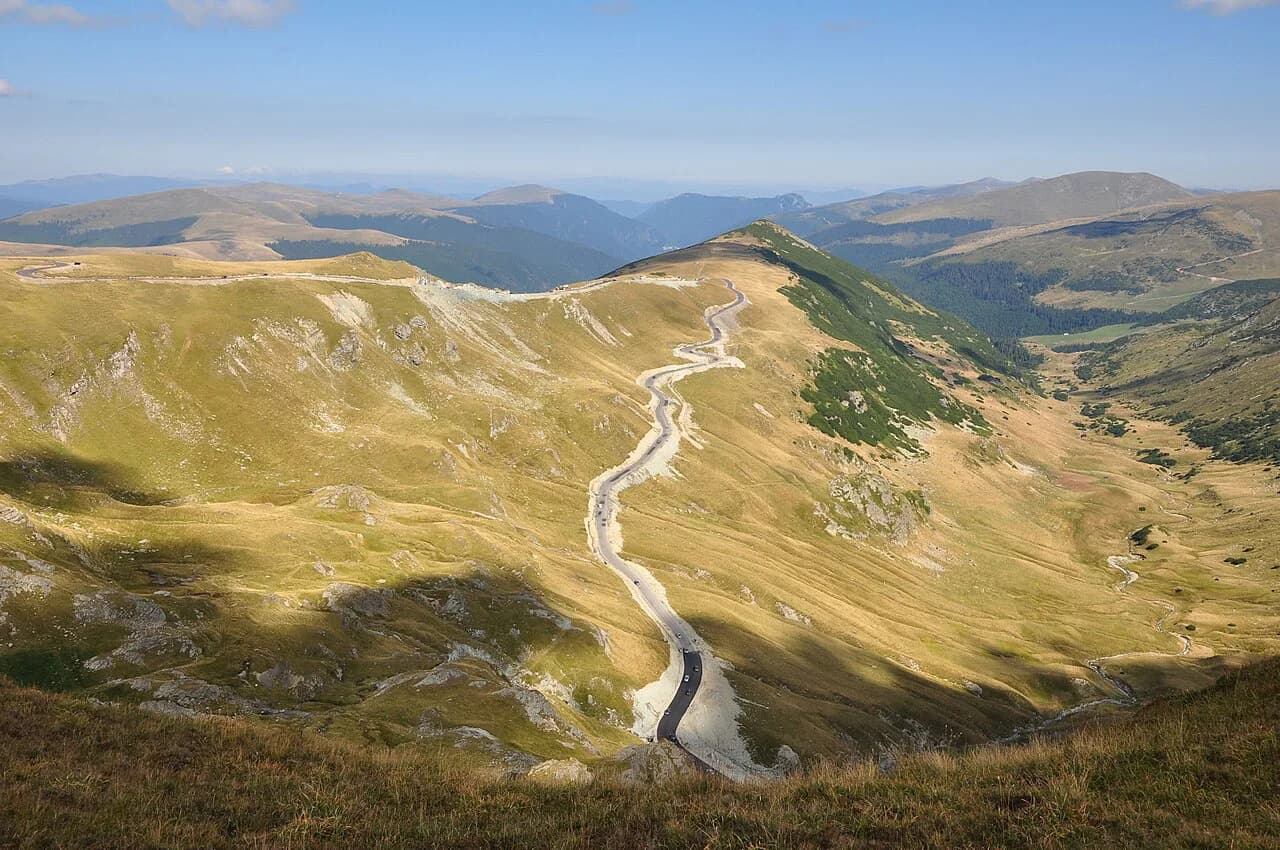
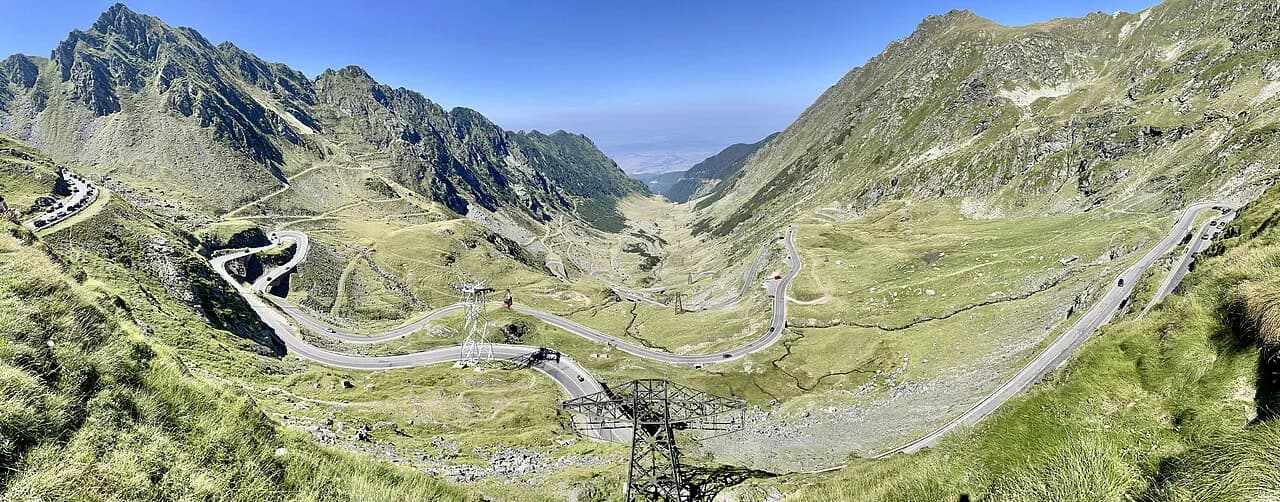
Above the dam the road becomes the Transfăgărășan, the DN7C, which climbs through the Făgăraș Mountains. It is generally open from July to October, depending on the weather, which is a general seasonal window rather than a promise for any given year. Plan the drive as a fair-weather add-on and give yourself an alternative day in town if the pass is closed.
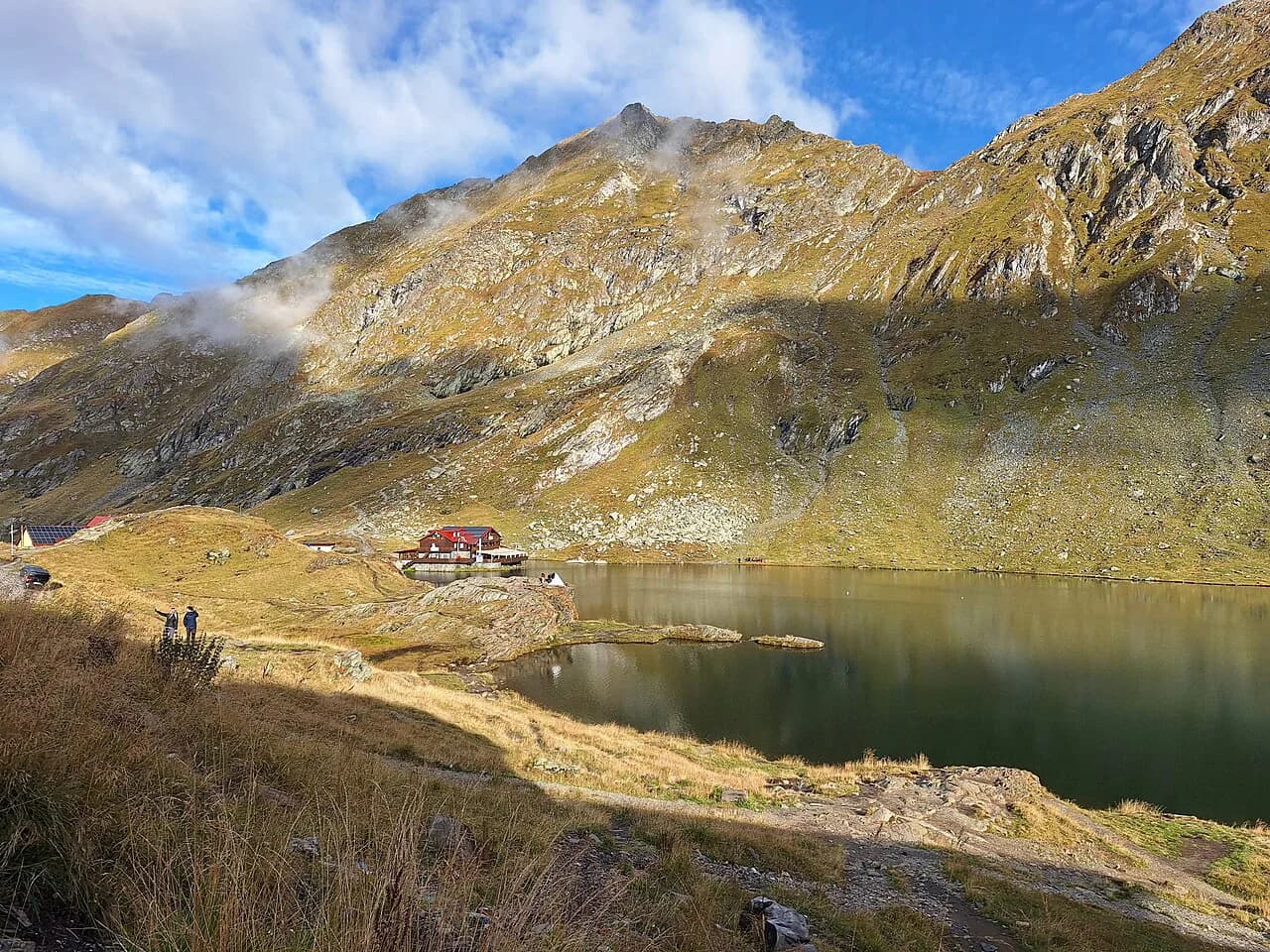
Higher up, the road passes Bâlea Lake, where a glacial lake sits among the peaks and the hairpins draw the photographers. This is the scenic high point of the drive and the reason many travellers come this way at all. If the lake is the goal, plan the day around it and work back down to Curtea de Argeș rather than the other way round.
Getting there and what to check
The town is reached by road, about 38 km from Pitești and within reach of Bucharest, and the DN7C runs through it. Coming from Bucharest by car is the simplest option; public transport to the town exists but the northern valley and Poenari really want a vehicle or an organised tour. Build in flexibility if your plan depends on the pass being open.
Currency in Curtea de Argeș is the Romanian leu (RON), and exchange rates vary between banks, so check the rate before you change money. Before a Transfăgărășan day, confirm the road's condition with a local source, since the general July to October window is not a schedule for any particular date.
Is Curtea de Argeș worth the stop?
Yes, if you are heading for the Transfăgărășan or moving between Bucharest and the mountain towns. The monastery and the Princely Court are two distinct stops within a short walk, and the smaller museums and ceramics collection fill the rest of an afternoon without padding.
Skip it if your only goal is the high road and you are short of time, because Poenari and Vidraru will eat the day on their own. Decide between a town-and-citadel day and a straight pass drive, and you will get more out of either.
Explore more Transfagarasan guides
Frequently Asked Questions
How long does Curtea de Argeș need?
Half a day covers the monastery, the Princely Court with St Nicholas Church and the Fountain of Master Manole at an unhurried pace. Add an hour if you want the monastery museum collection, the Municipal Museum or Casa Norocea. If you plan to continue to Poenari Citadel or Vidraru Dam, treat the town as a morning and the valley as the afternoon.
Can you visit Poenari Citadel without a car?
It is awkward. Poenari sits around 25 km north of town on the valley road, and the climb of close to 1,480 steps is the visit itself once you arrive. Without your own vehicle, an organised tour is the realistic option, and you should confirm pick-up points and what the day includes before booking.
Is the Transfăgărășan open in October?
It can be, but October sits at the edge of the general July to October window, and the road depends on weather conditions rather than a fixed calendar. Check the pass status before you set out, and keep a town-based alternative in reserve in case the high section is closed.
Do you need tickets for the monastery and Princely Court?
Entry arrangements for the monastery church, the Princely Court ruins and the small museums are not fixed information you can rely on from a distance. Ask at the site or through the town's tourist information on arrival, and carry lei in case a small entry fee applies at a museum or collection.
Sources
Useful notes for your next trip
Optional updates to our guides.
You might also like
Continue reading
More guides you'll find useful