Bâlea Lake: The Glacial Lake on the Transfăgărășan
Bâlea Lake sits at 2,034 m in the Făgăraș Mountains. Here is what waits at the top, how the cable car works and what the drive really demands.
On this page
Bâlea Lake is a glacial lake at 2,034 m in the Făgăraș Mountains, in Sibiu County, and it is the natural stop at the top of the Transfăgărășan drive. You can reach it by road or by cable car from Bâlea Cascadă, and the three parts of the trip — the pass, the cable car and the waterfall at the base — are separate decisions. This guide covers the lake itself, the chalet that marks it, the road up from the Sibiu side and the bear problem on the verges.
What Bâlea Lake is and where it sits
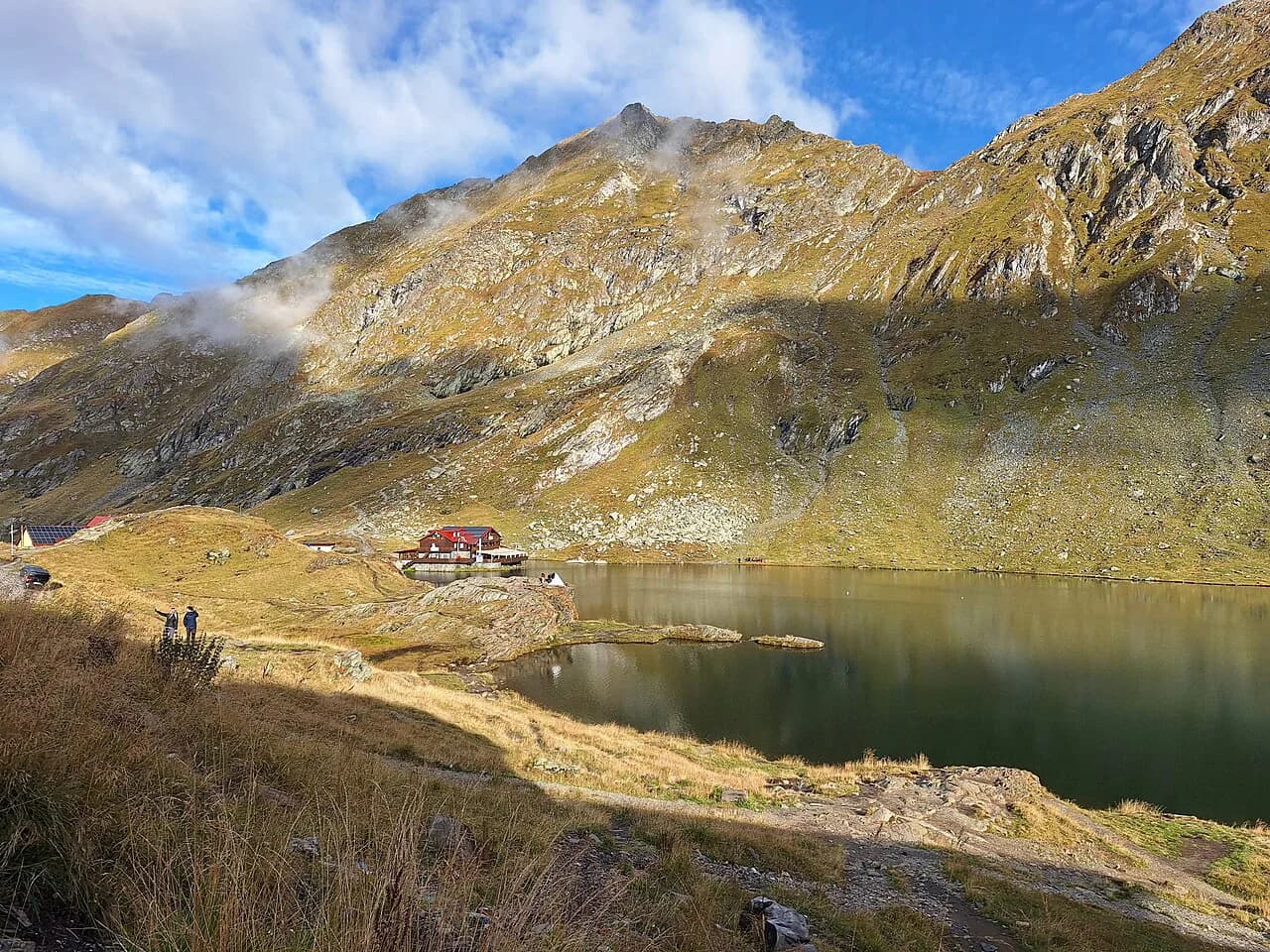
The lake lies in a glacial cirque at 2,034 m in the Făgăraș Mountains, in Sibiu County. It measures 360 m long and 12 m deep. Treat those figures as the fixed facts of the place: the altitude explains the cold and the persistence of snow, and the modest size explains why the lake feels like a single viewpoint rather than a walking destination in itself.
The lake sits in a hollow below the ridge, which is why snow can survive around its edges long after the road has been cleared. Snow was still lying around the water in mid-June on one recorded visit, and swimming in the lake is forbidden. Plan for cold air and wet ground even on a warm day lower down.
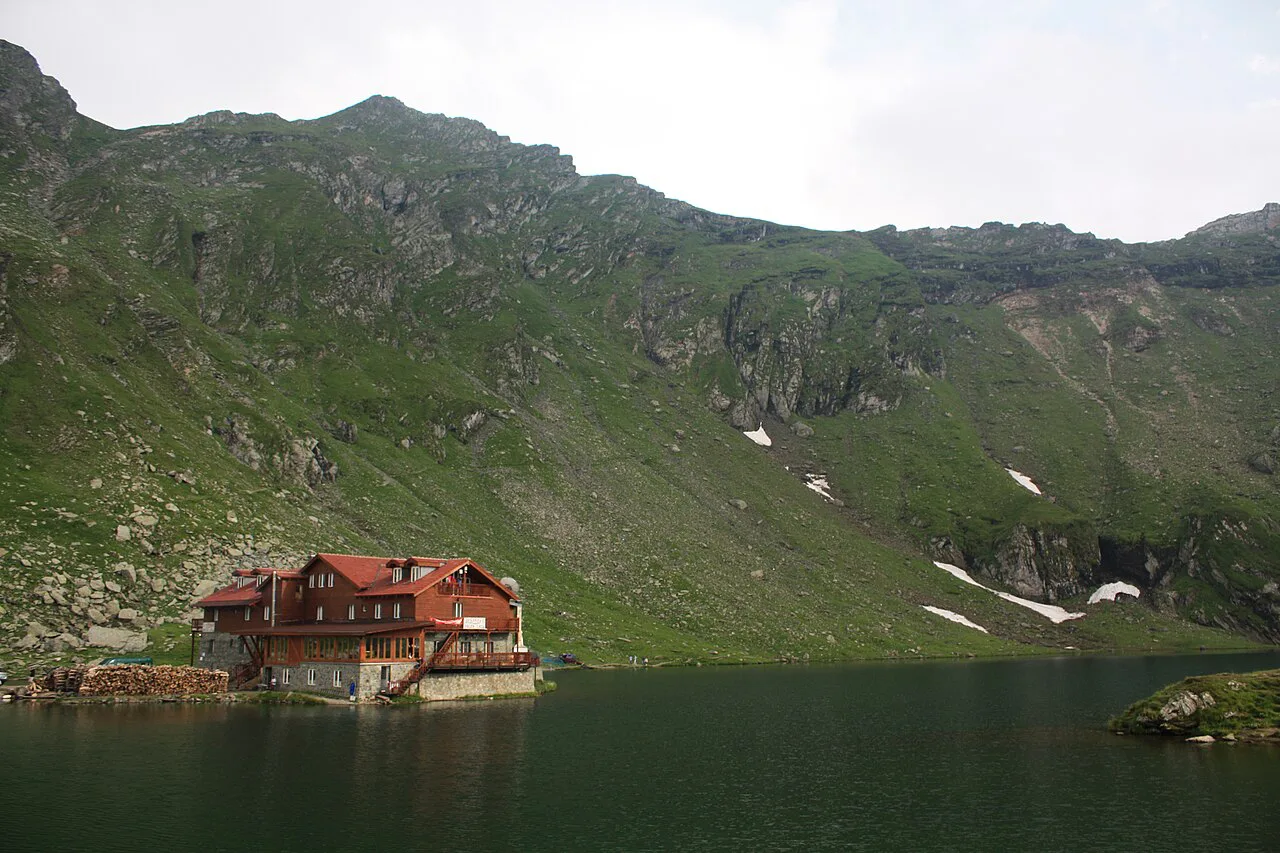
The lake itself: size, snow and the swimming rule
At 360 m long and 12 m deep, the lake can be walked around in a short time, so the visit is mostly about the setting rather than distance. The water sits in a bowl with steep ground above it, and patches of snow cling to the shaded side. Bring a warm layer and shoes that cope with slush; the ground beside the lake stays wet when the snow around it is melting.
The lake is not a swimming spot, whatever the weather encourages. Signs of people entering the water have been noted, but the rule is clear: swimming is forbidden. Keep that in mind if you are travelling with people who treat a mountain lake as a paddling pool.
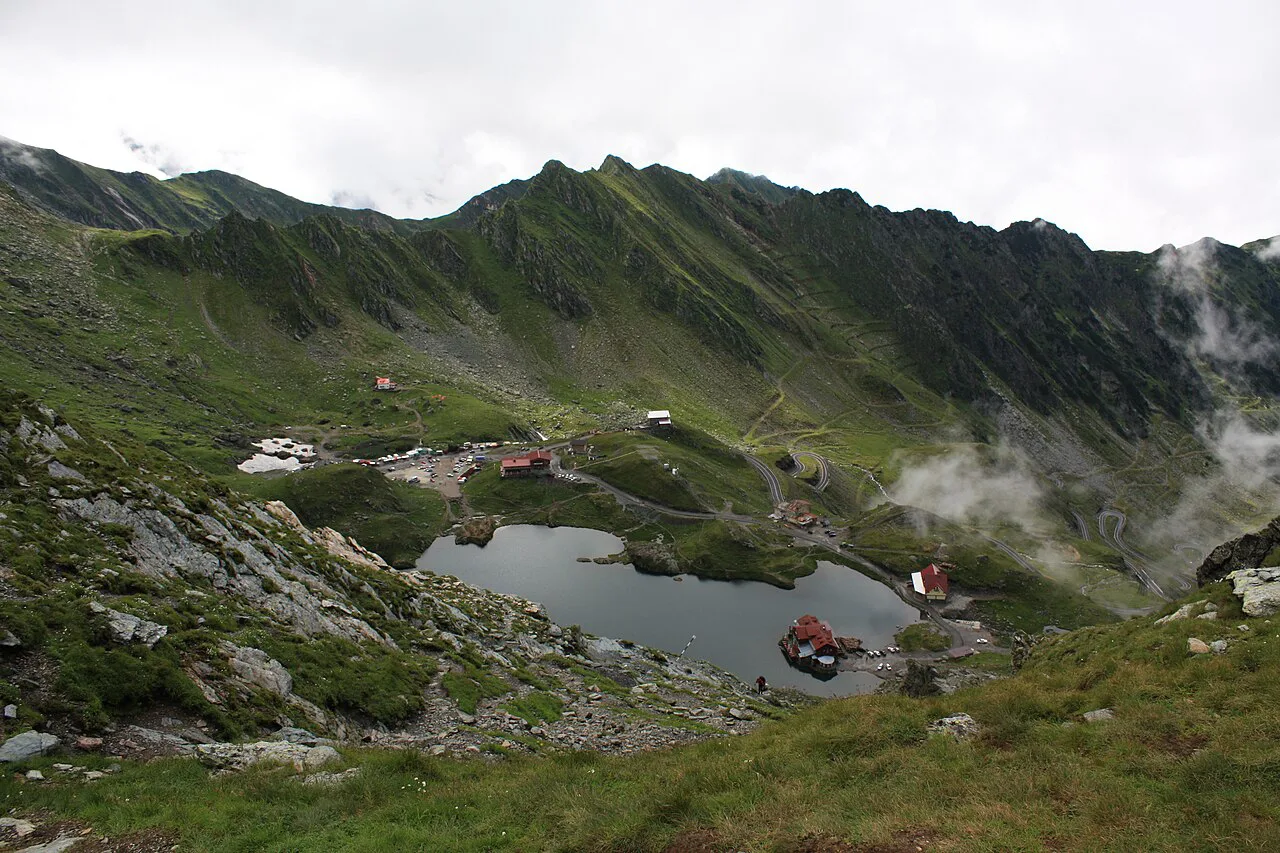
Bâlea Chalet as the landmark and pathhead
Bâlea Chalet stands beside the lake and is the reference point everyone uses for photographs, with the water and the building framed together. It also marks the start of paths into the Făgăraș Mountains, so it works as a meeting point and a place to orient yourself before following a route uphill. Treat it as a landmark rather than a base: the chalet is what you steer by, not where the trip is organised from.
The paths that begin near the chalet climb into high ground where conditions change quickly and where the season lags well behind the valleys. If you intend to walk beyond the lake, ask at the chalet about the route you have in mind and turn back if the ground is still snowbound. The lake is the easy part of the visit; everything above it asks more of you.
Getting there by car: the Transfăgărășan from the Sibiu side
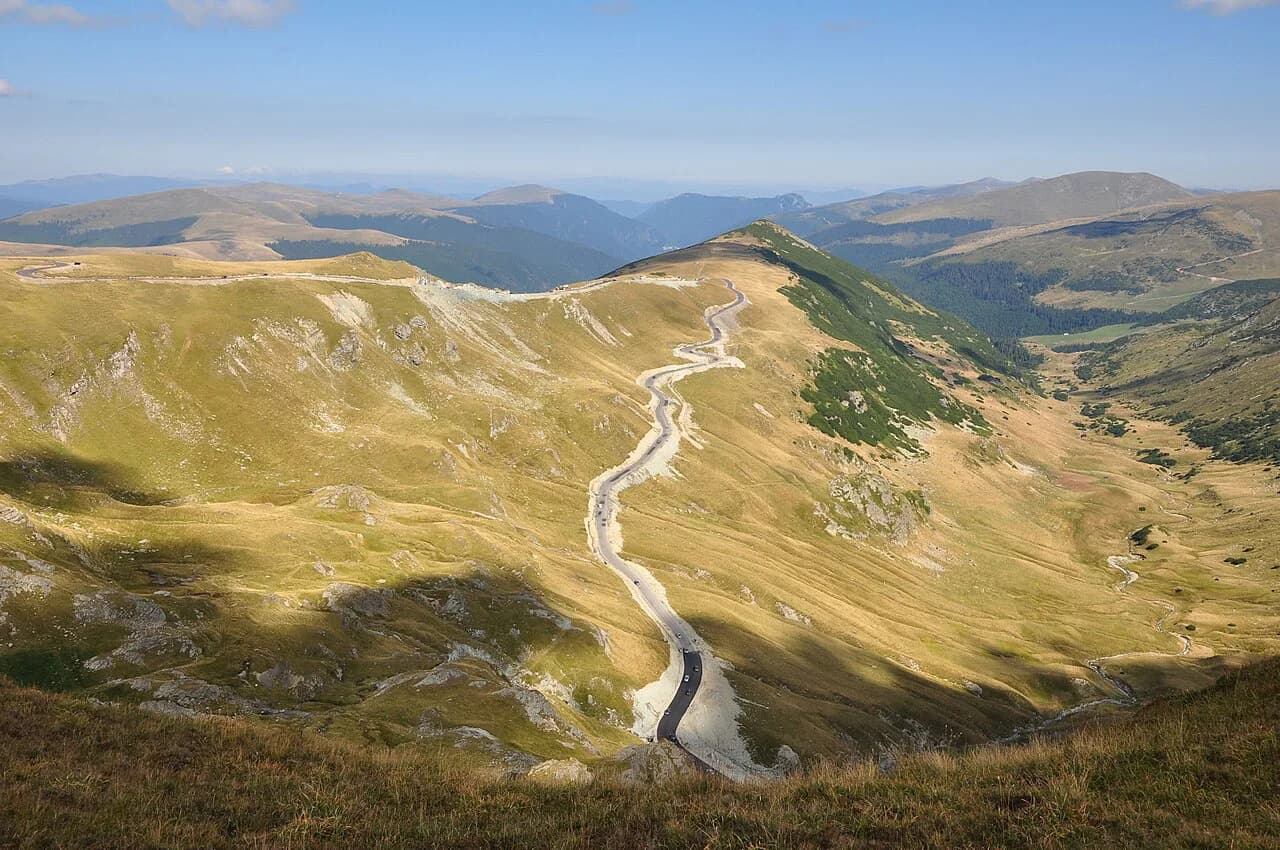
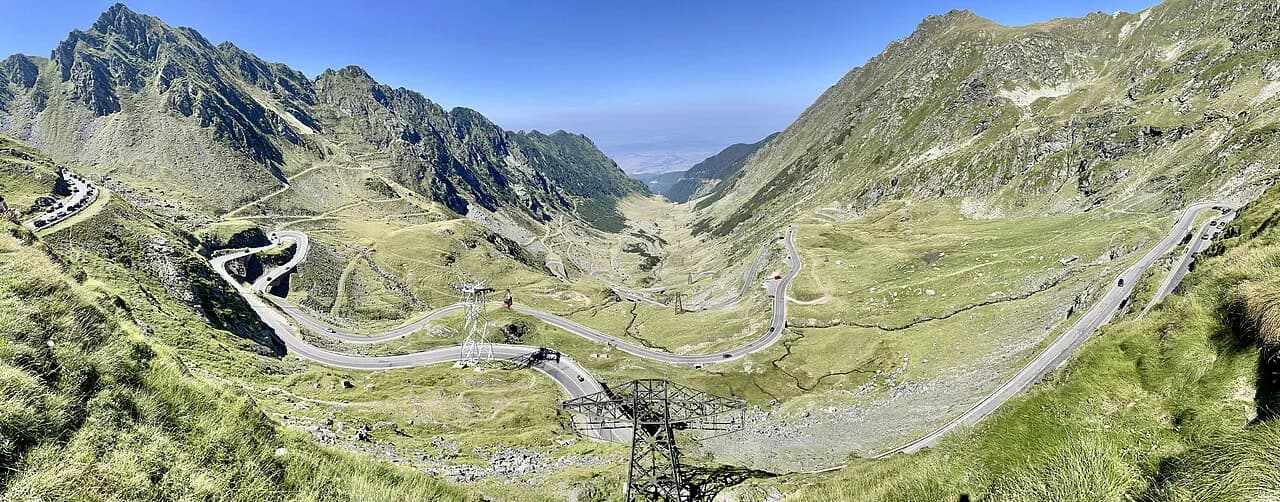
The Transfăgărășan runs 151 km and connects Sibiu and Argeș counties through the Făgăraș Mountains, with the lake near the high point on the northern side. Approaching from Sibiu means a long climb through forest and past the waterfall at the base before the road opens out above the tree line. Allow most of a day for the round trip rather than treating it as an hour's detour.
The road is heavily curved and climbs steadily, so progress is slower than the distance suggests. Petrol and food are best sorted before you start the ascent, and the car should be in good order for sustained braking on the way down. Check the pass opening arrangements before you commit to the drive.
Getting there without a car: the cable car from Bâlea Cascadă
The cable car from Bâlea Cascadă climbs to the lake and runs in both summer and winter, which makes it the way up when the road is buried. It passes above the road and gives views of waterfalls on the way, so it doubles as a sightseeing ride rather than only a transfer. If you are not confident on steep mountain roads, this is a reasonable choice, not a second-best one.
Arrive at the lower station with time to spare, since queues build when the road above is busy or closed. Fares, timetables and the operating calendar are set by the cable car company that runs the Bâlea Lake lift, so confirm them before travelling rather than relying on a plan made months earlier. The base is also where you park if you decide to ride up rather than drive.
Bâlea Waterfall at the base
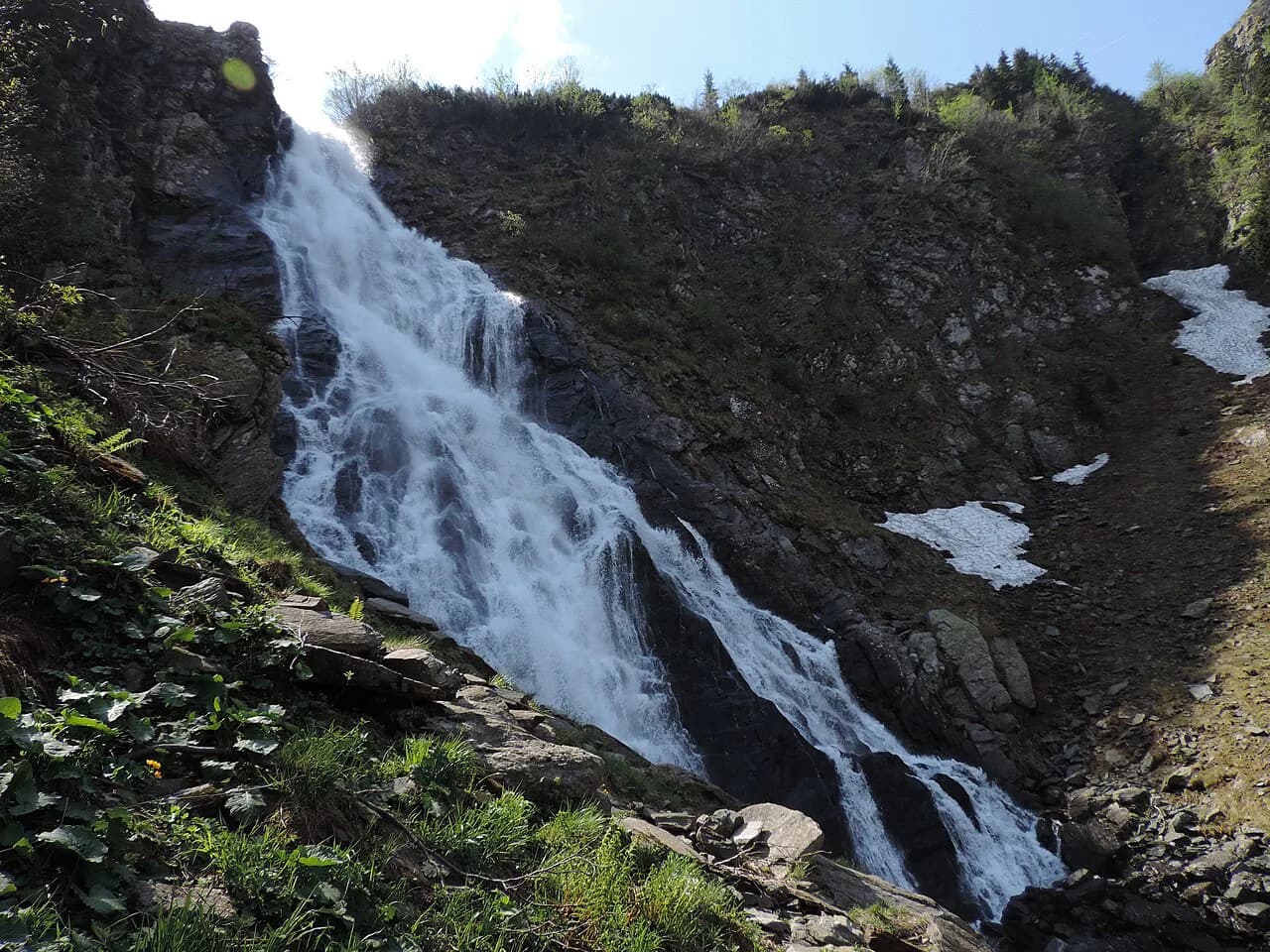
Below the cable car station, Bâlea Waterfall is a stepped fall near Cârțișoara that drops about 60 m, and it is a natural stop before the climb. Many visitors treat it as a quick photo pause on the way up, but it deserves more than a glance if you have the time.
The fall is the third decision of the trip: you can stop only here, park here and take the cable car up, or drive past it to the lake. If your day is tight, the waterfall plus the cable car gives you the lake without committing to the full road. If you are driving the whole pass, keep the stop short and save your time for the top.
Driving the road: curves, waterfalls and rhododendron
The drive is the attraction, and the driver sees least of it. Curves demand attention, waterfalls appear beside the road and unnamed ones show up after rain, and rhododendron flowers on the slopes in season. Being the person at the wheel means missing much of what the passengers are photographing, which is the honest trade-off of driving the pass yourself.
If you want the views more than the driving, take the cable car up and let someone else handle the road, or share the wheel so both directions get a passenger's seat. The scenery rewards whoever is looking rather than steering. Driving the pass is not compulsory to see the lake.
Bears and roadside behaviour
Bears appear at the roadside on the Transfăgărășan, drawn by food from passing cars, and warning panels ask drivers not to feed them and to keep their distance. People still stop to photograph themselves close to the animals, which puts both the people and the bears at risk. A fed bear becomes a dangerous bear, and that ends badly for it.
Stay in the car when a bear is near the road, keep the windows up and do not stop in the carriageway to take a picture. Food stays in the boot, not in your hand out of the window. This is the single behaviour that most changes whether the pass is safe for wildlife and for the next visitor.
When snow closes the road, and what that means for planning
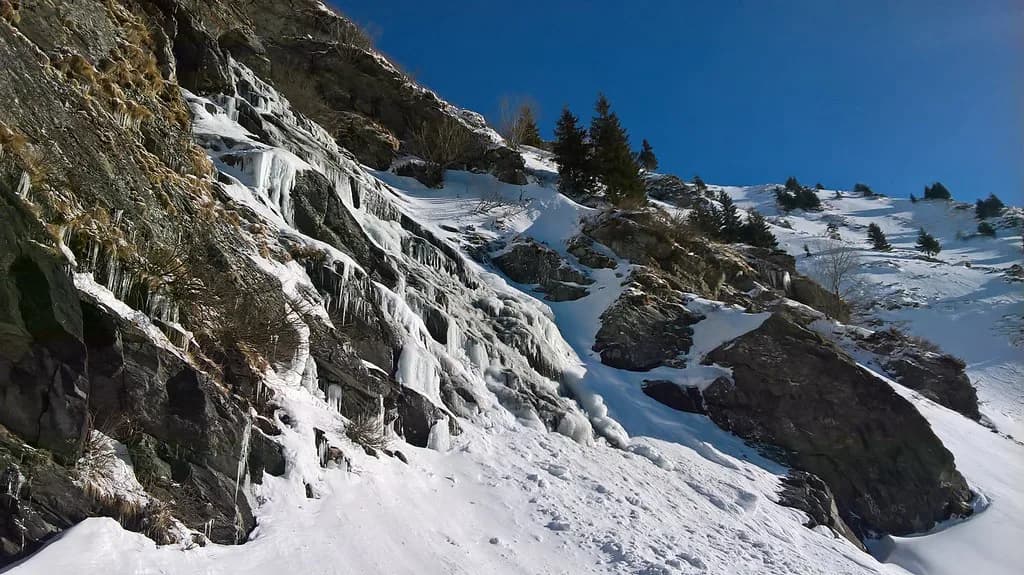
Snow closes the high section of the Transfăgărășan for part of the year, and snow walls can stand metres high along the cleared road. During those months the cable car from Bâlea Cascadă is the way to reach the lake. The calendar of closures is not fixed from year to year, so check before you set out.
Even in summer, the altitude keeps the lake cold and the snow slow to melt, so a June visit can still mean snow underfoot. Build the day around the cable car rather than the drive if you are visiting outside the warmest weeks. Winter tyres and a car suited to mountain roads are the minimum if you drive the lower section in cold weather.
Which way up to Bâlea Lake?
For most visitors, the cable car from Bâlea Cascadă is the sensible way to see the lake, with the waterfall as an added stop at the base. Drive the Transfăgărășan if the road itself is the point and you have a confident driver willing to miss some of the view. Either way, the lake, the chalet and the snow around them are the same reward at the top.
If you are driving on towards the south side, the road continues past Lake Vidraru, which makes a natural second stop on a longer day. The Transalpina is an alternative mountain pass rather than a substitute for this one, so pick your road by the day you have rather than by reputation.
Explore more Transfagarasan guides
Frequently Asked Questions
Can you swim in Bâlea Lake?
No. Swimming in the lake is forbidden, even though visitors have been seen entering the water. Treat it as a viewpoint and a walk rather than a place for a dip.
Is Bâlea Lake worth visiting if you cannot drive the Transfăgărășan?
Yes. The cable car from Bâlea Cascadă runs in summer and winter and takes you up to the lake without the drive. Check current fares and timetables before you go.
How cold is it at Bâlea Lake in summer?
The lake sits at 2,034 m, high enough that snow can still lie around the shore in June. Bring a warm layer and shoes that handle wet, slushy ground, whatever the forecast lower down says.
Sources
Useful notes for your next trip
Optional updates to our guides.
You might also like
Continue reading
More guides you'll find useful