
Copou Park (Parcul Copou), Iași: A Visitor's Guide

Copou Park (Parcul Copou, also called Grădina Copou) is worth an hour of any Iași trip: two named sights inside it give the walk a purpose — Eminescu's lime-tree and the Obelisk of the Lions. The park sits on Copoul hill above the university quarter, so reaching it is a short climb from the centre rather than a tram ride to the edge of town.
This guide covers where the park is, the uphill route from the centre, the two monuments, and how to pair it with the Botanical Gardens further up the hill. It also gives a time budget, and our Iasi Attractions: 11 Visitor Guides covers the ticketed sights you can pair with it.
Where Copou Park sits on Copoul hill
Copou Park occupies the Copou hill, above the Alexandru Ioan Cuza University and the streets of the old centre. The park was laid out from 1834 under Mihail Sturdza, and it is described as the oldest public park in Iași — a claim that applies to the city, not to Romania as a whole. Treat that date as history rather than something you will see on a plaque at the gate.
Because the park is a public garden rather than a walled attraction, it has no single front door or ticket office to aim for. Think of it as a green rectangle on the hill with paths running through it, and pick the entrance that suits the rest of your day: the side nearest the university if you are walking up from the centre, or the upper side if you are combining it with the Botanical Gardens.

Getting there from the centre, and why the climb is part of the visit
The practical route is on foot from the university quarter: the campus, the Mihai Eminescu Central University Library and the National Theatre sit at the foot of the hill, and the park begins above them. Walking up means you arrive at the lower paths first and can work upwards through the park, which is the natural way to see it. Pack for a gradient rather than a long hike — this is a city hill, not a trail.
Iași is served by plane and train, and the central sights sit close enough together that most visitors cover the centre on foot. If you are coming from further out, or the climb on a hot afternoon does not appeal, take a taxi or a ride-hailing car to the upper edge of the park and walk downhill through it instead; you see the same monuments in reverse. Bus and tram routes change, so pick up a current network map locally before setting out rather than working from an old one.

Admission and opening
Copou Park is a public garden rather than a ticketed attraction, so there is no ticket desk and no queue to plan around. That makes it an easy stop to slot between paid attractions such as the Palace of Culture and the Metropolitan Cathedral, both a short way back down the hill.
As a public garden, the park is open as a thoroughfare through the day rather than on a ticketed schedule, and the monuments are outdoors and visible at any hour you are likely to be walking. The two museums inside the park set their own hours, so check them directly before building a visit around them, particularly at weekends and on public holidays.
Eminescu's lime-tree and the poet's bust
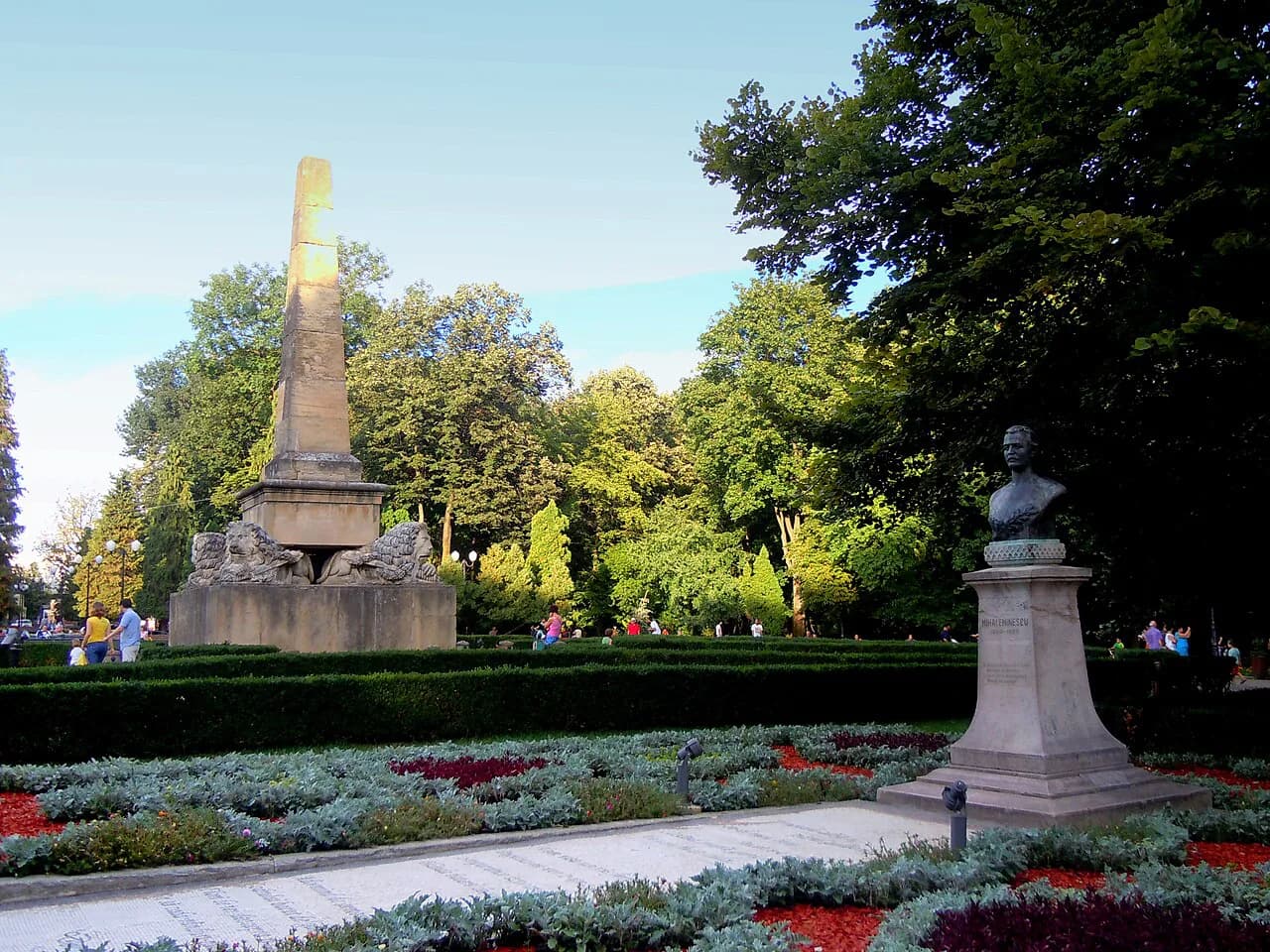
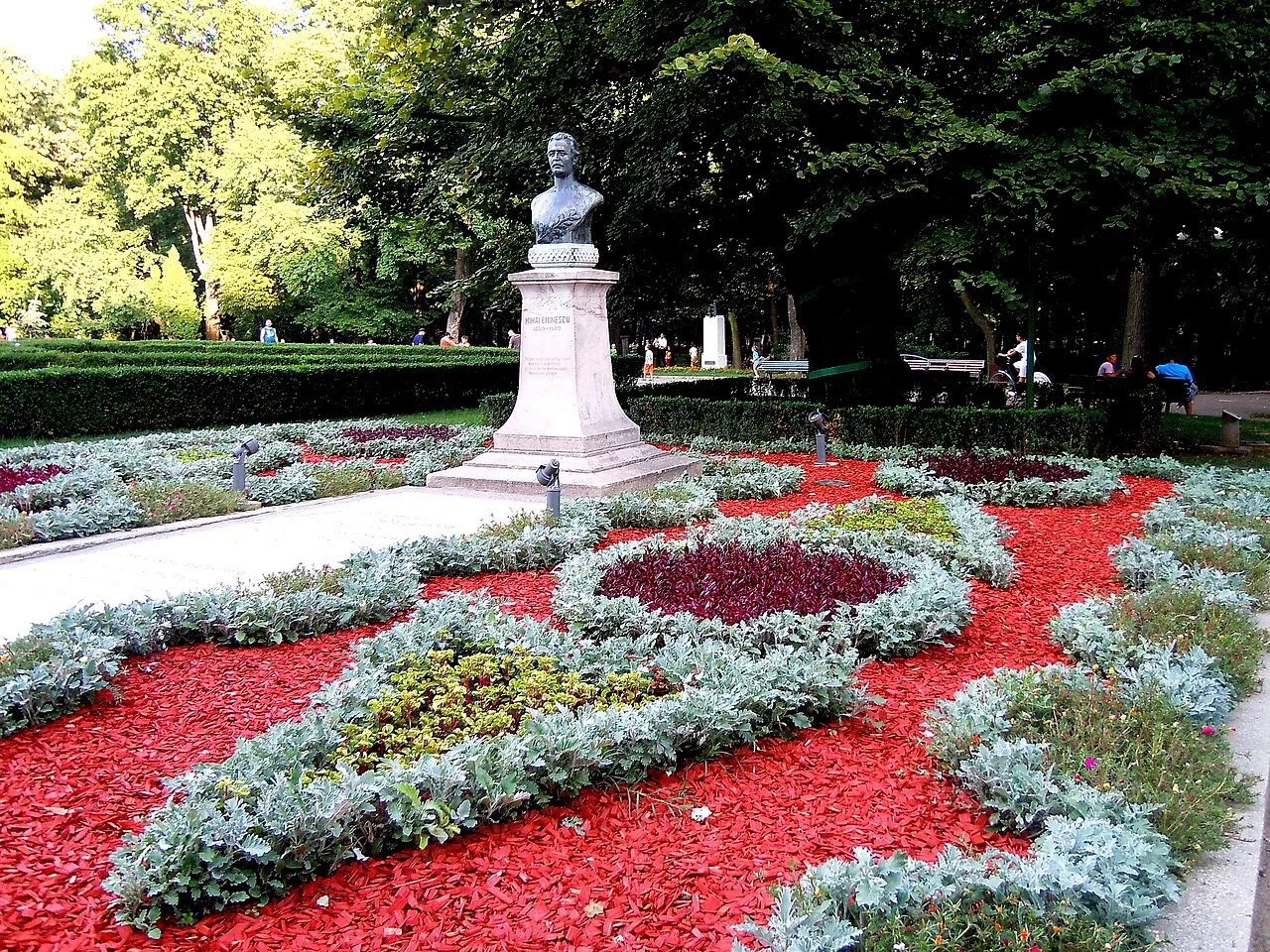
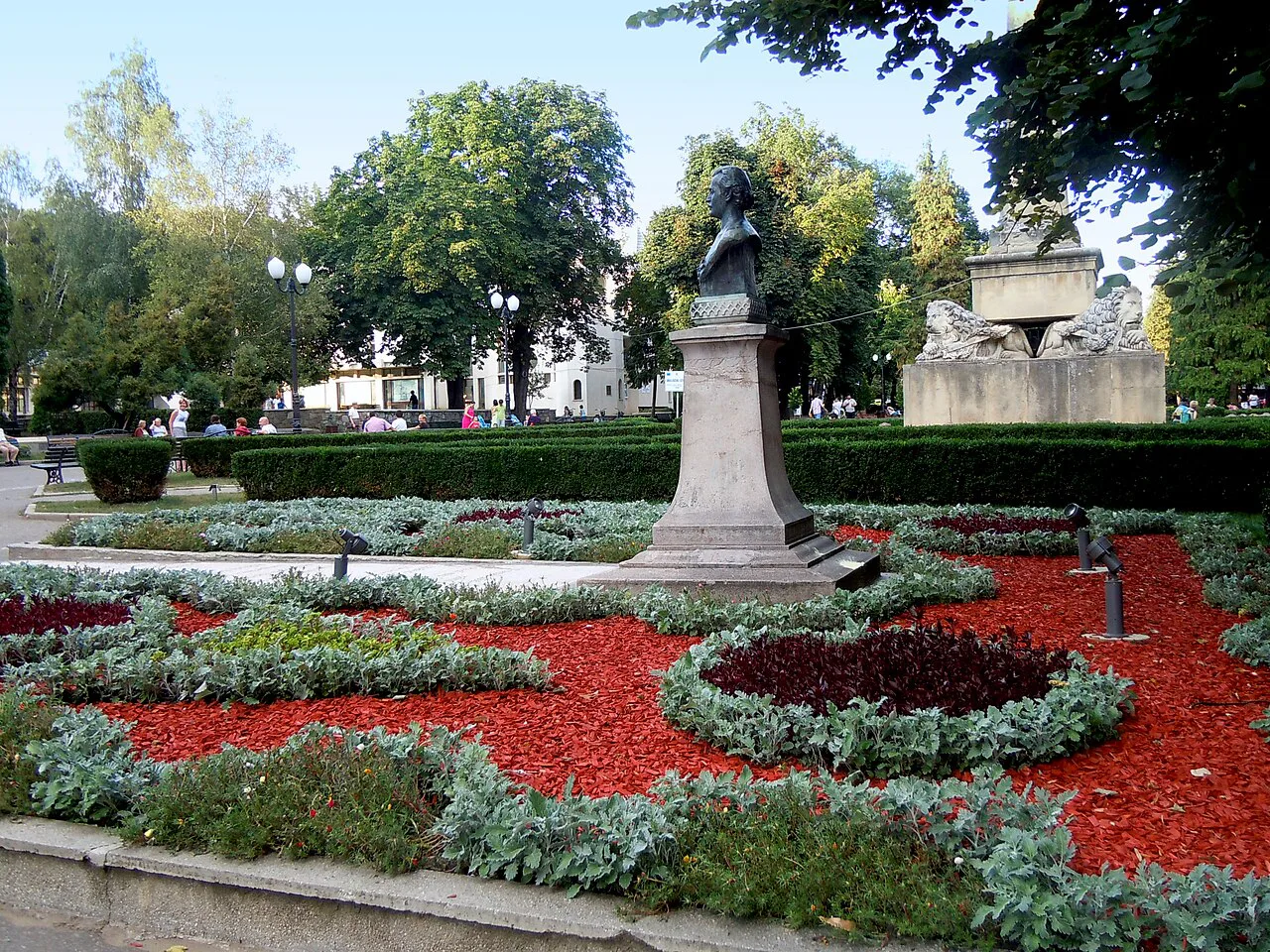
Teiul lui Eminescu, the lime-tree associated with the poet Mihai Eminescu, stands in Copou Park with a bust of the poet in front of it. The tree you see is a successor rather than the original: the park's lime-tree is described as a successor of the Copou forest, and when the old trunk was broken by storm and lightning a concrete support was placed inside it, after which roots grew down from the branches into the ground.
That framing matters for what you are looking at: this is a living memorial with a documented history of damage and regrowth, not an ancient tree that has stood untouched since the poet's lifetime. Read the bust and the tree together as one stop, then carry on along the path rather than circling for a second viewpoint.
The Obelisk of the Lions
Near Eminescu's lime-tree stands the Obelisk of the Lions (Obeliscul Leilor), also known as the Constitutional Laws Monument. It was built by Mihail Sigurov in 1834 after a design by Gheorghe Asachi, and takes the form of a fifteen-metre stone column resting on the backs of four lions, which stand for the four European powers that accepted the independence of the Romanian lands.
It is the one piece of sculpture in the park with a clear political reading, so it rewards a minute of looking rather than a photograph on the move. The lions and the column are the detail to look for; the inscription is the part most visitors walk past.
Other stops in and around the park
Two further stops sit in the park itself: the Mihai Eminescu Museum, which opened in 1990, and the Mihai Ursache City House of Culture. Both are building-based attractions with their own opening arrangements, so treat them as optional add-ons and check their hours before you go, since they do not necessarily follow the park's own schedule.
Down the hill, the university building is worth a look from the street for its Baroque and Classical façade, built between 1893 and 1897, with the Hall of the Lost Steps inside. The Palace of Culture holds four museums under one roof if you want an indoor afternoon after a morning outdoors.
Copou Park with the Botanical Gardens
The Botanical Gardens lie a few miles north of the centre in the leafy Copou neighbourhood, so the park and the gardens can be done in one outing. Do the park first: it needs less time, its monuments are the point, and you can then give the rest of your morning to the gardens without watching the clock.
The gardens opened in 1856 and spread over 80 hectares, with rose beds, greenhouses, orchids and carnivorous tropical species, so they take far longer than the park. If you only have an hour, keep to Copou Park; if you have a half-day, make the gardens the larger share.
How long to allow, and when it is quietest
Budget about an hour for Copou Park itself: ten minutes to walk up, twenty to thirty minutes for the lime-tree, the obelisk and a loop of the paths, and the rest for the Eminescu Museum if it is open. Add two hours if you are continuing to the Botanical Gardens, which is where the time goes.
The park is a public garden in a university city, so it is liveliest when students and families are out and quietest early in the morning. Mid-October brings the city's annual festival and the pilgrimage at Saint Parascheva's relics, when visitors come from across the country and abroad, so expect the centre to be busier then.
Is Copou Park worth the climb?
Yes, if you treat it as an hour's walk with two specific things to see rather than a destination in itself. The short climb from the university makes it an easy addition to a day built around the Palace of Culture, the Metropolitan Cathedral and the churches of the centre.
Skip it if your time in Iași is down to a single afternoon and you have not yet seen the museums, or if the weather has turned — the park's appeal is almost entirely outdoors. Otherwise go early, see the lime-tree and the obelisk while the paths are quiet, then decide on the spot whether the Botanical Gardens are worth the extra walk.
Explore more Iasi guides
Frequently Asked Questions
Is Copou Park free to enter?
Copou Park is a public garden with no ticket desk, and the monuments are outdoors, so a visit is a walk rather than a ticketed event. The Mihai Eminescu Museum and the Mihai Ursache City House of Culture inside the park are separate institutions, so check their own opening arrangements before planning around them.
Can you walk to Copou Park from central Iași?
Yes. The park sits on Copoul hill directly above the Alexandru Ioan Cuza University and the National Theatre, so the walk up from the university quarter is the natural approach. It is a city gradient rather than a hike, and walking up lets you work through the park from its lower paths.
Is there parking at Copou Park?
Parking is not covered by the sources for this guide, so check locally or ask your accommodation before driving up. The alternative is to be dropped at the upper edge of the park and walk downhill through it, which avoids hunting for a space on the hill.