
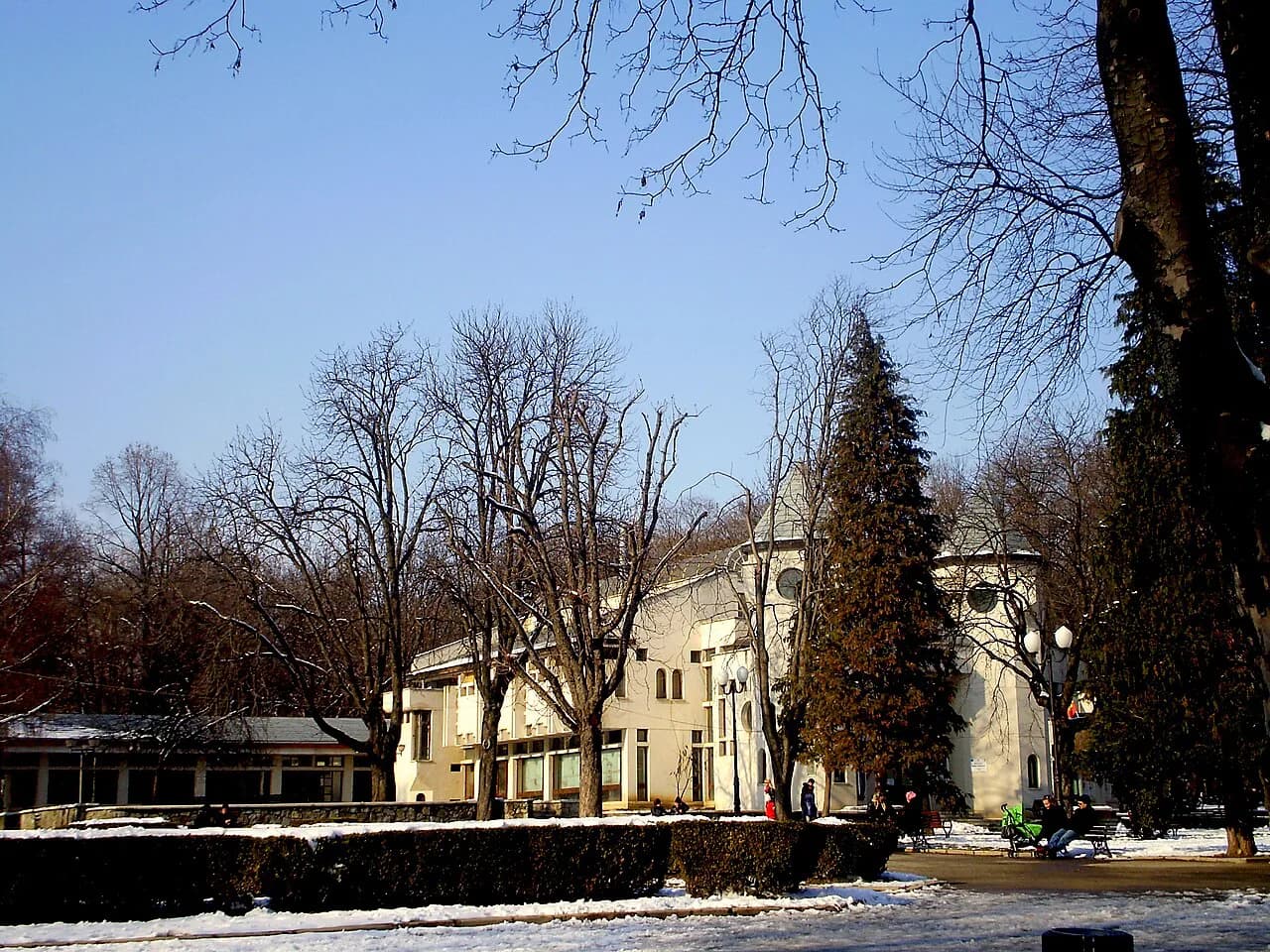
Muzeul Mihai Eminescu, Iași: What to See Inside Copou Park

The Mihai Eminescu Museum is a compact museum devoted to the poet and set inside Copou Park in Iași, and it needs roughly half an hour of your time. It stands a few steps from the tree known as Teiul lui Eminescu, the linden associated with the poet, so a visit to the museum and the tree belongs together. This guide covers where the building sits, how to reach it on the Copou hill, what the displays actually contain and how to fold it into a walk through the park.
Plan the museum as a park visit rather than a standalone excursion. The house sits among the park's better-known features, and the walk between them is short enough to do on foot.
Where the museum stands in Copou Park
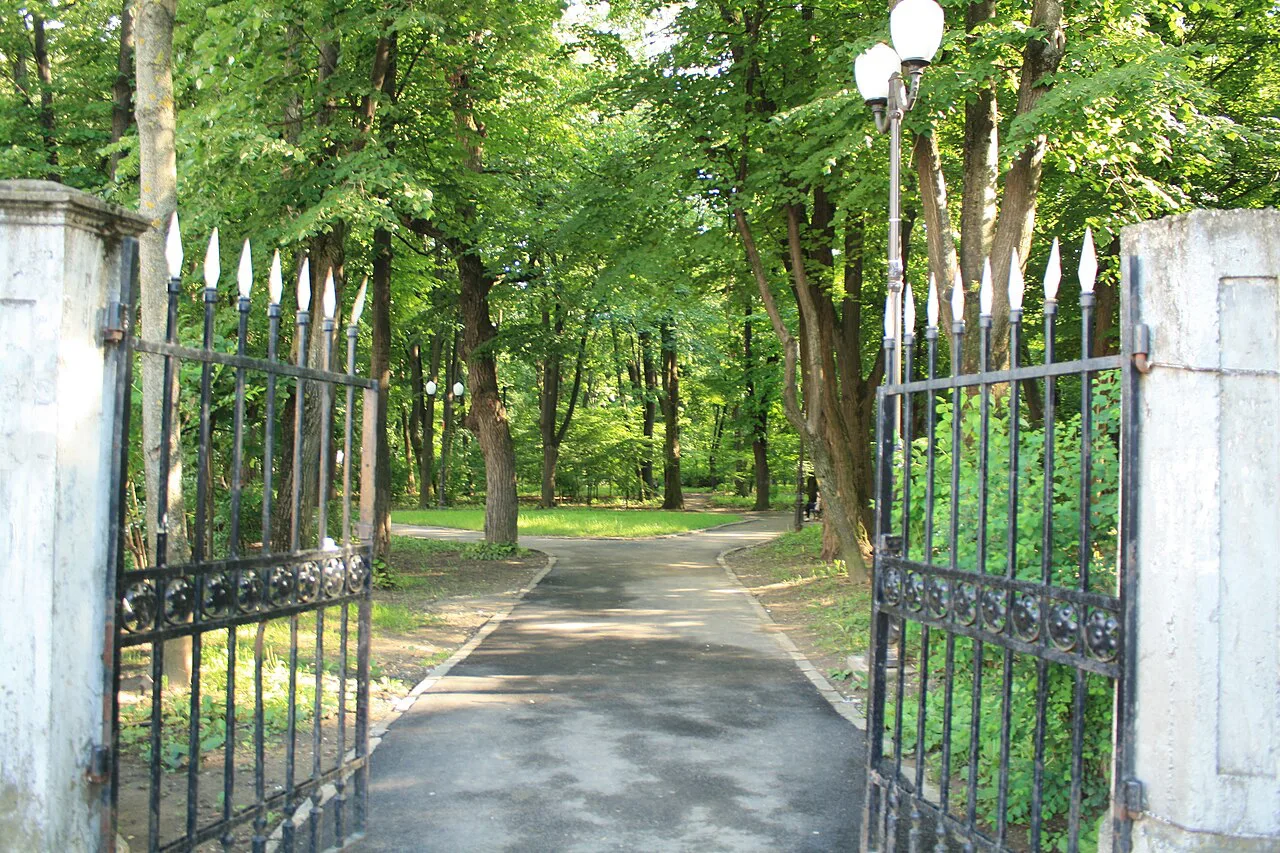
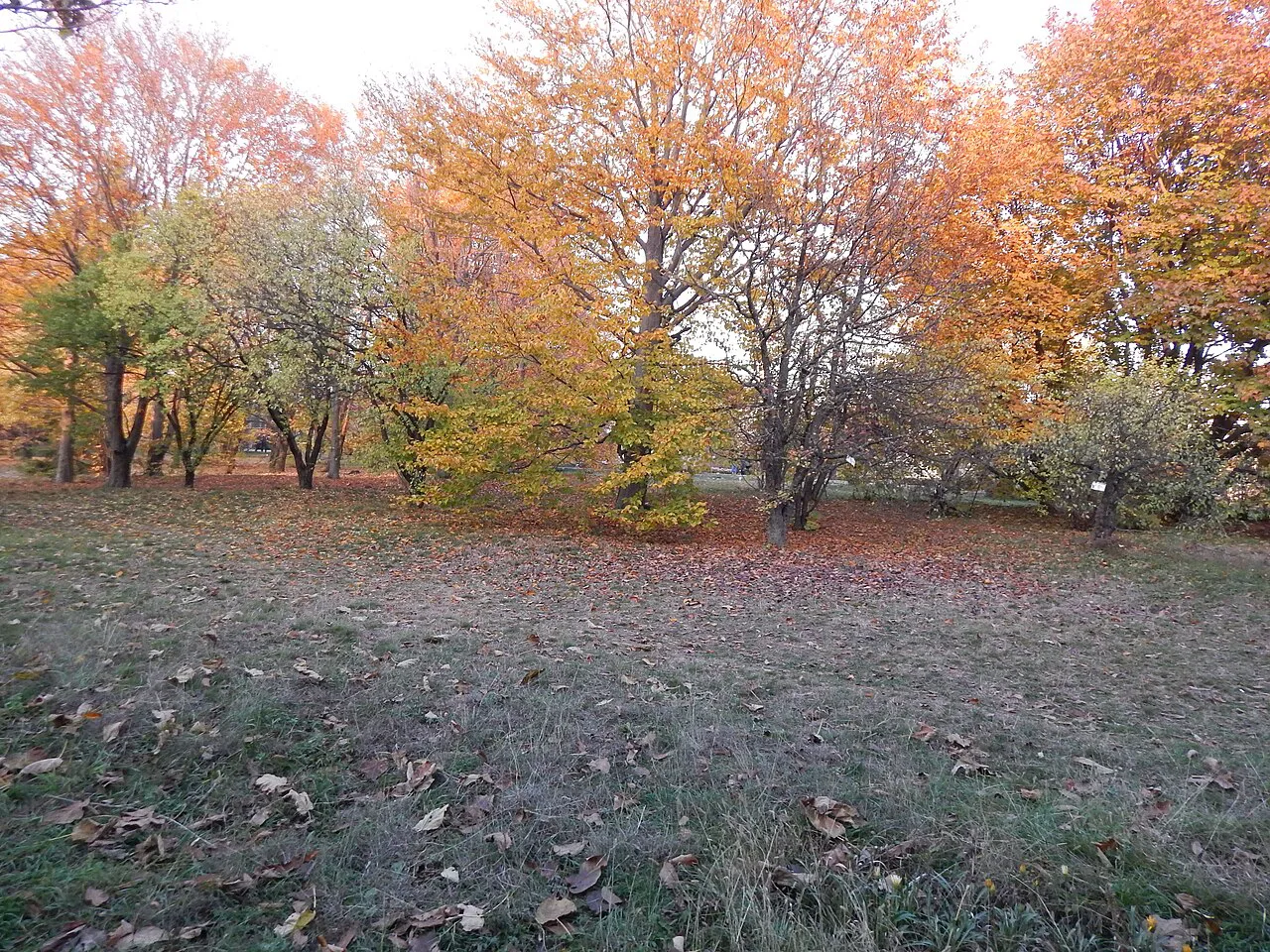
Parcul Copou occupies the hill of the same name and covers about ten hectares, with tree cover of linden, maple and ash. Its five entrances all lead into a park whose centre holds three of Iași's best-known sights: Teiul lui Eminescu, Obeliscul cu Lei and the Mihai Eminescu Museum. That central grouping is what makes the museum easy to slot into a park walk.
The plot began to be laid out in 1833–1834 under Prince Mihail Sturza as a relaxation ground for the boyars of Moldavia, with an oriental-style summer house built for rest and for festive brass bands. The museum building comes much later, opened on 15 June 1989 for the centenary of the poet's death. Treat the park as the setting and the museum as one room-sized stop within it, not as a separate destination across town.

How to reach it: Bulevardul Carol I and the Copou hill
The museum stands on Copou hill within Copou Park, and one location listing places it at Casa de Cultură Mihai Ursachi, Bulevardul Carol I, Copou. That is the reference to give a taxi driver or to enter into a maps app.
Because the park has five entrances, the sensible approach is to come up Bulevardul Carol I and aim for the centre, where the museum, the linden and the obelisk stand close together. Allow a gentle uphill walk from the lower city rather than a flat stroll.

Opening days and hours
The museum programme gives Tuesday to Sunday, 10:00 to 17:00. That leaves Monday out, so build the Copou Park day around a Tuesday-to-Sunday slot or move the museum to another day of the trip.
No ticket price or booking rule appears in the museum's published programme, so budget for an entry fee at the desk and check the tariff when you arrive rather than online in advance. The house is small, so give the displays unhurried attention.
What to see inside: Destinul, Arta and Prietenia
The exhibition is organised on three strands: Destinul (Destiny), Arta (Art) and Prietenia (Friendship). Expect collections of books and fine art rather than a chronological wall of dates. The label names alone tell you what to look for: the poet's life course, the visual art he inspired and the friendships that shaped his work.
The displays lean on poems and love letters, and the museum documents his attachment to the poet Veronica Micle alongside his writing. Read the letters as the core of the visit rather than skimming toward the exit. The interior photographs of the museum give a sense of the scale before you go.

The building: Virgiliu Onofrei's design and the Putna towers
The building was designed to Virgiliu Onofrei's sketches to echo the scale of Eminescu's life and work. The two towers flanking the entrance take their form from Mănăstirea Putna, specifically its entrance tower and its treasury tower, where the poet stayed overnight in August 1871 during the national celebrations at Putna. Look up at the facade before you go in, because the symbolism is easy to miss at eye level.
The two towers carry a second layer: one stands for Love, meaning Veronica Micle, and the other for Friendship, meaning Ion Creangă. Once you know that, the entrance reads as a statement about the two relationships at the centre of the Destinul and Prietenia sections. Pair the outside look with the displays to make sense of the layout.
Teiul lui Eminescu and the bronze bust
The linden known as Teiul lui Eminescu stands in front of the museum and is described as more than 460 years old. The poet, who lived from 1850 to 1889, often stopped here, sometimes with Veronica Micle or with his friend Ion Creangă. Give the tree a few minutes rather than photographing it from the path and moving on.
In front of the linden you will find the bronze bust of the poet by the sculptor Ion Mateescu, a professor at the Academy of Fine Arts in Iași. The tree and bust together form the small cluster most visitors come for, and the museum entrance sits just beside them. Read the bust and the tree as one stop, then turn to the museum door.
Nearby in the park: Obeliscul cu Lei and Aleea Junimii
Obeliscul cu Lei, the Lions' Obelisk, was built in 1834 as the park's central monument and is also called the Monument of the Organic Regulation, celebrating the quasi-constitutional law promulgated in 1831–1832 in Moldavia and Wallachia. Several engineers worked on it: Johann Freywald, who also designed the Metropolitan Cathedral, the Russian engineer Mihail Singurov, and finally Gheorghe Asachi, who completed it. It is cut from stone blocks from Șcheia near Iași.
The park is lined with busts of the figures who shaped Iași's cultural life. The Junimea group, including Mihai Eminescu, Ion Creangă, Veronica Micle, Costache Negruzzi and Nicolae Gane, is grouped on Aleea Junimii, while Barbu Ștefănescu Delavrancea, Ion Luca Caragiale, Ciprian Porumbescu, Octav Băncilă and Grigore Vieru stand on other paths. Walk Aleea Junimii on the way out rather than treating the busts as a separate outing.
If the park leaves you wanting more of the city's literary collections, the Muzeul Literaturii Române Iași is the natural next stop; keep it for a different day so this Copou visit stays short.
The rest of the city's sights are mapped out in our guide to Iasi Attractions, which is worth skimming before you fix the order of your days.
How long to allow and how it pairs with the park
Budget about half an hour inside the museum and an hour to ninety minutes for the park circuit that takes in the linden, the bust, the obelisk and Aleea Junimii. That is enough for a half-day on Copou hill without rushing. Push the park time longer only if you plan to sit, since the benches and the linden shade are the point of the place.
The park also hosts cultural events, and the Târgul Național de ceramică „Cucuteni 5000” takes place annually on the last weekend of June. Along the wall by the main entrance there is a gallery for artists and photographers called „La Gard”. If you are in Iași in late June, check the fair dates with the organisers before planning around them.
Beyond the park, the city's headline sights sit lower down, and the Palace of Culture (Palatul Culturii), Iași makes a sensible counterpart on another day. Keep Copou for the Eminescu morning and leave the civic centre for a separate stretch.
Is the museum worth the Copou climb?
Yes, if you are already walking the park: the museum, the linden, the bust and the obelisk form a tight cluster that justifies the uphill walk from the centre. Go on a Tuesday-to-Sunday and give it a morning rather than an afternoon squeezed against another sight.
Check the museum's current opening days and entry fee before you set out, then plan the rest of the Copou hill around that slot. The park rewards a slow pace more than a checklist.