
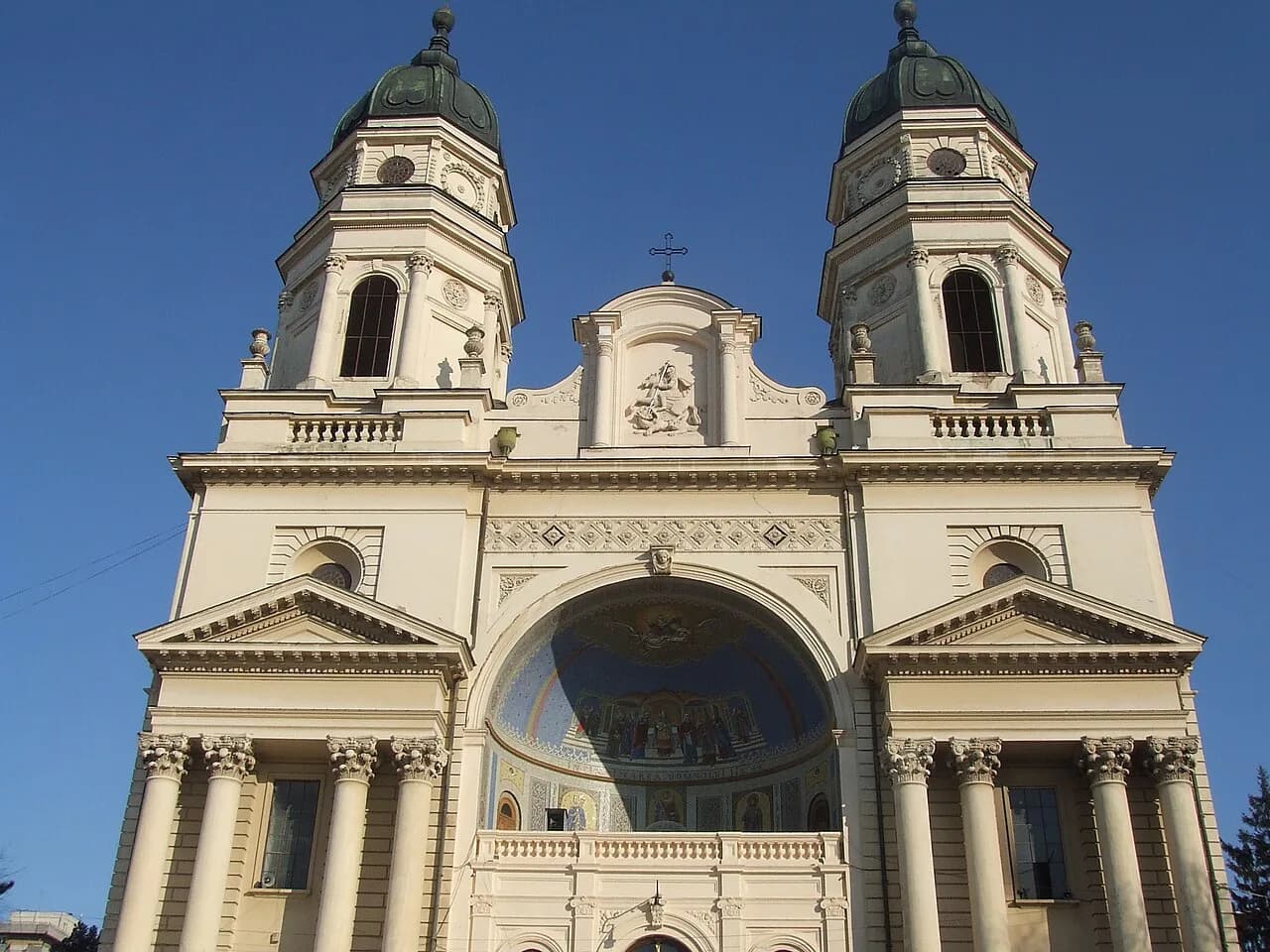
Metropolitan Cathedral (Catedrala Mitropolitană), Iași: What to See and How Long to Allow

The Metropolitan Cathedral (Catedrala Mitropolitană) is the building most visitors mean when they say they are going to the cathedral in Iași: a 19th-century church on Bulevardul Ștefan cel Mare și Sfânt, surrounded by the other buildings of the Metropolitan Complex. Allow around an hour to see the cathedral interior and the older St George's Church a few steps away. This guide covers where the cathedral stands, what to look for inside and how the complex is laid out.
Budget the time for the interior rather than the facade, because the painting and stained glass reward a slow lap of the nave. The building is an active place of worship, so a service can interrupt a visit and quiet is expected inside.
What the Metropolitan Cathedral is and where it stands in Iași
The cathedral is an Orthodox church built between 1833 and 1886 on ground where two earlier churches had stood. It is the focal point of the Metropolitan Complex on Bulevardul Ștefan cel Mare și Sfânt, the main boulevard through the centre of Iași. Treat the boulevard address as your landmark rather than a postcode to navigate to.
The buildings around it belong to the same ensemble, so you are visiting a group of structures clustered around an esplanade rather than a single monument in isolation. Read the complex as a whole and the older church beside the cathedral makes more sense.
For the wider set of sights in the city, start with the Iasi Attractions: 11 Visitor Guides collection and pick what else fits your day. The cathedral sits close enough to the centre that it slots into a morning rather than needing a trip of its own.
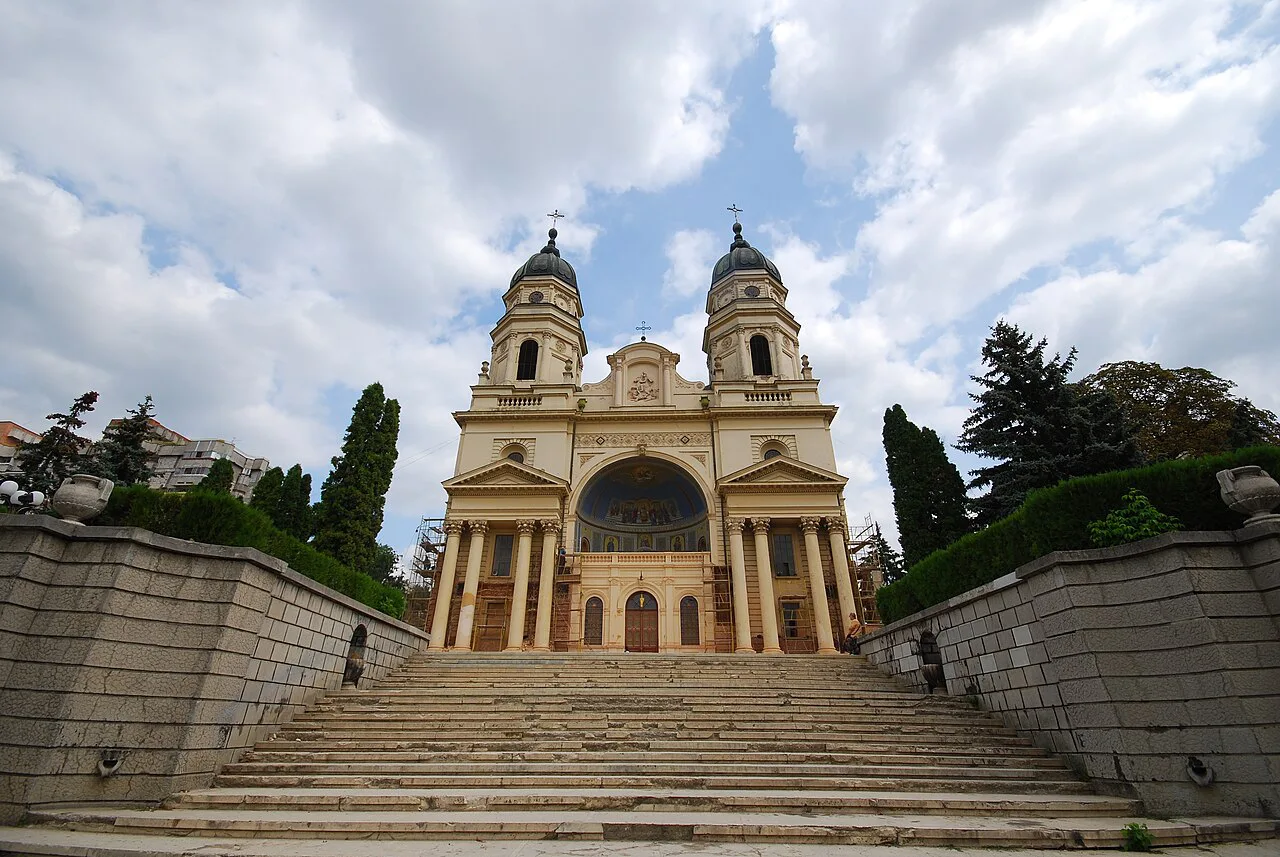

Finding the cathedral on Bulevardul Ștefan cel Mare și Sfânt
The cathedral is listed at 16 Bulevardul Ștefan cel Mare și Sfânt, on the city's central boulevard and within walking distance of the older centre. Arriving on foot, follow the boulevard and look for the tall church set back behind an open paved area rather than fronting the pavement.
The west side near the main entrance forms a broad esplanade, with stairways flanked by balustrades running down towards the lower courtyard by St George's Gate. Approach from the boulevard and you arrive at the esplanade; approach from below and you climb. It is the natural meeting point if your group splits up.
Plan on walking, taxi or bus for the final stretch into the centre. If you are combining the cathedral with the Palace of Culture (Palatul Culturii), Iași, the two are close enough to do on foot in one outing, which saves a fare and a wait.
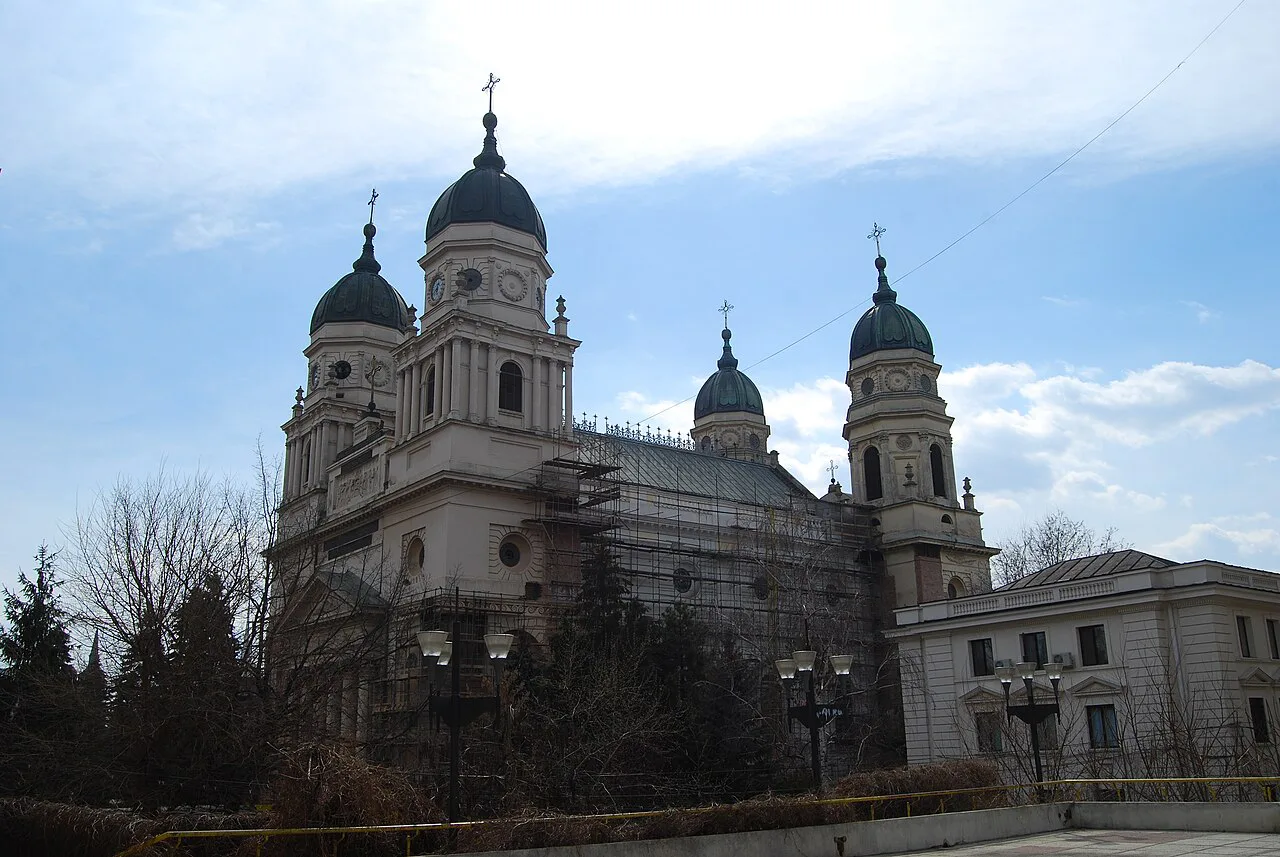

The building: 19th-century construction and the later restoration
Construction was authorised in 1826 by Prince Ioan Sandu Sturdza, but fire and pestilence in the city delayed the start, and building ran from 1833 to 1886. That span explains why the church reads as a 19th-century monument rather than a medieval one.
The interior painting was carried out by Gheorghe Tattarescu, whose work visitors see across the nave. Keep the construction history and the decoration separate in your head, because the painted scheme is what makes the interior distinct from Iași's much older churches.
Look at the exterior before going in, particularly the proportions of the dome and the way the building sits against the surrounding administrative blocks. The neoclassical restraint of the architecture sets up the contrast with the painted interior, so a couple of minutes outside makes the inside easier to read.
Inside: Gheorghe Tattarescu's painting and the interior scheme
The interior painting is by Gheorghe Tattarescu (1818-1894), whose iconography combines the Orthodox pictorial canon with Italian academic painting. Look up into the dome and along the upper walls, where the figures are largest and the style is clearest.
The painted scheme carries through the whole interior, so walk the length of the nave and pause where the figures on the upper walls and dome are clearest. The neoclassical sobriety of the architecture is what sets off the painting, so compare the plain stonework below with the painted surfaces above.
The cathedral is a working church, so dress modestly and keep voices low; a service may mean you wait or come back later. Photography inside is a matter of courtesy as much as rules, so follow what those present are doing and ask if unsure.
The Metropolitan Complex around it: St George's Church, the Metropolitan Palace and the library
St George's Church, the former Metropolitan Cathedral, was built between 1761 and 1769 by Metropolitan Gavriil Callimachi and served for more than a century as the church where the bishops of Moldavia were ordained. It now functions as the Metropolitan Chapel. Step inside after the main cathedral and the age difference is immediate: this is the older, darker building.
Around the two churches stand the Metropolitan Palace, the Metropolitan Chancery with its festivities hall, the Dumitru Stăniloae Metropolitan Library, the St George Monastic Home and the Faculty of Orthodox Theology. These are working buildings, so admire them from the courtyard rather than treating them as museum rooms. The ensemble was harmonised in the early 1960s under architect G. M. Cantacuzino.
Saint Parascheva and her relics at the Metropolitan Complex
Saint Parascheva is closely venerated in Moldavia, and her relics have been kept in Iași for more than 370 years. They were moved temporarily into the old church during consolidation work on the cathedral in 2006, which shows how central the relics are to the site. Expect people queuing to venerate them rather than a purely sightseeing atmosphere.
Her feast day falls on 14 October in the Orthodox calendar, when the church commemorates her. The rest of the year is calmer, so a weekday morning gives you more space inside.
Treat the relic area with the same quiet respect as the rest of the church, and do not photograph people praying. A short, unhurried stop is more appropriate than a long one.
How long to allow and when it is busiest
Allow around an hour for the cathedral and St George's Church together. The two churches are steps apart, so most of your time goes on the interiors.
Services and feast days are the times to avoid if you want to look rather than pray. Outside those, a weekday morning is the easiest slot for an unhurried visit. If you plan to visit around 14 October, go early and be ready for larger crowds.
Combine the cathedral with Copou Park (Parcul Copou), Iași if you want a long walk afterwards, since the park gives you trees and shade after the stone of the complex. Copou Park is a different kind of stop, so budget it separately rather than folding it into the cathedral hour.
Opening hours and entry: where to check before you go
Visitor information for the complex is published on the Metropolitan Complex website, so use it to plan access for the day you intend to visit. Check it before you travel rather than relying on a guidebook. If the main cathedral is closed for a service, the old church and the courtyard still make the trip worthwhile.
Because the cathedral is an active place of worship, access can shift around services and religious occasions. Keep your plan flexible, and treat a closed door as a reason to look at the complex's buildings from the esplanade instead.
What is nearby within a short walk
The Palace of Culture (Palatul Culturii), Iași is the other headline building in the centre, an easy walk from the cathedral and a natural pairing for a half-day. Its scale and museum contents contrast sharply with the churches, so do the cathedral first, while you are fresh.
Three Hierarchs Church, Iași is another central church with a distinctive carved exterior, and it fits the same walking loop if you want to compare ecclesiastical architecture across centuries. For something greener, the Botanical Garden Iași sits further out and needs its own time slot.
Is the cathedral worth an hour of your Iași day?
Yes, if you want the 19th-century church and the older St George's Church in one stop, with Tattarescu's painting as the interior highlight. An hour covers both churches at an unhurried pace, and the esplanade and stairways are worth a few minutes on their own.
Skip it only if you are pressed for time and have already chosen the Palace of Culture (Palatul Culturii), Iași as your one central stop. Otherwise slot the cathedral into a morning and walk on from there.
Explore more Iasi guides
Frequently Asked Questions
Do I need a ticket to enter the Metropolitan Cathedral in Iași?
The cathedral is a working Orthodox church. Check the Metropolitan Complex website before you go for access arrangements on the day of your visit.
How do I get to the cathedral from central Iași?
The cathedral is at 16 Bulevardul Ștefan cel Mare și Sfânt on the central boulevard, within walking distance of the main streets. Plan on walking, taxi or bus for the final stretch.
Can I see Saint Parascheva's relics?
The relics are kept at the Metropolitan Complex and are venerated by pilgrims, with her feast day marked on 14 October. Expect queues around that date and treat the relic area as a place of worship rather than a sight.