
Golia Monastery, Iași: A Visitor's Guide to the Fortified Church and Tower

Golia Monastery is a walled Orthodox monastery in Iași, close enough to the centre to reach on foot, and the reason to come is the combination of a late-Renaissance church, a ring of defensive walls and a 29 m tower you can climb. Allow around an hour for the church and courtyard, and up to half an hour more for the tower. This guide covers the layout, the church interior, the tower climb and the smaller buildings inside the walls.
Check opening hours with the monastery before you set out, since they are not published in the sources here. The rest of the visit needs little planning: most of what there is to see sits in the courtyard, and you can decide on the tower once you have seen the staircase.
What Golia Monastery is and where it sits in Iași
The complex is a compact ensemble behind fortified walls: the Church of the Lord's Ascension, a square entrance tower, four round corner towers on the perimeter wall, a water house, a columned house where Ion Creangă once stayed, and an abbey with a chapel dedicated to the Virgin Mary's girdle. Everything sits within one enclosure. The name comes from the chancellor Ioan Golia, who built a religious dwelling here in the 16th century.
The monastery stands in Iași, not far from the city centre, and reviewers describe it as fortress-like in appearance. Use the map link on the local travel site to route yourself. Treat it as a single-stop visit rather than a half-day out, and combine it with one other sight in the same part of town. The wider Iasi Attractions: 11 Visitor Guides collection helps you place it among the city's other sights.

How to get there from the city centre
Golia is described as not far from the centre, and reviewers note it can also be reached by public transport. No tram or bus numbers, timetables or walking times are published in the sources here, so plan the route with a maps app on the day. If you are already exploring the central streets, walking is the simplest option and keeps you flexible about when you arrive.
Set your expectations for the approach: this is an active monastery inside a residential part of Iași, not a ticketed heritage attraction with a coach park. Arrive with the church and tower as your goals, and let the courtyard set the pace. If you are building a day around several churches, pair Golia with the stops listed at the end of this guide to avoid doubling back.

The fortified church: exterior style, towers and domes
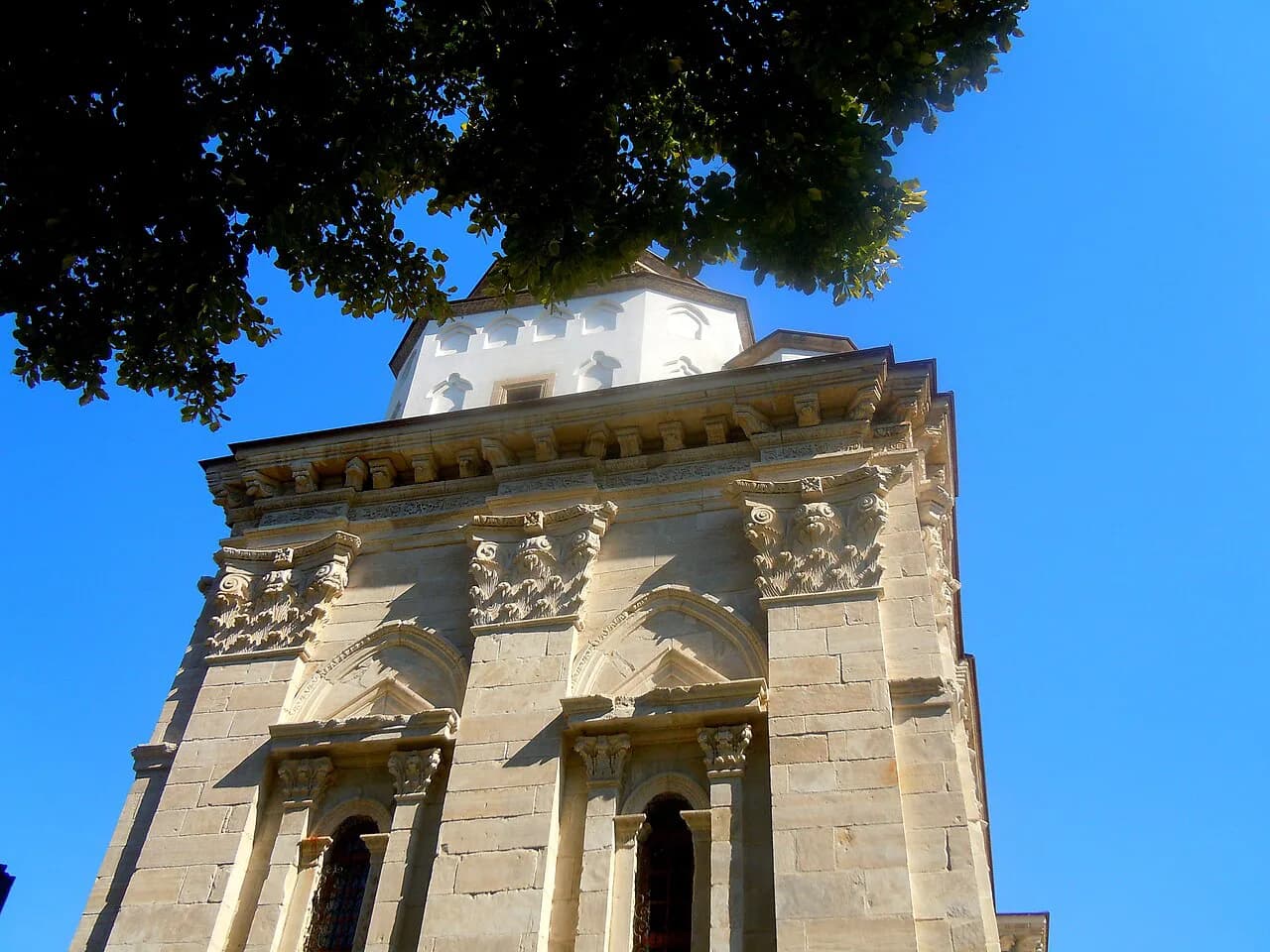
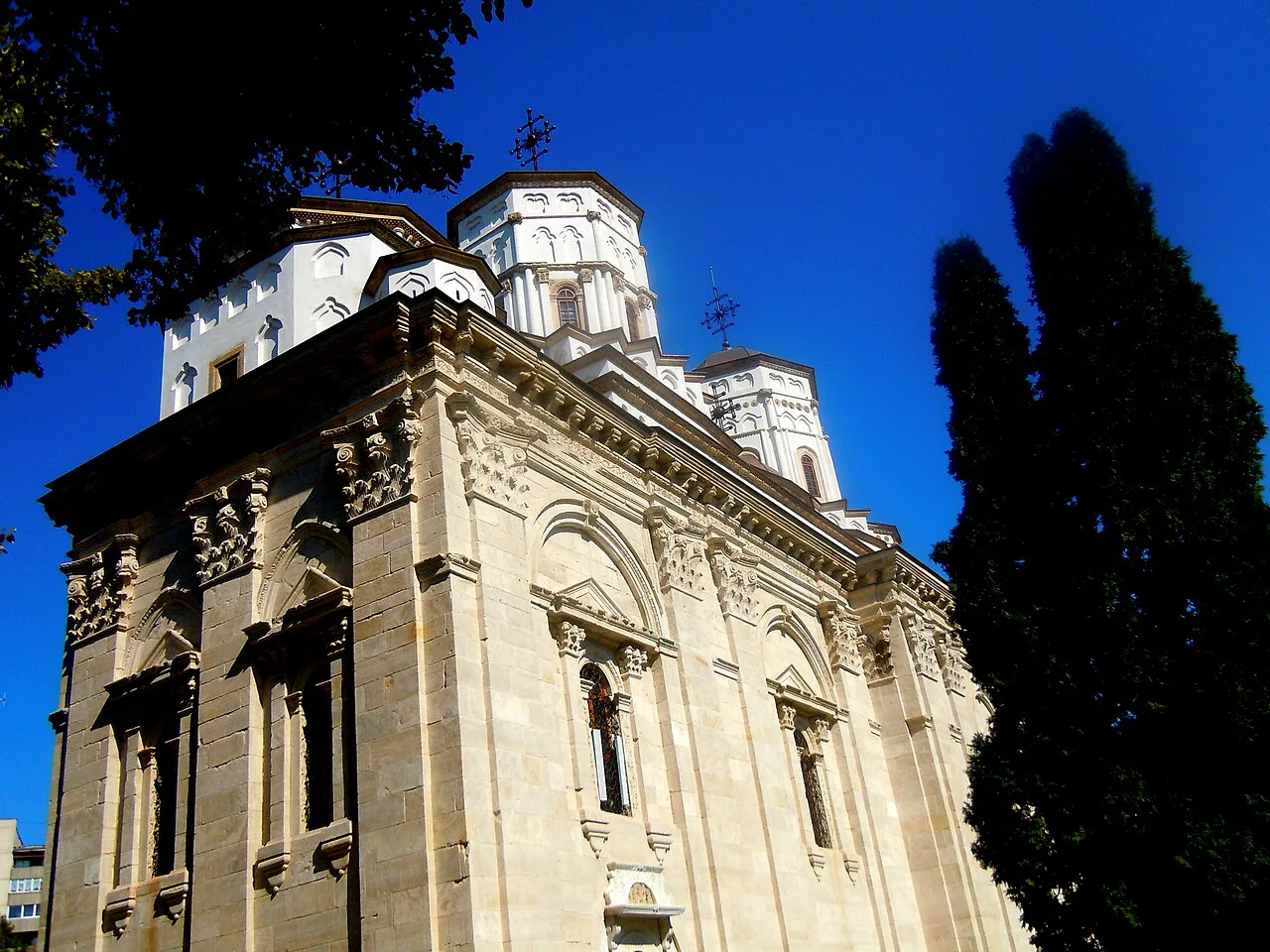
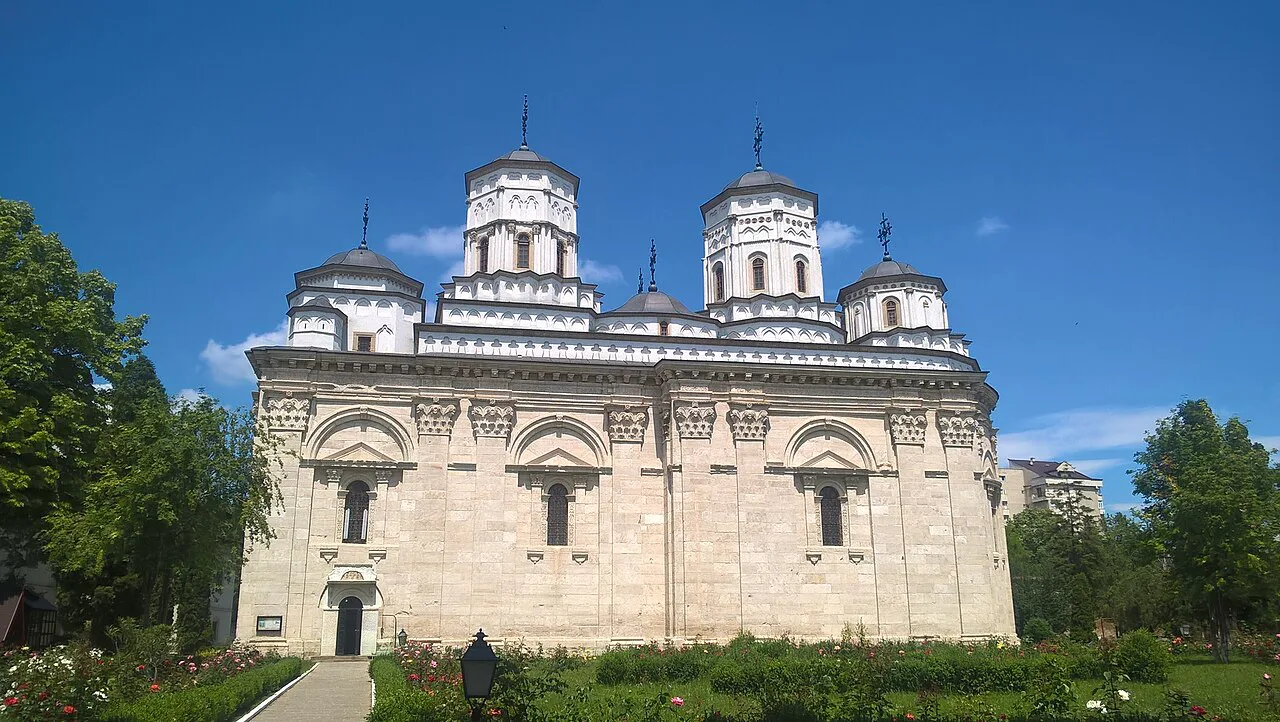
The present church was built between 1650 and 1653 under the Moldavian prince Vasile Lupu, and its exterior borrows from the late Renaissance, a style that reached Iași by way of Galicia. Look for dressed stone blocks, Corinthian pilasters with acanthus capitals and a crenellated cornice carried on consoles. It reads more like a small fortress than a parish church, which is exactly the appeal.
The roofline is the part to slow down for: a row of towers and domes sits on arches in the tiered arrangement known as kokoshniki, with octagonal bases and a mix of Wallachian and Oriental detailing. In 1672 the four round towers were added to the defensive wall and the steeple was strengthened, completing the fortified outline you see today. Walk the perimeter before going inside; the wall and its towers frame the church better from a few paces back.
Inside the church: the Sultana tombstone, chandeliers and founder paintings
In the pronaos floor, the most elaborate gravestone is the white marble one of Sultana, wife of the voivode Constantin Racoviță, dated 1763 and placed over the burial spot of the founders Ioan and Ana Golia. In the pronaos hangs a chandelier bearing Vasile Lupu's monogram, with four candlesticks before the altar given by the same voivode. The nave chandelier was a gift from Russia's Tsar Peter the Great, who visited in June 1711.
The painting layers are worth noticing: the earliest work, by an artisan named Matei, survives in the porch, the nave painting dates from 1754, and parts of the nave and altar were restored in 1838. On the pronaos wall at the entrance, a commemorative painting shows the founders, with Prince Ieremia Movilă and the Golia family on one side and Vasile Lupu's family on the other. Marble carving around the porch and pronaos doors carries Moldavia's coat of arms.
This is a working place of worship, so keep the interior portion of your visit quiet and brief, and give the tower and courtyard the time you save. Follow the notices at the door for photography and service times.
Climbing the Golia tower: 29 m, three floors and 120 steps
The entrance tower is 29 m tall across three floors, with hidden chambers and a spiral staircase of 120 steps, and its top terrace is open to the public. The tower has served as access to the patrol walls, a prison and an archive, and today its halls hold art exhibitions. Climbing it turns a short church visit into a proper outing, so decide before you start whether the stairs suit everyone in your group.
The height history explains the proportions: the tower was raised by 20 m in 1855 to almost 50 m, the extra weight caused cracking and risk of collapse, and it was brought back to its original size in 1900 after King Carol I intervened. That is why it looks balanced rather than stretched. Ask about access to the terrace and exhibitions at the monastery before you start climbing.
The water house, the Turkish fountain and Radio Trinitas
Beside the tower stands Iași's first water house, with a Turkish fountain built into its outer wall around 1805 under Prince Alexandru Moruzi. Look for the fountain detail on the wall rather than expecting a separate museum room. The same spot is where Radio Trinitas, the Romanian Orthodox Church's official radio station, was founded in the 1990s.
Treat this corner as a five-minute stop on the way in or out rather than a destination in itself. If you are interested in how the monastery supplied itself with water, the fountain is the tangible piece; if you are short of time, the church and tower come first.
The column house and Ion Creangă's ethnographic museum
The 18th-century column house inside the walls, where the writer Ion Creangă lived temporarily, holds a small ethnographic museum devoted to him. Creangă came to Iași in 1855, studied at the Theological Seminary of Socola Monastery and was later ordained; in 1866 he was given lodgings within Golia's walls. After a divorce request and accusations that included shooting crows from the monastery tower, he was excluded from the church in 1872 and rehabilitated posthumously in 1993.
The museum is small, so ask when you arrive whether it is open rather than planning the day around it. For readers following the city's literary connections, the house gives Creangă's Iași years a physical setting without turning the monastery visit into a biography tour. Iasi: A Practical Guide to Romania's Cultural Capital puts the monastery in the context of a short break.
How long to allow and the trade-offs of the tower climb
Budget around an hour for the church, courtyard and the smaller buildings, and add 20 to 30 minutes for the tower if you climb it and linger on the terrace. The trade-off is straightforward: the stairs are narrow, enclosed and spiral, and the 120-step descent is harder than the climb for anyone uneasy in tight spaces. Splitting the group is fine, since the courtyard and church keep everyone else occupied.
Visiting early in the day gives you a quieter courtyard, and the terrace view is best in clear weather rather than under low cloud. If you want a contrast later in the trip, the Palace of Culture (Palatul Culturii), Iași covers the city's secular history in a very different setting.
Nearby: Bărboi Church and other stops on the Pilgrim Route
Golia sits on a Pilgrim Route that links Iași's churches, and Bărboi Church is the neighbouring stop listed before it. That makes a natural pairing on foot: Bărboi first, Golia second, ending with the tower climb while you still have energy. The route is a sequence of individual visits, not a guided tour, so you set the pace.
If you want to extend the church-themed morning, the Metropolitan Cathedral, Iași is the obvious central addition, and the Three Hierarchs Church (Biserica Trei Ierarhi), Iași adds a very different carved-stone facade. Keep the number of stops small rather than worrying about distance: three churches plus one tower is a full morning.
Is the tower climb worth it for you?
Climb the Golia tower if you want the terrace view and do not mind 120 spiral steps in a confined staircase; skip it if stairs are difficult and enjoy the church, the Sultana tombstone and the founder paintings at ground level. Either way, the monastery rewards an hour rather than a quick look through the gate.
Build the visit into a church-focused walk with Bărboi Church, and use the wider Iasi Attractions: 11 Visitor Guides collection if you want to plan the rest of the day around the centre. Confirming opening hours with the monastery before you travel is the only step that needs checking in advance.
Explore more Iasi guides
Frequently Asked Questions
Can you climb the Golia tower?
Yes. The tower has three floors, a spiral staircase of 120 steps and a top terrace open to the public, and its halls hold art exhibitions. The staircase is narrow and enclosed, so it suits confident walkers better than anyone uneasy in tight spaces.
How long should I allow for a visit to Golia Monastery?
Budget around an hour for the church, courtyard and smaller buildings, then add 20 to 30 minutes if you climb the tower and linger on the terrace. The interior is a working place of worship, so keep that portion brief and give the tower and courtyard the time you save.