Free Things to Do in Sibiu: Squares, Churches and Walks
Most of Sibiu's old centre costs nothing to wander. Here are the squares, staircases, churches and viewpoints you can see without paying, plus the paid climbs.
On this page
A free day in Sibiu runs through Piața Mare (Large Square), down Strada Nicolae Bălcescu, across the Bridge of Lies and into the Lower Town, and none of that walking costs a leu. The paid items are limited: two tower climbs, a handful of museums and the interior collections behind them. This guide sets out the squares, churches and viewpoints you can see for nothing, then lists the modest charges so you can decide where to spend.
The old centre splits into the Upper Town, with the three squares, Strada Nicolae Bălcescu and the Council Tower, and the Lower Town, reached by steep staircases, which the city's sources describe as the historic quarter of the Romanian population. All of it is compact enough to cover on foot, and cars are kept out of most of the historic core, so the free sights sit within a short walk of each other.
Start in Piața Mare (Large Square)
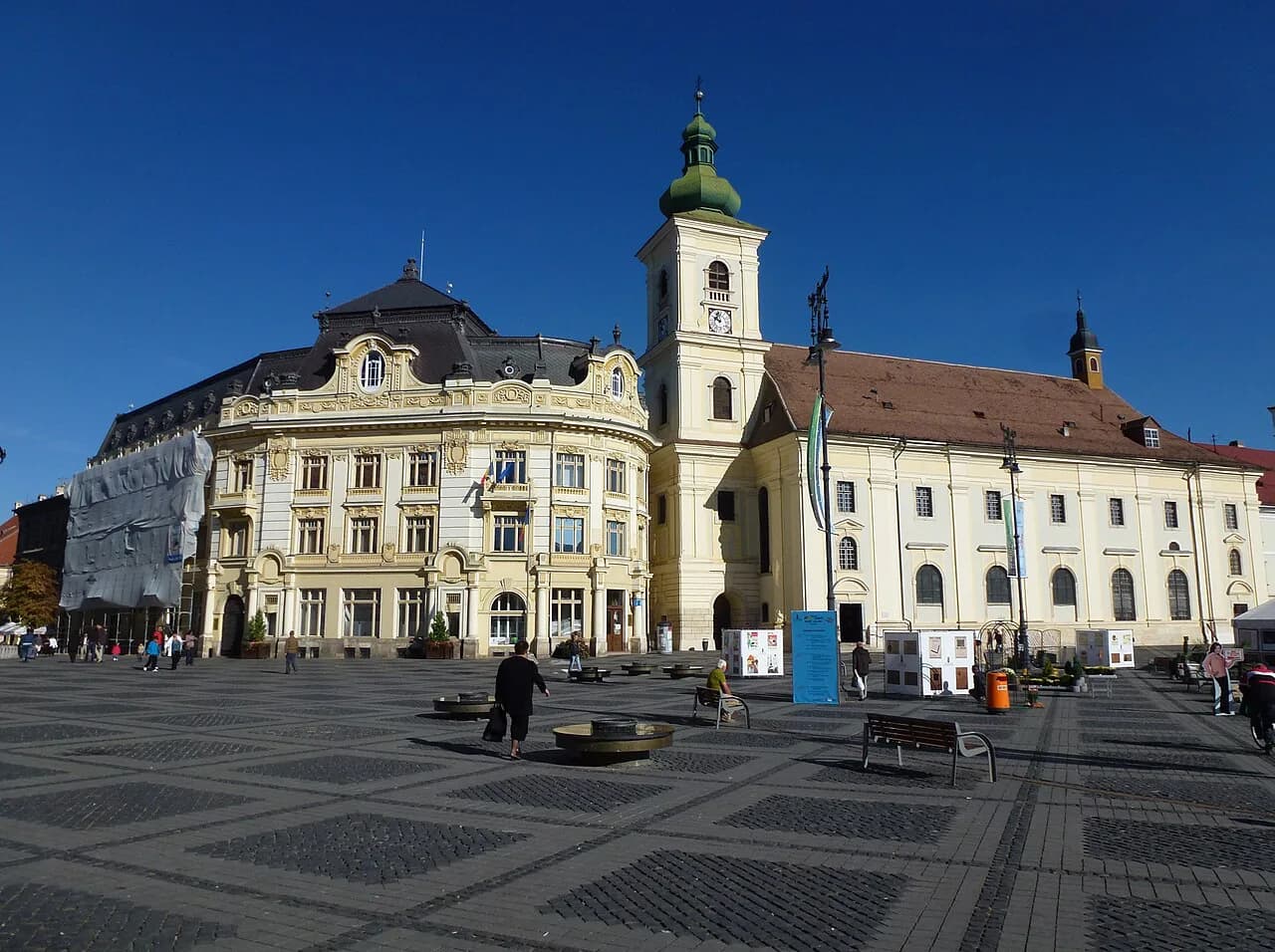
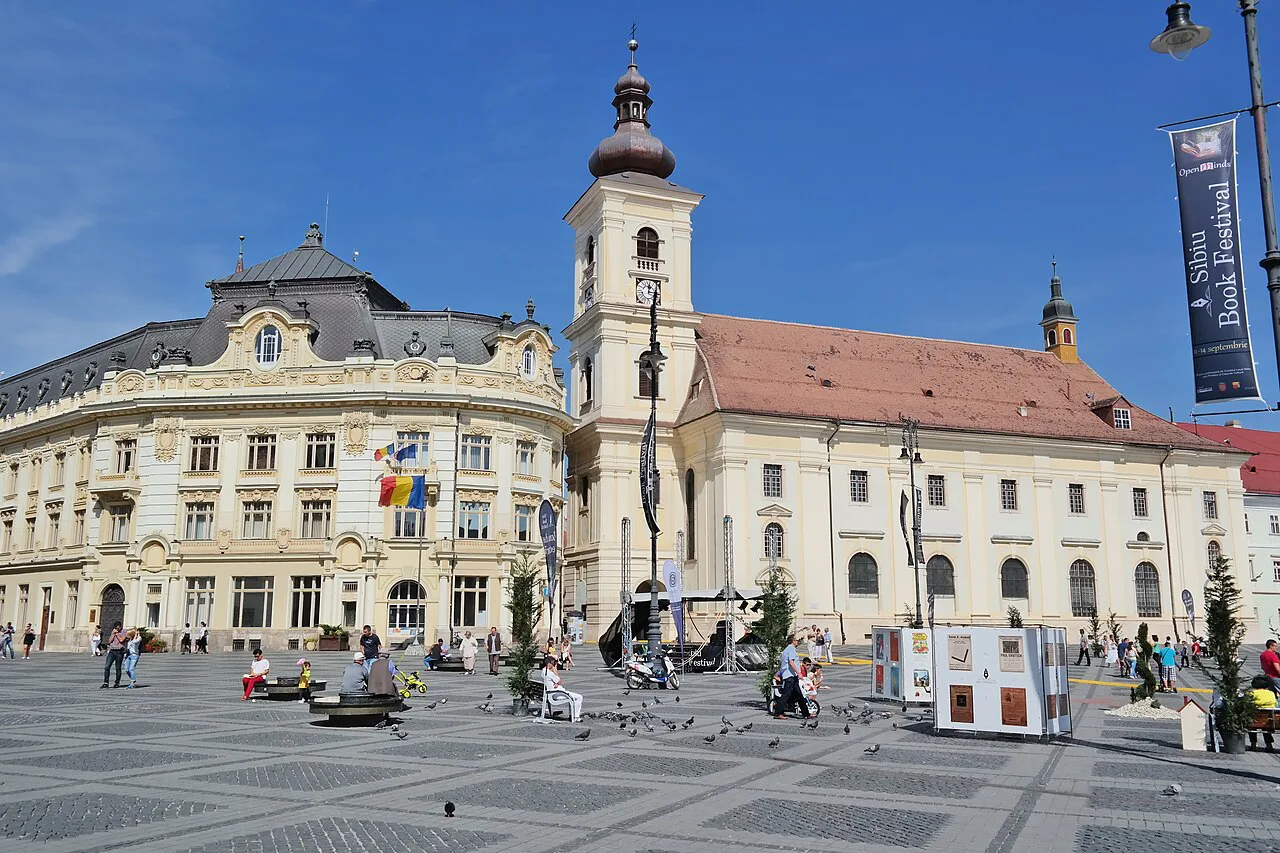
Piața Mare is the cobbled heart of Sibiu and the obvious place to begin, with no ticket and no gate. In the middle sits the grilled fountain, a copy of the 15th-century original demolished in the communist period, and the square is ringed by the Brukenthal Palace, the yellow City Hall on the corner, the Roman Catholic Church, the Council Tower and merchant houses now housing shops, banks and pharmacies.
The square is also where the city's big events are staged, including the theatre festival, so on some days you share it with a crowd and on others you have the cobbles largely to yourself. Walk it in both directions: the views open up from the far side back towards the tower and the church, and the fountain makes a natural meeting point if your group splits.
Look up for Sibiu's eyes
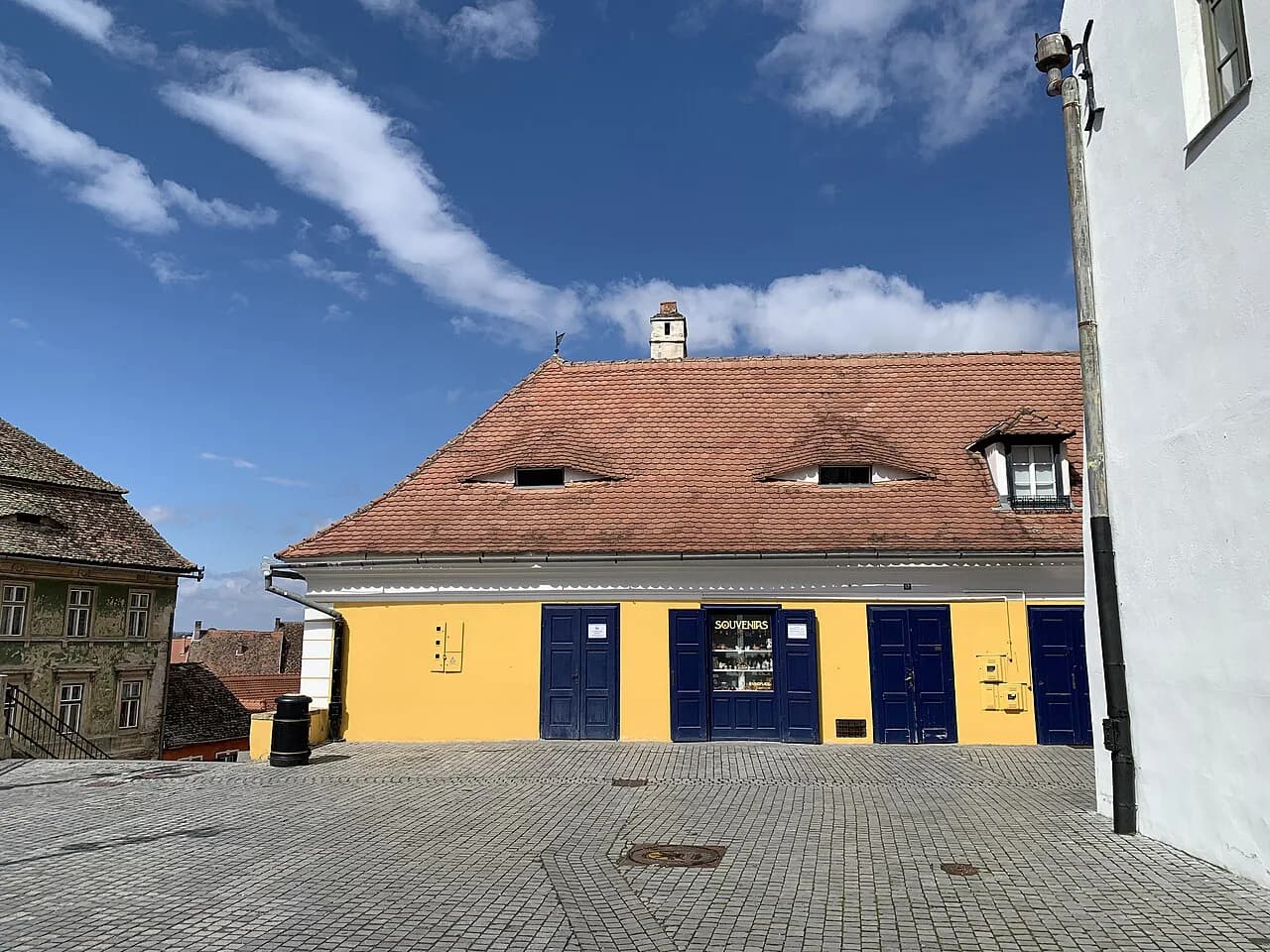
The almond-shaped roof windows that give the city its nickname sit on the 19th-century houses around Piața Mare and along the old streets. They were built for ventilating warm attics, but from street level they read as eyes, and local stories long held that they watched for spies and informers.
Spotting them is free and best done slowly, looking up rather than ahead. The tight lanes off the squares give closer views than the open expanse of Piața Mare, and a short detour up any side street rewards you with rows of them above the shopfronts.
Walk Strada Nicolae Bălcescu
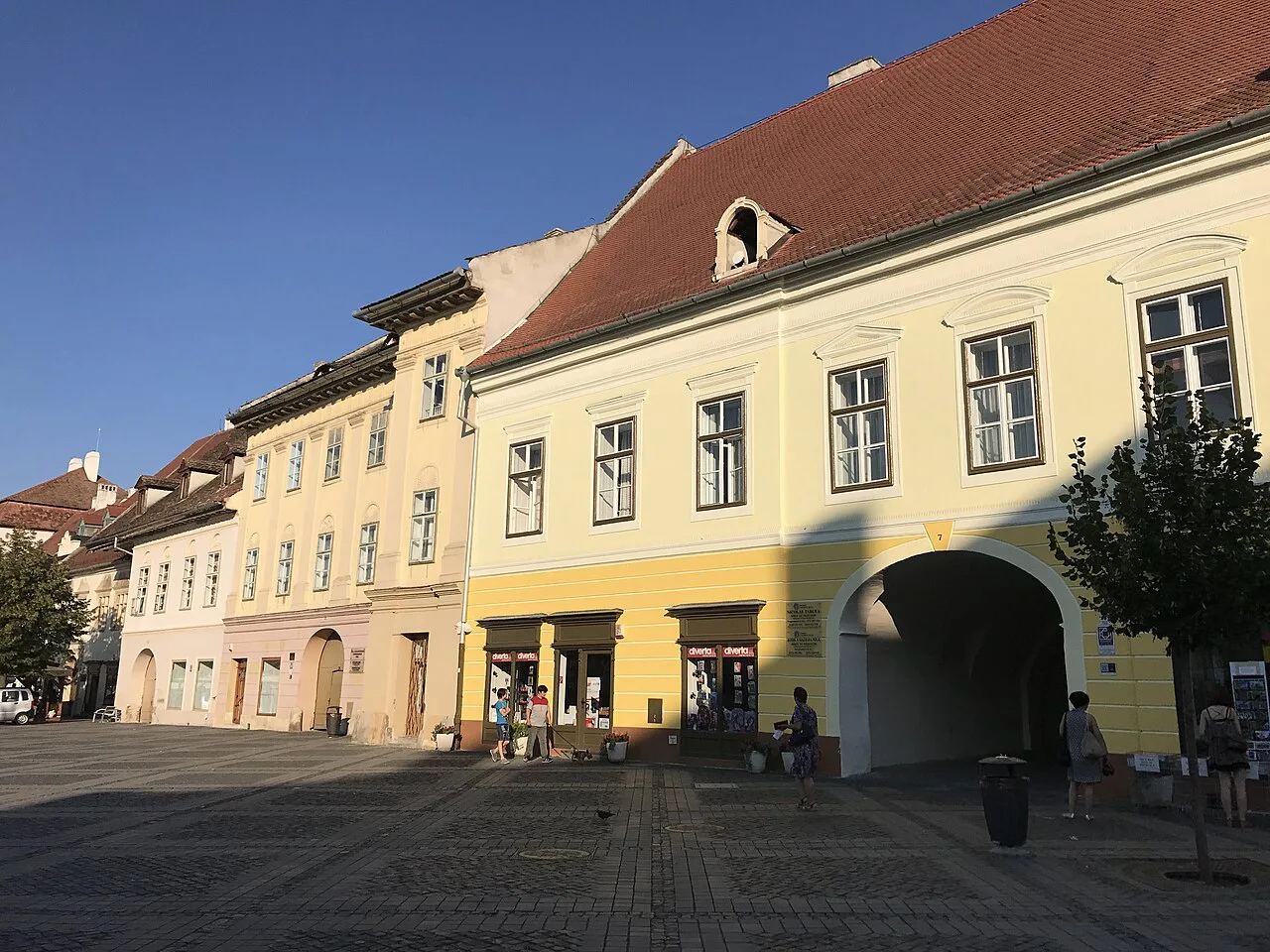
Strada Nicolae Bălcescu is the main pedestrian street and the easiest free introduction to the city, running from the boulevard that carries traffic from Bucharest on towards Alba Iulia into the old centre. Pastel merchant houses with flowery balconies line both sides, terraces fill the pavement in season, and a few familiar shops sit between them without breaking the street's look.
Treat it as the spine of a free morning: start at the boulevard end, walk towards Piața Mare, and turn off wherever a lane looks interesting. The street is flat and pedestrianised, which makes it the least demanding stretch of the day if you are pacing yourself before the staircases and tower steps.
Piața Mică and the Bridge of Lies
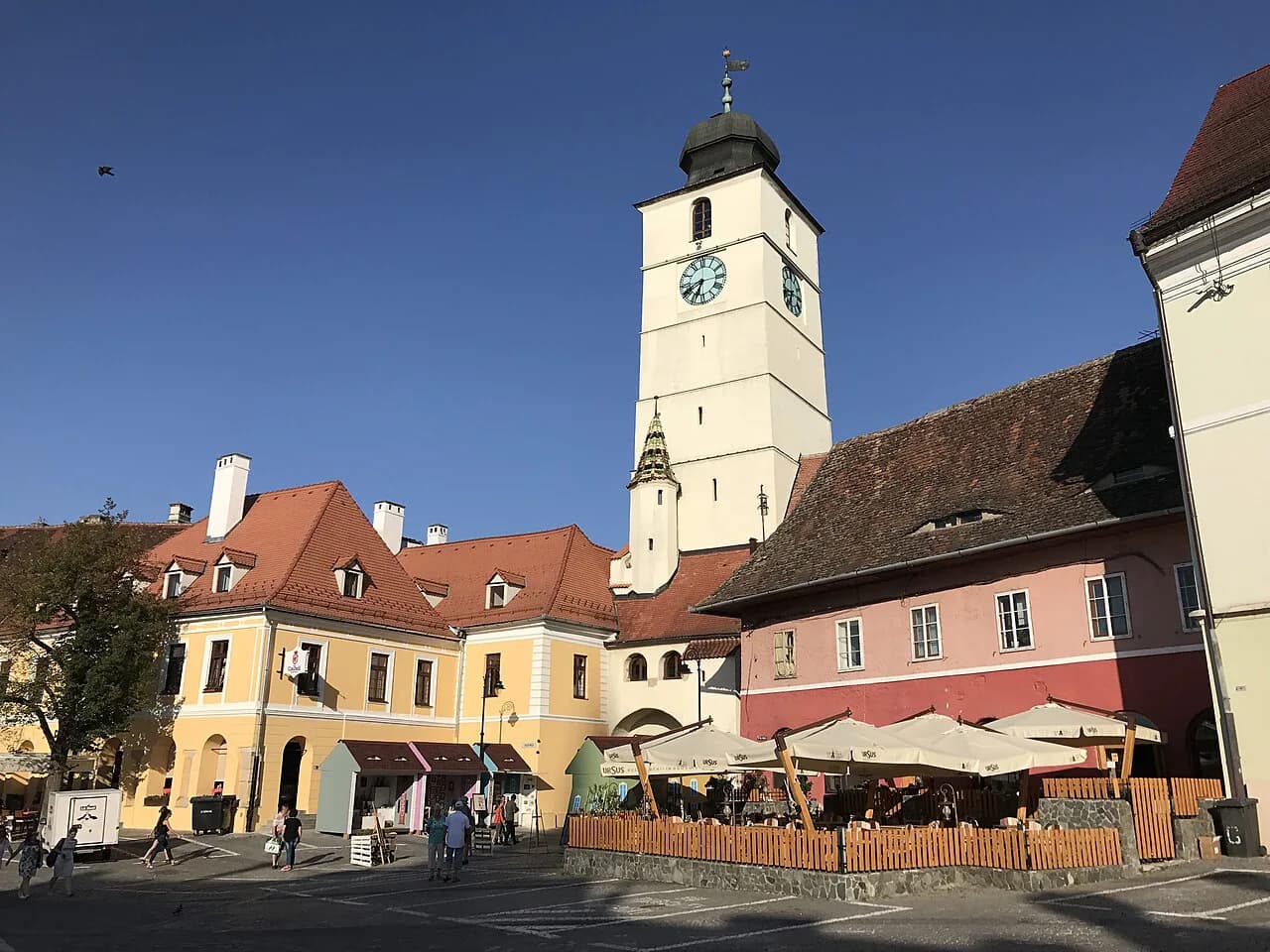
Piața Mică (Small Square) sits just off Piața Mare and connects to the Bridge of Lies, the iron footbridge of the 19th century that carries its own legend of creaking under a lie. Both are free, and the bridge is the shortest route down towards the Lower Town, so you cross it whether or not you care about the story.
The square itself is smaller and quieter than Piața Mare, with the tower's entrance on its side, and it makes a good place to pause between the two halves of the old town. Cross the bridge in both directions to see how the Upper and Lower Towns sit against each other.
Piața Huet and the Lutheran church from outside
Piața Huet is the third square and the quietest, tucked away with the Lutheran Evangelic Church filling one side. The church is massive and dominates the square, and simply walking around the outside costs nothing; the square's small, sheltered feel is as much the draw as the building itself.
For the full picture of the church and the other places of worship in the centre, it helps to know which interiors are open and when, since that varies by building and season.
Take the staircases down to Orașul de Jos
The medieval staircases, the pasajuls, link the Upper Town to the Lower Town, and the most handsome is Pasajul Scării. You can also drop down by the path at the Bridge of Lies, but the staircases are the more memorable way and cost nothing but a climb back up.
At the bottom, the Lower Town's streets are ordinary and lived-in rather than staged, which is the point: wander without an agenda and you see the city away from the café terraces. Plan your return route before you descend so you are not hunting for a staircase when your legs are tired.
Churches you can look inside
Two interiors worth stepping into are the Orthodox Holy Trinity Church, with blue frescoes, and the Roman Catholic Church on Piața Mare, whose plain exterior gives little away. Dress expectations can apply at Orthodox churches; women in particular often need shoulders and legs covered, so a light scarf is a sensible thing to carry in case you are asked to wrap up.
Small as these interiors are, they are the warmest free stop on a cold or wet day, and they sit within a few minutes of the squares. Photographs and quiet are the usual courtesy; keep voices low while others are praying.
Climb the Council Tower (Turnul Sfatului)
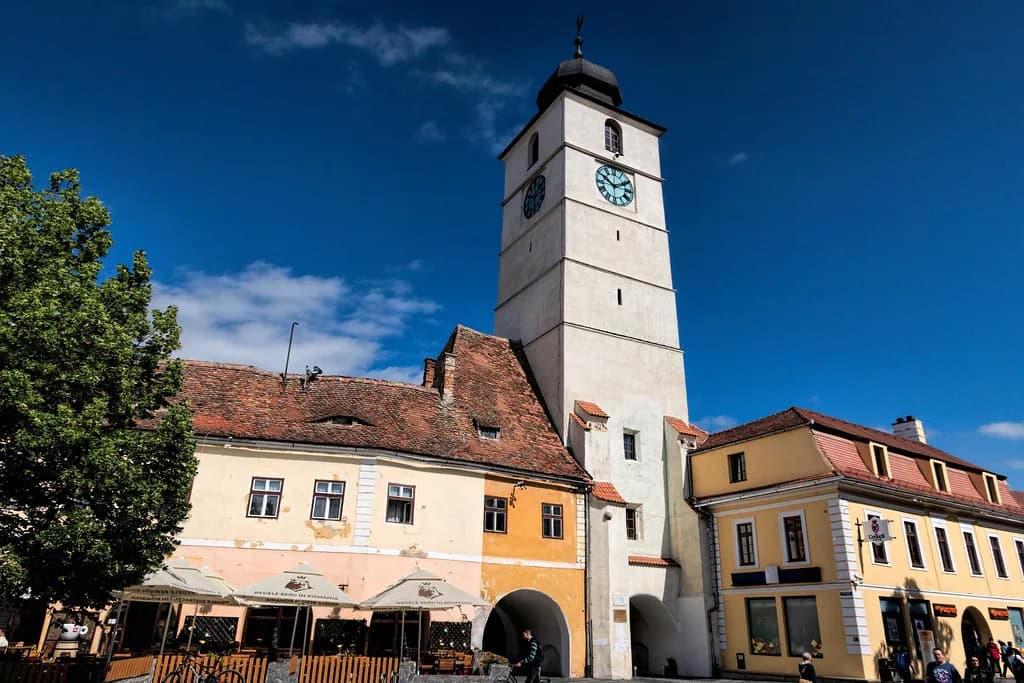
The Council Tower is the one paid climb most visitors make, with a viewing deck over Piața Mare, the Lutheran Church roof and Piața Mică. A 2020 travel account recorded an admission fee of 2 RON for the Council Tower, with the ticket office up the steps and the entrance on the back of the tower, approached from Piața Mică. Treat that as a 2020 figure and confirm the current charge at the door before you climb.
The honest trade-off is the glass around the deck, which can be less than clean, so you may need to hunt for a clear spot to look through. Go early or late in the day for the best light over the red roofs and the hills beyond.
Climb the Lutheran church tower
The Lutheran Evangelic Church offers a second climb with a view over the rooftops, and the same 2020 account gives an admission fee of 8 RON. Check the price and opening at the church before you commit, because the tower is not always open alongside the nave.
If you only climb once, the Council Tower puts you on the square itself while the church tower gives you the church roof and the surrounding streets from a different angle. Neither is expensive, and both are optional additions to an otherwise free day.
Museums for when you want to spend
The Brukenthal Museum fills the baroque palace on Piața Mare and holds the art collection assembled by Baron Samuel von Brukenthal, who left the building to become a public museum after his death. The same institution runs other museums in the city, including the Natural History Museum and the Pharmacy Museum, so one ticket conversation can cover several.
These are the entries that turn a free day into a paid one, so decide deliberately rather than drifting in. If your budget for the day is zero, the squares and churches already fill it; if you have one paid stop in you, the palace's collections are the obvious candidate.
What to skip if you are keeping costs at zero
Skip both tower climbs and the museum interiors and you still have the best of the city: Piața Mare, Piața Mică, Piața Huet, Strada Nicolae Bălcescu, the bridge, the staircases, the Lower Town and the church interiors. The squares are the main event, not a backdrop to the paid sights, and a slow circuit of them beats rushing between ticket desks.
The trade-off is the view: the red roofs and the hills beyond are what the towers sell, and you will not see them from street level. Weigh one small climb against a longer, unhurried walk, and remember that a full day on foot here costs nothing but shoe leather.
Which free route suits your day
Build the day around the squares and the walk between them: Piața Mare first, then Strada Nicolae Bălcescu, Piața Mică and the bridge, Piața Huet, the staircases down and the climb back up. Add one tower if you want the view, and leave the museums for a return visit when you have the time and budget to do them properly.
Sibiu rewards slow walking more than ticked-off sights, so leave gaps between the squares for the roof windows, the church interiors and the lanes that connect them. Everything listed here sits within a compact old centre, which means a zero-cost day is a question of route, not of distance.
Explore more Sibiu guides
Frequently Asked Questions
Is Sibiu expensive to visit?
The old centre is not: the squares, the pedestrian street, the Bridge of Lies, the staircases and the Lower Town streets cost nothing to walk. The charges come from the Council Tower and Lutheran church tower climbs and from the Brukenthal Museum and its sister museums, and those are optional. Church interiors are a separate matter and it is worth checking whether a particular interior is open, and on what terms, when you arrive.
How long do you need to see Sibiu's free sights?
A full day covers the squares, the pedestrian street, the bridge, the staircases and the Lower Town at an unhurried pace, with a break in between. Add a tower climb only if you are happy to pay and to take the steps.
Sources
Useful notes for your next trip
Optional updates to our guides.
You might also like
Continue reading
More guides you'll find useful