Houses with Eyes in Sibiu: Where to See the Eyebrow Windows
The houses with eyes in Sibiu are roof windows set in eyebrow dormers across the old centre. Here is what they are and the streets and squares to see them on.
On this page
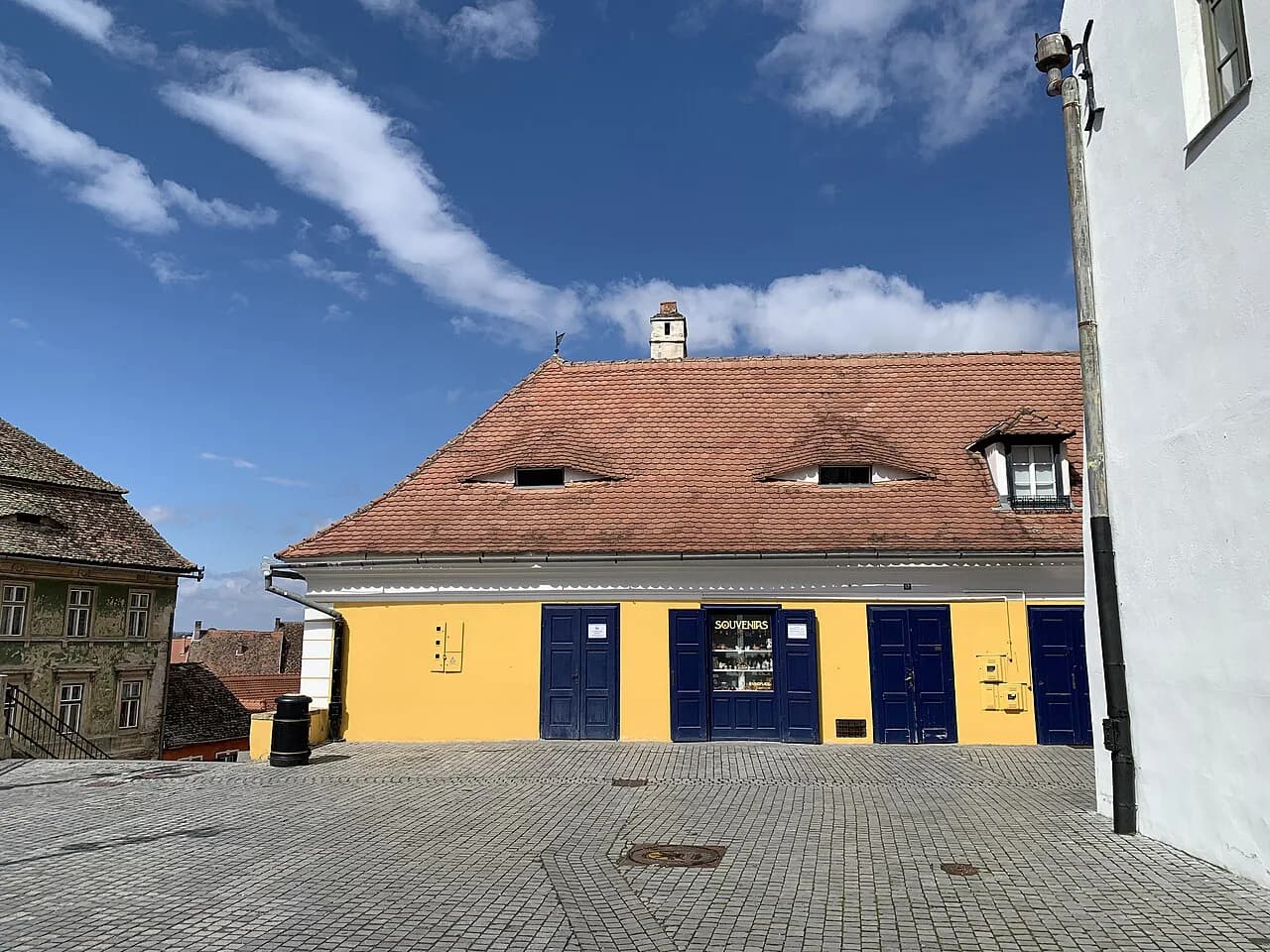
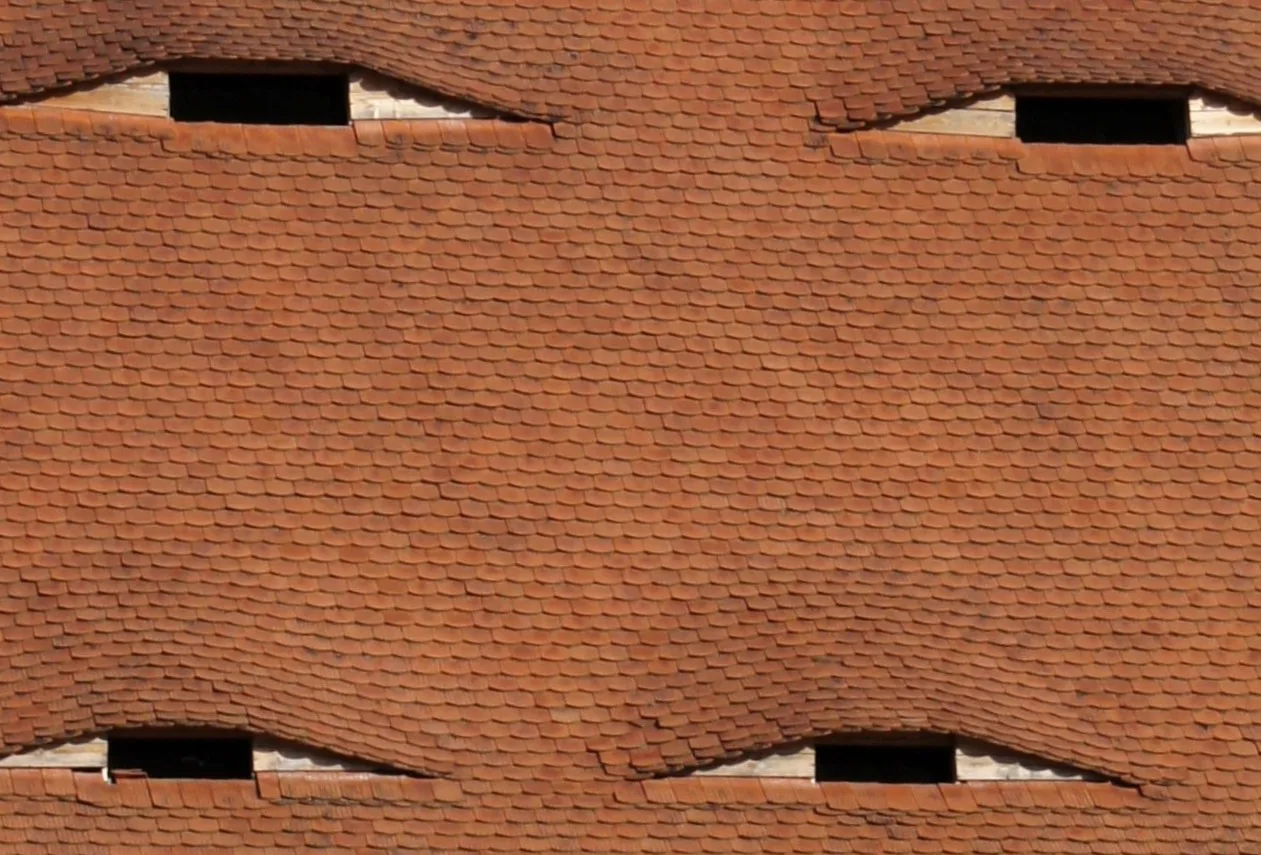
The houses with eyes in Sibiu are eyebrow dormers: small windows set low into the sloping tiled roofs of the old centre, shaped so that the roof line lifts over each one like a brow. Locals call them the Eyes of Sibiu, and they are the reason so many facades seem to be watching the street. This guide explains what you are looking at, why the roofs differ from house to house, and the squares, streets and passages where the dormers show up best on foot.
Treat the whole old centre as the site rather than one building. The dormers are scattered across the Upper Town squares and the older streets below them, so a loop of an hour or so covers the best of them. If you want the wider context of the centre first, start with the things to do in Sibiu, the Sibiu Old Town overview.
What the eyes of Sibiu are
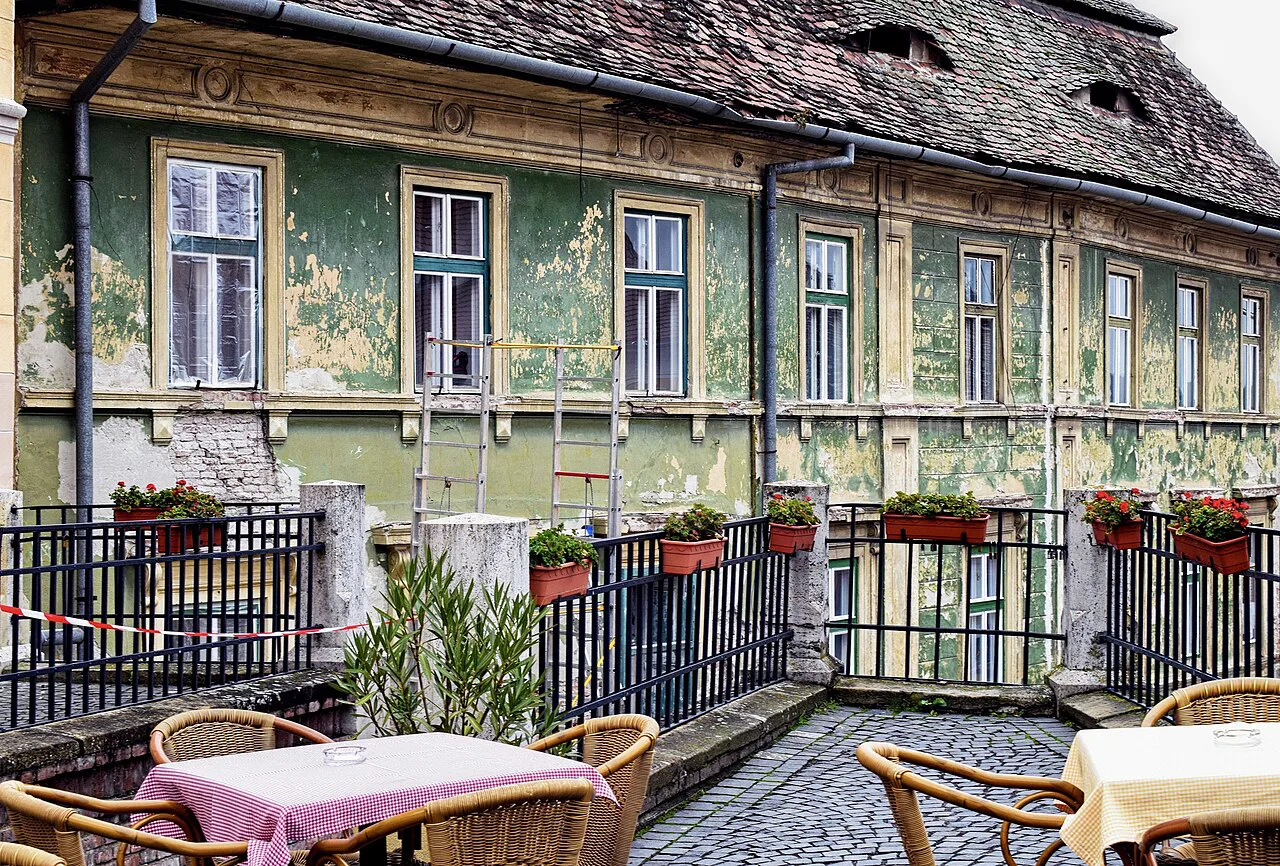
Each eye is a dormer window, an opening built into a pitched roof to let light and air into the attic storey beneath. The eyes on the rooftops of Sibiu are eyebrow dormers, the roof-level windows that give the houses their watching look and act as a symbol of the town. Visitors photograph them for the face-like effect; they are ordinary roof windows doing an ordinary job, and that is exactly what makes the streets so distinctive. They appear across the roofs of the historic centre as a recurring feature rather than on a single showpiece building, so you notice them by looking up as you walk rather than by calling at one address.
The nickname matters because it shapes what people expect to find. The eyes ensure that you are always being watched, and each house is different, so the rooftops have a character no single facade can match. Read them as a piece of roof carpentry with a good story attached, not as a secret surveillance system, and the streets make more sense.
Why the roofs have them, and how each house differs
The dormers light the loft space under the tiles, a practical answer to steep roofs and deep attics in a town of tall, narrow houses. What makes them worth a slow walk is the variation: neighbouring buildings carry different roof shapes, tile colours and window proportions, so no two sets of eyes sit quite the same way. Some are neat and symmetrical; others are squeezed in at uneven spacing where an older house has been altered.
That variety is also why the best approach is to look along a whole terrace rather than fix on one facade. Stand back on the opposite pavement, follow the roof line from one building to the next, and the rhythm of brows and tiles becomes obvious, and it still costs nothing to look.
Where to look: Piața Mare, Piața Mică and the Upper Town
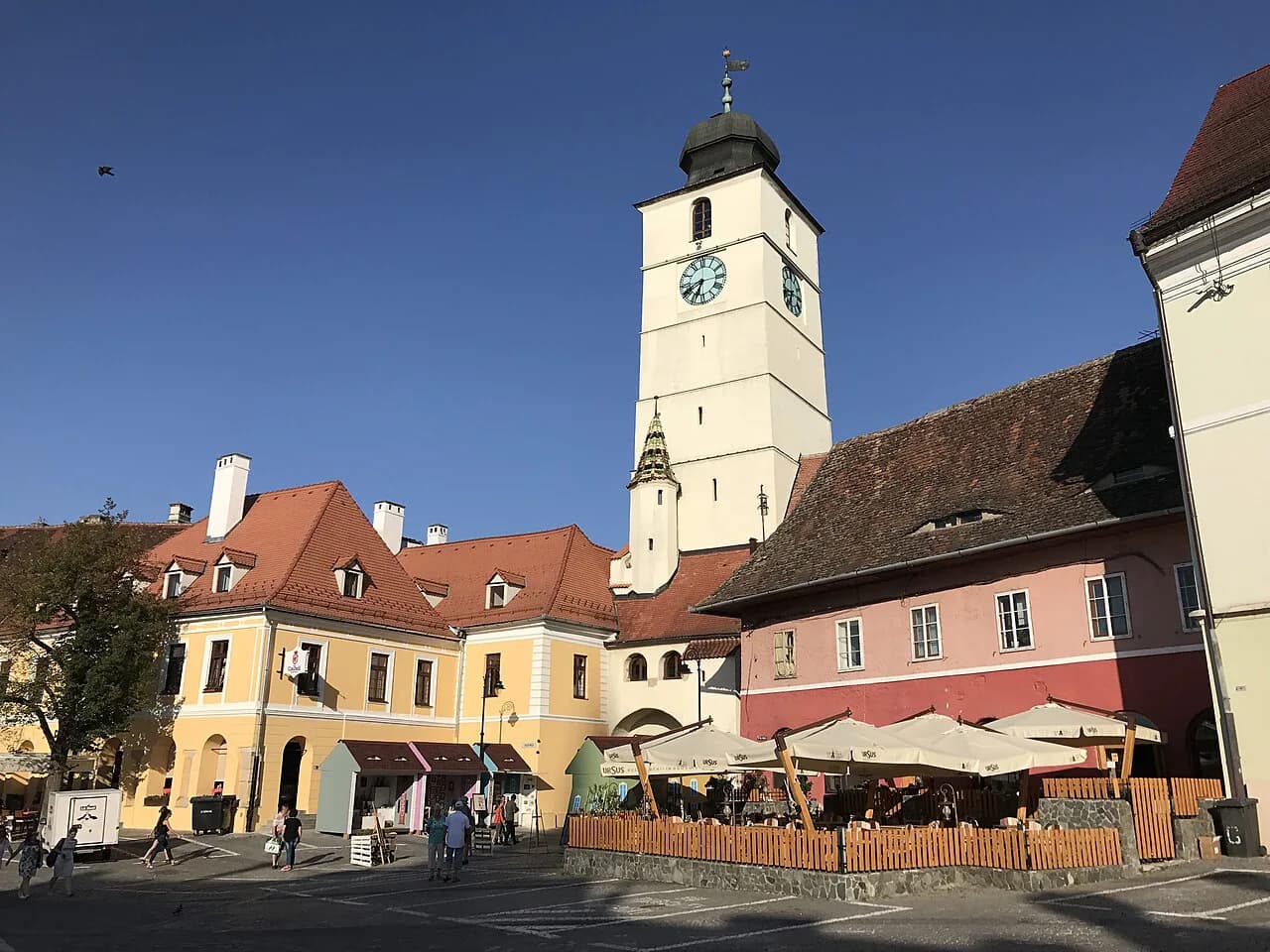
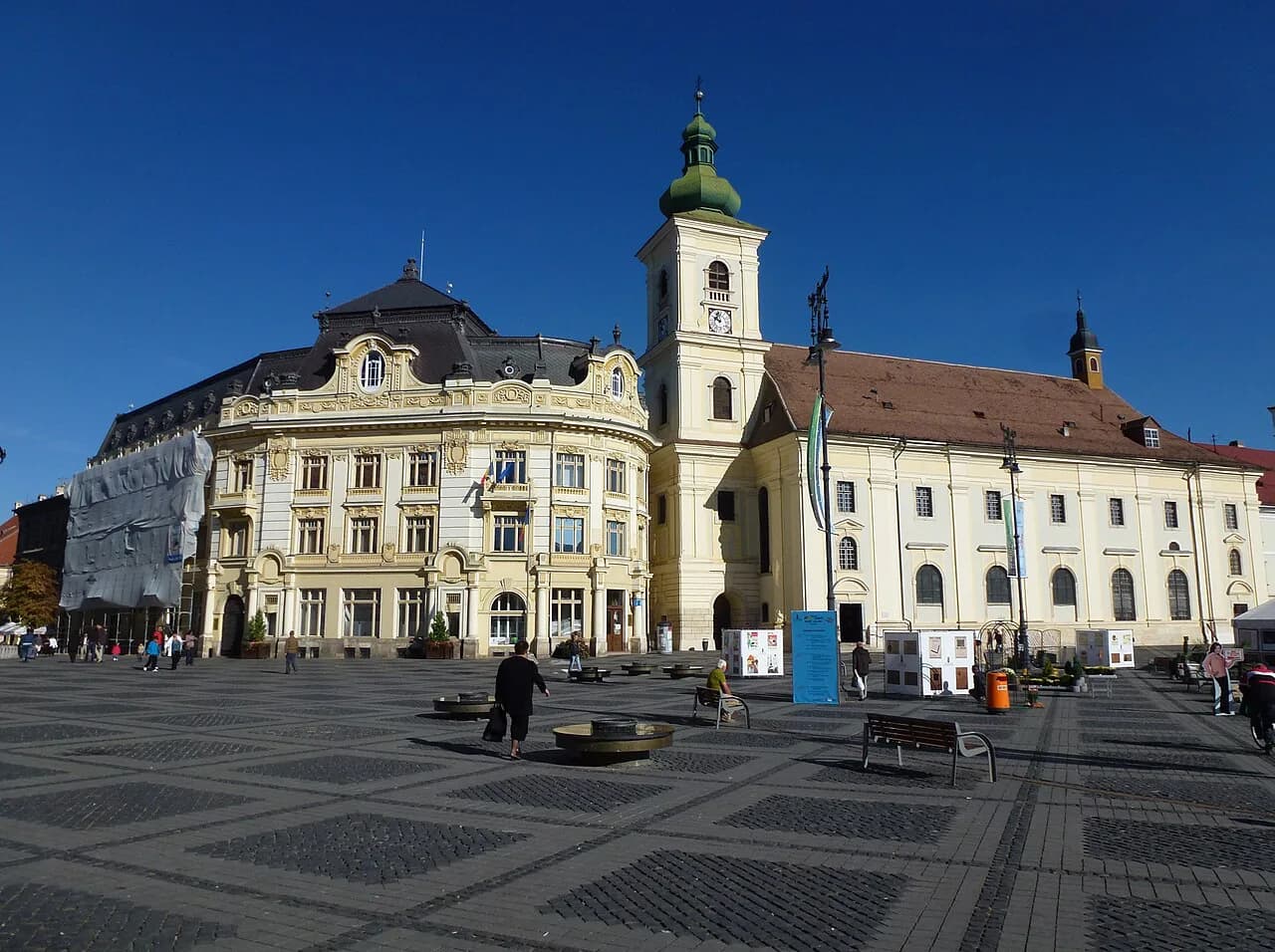
Start in Piața Mare (Large Square), the broad central square ringed by tall, colourful houses with terracotta roofs; keep your eyes at eaves level and the dormers appear along the top of the facades. From there, walk through into Piața Mică, the smaller square, where the buildings sit closer together and the roofs are easier to read at a glance. The two squares are minutes apart, so cover both in one pass.
Beyond the squares, the streets of the Upper Town repay a wander, especially where the houses are low enough for the roofs to sit within easy view. Strada Nicolae Bălcescu, the busy pedestrian spine, is a straightforward place to begin, and the surrounding side streets are quieter. If you want the layout fixed before you set off, a Sibiu map helps you link the squares without doubling back.
Allow for the fact that the Upper Town is not only about roofs. The same walk passes the squares, the churches and the cafés, so the eyes of Sibiu work best as a theme threaded through a normal morning rather than a separate outing.
Lower Town: older, scruffier roofs where the eyes show up best
Head downhill into the lower town Sibiu and the character changes. The houses are older and plainer, with peeling paint, uneven tiles and wooden shutters, and because the roofs have aged unevenly, the dormers stand out more sharply against the sky.
Walk the lanes slowly and look up often; the streets are narrow enough that a dormer directly above you is easy to miss. The Lower Town also sits within reach of the city walls and their towers, so you can combine the roofs with a look at the fortifications.
Getting a view over the rooftops: the tower of the Lutheran Evangelical Cathedral
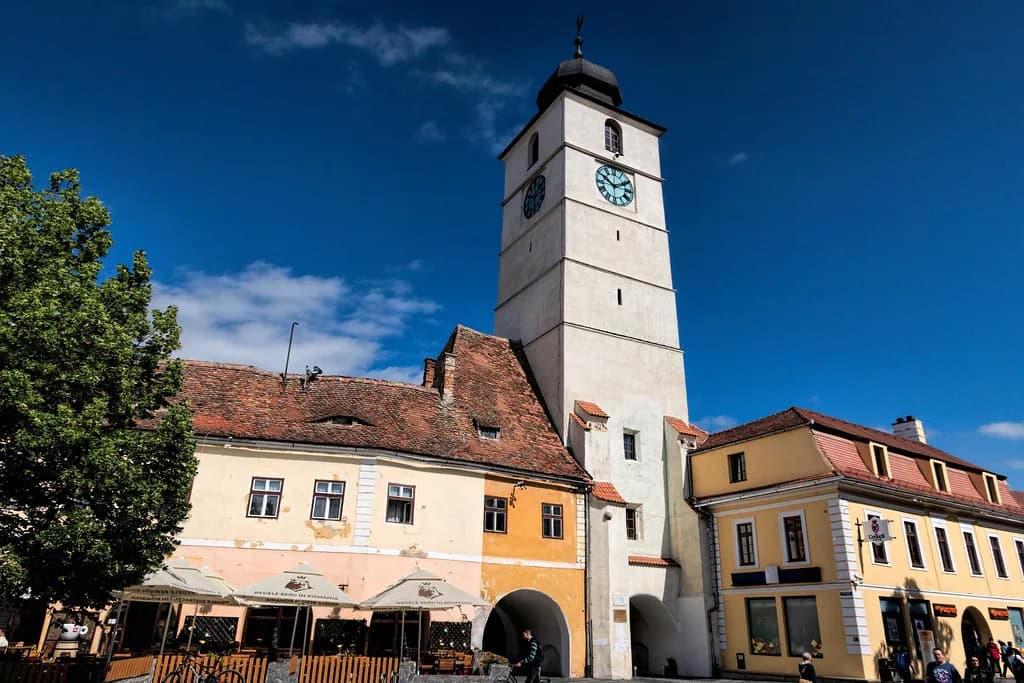
For a view down onto the roofs rather than up at them, climb the tower of the Lutheran Evangelical Cathedral, which gives a panorama over the old centre and the tiled roofs in particular. The ascent is not for everyone: inside the tower you work your way up through free-standing staircases among the rafters, past the bells, and the top opens onto corner turrets to peer from. There is a small entry fee, so check the current charge and opening times at the cathedral before you go.
If heights are a problem, you can still see the dormers from street level, where the best examples sit low in the roof slope. The tower is a bonus for the view over the rooftops; for a simple walking route through the old centre, see the Sibiu Old Town guide.
A walking route that passes the eyes: Passage of Stairs, Liar's Bridge, Strada Nicolae Bălcescu
A simple route strings the roof-spotting together with the old town's landmarks. From the Lower Town, take the Passage of Stairs (Pasajul Scărilor), a wide passage between high red-brick walls and terracotta arches that climbs back towards the Upper Town; look up at the roofs as you emerge. Continue to Liar's Bridge, the small Black iron footbridge with its floral display, which crosses between the two levels of the town.
Finish along Strada Nicolae Bălcescu, where the pedestrian traffic keeps you at walking pace and the shopfronts alternate with old facades above.
Two green pauses sit close to the route: Citadel Park beside the old walls, and leafy Astra Park beyond it, both of which give you open sky and a longer view back towards the roofs.
How long the roofs take to see on foot
Budget about two hours to walk the squares, the Lower Town lanes and the Passage of Stairs at an unhurried pace, with time to look up. The centre is compact and largely pedestrianised, so the distance is short even if the streets climb. If you have only half a day, the Upper Town squares plus the tower are a sound combination.
Photographers should aim for soft, low light, which brings out the tile colours and the relief of the brows; midday flattens both. Allow extra time for the cathedral tower, since the stairs take longer than they look.
Should the roofs be part of your Sibiu day?
Yes: the eyes of Sibiu are a quick and genuinely local thing to notice, and they slot into any walk through the centre without a detour. Plan the loop through Piața Mare, Piața Mică and the Lower Town, then climb the cathedral tower if you want the view down over the tiles.
Check the cathedral's current opening times and entry charge before setting out. If the roofs leave you curious about the wider region, the villages near Sibiu and the Mărginimea Sibiului are a short drive beyond the town.
Explore more Sibiu guides
Frequently Asked Questions
Are the eyes of Sibiu actually spy holes?
No. They are eyebrow dormers, roof windows that light the attic space, named for the way the tiled roof arches over each one like a brow. The watching effect comes from the shape and the way the openings sit low in the slope, which is why the nickname has stuck.
Where do you see the houses with eyes in Sibiu?
Look up along Piața Mare, Piața Mică and the streets of the Upper Town, then walk down into the Lower Town, where older roofs make the dormers easier to pick out. The Passage of Stairs and Strada Nicolae Bălcescu link the two areas on foot.
Can you see the roofs from above?
The tower of the Lutheran Evangelical Cathedral gives a view over the old centre and its tiled roofs. The climb passes through the rafters and bells, so it may not suit anyone uneasy with heights. Check current opening times and the charge at the cathedral.
Sources
Useful notes for your next trip
Optional updates to our guides.
You might also like
Continue reading
More guides you'll find useful