Sibiu Old Town: Squares, Towers and Streets to Walk
A walking guide to Sibiu Old Town, covering the Great Square, Little Square, Huet Square, the Passage of Steps and the surviving defence towers.
On this page
Sibiu Old Town is small enough to cross on foot in an afternoon and layered enough to fill two days, with a pedestrian historic centre built around Piața Mare (Great Square), Piața Mică (Little Square) and Piața Huet (Huet Square). The old town divides into an Upper Town holding most of the historic landmarks and a Lower Town of cobbled streets inside the walls above the river Cibin. This guide walks the squares in turn, names the towers and the Passage of Steps that link the two levels, and suggests a route that accounts for the climbing. For the wider list of sights, see Things to Do in Sibiu.
Much of the centre is cobbled and stepped, so a short hop between squares can take longer than the map suggests; allow for that rather than racing between them, and wear shoes that cope with uneven stone. The squares, streets and walls are open to walk, and the churches, towers and museums you choose to enter are the only things that ask for a ticket. The Sibiu Map shows the layout and the climbs between levels.
How Sibiu Old Town is laid out
The centre splits into Orașul de Sus (Upper Town) and the Lower Town. The Upper Town holds most of Sibiu's historic landmarks and the three main squares, while the Lower Town is a grid of colourful houses on cobblestone streets bounded by the old walls and defence towers overlooking the river Cibin. Knowing which level you are on decides how much climbing a day involves, so plan to group sights by level rather than zig-zagging.
The old town limits follow the original fortifications: 39 defensive towers, five bulwarks, four gates and five artillery batteries once enclosed it, and although the whole network is well preserved, the southeastern stretch is the best maintained because attacks most often came from that direction. Three 15th-century towers survive on that side, the Harquebusiers' Tower (Turnul Archebuzierilor), the Carpenters' Tower (Turnul Dulgherilor) and the Potters' Tower (Turnul Olarilor). The Sibiu city walls page walks the surviving stretches.
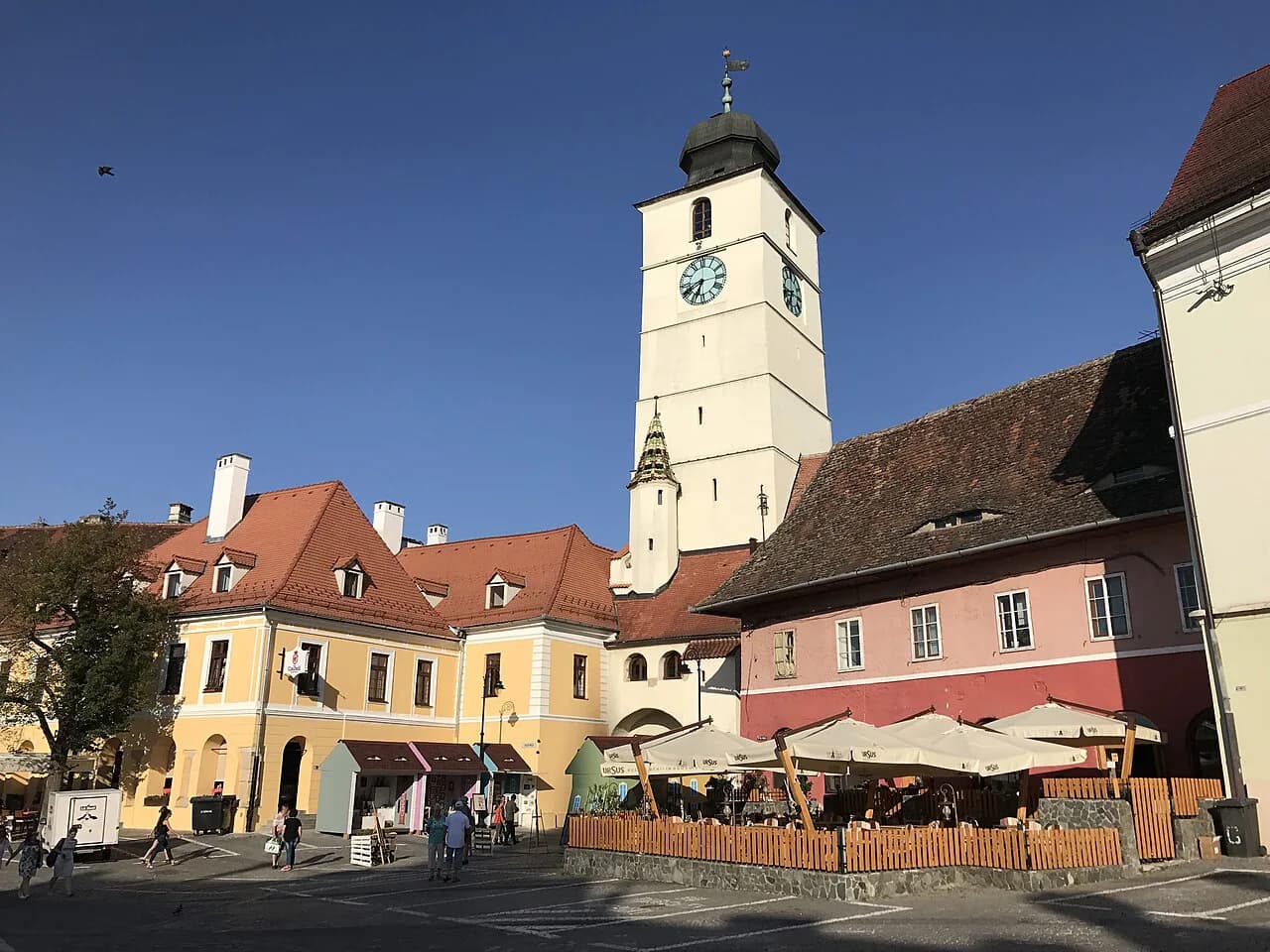
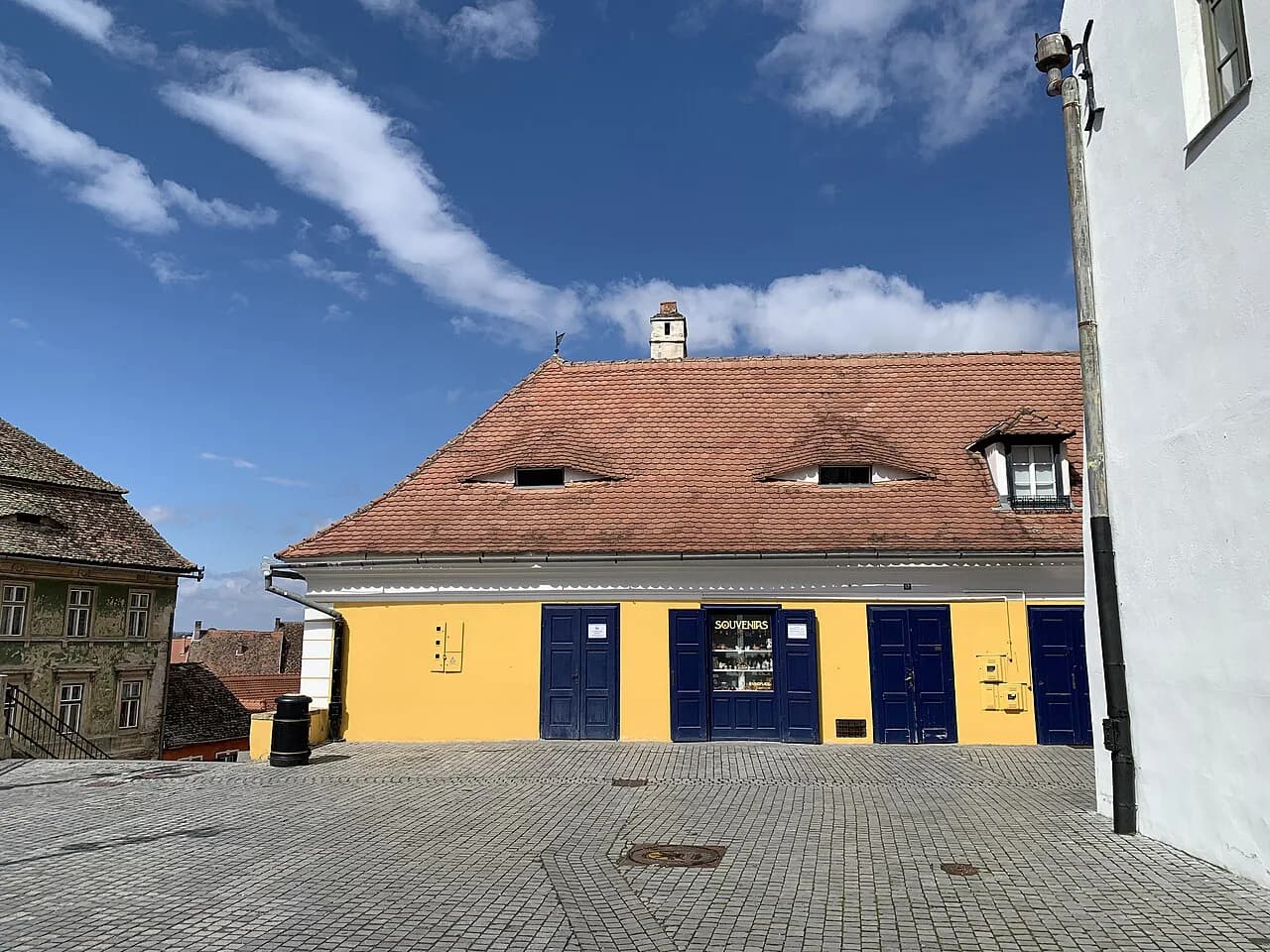
Narrow streets pass steep-roofed 17th-century buildings with gable overhangs before opening into the church-dominated squares, and sections of the medieval wall still guard the historic area. The Germanic character of the place comes through in the rooflines and the square proportions more than in any single building.
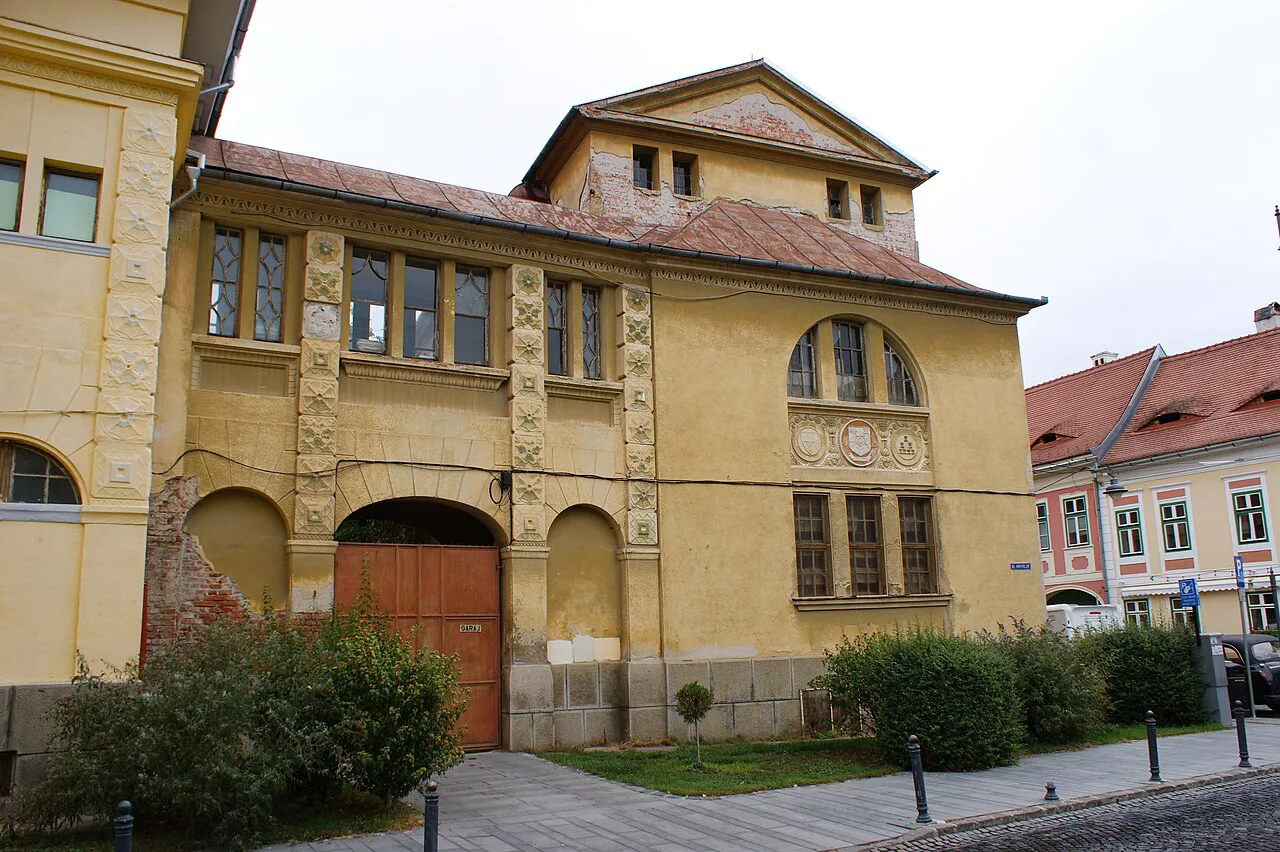
Piața Mare (Great Square)
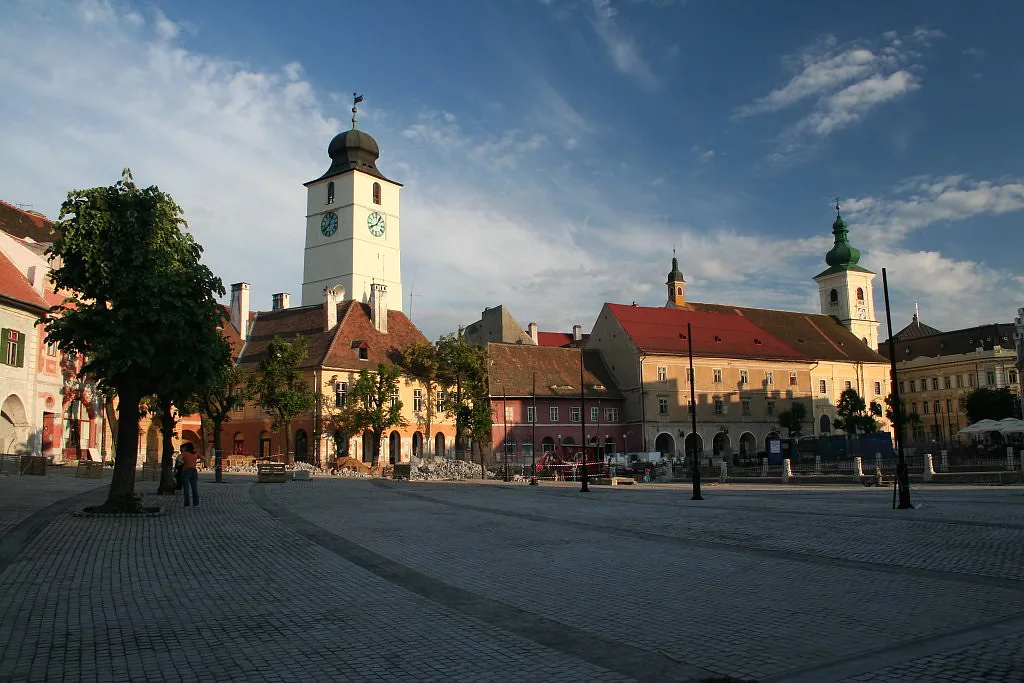
Piața Mare is the largest and most open of the three squares and the place where most community events are held. Two structures face onto it: the Roman-Catholic church and Brukenthal Palace, which houses an art collection. Walk the perimeter once to take in the facades, then use the square as a meeting point rather than a destination in itself.
Brukenthal Palace houses one of Romania's most important art collections, which is the reason many visitors linger here, and the collection inside rewards a proper stop if art is your priority. If it is not, the square is still the natural orientation point for the rest of the old town.
Piața Mică (Little Square) and the Bridge of Lies
Piața Mică sits just off Piața Mare and connects to it through a short passage under the buildings, which makes the two feel like one continuous space until you are through. The square is tighter and more enclosed than the Great Square, with the Bridge of Lies as its best-known crossing.
The Bridge of Lies is a small iron footbridge rather than a viewpoint, and crossing it takes seconds, so treat it as a marker on the walk rather than a sight to plan around. Together with Goldsmiths' Square nearby, it makes a natural loop back up towards the Upper Town.
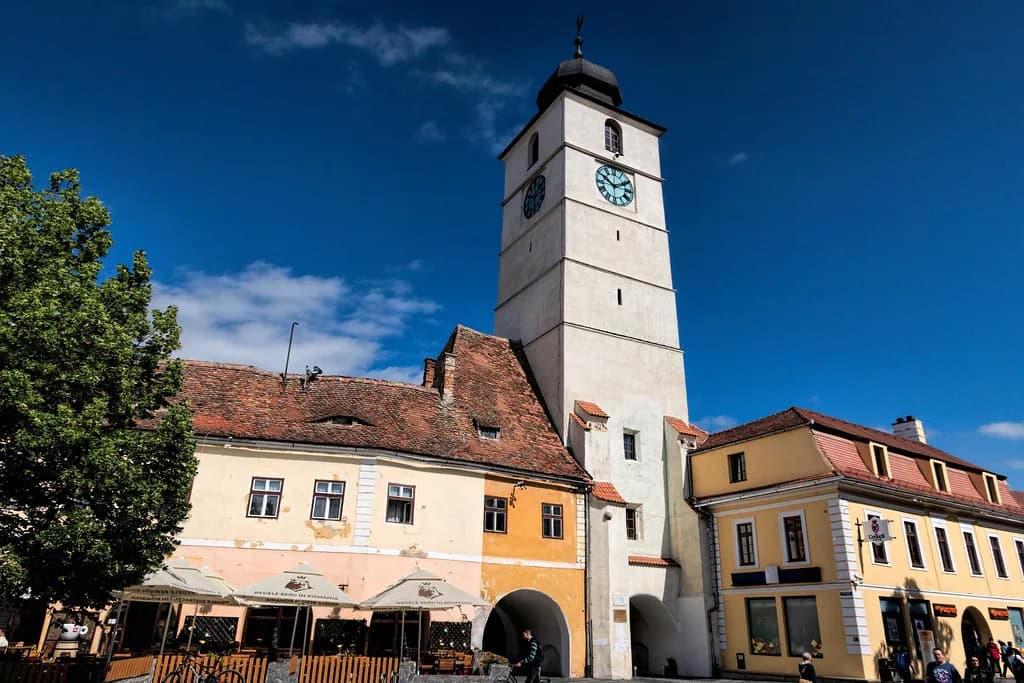
Piața Huet (Huet Square) and the cathedral
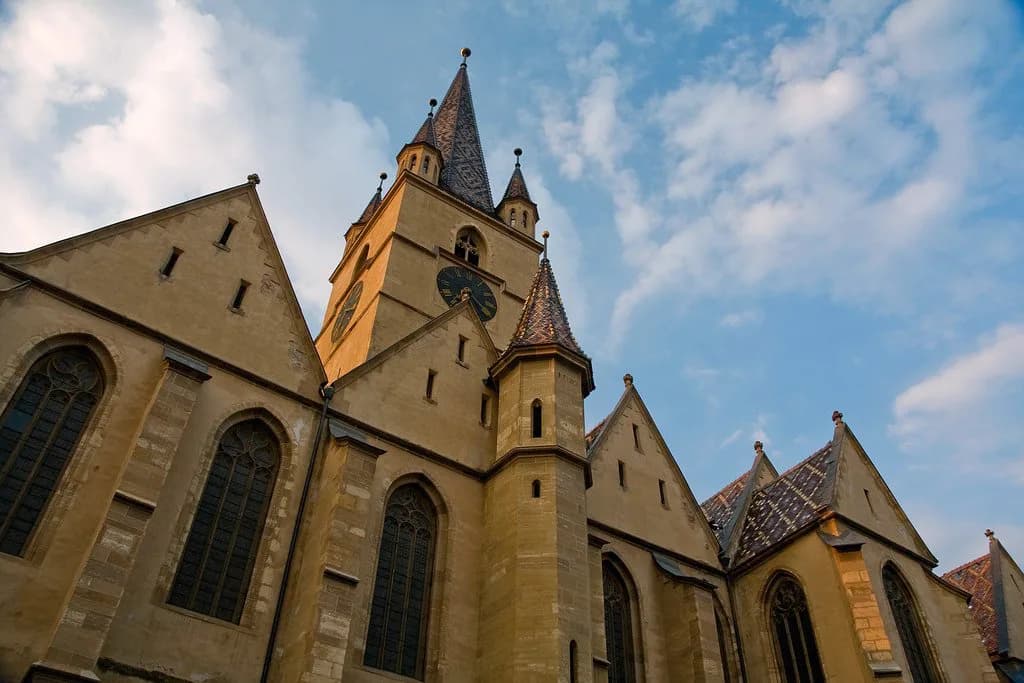
Piața Huet is the third of the main squares and the one most closely tied to the church that dominates it. The square is quieter than Piața Mare and rewards a slow circuit to look at the buildings around its edges rather than a quick pass-through.
The church on Piața Huet anchors the square; the Sibiu churches page covers the churches of the old town and what you can see inside them. Use the square as a pause between Piața Mare and the Passage of Steps rather than as a sight in its own right.
The Passage of Steps and Goldsmiths' Square
The Passage of Steps links the Upper Town to the Lower Town, and it is the single most useful piece of geography in Sibiu: find it once and the two levels stop feeling like separate towns. The stairway is steep and cobbled, so it is not a route to take with a suitcase or in a hurry.
Goldsmiths' Square sits close by and is one of the smaller open spaces listed among the old town's attractions. It works best as part of the descent rather than a stop in its own right, so fold it into the walk between levels.
Walking the walls and towers
Start with the southeastern stretch, which shows the fortifications at their clearest. The 16th-century Thick Tower (Turnul Gros) was the site of Sibiu's first theatrical performance, staged in 1778, and its bulk is easy to pick out along the wall. The three 15th-century towers nearby are the ones to name when you are navigating: Harquebusiers', Carpenters' and Potters'.
Sibiu (Hermannstadt in German) was the largest and wealthiest of the seven walled citadels founded by German settlers known as Transylvanian Saxons, and the guild wealth that paid for the buildings also paid for the defences that protected them. That is why the wall reads as a working system of towers and gates rather than a decorative fragment.
A suggested route on foot
Begin in Piața Mare, cross into Piața Mică and the Bridge of Lies, then climb to Piața Huet and the cathedral. Take the Passage of Steps down into the Lower Town, loop through Goldsmiths' Square, and finish along the southeastern walls past the Thick Tower and the three 15th-century towers. That order keeps the climbing to one descent and one ascent rather than repeated up-and-down.
Allow a half day for the walk at an unhurried pace, and longer if you go inside the cathedral, Brukenthal Palace or any museum. The cobbles and steps are the main reason a route that looks short on the Sibiu Map takes longer in practice.
If you would rather have the geography explained as you go, guarantee-departure, small-group walking tours of the old town run about two hours. They are tip-based: there is no set price and no upfront payment, and you give the guide what you consider appropriate at the end. The tour listing names the language and itinerary, so the meeting point is confirmed when you reserve.
What to leave for another day
If time is short, keep the three squares, the Passage of Steps and the southeastern walls, and leave the museums for a return visit; Brukenthal Palace alone can absorb an afternoon. The smaller squares and side streets are pleasant but interchangeable on a first trip, and skipping them costs you little.
Sights beyond the centre, such as the villages south of the city, need a car or a bus and a separate half day. They are worth planning as their own outing rather than squeezing into an old town walk.
Practical points for the old town
Sibiu International Airport (SBZ) is the nearest airport to the city, which makes the old town reachable on the day you land if your flight arrives early enough. The centre itself is pedestrian-friendly, so once you are in it you will mostly be on foot; the Sibiu Map shows the streets between the airport road and the squares.
Prices, opening hours and tour times change by season, so confirm them with the venue or operator before you travel. For the rest of the city's sights, the Things to Do in Sibiu guide covers what sits outside the old town boundary.
Which half of Sibiu Old Town to walk first
Walk the Upper Town squares first and take the Passage of Steps down to the Lower Town and the walls; that order gives you the historic landmarks while you are fresh and saves the climbing for the descent. If you only have an afternoon, the three squares plus the southeastern stretch of fortifications are the essential loop.
Leave the museums, the outlying villages and the wider city for a second day, and check current opening times with the venues you plan to enter before setting out.
Explore more Sibiu guides
Frequently Asked Questions
How many days do you need in Sibiu?
One full day covers the three main squares, the Passage of Steps and the southeastern walls on foot at a relaxed pace. Add a second day if you want to go inside Brukenthal Palace and visit sights outside the old town.
Is Sibiu Old Town flat?
No. The centre is split between an Upper Town on the plateau and a Lower Town inside the walls above the river Cibin, connected by stepped passages such as the Passage of Steps. Expect cobbles and short climbs between the levels, and plan a route that descends once rather than repeatedly.
Where does a walk through Sibiu Old Town start?
Start in Piața Mare (Great Square), which is the most open of the three squares and easy to find. From there the walk runs through Piața Mică and the Bridge of Lies, up to Piața Huet and the cathedral, then down the Passage of Steps to the Lower Town and the walls.
Sources
Useful notes for your next trip
Optional updates to our guides.
You might also like
Continue reading
More guides you'll find useful