Museum of the Romanian Peasant, Bucharest: What to See and How Long
What the Museum of the Romanian Peasant in Bucharest shows, from ceramics and costumes to the wooden church in the yard, plus hours and how long to allow.
On this page
The Museum of the Romanian Peasant is a folk art and ethnography museum on Șoseaua Kiseleff in northern Bucharest, and it needs roughly two hours if you want to read the displays properly. The collections cover ceramics, home textiles, peasant costumes, wood, furniture and religious art, and a wooden church stands in the courtyard. This guide covers what the rooms hold, the opening hours, tickets, and how the museum fits a day on Kiseleff.
Where the museum sits on Șoseaua Kiseleff
The museum's address is Kiseleff 3, Sector 1, on the boulevard that runs north from Piața Victoriei towards Herăstrău, and the Village Museum sits further up the same road. Pairing the two ethnographic collections in one afternoon saves a second cross-town trip, and the walk between them is along the boulevard rather than through back streets.
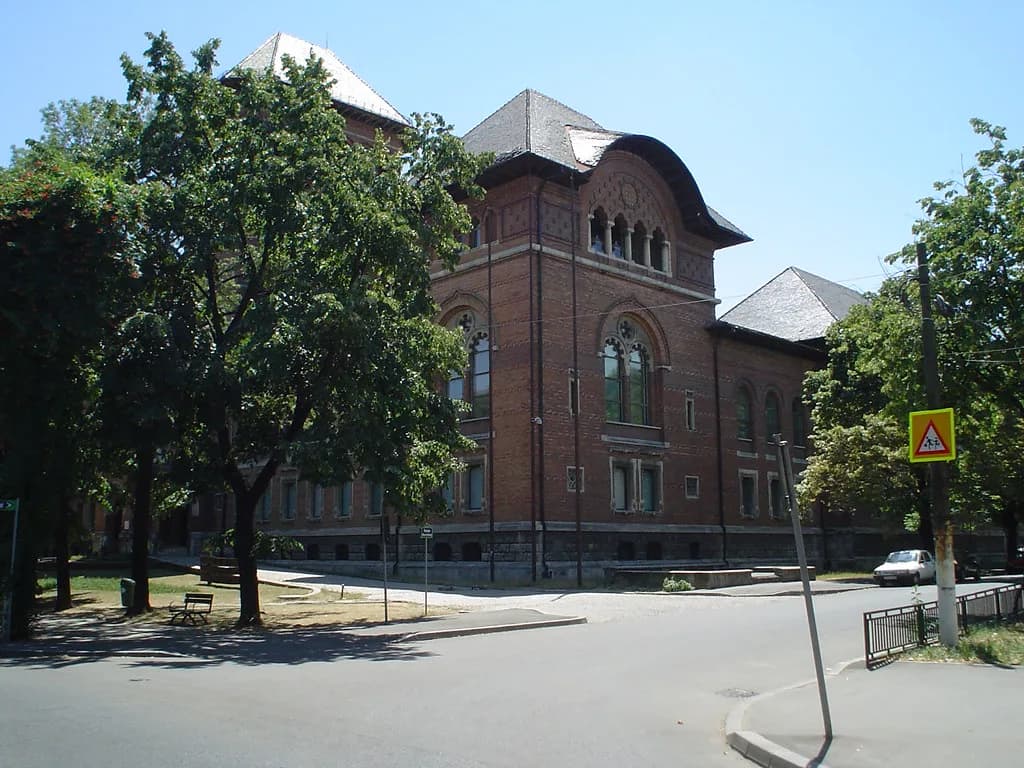
The building is a Neo-Romanian design inspired by the Brâncoveni tradition, laid out as a monastic-type enclosure and completed in 1941. From the street you see a low, brick-faced complex behind gates with the courtyard before the galleries.
The collections: ceramics, costume, textiles, wood and icons
The museum lists its collections under ceramics, religious art, wood, furniture and ironmongery, home textiles, carpets and peasant costumes. In practice that means rooms of glazed pottery, woven cloth and painted icons, with carved furniture and tools filling out the domestic side of village life. Read the labels: the point of the displays is how objects were used, not just how they look under glass.
Ceramics and costume are where most visitors linger, because the colour and pattern work lands even without context. Textiles reward a slower pass, since variation between regions is carried in weave and embroidery rather than shape. Religious art and carved wood sit further into the building and give the collection its quieter counterweight.
Treat the visit as a sequence of collection types rather than one chronological story. If time is short, ceramics, costume and the religious art rooms give the clearest picture of what the museum is for, and furniture is where fatigue sets in. The museum publishes virtual tours of the collections, a reasonable way to preview the displays first.
The Peasant Art Gallery and how to read the displays
The Peasant Art Gallery is arranged like the good room of a peasant house, where the best and most precious objects were kept and shown. That framing matters: the gallery is about selection and display rather than a neutral storage of everything the museum owns. Look for the logic of the room — which objects were thought fine enough to put on show.
Displays combine objects with the customs they belonged to, which is where the Romanian Peasant title earns its keep. Give the labels time in the gallery and the costume rooms especially, because regional differences are explained there rather than in the object shapes. Photography rules and guided visit arrangements change, so confirm them at the ticket desk on arrival.
The wooden church in the courtyard
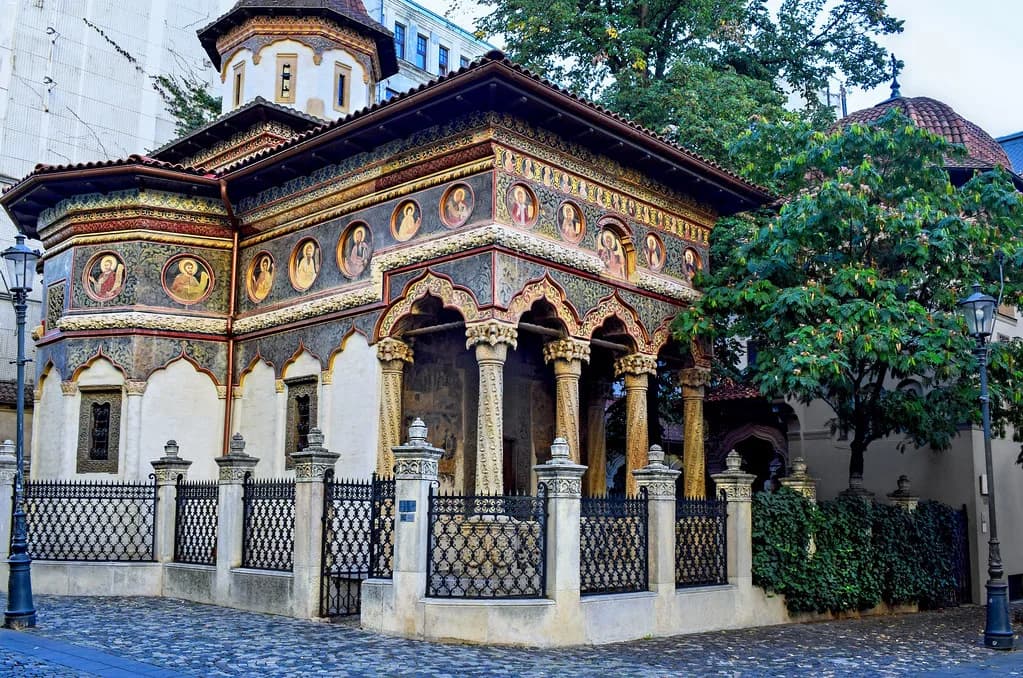
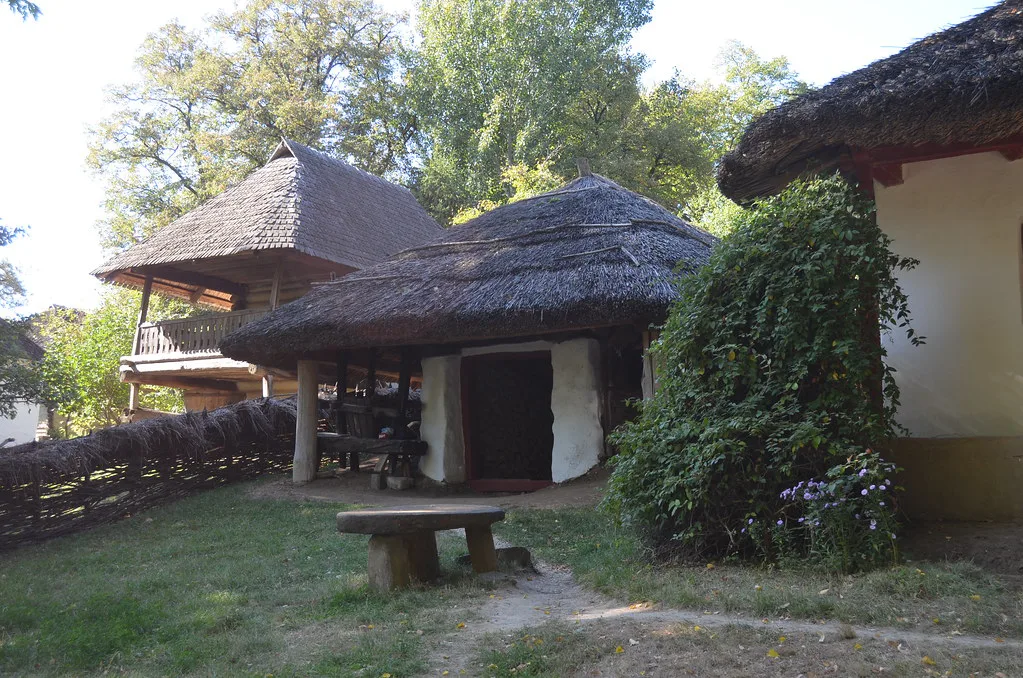
A wooden church stands in the museum courtyard, an eighteenth-century historical monument relocated here in 1992. It is a separate stop rather than part of the indoor galleries, so build it into the walk between the entrance and the exhibition rooms. The open-air setting makes it a natural breather between floors of dense display.
If carved timber churches are the reason you travel in Romania, this courtyard example is a taster rather than a destination in itself. The museum's own site lists its relocated wooden churches under the names Bejan, Groșii Noi, Julița, Lunca Moților and Troaș, which shows how seriously the institution treats timber architecture. The city's other religious architecture is covered in the guide to Bucharest churches.
The Museum of Communist Iconography inside the same building
The Museum of Communist Iconography sits inside the Romanian Peasant Museum, and it is a distinct thing to see rather than an extension of the ethnographic galleries. It covers art produced under the communist regime, which makes for a sharp tonal shift after rooms of village textiles and pottery. Allow extra time for it if the period interests you, and skip it if you are already running against a fixed afternoon.
The two collections work well as a contrast: one is about rural continuity, the other about a state-imposed visual language. Keeping them mentally separate stops you reading the communist material as folk art or the folk art as political. Ask at the entrance whether that section is open on the day you visit.
Opening hours: which days it closes and when to arrive
Tuesday to Sunday 10:00 to 18:00 is the published gallery pattern, with Monday a closed day. That makes Monday the main scheduling constraint on a Bucharest trip, so build the museum into the middle or end of a stay rather than the first morning.
The museum site publishes office hours rather than gallery hours: Monday to Thursday 08:30 to 17:00, Friday 08:30 to 14:30, and closed at weekends. Those are administrative times for correspondence and enquiries, not the times the exhibitions open. Read the two sets of figures as different things and plan from the gallery pattern.
The building also houses a cinema and the Peasant Club, and they keep their own hours that run later than the galleries. The club opens Sunday to Thursday 09:00 to 22:00 and Friday to Saturday 09:00 to 23:00, and the cinema runs Tuesday to Friday 17:30 to 20:30 and weekends 14:30 to 20:30.
Tickets in lei and what concessions exist
Published admission is 12 lei for adults, 6 lei for seniors, and 3 lei each for children and students. Cinema screenings are priced separately: a full ticket costs 32 lei, a pensioner ticket 16 lei, and pupils, students and people with moderate or mild disabilities pay 8 lei, with no charge for people with severe disabilities. Special screenings run at 40 lei full and 20 lei for pensioners.
At those levels the museum sits at the cheap end of a Bucharest afternoon, which makes it easy to justify alongside a paid attraction elsewhere in the city. Pay at the ticket desk on arrival, and budget separately if you intend to catch a film. Confirm the figures on the day, since the museum sets its own prices and concession categories.
How long the museum needs and how to pace the visit
Allow about two hours for the ethnographic galleries at a steady pace, and add half an hour if you want to do the communist iconography collection properly. The courtyard church takes fifteen minutes or so, mostly walking and looking rather than reading. Budget two and a half hours in total, and drop the communist section first if you are short.
The rooms are dense with objects and labels, so a single continuous pass tends to blur after the first hour. Take a short break in the courtyard between the folk art and the communist material, and you will retain far more of the ceramics and costume detail. If you are building a longer itinerary, this museum is one of the stops covered in the guide to things to do in Bucharest.
Getting there and pairing it with nearby sights
The museum is reached on foot from Piața Victoriei, which is served by metro and tram routes across the city, and the walk north along Șoseaua Kiseleff takes around ten minutes. Rather than crossing town twice, group the museum with the Village Museum and the parkland further north on the same boulevard. From the south side of the centre, allow half an hour by metro plus the walk.
A sensible half day runs from the museum up Kiseleff to the Village Museum, with a walk through the Herăstrău area to finish. Coming south again, Calea Victoriei and the Ateneul Român are within reach for an evening walk, and the museums of Bucharest include the Royal Palace for a fuller art and history afternoon. If you are planning a fuller day across the centre, the 3 days in Bucharest itinerary shows how these pieces fit together.
The Old Town makes a natural contrast for the evening, with Strada Smârdan and the surrounding streets carrying the restaurant and bar end of the city. Walking tours run from the centre, and a free walking tour is a useful way to orient yourself before tackling the museum district on foot.
Is the Peasant Museum worth half a day?
Yes, if you are interested in how rural Romania lived and made things. The collections have broad scope, the ticket is cheap, and the courtyard church gives the visit a shape beyond rooms of display cases. The main constraint is the Monday closure, so check the day before you plan around it.
Build it into a Kiseleff afternoon with the Village Museum and you get two complementary versions of the same subject: objects indoors, buildings outdoors. If your interests run to palaces and opera instead, Bucharest has plenty of alternatives covered elsewhere on the site.
Explore more Bucharest guides
Frequently Asked Questions
Do I need to book tickets for the Museum of the Romanian Peasant in advance?
No advance booking is required for general admission. Turn up at the ticket desk during the published gallery hours, which run Tuesday to Sunday. Cinema screenings are priced and sold separately, with tickets available at the cinema box office or through the platform listed on the museum site.
Is the wooden church included in the museum ticket?
The wooden church stands in the museum courtyard and is seen as part of the visit rather than a separately ticketed attraction. Plan it into the walk between the entrance and the galleries rather than treating it as an extra stop elsewhere in the city.
Can I visit the Museum of Communist Iconography on its own?
It sits inside the Romanian Peasant Museum building and is visited alongside the ethnographic galleries. Ask at the ticket desk whether it is open on the day, because access to that section can differ from the main displays.
Sources
Useful notes for your next trip
Optional updates to our guides.
You might also like
Continue reading
More guides you'll find useful