Sibiu Map: Where the Old Town Sights Sit and How to Walk Them
A map-reading guide to Sibiu's old centre: where the squares, towers, churches and museums sit, and a walking order that links them without doubling back.
On this page
Sibiu's old centre is compact enough to cross on foot, but it sits on two levels: the Upper Town around the main squares and the Lower Town below the walls. A printed or offline map beats a phone screen here because the streets twist and the stairs between levels are easy to miss. This guide groups the sights by function so you can mark the squares, towers, churches and museums that matter to you, then follow a walking order that links them.
Sibiu's layout in one paragraph
The old centre rides a ridge above the Cibin river, with the Upper Town on top and the Lower Town tucked below the defensive walls. The main squares, Piața Mare and Piața Mică, anchor the Upper Town, while Piața Huet sits slightly east. An interactive sight map marks the towers, churches and museums across both levels, which makes it easier to see how the pieces fit before you set out.
The two levels: Upper Town and Lower Town
The Upper Town holds the big squares, the Evangelical Cathedral, the Brukenthal Museum and most of the monuments casual visitors come for. The Lower Town spreads below the walls, reached by stairs, by towers that double as passages, and by a footway ramp. Mark the ramp and the Stairs Tower on your map early, because they are the obvious links between the levels and easy to overlook when you are following street names.
Apple Maps labels the old town as a single area, which is fine for orientation but hides the split between levels. Use it to find the general quarter, then switch to a sight-specific map for the named towers and churches. If you are building a day around the old town, the Sibiu old town guide covers the core streets in more detail.
The core squares and streets to mark first
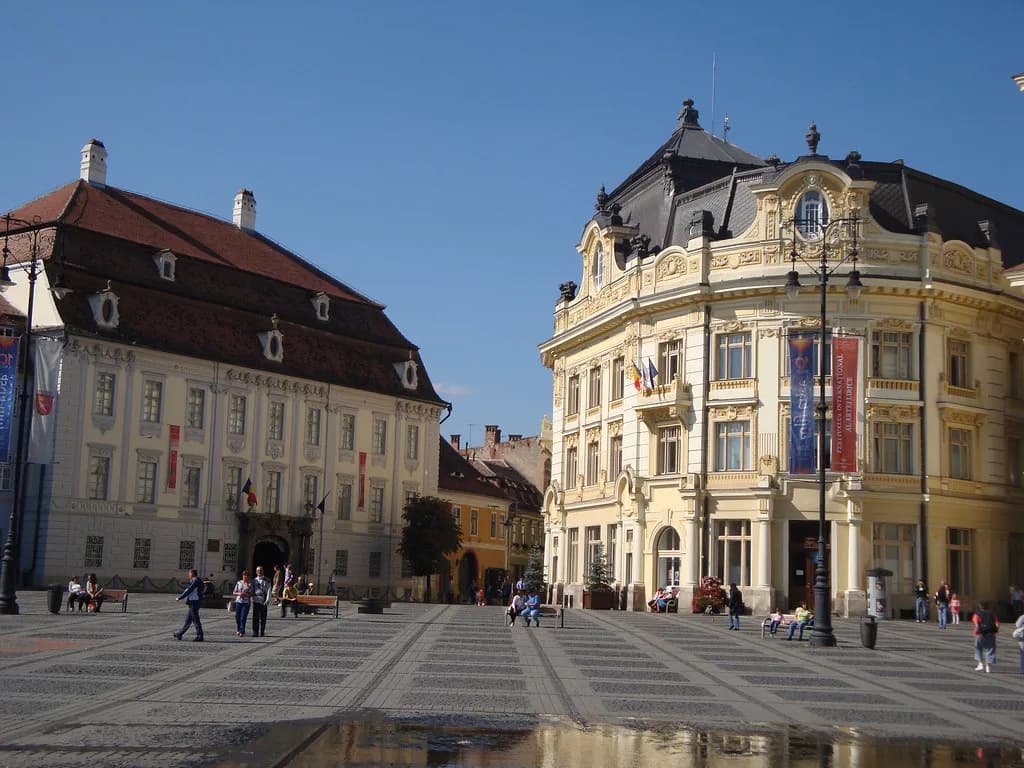
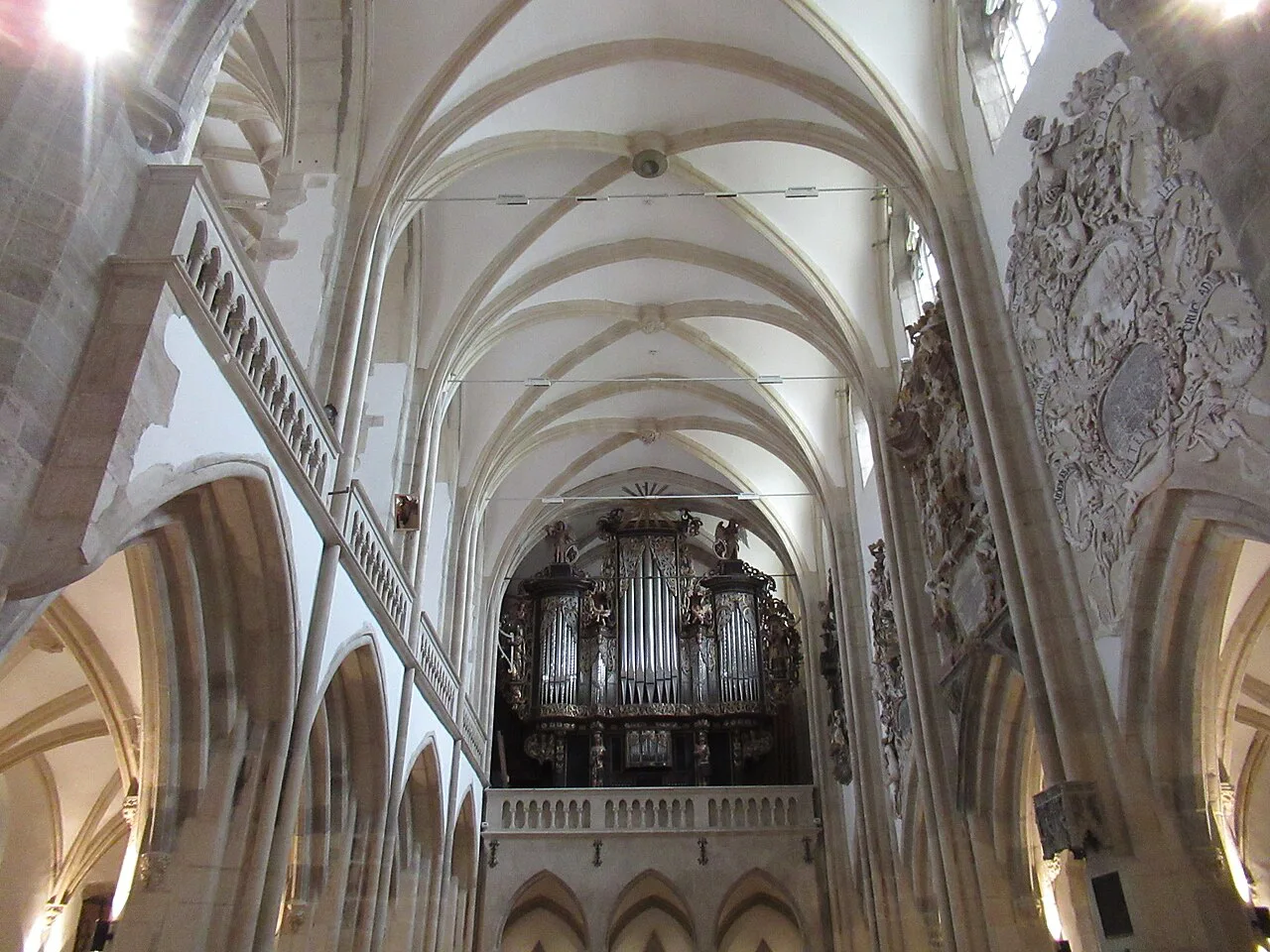
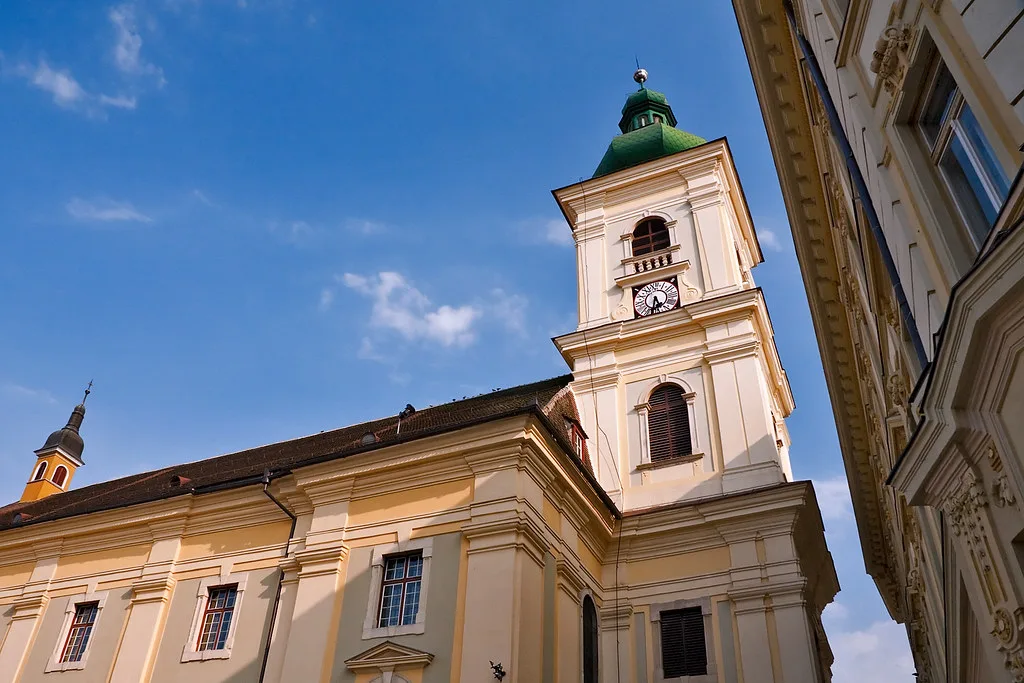
Start with Piața Mare, the large square that holds the Catholic Church and the Brukenthal Museum, then walk through to Piața Mică, the smaller square that opens onto the Bridge of Lies. Piața Huet, just east of Piața Mare, is the third anchor and puts you beside the Evangelical Cathedral. Pin these three before anything else and the rest of the old town falls into place around them.
The streets between the squares are short and often pedestrian, so a map that shows building footprints is more useful than one that only labels roads. The Bridge of Lies, in Piața Mică, is a natural orientation point for the heart of the old town. If you want a structured route through the centre, a Sibiu walking tour can save you from criss-crossing the same streets.
Mapping the towers and the defensive system
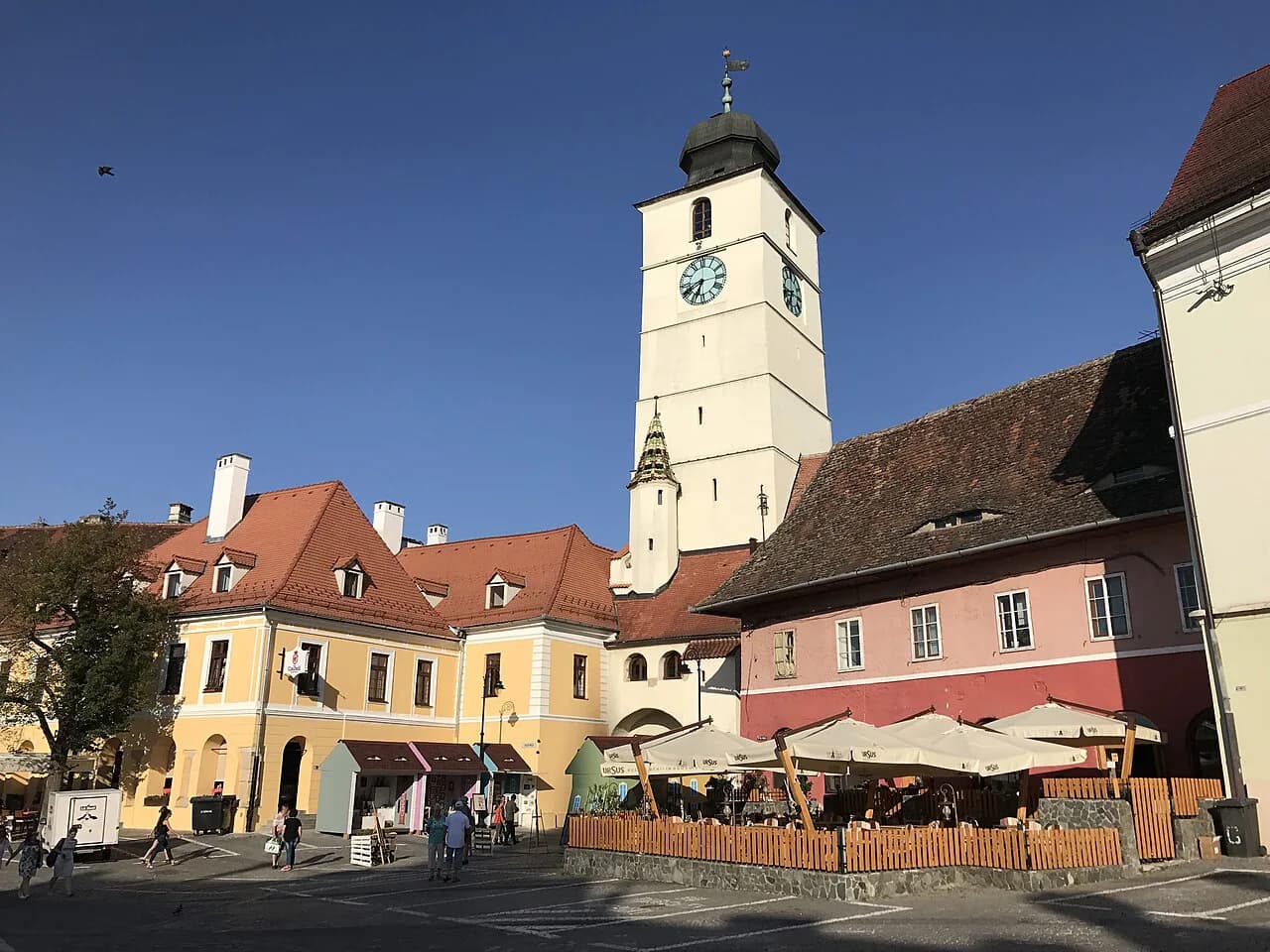
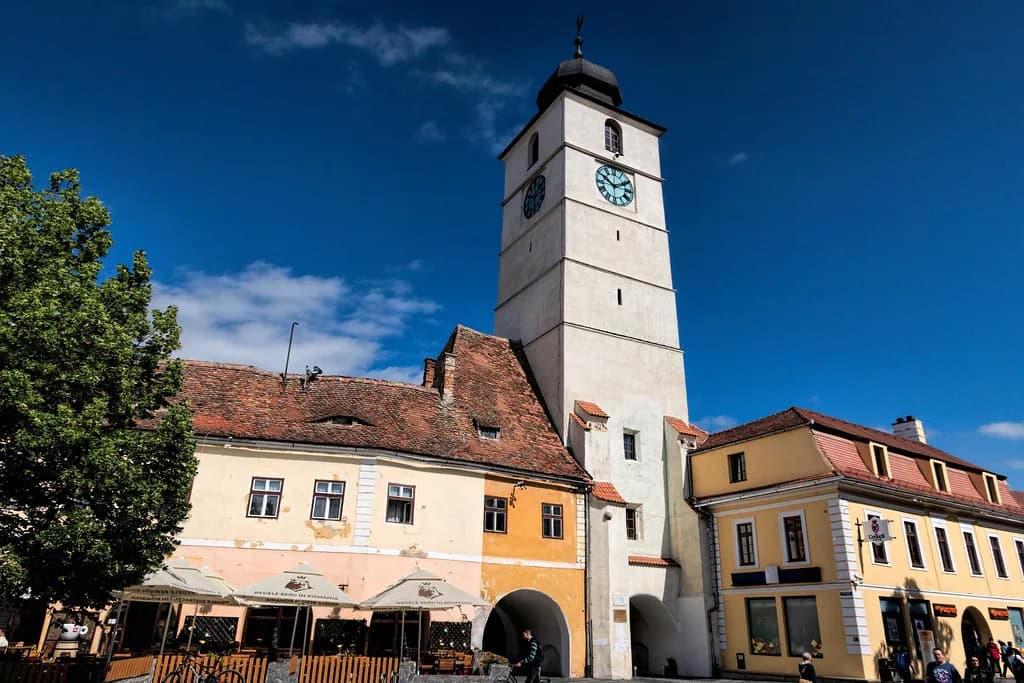
Sibiu's defensive system left a ring of towers, each once maintained by a guild. The Coopers' Tower, Goldsmiths' Tower, Gunsmiths' Tower, Potters' Tower, Tanners' Tower, Fat Tower and Gunpowder Tower all appear on the interactive sight map, along with the Stairs Tower. Mark them as a group rather than one by one, because they trace the line of the old walls and make more sense seen as a circuit.
The towers are scattered across both levels, so expect to walk up and down between them rather than along a single flat street. The Stairs Tower and the footway ramp are the practical connections, and the Gunpowder Tower sits further out from the core squares. Put the towers on your map after the squares so you can see which ones fall naturally on your route and which need a deliberate detour.
Mapping the churches
The Evangelical Cathedral stands in Piața Huet, the Catholic Church in Piața Mare, and the Orthodox Cathedral slightly south of the main squares. The Reformed Church, the Ursuline Church, the Saint Cross Chapel and the Minorite church fill in the rest of the ecclesiastical map. Grouping them by square saves you from hunting individual addresses, and the Sibiu cathedral guide covers the Evangelical Cathedral in depth.
Several of these churches sit on the same short walk, so it is worth marking them as a cluster rather than as separate pins. The Evangelical Cathedral and the Catholic Church are close enough to visit in one pass, while the Orthodox Cathedral pulls you slightly away from the main squares. A churches-focused page in the Sibiu Attractions collection gives each one its own entry if you want to plan around a particular building.
Mapping the museums
The Brukenthal Museum sits in Piața Mare and is the obvious first pin for museum-goers. The History Museum, the Natural History Museum, the Franz Binder Museum, the August von Spiess Hunter Museum, the Officinal Museum and the Steam-engine Museum all appear on the interactive sight map, spread across the old centre. The ASTRA Folk Civilisation Museum sits outside the core old centre, so treat it as a separate trip rather than a stop on the square-to-square walk.
Mark the museums you actually want rather than all of them, because the old centre rewards a short list over a long one. The Brukenthal and the History Museum sit close enough to pair, while the smaller museums work best as fillers between squares. A museums-in-Sibiu guide lists each one with what it holds, which helps you decide before you pin anything.
Monument buildings on the map
The Bridge of Lies is the best-known monument building in the old centre, spanning the street by Piața Mică. The Kariatidas House, the Luxemburg House and the Müller House are less obvious but appear on the sight map alongside the larger landmarks. Pin them if you are walking slowly and want to read the streets rather than tick off headline sights.
A walking order that avoids doubling back
Start in Piața Mare, walk east to Piața Huet for the Evangelical Cathedral, then drop south through Piața Mică and over the Bridge of Lies into the Lower Town. Follow the towers and the footway ramp back up to the Upper Town and finish at the Brukenthal Museum. This order keeps the uphill work brief and puts the squares early, when you still have energy for the churches and museums.
If you are planning a fuller day, the things to do in Sibiu guide lays out the same old town with more context on each stop. Treat any timings as a rough order rather than a schedule, because the stairs and the two levels slow you down more than the map suggests.
If you only have a short stop
For a brief visit, mark Piața Mare, Piața Huet, the Evangelical Cathedral and the Bridge of Lies, then walk between them in that order. Skip the Lower Town towers and the smaller museums, which need more time than a short stop allows. This loop keeps you on the Upper Town ridge and avoids the stairs entirely.
Where to find a usable map
The interactive sight map on welcometoromania lists the towers, churches, museums and monument buildings with icons you can click for more detail. A separate street-plan viewer covers elevations and lets you print a map, though it is built more for general orientation than for sight-finding. Apple Maps labels the old town as a single place, which is fine for getting your bearings but not for finding the Kariatidas House.
Opening hours and ticket prices for the towers, churches and museums are not listed on these maps, so check each venue's own page before you set out. If you are heading beyond Sibiu, Avrig sits on the road towards Făgăraș and makes a natural extension of the map.
Which loop fits your day in Sibiu?
The old town rewards a short, deliberate list over a scatter of pins. Mark the three squares, add the churches and museums that genuinely interest you, then follow the upper-then-lower order so the stairs work with you rather than against you. Leave the ASTRA Folk Civilisation Museum for a separate outing and check each venue's own page for hours and tickets before you go.
Explore more Sibiu guides
Sources
Useful notes for your next trip
Optional updates to our guides.
You might also like
Continue reading
More guides you'll find useful