Bistrița: The Saxon Town, the Sugălete and the Dracula Link
Bistrița in Transylvania: the Evangelical church, the Sugălete arcades, the Dogarilor Tower and the passages, plus the town's link to Bram Stoker's Dracula.
On this page
Bistrița needs half a day, and a full one if you add the churches and civic buildings around the centre. It is the seat of Bistrița-Năsăud county, set at the foot of the Bârgău Mountains in northern Transylvania, and the older core is small enough to walk end to end. Its first documentary attestation dates from 1264, and the Saxon legacy is what you see on the ground today. This guide covers the Evangelical church, the Sugălete arcades, the Dogarilor Tower, the town's 22 passages, the surrounding monuments and a walking route that strings them together.
Where Bistrița sits and what it is
Bistrița lies in the north-east of the Transylvanian Plateau, in the Bistrița Depression below the Bârgău Mountains, and it serves as the county seat of Bistrița-Năsăud. The town centre is compact: the sights cluster around Piața Centrală, the main square, within easy walking distance of each other.
Approach it as a stop rather than a base. The historic core is tight, the monuments sit close together, and you will not spend a day crossing town between them. That makes Bistrița a natural half-day pause on a longer Transylvania circuit rather than a destination in its own right for most travellers.
Bram Stoker's Dracula and Bistrița: fiction, not history
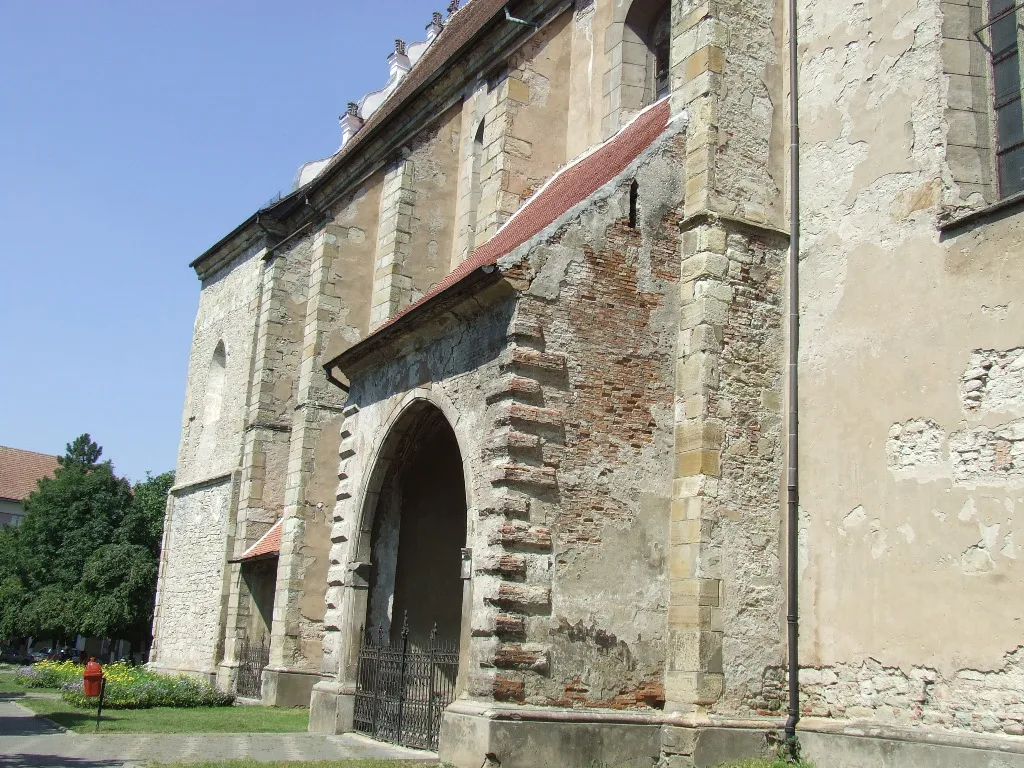
Bistrița is often named alongside Bram Stoker's novel, and the town is a legitimate stop for readers tracing the book. Keep the novel and the historical Vlad III apart, though: the fictional Dracula and the real fifteenth-century ruler are separate subjects. If you want the actual historical figure, start with the guide to Vlad the Impaler rather than treating the novel as a map.
Nothing in the town's own tourist listings frames Bistrița as a vampire attraction, so do not arrive expecting theatrical sites. What you get instead is a working Saxon-founded town with a medieval centre, which is the honest reason to come. If the fictional side is what draws you, the wider Dracula's Castle in Romania material will show you where the book and the real places diverge.
The Evangelical church
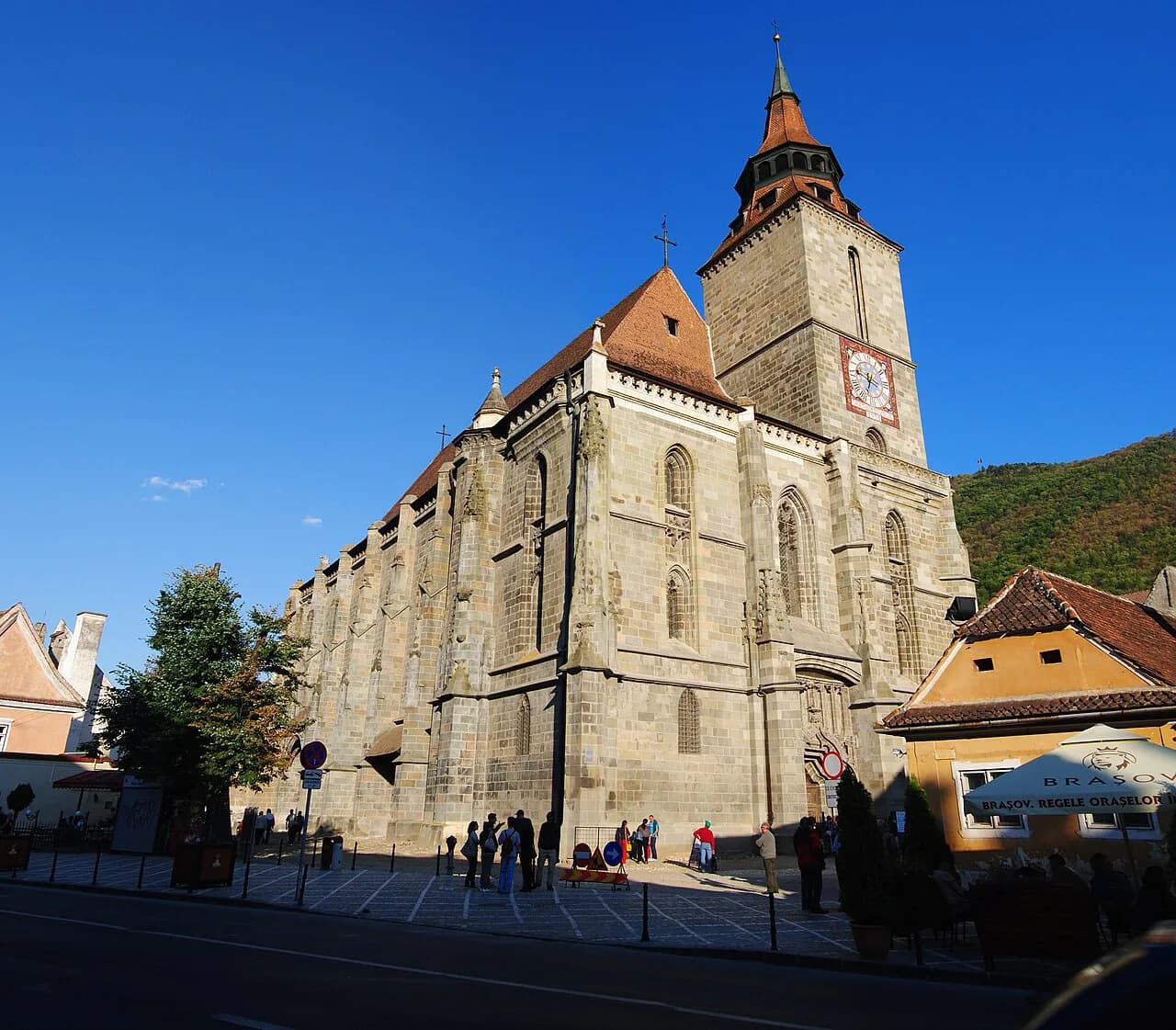
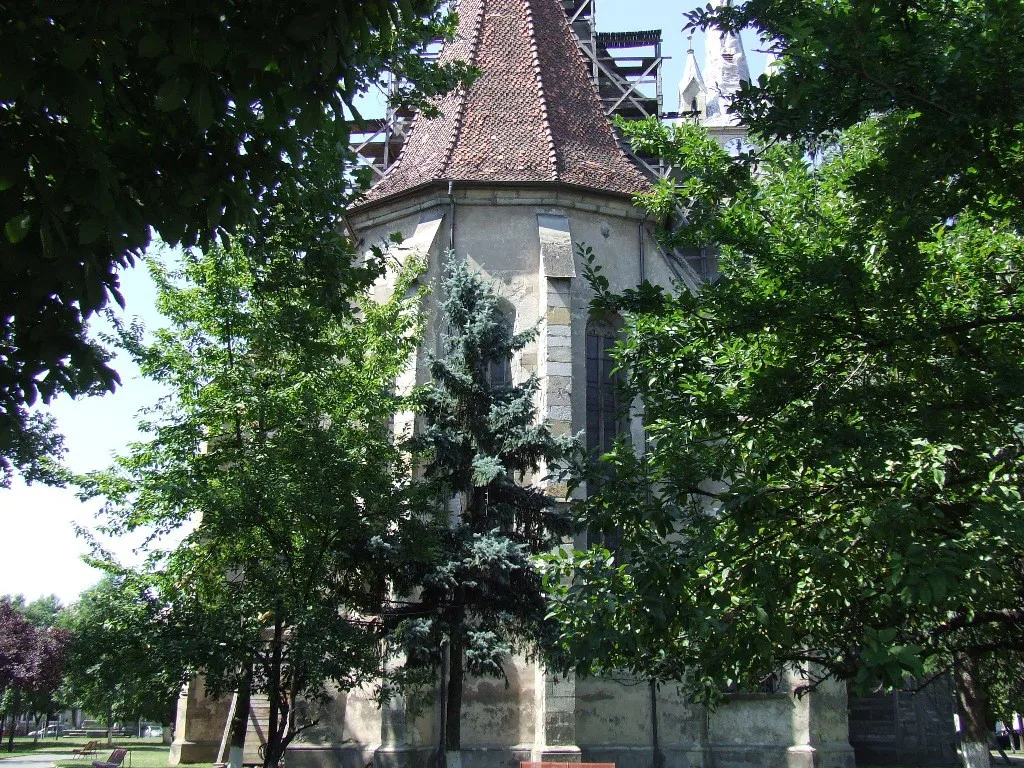
The Biserica Evanghelică, the Evangelical church, is the monument the town hall describes as Bistrița's most imposing historic building. It anchors the centre and is the first thing to look for when you arrive on Piața Centrală.
Check visiting arrangements on the spot or through the tourist information centre before you build your morning around going inside. The town's listings confirm the church as a monument without setting out access details, so treat the exterior as the certain part of your visit.
The Sugălete: the arcaded row
The Sugălete is a run of medieval houses built around 1480, with open vaulted arcades at ground level facing the public street. The arcades are the practical core of a Bistrița visit: you walk through them rather than past them, and they give the centre its distinctive covered edge.
Give the row twenty minutes of unhurried walking and look up at the upper storeys as well as through the arches. This is a place to read the street rather than tick off a sight, and it is best done before you head for the towers.
The Dogarilor Tower and the citadel walls
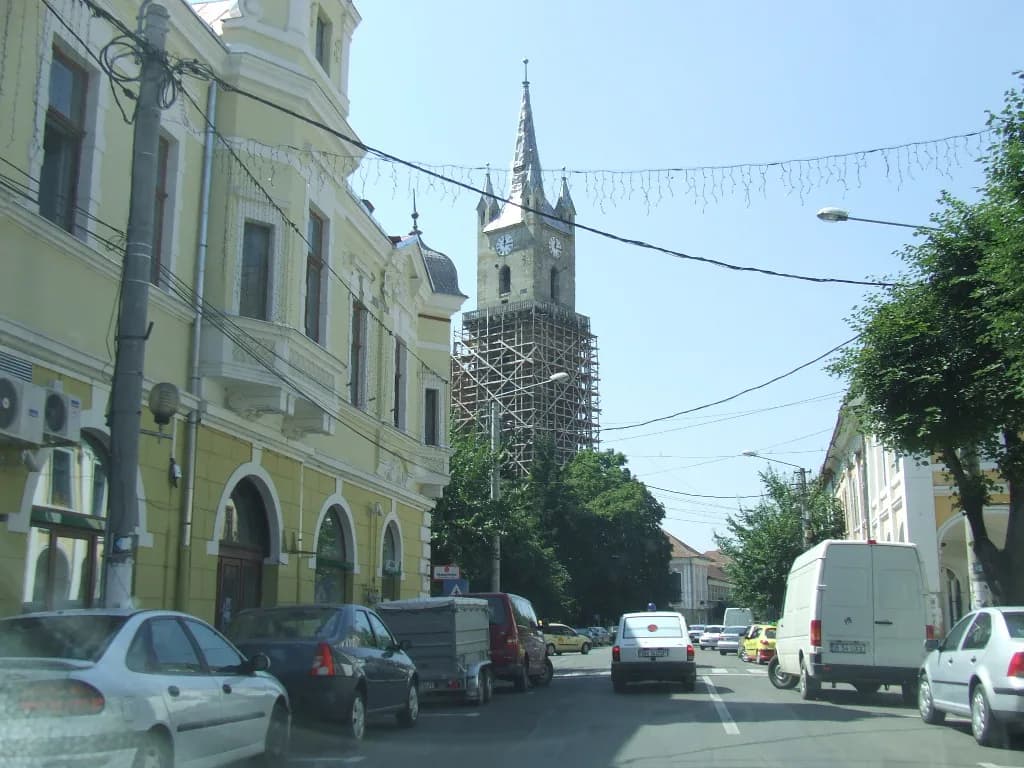
Turnul Dogarilor, the Cooper's Tower, is the only tower preserved from Bistrița's medieval citadel. That single survival is what makes it worth the short walk: it is the last standing piece of the town's fortification, not a reconstructed set piece.
Read the tower together with the passages. The town walls have largely gone, and the tower marks where the defensive circuit ran, so seeing it after the arcades gives the centre a shape. Allow ten to fifteen minutes here, longer if you want to photograph it from a few angles.
The 22 passages of the old burg
Bistrița keeps 22 passages from the old medieval burg, running as shortcuts from the central area towards the sites of the former town fortification towers. They are the connective tissue of a walk here: you use them to cut between streets rather than visiting them as a single sight.
Treat them as a route, not a checklist. Pick two or three that sit between the square, the Sugălete and the Dogarilor Tower, and let them do the work of moving you around the centre on footpaths rather than main roads.
Around the centre: monasteries, churches and old houses
Within a short radius of the square you can see the Mănăstirea Minorită, the church of the former Franciscan monastery and now an Orthodox church dedicated to the Entry of the Mother of God. The Biserica Catolică, the Catholic church, is a baroque building put up between 1781 and 1787 to plans by Paul Schmidt of the fortifications office.
The Mănăstirea Dominicană preserves Gothic stonework and door frames from the old Dominican convent of the Holy Cross, attested in Bistrița in the thirteenth century. The Casa Argintarului, the Silvermonger's House, is a Renaissance monument, and the Casa Ion Zidaru keeps Gothic elements from the fifteenth century alongside Renaissance work from the first two decades of the sixteenth.
These are exterior stops on a walking route, not a sequence of interiors, so plan them as facades and doorways you read in passing. Where a building is open for visitors, the information centre on Piața Centrală is the place to confirm it.
Civic buildings: the Culture Palace and the Old Town Hall
The Palatul Culturii, the Culture Palace, was built as the house of Bistrița's craftsmen's association at the end of the nineteenth century in the spirit of 1900 architecture, to designs by Paul Brang. It hosted the town's most important cultural events, and it still reads as a civic statement on the street.
The Primăria Veche, the Old Town Hall, was raised in the sixteenth century on Renaissance principles. Pair the two on the same leg of your walk, since both sit in the central area and take only a few minutes each to look at from outside.
Memorials and modern stops
The Monumentul Exodul Sașilor, the Monument to the Exodus of the Saxons, was inaugurated in 2014 and is dedicated to the departure of the Transylvanian Saxons. It is the clearest modern marker of the community whose churches and houses you have just walked past.
The Centrul de Informare Turistică și Diaspora combines the town's tourist information and promotion centre with a support centre for Romanians abroad. It is the practical stop for maps, current access details and anything else you need to confirm on the ground.
A short walking route through the centre
Start on Piața Centrală at the tourist information centre, then take in the Evangelical church. Walk the Sugălete arcades next, using a passage or two to cut through towards the Dogarilor Tower, and finish the medieval leg at the line of the old walls.
From there, loop back through the centre for the Minorite church, the Catholic church, the Dominican monastery remains and the two old houses, then close with the Culture Palace, the Old Town Hall and the Exodus monument. The whole circuit is a walk of a couple of hours at an easy pace, with stops.
How long Bistrița needs and how it fits a Transylvania trip
Half a day is right for the centre as described here, and a full day if you slow down, return to the churches and spend time on the passages. The town works well as a stop between larger Transylvanian centres rather than as a multi-day base.
Many travellers pass through on the road over the Tihuța (Borgo) Pass, the mountain route north-east of town, which is the reason Bistrița appears on itineraries at all. Castles such as Bran and the better-known stops to the south are a separate trip; start with the Dracula's Castle in Romania guide to plan those.
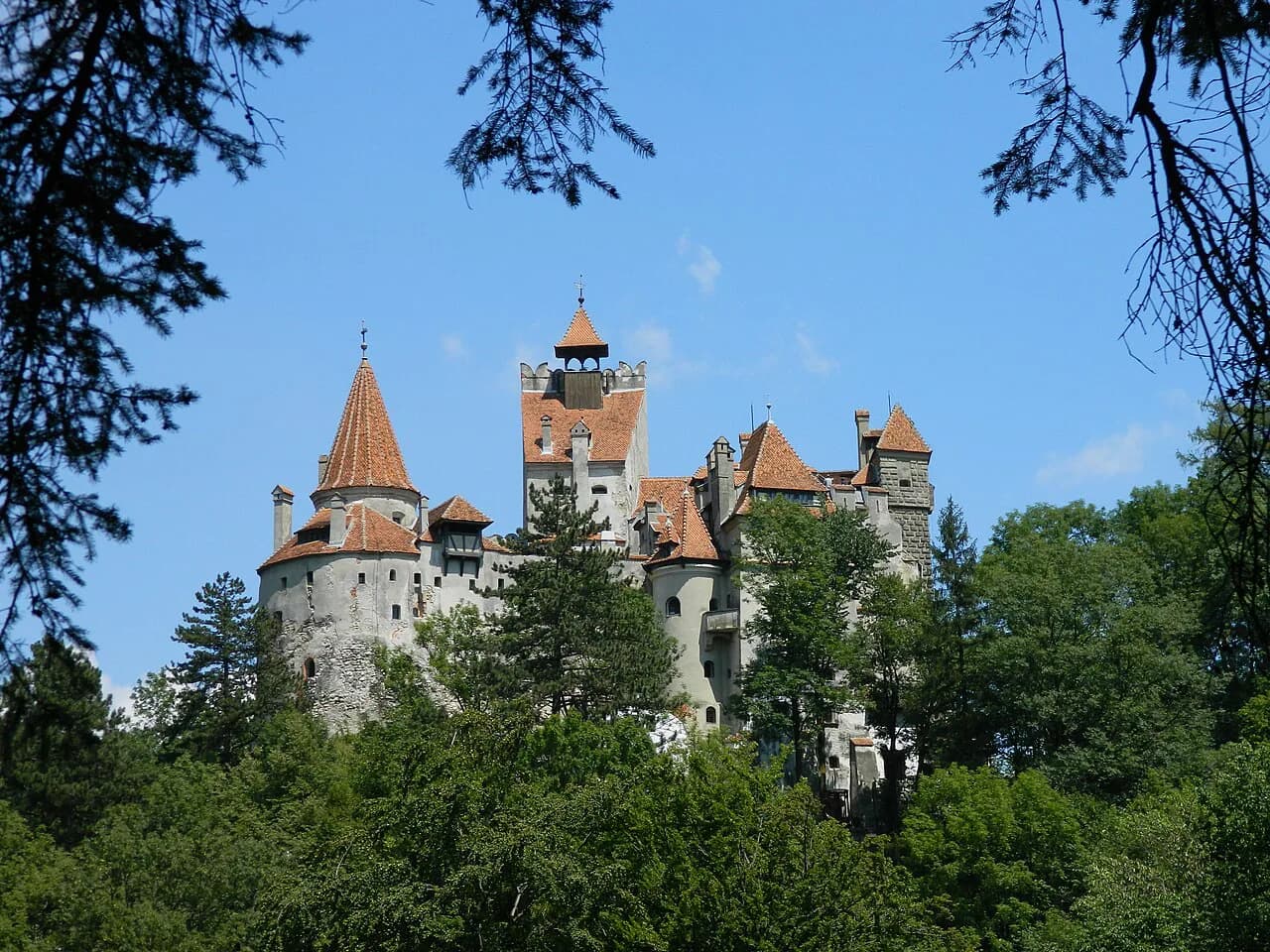
If the fortress-and-castle side of Romania is your priority, be honest about the trade-off: Bistrița gives you a medieval street plan and one surviving tower, not a castle on a crag. Spend your castle day at Poienari Castle in the Argeș gorge country if you want a hard climb, or at Bran Castle for the crowded classic.
Practical points: arriving and getting around the centre
Once you are in Bistrița, the centre is a walking proposition; the monuments sit within a few minutes of Piața Centrală and the passages keep you off the main roads. Check current train and bus connections from Cluj-Napoca or Brașov before you commit to a route.
Use the town hall's own tourist page as your reference list: it names each monument with its Romanian name, which is what you will see on street signs and maps. Pair it with the town's visitor listings for an overview before you arrive.
Is Bistrița worth the stop?
Yes, for half a day, and mainly for the Sugălete, the passages and the Dogarilor Tower, with the churches and civic buildings filling out the morning. Come for a real Saxon town centre rather than for vampire attractions, and keep the Stoker connection as literary context.
If your trip is built around castles and the historical Vlad III, spend the time at the fortresses instead and treat Bistrița as a road stop on the way over the Tihuța Pass. Either way, confirm access and transport through the town's information centre before you travel.
Explore more Romania guides
Sources
Useful notes for your next trip
Optional updates to our guides.
You might also like
Continue reading
More guides you'll find useful