Biertan: A Guide to the Fortified Church and Saxon Village
Plan a visit to Biertan in Transylvania: the UNESCO-listed fortified church, its walls and towers, what you see inside, how to get there and how long to allow.
On this page
Biertan is worth half a day if you are based in Sibiu or Sighișoara, and it earns that time because of one building: the fortified church on the hill, inscribed by UNESCO in 1993 as part of the 'Villages with fortified churches in Transylvania' listing, with an extended list of seven well-preserved churches added in 1999. This guide separates the two things visitors conflate, the church with its defensive ring and the Saxon village below it, and then covers access, timing and how Biertan fits alongside the other fortified churches.
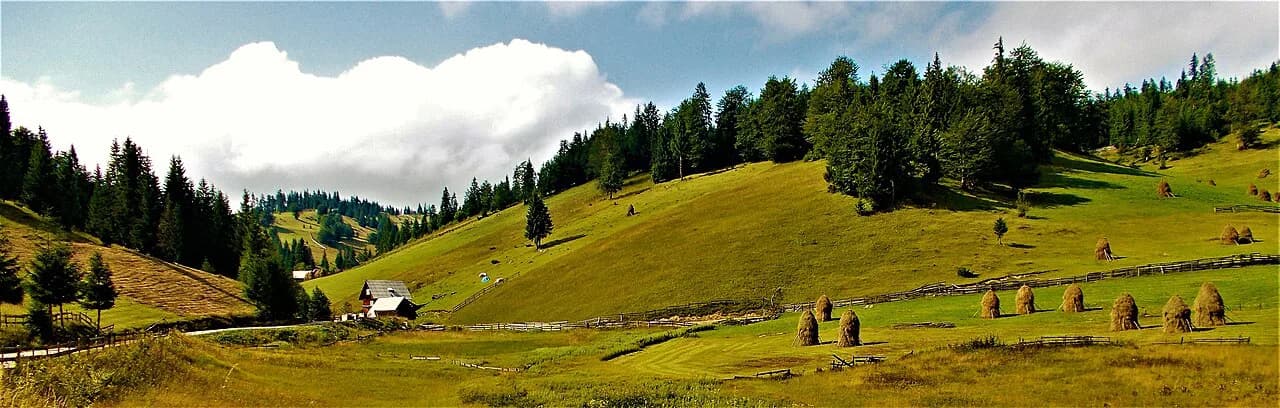
Biertan sits in Sibiu County in southern Transylvania, and its German name is Birthälm; the Transylvanian Saxons who built the church were German settlers, so you will see all three names on maps and signs. The village is first mentioned in a medieval document in 1283, under the name 'Bierthal', while its Saxon colonisation reaches back to the 12th century. Expect a working village on a slope rather than a museum set, and plan on walking uphill.
The fortified church on its hill
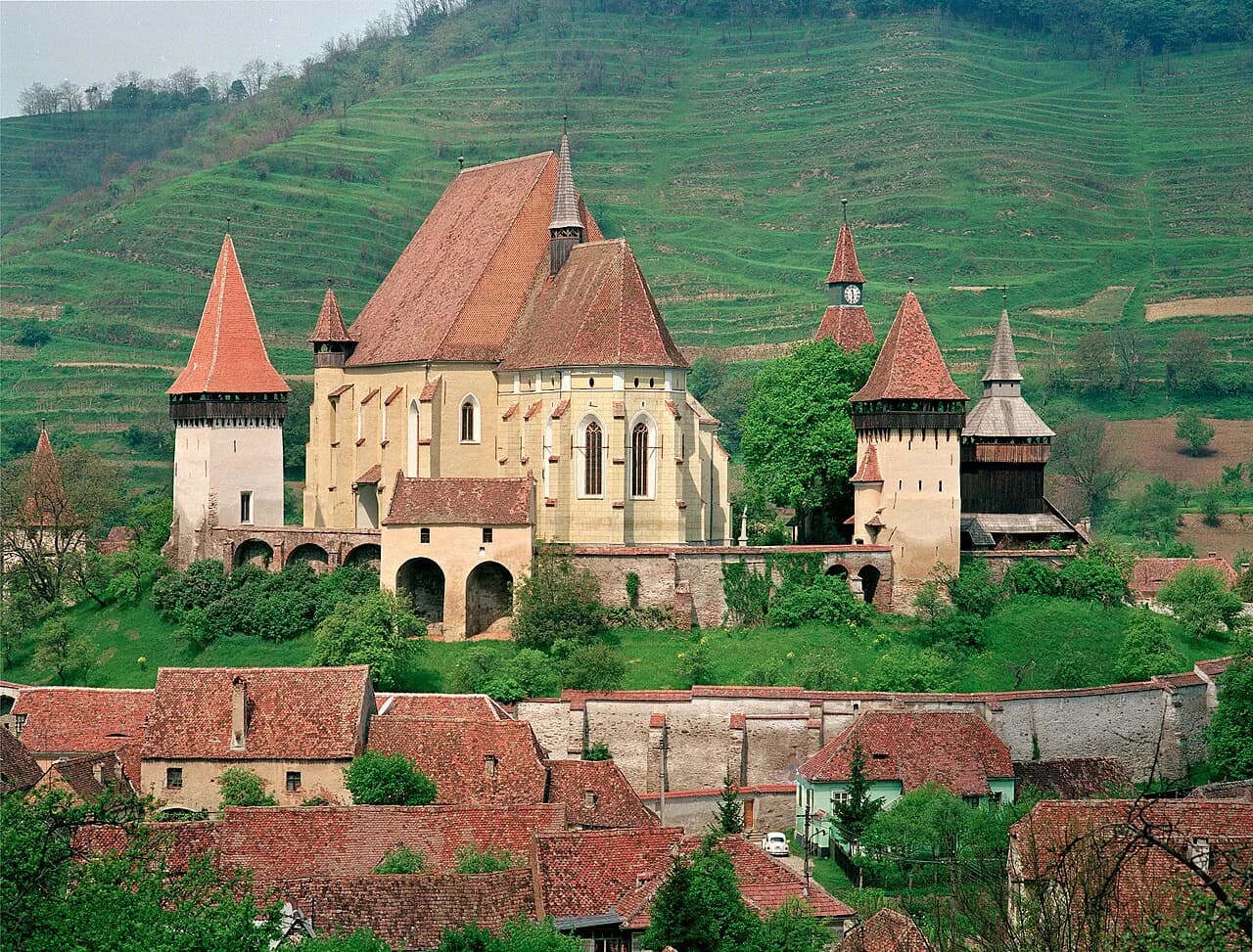
The church stands on a hill above the village and was founded by the Transylvanian Saxons in the 15th and 16th centuries, predominantly Late Gothic in style with Romanesque elements. It began as a Roman Catholic building and became Evangelical Lutheran when the Saxons of Transylvania adopted Lutheranism after the Reformation, which is why the interior you see today is Lutheran rather than Catholic.
The position is the point: the hill made the church defensible, and the same hill gives you the view back over the rooftops that most visitors photograph. Walk up rather than driving to the gate if you can, because the approach through the lanes is where you see the village layout.
The walls, towers and defences
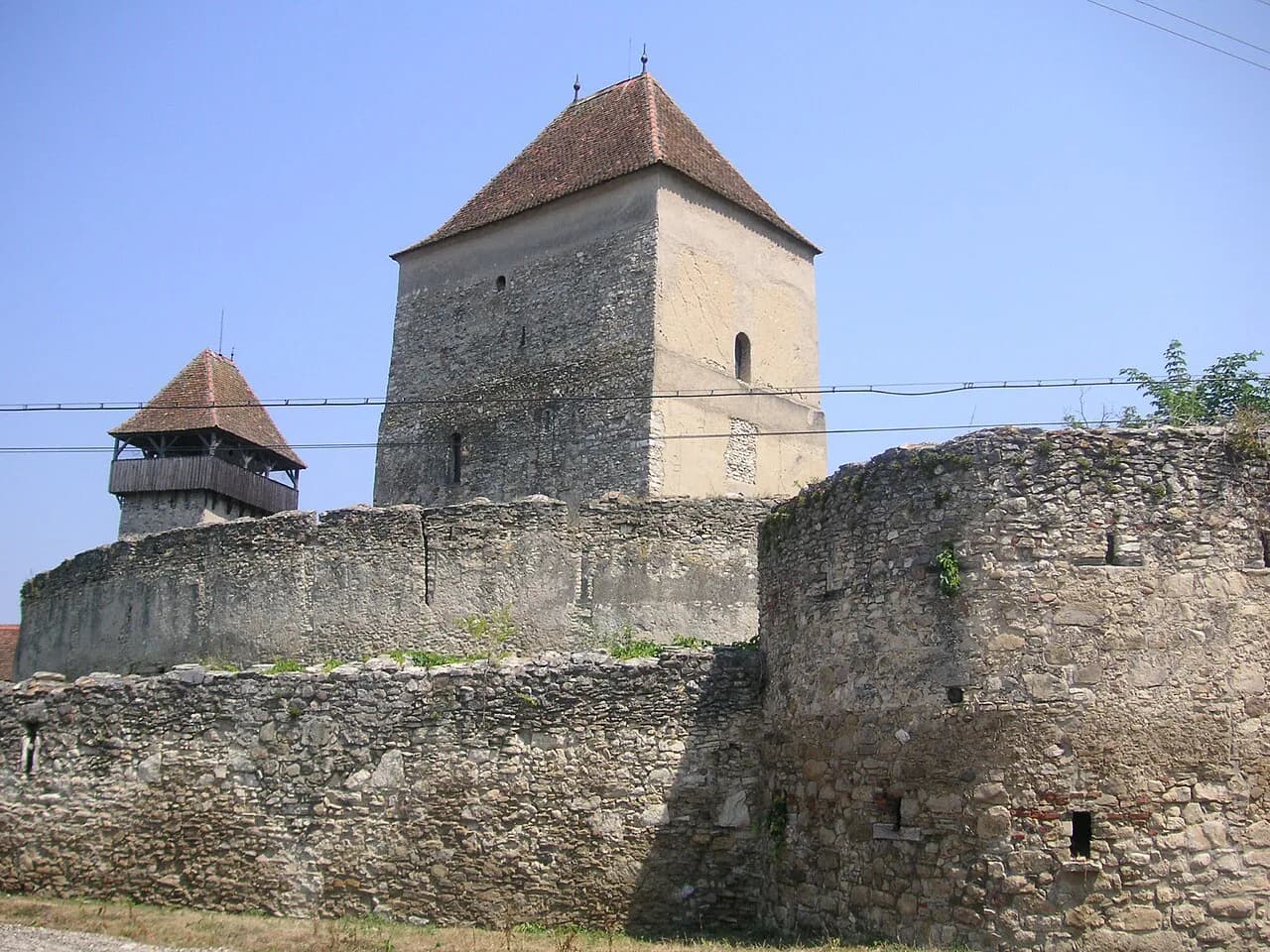
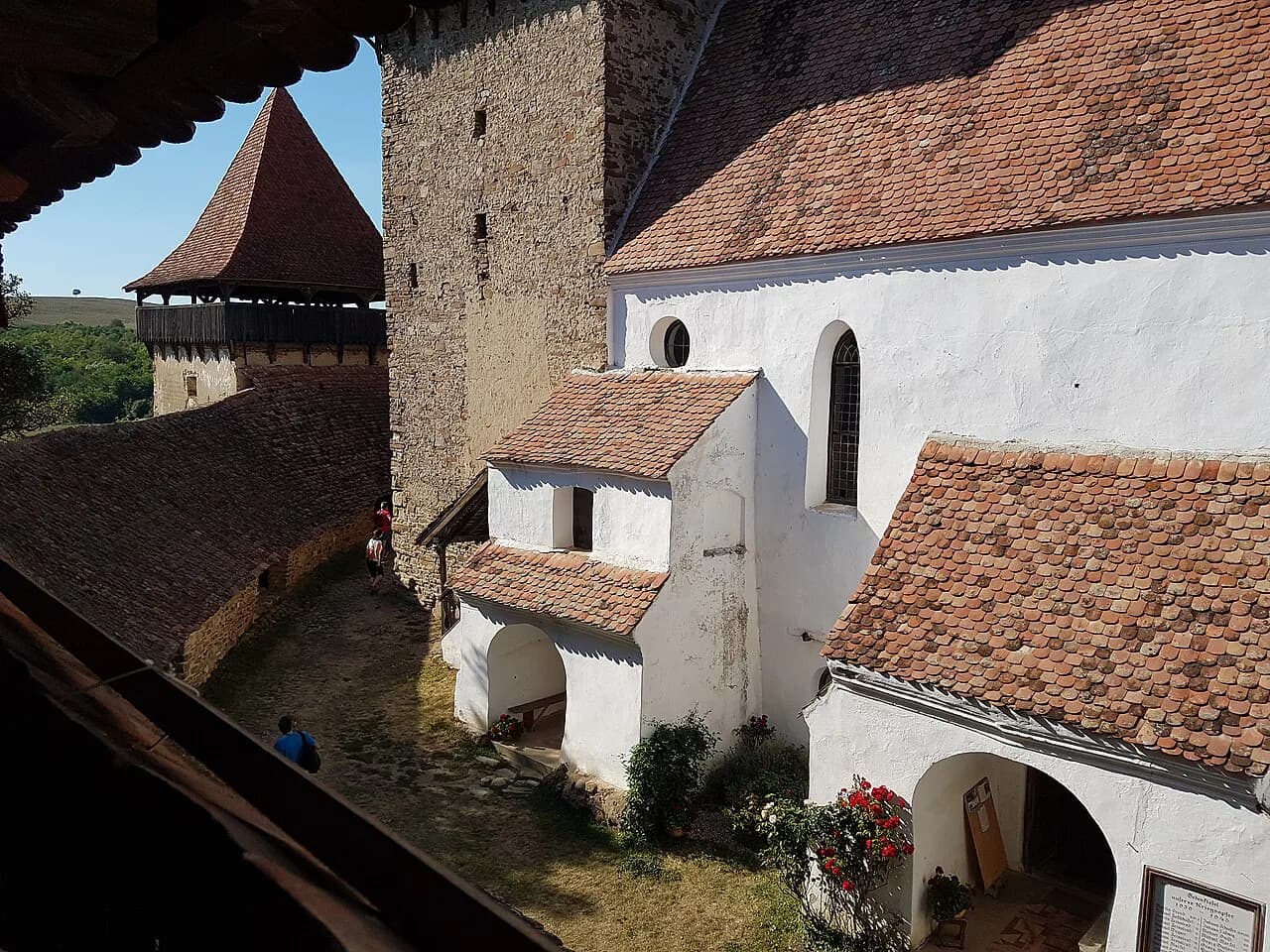
The church is enclosed by a ring of defensive walls and towers built so the community could shelter inside with its stores during raids; the system illustrates how a Saxon village protected people and goods when Turkish and Tatar incursions were frequent. Walk the circuit slowly, since the towers and wall line are the part of Biertan that explains why the church looks the way it does.
Treat the defences as a short walk, not a hike: the circuit inside the walls takes a fraction of an hour, and the ground is uneven in places. Wear shoes with grip rather than smooth soles, particularly after rain.
Inside the church
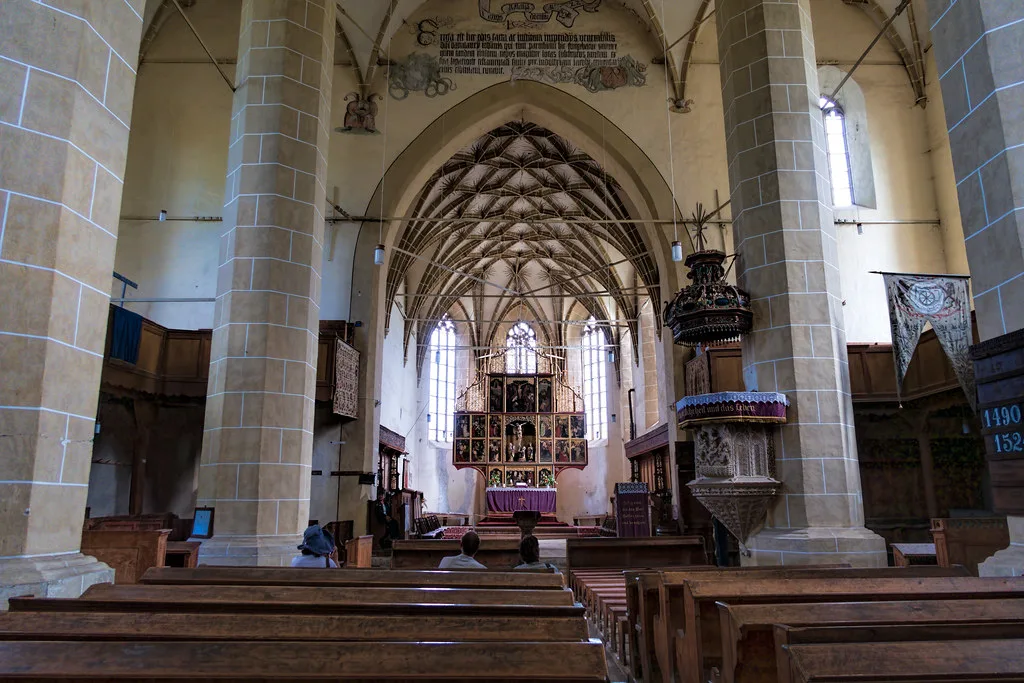
The interior is the Lutheran church that replaced the Catholic fittings, with a ceiling and box pews that carry the atmosphere of a village congregation rather than a cathedral. Photographs of the nave and ceiling show the scale before you arrive, so you know what you are looking at when you step in.
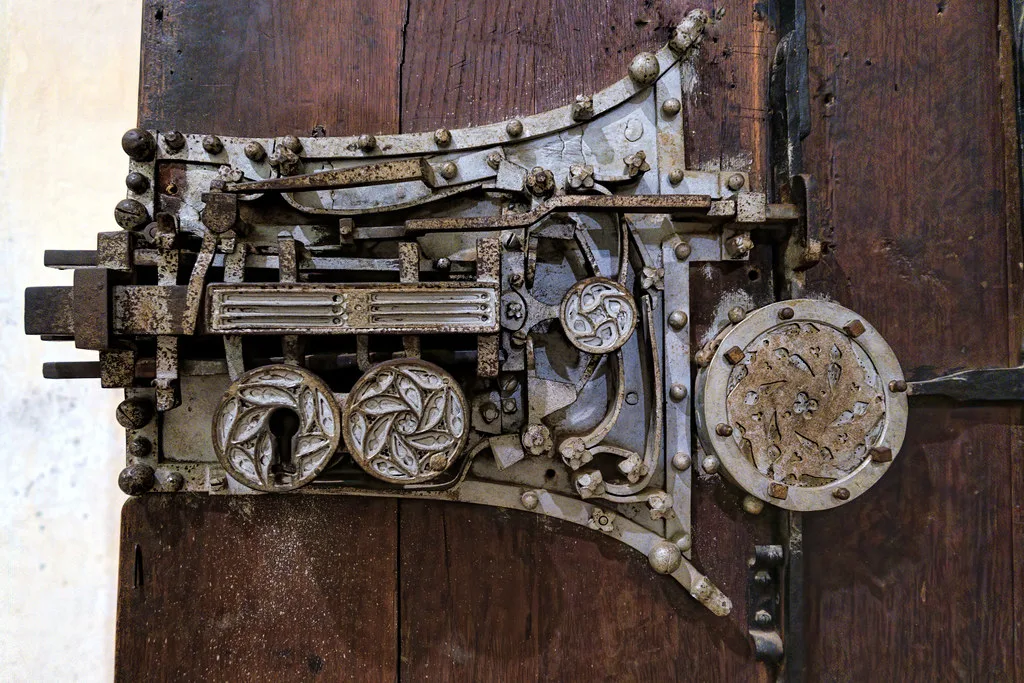
Whether the sacristy and its famous locking door can be seen, whether you may climb the towers and whether entry is by ticket or with a key-holder are all arranged on site; the parish at the fortified church sets the terms, and those terms change by season. Ask at the entrance or contact the Sibiu County tourism office ahead of a day built around tower access.
Biertan as the seat of the Transylvanian Lutheran Church
Biertan was the see of the Transylvanian Lutheran Church for roughly three centuries, from 1572 to 1867, and that status is the reason the church is more than a parish building. When the bishopric moved to Sibiu in 1867, the village lost its privileged position, and the following century brought the confiscation of Saxon property under the communist regime and emigration to Germany.
Hold that timeline in mind as you look around: a bishop's seat needs a church big enough for ceremony, which is why this one feels out of scale with a village of this size. It also explains the quality of the fittings inside.
The village below the hill
Near the church stand Franconian-style houses built by the same Saxon community, and the lanes below the hill are lined with the tall gateways and deep eaves of that tradition. Give the village an hour on foot: walk down from the church, loop through the centre and come back up by a different lane.
Life in the village has shifted toward cultural and rural tourism since 1989, and you will pass craft workshops and farm stays as you walk; treat these as part of the place rather than a separate attraction. If you want the fortified churches of the region as a set, the Fortified Churches of Transylvania guide maps out the options.
How to get to Biertan
By car, Biertan is a straightforward run from Sibiu through the Sibiu County countryside, and having your own vehicle lets you combine it with other villages on the same day. Fuel up and sort parking in Sibiu before you leave, since facilities in the village are limited. By train, Biertan has a station on the line serving the area, but services are infrequent and the station sits outside the village, so check the CFR Călători timetable and be ready for a walk or a taxi at the other end.
By air, Sibiu International Airport is the natural arrival point for Biertan, with the village reached onward by hire car or bus. Train times and frequencies vary, so buy train tickets at the station or on the CFR Călători website, and arrange airport transfer options with your car hire desk on arrival.
How long to allow
Budget half a day for Biertan: roughly an hour for the church, the walls and the towers, an hour for the village lanes, and the rest for the drive and a stop. That makes Biertan a comfortable half-day from Sibiu and a longer but doable excursion from Sighișoara.
If you are short of time, do the church and the wall circuit and skip the full village loop; the view from the hill is the part people remember. If you have a full day, pair Biertan with one other fortified church rather than trying to tick off four.
Biertan alongside Viscri and the other fortified churches
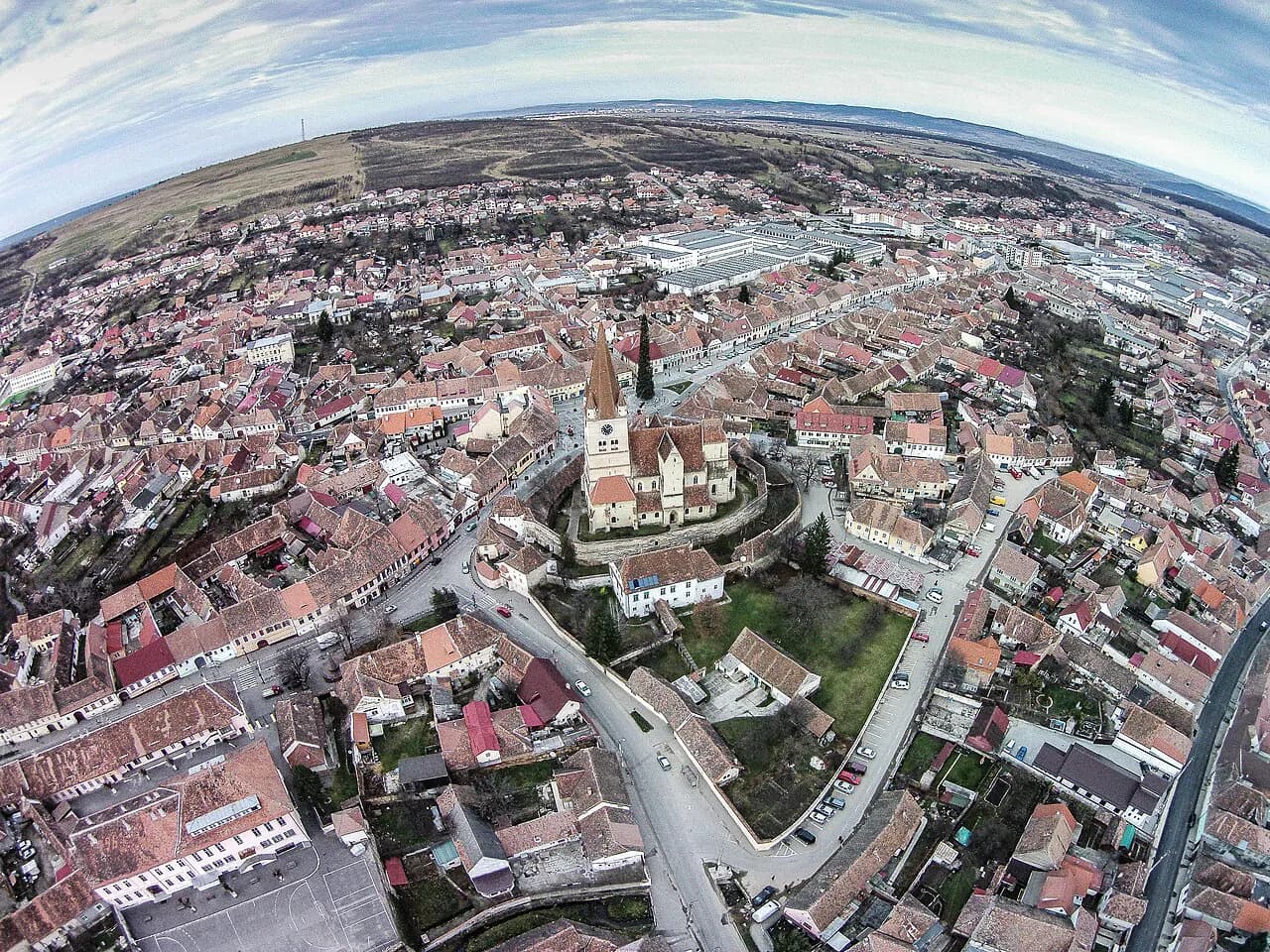
Biertan is one of the seven churches on the UNESCO list, and the practical question is which ones to see when you cannot see them all. Viscri is the usual companion, with its own fortified church and Saxon village, while Prejmer and the Hărman fortified church sit closer to Brașov and suit a different day. Farther east, Saschiz combines a fortified church with a hilltop citadel, and Cisnădie sits under the Cindrel mountains.
Choose Biertan if you want the episcopal seat and the walled ensemble; choose Viscri if you want the smaller village atmosphere. Both are in Transylvania and both reward a slow morning rather than a rushed photo stop.
The Biertan Donarium in Sibiu
A 4th-century votive object known as the Biertan Donarium was found in a forest about 5 kilometres from the village in the 18th century and later entered Baron Samuel von Bruckenthal's collection. It carries a Latin inscription recording a gift, and it is exhibited at the Brukenthal National Museum in Sibiu rather than in Biertan itself.
If you are basing yourself in Sibiu, add the museum to your city day and see the object that connects the village to the city's collection. It is a useful reminder that the archaeology of these villages is often displayed elsewhere.
Is Biertan worth the detour?
Yes, if you are already in Sibiu or Sighișoara and can give it half a day. The combination of the hilltop church, the walkable wall circuit and the Saxon lanes gives you more than a single photograph, and the 1572 to 1867 episcopal story is what makes the interior worth studying.
Sort transport and confirm opening arrangements before you set out, then treat the rest of the day as flexible. If you want a second village, Viscri is the natural pairing.
Explore more Transylvania guides
Frequently Asked Questions
Is Biertan the same as Birthälm?
Yes. Biertan is the Romanian name and Birthälm the German name used by the Transylvanian Saxons who built the church; both appear on maps and signs, and the village is in Sibiu County.
Do you need a guide to visit the Biertan fortified church?
Not necessarily. The church and the walled circuit can be visited independently; ask at the entrance about access to the interior and any parts that are shown only with a member of staff.
Can you climb the towers at Biertan?
Access to the towers depends on arrangements made on site by the parish or visitor office. Ask when you arrive, and wear shoes with grip for uneven steps and ground.
Sources
Useful notes for your next trip
Optional updates to our guides.
You might also like
Continue reading
More guides you'll find useful