Sibiu City Walls: The Surviving Towers and Bastions
Sibiu's medieval walls once ran four kilometres with 39 towers. Here is what survives, which towers you can see, and how to walk the line today.
On this page
Sibiu's city walls are not one sight behind a ticket desk: they are a circuit of red brick wall, towers and a park that still frames the old centre, and you can walk most of the surviving line in an afternoon. The defences once ran for four kilometres and carried 39 towers, a number of which still survive. This guide names the stretches and towers you can actually see, explains how the wall line separates the upper town from the lower town, and sets out the surfaces, steps and footwear that suit the walk.
Treat the walls as a route rather than a stop. The three interlocking squares of the upper old town, Piața Mare, Piața Huet and Piața Mică, sit inside the line, so you can pair the Brukenthal Palace and the Evangelical Cathedral with the towers on the southern and western edges in one loop.
Where the wall line runs and what survives
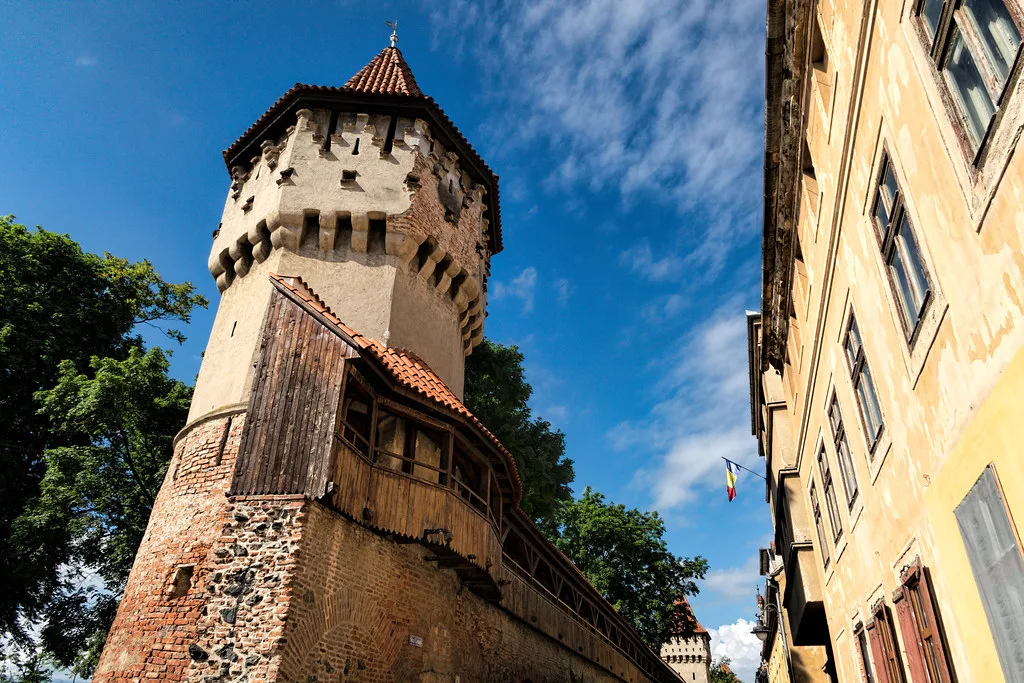
The best surviving stretch is on the southern side of the old centre, where 15th-century defensive walls stand with the Tower of the Potters. From there the line continues west towards Citadel Park, which holds several towers, and the whole circuit wraps around the pedestrianised upper town. Walk it anticlockwise from Piața Mică and you meet wall, tower and park in that order without doubling back.
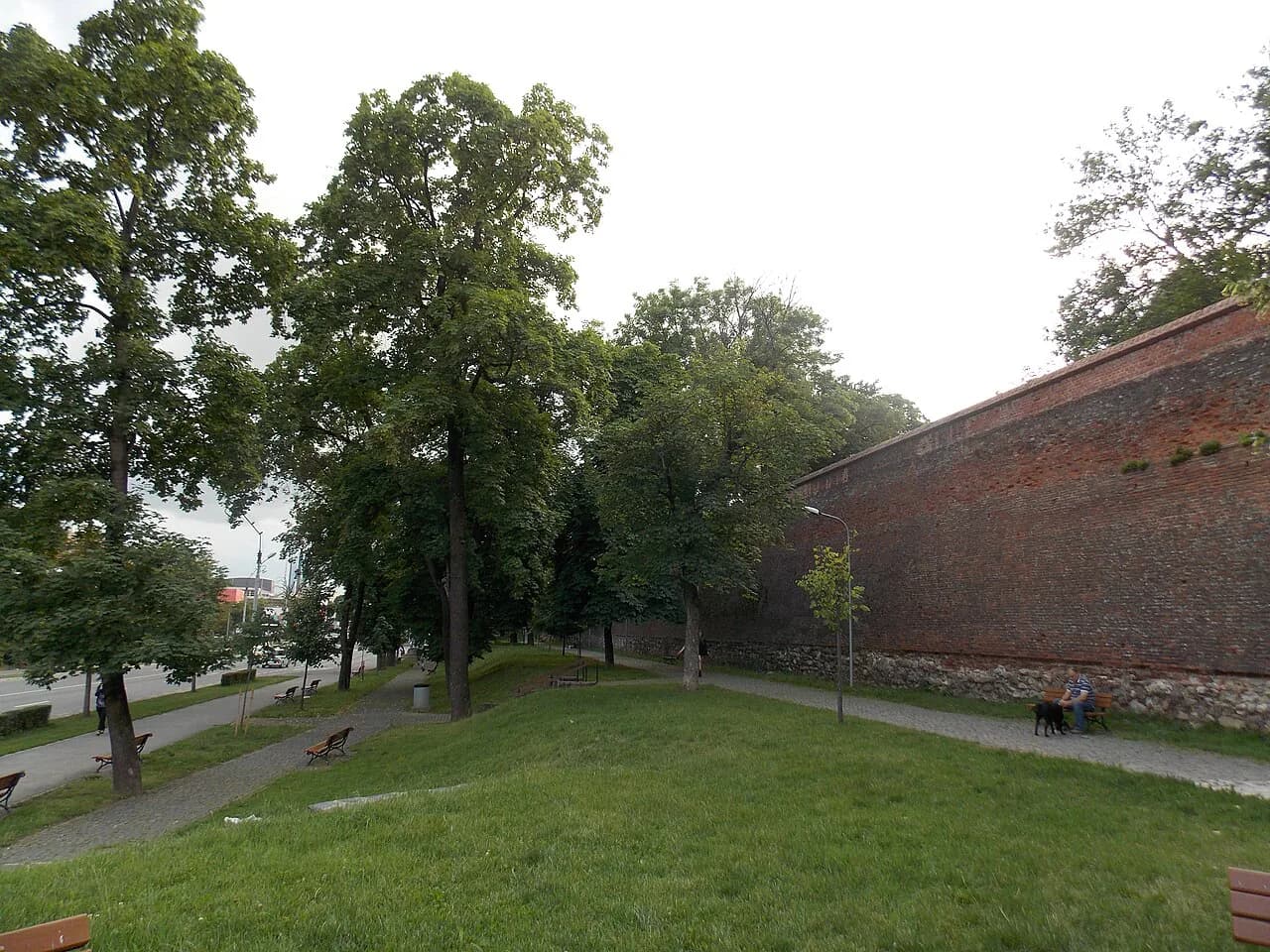
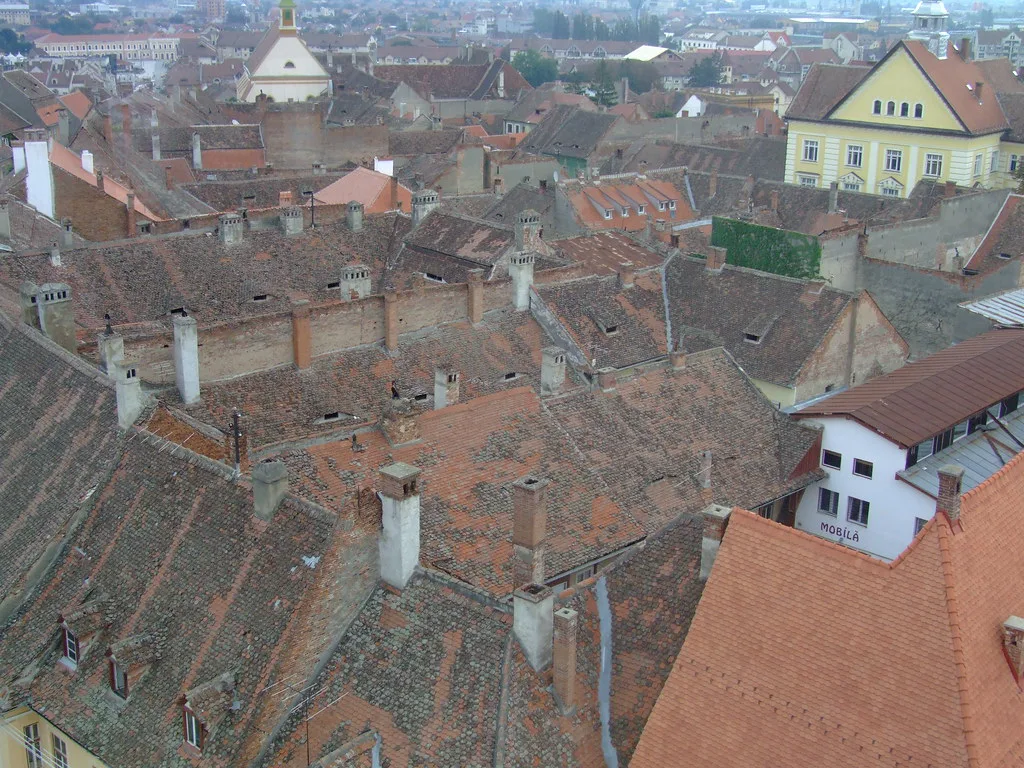
Sibiu is sometimes called the Red Fortress after the massive red brick walls built to protect the city after 1241, and the colour is the easiest way to read the line on the ground: where you see red brick running between buildings, you are on the old perimeter. The walls sit beneath and behind later houses in places, so look for the brick where streets step down towards the lower town.
The red brick walls and the 39 towers
The defences were built as a single system: a continuous wall, towers at intervals and gate passages controlling movement between the upper town and the lower town. The towers stood at intervals along the wall and some of them have names tied to the trades that once used them, such as the Tower of the Potters. Read the wall as a working structure rather than scenery: it decided which streets you could use and where you entered the merchant squares.
The system's scale explains why the walls are scattered today. Four kilometres of wall and 39 towers could not all survive later building, so what you see is a sequence of fragments, some free-standing, some built into houses, some standing in grass. That is why a map helps more than a single address.
The southern stretch and the Tower of the Potters (Turnul Olarilor)
Start on the southern side, where the 15th-century defensive walls stand with the Tower of the Potters. This is the stretch to prioritise if you have an hour: the wall runs at a readable height, the tower gives the line a landmark, and the ground behind it drops towards the lower town.
The drop is the point. From the wall you look down over roofs and streets rather than across a flat park, which shows how the defences used the slope. Allow ten to fifteen minutes here for the wall and the tower exterior.
The Council Tower (Turnul Sfatului) and the old line
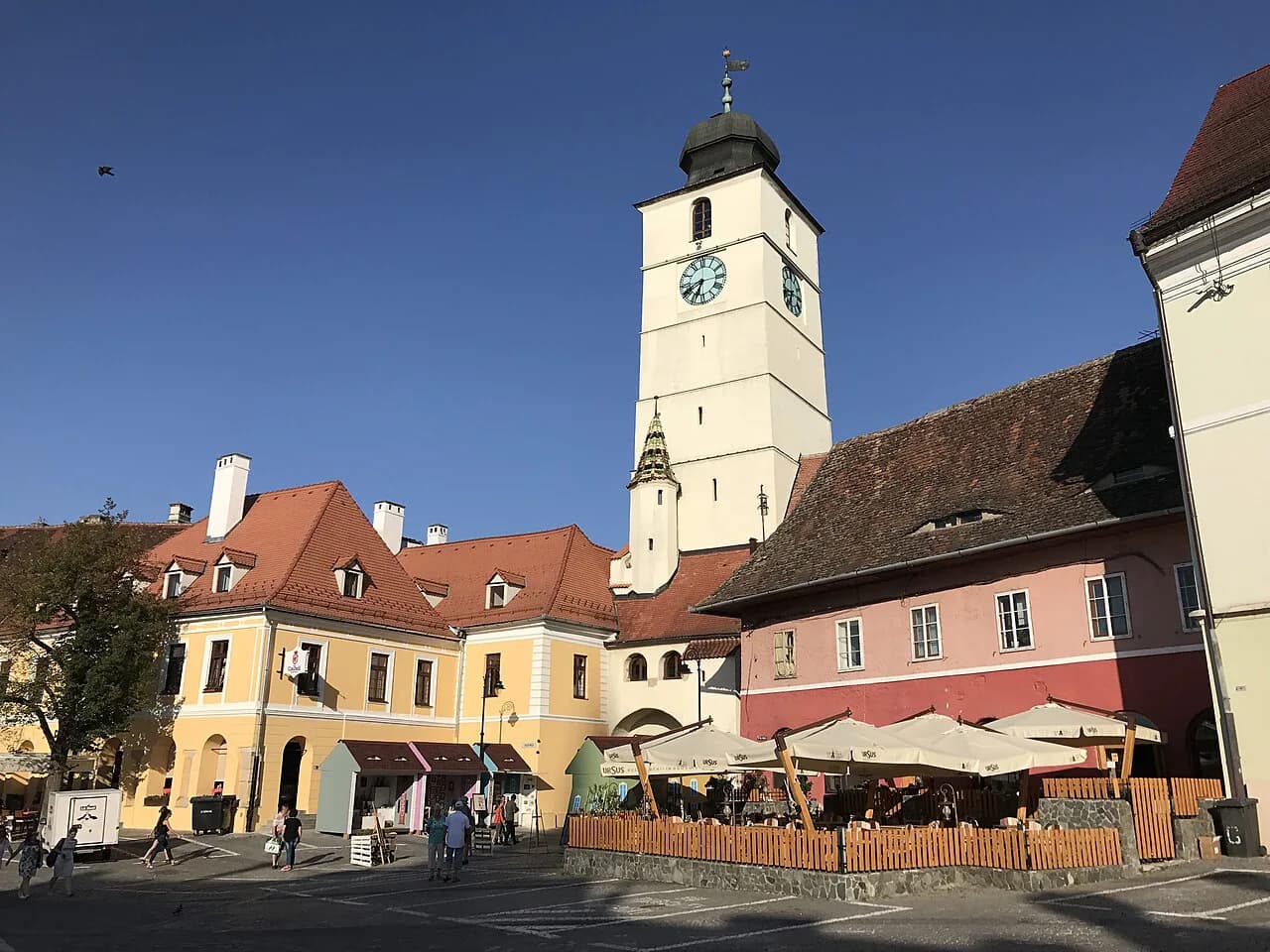
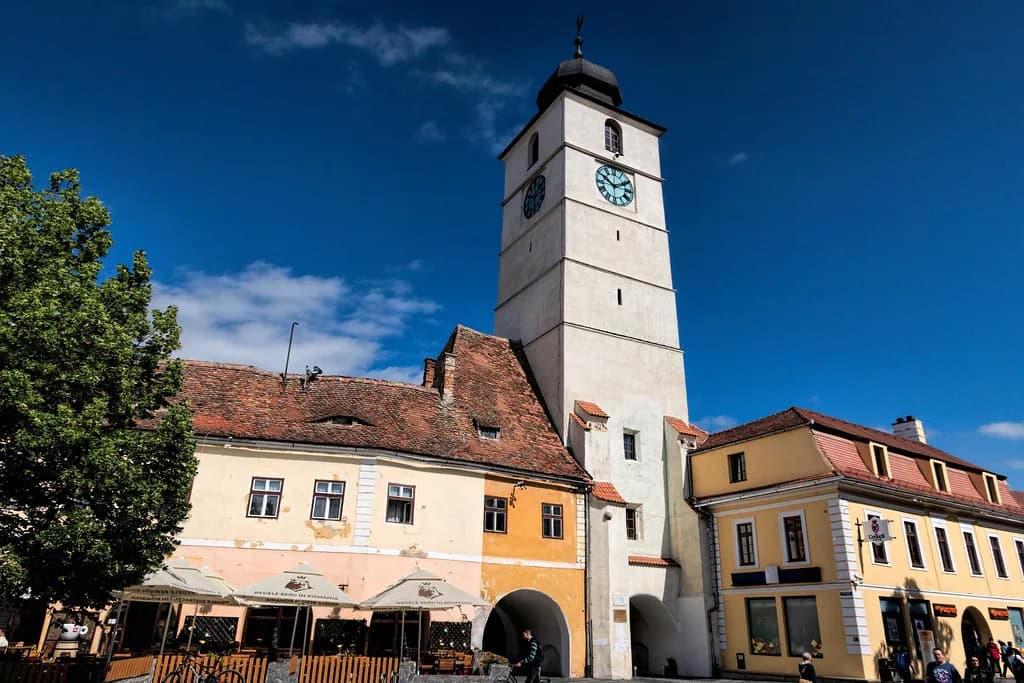
The Council Tower stands in the heart of the upper town rather than on the open wall, but it belongs to the same defensive story: it was built during the same period as the second fortified citadel, between 1224 and 1241, and gets its name from being attached to the building housing the city council. Its upper floors collapsed in 1585 and were restored in 1588; the top was demolished in 1824 and replaced with the current dome.
The tower now works as a viewpoint over both main squares, Piața Mare and Piața Mică, and it holds small exhibitions on the way up, including a photography floor and a display of decorated clocks. You also pass the clock mechanism. That makes it the one place on the circuit where you can read the old town's layout from above before walking the walls at ground level.
Pair it with the squares it overlooks. Piața Mare has existed since 1366 and holds the City Hall Palace, the Holy Trinity Roman Catholic Church and the Brukenthal Palace, all worth a look before or after the climb. The Brukenthal Museum itself is a separate visit, best kept for another slot.
The Tower of the Stairs (Turnul Scărilor) and the passages between town levels
The Tower of the Stairs is the other tower listed within the old town, and it sits near the passages linking the upper and lower levels. Historically the defences controlled exactly this kind of movement: the stairs and gateways that let people and goods move between the two towns. Visit it as part of a descent rather than a detour, then walk back up through the squares.
The descent is where the wall line earns its place in a day's plan. Steps from the lower town to the upper town are steep in places, and the passage through the tower is narrow, so carry a bag you can hold rather than wheel. Wear shoes with grip; the stone and brick are worn smooth in the middle of the tread.
Citadel Park and the towers on the western edge
Citadel Park, on the western edge of the old centre, gathers several towers into one green space, and it is the easiest place to see wall and tower together without traffic. Use it as the second half of the walk: after the southern wall, cut west through the streets and finish in the park.
The park also gives you the clearest view of how the wall line sits in the town today, with grass and trees in front of the brickwork. That makes it a good spot to stop rather than a sight to tick off, and it is the natural place to end a circuit that began at the Potters' Tower.
Upper town and lower town: how the walls shape the walk
The old centre has an upper and a lower section, and the upper section has been largely pedestrianised, which makes walking between the squares easy. The walls mark the seam between the two levels. Plan the upper town for squares, churches and museums, and the wall circuit for the edges, where the town steps down.
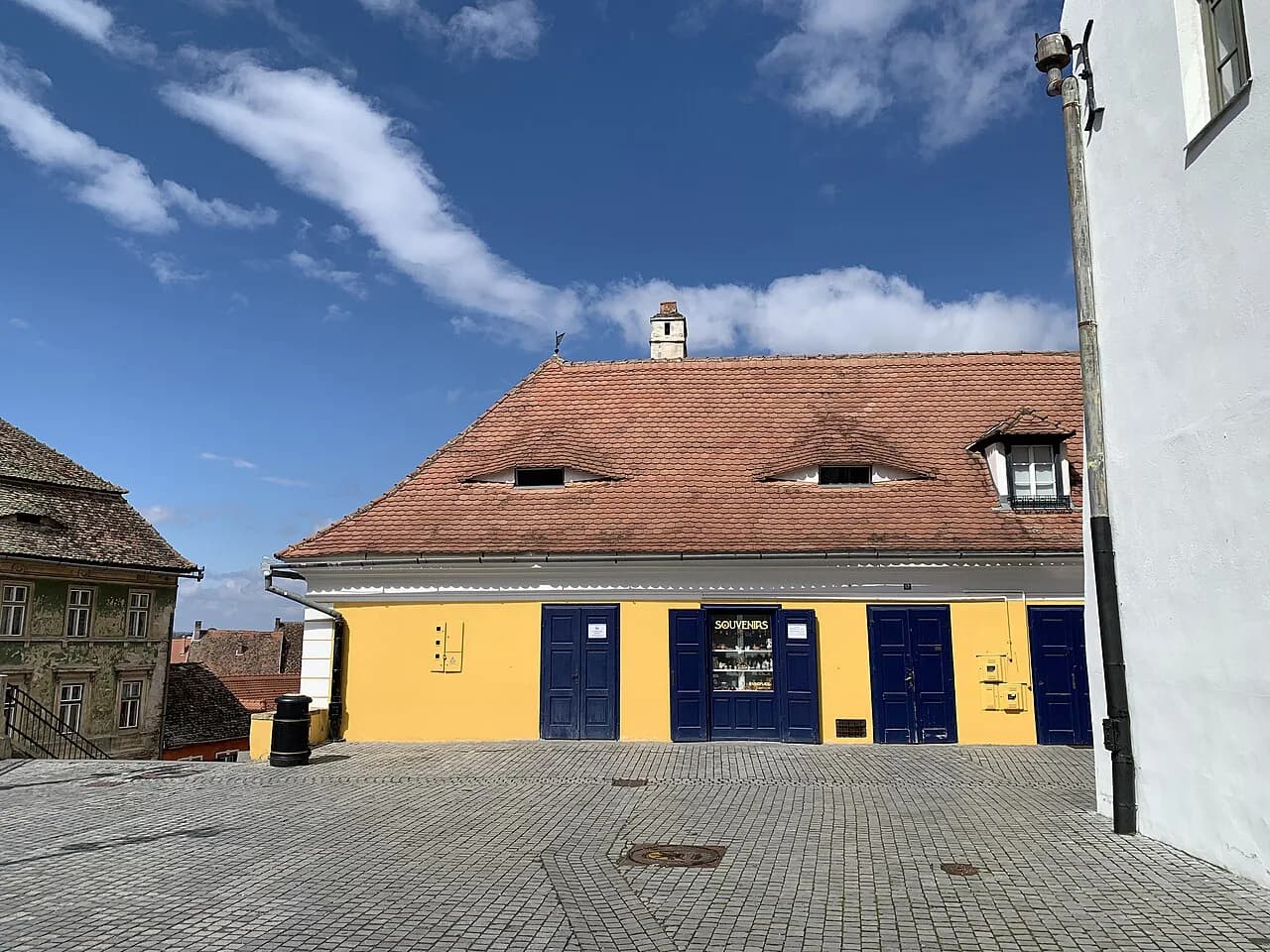
The Bridge of Lies, in Piața Mică, sits close to the line, so it fits naturally at the start or end of the wall walk. The eye-shaped roof windows on the surrounding buildings are a Sibiu signature, common in the old centre, and worth looking up for as you cross.
Walking the wall line: route, surfaces and how long to allow
A sensible route starts at Piața Mică, takes in the Council Tower, drops south to the Potters' Tower and the 15th-century defensive walls, then works west to Citadel Park, returning through the upper town. The whole circuit is a half-day at an unhurried pace, with the climb up the Council Tower adding time on steep stairs. Set aside two to three hours if you also stop in the squares.
Surfaces vary: paved streets in the pedestrianised centre, uneven stone on the stairs, and grass or gravel in Citadel Park. The stairs in the towers are steep and can be challenging, so good footwear matters more than distance. Carry water in warm weather; the wall stretches have little shade.
If you would rather follow a set line through the old town first, a guided walk covers the squares and passages before you branch off to the walls. That order suits a first morning in Sibiu.
Climbing for views: the Council Tower and what you see
The Council Tower is the one place on the circuit with a proper bird's-eye view, and the reward is the layout of Piața Mare and Piața Mică seen together. There are steps all the way up and the stairs are steep, so the climb suits people comfortable on narrow treads. The photography floor partway up gives you a rest and a reason to pause.
The tower's spire is also the landmark you will navigate by for the rest of the walk, and the Evangelical Cathedral's spire, on Piața Huet, is the other. Note both from the top and you can orient yourself from street level for the remainder of the circuit.
Practical points before you set out
Wear shoes with grip, keep your hands free on the stairs and allow more time than the map suggests, because the passages between levels slow you down. The brick and stone are worn in the middle of steps, so take the edges where you can.
The city's historic centre was renovated in 2006 and the pedestrianised squares are straightforward to cross, but the wall stretches sit at the edge of that zone. Fix the route on a map before you start, or you will drift back into the squares and lose the line.
Check current opening times for the Council Tower and its exhibitions before you climb, as access and charges change.
Is the wall walk worth half a day?
Yes, if you want to understand how Sibiu is put together rather than just see its squares. The wall circuit takes you past the Potters' Tower, the Tower of the Stairs and Citadel Park, and delivers you back into the upper town for the Brukenthal Palace and the Evangelical Cathedral. Build it as a loop, not a separate outing.
If time is short, do only the southern stretch and the Council Tower, and leave the park for a return visit. If you have a full day, extend beyond the walls to Avrig, on the road towards Făgăraș.
Explore more Sibiu guides
Frequently Asked Questions
What is the German name for Sibiu?
Sibiu has a long Saxon history reflected in its Romanian, Hungarian and German place names, and walking between the squares and the wall towers you will see several on street signs and plaques. The sources used for this walk give the Romanian forms such as Piața Mare and Turnul Sfatului, so read the signs on site rather than relying on a single English equivalent.
Where should I start a walk along Sibiu's city walls?
Begin at Piața Mică, climb the Council Tower for the view over the two main squares, then work south to the 15th-century wall and the Tower of the Potters before heading west to Citadel Park. This order follows the surviving line and ends in open space rather than in the busiest streets.
Are Sibiu's walls free to visit?
The surviving walls, towers and Citadel Park are part of the town and can be seen on foot as you walk between the upper and lower town. The Council Tower is a separate climb with its own admission arrangements, so check the charge on site or with the tourist office before you set out.
Sources
Useful notes for your next trip
Optional updates to our guides.
You might also like
Continue reading
More guides you'll find useful