Salina Târgu Ocna: A Practical Guide to the Salt Mine
Salina Târgu Ocna in Bacău County has an underground church, a salt museum and a treatment base at 240 m depth. Check current access before you travel.
On this page
Salina Târgu Ocna is a salt mine in the Târgu Ocna resort of Bacău County, Moldavia, visited for its underground chambers, its church of Saint Barbara and its museum of salt formation and working. It suits travellers already crossing Moldavia who want a deep, cold, industrial working rather than a polished show cave, and this guide sets out what you see inside, how you get in, and what to confirm before setting off.
The mine is one stop within the wider set of salt mines in Romania, and it behaves very differently from the others: entry is not a walk down a staircase but a bus ride into the mountain. Everything below follows from that.
Where Salina Târgu Ocna sits
The mine belongs to the Târgu Ocna balneoclimateric resort in Bacău County, in the Moldavia region of eastern Romania, and its address is Str. Salinei 12. That street name is the one to give a taxi driver or put into a navigation app, because the mine entrance is not on the town's main square.
Salrom, or Societatea Națională a Sării, is the state salt company that extracts, prepares and sells salt from the site. The mine is also one of the older salt workings on what is now Romanian territory, with attestations reaching back to the Daco-Roman period, and it stayed economically important through the medieval period.
What you see underground
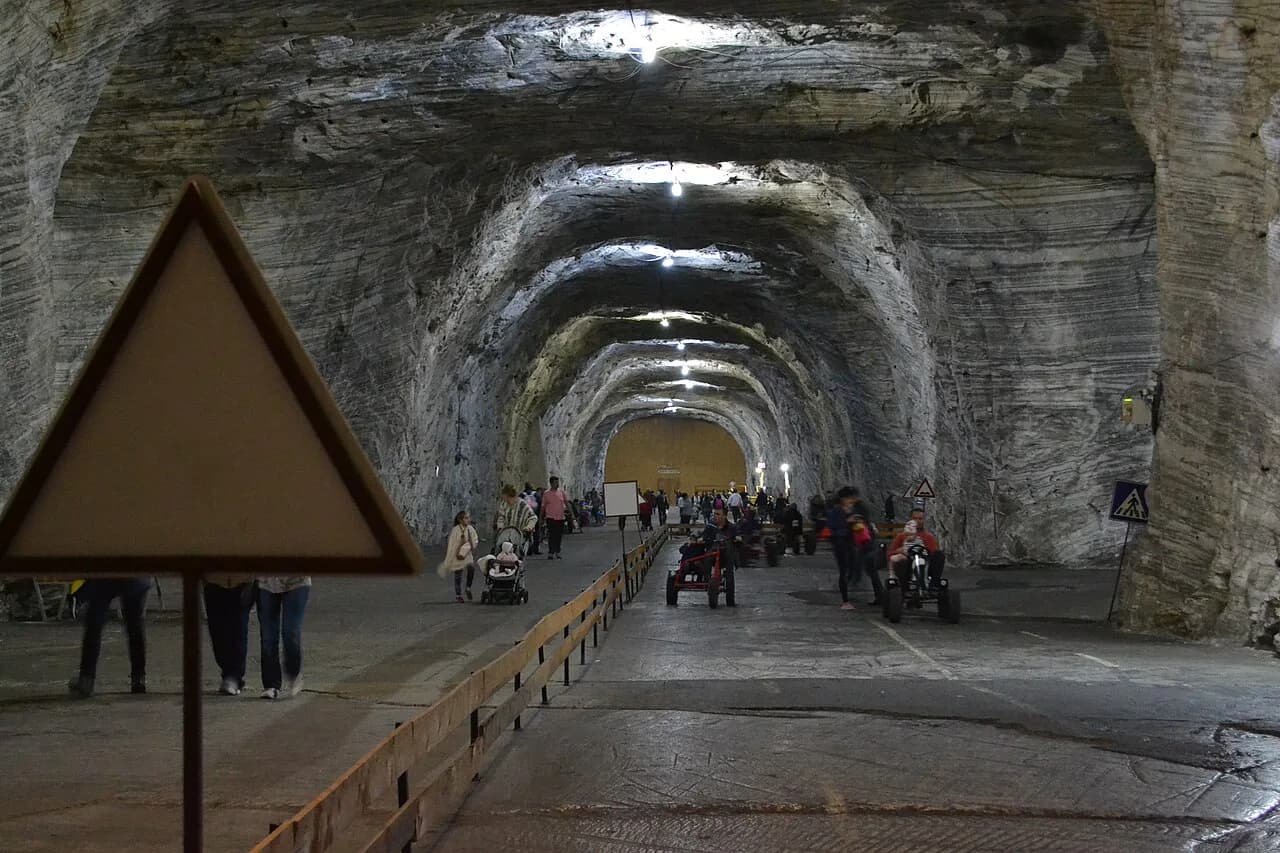
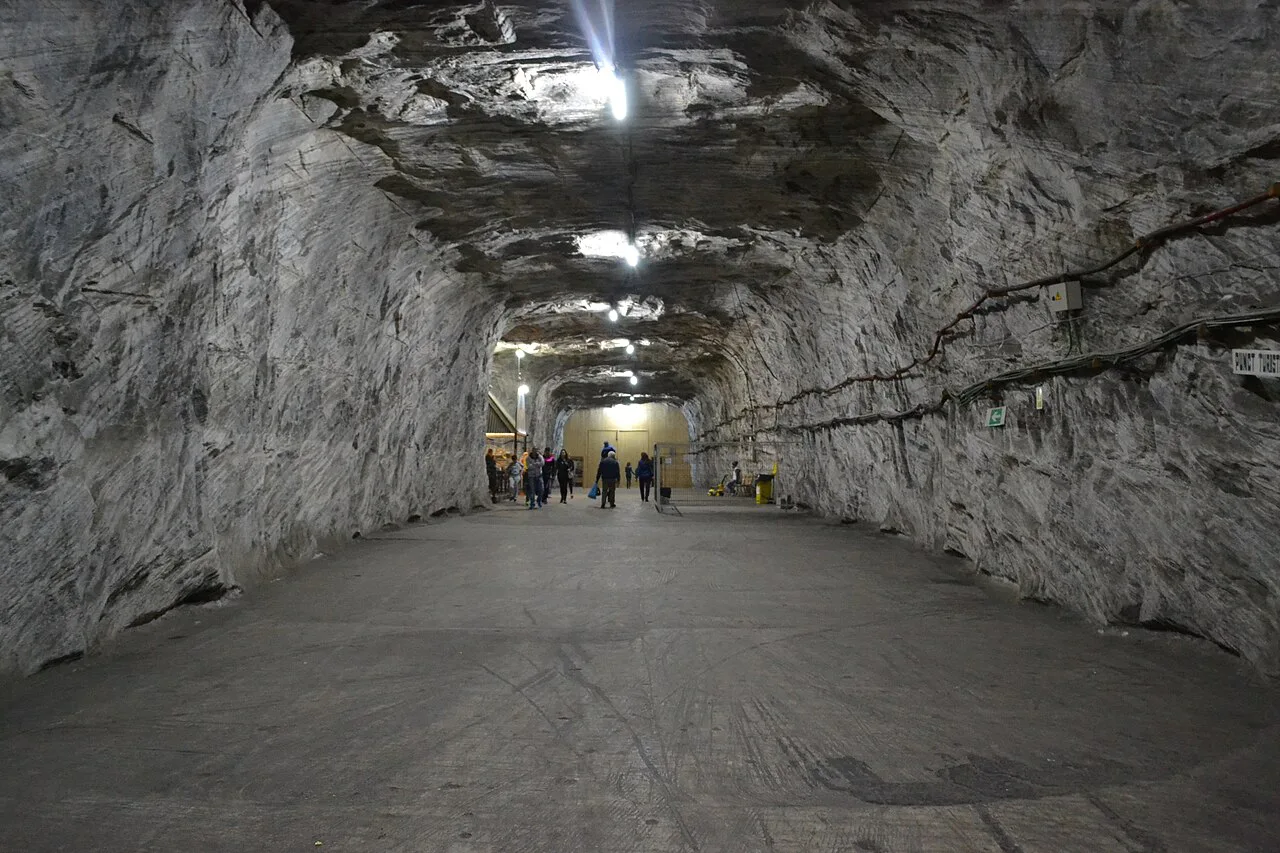
Inside the mine the two fixed stops are the church of Saint Barbara, one of the few places of worship built inside a Romanian salt mine, and the museum of the formation and working of salt. The museum covers the history of salt mining with old objects, the tools of traditional working and the way the technology changed, which gives the chambers some context beyond the colour of the walls.
How do you get into Salina Târgu Ocna? When the mine is operating, visitors reach it by bus rather than on foot: buses carry them through the tunnel. A 2023 visitor review states that the mine has been closed, so phone the published number before travelling to check whether it is open and whether the buses are running.
Is there a church inside the mine? Yes. The church of Saint Barbara is built inside the mine, one of the few places of worship constructed in a Romanian salt mine.
How deep does the mine go? The treatment base inside the mine lies at 240 m depth. That figure describes the treatment base rather than every part of the visitor route.
The chambers themselves sit in the Trotuș mine, and the treatment base there lies at 240 m depth. Treat that figure as the depth of the treatment base rather than the depth of every part of the visitor route, since the source gives it for the base.
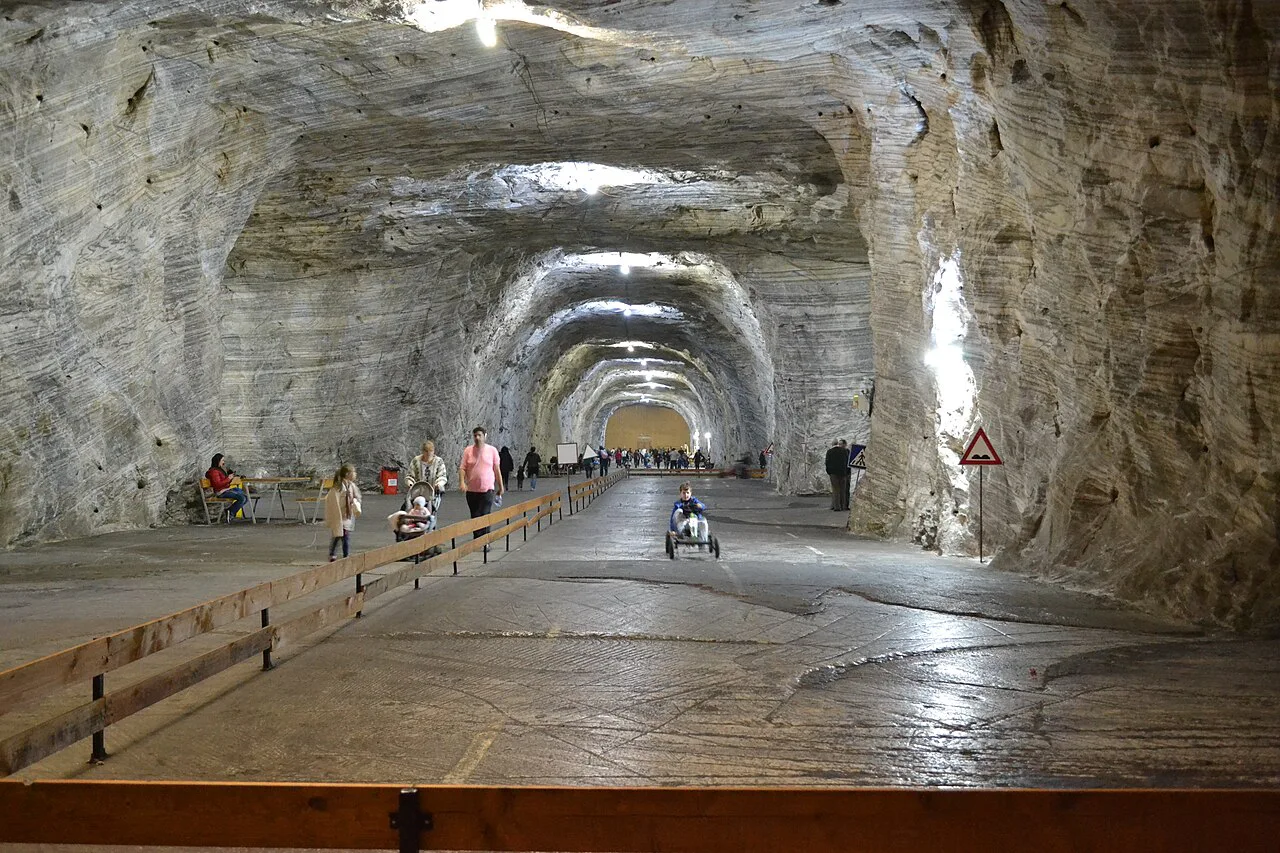
Do not expect the sculpted caverns and lighting of Salina Turda in Cluj county, where the Rudolf Mine is presented as a visitor set piece. Târgu Ocna reads as workings: salt faces, industrial traces, a chapel and a museum, with the treatment function running alongside. Before committing to a route, weigh how the two differ using the wider guide to Salt Mines in Romania.
The treatment base and who the mine suits
Much of the mine's daily purpose is therapeutic: the treatment base is used for relaxation, movement and respiratory complaints in salt-laden air. That means you may be sharing the underground space with people on treatment rather than with a tour group, and it also explains why the visit is about spending time in the mine rather than ticking off exhibits.
The mine suits travellers who are curious about how salt was worked and who accept cold, dim, industrial conditions. It suits children less well than a presentation-led mine, and it is a poor fit for anyone who dislikes confined spaces or long periods underground.
Getting there
A visitor review notes that buses carry visitors into the mine through the tunnel when it is operating, and that the site also sells tickets and souvenirs, with drinks and bags of salt at a small counter. The same review, dated 2023, states that the mine has been closed, so confirm by phone whether buses are running before you rely on them.
By car, navigate to the mine's address in Târgu Ocna, Str. Salinei 12; the mine sits within the resort, so it works as a half-day stop if you are already in Bacău County rather than as a reason to cross the country on its own. Parking arrangements are not covered here.
There is a contact number published for the site, and it is the quickest way to settle questions about access and whether the buses are running on the day you plan to arrive.
Opening hours and tickets
A public listing gives hours of 08:30 to 17:30, shown the same on Sunday as on weekdays, but a dated visitor review from 2023 states that the mine has been closed. The two cannot both describe the current position, so treat the hours as provisional and check the day's status by phone rather than relying on either the listing or an old post.
No admission price in lei is published for Salina Târgu Ocna, so this guide does not quote one. Ask about prices only once opening has been confirmed by phone.
Before travelling, phone the published number to check the current hours and whether the mine is open and the buses are running. One call settles it.
How long to allow and what to expect
No source here gives a duration for the visit, so treat the time as elastic: the bus transfer in and out, the walk between the church of Saint Barbara and the museum, and any time spent in the treatment area all add up. Allow a generous half day, and more if you plan to spend time in the mine's air.
Expect a working mine rather than a theme park: cold air, dim light, salt dust and uneven surfaces. Sturdy shoes and a warm layer are the practical kit, and a light waterproof helps where the walls sweat.
Practical limits
The depth is the first limit: the treatment base at 240 m means a bus descent and a change in air and temperature, which some visitors feel in their ears. If you have heart or breathing conditions, take advice before going down rather than deciding at the entrance.
The second limit is the operating schedule: entry by bus means you move on the mine's timetable, not your own. Check current opening hours and bus departure times before you travel, and ask by phone how long you get underground once inside.
Where to go next
Salina Turda in Cluj county is the polished counterpart, with a very different underground presentation, so if Turda is on your route, compare Salina Turda tickets before committing to a long detour west. The town itself has more to see than the mine, and Turda: What to See Beyond the Salt Mine covers the rest of the day.
In Moldavia, the Cacica salt mine in Suceava County offers another underground stop with its own underground chapel, and it pairs naturally with the monasteries of the region. Salina Praid in Harghita County is a big Transylvanian mine in Székely Land and a very different day out.
Is Salina Târgu Ocna worth the detour?
Yes, if you are already in Bacău County or crossing Moldavia and want an honest working mine rather than a show cave. The church of Saint Barbara and the salt museum give the underground trip a shape, and, when the mine is operating, the bus ride down is part of the experience.
Call the number published for the site and confirm the day's hours, whether the mine is open and whether buses are running; the listing and a 2023 review do not tell the same story, and no admission figure in lei is available. Then decide: the mine rewards curiosity, not a checklist.
Explore more Romania guides
Frequently Asked Questions
How do you get into Salina Târgu Ocna?
When the mine is operating, visitors reach it by bus rather than on foot: buses carry them through the tunnel. A 2023 visitor review states that the mine has been closed, so phone the published number before travelling to check whether it is open and whether the buses are running.
Is there a church inside the mine?
Yes. The church of Saint Barbara is built inside the mine, one of the few places of worship constructed in a Romanian salt mine. It sits alongside the museum of the formation and working of salt as the two fixed stops underground.
How deep does the mine go?
The treatment base inside the mine lies at 240 m depth. That figure describes the treatment base rather than every part of the visitor route.
Can you turn up without booking?
The site has sold tickets at the counter, so buying on the day has been the normal route, though no source confirms a booking system. Because the mine has had closed periods, phone the published number first to check whether it is open and whether buses are running.
Sources
Useful notes for your next trip
Optional updates to our guides.
You might also like

Continue reading
More guides you'll find useful