Salina Turda: How to Visit the Underground Salt Mine
Plan a visit to Salina Turda near Cluj-Napoca: the Rudolf and Terezia mines, the descent, how long to allow and how to get there by car, bus or tour.
On this page
Salina Turda is a former salt mine in Transylvania that now works as an underground attraction rather than a guided history tour, with boat rides, pool tables, bowling, mini golf, a basketball court and a Ferris wheel in the old workings. Allow two to three hours for a standard visit, and bring warmer layers in case the underground chambers feel chilly. This guide covers the layout, how to reach it from Cluj-Napoca, what the entry costs and how to decide whether the detour suits you.
What Salina Turda is and what you actually see underground
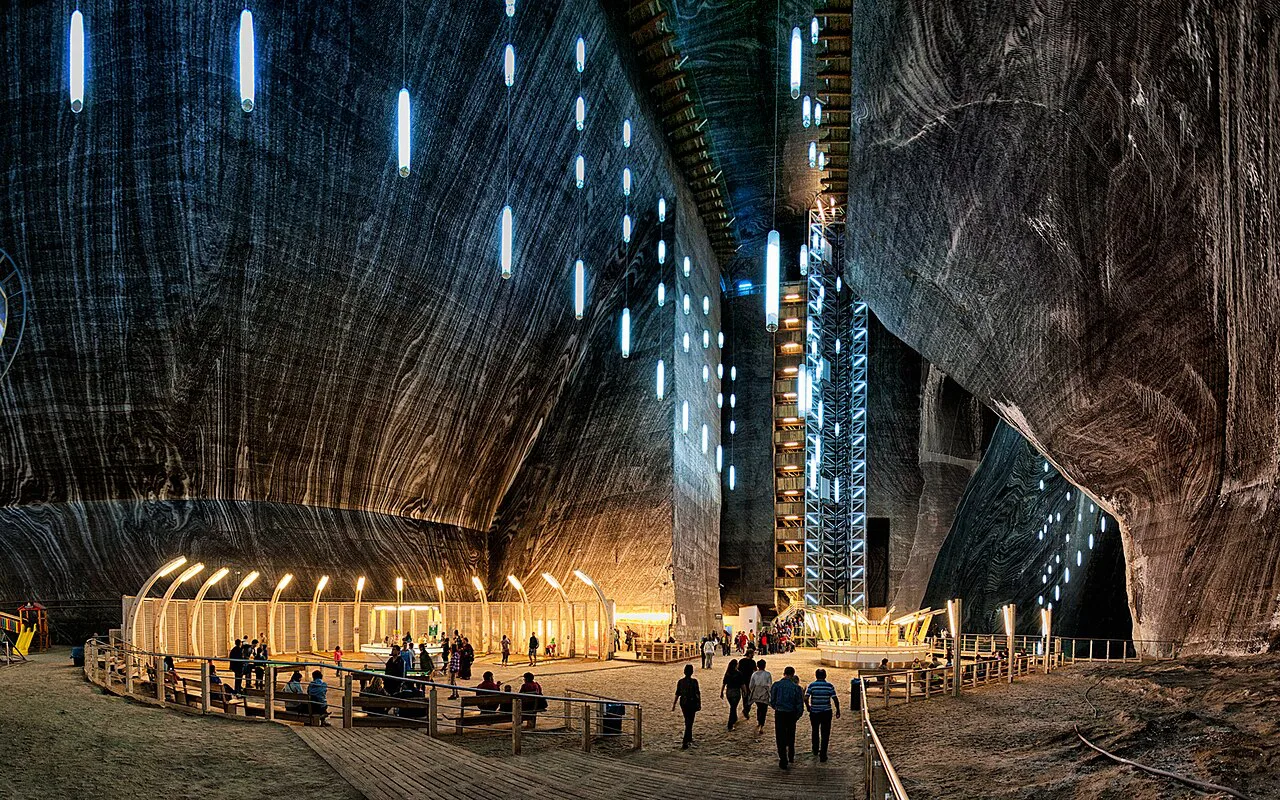
You enter a working museum of salt extraction that has been fitted out for play. Two chambers carry the visit: the Rudolf Mine, 42 metres deep, and the Terezia Mine, 90 metres deep. Visitors walk through at their own pace with no guided tours and no time limit once inside, so the route is yours to shape.
If you have visited other salt mines in Romania expecting a guided walk through galleries and chapels, Salina Turda will feel different: here the salt rooms hold amusements and there is no fixed circuit with a guide. The history is present in panels and in the shape of the excavated chambers, but it is not the main event.
Where Salina Turda is and how far it is from Cluj-Napoca
Salina Turda sits beside the town of Turda in Cluj county, roughly 30 km from Cluj-Napoca, 80 km from Târgu Mureș and 146 km from Sibiu. Brașov is about 243 km away and Bucharest about 421 km, which makes Cluj-Napoca the natural base for a visit.
If you are spending a day in the town itself, Turda: What to See Beyond the Salt Mine covers the History Museum and the Roman Castrum Potaissa, both a short stop from the mine entrance.
Getting there: car, bus from Cluj-Napoca and tours
Driving is the simplest option. There is a large car park in front of the entrance, and when it fills up, which happens, you can park along the approach road and walk the last stretch. From Cluj-Napoca the usual route is the DN1 through Turda; from Târgu Mureș it is the DN15.
Without a car, take a bus from Cluj-Napoca to the centre of Turda, then either bus 17 towards the mine or a taxi to the entrance. Bus 17 does not run frequently, so check the return leg before you commit to it. Several local bus lines reach the area around the saltworks, including 13, 17, CJ 153 and 14.
Organised trips from Cluj-Napoca remove the transport problem. Options include a four-hour Turda salt mine tour from Cluj, a Curly Tour day trip from Cluj, a day trip combining the mine with Rimetea village and Colțești Fortress, and a full-day outing pairing the mine with a gorge and Remetea.
Tickets and entry: what you pay and whether you need to book ahead
A Viator listing for the mine quoted adult tickets at 50 lei on weekdays and 60 lei on weekends and public holidays when that page was last updated, with reduced categories for seniors and students. Treat those as a guide rather than a fixed rate, and confirm the current figure before you travel.
Booking ahead is rarely necessary. Even on a busy Sunday afternoon, tickets were available at the entrance without difficulty, and the underground space is large enough that queues form mainly at the lifts rather than at the ticket desk.
The mine's own opening hours and fees are set by the mine administration, and Salina Turda tickets walks through the current rates and any online options. Groups and anyone visiting in a school holiday should look at that before setting out.
The descent: stairs, the long corridor and the panoramic lift
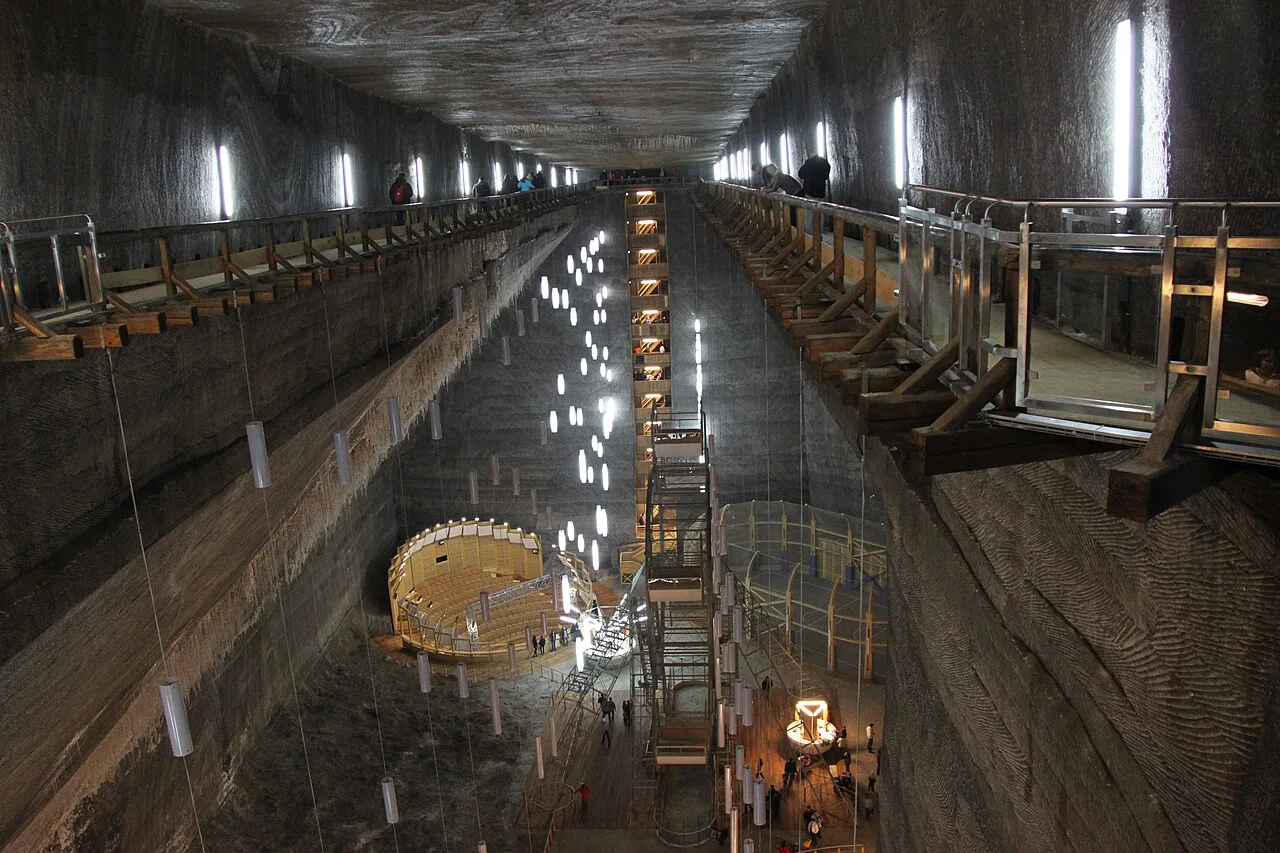
The visit starts with a staircase cut through salt rock, which brings you into a corridor around a kilometre long that links two entrances to the mine. You do not need to walk the full length: follow the signs and other visitors towards the main chambers, and let the corridor be a passage rather than a hike.
Lifts, including a panoramic one, cut out the stairs and are the easier way down and back up. They are also where queues build, so a visit at a quieter time saves waiting.
Rudolf Mine: the lake, the boats and the attractions on the floor
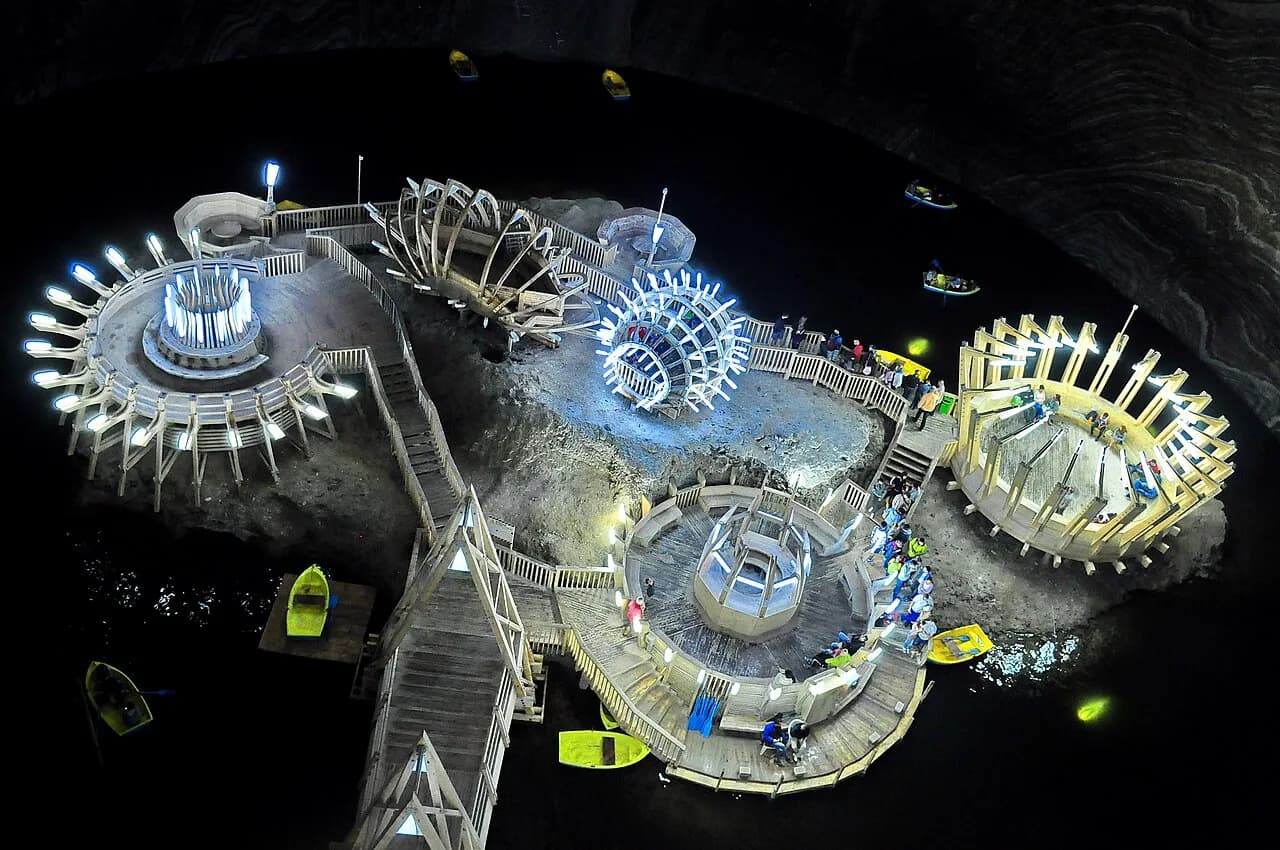
The Rudolf Mine is the chamber most people picture: a vast salt hall with a lake on its floor, ringed by walkways, with boats out on the water and the amusement area laid out around it. The Ferris wheel, pool tables, bowling, mini golf and basketball court all sit in this repurposed extraction space, and you can watch from the balconies without taking part.
Valea Verde notes that the Rudolf Mine stairs run 80 metres underground, which gives a sense of how far the walkways descend. The effect is theatrical: dark salt walls, low lighting and the noise of the attractions echoing off the rock.
Terezia Mine and the rest of the underground route
The Terezia Mine, 90 metres deep, is the second headline chamber, and the route between the mines and the corridors lets you see salt formations on the walls at close range. Allow time to wander rather than marching from one highlight to the next, because the side passages and balconies are where the place makes sense.
How long to allow for a visit
Budget two to three hours if you are passing through and want to see the main chambers and try an attraction or two. If you are staying locally and using the mine for its therapeutic reputation, daily sessions of an hour to an hour and a half are the usual pattern instead.
Because there is no time limit underground, the clock is yours: families with children tend to stay longer in the Rudolf Mine, while a solo traveller can be in and out in well under two hours. The return bus is the real constraint, not the ticket.
Practicalities: stairs, lifts and what to wear
The stairs into the mine are substantial, and while lifts are available, the walk back up is more demanding than the descent. Allow for that if anyone in your group struggles with heights or enclosed spaces.
Is Salina Turda worth it, and who should skip it
Salina Turda is worth the trip if you want an unusual half-day out from Cluj-Napoca and are happy with an amusement-park feel in a historic mine. It is less appealing if you want a guided explanation of salt mining, prefer not to share a space with crowds, or dislike stairs and enclosed places.
Travellers comparing options across the country should look at the wider picture of salt mines in Romania, which range from this developed attraction to quieter sites elsewhere. If Cluj-Napoca is not on your route, salina Praid in Harghita County and the Slanic Prahova salt mine in Prahova County are the other names that come up.
Should Salina Turda be on your Cluj-Napoca itinerary?
Yes, if you have a spare half-day in Cluj-Napoca and want something genuinely odd: a boat lake, a Ferris wheel and a bowling alley inside a salt mine. Go early, bring a warm layer, and take the lift if the staircase looks like hard work.
Skip it if you want a quiet, guided heritage visit, or if your itinerary is already full of salt mines. Check Salina Turda's current opening hours and prices the day before you go, because those are the details most likely to change.
Explore more Romania guides
Sources
Useful notes for your next trip
Optional updates to our guides.
You might also like
Continue reading
More guides you'll find useful