Cacica Salt Mine: What's Inside and How to Visit
A candid guide to the Cacica salt mine in Bucovina: the descent of roughly 280 steps, the underground chapel and ballroom, and what to expect underground.
On this page
Cacica salt mine is worth visiting if you accept a descent and climb of roughly 280 steps each way and want the odd, memorable sight of a chapel, ballroom and salt lake cut underground. It sits at Cacica in Suceava County, in the Bucovina region of northern Romania, and works best as a stop on a wider monastery trip rather than a destination on its own. This guide covers what is underground, how the visit works, the hours Salrom publishes and who should give it a miss.
What the Cacica salt mine is and where it sits
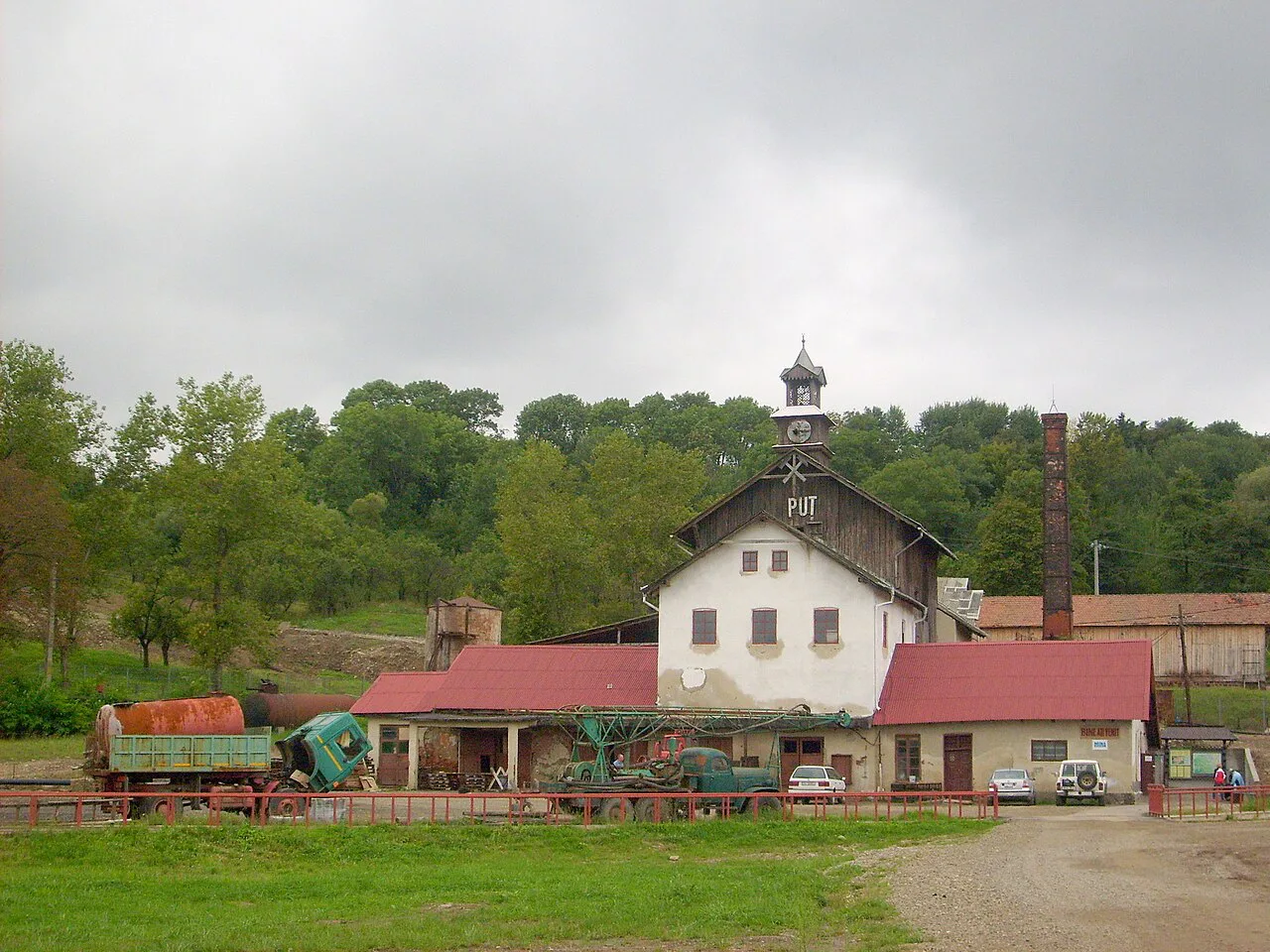
Cacica is a salt-mining village in Suceava County, northern Romania, in the part of Bucovina travellers usually visit for its painted monasteries. The mine is the public face of the local salt works, and Salrom lists Salina Cacica among the tourist mines it runs alongside Slănic Prahova, Praid and Târgu Ocna. Treat it as a village-scale attraction: a single underground route rather than a full day out.
The workings sit close to the village, so you do not need a long approach walk once you reach Cacica. Local accounts describe the mine as opening in the 1780s with Polish miners, which explains the chambers you walk through rather than the scale of the site. That history is background only; the reason to come is what has been carved out of the salt.
How the visit works: the descent and the climb back up
The defining feature of a Cacica visit is the staircase. Visitors report a descent, and later a climb, of around 280 steps to reach the mined chambers, so you commit to the same effort in both directions. Budget more time for the return than you expect, and treat the steps as the main physical test of the day rather than the walking underground.
Do you need a guide at Cacica salt mine? Salrom publishes opening hours but no guided-tour schedule, so plan to walk the public route at your own pace. Ask at the entrance whether a guide is available on the day.
How long does a visit to Cacica salt mine take? Allow a couple of hours to cover the descent, the underground chambers and the climb back up. The stairs are the slow part, so build in extra time if your group includes slower walkers.
What should you wear underground at Cacica? Wear shoes with grip for the salt-dusted surfaces and take a light jacket, since the chambers feel cool. Keep bags small for the tight stairwell and corridors.
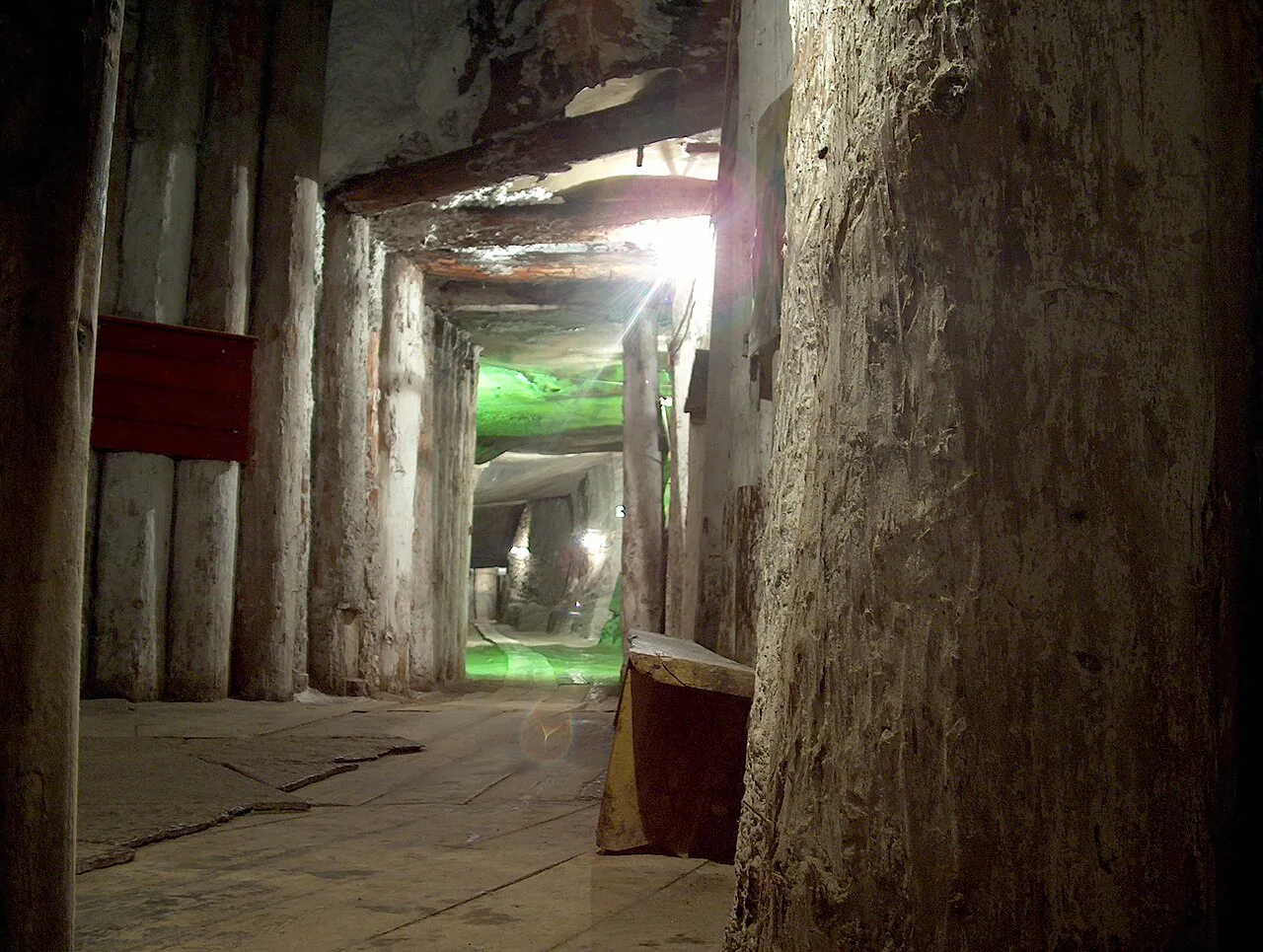
The descent is the point at which you decide whether the rest of the visit suits you, because once down the stairs you are in dark, enclosed corridors with artificial light. Salrom publishes the mine's opening hours but no tour schedule, so plan on moving through at your own pace rather than joining a timed guided group. Carry a layer: underground temperatures feel steady and cool compared with the surface.
If you want a Romanian salt mine built around a gentler, more engineered visitor route, the contrast is worth knowing before you commit. The country's better-known underground attractions vary a lot in how much climbing they demand, and our guide to salt mines in Romania sets out which ones suit which kind of traveller.
What there is to see underground
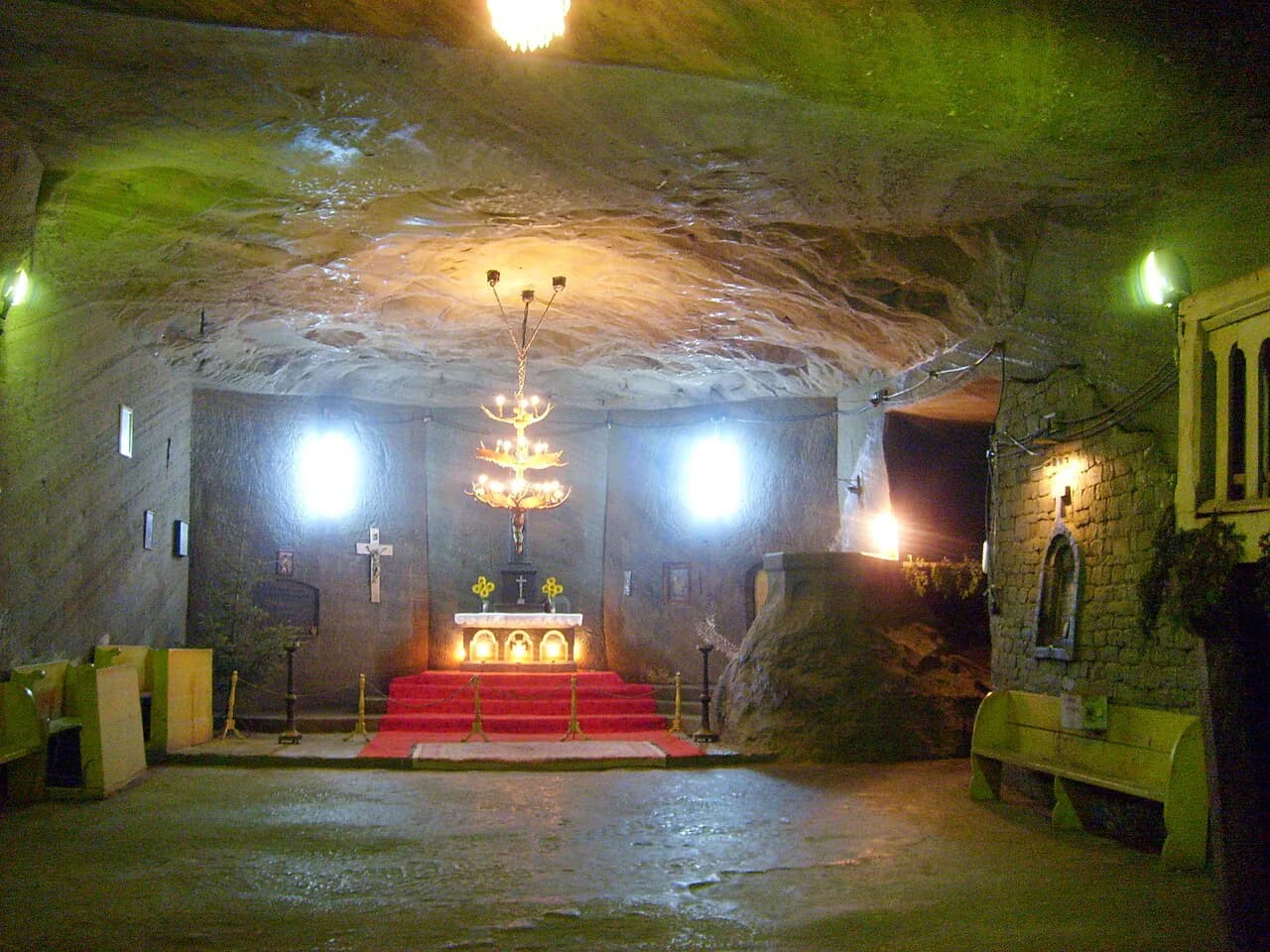
The underground chapel is the sight most visitors remember: a religious space cut into the salt. Photographs of the mine show a chapel, salt-carved seats and an altar among the public chambers, which tells you the visit is as much about human handiwork as geology. Look for the carved detail rather than expecting a cathedral-scale nave.
Beyond the chapel, the route takes in a ballroom, a salt lake and sculptures worked in salt, all lit artificially. The lake and the salt-carved figures give the corridors something to look at between the bigger rooms. Photography is possible but low light makes a steady hand more useful than a long lens.
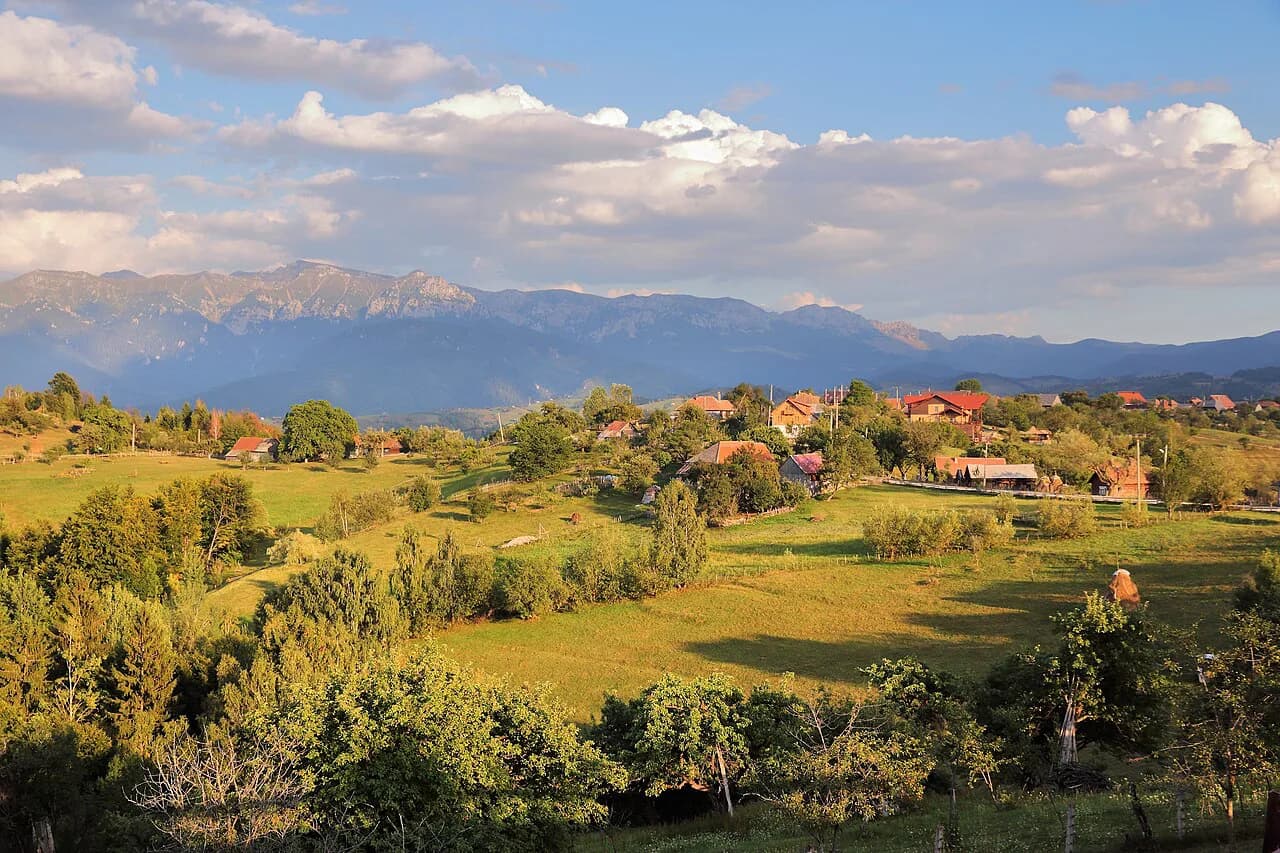
The mine sits in Bucovina, salt country under pasture and forest. A stock-photo caption describing the mine puts the reserves beneath it at an estimated 238 million tonnes of sodium chloride, a figure that explains why the workings are so extensive. You see only a fraction of that on the public route.
Opening hours for the mine
Salrom's published programme for Salina Cacica is Monday to Sunday, 09:00 to 17:00. Those are the hours as published, so confirm them on the Salrom site before you travel, particularly outside the summer season. Arriving in the morning leaves room for the stairs and the chambers without watching the clock.
The same Salrom page announced a salt-water pool opening at Cacica on 22 June 2024, with daily hours of 10:00 to 20:00 and entry charged in lei. Treat those as 2024 details rather than current arrangements, and check the pool separately if it interests you. The mine itself is the reliable reason to make the journey.
Is the mine a good stop on a Bucovina painted monasteries trip?
Cacica fits naturally into a Bucovina itinerary because the painted monasteries lie in the same county, and the mine gives you an indoor half-day when weather turns. It is a single underground route of a couple of hours rather than a whole day, so pair it with one or two monastery stops rather than trying to do everything at once. Driving between the monasteries and Cacica is the practical way to link them.
If you are choosing between Romanian salt mines rather than adding one to a monastery trip, the calculus changes. Salina Turda is the better-known, heavily engineered option and it draws the crowds to match; Cacica is quieter and more rough-hewn. Read our Salina Turda guide before deciding which one earns your day.
Other options sit further from Bucovina: salina Praid in Harghita County is another Salrom site, and salina Ocnele Mari is a further Salrom mine to the south. Neither belongs on a short Bucovina trip, but they matter if you are touring the country by car and want to compare underground experiences.
Who should skip it: stairs, darkness and confined spaces
Skip Cacica if anyone in your party struggles with stairs, because the roughly 280 steps down are matched by 280 back up and there is no shortcut out. The corridors are dark and narrow in places, which is hard work for anyone uneasy underground. The honest verdict is that the physical effort, not the ticket queue, is what decides the visit.
It is also the wrong choice if you want a polished, thematic attraction with lots of interpretation; this is a working salt mine opened to visitors, and the draw is the raw chambers. Families with small children should think about carrying them up the stairs on the way out. Anyone short of time in Bucovina should put the monasteries first and treat the mine as a bonus.
If you go, wear shoes with grip for the salt-dusted surfaces and take a light jacket. Leave bulky bags behind if you can, since the stairwell and corridors are tight. The visit rewards curiosity about how salt has been cut and shaped rather than a checklist of exhibits.
Should the salt mine make your Bucovina plan?
Add Cacica to a Bucovina monastery trip if you can manage 280-odd steps each way and want an hour or two underground among salt carvings, a chapel and a ballroom. Leave it out if stairs, darkness or tight corridors would spoil the day, or if your time is better spent at the painted monasteries. Check the Salrom hours before you set off and keep the visit flexible around the weather.
Explore more Romania guides
Frequently Asked Questions
Do you need a guide at Cacica salt mine?
Salrom publishes opening hours but no guided-tour schedule, so plan to walk the public route at your own pace. Ask at the entrance whether a guide is available on the day.
How long does a visit to Cacica salt mine take?
Allow a couple of hours to cover the descent, the underground chambers and the climb back up. The stairs are the slow part, so build in extra time if your group includes slower walkers.
What should you wear underground at Cacica?
Wear shoes with grip for the salt-dusted surfaces and take a light jacket, since the chambers feel cool. Keep bags small for the tight stairwell and corridors.
Sources
Useful notes for your next trip
Optional updates to our guides.
You might also like

Continue reading
More guides you'll find useful