Icons on Glass in Romania: The Sibiel Museum and Painted Glass Tradition
Icons on glass are Romania's reverse-painted folk icons. See the Zosim Oancea Museum in Sibiel, near Sibiu, and learn how the craft works today.
On this page
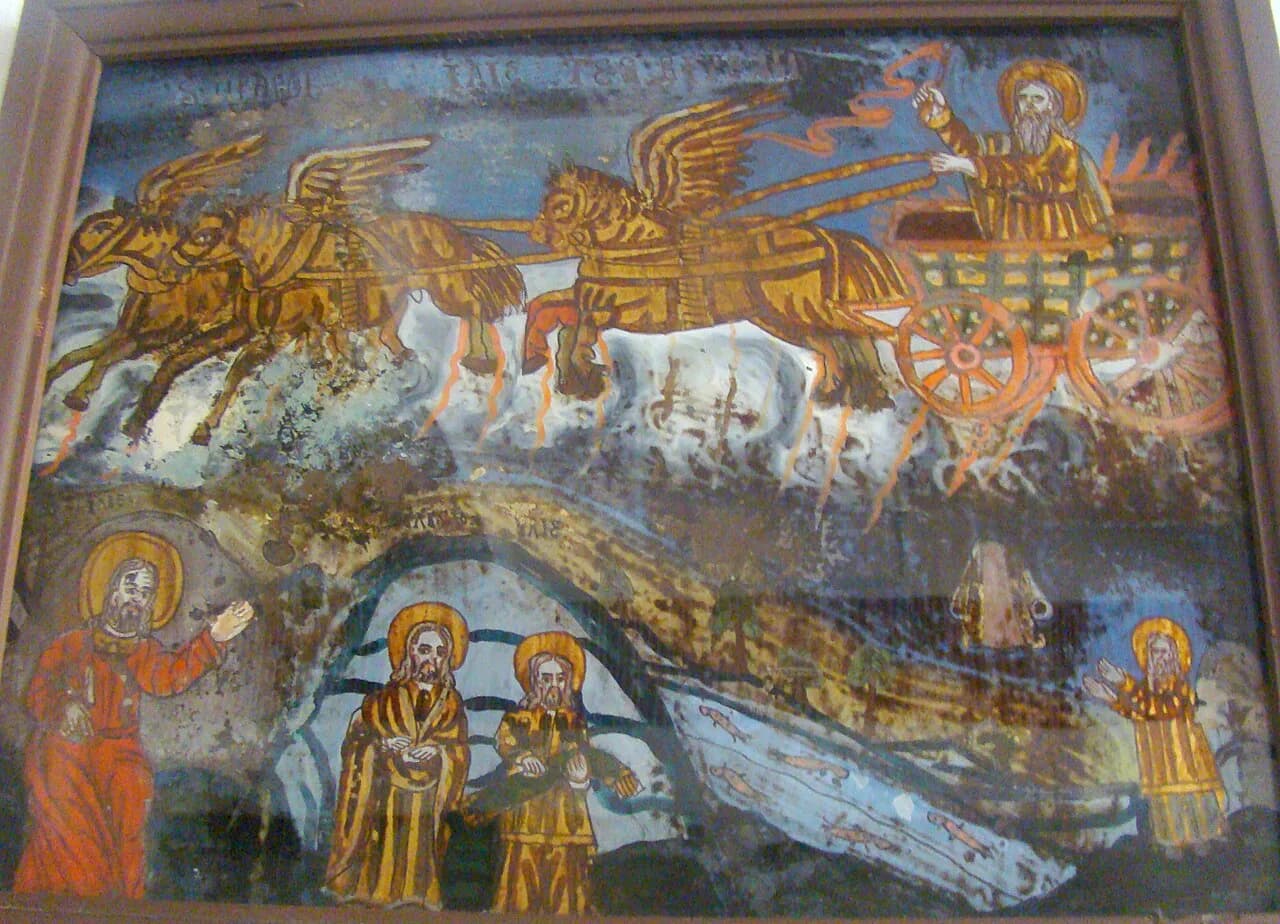
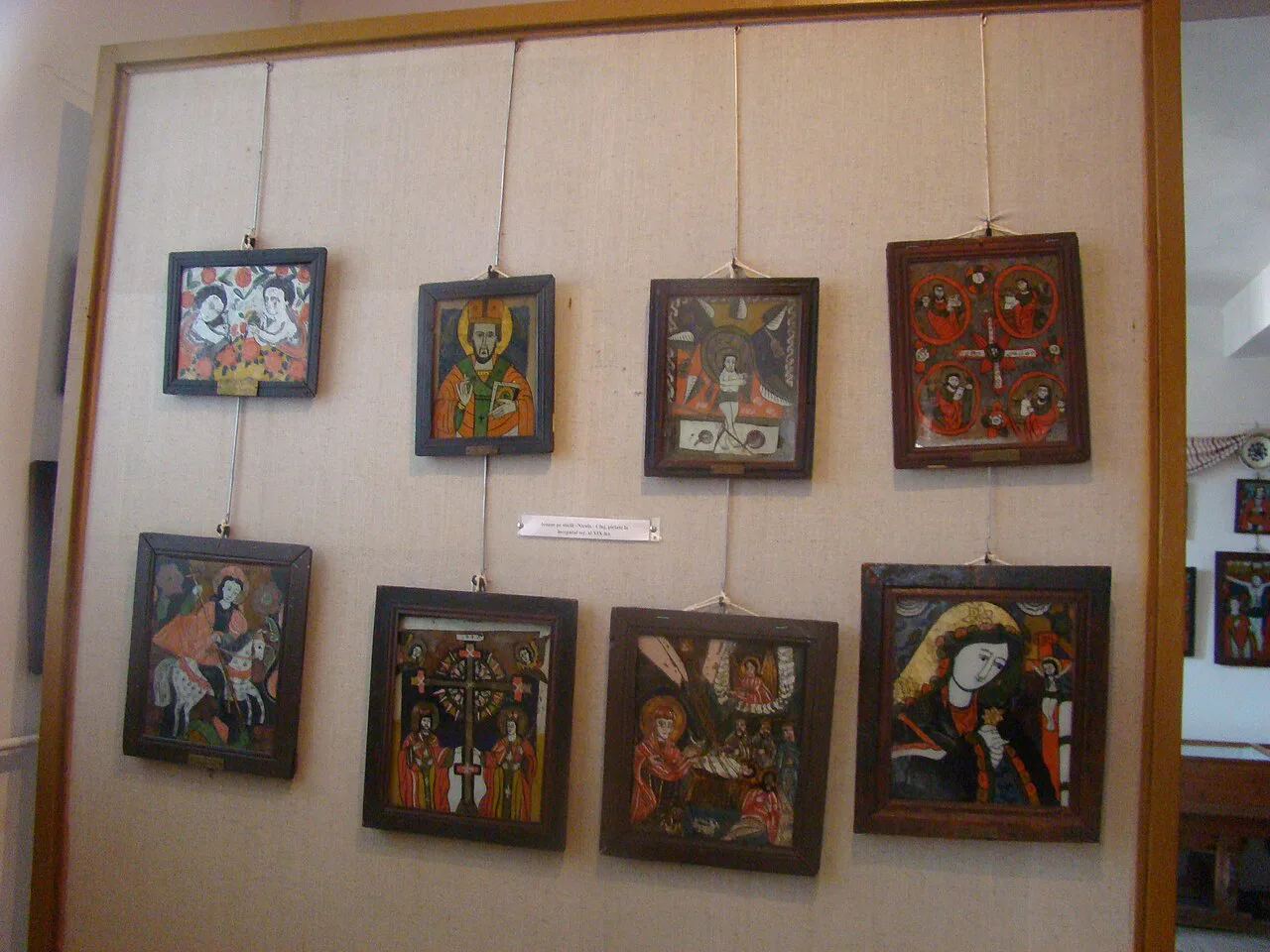
Icons on glass are Romania's reverse-painted sacred images: the picture is painted on the back of a glass panel and viewed through the front, so the finished icon sits behind a protective sheet of glass rather than on top of a board. The best single place to see the tradition is the Zosim Oancea Museum of Icons on Glass in Sibiel, a village about 22 km south-west of Sibiu, where more than 600 pieces are housed across the cemetery from the village's 18th-century church. If you searched for glass app or UI icon design, this page is about something else.
This guide explains what the icons are, how the museum came together, how a reverse glass icon is painted, and what to look for in the imagery. It also sets out the shape of a visit from Sibiu so you can judge whether Sibiel fits a Brașov–Sibiu itinerary.
What icons on glass are
A reverse glass icon is painted from the front face backwards: the outlines, lettering and finishing details go onto the glass first, then the background colour and any gold leaf are applied behind them. The image is then sealed with a coat of varnish, covered with a sheet of paper and fixed into a wooden frame with a protective backing. Because every layer sits behind the one applied before it, the painter works in the opposite order to a normal picture and has no room to correct a mistake.
The result reads as flat, bright and slightly luminous, with the glass itself acting as the surface you look through. It is a folk form made for homes and for sale at markets rather than for church walls, which is why the Sibiel collection is built from icons villagers kept in their houses.
Where to see them: the Zosim Oancea Museum in Sibiel
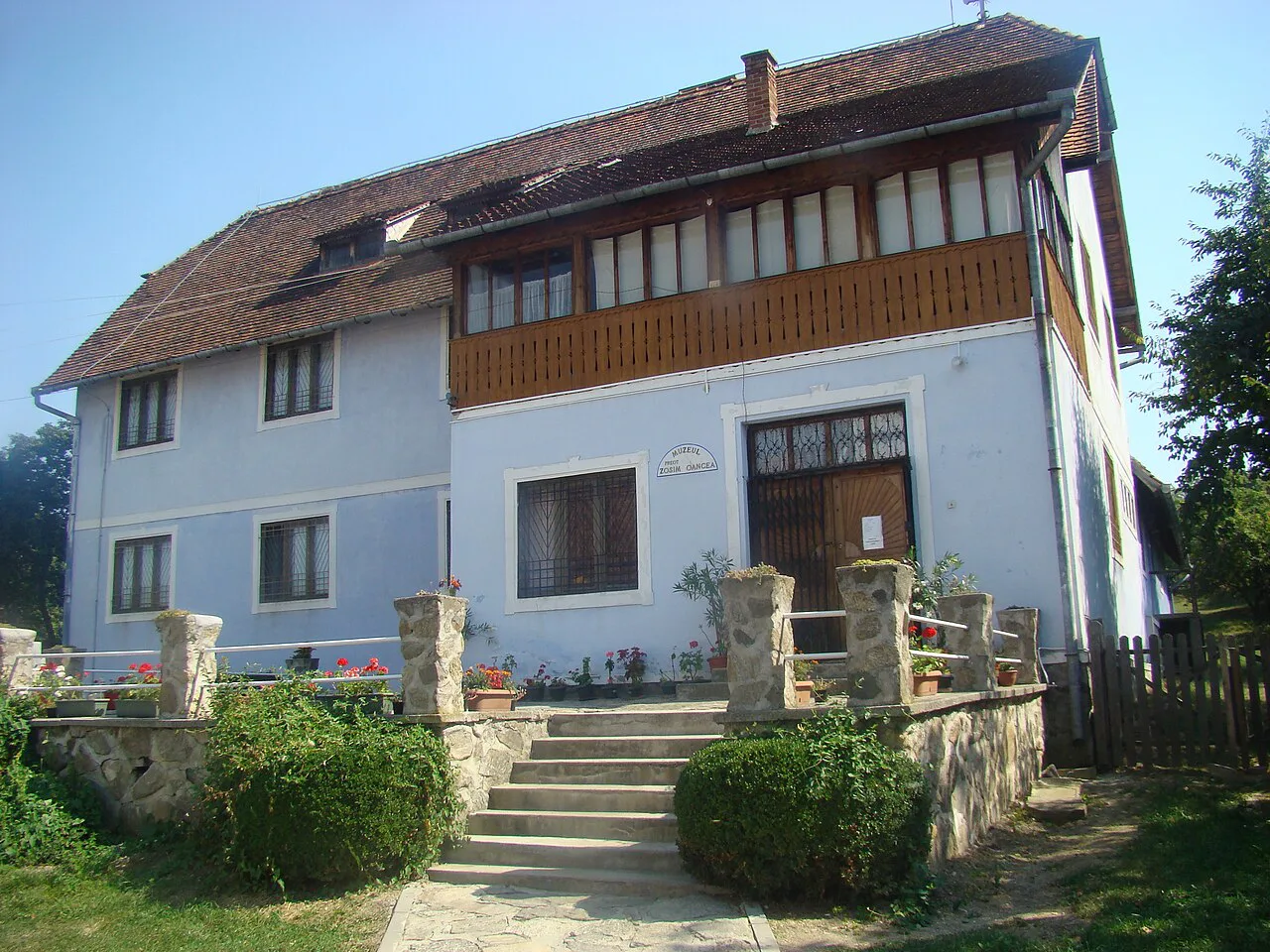
The museum stands in Sibiel, a village in Transylvania about 22 km south-west of Sibiu, the region's historic cultural centre. It occupies a two-storey, whitewashed plaster-and-timber building in a traditional rural style, sited across the cemetery from the 18th-century village church. The building was renovated in 2021, and the museum draws around 15,000 visitors a year.
Can you buy icons on glass in Romania? The museum in Sibiel is a collection built from villagers' donations, not a shop, so it is the place to study the icons rather than a place to buy them. Contemporary painters such as Adriana Vasile and Andrei Grigore work in the traditional method and contribute images to an online archive, so ask locally about current makers rather than expecting a retail counter.
How long does a visit to the Sibiel museum take? Allow generous time inside for the two floors and a little more for the churchyard across the cemetery. The collection rewards slow looking, because the interest lies in the differences between many versions of the same subjects.
How do you get to Sibiel from Sibiu? Sibiel lies about 22 km south-west of Sibiu, which makes it a short road trip from the city, best treated as a half-day. Transport arrangements and timetables change, so confirm the current options with the Sibiu tourist office before you travel.
Plan the museum and the church as one stop rather than two separate outings: the two buildings face each other across the graveyard, so visiting both together makes sense. Sibiel is a small village stop, so treat it as a half-day from Sibiu rather than a destination in its own right.
Two floors of icons, looked at properly, reward a slow visit, because the interest is in the small differences between dozens of versions of the same subjects. Allow generous time inside and in the churchyard rather than rushing through.
How the collection began
The collection exists because of Father Zosim Oancea, a Romanian Orthodox priest who spent 15 years in Communist prisons before being exiled to the remote parish at Sibiel in 1964. He asked villagers to donate their glass icons so that a neglected form of peasant sacred art could be preserved, and stored the gifts in a shed behind the church. By the time he died in 2005, the collection had passed 600 pieces and had moved into a permanent museum bearing his name.
These are not commissioned masterpieces but household icons given up by the families who owned them, which is why the collection is strong on repeated subjects, varied hands and the small local details that ordinary painters added. The 2021 renovation is why visitors now see the collection in a dedicated museum building.
How a reverse glass icon is made
The working order is the whole technique. The painter brushes the outlines, the lettering and the finishing details onto the glass first, then lays in background colour and sections of gold leaf behind them, working from the detail outwards. The panel is sealed with varnish, backed with paper and set in a wood frame with a protective backing.
Because the composition is built backwards, the drawing has to be right the first time. The painter cannot lay a correction over a finished area the way an artist on board or canvas can, because anything added sits in front of what is already there when seen through the glass. That constraint explains the boldness of the outlines and the confidence of the lettering on the better pieces.
Why the technique took hold in Transylvania
Glass icon painting reached Transylvania from Bohemia and Austria at roughly the time the Habsburg Empire annexed the region in the late 17th century. Romanian Orthodox peasants under Catholic and Protestant landlords of Hungarian and German extraction took up a relatively cheap art form introduced by their Austrian rulers and adapted it to their own iconography. The icons were affordable sacred images sold at farmers' markets and by travelling peddlers.
By the 19th century the craft had reached a high level of finish among Romanian painters, with regional masters and local schools of painting. It declined when mass-produced lithographs of Holy images took over the sacred art market, and the current interest in traditional crafts, together with a religious revival in post-Communist Romania, has given the form a second life.
The icons belong with the other Romanian traditions covered on the site, from costume to decorated eggs. Seeing them alongside those crafts makes clear how much of the detail is shared: the same eye for dress, pattern and colour, applied to a sacred subject.
What to look for in the imagery
Largely self-taught painters put local architecture, plants, animals and clothing into their icons, and later painters have kept those variations. Look for buildings that resemble village houses rather than the Holy Land, orchards that read as Transylvanian gardens, and dress that follows local fashion. In one Crucifixion the background carries a Jerusalem skyline that reads as distinctly odd, and in an Adam and Eve the Garden of Eden appears as an apple orchard.
The imagery could also carry a political edge. In one Resurrection icon the guard at Christ's tomb wears the turbans and uniforms of the Ottoman Turks, a pointed choice for viewers who knew exactly who was meant. Reading the icons this way turns a room of similar panels into a series of small arguments.
For the clothing specifically, the icons are a useful companion to the Romanian folk costume, since the painters dressed their figures in what they saw around them. Compare the embroidered patterns on the garments with the museum pieces you meet elsewhere in Transylvania.
One motif is worth seeking out across painters. The Mystical Winepress shows Christ squeezing grapes into a Eucharistic chalice from a vine growing out of his wounded side and entwined on a cross-shaped trellis. Adriana Vasile, who mostly works on contemporary pieces, paints the motif in a traditional style, and Andrei Grigore painted his version while still in his teens; his sister Nicoleta-Octavia painted a Last Supper in the same craft.
The craft today
The museum has helped foster a revival in Romanian glass icon making, with painters of the craft contributing images to an online photo archive. Contemporary artists work in the traditional method, including Adriana Vasile, Andrei Grigore and Nicoleta-Octavia Grigore, alongside older named pieces such as a Madonna and Child attributed to Nicula. The collection therefore reads as a living tradition rather than a closed historical one.
Note which pieces are older and which are modern work in the old method, because the difference is not always obvious at a glance and is the point the museum is making. If the painted folk art is what draws you, the Romanian folk art page opens up the wider field, from the Bucharest Village Museum to the ASTRA Museum.
The practical shape of a visit from Sibiu
Sibiel sits about 22 km south-west of Sibiu, which puts it within easy reach of the city by road for a half-day. The museum is the anchor, with the 18th-century church across the cemetery as the second stop, and the two together fill a morning or an afternoon comfortably.
Check the museum's current opening days and any ticket price directly with the museum or the Sibiu tourist office before you set out, since a rural collection can keep short hours outside the main season. Build the drive so that a closed door does not waste the trip: the village and church are worth the journey on their own.
If you are working Sibiel into a Brașov–Sibiu route, keep it as a deliberate detour rather than a passing stop. The village is small, the collection is concentrated, and the value comes from spending time with the icons rather than ticking off a building.
Is Sibiel worth the detour from Sibiu?
Yes, if you want a focused encounter with a folk art form and its dedicated museum. The museum gives you more than 600 reverse-painted icons, the story of Father Zosim Oancea, and a clear look at how the technique works.
Skip it if your days in Sibiu are already full and painted glass is not your interest; the city's squares and churches will use the time better. If you do go, confirm the museum's current hours before leaving Sibiu and give the village church a few minutes on the way out.
Explore more Romania guides
Frequently Asked Questions
Can you buy icons on glass in Romania?
The museum in Sibiel is a collection built from villagers' donations, not a shop, so it is the place to study the icons rather than a place to buy them. Contemporary painters such as Adriana Vasile and Andrei Grigore work in the traditional method and contribute images to an online archive, so ask locally about current makers rather than expecting a retail counter.
How long does a visit to the Sibiel museum take?
Allow generous time inside for the two floors and a little more for the churchyard across the cemetery. The collection rewards slow looking, because the interest lies in the differences between many versions of the same subjects.
How do you get to Sibiel from Sibiu?
Sibiel lies about 22 km south-west of Sibiu, which makes it a short road trip from the city, best treated as a half-day. Transport arrangements and timetables change, so confirm the current options with the Sibiu tourist office before you travel.
Sources
Useful notes for your next trip
Optional updates to our guides.
You might also like
Continue reading
More guides you'll find useful