Dragomirna Monastery: Visiting the Fortified Church Near Suceava
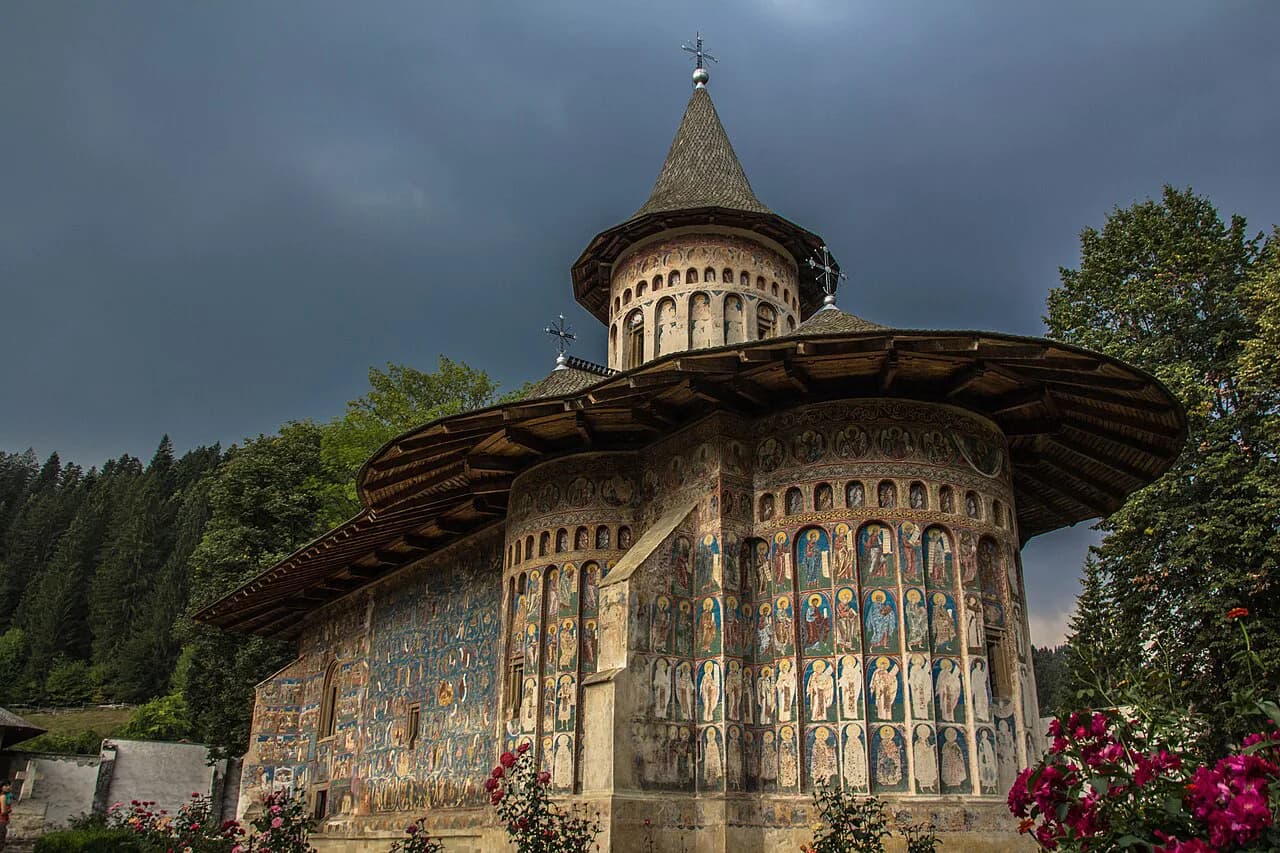
Dragomirna Monastery near Suceava has a tall, near-fortified church whose restored early 17th-century frescoes cover 900sqm in the nave and chancel.
On this page
Dragomirna Monastery is worth a half-day from Suceava: a substantial, almost fortified church whose nave and chancel carry early 17th-century frescoes over some 900 square metres of wall. Plan the visit around the painted interior rather than the wider site, because the celebrated conservation work was specific to those murals.
The monastery stands about 15km from Suceava, in Mitocu Dragomirnei commune. It makes a sensible first or last stop on a Bucovina church circuit, alongside the painted monasteries of the region.
Where Dragomirna Monastery sits
Dragomirna lies roughly 15km from Suceava, in Mitocu Dragomirnei commune. Suceava is the practical base: it has the nearest rail and road connections, and the monastery is a short road trip from the city rather than a day out in the far west of the region.
Because the distance is short, treat Dragomirna as a half-day rather than a full one. That leaves time to pair it with another Bucovina stop on the same day, but the church interior deserves unhurried attention before you move on.
The fortified church
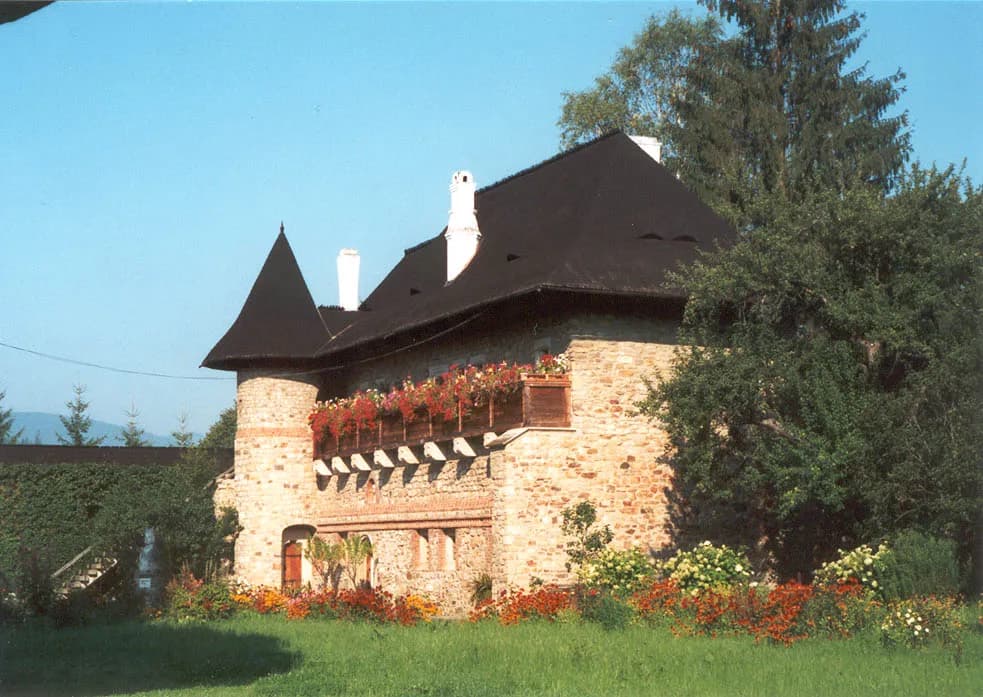
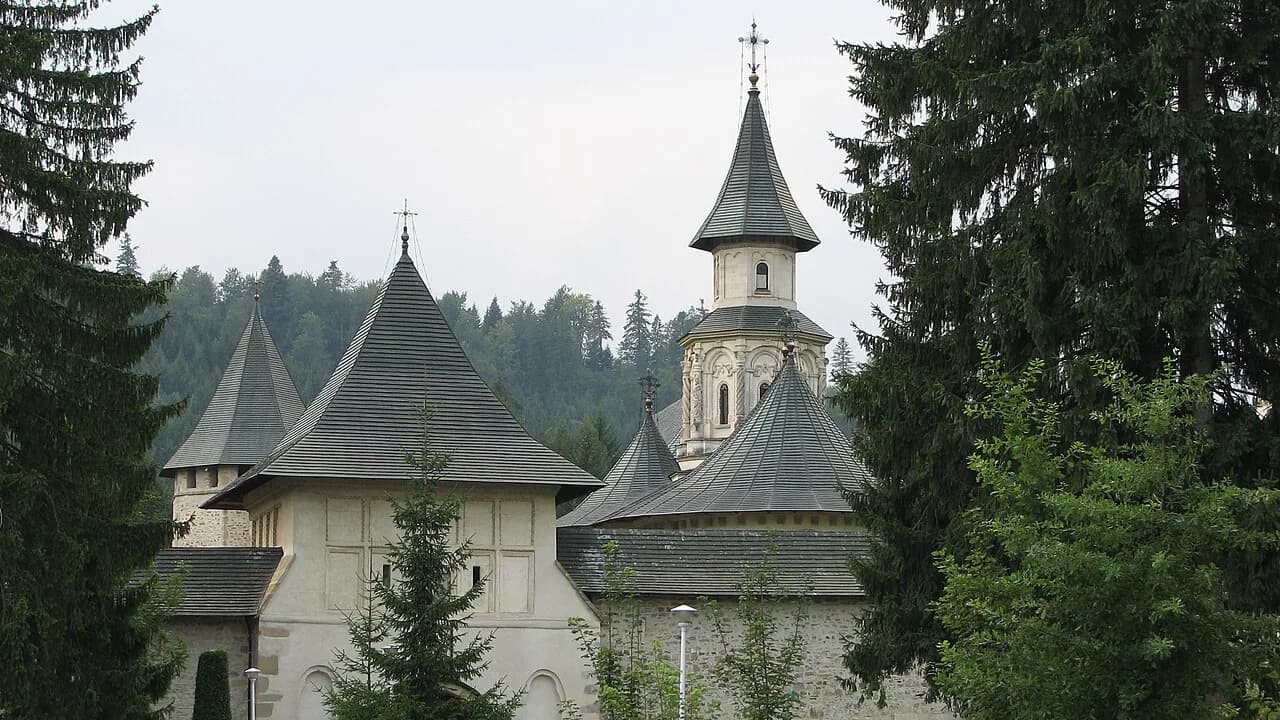
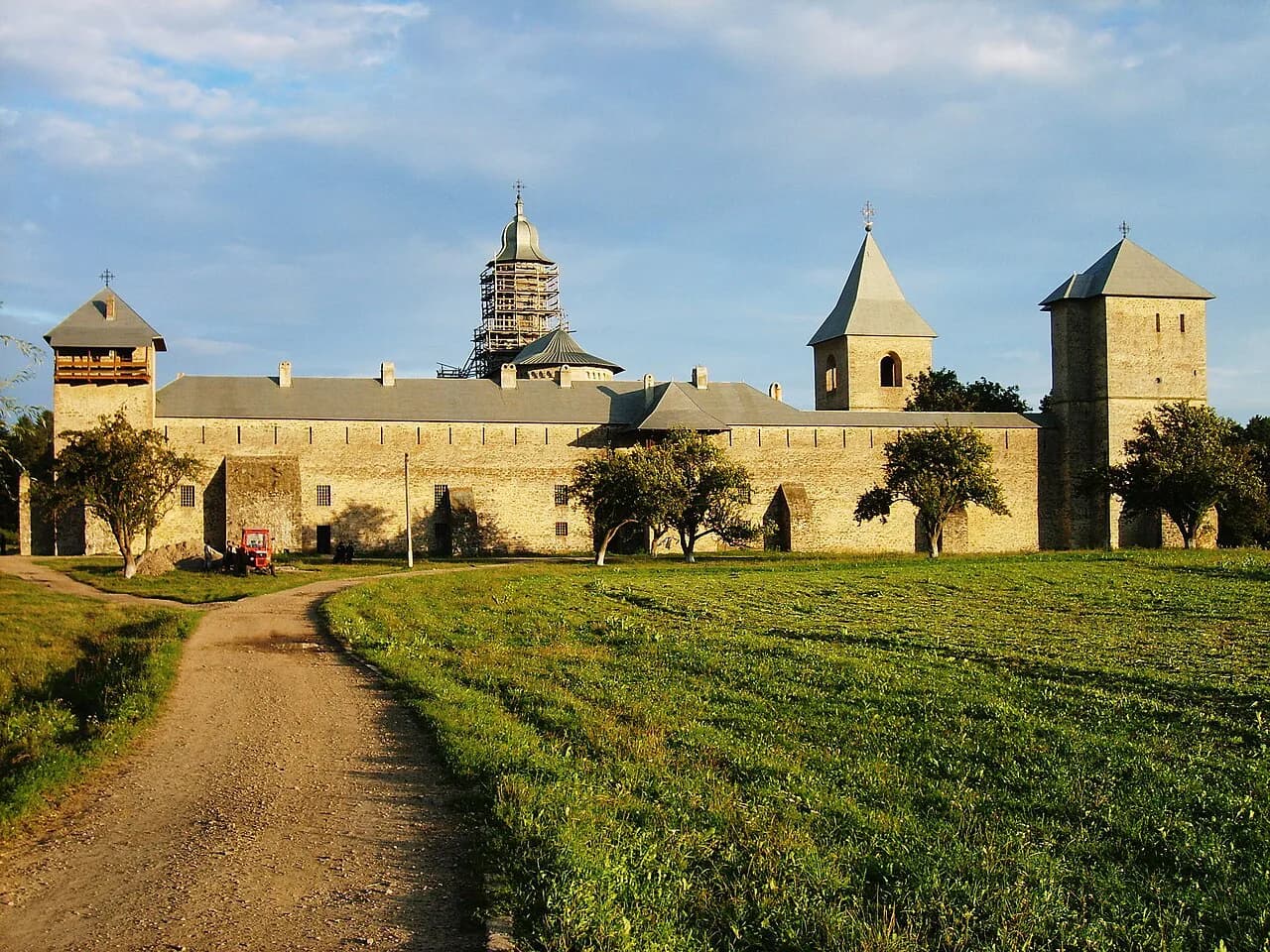
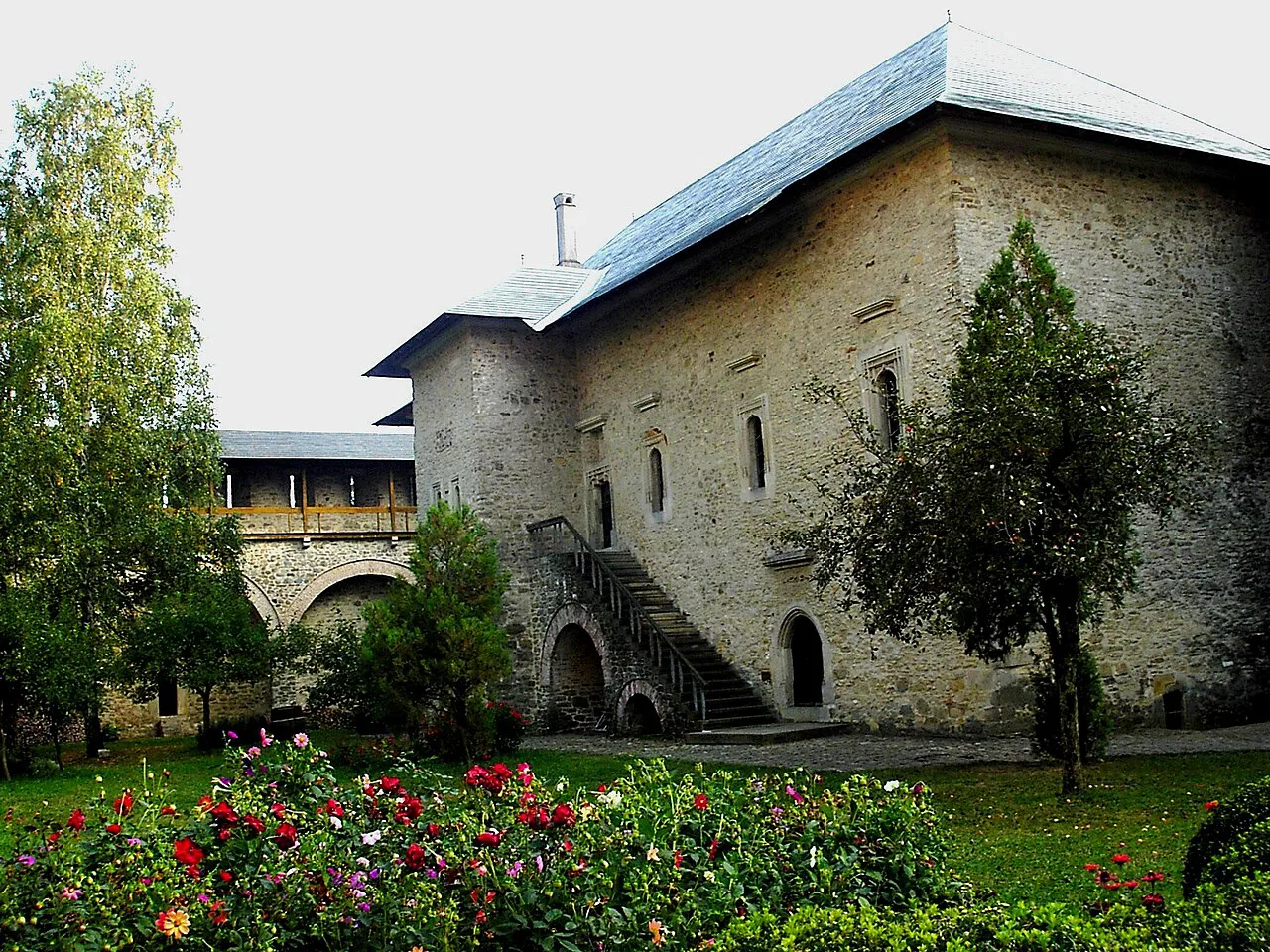
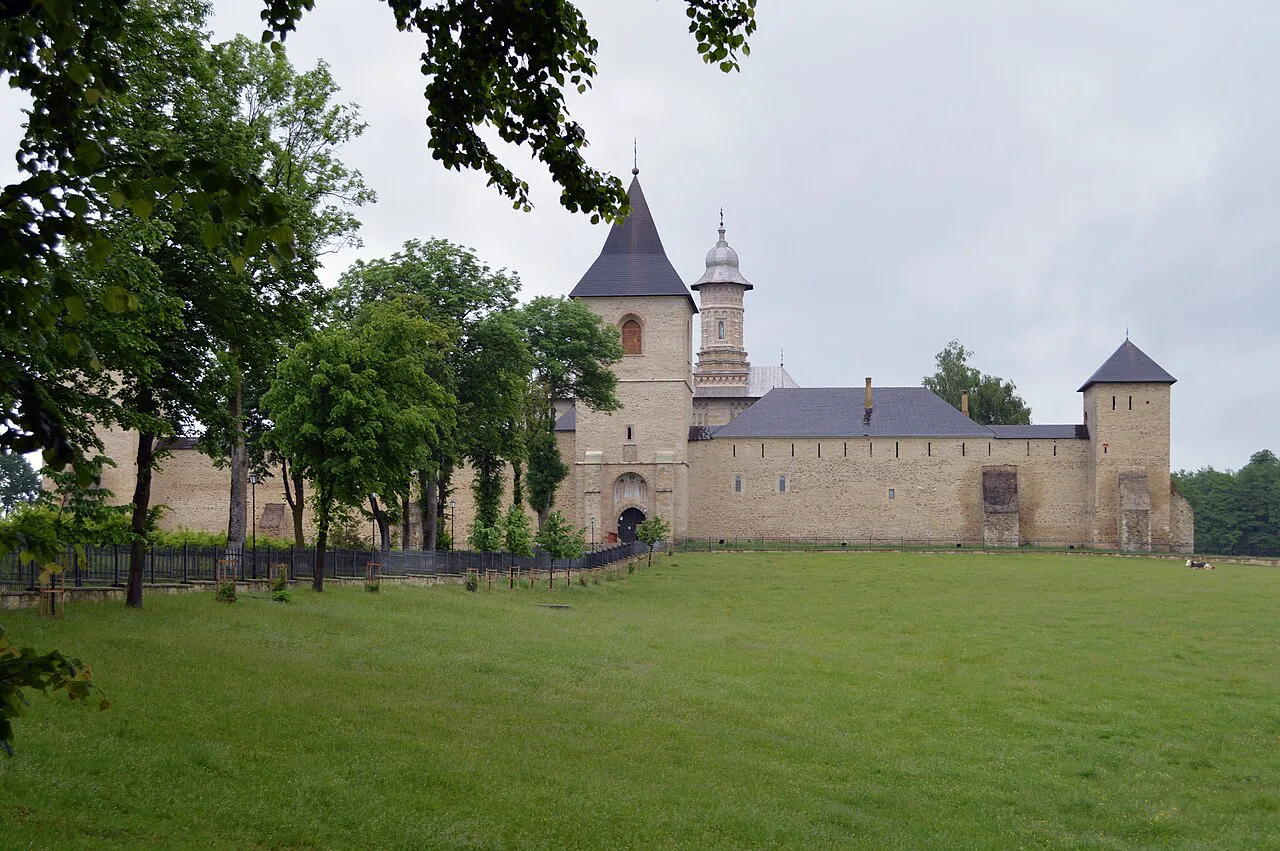
The monastery was built during the first three decades of the 17th century. The church reads as a substantial, almost fortified structure rather than an ornate one, which is the first thing that strikes you as you approach.
Keep that defensive character in mind when you plan time on site: the exterior asks for a short walk around, while the interior is where the visit slows down. The contrast between the austere shell and the painted nave is the reason to come.
The frescoes in the nave and chancel
Inside, the nave and chancel carry early 17th-century frescoes showing scenes from the life of Christ, saints, angels and a wide range of Christian iconography. The painting is vigorous and colourful, and the conservation work has made it far more visible than it had been.
The figure to hold on to is 900sqm: that is the extent of wall surface covered by the conservation project, not the whole monastery. It is also the reason to give the nave and chancel most of your time and to treat the rest of the site as secondary.
Why the paintings look as they do now
Four hundred years had badly compromised the quality and visibility of the murals before conservation began. A team of 50 professionals and students from several countries, led by a Romanian expert, worked on the paintings in situ using natural, traditional and reversible materials, while preserving the original 17th-century mood and patina.
The project won a Grand Prix and the Public Choice award at the 2014 European Heritage Awards. The award organisers also note the conservation was followed by a considerable increase in tourists and school groups, which is a fair warning that the interior can be busy when a group is in.
The rest of the site
Beyond the tall church, the monastery is a working religious site with its own grounds and buildings. The celebrated conservation work was confined to the frescoes in the nave and chancel of the main church, so that interior, not the wider complex, is where to spend your attention.
Whatever else you look at, make sure the painted nave and chancel come first. The award-winning restoration was specific to those murals, and they are the reason most travellers make the trip from Suceava.
How long to allow and what to prioritise
Allow a couple of hours on site. Start with the exterior so you register the fortified shape, then give the nave and chancel the bulk of your time, reading the scenes rather than photographing the whole wall at once.
Prioritise in this order: the painted nave and chancel, then the approach and outer walls. If you are building a wider itinerary, the painted monasteries of Bucovina reward a separate day, and Voroneț Monastery, outside Gura Humorului, is a natural next stop on the circuit.
Getting there from Suceava without a car
The monastery is about 15km from Suceava in Mitocu Dragomirnei commune, close enough for a taxi or a hired car with a driver. Arrange your return with the driver before you set out, and agree a pickup time on arrival.
With your own car the drive is short and the site is easy to combine with other churches in the region. Without one, a taxi both ways is the simplest reliable option, and worth agreeing a return time with the driver on arrival.
Practical points to settle before travelling
Opening times, entry charges, service times and any photography or dress rules are set by the monastery. Check the monastery's own information before you travel rather than relying on an old listing.
If your trip is built around the painted churches, read up on the wider group first: Sucevița Monastery and Moldovița Monastery are the usual companions on a Bucovina circuit, and each has its own access and visiting pattern.
Is Dragomirna worth the stop from Suceava?
Yes, if you want one compact, rewarding church close to the city rather than a long day on the road. The fortified exterior and the restored nave and chancel give you both architecture and painting in a single stop, and a couple of hours covers it comfortably.
Build it into a Bucovina itinerary as the Suceava-area stop, then head west for the larger painted monasteries on another day. Check opening times and access before you go.
Explore more Bucovina guides
Frequently Asked Questions
How far is Dragomirna Monastery from Suceava?
It stands about 15km from Suceava, in Mitocu Dragomirnei commune, so it is a short road trip from the city rather than a long day out.
What can I see inside Dragomirna Monastery?
The tall, near-fortified main church has early 17th-century frescoes in its nave and chancel, showing scenes from the life of Christ, saints and angels across some 900sqm of wall.
Did the frescoes win an award?
Yes. The conservation of the church's 17th-century frescoes won a Grand Prix and the Public Choice award at the 2014 European Heritage Awards.
How long should I allow at Dragomirna?
A couple of hours is enough to walk the exterior and give the painted nave and chancel most of your time.
Sources
Useful notes for your next trip
Optional updates to our guides.
You might also like
Continue reading
More guides you'll find useful