Voroneț Monastery: The Painted Church, the Blue and the Visit
Voroneț Monastery is a painted church built in 1488, with exterior frescoes added in 1547. Here is what you see, why the blue matters and how the visit works.
On this page
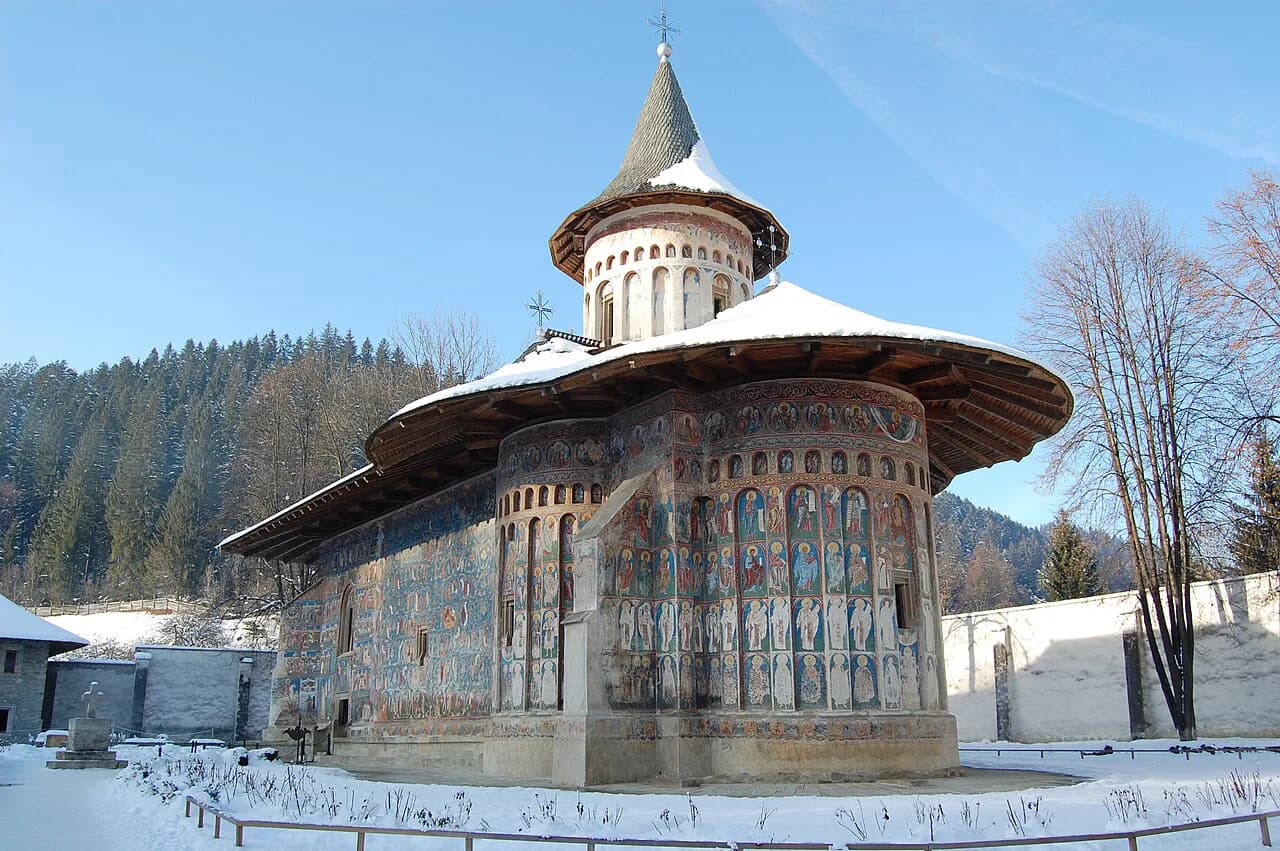
Voroneț Monastery is worth an hour of your day for one reason: a single small church whose outer walls carry a continuous scheme of frescoes added in 1547, against a background of intense blue. It sits in the village of Voroneț, close to Gura Humorului, and is one of the painted monasteries of Bucovina that travellers route together. This guide covers the church fabric, the fresco campaign, where to look first, and how the stop fits into a driving day.
Where Voroneț Monastery stands
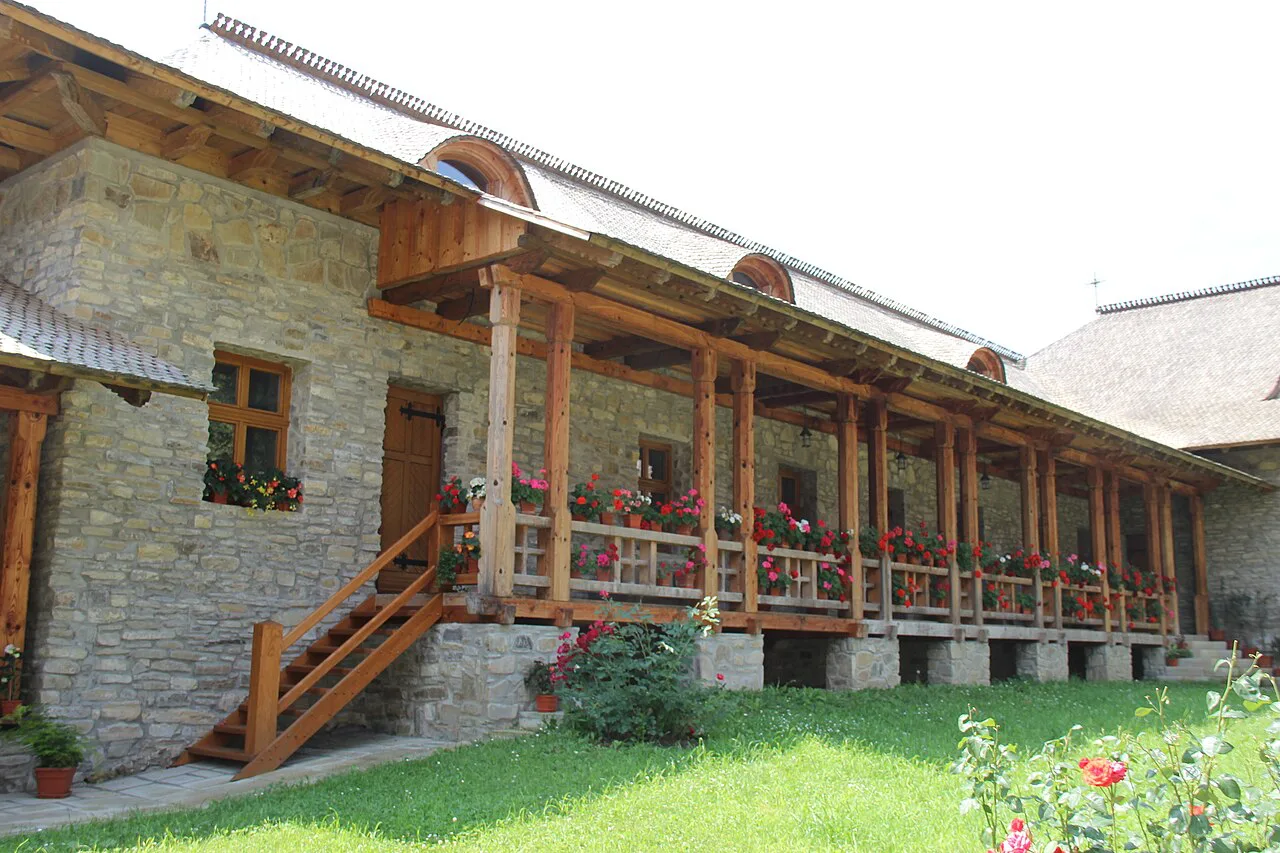
The monastery stands in the village of Voroneț, at the foot of the Carpathians, with pine forest behind the church. That setting is part of the visit: you arrive through a village rather than a heritage complex, and the church appears as a modest building rather than a monument on a grand scale. Allow for the walk from wherever you park, and treat the grounds as a place people still use rather than a ruin.
Gura Humorului makes a practical base for the painted churches, and the Gura Humorului guide covers the shape of staying there if you are working out how the town and its monasteries fit together.
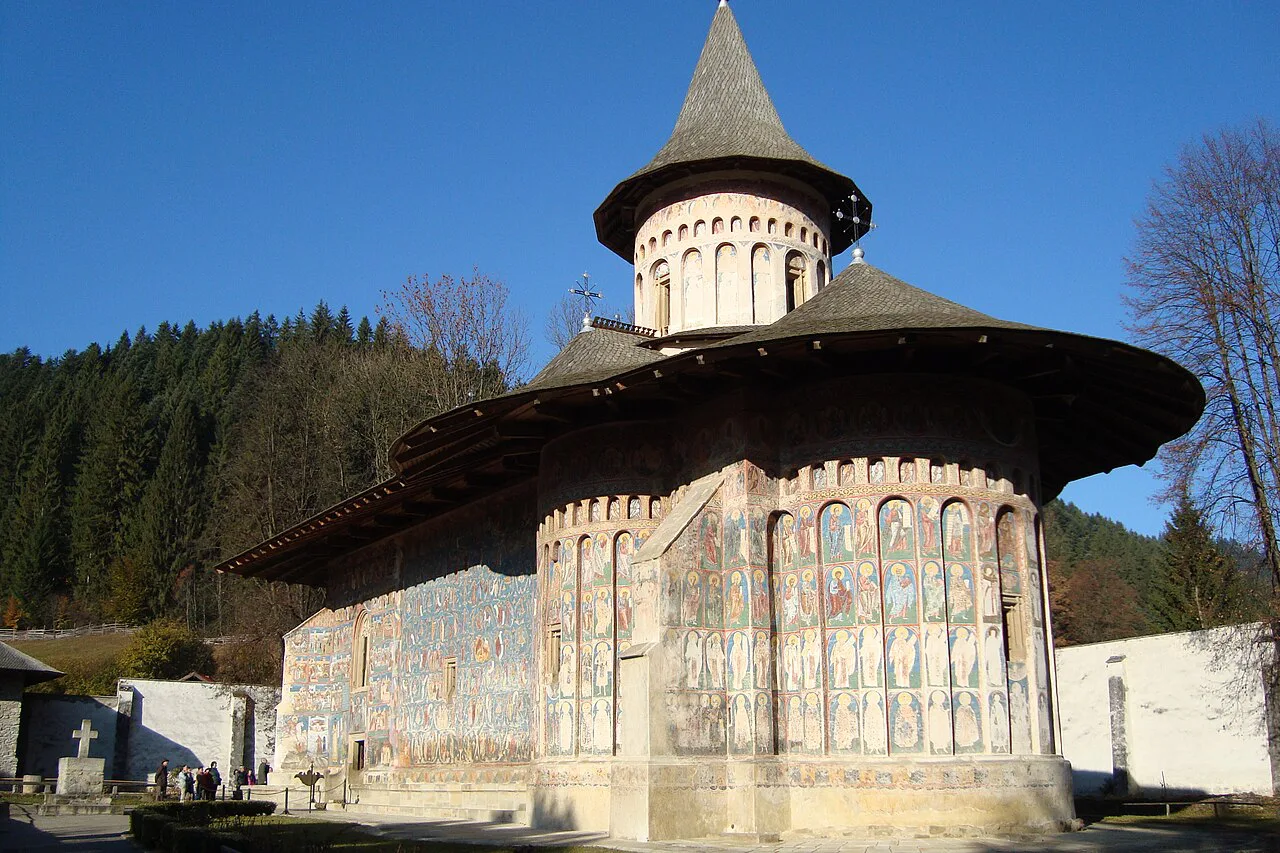
The church Stephen the Great built in 1488
The church is the foundation of Stephen the Great and was built in 1488 in three months and three weeks, between 26 May and 14 September. It is dedicated to Saint George. Keep those dates in mind: the building you see is late fifteenth-century, while the paintings on the outside belong to the following century.
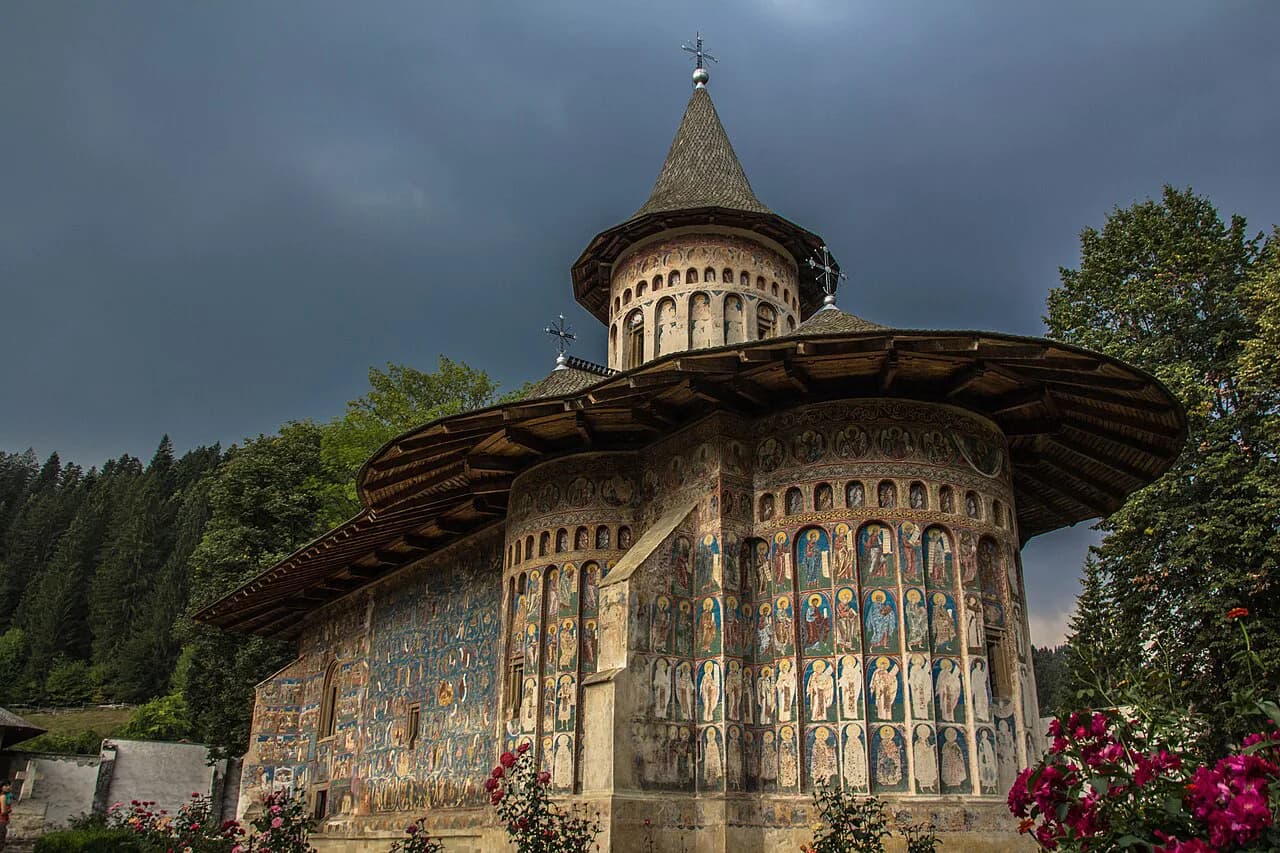
Architecturally it is a Moldavian-style church: a trefoil plan with three semicircular apses, divided inside into altar, nave and narthex, with a tall pointed roof of fret-sawed clapboard in the manner of a peasant house. The walls are massive and buttressed, and the door and window frames are cut in a broken arch. Look at the roofline before you go in; it explains why the church reads as vertical and narrow rather than wide.
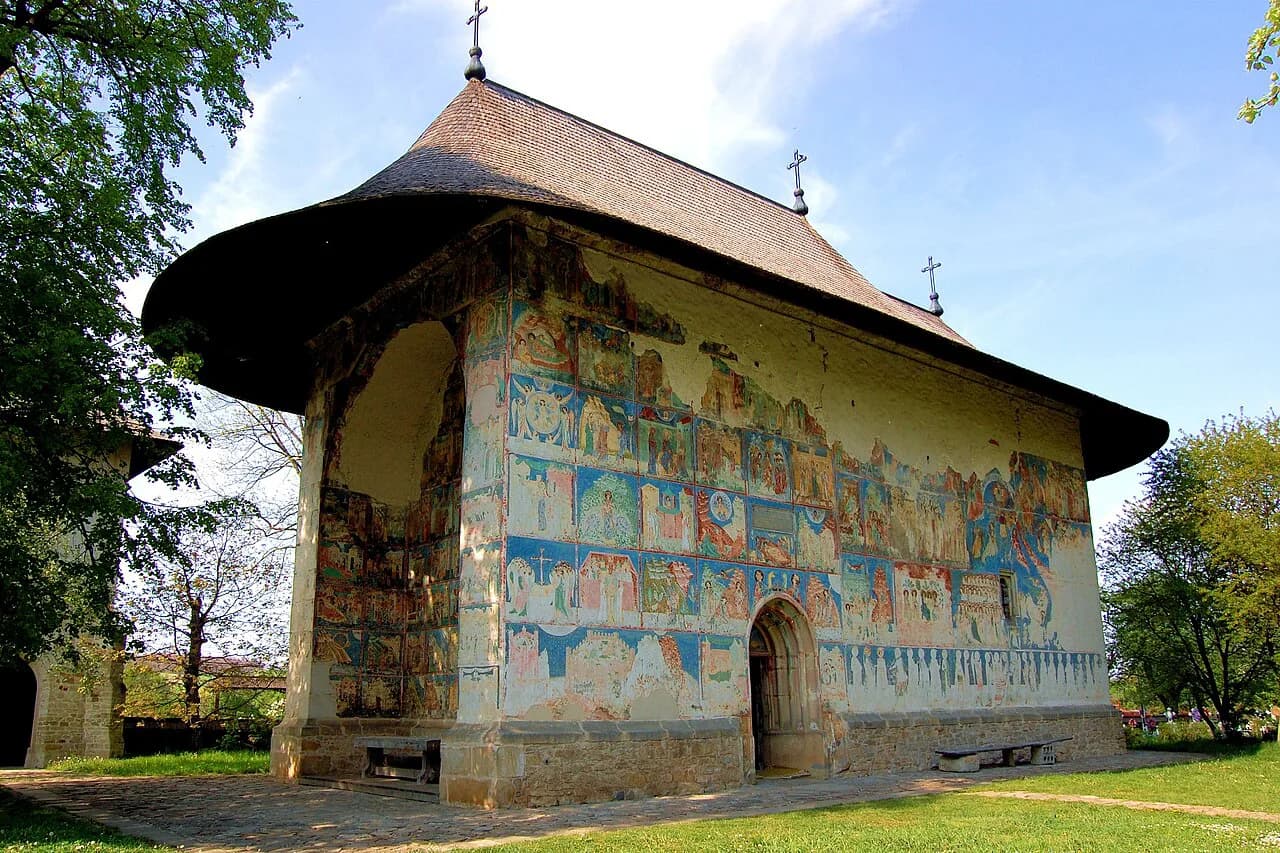
The 1547 frescoes and the west porch
The exterior paintings were added in 1547, a year after the death of Petru Rareș, under Metropolitan Bishop Grigorie Roșca, who extended the church with a closed porch on the west side before the walls were painted. The same campaign is bracketed with the exteriors at Probota, Humor, Moldovița and Arbore. Because the porch was built first, the painted surface wraps a slightly longer building than the 1488 core, so walk round to the west end as well as the better-known south wall.
The author of the scheme is given in the monastery's own account as the supposed herald Marcu, so treat the attribution as a tradition rather than a signed work. What is not in doubt is the execution: figures drawn with portrait-like firmness and themes arranged in registers across the walls. Look for the horizontal bands rather than trying to read the whole wall at once.
The Voroneț blue: where to look
The blue is a property of the exterior frescoes, not of the building: an intense, brilliant background against which the painted figures sit like a carpet of colour. It is at its most legible on the large exterior panels, where broad areas of background survive between the compositions. Go close to a sheltered stretch of wall and then step back; the colour shifts with the light, and an overcast day reads differently from direct sun.
Start with the south wall and work anticlockwise round the building. If the wall is in shade when you arrive, see the interior first and come back out.
What to read on the walls
Read the exterior panels thematically rather than in sequence. The compositions are arranged in registers, with the great compositions occupying the broad wall surfaces and smaller scenes stacked above and beside them. The monastery's account singles out the monumental conception and the decorative arrangement of the themes as what gives these paintings their quality, which is a hint to stand back and take in the whole before picking out individual figures.
On the south wall, Saint Daniil the Hermit is painted as a Saint, 47 years after his death, and he is also remembered in the Orthodox calendar on the porch. Finding him gives the exterior a human anchor among the crowds of painted figures.
Inside the church: the 1496 painting and Daniil's grave
The interior was painted in 1496 under the same founder, and the monastery describes the drawing as vigorous and the colour range as solemn. The iconographic programme is disciplined and archaic in spirit, closer to Byzantine models than the exterior. Spend your time in the nave on the clarity of the individual figures; the interior is darker and smaller than the outside, and your eyes need a minute to adjust.
Daniil the Hermit is buried in the narthex, and the grave is part of the reason the church matters to Romanian visitors. Stephen the Great is said to have come to the hermit's cave at Voroneț before a battle, and the monastery ties the two men together in the country's story. Stand in the narthex with that in mind, but keep the visit quiet: this is a working place of worship, not a museum room.
Stephen the Great, Daniil and the founding vow
The founding story, as the monastery retells it from Ion Neculce, has Stephen the Great visiting a hermit named Daniil, confessing, and being told not to yield the country but to build a monastery on the spot after victory, dedicated to Saint George. The same account has Daniil living at Putna first and then at Voroneț for 20 years. Take it as the monastery's own origin story: the dated facts are the 1488 church, the 1496 interior and the 1547 exterior.
If Stephen the Great's foundations interest you, Putna is the other one to see on a Bucovina circuit, and it puts the Voroneț vow in context.
The visit itself: entry, photography and noise
The monastery publishes its liturgical programme and general information on its own site, but the material does not give a visitor entry price, so budget for whatever is asked at the gate on the day rather than planning around a figure. Follow the monastery's on-site instructions about photography, and keep cameras down during services. This is a consecrated church, so behave as you would in any working place of worship.
The church is small, so it fills quickly when a coach group arrives. Go early or late in the day if you want the exterior walls to yourself, and use any waiting time to walk the outside of the building rather than queuing at the door. The programme is fixed by the monastery rather than by a tourism office, so check current opening details before you set out.
Getting to Voroneț and how long to allow
Voroneț is reached by road from Gura Humorului, and the last stretch is through the village itself. Driving gives you the flexibility to move on to Moldovița or Sucevița the same day; public transport in this part of Bucovina is thin, so a car or an organised tour is the realistic option. No source here gives bus times, so plan the day around your own vehicle and don't rely on a timetable you haven't confirmed locally.
Allow about an hour at Voroneț for the exterior, the interior and the grounds. That is enough to read the main panels properly without rushing, and it leaves the rest of the day for two more monasteries.
Pairing Voroneț with the other painted monasteries
Three churches sit naturally with Voroneț on a single driving loop: Humor, Moldovița and Sucevița. Each has exterior painting of the same period, and seeing two or three in a day lets you compare the schemes rather than absorbing one in isolation. Build the route from Gura Humorului and decide the order on the ground, since each church keeps its own hours.
If you want a wider frame for the region, the Painted Monasteries of Bucovina guide sets out how the churches relate and how to string them together over a few days.
Is Voroneț worth the stop?
Yes, for the exterior frescoes and the blue in particular. The church is small and the visit is short, so treat it as one strong stop on a driving day rather than a destination in itself, and pair it with at least one more painted church nearby.
Go early, give the walls time, step inside for the 1496 painting and the narthex grave, and confirm the monastery's programme locally before you travel. That is the whole shape of a good visit.
Explore more Bucovina guides
Frequently Asked Questions
Is Voroneț Monastery still a working monastery?
It is an active Orthodox monastery with a published liturgical programme, and the church is a consecrated place of worship rather than a museum. Visitors are welcome, but services take priority and you should keep quiet and dress respectfully when you go in.
Can you visit Voroneț Monastery without a guide?
Yes. The exterior panels are readable on your own if you look at them thematically, and the interior and narthex are small enough to take in without a guide. A guide helps most if you want the iconography of each panel explained in detail.
What is the Voroneț blue?
It is the intense blue background of the exterior frescoes added in 1547. It belongs to the paintings rather than the stonework, and it shows best on the large exterior panels, where broad stretches of background survive between the compositions.
Sources
Useful notes for your next trip
Optional updates to our guides.
You might also like
Continue reading
More guides you'll find useful