Gura Humorului: The Painted-Monastery Town in Bucovina
Gura Humorului is a small Bucovina town near Voroneț and Humor monasteries. Here is how it is laid out, how to reach it and how long it needs.
On this page
Gura Humorului is best used as a base, not a destination in its own right: give the town centre half a day and spend the rest of your time at Voroneț and Humor monasteries just outside it. The town sits at the confluence of the Humor and Moldova rivers in the Humor depression, at about 470 m, roughly 35 km from both Suceava and Câmpulung Moldovenesc. This guide covers where the town sits, how to reach it by train or road, the short walking loop in the centre, and how long to allow.
Gura Humorului at a glance
The town centre sits where the river Humor empties into the Moldova, an altitude of about 470 m that gives it the cool, green setting travellers associate with the region. It lies roughly halfway between Suceava and Câmpulung Moldovenesc, about 35 km from each, and the nearest neighbouring town is Frasin, 7 km away towards Câmpulung. The European road E58 (DN 17) runs right through the town, which is what makes it such an easy hinge for a monastery road trip.
Gura Humorului was sought out from the second half of the 19th century as a climate resort, drawn by a climate noted for its sedative qualities; that is history, not a current spa offer. Today it is a small mountain town and a practical base. What you get is a compact centre, a handful of churches and a park, with the monasteries a short drive away.
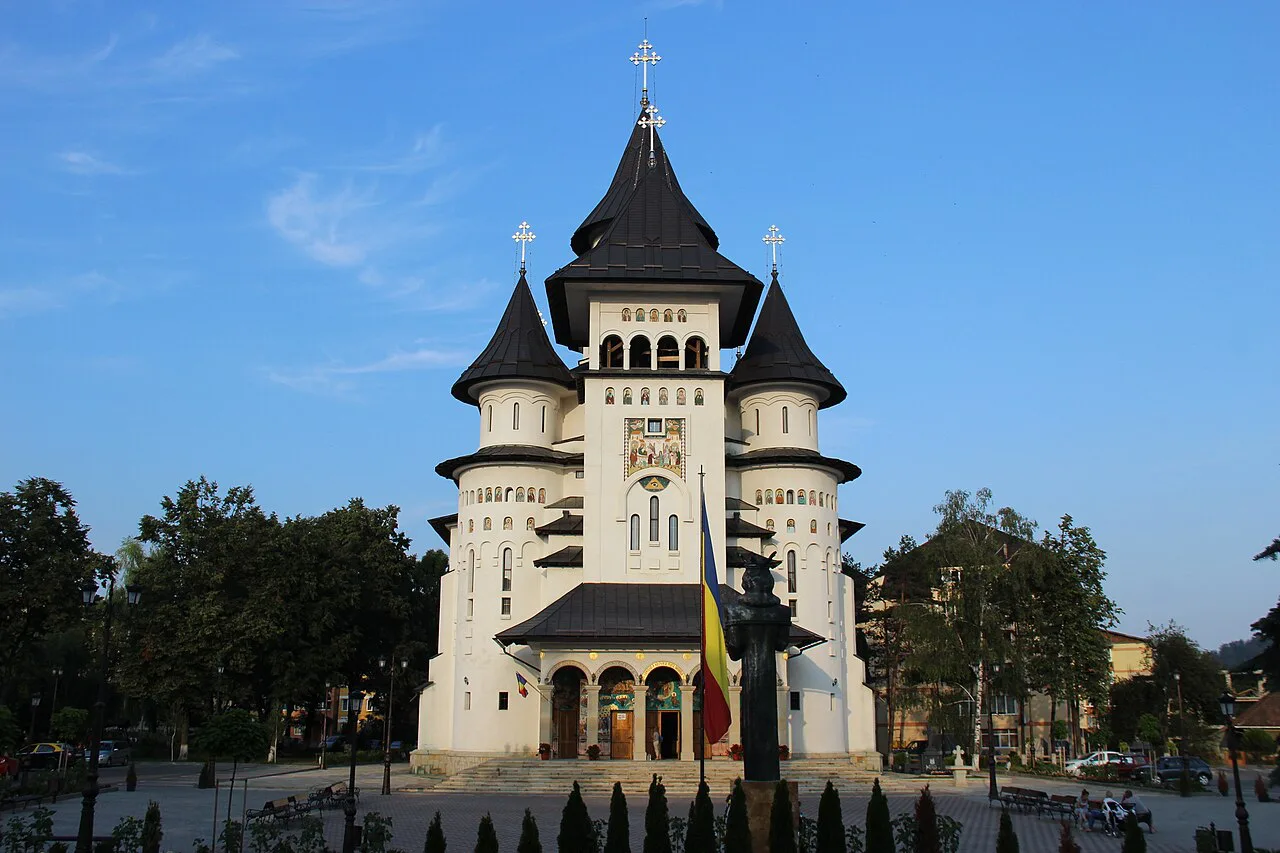
That role as an intersection is what the town itself promotes: it is placed where the roads to the medieval painted monasteries of Bucovina meet, with Voroneț and its blue a few kilometres off. Treat the town as the practical anchor and the monasteries as the reason you came.
Why the name means what it does
The name is descriptive: the town grew at the mouth (Gura) of the Humor river, where it joins the Moldova. The river carries the more interesting half of the story, with one local legend explaining Homor as a Tatar word for 'swift' after floodwater blocked a crossing, later smoothed in speech to Humor. Even today, the source notes, some older residents say Homor rather than Humor.
The town was first recorded on 26 February 1490 in a document issued by the chancellery of Ștefan cel Mare; the Austrian military command was moved here on 10 September 1782. It was raised to market town and district capital in the 19th century and became a town in 1904. You do not need any of this to enjoy the monasteries, but it explains the town's layered history.
The surrounding region is the old Bucovina, the territory whose monasteries you are here to see. If you want the wider picture before you arrive, read around the painted monasteries first so the frescoes make sense on the day.
Getting there: two stations and two roads
Gura Humorului has two CFR stations on the Suceava–Vatra Dornei line, and the distinction matters. Gura Humorului Oraș is the one near the town centre, so book or plan around that name if you are arriving by rail and walking to a guesthouse. The other, plain Gura Humorului, sits in Păltinoasa, a village of the same commune, and is the wrong stop for the centre.
By road the E58 (DN 17) carries you through town between Suceava and Câmpulung Moldovenesc. The county road DJ 177 branches off up the Humor valley towards Mănăstirea Humorului, the village that serves Humor Monastery. If you are driving the monastery circuit, that turn is the one you want.
Coming from Suceava by train is the simplest arrival, and it puts you close to the centre rather than out at the Păltinoasa stop. Rail timetables change, so check the exact service on the CFR site before you book. The same trip by road along the E58 is straightforward if you are driving the region.
The town centre on foot
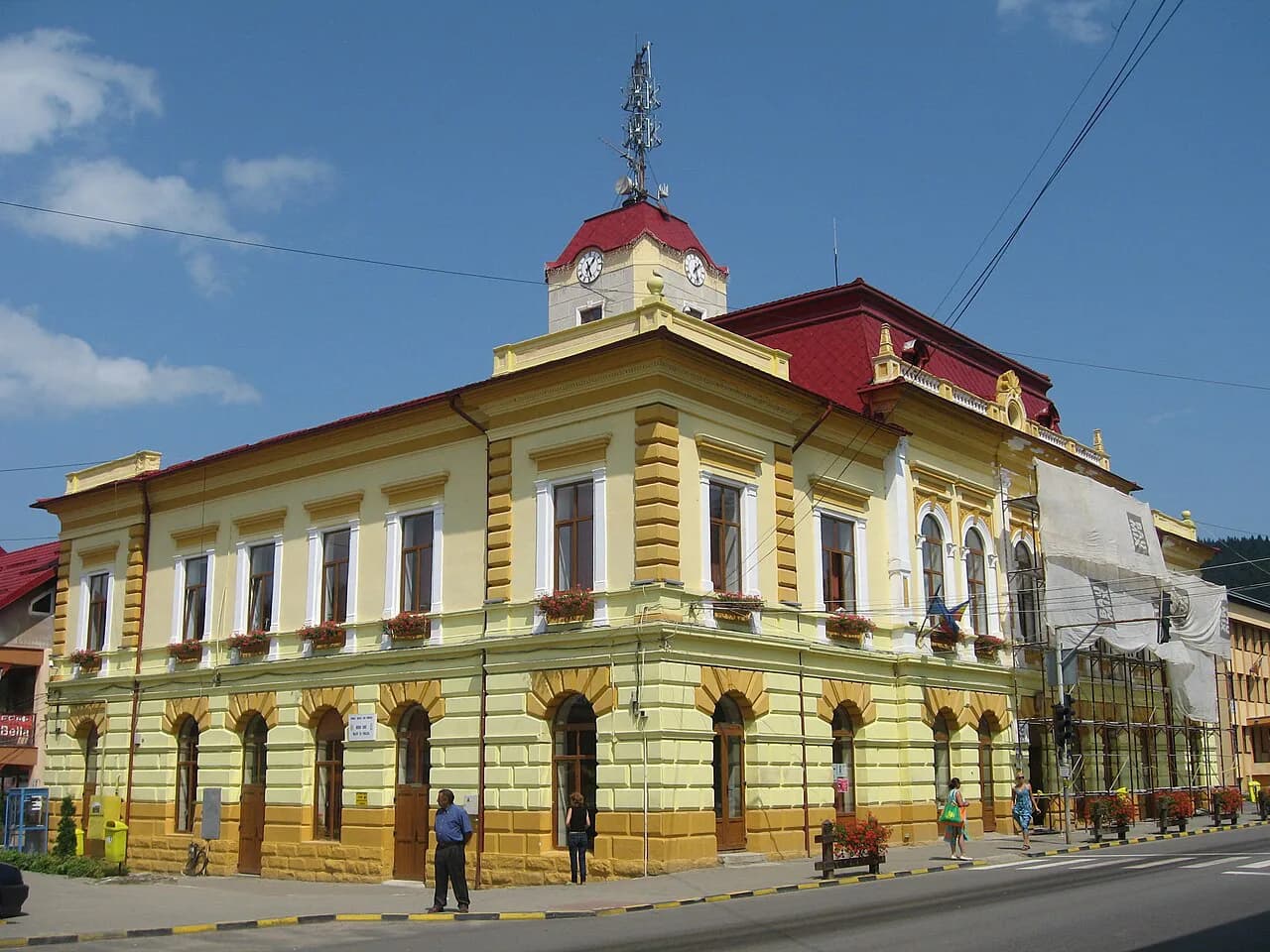
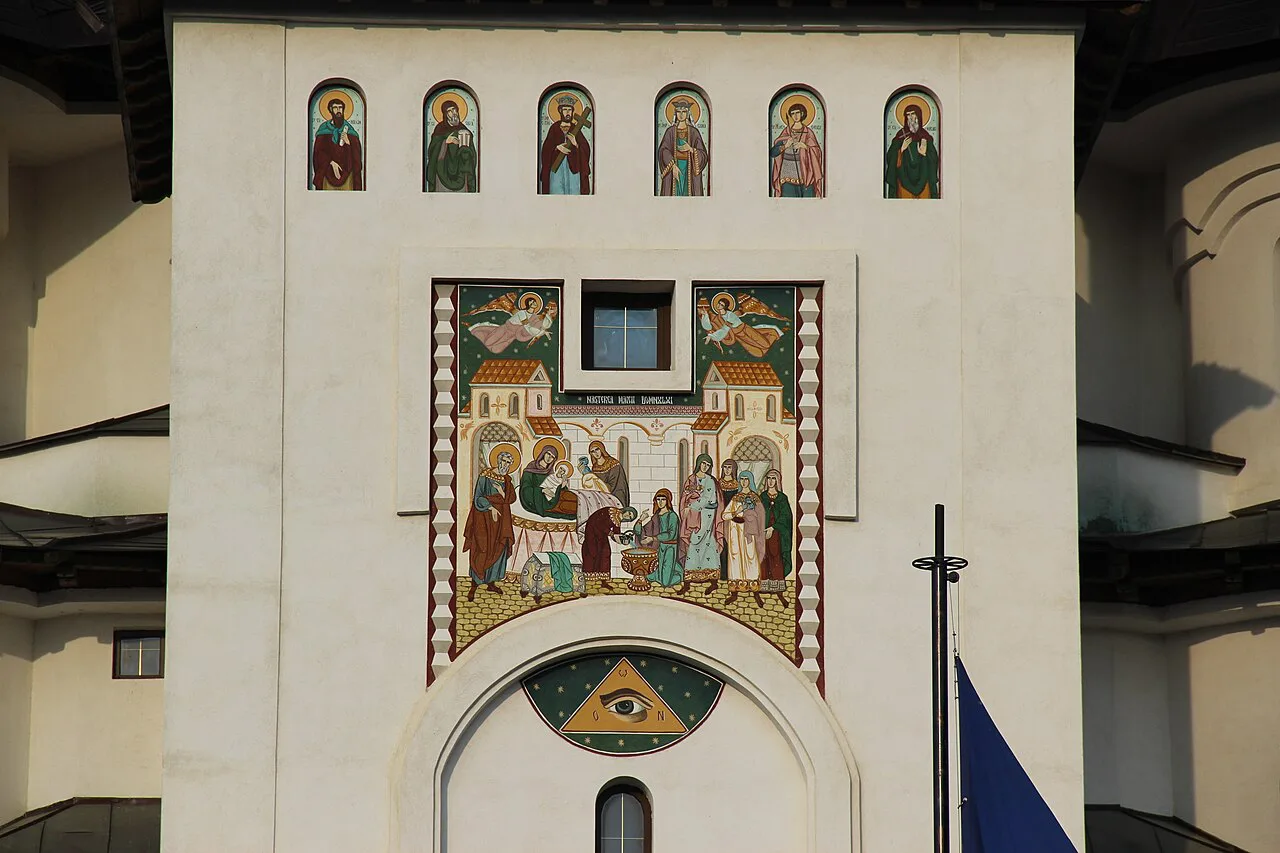
The walkable core is small. Start on Piața Republicii, where the town hall stands at number 14, and use the square as the natural beginning of an hour-long loop. The town's sight list also includes the old station building and the court house, and the streets around the centre hold the town's churches.
Allow an hour to walk the centre without stopping, two if you go into a church or sit in a café. The route is flat and easy, which suits a rest day between monastery visits. A car is still useful for the monasteries themselves, which sit outside the built-up area.
Churches and the synagogue
Four religious buildings sit within the town and are listed among its sights: the Roman Catholic Church of the Holy Trinity, the Orthodox Church of Saints Constantine and Helena, and the Church of the Archangels Michael and Gabriel, alongside the Great Synagogue and the Jewish cemetery. The synagogue and cemetery are the quieter, less-visited pair, and they sit within a town whose later history includes the settlement of Germans, Poles, Jews and Ukrainians from after 1800.
Plan the churches as a short circuit off Piața Republicii rather than separate trips. Check service times at the door rather than relying on any online listing, and dress for an Orthodox church interior.
The Dendrological Park nature reserve
The Parcul Dendrologic is a protected nature reserve in the middle of town, which makes it the easiest green break in Gura Humorului. It fits into a town half day without timetabling. Take the afternoon light there after a monastery morning.
If you have children or just want a slow hour, the park is one more reason to spend the night in town rather than pushing straight on to Suceava. A Ferris wheel, the Roata Panoramică, also appears among the town's attractions for those wanting a look back over the valley.
Voroneț Monastery
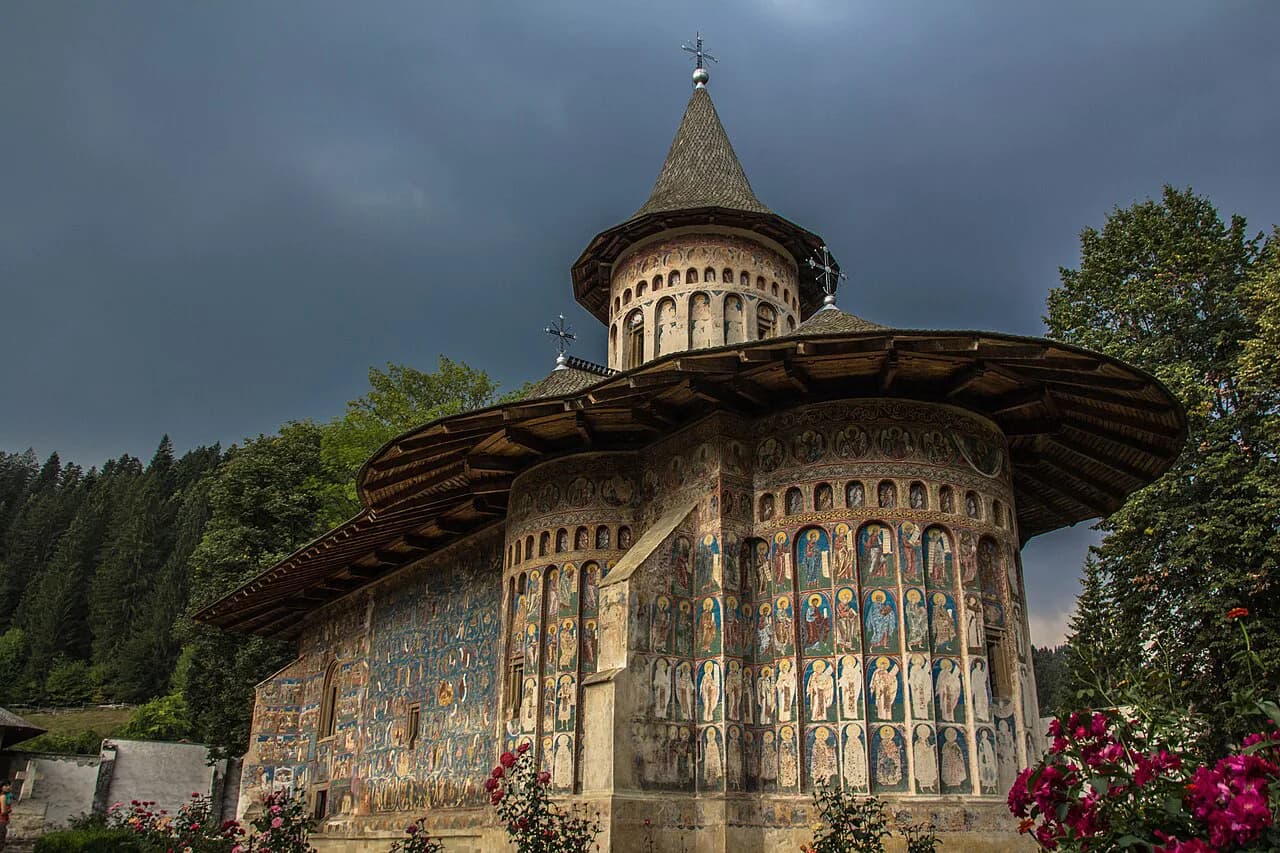
Voroneț Monastery is why most travellers stop here at all. It was raised in 1488 under Ștefan cel Mare, and the exterior painting added under Petru Rareș in 1547 is the famous blue that carries the monastery's reputation. It is popularly nicknamed the Sistine Chapel of the East, and the Last Judgement is among the biblical scenes the exterior presents.
The monastery sits outside Gura Humorului on the edge of Voroneț village, and the town is the obvious place to set out from. The walk in is straightforward, but the last stretch is open, so treat it as a proper outing rather than a stroll from the high street. There is a cluster of stalls and a story house on the approach, which makes the visit feel more commercial than Humor.
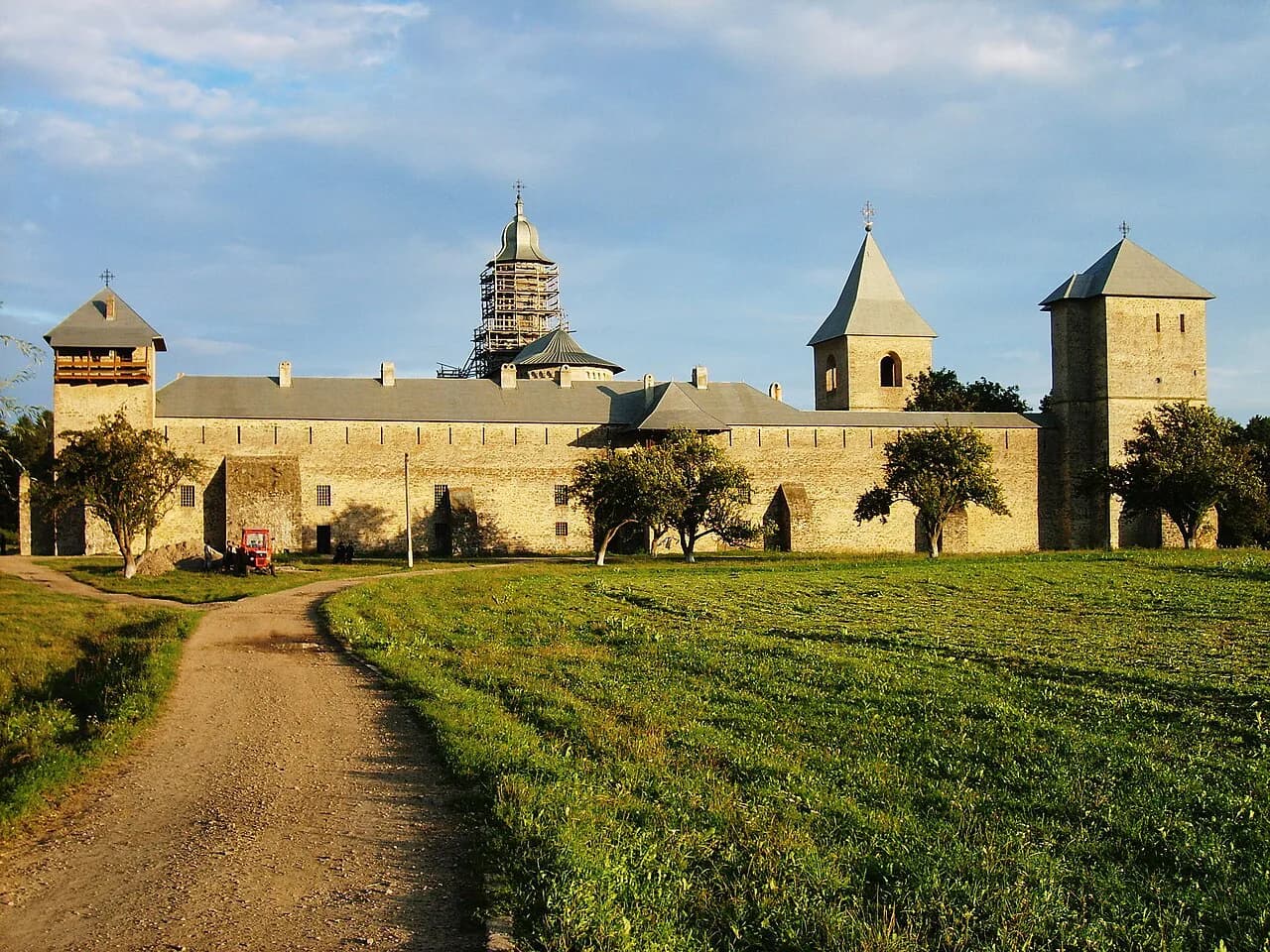
Humor Monastery a few minutes away
Humor Monastery is the quieter companion, painted in reds rather than blues, and it sits only a few minutes from the town on the DJ 177 towards Mănăstirea Humorului. Built in 1530, it has an open porch and a hidden chamber, and its exterior includes the Burning Bush and the Parable of the Prodigal Son, with local motifs such as the bucium and other regional details among the biblical panels. Look for those details rather than photographing the whole wall.
Because it is close, Humor can be visited on the same morning as Voroneț without eating into your day. The trade-off is that it is heavily weathered, so some panels read better from a distance than close up.
Using Gura Humorului as a base for the monastery road
The town is the natural hinge for the wider painted monastery circuit: Arbore, Sucevița and Moldovița lie within driving distance to the north and west. Arbore carries its own green tone, distinct from Voroneț blue and Humor red. Sucevița is known for the green of its exterior and the Ladder of Virtue scene, and Moldovița, built in 1532 under Petru Rareș, is the northern anchor.
With a car, a full day covers Voroneț and Humor in the morning and one or two of the northern monasteries in the afternoon without rushing. Without a car, you are limited to what you can walk to, which in practice means Voroneț and Humor. A car or a local tour is worth the cost if the monasteries are the point of your trip.
How long to give Gura Humorului
For the town alone, half a day is enough: the centre loop, a church or two, the synagogue and the park. If you are here for the monasteries, plan two nights: one full day for Voroneț and Humor, and a second for the northern road. A single overnight works only if you have a car and start early.
The town is small enough that you will not run out of things to do in the centre before lunch. That is the point: the value is in its position, not its sights.
Practical trade-offs
Voroneț draws the coaches, so go early or late and save Humor for the busy middle of the day. The two rail stations are the trap for new arrivals: confirm that your ticket says Gura Humorului Oraș, because the Păltinoasa stop leaves you a walk or taxi from the centre. And the monasteries sit outside the built-up area, so a car, a taxi or a tour is the realistic way to cover more than one in a day.
Should Gura Humorului be your base?
Yes, if Voroneț and Humor are on your list and you want a cheap, compact, walkable base with rail access and the E58 on the doorstep. Book around Gura Humorului Oraș station, keep the monasteries for the mornings and the town for the afternoons, and add a car or a local tour if you want to reach Arbore, Sucevița and Moldovița in the same trip.
If you have only a few hours between trains, skip the town and go straight to Voroneț; if you have a full day, the centre loop plus both nearby monasteries is the honest minimum.
Explore more Bucovina guides
Frequently Asked Questions
Is Gura Humorului worth visiting on its own, or just as a base?
It is a base. The centre, the churches, the synagogue and the park fill half a day, while Voroneț and Humor monasteries just outside town are the reason to come.
Do you need a car to see Voroneț and Humor from Gura Humorului?
No. Both are close enough to reach without a car, though the walks are open. A car or taxi becomes useful for Arbore, Sucevița and Moldovița further out.
Which Gura Humorului train station is closer to the centre?
Gura Humorului Oraș, which sits near the town centre on the Suceava–Vatra Dornei line. The plain Gura Humorului station is in Păltinoasa, a separate village.
How far is Voroneț Monastery from Gura Humorului?
It is just outside town, close enough to walk, and the town is the obvious place to set out from. The exact distance is short enough that most visitors go on foot or take a short taxi ride.
Sources
Useful notes for your next trip
Optional updates to our guides.
You might also like
Continue reading
More guides you'll find useful