Moldovița Monastery: The Painted Church and What to See
Moldovița Monastery is a UNESCO-listed painted church in Bucovina at Vatra Moldoviței, with an exterior painted in 1537. See what the frescoes show.
On this page
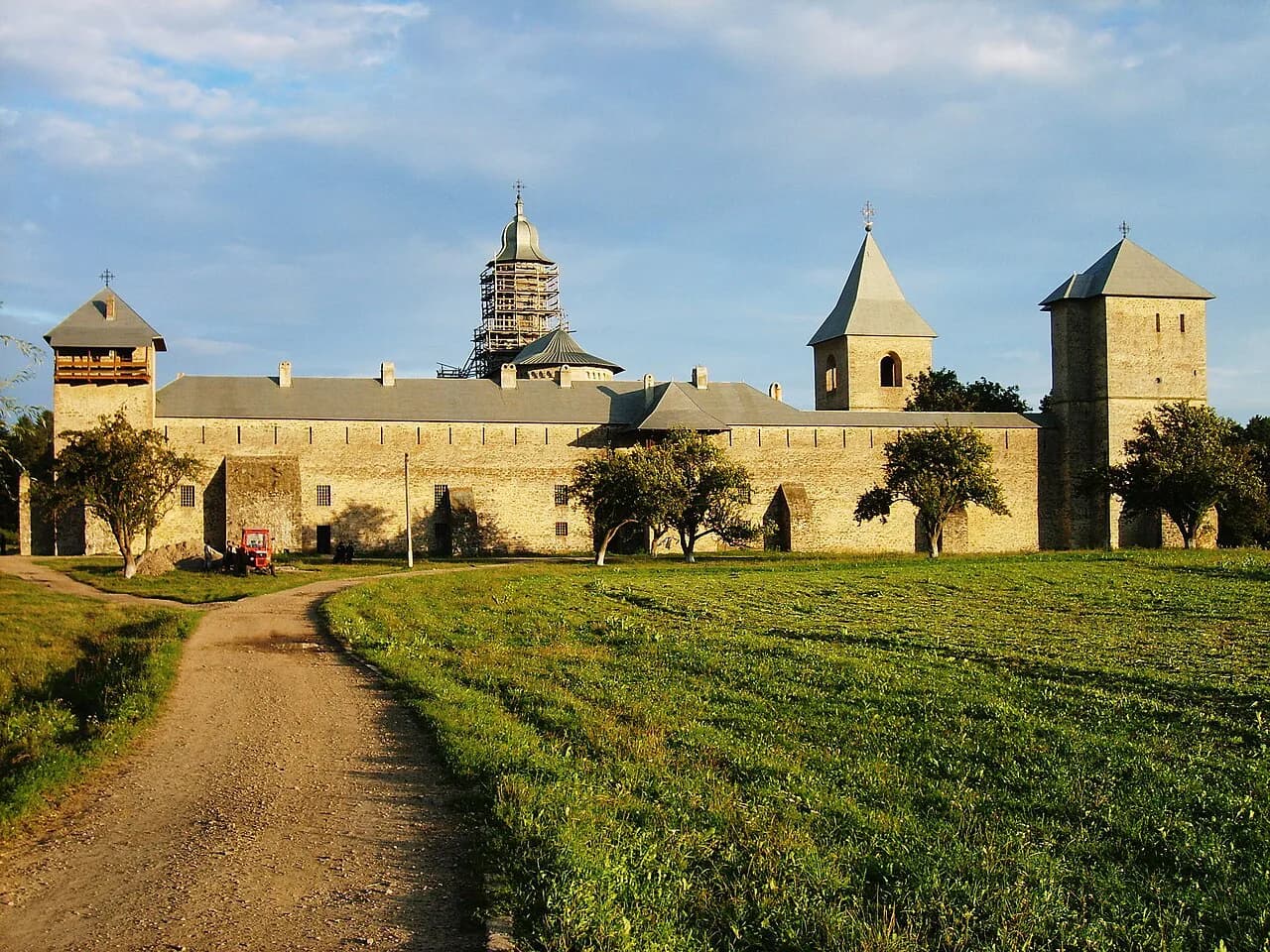
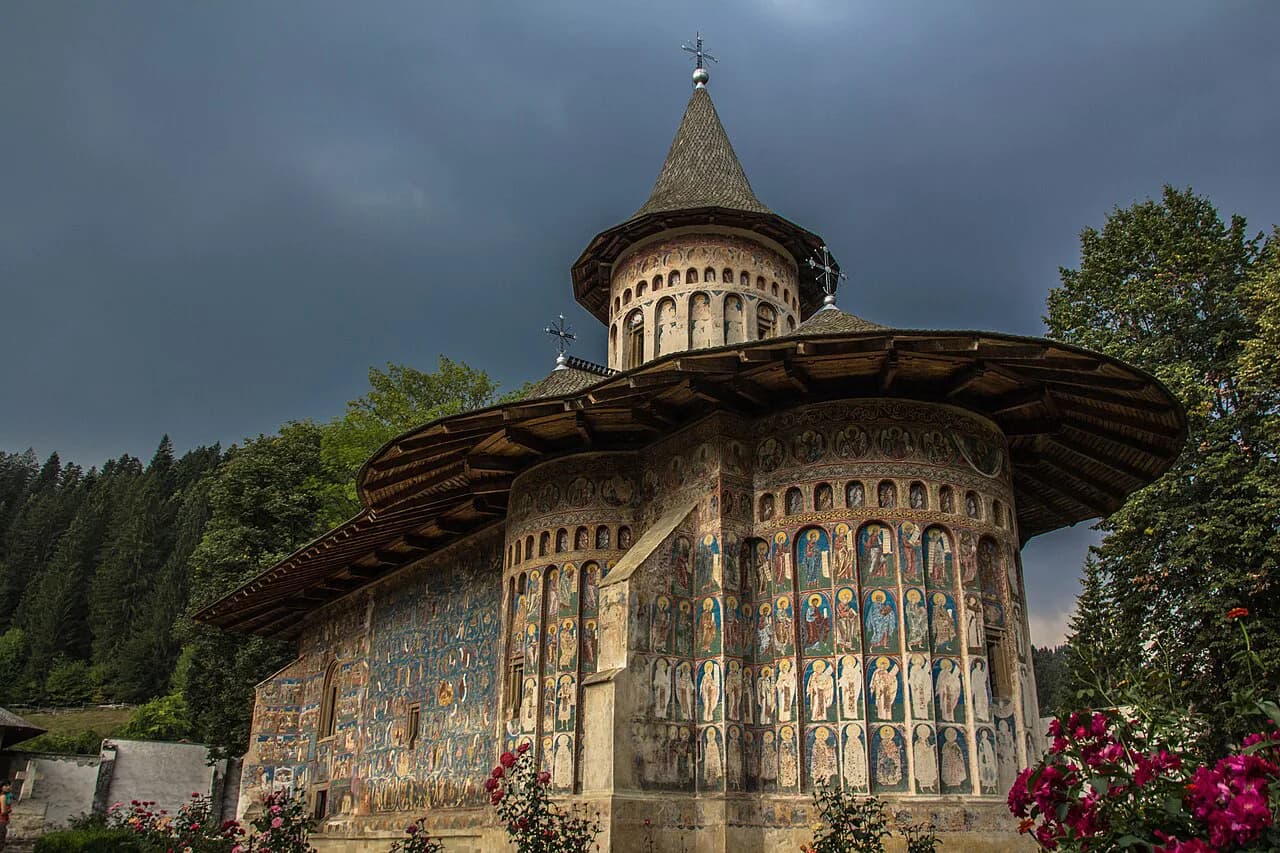
Moldovița Monastery takes about one to two hours, and the reason to come is the outside of the church: a yellow-and-blue painted cycle finished in 1537 that covers the south and west walls. It stands in the village of Vatra Moldoviței in Suceava County, part of the group of painted monasteries of Bucovina. This guide covers the church, the scenes worth finding, how long to allow and what to see nearby.
The monastery is one of eight churches inscribed on the UNESCO World Heritage list in 1993 as the painted churches of Moldavia, and it is still a working religious house rather than a museum piece. Treat the visit as a short, focused stop on a driving day and pair it with one neighbouring site instead of trying to see everything at once.
Where Moldovița Monastery is and why it is listed
Moldovița Monastery sits at Vatra Moldoviței in Suceava County, in the Bucovina region of northern Romania. It is a Romanian Orthodox monastery, and the church was built in 1532 under Petru Rareș, son of Stephen the Great. The eight painted churches of Moldavia, Moldovița among them, were added to the UNESCO World Heritage list in 1993.
If you are basing yourself somewhere for several days, Câmpulung Moldovenesc is a practical base for this stretch, with Vatra Moldoviței a short drive north-west along the Moldova River valley. The Bucovina guide covers how the monasteries sit relative to Suceava and the roads between them.
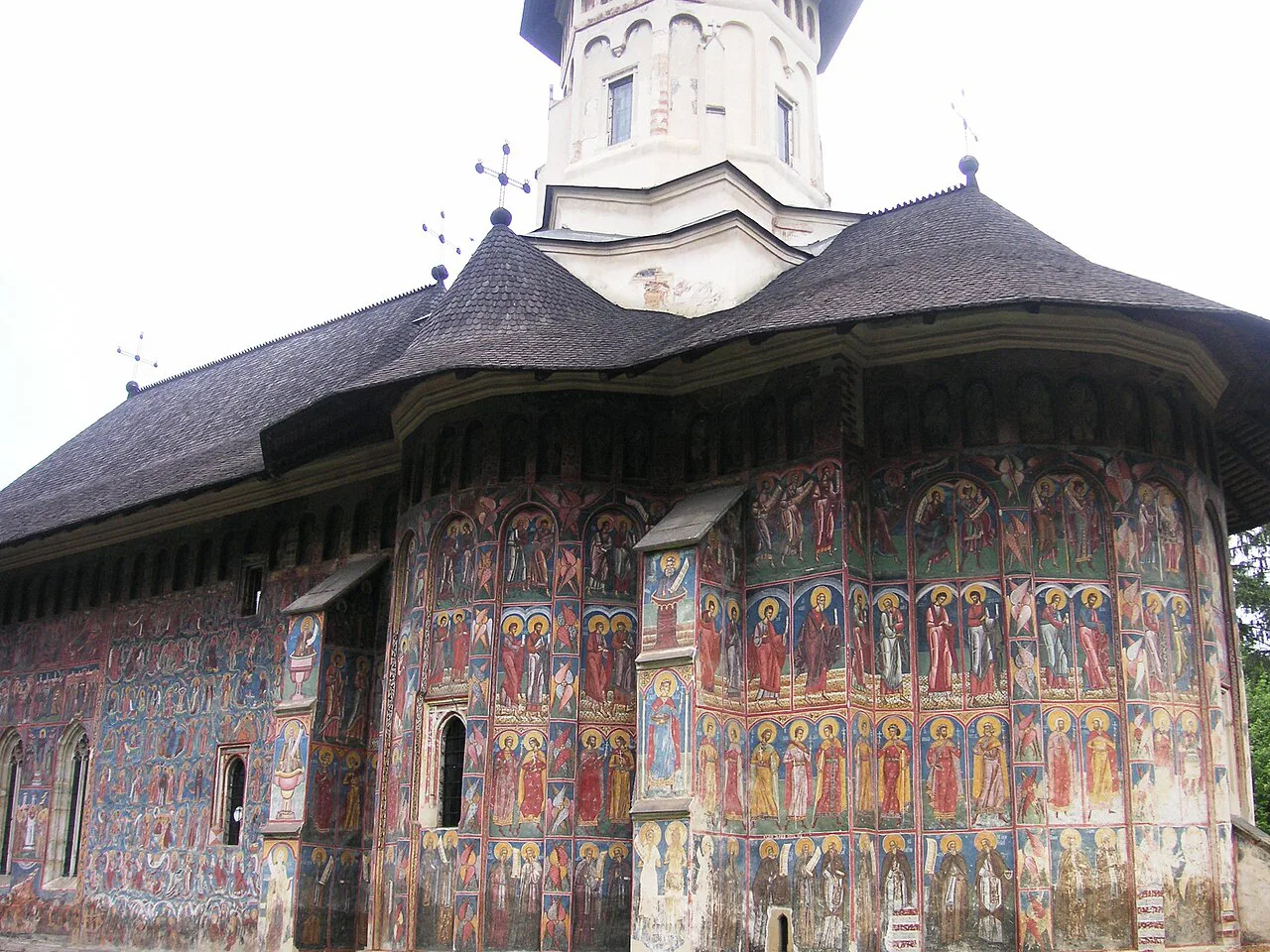
The church: 1532 and the frescoes of 1537
Petru Rareș ruled Moldavia from 1527 to 1538 and again from 1541 to 1546, and he commissioned the church at Moldovița as part of a broader programme of painted exteriors across the region. The exterior paintings here were the work of Toma of Suceava and are dated to 1537, which puts the scheme in the same generation as the other Moldavian painted churches.
The interior follows Orthodox convention, with an iconostasis and painted walls, but the crowds come for the outside, where the narrative scenes are arranged across large panels. Read a short account of the scheme before you arrive so you know which wall carries which story.
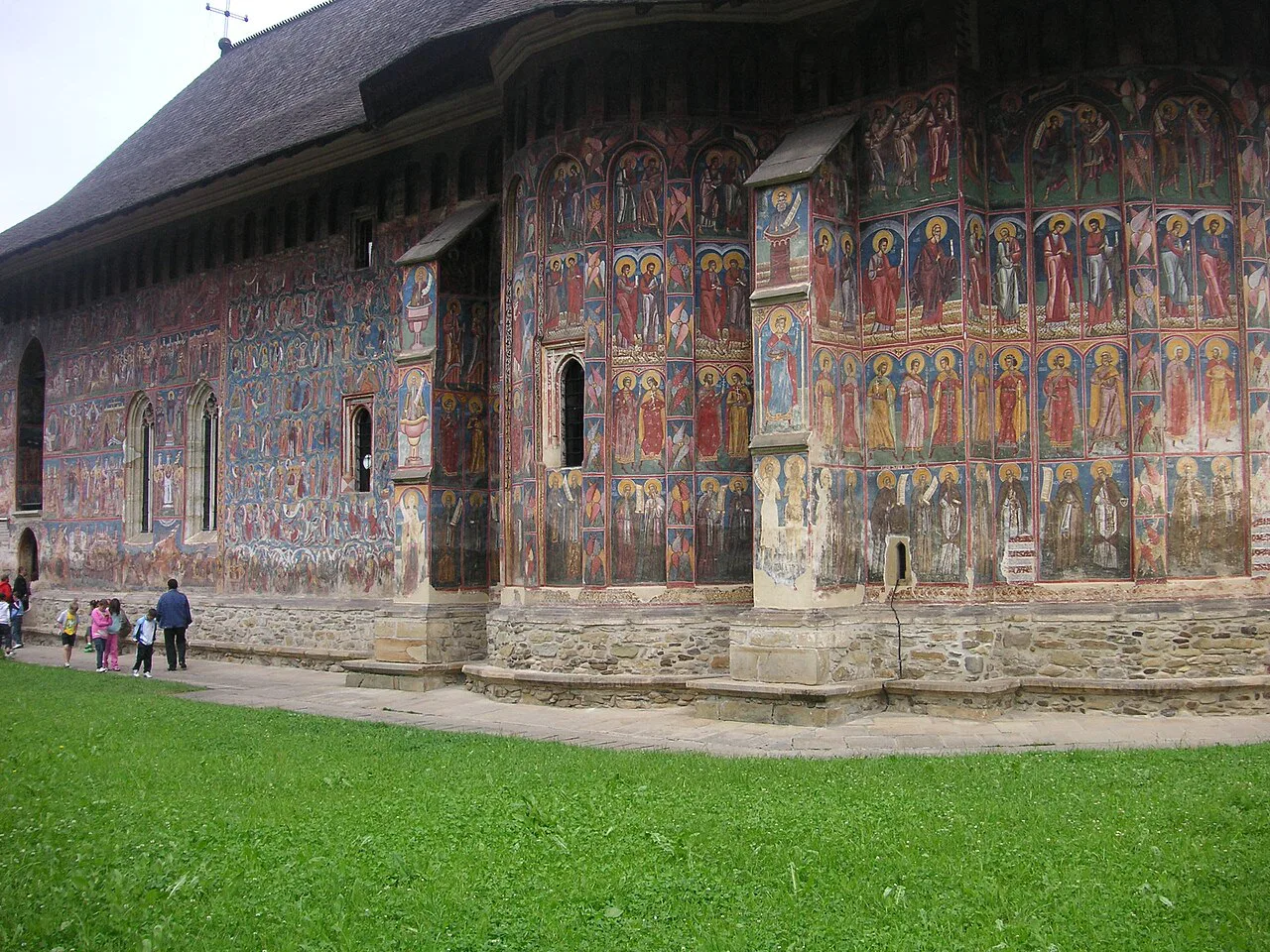
What to look for on the exterior walls
On the south wall, a procession of saints leads up to the Virgin enthroned with the Child on her lap, above the narrow east window. Around the Holy Family, the Tree of Jesse springs from a recumbent Jesse at the foot of the wall and spreads the ancestry of Christ across the surface. The figures face and step towards the Virgin, so the wall reads as a single approach rather than a set of separate portraits.
The Siege of Constantinople panel depicts the Virgin's intervention in saving the city of Constantinople from a Persian attack. It is a historical subject within the church's narrative programme rather than a depiction of the Ottoman sieges, which is worth keeping straight as you look. The west wall is given over to the Last Judgment, a river of fire running across the whole surface and the sea giving up its dead.
The porch, the Gothic details and the hidden chamber
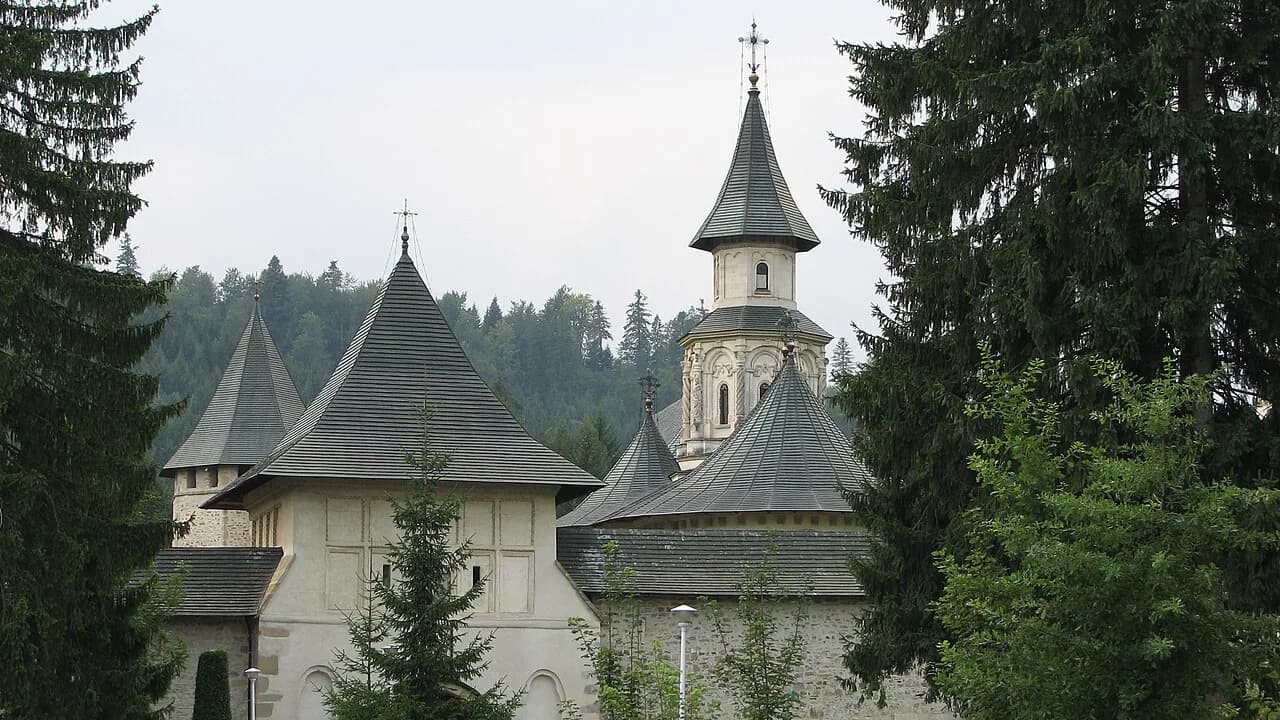
Moldovița and Humor are painted churches built with an open porch, a hidden space above the burial vault, and Gothic-style windows and doors. Look at the door and window surrounds rather than only at the paintings: the Gothic detailing is the architectural marker that distinguishes these two churches from the later foundations.
Because the monastery is a working religious house, treat the church as a place of worship rather than a display, and follow any postings about where you may and may not go. The hidden chamber above the vault is a structural feature rather than a room you enter. Turist prin Romania describes the open porch, the vault chamber and the Gothic openings at Moldovița Monastery in more detail.
How well the paintings have survived
The palette is dominated by yellow and blue, with warm ochre grounds behind the figures. Weathering is uneven across the walls: some panels read clearly, others are abraded where rain and frost have worked on the surface. Photograph in flat light where you can, because direct sun on the yellow ground washes out the contrast between figures and background.
Rather than assume every panel is original, ask at the monastery about what has been restored. A comparison with Voroneț Monastery and the others on the circuit shows how differently each set of exteriors has aged.
How long to allow and when it is open
Plan on one to two hours at Moldovița Monastery, which covers the exterior, the porch and a circuit of the courtyard without rushing the frescoes. Trip.com lists the monastery as open from 7:00 to 19:00, a useful planning figure rather than a guarantee for the day you arrive, so confirm the hours with the monastery before you set out, particularly outside the summer months.
Entrance is handled by the monastery itself rather than sold as a standard ticket at a published gate price, so ask on site or by phone rather than budgeting from an old figure. The listing gives a ticket enquiry number, +40-230336365, for exactly this question. If you are travelling with a group, ring ahead so the community knows you are coming.
Getting there and fitting it into a Bucovina day
Moldovița is a driving stop. Vatra Moldoviței sits north-west of Câmpulung Moldovenesc on the road through the Moldova River valley, and Sucevița Monastery is around 17 km away according to the Trip.com listing. Doing both in one day is straightforward by car, and the pair makes a sensible loop if you are staying in Câmpulung Moldovenesc or Gura Humorului.
Sucevița is the larger complex, with its Church of the Resurrection and a fortified enclosure, so give it the longer slot and keep Moldovița as the tighter stop. Public transport to the villages is thin, so a car or an organised tour is the realistic way to string several monasteries together.
Nearby stops: the Huțulca railway, painted eggs and Rarău
The Mocănița Huțulca railway at Moldovița is about 4 km from the monastery; check its running days directly before building a day around it. The Painted Eggs Museum Lucia Condrea, also around 4 km away, is a small museum and a reasonable add-on if you have a car, while Rarău Resort, roughly 19 km off, is listed as a nearby stop towards the Rarău area.
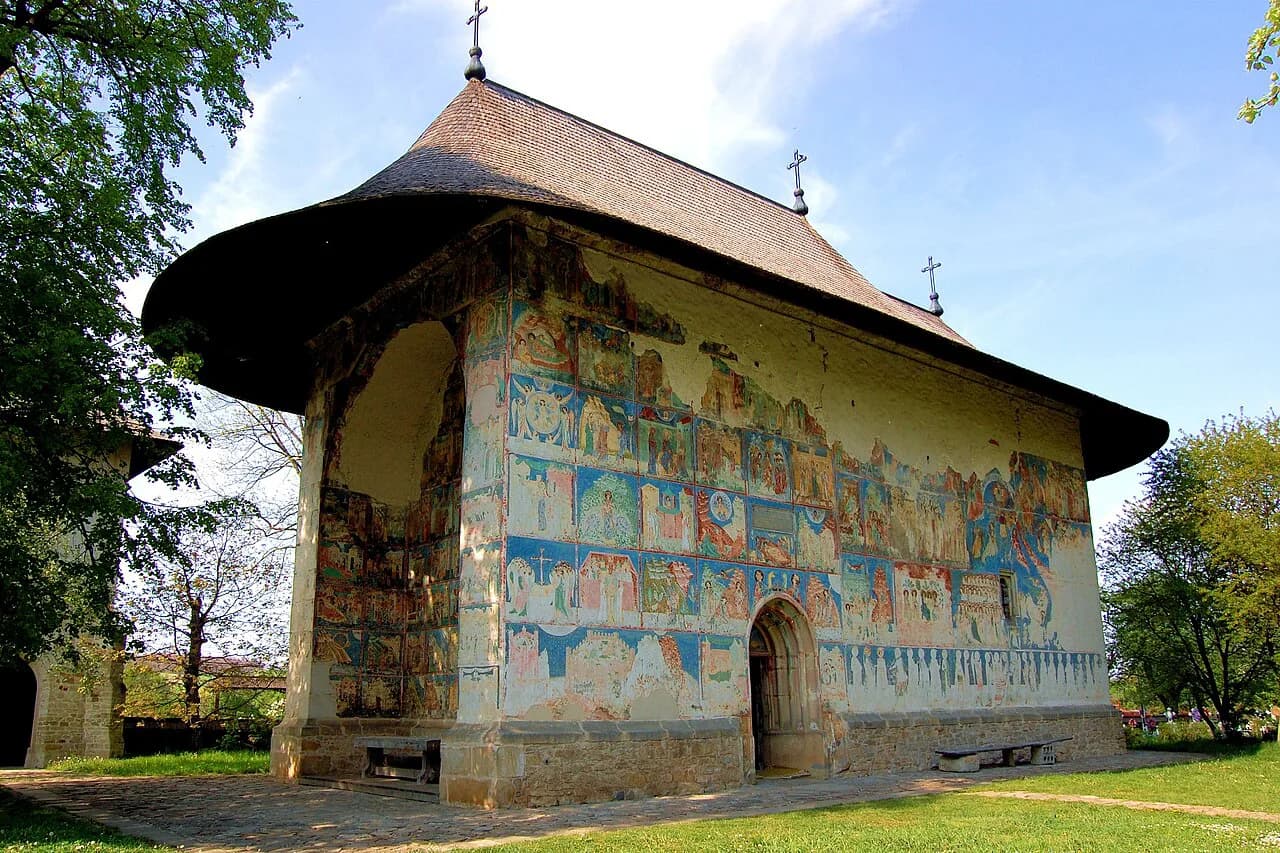
Heading east instead brings you to Gura Humorului, which puts Humor Monastery and Voroneț Monastery within easy reach on a second day, and Arbore Monastery fills out the wider circuit for anyone with three or four days in the region.
Dress, conduct and photography
This is a working Orthodox monastery, so dress and behave as you would in any active church: modestly, quietly, and with an eye on what is posted at the door. Step aside when a service is in progress and follow any instructions from the community about where visitors may go.
Ask before photographing inside the church. If a liturgy is underway, wait outside until it finishes rather than moving through the nave, and build slack into the day for exactly that.
Is Moldovița worth the detour?
Yes, if you are already driving the Bucovina monastery circuit: the church at Moldovița rewards an hour of close looking, and it pairs naturally with Sucevița on the same day. It is not a destination in its own right for a traveller based in Bucharest or Brașov, and the village has little else to hold you beyond the railway and the painted eggs museum.
Build the day around two monasteries rather than four, confirm opening arrangements before you set off, and leave the camera off inside the church.
Explore more Bucovina guides
Frequently Asked Questions
How much does it cost to visit Moldovița Monastery?
Entrance is handled by the monastery rather than sold as a standard ticket at a published gate price, and the visitor listing gives a ticket enquiry line, +40-230336365. Ring ahead or ask on arrival rather than budgeting from an old figure.
How do I get to Moldovița Monastery without a car?
Public transport to Vatra Moldoviței is limited, and the practical options are a car or an organised tour from a base such as Câmpulung Moldovenesc or Gura Humorului. If you are relying on buses, check the current timetable locally before committing to the day.
Sources
Useful notes for your next trip
Optional updates to our guides.
You might also like
Continue reading
More guides you'll find useful