Arbore Monastery: The Painted Church, Tickets and Visiting
Arbore Monastery is a painted church in Suceava County built in 1502. See the green-ground frescoes, the published entry price and opening hours.
On this page
Arbore Monastery is worth under an hour of any painted-church trip in Bucovina: a compact church in Arbore Commune, Suceava County, built in 1502 by the boyar Luca Arbore and painted inside and out, with an exterior that reads green rather than the blue most travellers expect. It sits within easy driving distance of Humor and Voroneț, so it works as a pairing rather than a destination on its own. This guide covers the church and its founder, the frescoes to look for inside, the published entry price in lei, the daily opening window and the drive in.
What Arbore Monastery is and where it sits in Suceava County
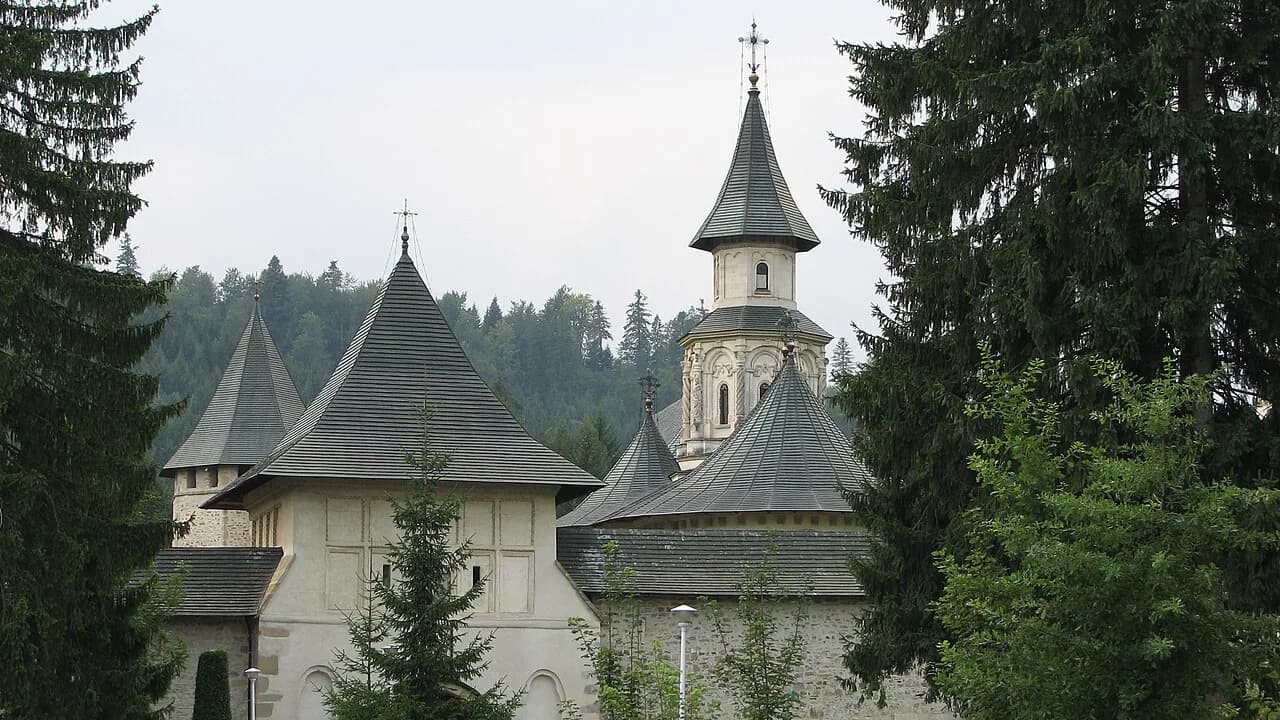
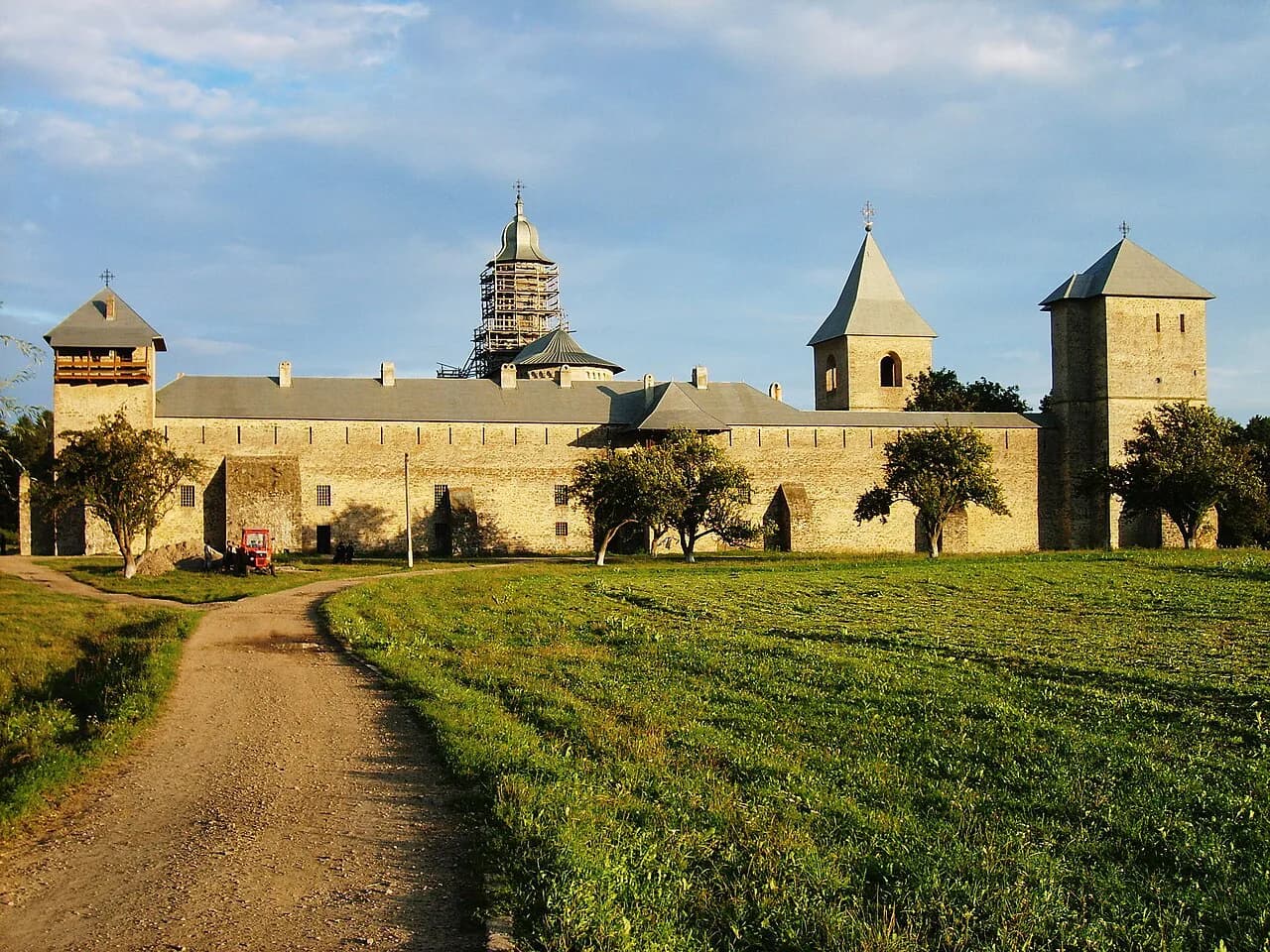
Arbore Monastery is a Romanian Orthodox monastery church in Arbore Commune, Suceava County, in the Bucovina region of north-eastern Romania. The complex is small: a single painted church with a grassy yard around it rather than a walled town of buildings, so plan your stop around the church itself. The address published for visitors is DN2K, Strada Principală nr. 734, Arbore 727015.
Treat Arbore as one stop on the painted-church route rather than the anchor of a day. It is normally reached by car as part of a loop that takes in Humor and Voroneț, so build it into a driving day. The wider circuit of painted monasteries is worth sketching before you fix your route.
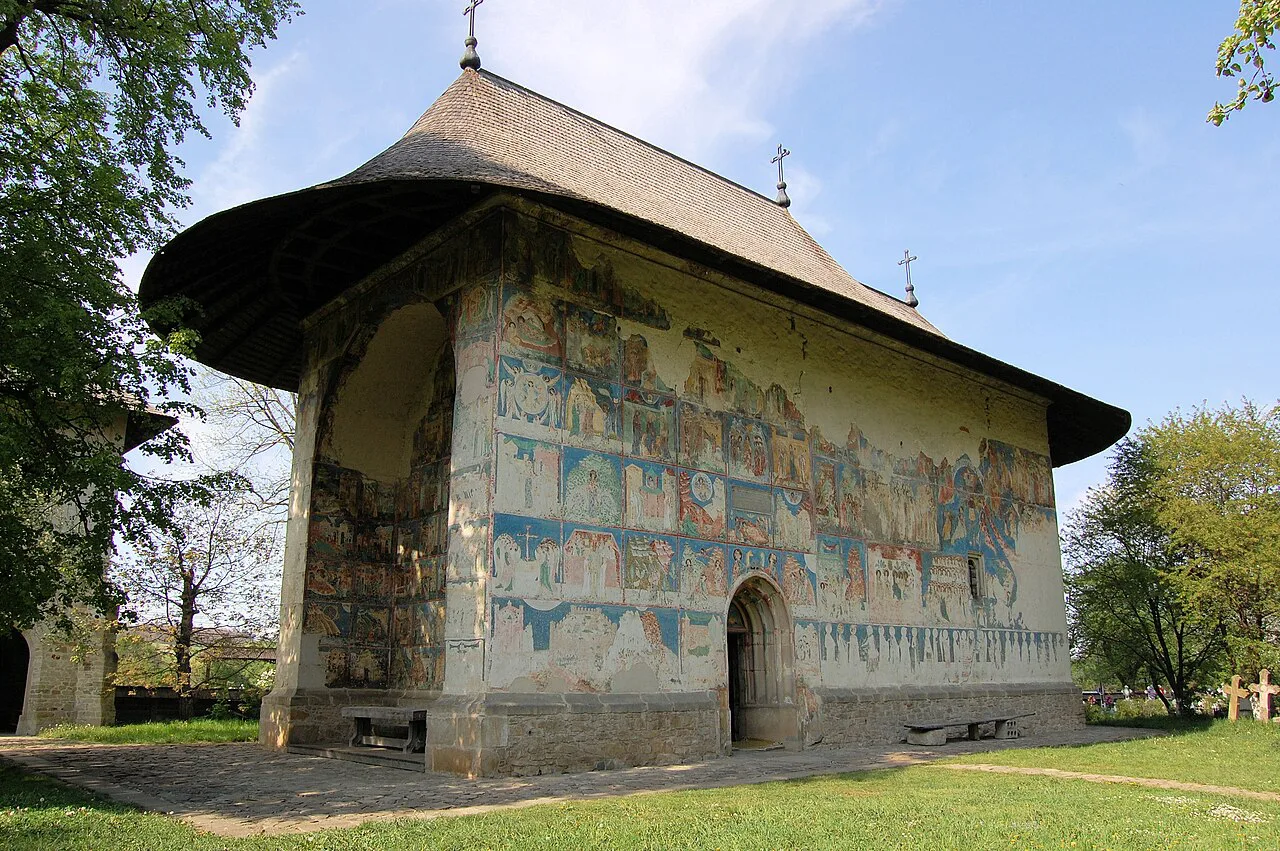
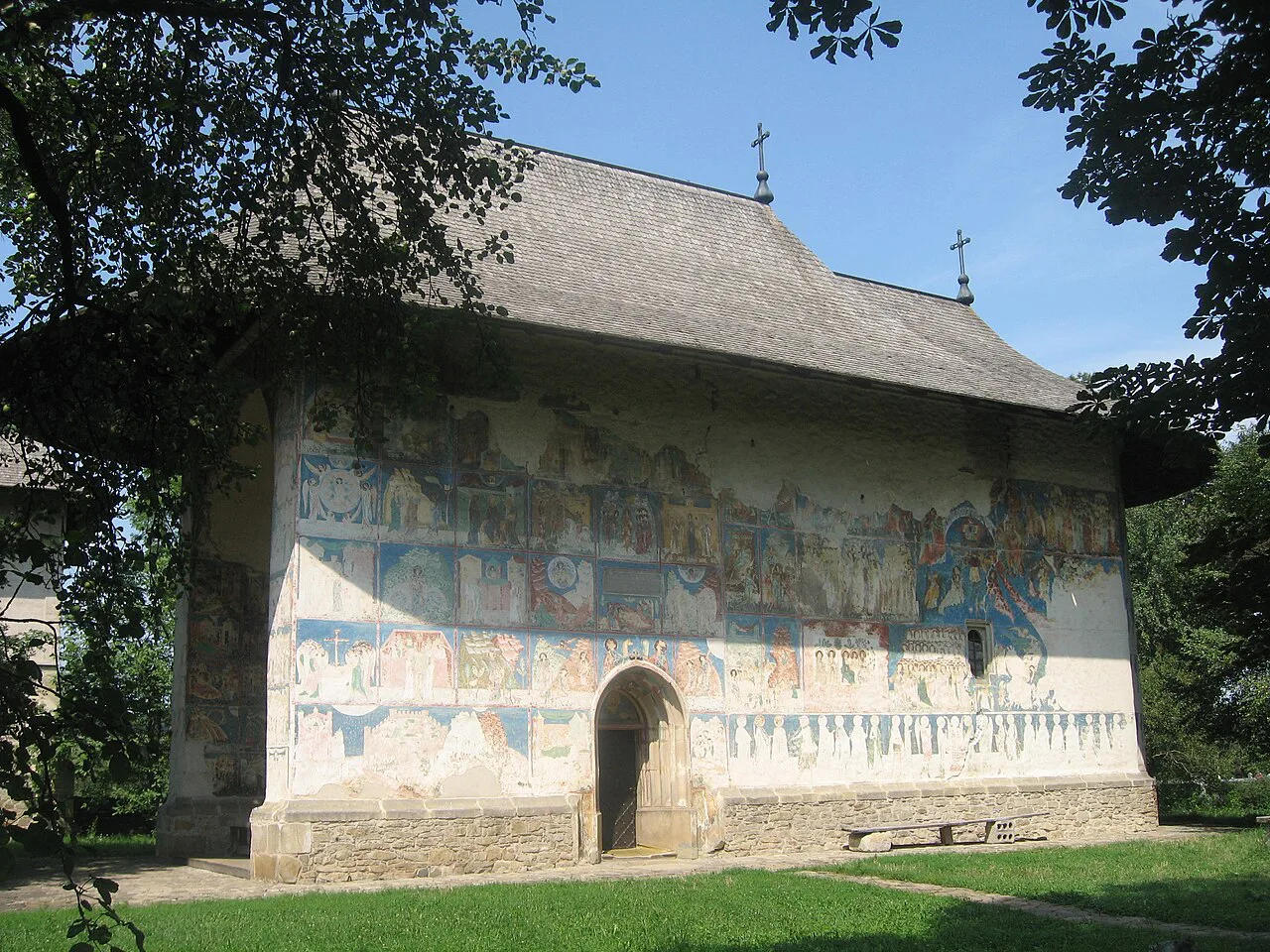
The church of St John the Baptist: built in 1502 by Luca Arbore
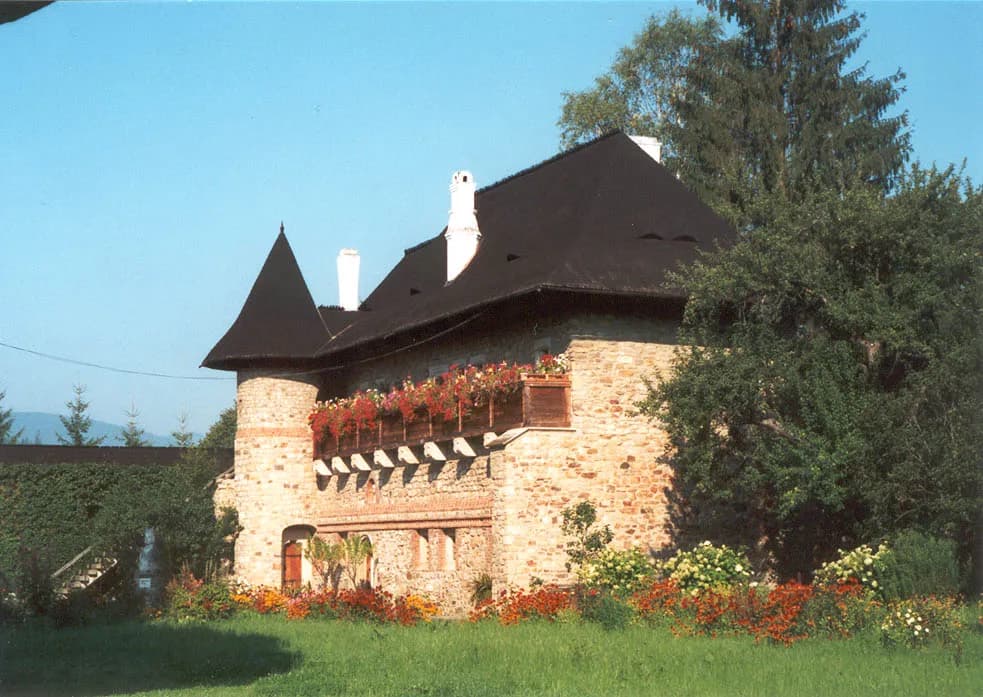
It went up in less than half a year, which fits the modest scale you see on arrival: raw stone and brick, thick walls, a tall nave and no towers, because the right to build towers belonged to the ruler rather than to boyars. Luca Arbore was beheaded with his sons in 1523 for refusing to renounce his faith, and their graves are in the church.
That detail explains why the church is treated locally as a memorial as much as a place of worship, and it is the reason to look at the floor and the tombs as well as the walls. After a long period roofless and overgrown, the church was added to the UNESCO list in 1993, and since 2022 it has been reopened to the monastic community and to visitors.
It is once again a working monastery with a resident community, so treat it as a place of worship first and a monument second. Expect a small, quiet painted church rather than a major visitor complex.
Why the exterior painting at Arbore looks different from Voroneț
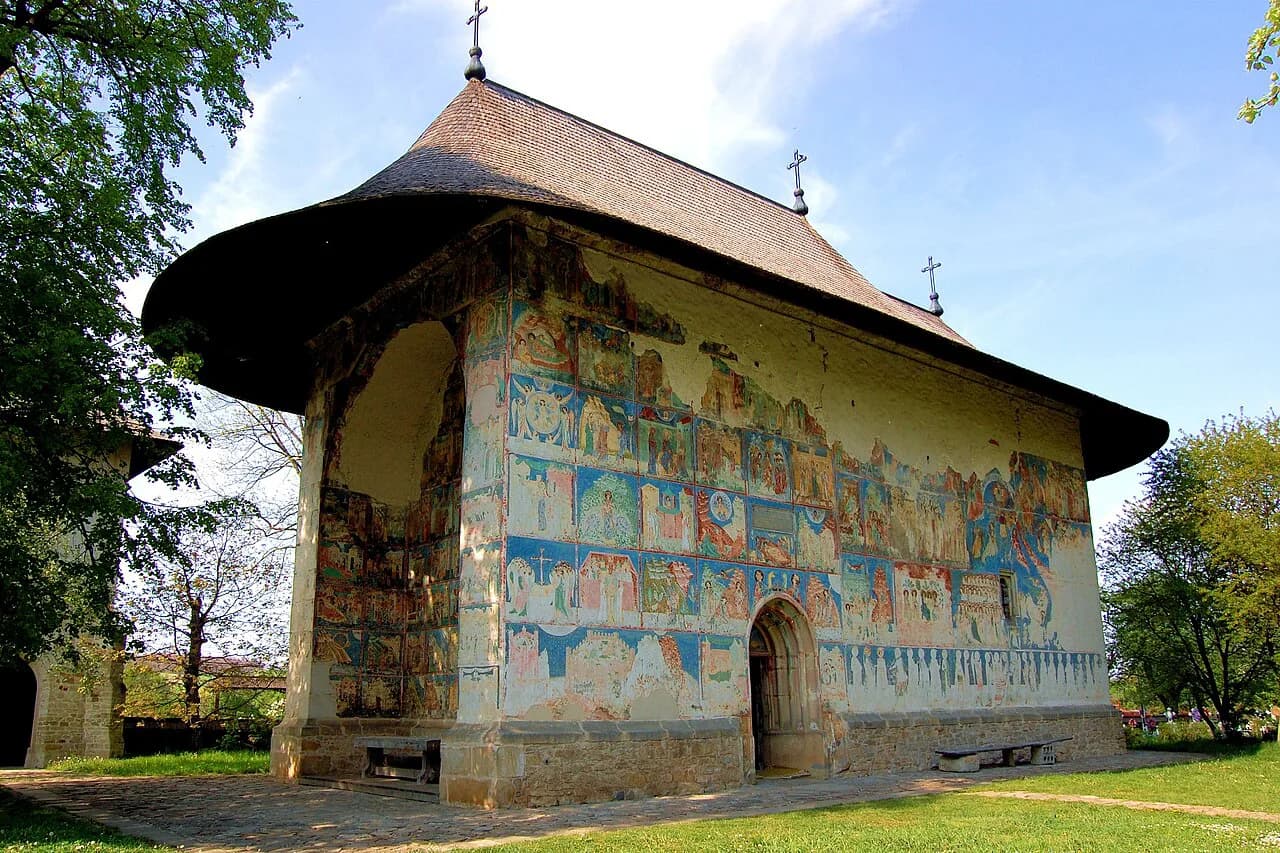
The exterior frescoes at Arbore are set on a green ground, in contrast with the blue that dominates at Voroneț. The green outside runs through five shades and 47 nuances in combination with other colours, and the painting is treated as an early example of the Moldavian style that later churches developed. If you have already seen Voroneț, expect a warmer, more varied palette here rather than another blue wall.
The style blends post-Byzantine painting with Renaissance and Gothic elements, and the church combines a post-Romanesque plan with Moldavian architecture and Gothic lines. The exterior suffered when the roof was lost, but cleaning has brought back much of the original colour, so the west and south walls reward a slow look rather than a quick photo.
Treat the well-known acoustics story carefully. Local legend holds that bottles filled with sand were built into the walls, following an Italian method, to give the sound purity and echo in the church; it is legend rather than documented construction technique, and worth repeating to companions as exactly that.
What to look for inside: the pronaos scenes and the nave
The pronaos at Arbore is notably larger than in other churches of the period and is almost square, separated from the nave by a thick wall opened by a portal decorated with crossed wands. Spend your time here on the cycle of St John the Baptist: Herod's Banquet and the Beheading of St John the Baptist are painted in this space, alongside an icon of the Virgin Mary with the Baby Jesus and a portrait of St Macrina killing the devil.
In the nave, look for the Passion of the Saviour and the Crucifixion. The interior proportions come from low arches without spirals, slopes and a system of Moldavian arches, which is why the space feels lower and more enclosed than the exterior suggests. The saints painted on the vault of the nave and in the altar came through the church's hard centuries almost untouched, so the interior is where the freshest paint survives.
Tickets and opening hours
The published schedule for Arbore Monastery is 08:00 to 18:00 every day of the week, Monday through Sunday, with no closing day listed. Adult entry is published at 10 lei per person, and guides are listed in Romanian, English and French.
The same listing also carries a free-entry line alongside the adult ticket price, so check which applies before you set out. Carry cash in lei in small notes, since the listing gives cash as the payment method and does not promise card payment.
There is a sanitary facility in the location or nearby, and disabled access is listed as not available, with no Wi-Fi. Set aside a short stop rather than a half day, and plan food and drink in Rădăuți or Suceava.
Getting there: access by car and what to expect on arrival
Arbore is reached by car along DN2K, and the listed access modes are by car, on foot or by bicycle. Parking is listed as in the proximity of the site rather than in a dedicated monastery car park, so expect to leave the car on the street near the church and walk the last stretch.
Arrival is undramatic: you pull into a village street, and the churchyard opens off it. Bring the address with you, because Arbore is a small commune and the published address is DN2K, Strada Principală nr. 734.
How long to allow and how Arbore fits with nearby monasteries
Allow around 45 minutes to an hour at Arbore: enough for the exterior walls, the pronaos cycle and the nave, with time to read the founder's tombs. The church is small enough that a much longer stop is padding, and short enough that skipping it on a monastery day is a real loss.
The natural pairing is with Humor Monastery and Voroneț, both within the same driving arc from Arbore. Arbore's green exterior sets off Voroneț's blue most sharply when you see them on the same day, so put Arbore first or second rather than last, while the light on the walls is still good.
If you want other stops nearby, the local listing points to Bogdana Monastery, the wooden church at Botoșana, the Ethnography Museum in the area and the Black ceramic centre at Marginea, as well as the zoo and stud farm at Rădăuți. Arbore also works as a quieter counterpoint to the busier painted churches of the circuit.
If you are basing yourself in Suceava or Gura Humorului, give Arbore a slot on the day you drive through the Arbore area rather than bolting it onto a Moldovița day.
Practical points: local festivals and practical facilities
Guides are listed in Romanian, English and French, which matters at Arbore because the best interior scenes are not labelled for casual visitors. If you want the cycle of St John the Baptist explained, ask at the entrance when you arrive rather than assuming a guide will be waiting.
The commune holds a folklore festival when the acacias bloom and marks the church's patron Saint on 29 August, with a Housewives' Ball on the second day of Christmas. These are local traditions rather than a published events programme, so do not build a trip around them without checking with the parish first.
Is Arbore worth adding to your monastery day?
Yes, if you are already driving the painted-church circuit through Suceava County: Arbore adds a green-ground exterior and a strong interior cycle for a small entry fee and a stop of under an hour. Skip it only if you are limited to one church and want the blue exterior at Voroneț instead.
Plan the drive around the published daily window, carry lei in cash and pair Arbore with Humor and one other church so the distance earns its keep. Confirm the ticket figure with the custodian before setting out, since visiting conditions at an active monastery can change.
Explore more Bucovina guides
Frequently Asked Questions
Do you need a guide to visit Arbore Monastery?
No, you can walk in and see the church on your own. Guides are listed in Romanian, English and French, and they earn their keep here because the pronaos scenes and the founder's tombs are not explained on site.
Can you photograph the frescoes at Arbore Monastery?
Photography rules are not published with the monastery listing, so ask the custodian or the community at the entrance before you start shooting. Flash on painted surfaces is the usual concern at active monasteries, and a polite question avoids being asked to stop.
Sources
Useful notes for your next trip
Optional updates to our guides.
You might also like
Continue reading
More guides you'll find useful