Horezu Monastery: What to See and How to Reach It
Plan a visit to Horezu Monastery, built between 1690 and 1693 by Constantin Brâncoveanu, plus the pottery workshops at Olari and two nearby monasteries.
On this page
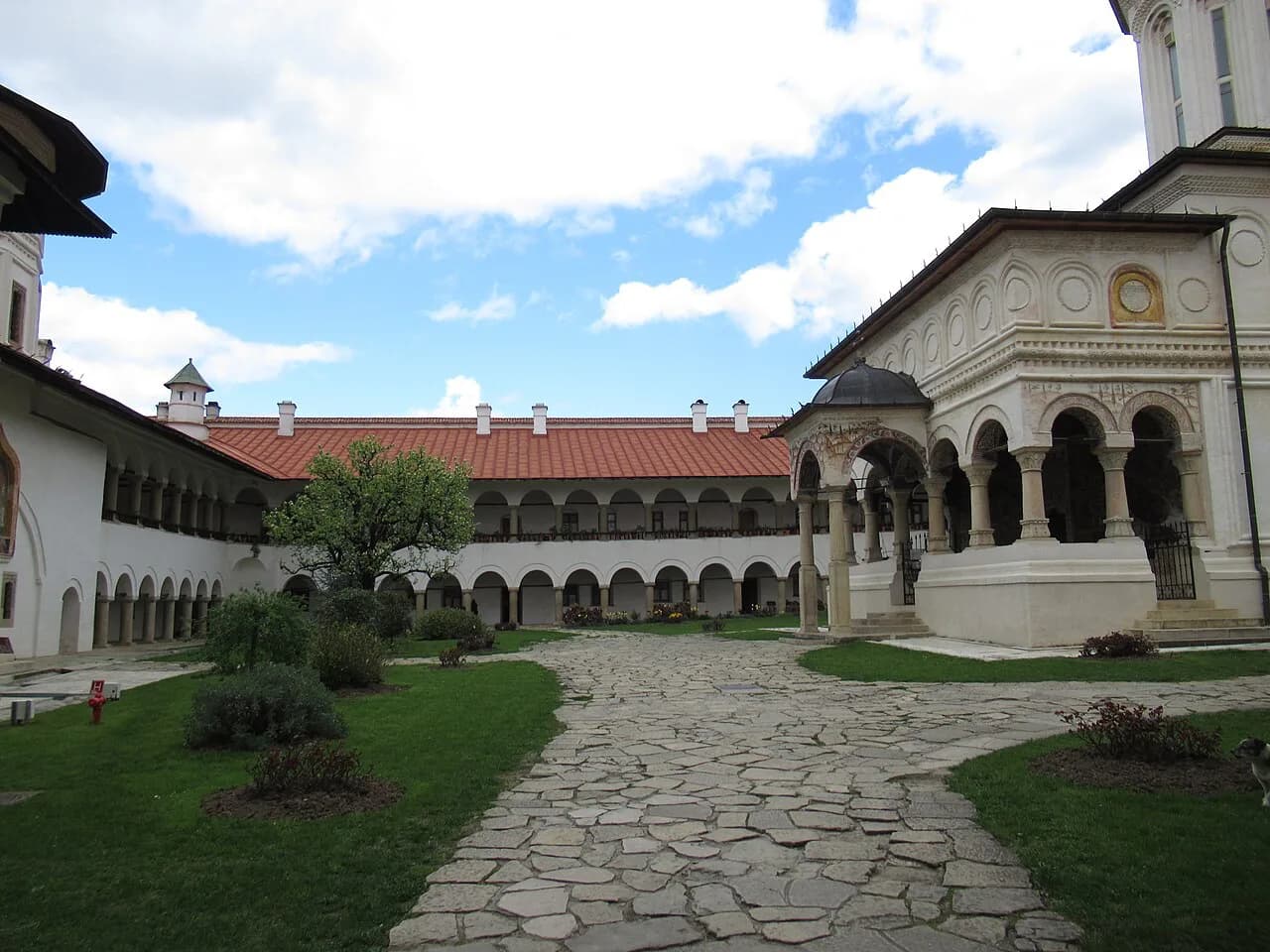
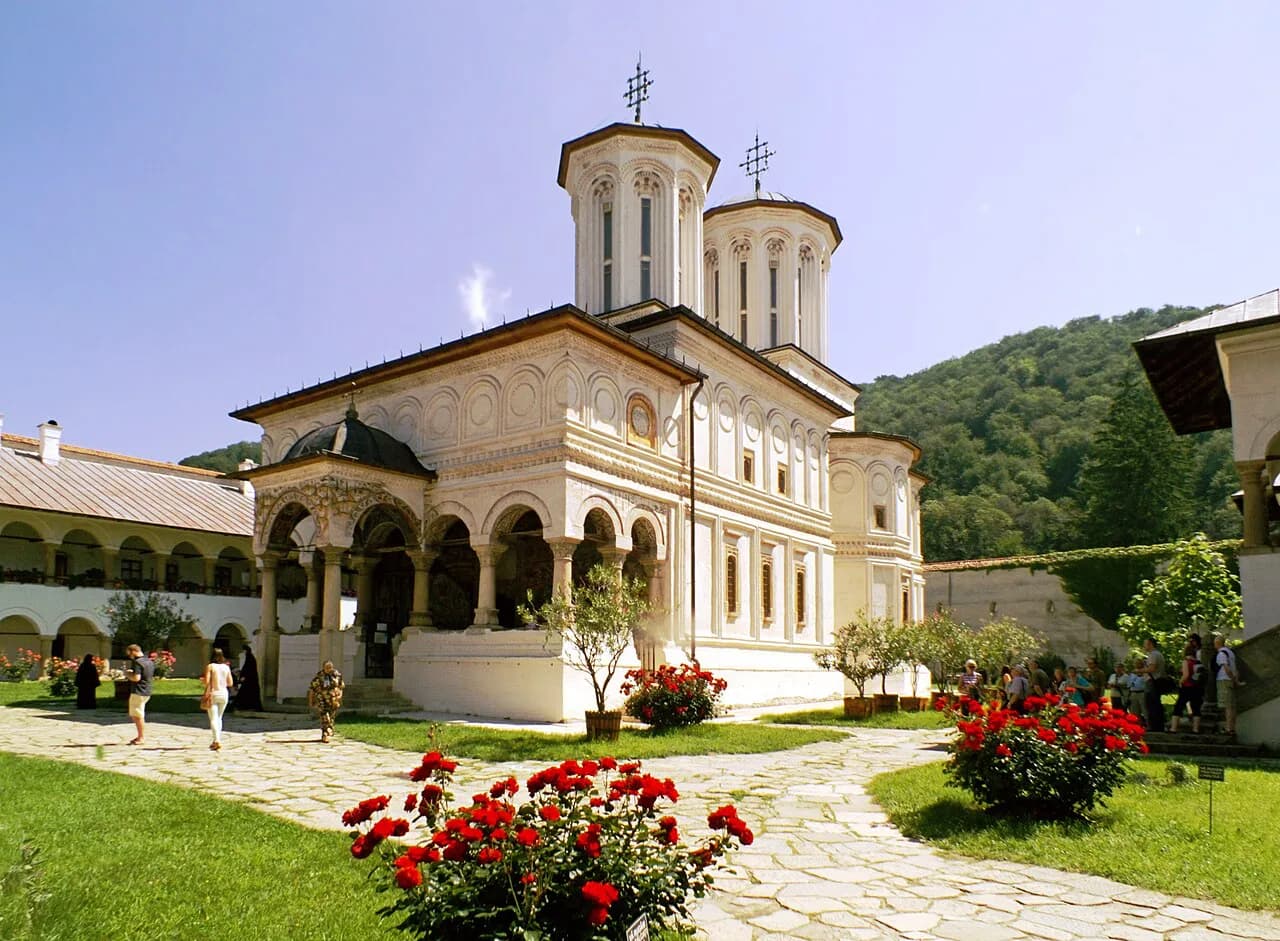
Horezu Monastery is a walled Orthodox complex built between 1690 and 1693 by Constantin Brâncoveanu, ruler of Wallachia, and listed as a UNESCO World Heritage monument. Most visitors come for the monastery church and its Brâncovenesc architecture and painting, then walk the potters' quarter in Horezu town about two kilometres away. This guide sets out what stands where, which nearby monasteries fit the same day, and what you need to reach them.
The site sits inside the Horezu depression, the group of five localities Horezu, Costești, Vaideeni, Măldărești and Slătioara that the national tourism board treats as one area. Distances are short on paper, but Bistrița is twelve kilometres away, Arnota seventeen and Costești seven, so a car decides how much you see.
Where the monastery sits in relation to Horezu town
The monastery was built on the site of the old settlement, and the village later moved up the hill by roughly two kilometres, shifting the centre of Horezu to the market that grew there. That split still shapes a visit: the monastery, its museum and its grounds sit in one place, while the shops and the potters' quarter sit in the modern town. Plan the monastery first and the town second, rather than expecting one continuous sight.
Horezu itself lies in Vâlcea County, roughly midway between Râmnicu Vâlcea and Târgu Jiu, which makes it a natural midpoint stop on a drive between the two towns rather than a stand-alone destination. If you are driving from Bucharest, the road distance is about 221 kilometres. Treat that as distance, not a timetable: traffic and the last stretch of valley road decide the driving time.
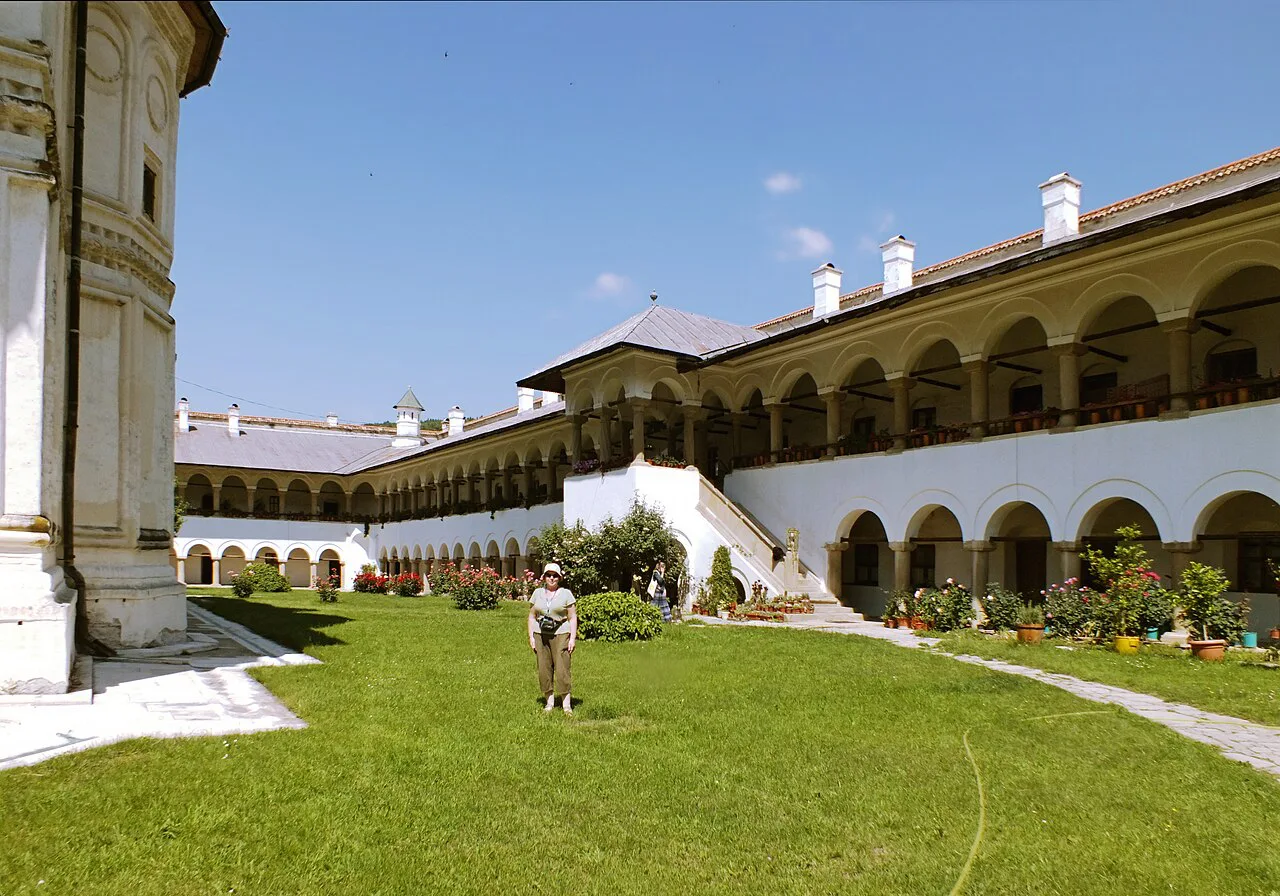
What to see inside the monastery
The monastery church is the reason to come: a Brâncovenesc building commissioned by Constantin Brâncoveanu between 1690 and 1693, the period when the style, with its carved stone, porticoes and painted interiors, took shape. The Brâncovenesc style is the architectural thread running through the Wallachian monasteries of this era, so if the carving and frescoes hold your attention, it is worth comparing it with other Romanian Orthodox Churches on the same trip.
Is Horezu Monastery the same as Horezu town? No. The monastery, with its church and museum, stands on the old settlement site, while the town centre later moved about two kilometres up the hill.
Do I need a car to visit Horezu Monastery and the pottery workshops? A car makes the day far easier. Bistrița Monastery is twelve kilometres away, Arnota seventeen and the trovant museum at Costești seven, and the monastery and pottery quarter are about two kilometres apart.
When is the Horezu pottery fair held? The Cocoșul de Hurez fair takes place annually at the end of the first week of June. It is a pottery market, so it is the best moment to see many Horezu potters together, but confirm the dates with the local organisers before booking travel around it.
The painted interior and the carved detail reward slow looking rather than a quick circuit. Arrangements for visitors, expectations of dress and rules on photography are set by the monastery rather than by this guide, so check them on arrival; the same applies to service times, which depend on the monastic day rather than the tourist one.
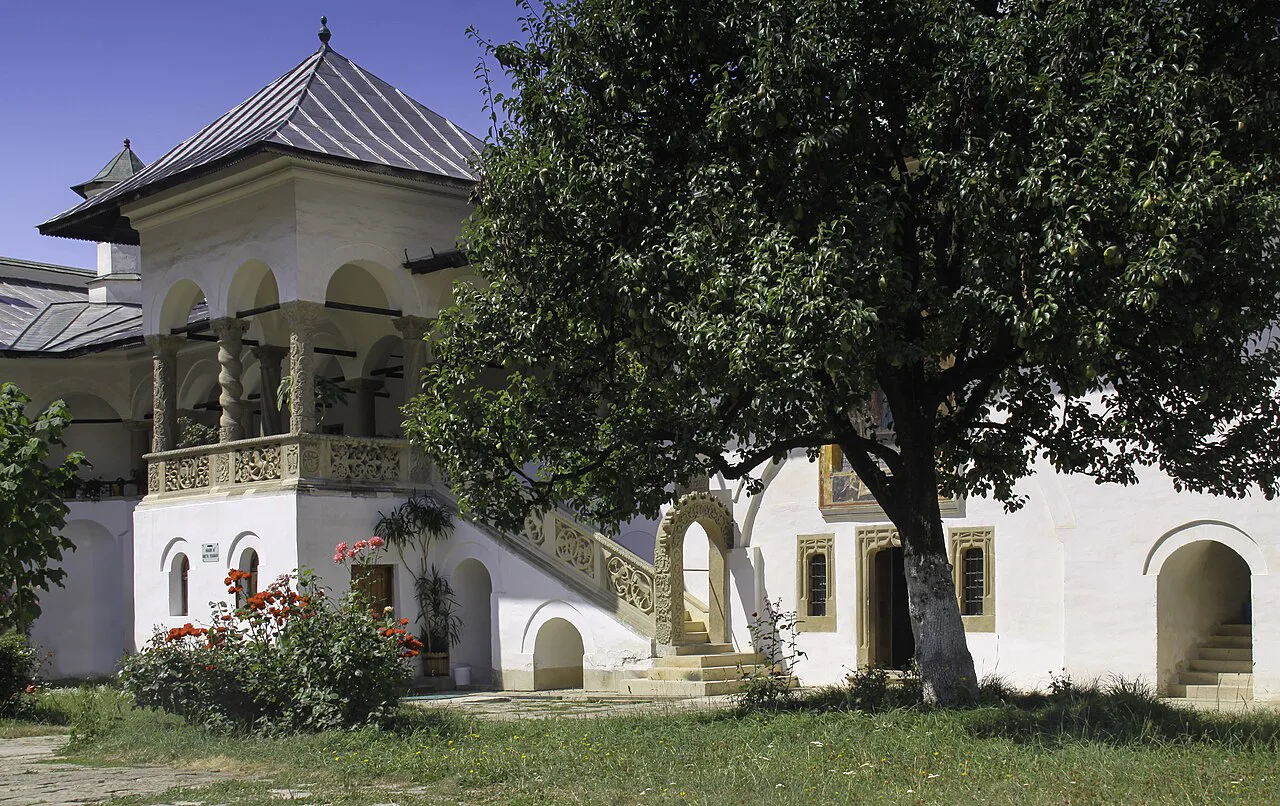
Muzeul Mănăstirii Hurezi
The monastery museum holds medieval art, textiles, and old documents and books from the library that Constantin Brâncoveanu founded, one of the most valuable book collections of its time. Above the library entrance a Greek inscription from 1708 remains in place, dedicating the house of books to the nourishment of the soul. Look for it on your way round, because it ties the collection to the building itself.
The catalogue is broader than devotional reading: it included works by Herodot, Euripide, Hesiod and Aristofan, Justinian's books, Byzantine chronicles and Greek and Latin grammars, which Alexandru Odobescu studied in 1860. That makes the museum a useful half-hour for anyone interested in how an early eighteenth-century Wallachian monastery assembled a working library. Opening days are set locally rather than advertised here, so confirm them before you rely on a visit.
Horezu pottery and the Olari workshops
Horezu pottery was inscribed on the UNESCO Representative List of the Intangible Cultural Heritage of Humanity in 2012, and the craft is still passed down within potter families. The decoration uses white, Black and red earth, copper green, blue and cobalt blue, and the established motifs include the Horezu rooster, the tree of life and the double spiral. These are the patterns to look for when you are deciding what to buy, and they are the reason a workshop visit is more interesting than a shelf of souvenirs.
The workshops cluster in the Olari quarter of Horezu, where potters work on a hand wheel and finish pieces with a horn tool. Pottery is not the only craft in the area: weaving on handlooms and religious painting are also traditional occupations of the Horezu area, so the town rewards a wander beyond the first workshop you see. The annual Cocoșul de Hurez fair is a pottery market held at the end of the first week of June, which is worth planning around if you want to see many potters in one place.
Nearby monasteries on the same day
Bistrița Monastery, twelve kilometres from Horezu in the village of Bistrița, Costești, was founded by the Craiovești boyars around 1490. It is known for the first printing press in Wallachia, where the monk Macarie printed the Liturghier in Slavonic in 1508. The printing connection gives the visit a different focus from Horezu: here you are looking at the start of Romanian printed books as much as at the church.
Arnota Monastery stands at 840 metres on the Arnota massif in Costești commune, seventeen kilometres from Horezu, and holds the tomb of Matei Basarab. The height and the position on the edge of the mountains make it a striking setting, but the drive is longer and the road climbs. If you have time for only one companion monastery, choose Bistrița for the printing history and Arnota for the setting.
The wider group of Monasteries in Romania includes houses of very different date and character, and a trip built around Wallachia can combine Horezu with others. South of Horezu, the Cozia monastery on the Olt is associated with Mircea cel Bătrân and sits at the edge of the Southern Carpathians, so it fits a route towards Râmnicu Vâlcea. Further west, Tismana monastery in Gorj county lies in the direction of Târgu Jiu and makes a natural link if you are driving on rather than turning back.
Măldărești, Costești and Vârful lui Roman
The cule at Măldărești are three kilometres from Horezu: eighteenth-century fortified houses with ornamental detail, built to shelter local owners and their families in wartime. They are the architectural contrast to the monastery, domestic rather than monastic, and quick to see. At Costești, seven kilometres away, the Muzeul Trovanților explains and conserves the unusual stones known as trovants, and entry is free.
Vârful lui Roman is nineteen kilometres from Horezu, an alpine pasture and a starting point for routes into the surrounding mountains. Access is difficult in winter, when the road calls for a four-wheel-drive vehicle and snow chains. That warning is about the mountain road, not the monastery, so it should not put you off a winter visit to Horezu itself; it does mean the summit is a summer addition rather than a year-round one.
Getting around: car or no car
A car is what lets you cover the monastery, one or two workshops and Bistrița or Arnota in a day. Without one, the distances of three, seven, twelve and seventeen kilometres turn into separate trips, and the pottery quarter and the monastery are two kilometres apart, so the day shrinks to Horezu itself. Decide this first, because it determines whether you book a single night or two and whether you head on to Târgu Jiu afterwards.
If you are linking Horezu into a longer monastery route in the region, the same principle applies elsewhere: places such as Râmeț Monastery in Valea Râmețului are reached by road and repay a car rather than public transport. The Merry Cemetery at Săpânța, far to the north, is a different trip and pairs with the Maramureș monasteries, not with Horezu. Group your stops by valley and you will spend less time doubling back.
Which drive makes the best day from Horezu
The strongest day from Horezu is monastery first, museum second, then the Olari potters' quarter, with Bistrița added if you have a car and Arnota if the weather is clear. Do not try to add Vârful lui Roman on the same day unless you are comfortable on mountain roads and travelling outside winter. Two nights in Horezu lets you split the monasteries from the pottery without rushing either.
Check the monastery's own visiting arrangements and the museum's opening days shortly before you go, since neither is promised here as fixed all year. If your trip falls at the end of the first week of June, build the Cocoșul de Hurez fair into the plan instead of treating the pottery as a quiet workshop visit.
Frequently Asked Questions
Is Horezu Monastery the same as Horezu town?
No. The monastery, with its church and museum, stands on the old settlement site, while the town centre later moved about two kilometres up the hill. You need to travel between the two, so plan the monastery and the Olari pottery quarter as separate stops.
Do I need a car to visit Horezu Monastery and the pottery workshops?
A car makes the day far easier. Bistrița Monastery is twelve kilometres away, Arnota seventeen and the trovant museum at Costești seven, and the monastery and pottery quarter are about two kilometres apart. Without a car, plan on seeing Horezu itself and arrange local transport for the rest.
When is the Horezu pottery fair held?
The Cocoșul de Hurez fair takes place annually at the end of the first week of June. It is a pottery market, so it is the best moment to see many Horezu potters together, but confirm the dates with the local organisers before booking travel around it.
Sources
Useful notes for your next trip
Optional updates to our guides.
You might also like
Continue reading
More guides you'll find useful