Cozia Monastery: Visiting the Olt Valley Church
Plan a stop at Cozia Monastery in Călimănești on the Olt, founded by Mircea cel Bătrân. What the medieval complex contains and how it fits an Olt Valley drive.
On this page
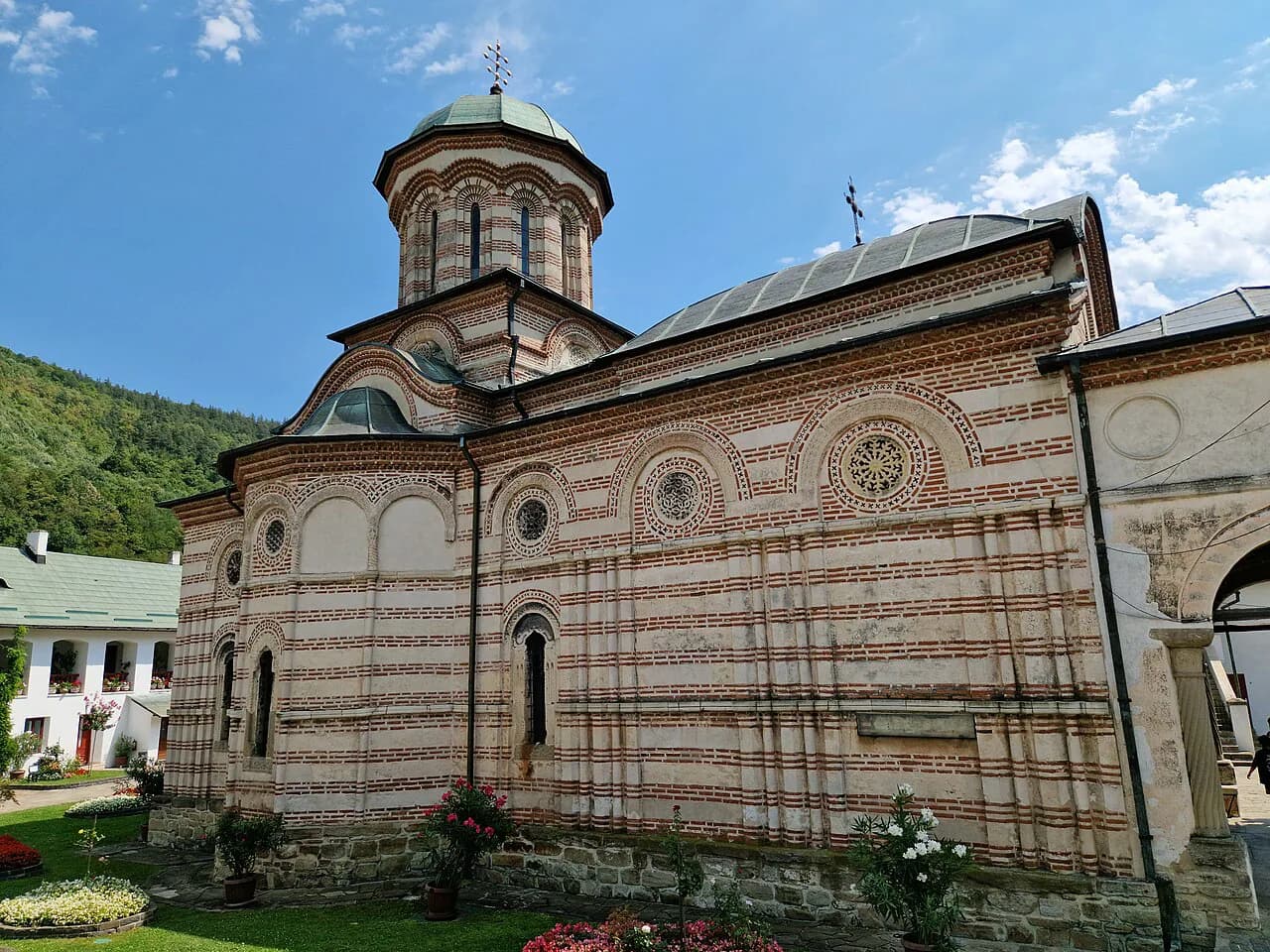
Cozia Monastery is a medieval monastic complex at Călimănești on the Olt, and it rewards a deliberate stop rather than a glance from the car window. The church is the reason to come: a Wallachian foundation of the 14th century with frescoes and carved stonework inside. This guide covers who founded it, what the interior holds, where it sits on the Olt Valley road and how to shape a visit around it.
Treat Cozia as one anchor of an Olt Valley run rather than a standalone day out, and read it alongside the wider picture of monasteries in Romania. The valley road and the town of Călimănești do most of the practical work: you arrive, you park, you walk in, and you are back on the road with the day intact.
What Cozia Monastery is and where it sits on the Olt
Cozia is a monastic complex, not a single church, and it stands at Călimănești on the river Olt. If you are mapping the trip around historical regions, treat it as part of Wallachia rather than Transylvania, on the corridor the Olt cuts through the hills.
Călimănești is the practical anchorage. Approach the monastery through the town, using it as your reference point for parking, orientation and the walk to the gate. It is a working religious site, so plan a calm visit built around the church rather than a sprawling museum circuit.
The setting repays a slower approach: the Olt, the valley sides and the monastery walls read as one composition from the road. If you are driving the valley, plan the stop for daylight and leave the car properly parked before walking down.
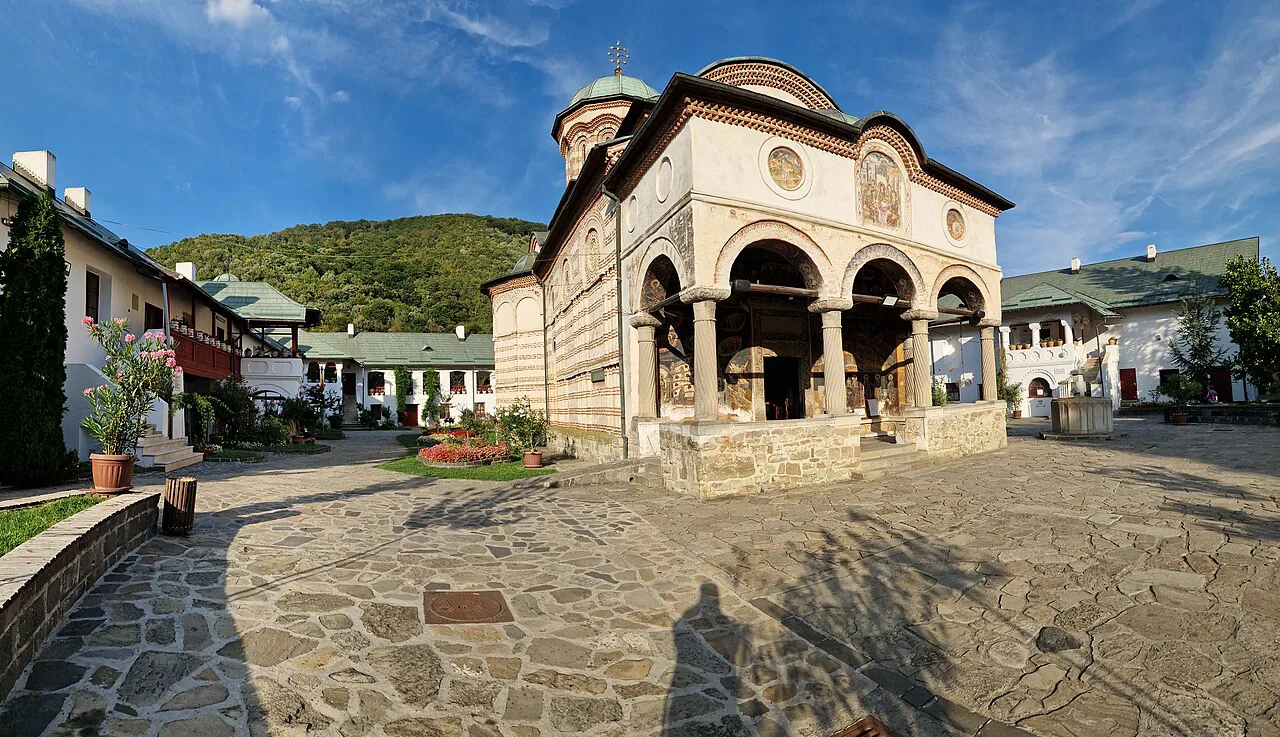
Founder and date: Mircea cel Bătrân and the recorded 1388 foundation
Cozia was founded by Mircea cel Bătrân, known in English as Mircea the Elder, the Wallachian ruler. The foundation date recorded for the monastery is 1388, which places it in the 14th century.
The founder's identity matters for reading the building. Cozia belongs to the programme of a Wallachian prince, and the church carries the architectural language of that world.
Mircea the Elder's tomb is at Cozia, which is why the church reads as a dynastic monument as much as a parish one. Keep his reign and the building's date as the frame; anything about Vlad III or Dracula belongs to other sites and other stories.
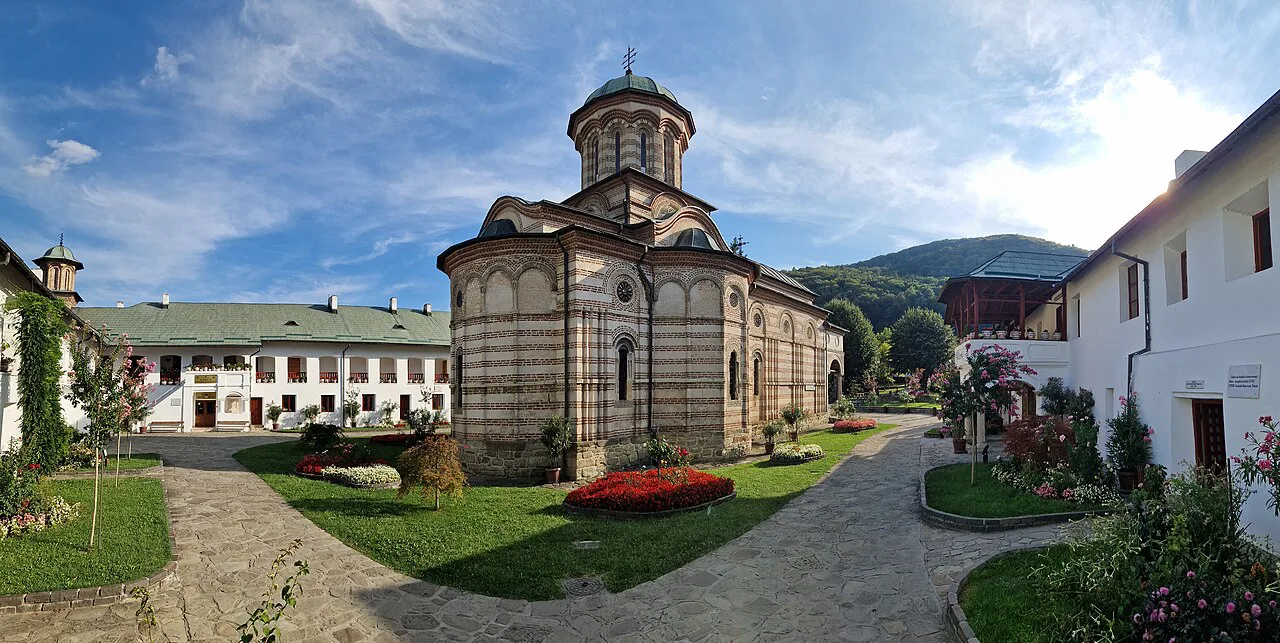
Inside the church: painting, architecture and Mircea's tomb
The interior is the heart of the visit. Cozia's church is the reason most travellers come, and the painting inside is what they spend their time on. Walk in, let your eyes adjust, and read the walls slowly rather than photographing the first panel you meet.
Look at the architecture as well as the paint. The church is described as combining local and Byzantine architectural motifs, and the stone detail is where that mix shows most clearly.
Mircea the Elder's tomb sits within the complex, and it gives the interior its political weight: this is where the founder is buried, not merely commemorated. Approach the tomb as you would any grave inside a working church, with quiet and without crowding.
If you want a wider frame for what you are looking at, the painted interior at Cozia is a useful introduction to the Romanian Orthodox church as a building type before you meet the bigger painted schemes elsewhere.
Getting there: the Olt Valley road and Călimănești as the access point
Cozia is reached from Călimănești on the Olt Valley, and the town is the access point you should plan around. Come by car along the valley road, or arrive in the town and walk to the monastery.
Public transport along the valley reaches Călimănești, and the last stretch to the monastery is on foot. Check current train and bus times for the Olt Valley before you set out.
Driving gives you the most control over timing. The valley road is the through route, so plan the stop as a break in a longer run rather than a destination reached by a single dedicated journey. If you are coming from the north, use the Olt corridor as your line and treat Călimănești as the marker.
How long a visit takes and what to fit around it
Allow a focused spell for the church and the grounds — long enough to see the paintings and the tomb without hurrying, and to leave the rest of the day free for the valley.
Cozia works best as a stop on an Olt Valley drive, paired with the river landscape and the town of Călimănești rather than with a second monastery haul. One religious site in a day is enough for most travellers.
If your wider route runs west, Horezu is the natural companion foundation, with its own painted and carved interior, and the pottery village of Horezu adds a different sort of stop to the same day.
Travellers heading further west can put Tismana monastery and Târgu Jiu on a separate day rather than bolting them onto Cozia.
For a different monastic setting inland, Râmeț Monastery above the Valea Râmețului rewards a dedicated detour.
Practical points: dress, silence and photography
Cozia is a working monastery, so dress and behaviour should follow the usual conventions of an Orthodox religious site: modest clothing, quiet voices and respect for anyone at prayer.
Inside the church, keep photography discreet and respect any instruction from the community on the day.
Entry arrangements, opening times and any photography conditions are set locally and change with the season and the liturgical calendar. Check the current position with the monastery or the town before you travel rather than relying on last year's blog post.
Religious sites across the country vary in how they handle visitors, and it helps to know the pattern of a Romanian Orthodox church before you arrive. The guide to Romanian Orthodox Churches covers the building type and what is expected inside, which makes a first monastery visit much less awkward.
Where Cozia fits among the monasteries of Romania
Cozia is a Wallachian foundation of the 14th century, which places it among the earlier medieval monastic complexes rather than the painted monastery circuit of Bucovina. If you are choosing which monasteries to visit, use that distinction: Cozia is an interior to read slowly, not an exterior painted in narrative panels.
That difference matters for planning. The Bucovina houses are a separate trip in the north-east, while Cozia sits naturally on the Olt Valley in the south. Trying to link them in one itinerary means a long drive and two half-seen sites, which is the worst of both options.
Cozia also gives you a reference point for later styles: once you have seen the medieval fabric here, later Romanian church building reads as a clear departure rather than a vague label.
See Horezu Monastery as the natural comparison: a later foundation in the same region, with its own painted and carved interior, reached from the same Vâlcea approach.
Should Cozia be a stop on your Olt Valley run?
Yes, if you are already driving the Olt Valley. Cozia gives you a 14th-century foundation by Mircea cel Bătrân, a painted and carved interior, and the founder's tomb, all in a compact stop at Călimănești.
Build the day around the valley and the town, set aside roughly an hour at the monastery, and pair the church with one other site in the region rather than three.
Explore more Romania guides
Frequently Asked Questions
Is Cozia Monastery the oldest monastery in Romania?
Cozia is a medieval monastic complex, founded in 1388 by Mircea cel Bătrân, on the Olt at Călimănești. Whether it is the oldest monastery in Romania is a question for a history of Romanian monasticism rather than something to plan a visit around.
How do you reach Cozia Monastery without a car?
Use Călimănești on the Olt as your destination and cover the last stretch on foot. Rail and bus services along the Olt Valley change with the season, so check current times for the valley before you travel.
Sources
Useful notes for your next trip
Optional updates to our guides.
You might also like
Continue reading
More guides you'll find useful