Desești Wooden Church: Maramureș Village Guide
Desești is a Maramureș village on a wooden-church circuit. What to see, neighbouring churches and how to reach the village by car or bus.
On this page
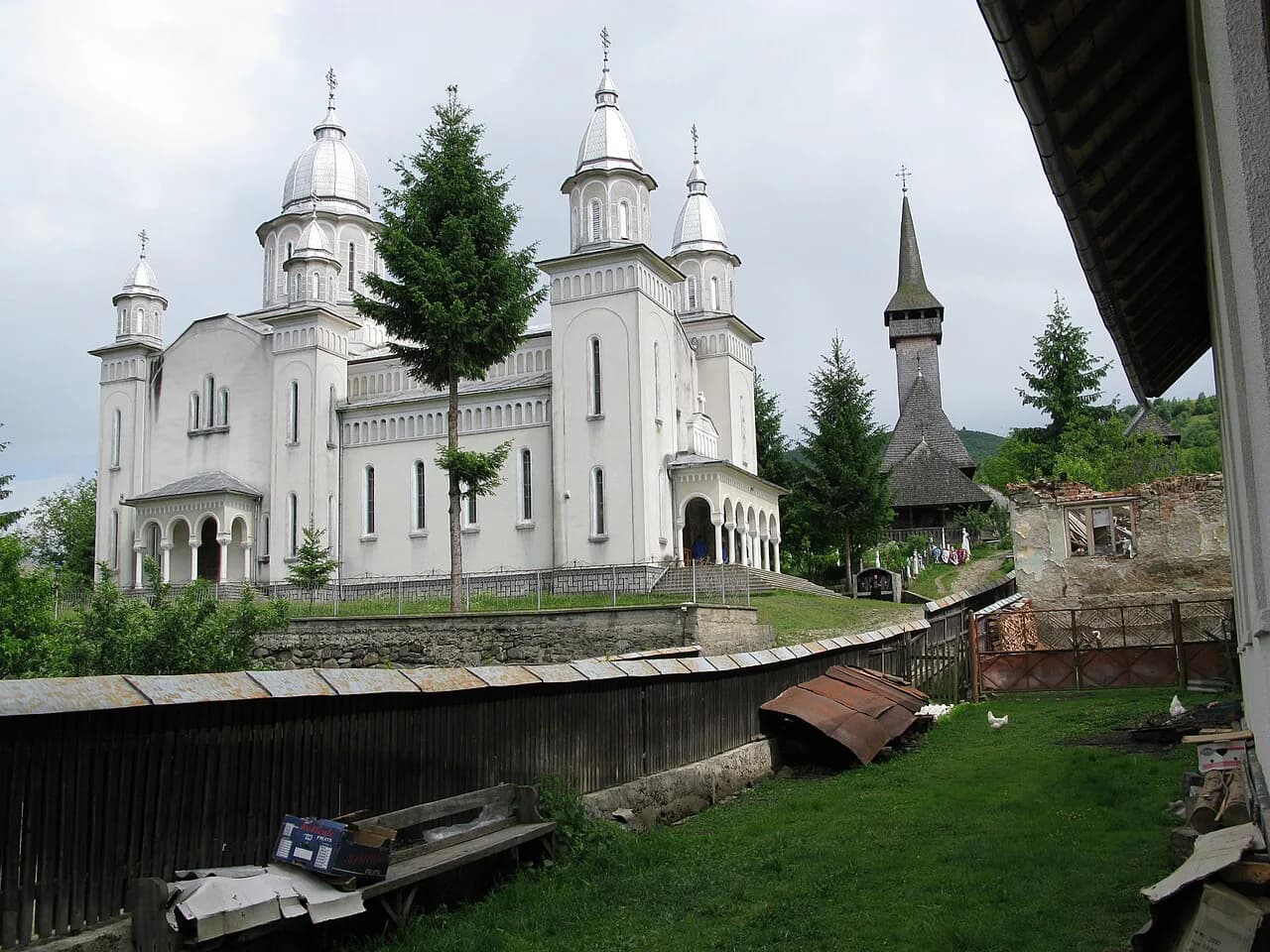
Desești is a small Maramureș village that works as a short stop on a wider circuit of the region's wooden churches rather than a journey of its own. Plan it as part of a half-day drive in Maramureș with other churches. This guide covers what to see in the village, the neighbouring churches worth pairing it with, and the practical business of getting there by car or public transport.
You need a car to make the most of it. Maramureș is scattered across a poor road network, which keeps it quiet but makes bus and train connections slow and awkward. Treat Desești as one stop in a day of driving between villages, and check current opening arrangements with the parish before you set out.
Desești and the Maramureș wooden-church tradition
Around 300 wooden churches were built in Maramureș in the 17th and 18th centuries, and almost 100 survive in the region today. The churches went up in timber because stone and brick were barred for Orthodox construction under Habsburg rule, so local builders raised oak churches with tall bell towers and steep shingled roofs. Eight of these churches were inscribed on the UNESCO World Heritage list in 1999, and the broader group is covered in our guide to the wooden churches of Maramureș.
Because the churches were built without nails, keeping them standing has never been straightforward, and the ones that survive have been repaired and looked after. The wooden churches of Maramureș are a broader group than any one village can show, so treat Desești as one stop within it rather than the whole story.
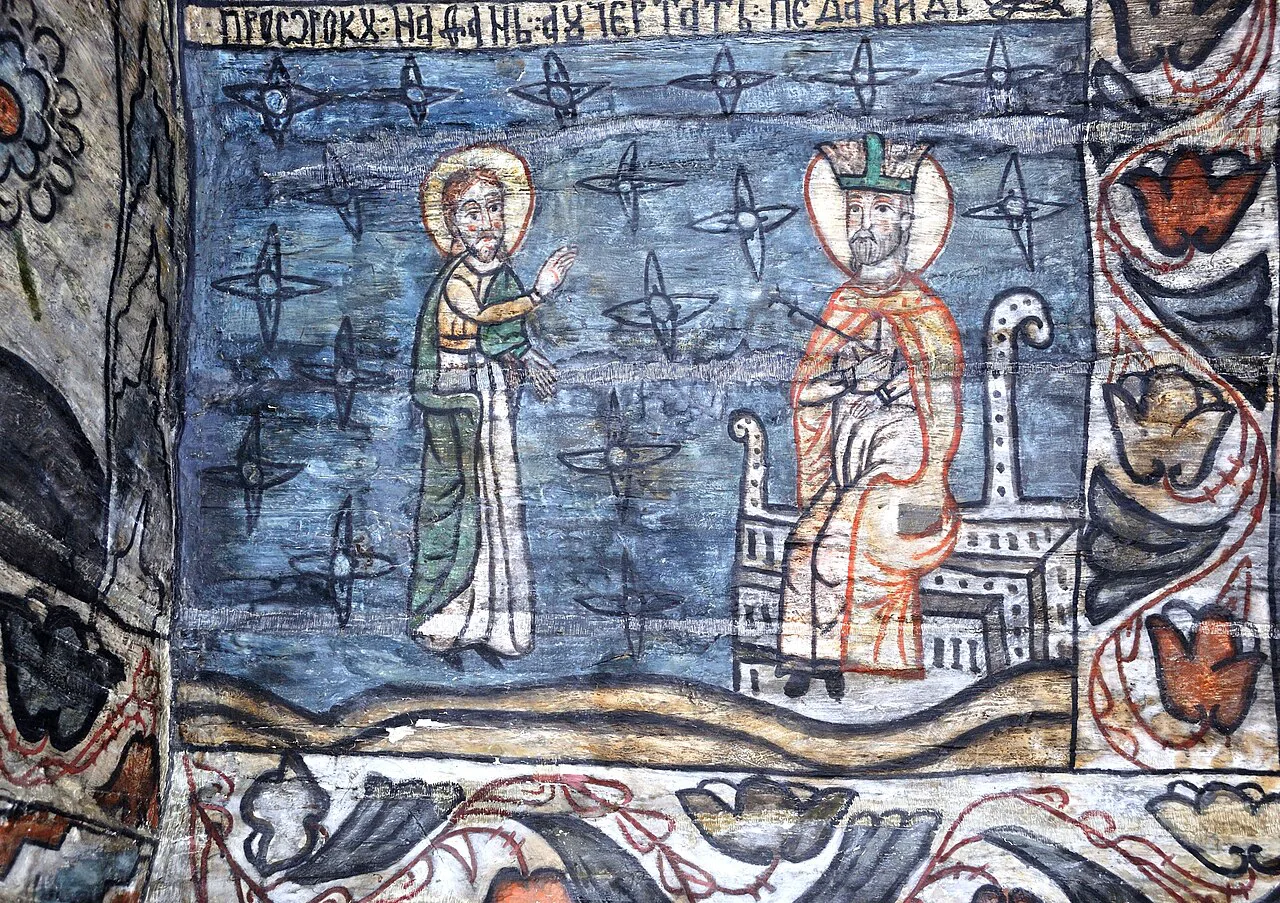
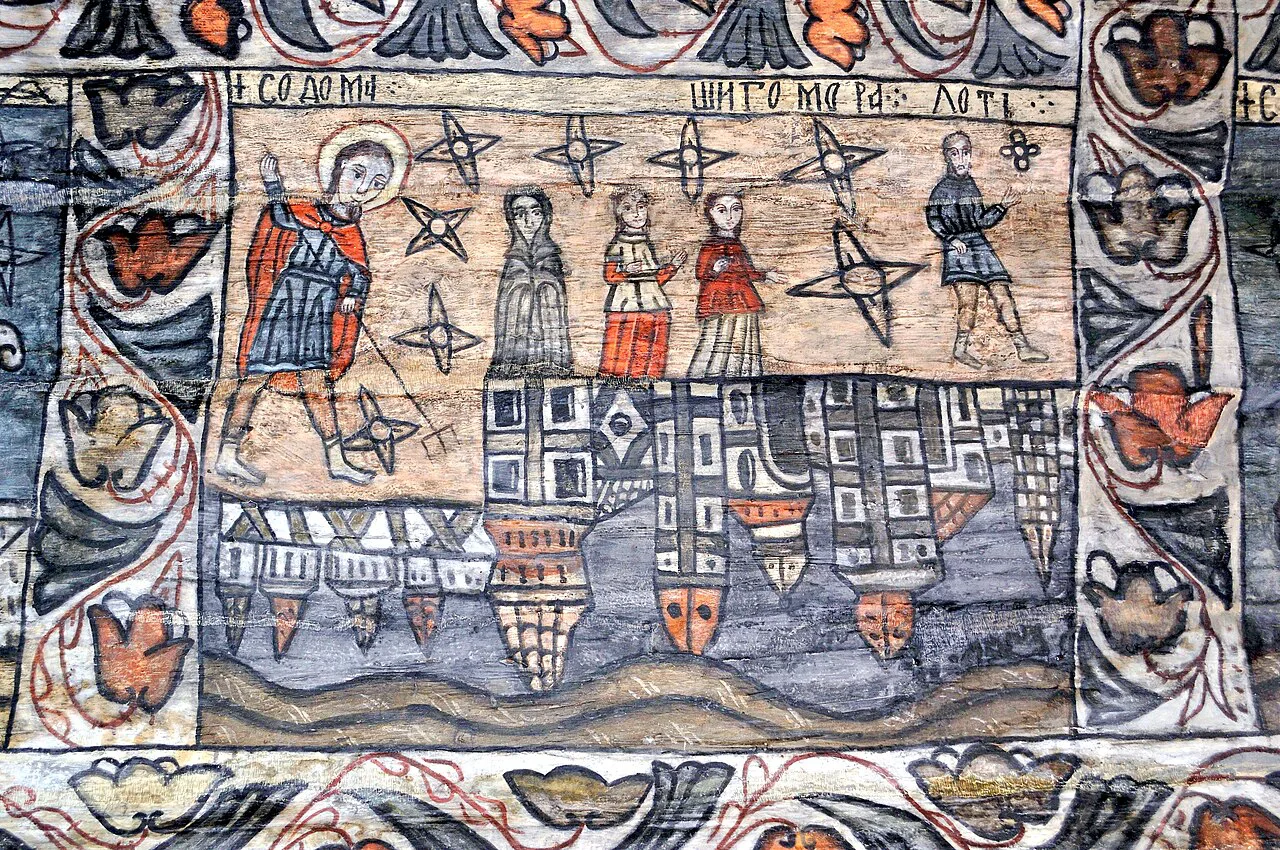
What you see inside: painted interiors
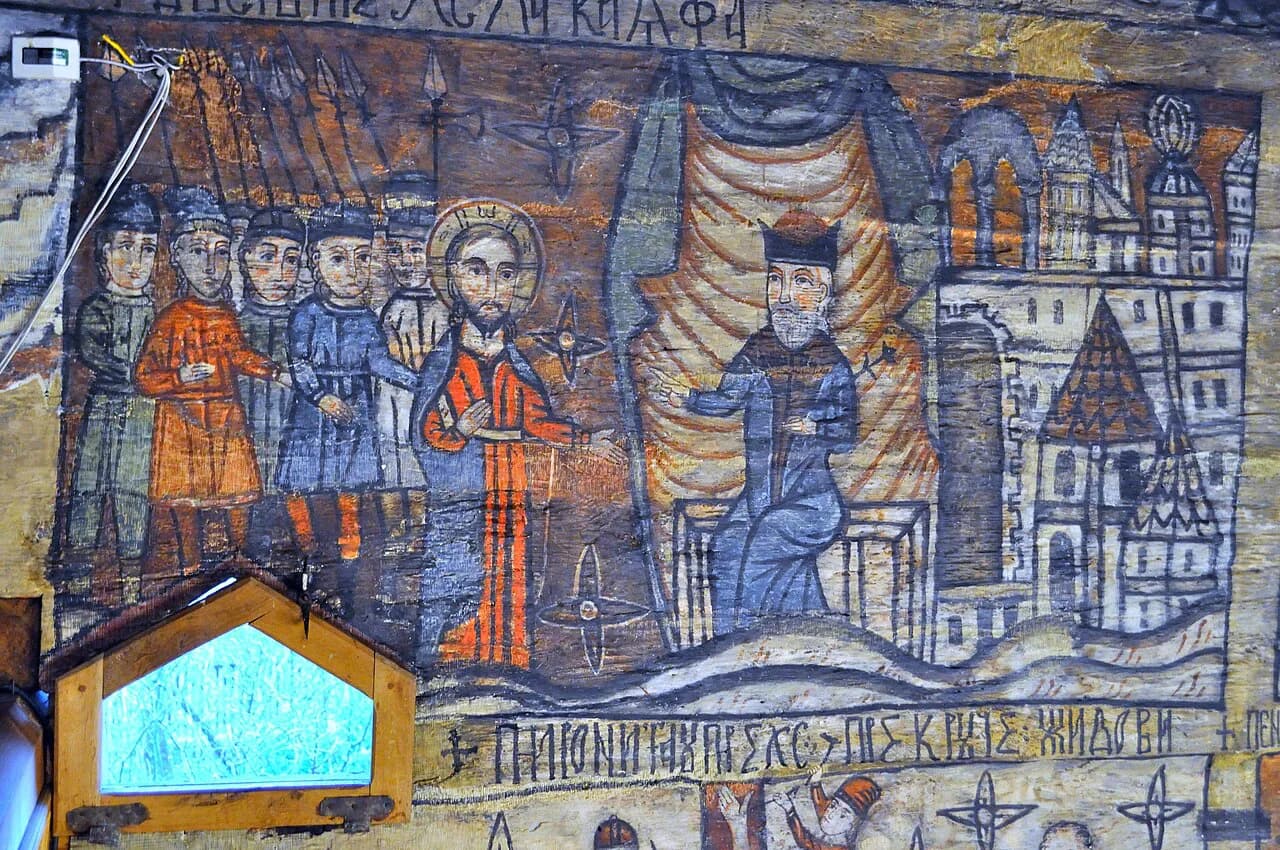
Across Maramureș, church interiors were painted by local artists, often setting biblical scenes against the familiar landscape of the village rather than a distant Holy Land. Allow your eyes time to adjust to the dim interior of any wooden church you enter, and carry a torch for the darker corners.
The mood of the painting varies sharply from church to church. At Poienile Izei the walls are known for scenes of punishment, including a liar hanged by his tongue, a farmer ploughed by two devils for stealing a neighbour's land and a mother forced to swallow her aborted baby.
Paintings of this age on wood do not do well in damp, so treat any interior as a place to look slowly and quietly rather than to photograph on a flash. Some Maramureș churches are closed when you arrive, and a small entrance fee is charged at several of those that open. Ask locally in the village on the day about whether Desești is open.
The churchyard and the village's carved wooden gates
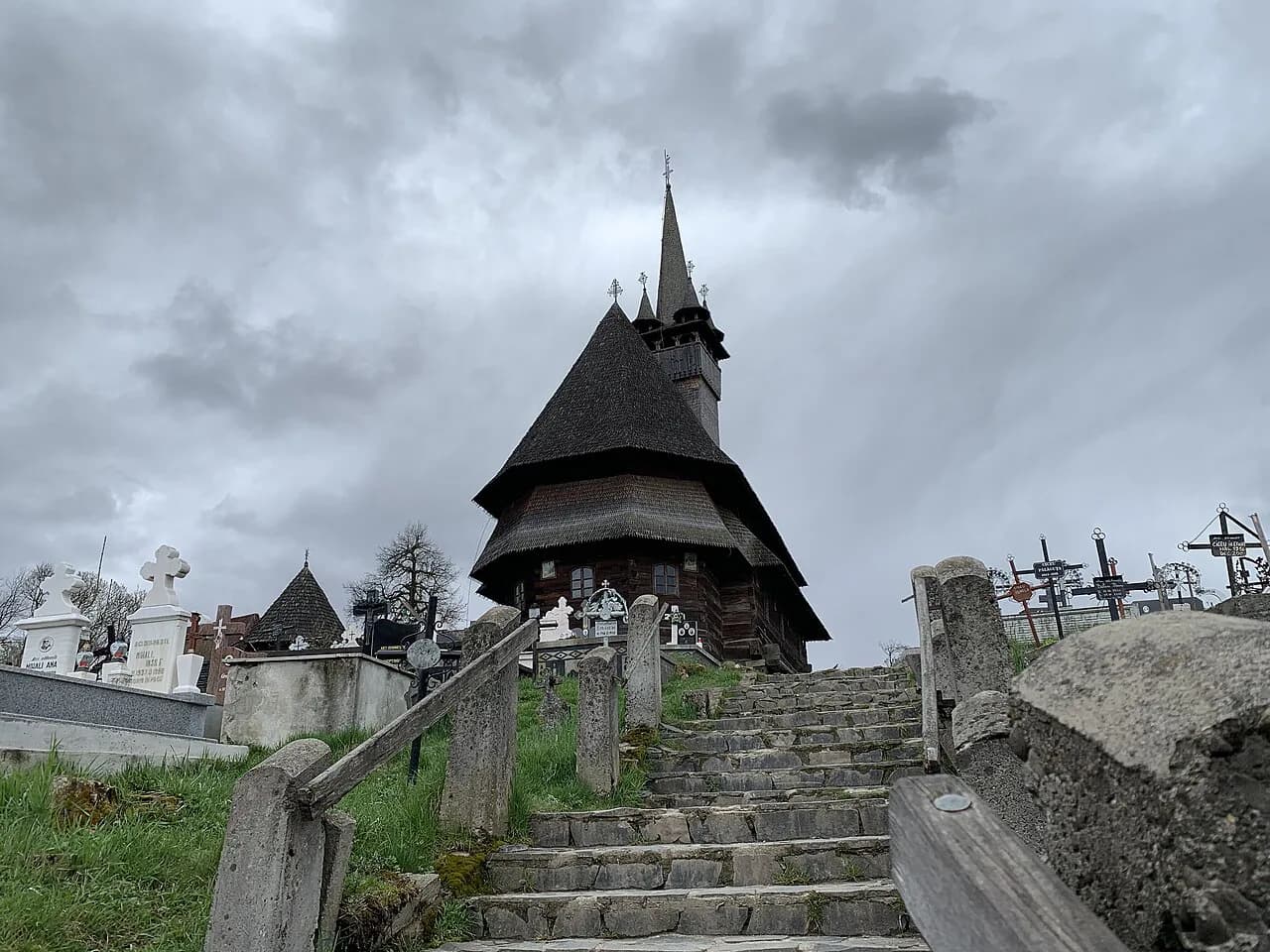
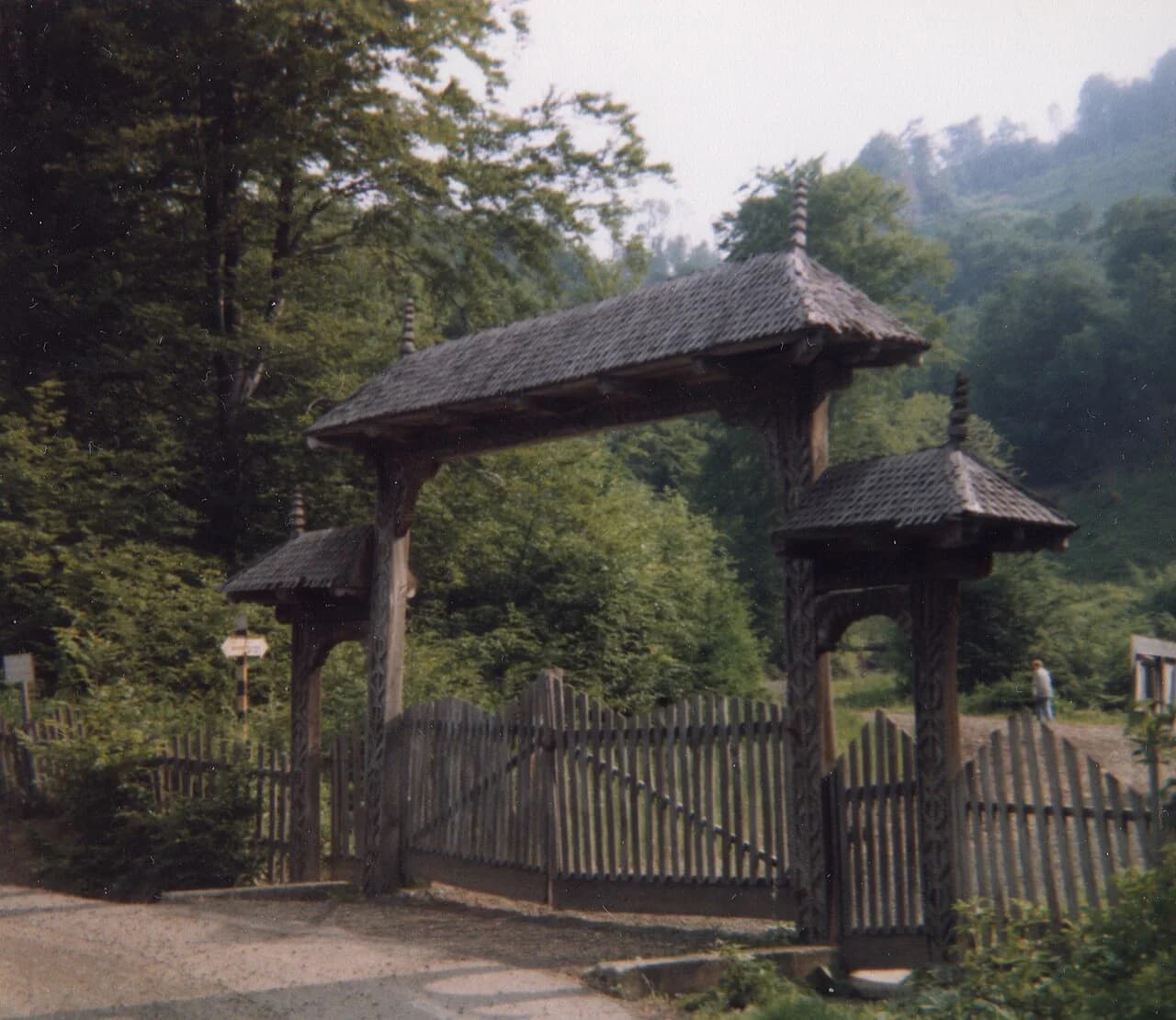
Maramureș is known as the land of wood, and the proof is in the villages: timber houses, carved wooden gates and the churches themselves. Around the region's churches the graveyards are part of the experience, with rows of naive Orthodox crucifixes rather than polished stone. Allow time to walk the churchyard before or after seeing an interior.
The lanes themselves are the other half of the visit. Carved gates stand at the entrance to farmyards, and the old timber houses give the villages the set-like quality that travellers tend to notice first. Walk the main lane slowly, keep to the road where yards are private, and you will see more than by driving through.
Nearby wooden churches: Bârsana, Ieud, Budești, Șurdești and Rozavlea
Bârsana is a substantial stop, whose church of the Entry of the Virgin was built in 1720 and stands 57 metres tall. It was moved to Jbar Hill in 1791, and the village is named after the barsani, local breeders of long-haired sheep. The monastery is covered in our Bârsana Monastery guide.
Ieud has a fir-wood church, probably built in the 17th century, with walls completely covered in murals painted by Alexandru Ponehalski in 1792. The Codex of Ieud, described as the oldest document in Romanian and dating from 1391, was found in the church attic in 1921. Budești's oak church of Saint Nicholas dates from 1643 and holds a collection of glass-painted icons, with four small turrets around its belfry.
Șurdești Wooden Church is described with a tower of 54 metres and a total height of 72 metres, a two-level portal and nave paintings drawn from the Old Testament. Rozavlea's church of the Holy Archangels is outside the UNESCO listing but has naive 18th-century frescoes on wood and fabric painted with vegetal colours.
Two more villages round out a circuit. Breb is the quiet one, dirt streets and timber houses, while Botiza and the other villages each add their own churches. Both work as short stops rather than destinations in their own right.
How to get to Desești by car, and how the roads compare
Drive. Maramureș's isolation comes down to geography and a poor road network, which is exactly why the villages feel as they do and exactly why public transport is thin. A car lets you link Desești with Ieud, Rozavlea, Budești and Șurdești in a single loop instead of losing hours waiting.
Build the day around distance rather than a fixed list. The valleys run roughly east to west, with the Iza Valley villages on one line and the Cosău valley on another, so grouping churches by valley saves backtracking. Surfaces vary once you leave the main roads, so hire a car with reasonable clearance and fill up where you can.
Reaching the village by bus or train from Baia Mare and Sighetu Marmației
Public transport is possible but slow. Bus coverage across the region is thin, so plan to use a bus to reach a starting village and then walk or arrange a lift between churches rather than working to a strict timetable.
The two practical bases are Baia Mare and Sighetu Marmației, the main towns of the region. Ask at the bus station or your accommodation the day before about services into the villages, rather than relying on an online timetable.
If you want a car-free day out, the Mocănița steam train on the Vaser valley is the one rail experience in the region worth planning around. It is not a way of reaching Desești, so keep it as a separate morning rather than folding it into a church circuit.
How long Desești needs, and pairing it with the Merry Cemetery at Săpânța
Plan Desești as a short stop within a day of driving between villages, rather than a fixed attendance. A walk along the lane and a look at the church exterior and churchyard will not take long; add time for the interior if you find it open.
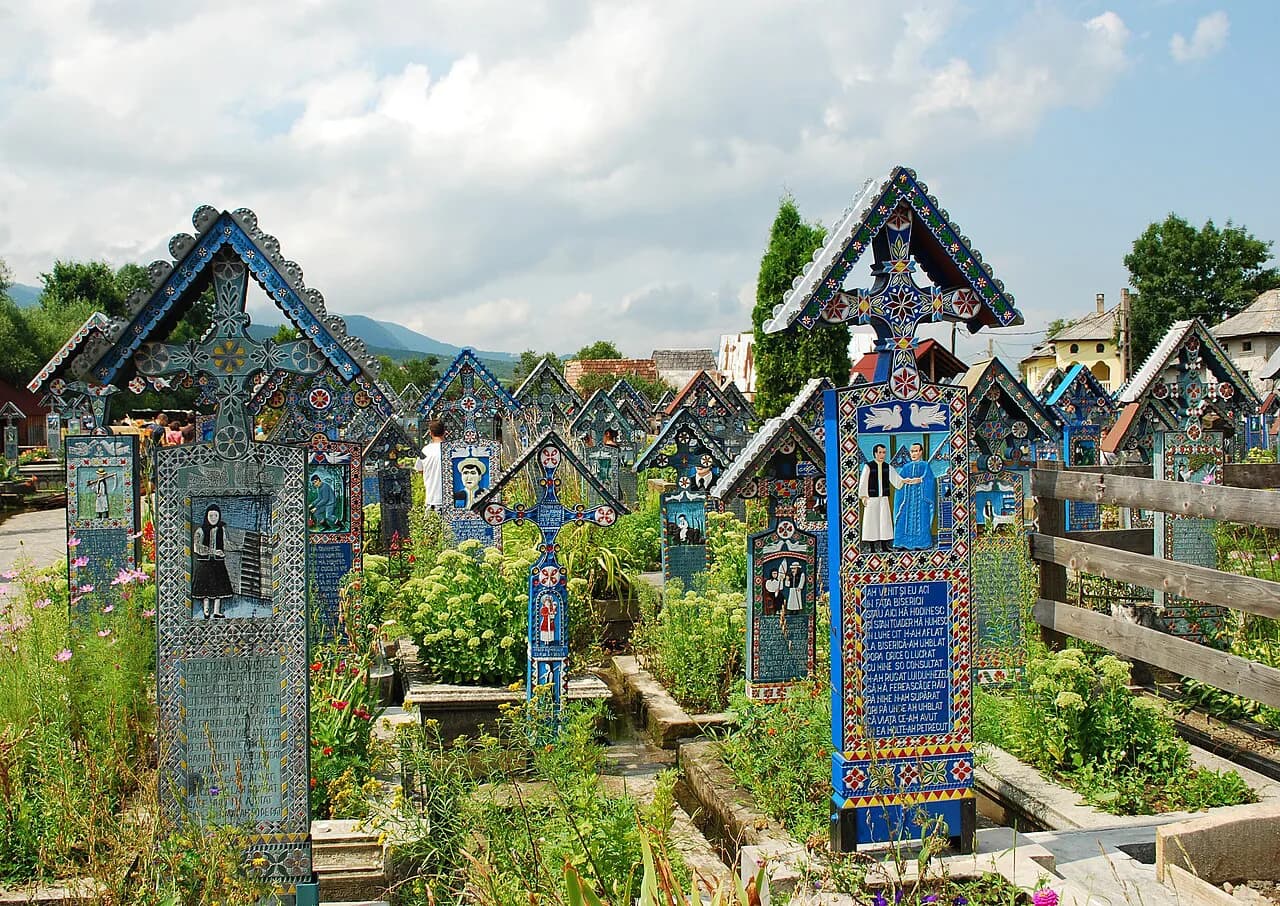
The natural pairing is the Merry Cemetery (Cimitirul Vesel) at Săpânța, where the grave markers are carved and painted with scenes and verses about the person buried there. It sits on the northern side of the region, so work out whether it fits the same day or the next one. Săpânța is a well-known stop and busier than Desești.
Where the wooden churches stand on opening and entry fees
Opening is the weak point of any wooden-church circuit. Some churches are closed when you arrive, and a small entrance fee is charged at some of those that open. The amount varies, so carry cash in lei and ask on the day.
Do not plan a day around a guaranteed interior. Expect to find some doors shut and to see the outside and the churchyard instead. That is why a car helps: when one church is locked you can be at the next in minutes rather than waiting for a bus.
Expect some closures. A circuit of several churches in a day makes it less likely that a locked door will define the visit.
Is Desești worth the detour?
Yes, if you are already driving Maramureș. The village lanes, carved gates and churchyard justify a short stop, and pairing it with other wooden churches fills a morning. It is not a reason to cross Romania on its own, and anyone relying on buses should allow plenty of slack.
Build a loop that takes in two or three neighbouring churches and the Merry Cemetery at Săpânța, and check locally which interiors are open that week. That way a locked door costs you minutes rather than the day.
Explore more Maramures guides
Sources
Useful notes for your next trip
Optional updates to our guides.
You might also like
Continue reading
More guides you'll find useful