Romanian Orthodox Churches: What to See Inside and How to Visit
Romanian Orthodox churches follow a set layout of narthex, nave and iconostasis. Here is what each part is for, plus dress, photo rules and visiting etiquette.
On this page
A Romanian Orthodox church is built to be read in one direction: you enter through a porch, pass into the narthex, step into the nave and face a screen of icons, behind which the altar lies. Knowing that sequence turns a quick look round into a visit you can follow, and it also tells you where to stand and what to leave alone. This guide covers the layout, the paintings, the main architectural styles, dress and photo rules, and how to behave when a service is under way. For the walled monastic complexes where much of this survives intact, see Monasteries in Romania.
What a Romanian Orthodox church looks like from outside
From outside, most parish churches announce themselves with a dome or a slender spire over the nave, whitewashed or plastered walls, and a porch on the west end. The building is normally oriented so that the altar sits at the east end, which means the main door faces west and you cross the church from west to east as you go in. A wide painted band or a row of niches around the walls often carries the patron Saint or a feast, so a slow walk around the outside is worth the few minutes before you push the door.
Village churches add a bell tower over the entrance, a low wall and a churchyard with graves and a wooden cross, and often a small table for candles near the gate. Larger town churches may sit behind a paved courtyard with a separate bell tower and a parish house. The safest way to judge whether a church is open for visitors is to look for the door standing ajar and someone inside rather than to rely on a posted timetable, which many parishes keep on their own noticeboard or website.
The layout of the interior: narthex, nave and altar
The interior runs west to east in three parts. The narthex, called the pronaos in Romanian, is the entry room where you will usually find a candle stand, a table of icons and books, and the place where people stop to cross themselves. Beyond it, through a doorway, the nave or naos holds the congregation, and at its east end the iconostasis closes off the altar, the bema. Each threshold marks a step up in solemnity, so voices drop and movement slows as you go further in.
In many churches the narthex is where women tend to stand and where visitors wait during a service, while men more often occupy the nave; this is custom rather than a rule posted at the door, and you should follow what the people around you are doing. The altar itself is reserved for the priest and is not a place visitors walk into. The practical consequence for a sightseeing visit is that you can see and photograph most of the painted walls from the narthex and nave without going anywhere near the east end.
The iconostasis: what the screen of icons separates and why
The iconostasis is a tall partition of panels and icons that stands between the nave and the altar, usually with a central double door, the royal doors, and a single door on each side. It is not a wall to keep people out for its own sake: it marks the boundary between the space where the congregation gathers and the space where the liturgy is served. Icons on the screen are arranged in rows, with Christ and the Mother of God flanking the royal doors and the patron of the church often on the right.
Look at the screen closely rather than through it. The carving or painting of the frame, the size of the panels and the number of rows tell you how elaborate the church is, and in richer foundations the screen is gilded and carved in deep relief while a village church may have a simple painted wooden version. If the royal doors are open you can glimpse the altar, but keep your distance and do not step past the screen.
Icons and frescoes: how to read the walls and which stories they tell
Interior painting is organised rather than random. The dome or ceiling over the nave usually carries Christ or a great feast, the upper walls carry scenes from the life of Christ and the Mother of God, and the lower walls are where you find saints, martyrs and monastic founders, closer to eye level. The west wall, the one behind you as you face the altar, often holds the Last Judgement, which is why the most crowded and dramatic painting is frequently the one you only see on the way out.
Read an icon by its attributes rather than its label: a figure holding a book, a cross, a model of a church or a severed head is telling you who they are, and gilded halos mark sanctity. Photography stops at the icons in many churches, so look first and decide about the camera later.
Exterior frescoes on Moldavian churches and what changes when you visit one
The painted monasteries of Moldavia, among them Voroneț, Sucevița and Moldovița, carry their frescoes on the outside as well as the inside, which changes the visit: the best light is on the walls rather than in the dark nave, and you can spend as long outside as in. The exterior programme covers the walls in horizontal bands, so you read them upwards from the saints at the bottom to the great feasts and the Last Judgement high on the facade. These are working monastic sites, so the visit is a walk around a walled compound rather than a museum circuit.
For a wider survey of walled complexes, painted churches, wooden buildings and the villages around them, see the guide to monasteries in Romania.
Wooden churches and the village settings where you find them
Wooden churches are the other great Romanian church type, with walls of beams or logs on a stone footing and a shingled roof that sweeps low over the body of the building. Inside, the same three-part layout applies, but on a small scale: a cramped narthex, a nave you can cross in a few steps, and an iconostasis of painted boards rather than carved and gilded panels. The tower, where there is one, is timber-framed and sits over the entrance.
You meet them in villages and in upland areas where stone was expensive and timber was not, and they are often the only building of note in a settlement. Expect uneven floors, low doorways and little electric light, so bring a torch and watch your footing. Some are locked outside service times and the key is held by the parish or a neighbour, which is the point at which a local enquiry beats a guidebook.
Brâncovenesc and Moldavian styles: how the architecture differs
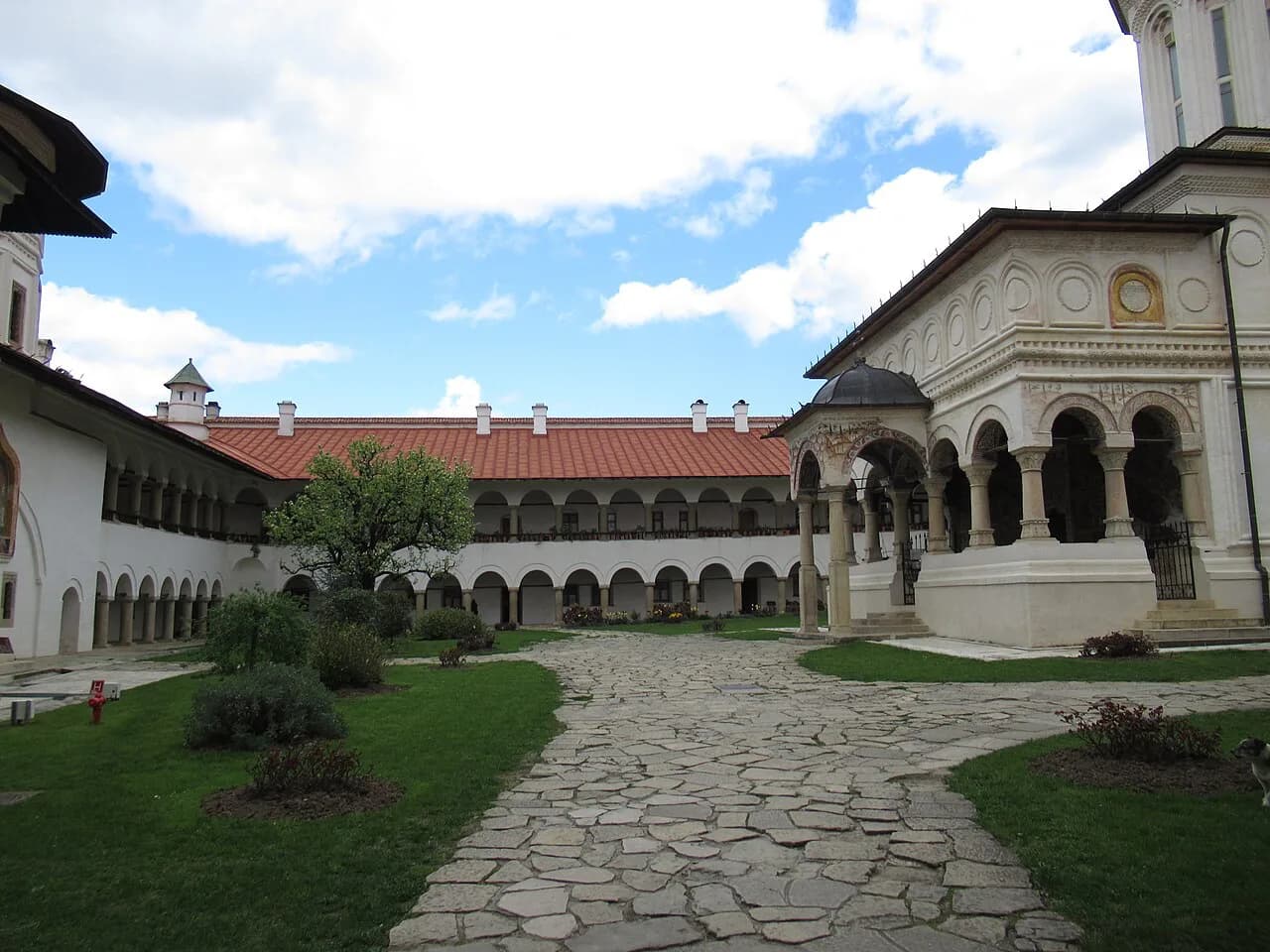
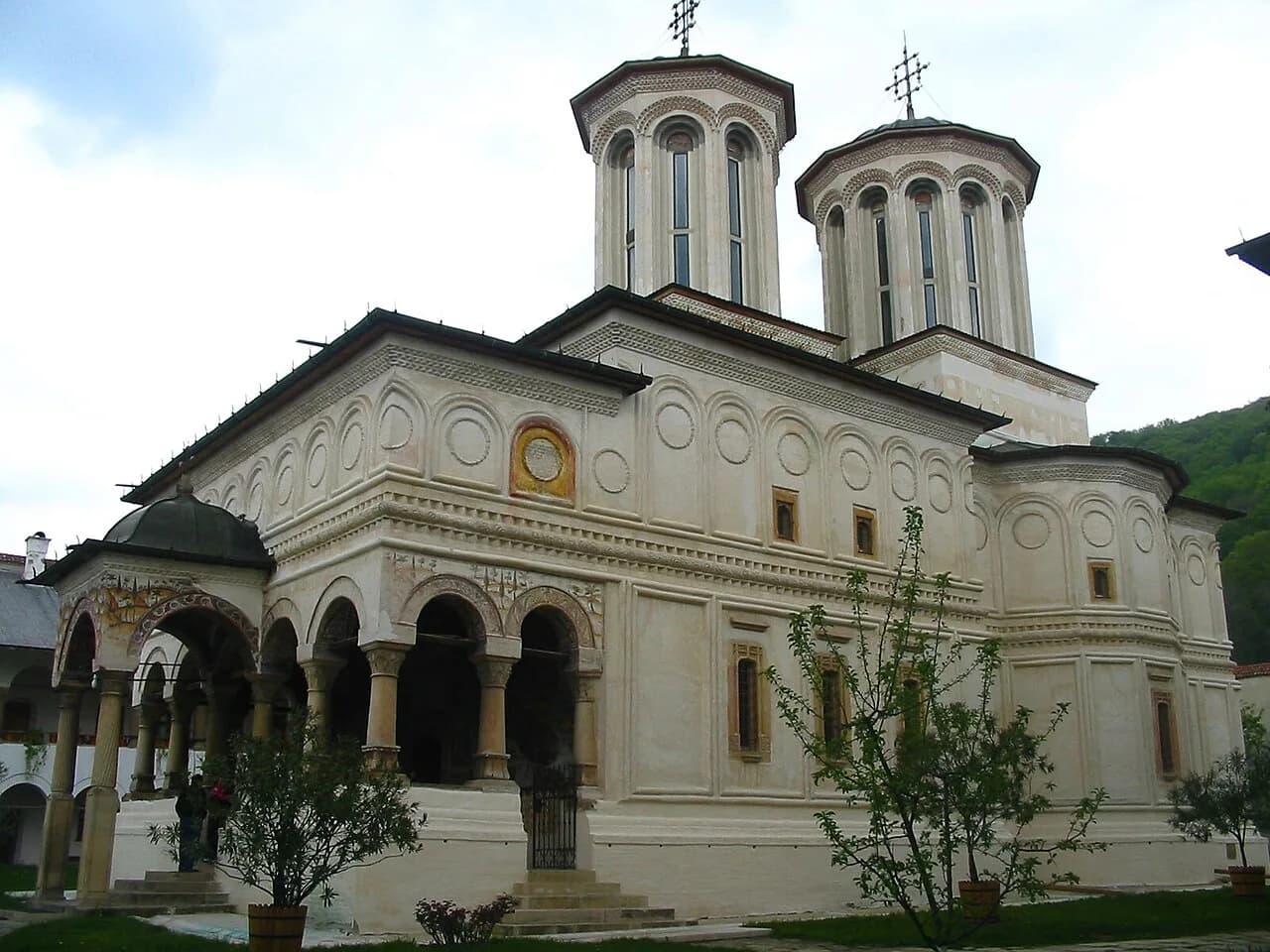
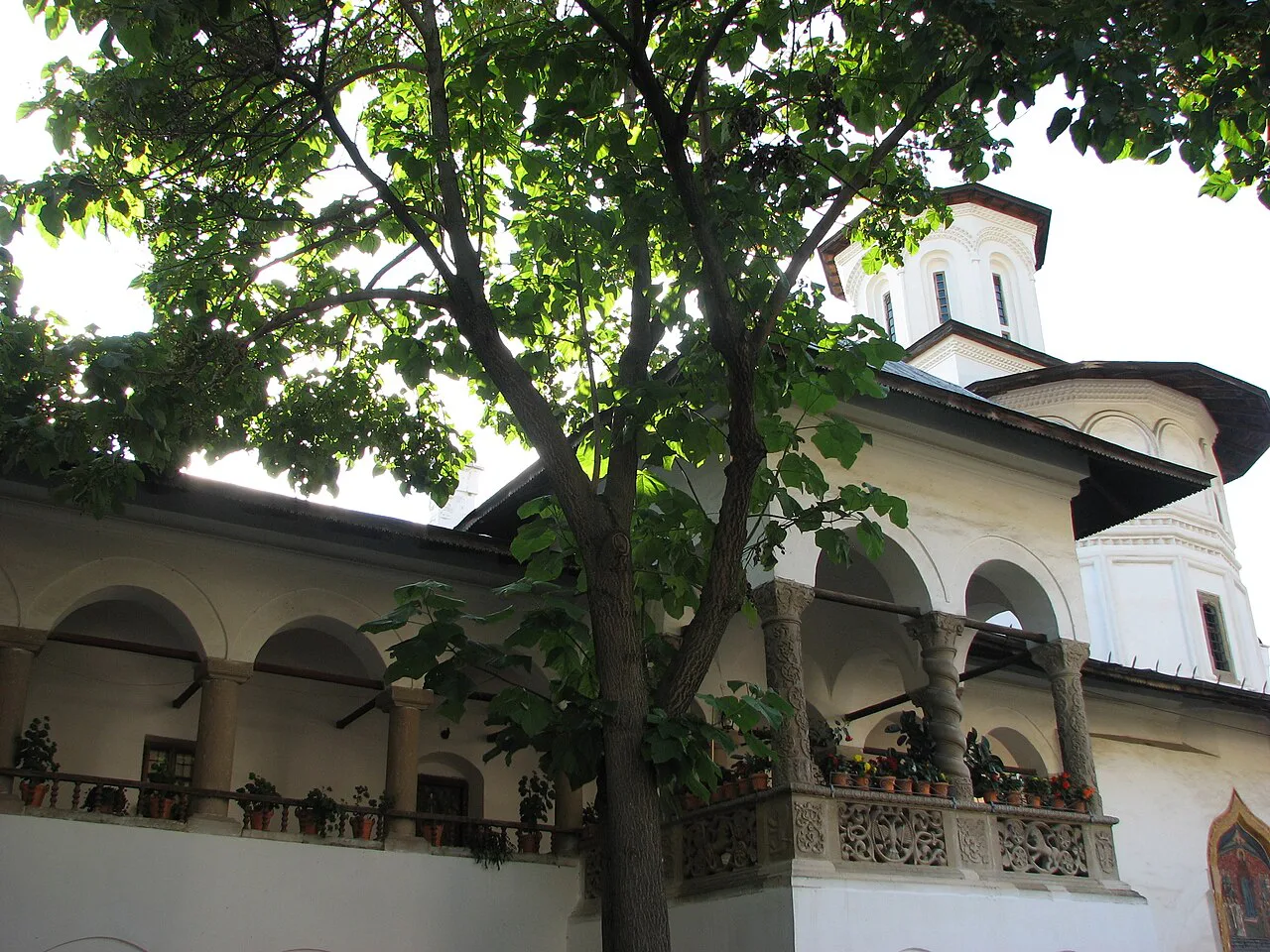
The Brâncovenesc style, named for the Wallachian prince Constantin Brâncoveanu, is a late seventeenth and early eighteenth century manner seen in churches with a carved stone porch of twisted columns and floral capitals, decorative arches and a rich, low-relief treatment of the facade. It is a sculptural style, more about carved stone than painted wall, and the porch is the part to study. A good place to see it in a monastic setting is Horezu Monastery, where the same decorative vocabulary is applied at the scale of a whole complex.
Moldavian churches, by contrast, are often tall, with a pronounced drum and dome and, in the painted examples, a completely frescoed exterior. Where Brâncovenesc churches are broad and porticoed, Moldavian ones are vertical and enclosed, and a fortified enclosure wall with a gate tower is common. Elsewhere in the south-west, Cozia monastery on the Olt shows a different, earlier treatment again, while the small ramet monastery in the Valea Râmețului shows the village scale.
Dress and behaviour: shoulders, headscarves, and how much covering is expected
Cover your shoulders and knees, and keep clothing quiet rather than beachwear, in any Romanian Orthodox church you enter. A headscarf for women is customary in many parishes and is often offered in a basket by the door, but practice varies between town and village churches, so take your cue from the women around you and accept a scarf if one is handed to you. Men remove hats; everyone stands for prayer.
Behaviour matters more than clothing. Do not turn your back on the altar to pose for a picture, do not step over the low barrier in front of the iconostasis, and keep phones silent. If a service is in progress, stand near the back, do not talk, and leave quietly if you need to. Kissing icons is a practice for the faithful, not a sightseeing step.
Photo rules inside churches: where photography is stopped and why
Photography is usually tolerated in the nave and narthex of a parish church and stopped at the iconostasis and the altar, out of respect for the sacrament rather than because of copyright. In monasteries, a painted sign at the door often bans flash, tripods or all photography, and the rule can differ between the church and the museum rooms in the same compound. Look for the sign first and ask the person at the candle stand if you are unsure.
Where photography is allowed, avoid flash near painted surfaces and never photograph people at prayer or a priest serving the liturgy. If you want images of the exterior frescoes, go early or late for raking light on the walls, and keep out of the way of anyone entering for a service.
Visiting during a service: standing, candles, and when to stay back
Romanian Orthodox services involve a good deal of standing, and there are few pews; if you arrive mid-service, take a place near the back or in the narthex and stand as others do. Candles are bought at the candle stand and lit in the rack by the icons, usually with a small offering, and this is the one moment when a short queue at the entrance is normal. Do not walk about, take photographs or cross in front of people during the reading.
The calendar runs on the Orthodox Easter calculation, so feast days and the Easter period fall on different dates from western Easter and the church may be full at times you would not expect. If you want a quiet look at the paintings, plan around service times rather than during them, and if you want to hear the liturgy, arrive before it starts and stay at the back.
Tickets, opening days and guided-only sites
Village and town parish churches generally have no ticket and no staffed opening hours; they are open for services and, when someone is there, for visitors. Walled monasteries and the painted churches that draw coach parties often have an entrance fee, a car park and a set route, and some parts of a complex are guided-only. Check the monastery's own noticeboard or website before you travel rather than trusting an old listing.
In Britain and Ireland, Romanian Orthodox parishes are equally varied: the East England and London Deanery list gives a parish address, patron Saint, priest and contact email for each congregation, which is the reliable way to find a service. Some parishes meet in Anglican or other churches rather than in a building of their own, so the address on a map may not look like an Orthodox church from the street.
Practical trade-offs: crowds, steps and uneven floors
The trade-offs are predictable. Painted monasteries on the coach circuit are busiest in the middle of the day, so an early or late visit gives you the walls to yourself; parish churches in towns are quiet but may be locked. Floors in older churches are uneven stone or brick, thresholds are raised, and wooden churches have steep, narrow stairs to a gallery, so wear shoes you can walk in and take your time.
There is also a personal trade-off between looking and recording. A camera in hand slows you down at the iconostasis and invites a rebuke in a monastery; a notebook and ten unhurried minutes in the nave will teach you more about the painting programme. Leave time outside the building as well as inside it.
Which church to put first on your route
If you want one visit that shows the full Romanian Orthodox sequence of porch, narthex, nave and painted screen, choose a walled monastery with an exterior fresco programme and arrive early, when the light is on the walls and the coach parties have not yet come. If you want the architecture without the crowds, a Brâncovenesc church with a carved porch, of the kind you see at Horezu Monastery, repays a slow half hour more than a quick stop at a famous name.
Build the rest of the day around the building rather than the other way round: check the parish or monastery notice for opening and any entrance charge before setting out, then leave an hour for the walk round the outside and another for the interior. The same approach works for a village wooden church, where the key may be with a neighbour and the reward is a nave you will have entirely to yourself.
Explore more Romania guides
Frequently Asked Questions
Is Romania predominantly Orthodox or Catholic?
Romania is predominantly Orthodox, and the Romanian Orthodox Church is the country's main church. You will still find Catholic, Reformed, Lutheran and Greek Catholic churches in Transylvania and the Banat, which is why a walk through a town such as Timișoara or Cluj-Napoca passes several denominations within a few streets.
What is Orthodox Easter?
Orthodox Easter follows the Julian calendar calculation used by the Orthodox churches, so it usually falls on a different date from western Easter, though the two coincide in some years. The date moves each year, and the services around it are the busiest of the Orthodox year, so if you want a quiet look at a church interior, avoid that week.
Should I cover my head in a Romanian Orthodox church?
A headscarf for women is customary in many parishes and scarves are often left in a basket at the door for visitors. Practice varies, so watch what the women around you do and accept a scarf if it is offered. Men remove hats, and everyone should cover shoulders and knees.
Can I take photographs inside a Romanian Orthodox church?
Usually in the nave and narthex, but not at the iconostasis or altar, and monasteries often restrict flash, tripods or photography altogether. Read the sign at the door and ask the person at the candle stand if it is unclear. Never photograph people at prayer or a priest serving the liturgy.
Sources
Useful notes for your next trip
Optional updates to our guides.
You might also like
Continue reading
More guides you'll find useful