Baia Mare Guide: Town Centre Sights and Maramureș Gateway
A short, honest guide to Baia Mare: the old centre, Saint Stephen Tower, the mineralogy museum and the parks, plus how long to stay and how it fits Maramureș.
On this page
Baia Mare suits half a day to a full day: the centre is compact, with a tower, a clutch of small museums, a theatre and several parks within a couple of kilometres of one another. Plan it as a stop on the way into Maramureș rather than a destination that fills a long weekend.
The old centre, listed as Centrul vechi, sits within about a kilometre of most of the central sights, so a single walking loop covers nearly everything on foot. Museums and parks make up the rest of the town's appeal, and the wider Maramureș countryside carries the trip as a whole.
What Baia Mare is and where it sits in Maramureș
Baia Mare is in Maramureș, in northern Romania, and the town is the practical urban anchor for the villages and wooden churches around it. The centre is compact enough to keep in your head, so treat the town itself as a half-day stop before you head out to the villages.
Coming from the south, the usual route into the region runs through Cluj-Napoca, and Baia Mare works as a first or last stop rather than a base for the whole county. Further east, Sighetu Marmației is the other natural base, and the trade-off between the two is distance to the villages you actually want to see.
Treat Baia Mare as a town stop with a tower, museums and parks, then move on to the villages for the part of the trip that justifies the journey. That framing keeps expectations honest and avoids padding a visit with sights that do not earn the time.
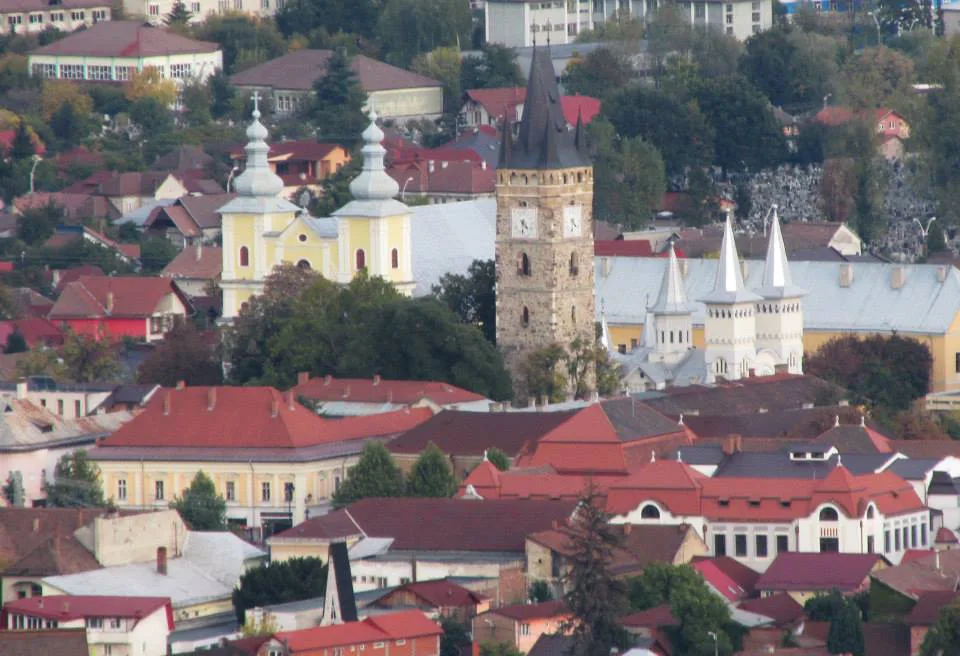
How the town is laid out: Centrul vechi, the parks and the tower
The layout is simple enough to hold in your head. Centrul vechi sits about 800 metres from the reference point used by the attraction listing, Saint Stephen Tower a little under 900 metres, and the County Museum of Ethnography and Folk Art only about 500 metres out. Mara Park is roughly 1.8 kilometres out, Parcul Central about 2.2 kilometres, and the Museum of Mineralogy about 2.1 kilometres.
Group your day by distance instead of by category: do the old centre, the tower, the County Museum of Ethnography and Folk Art and the theatre first, then decide whether the parks or the mineralogy museum are worth the extra walk. The Municipal Theatre sits about a kilometre from that reference point, so it slots naturally into the middle of the loop.
Saint Stephen Tower
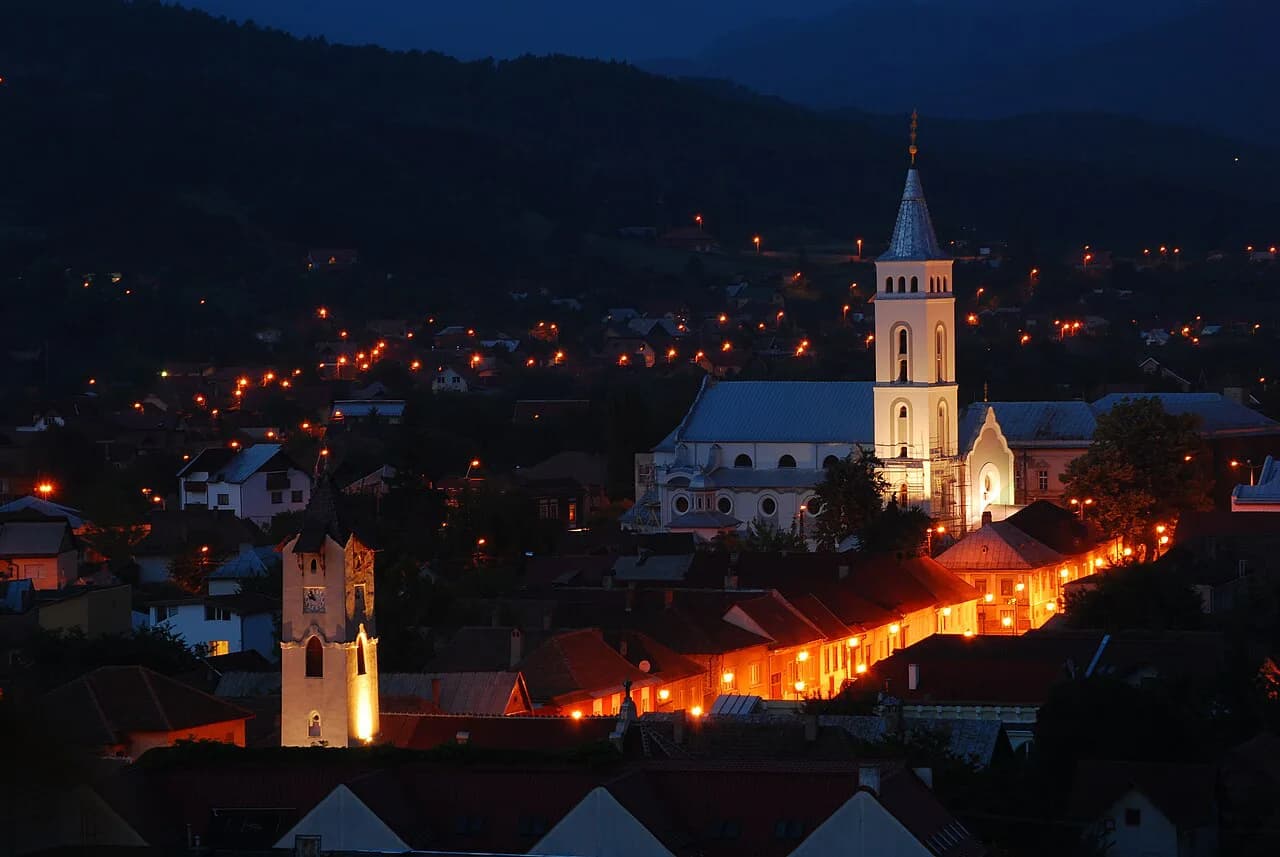
Saint Stephen Tower is the town's landmark and the one sight to keep whatever else you drop. It sits about 900 metres from the listed reference point, which makes it an easy walk from Centrul vechi and a sensible first anchor for a walking route.
Check access and any entry charge locally before you build the day around climbing it; the tower appears on the attraction listing without a published opening schedule or ticket price. If it is shut, the walk to it still puts you in the right part of town for the museums nearby.
Museum of Mineralogy
The Museum of Mineralogy is the pick of the town's indoor stops. It sits about two kilometres from the centre point, so it is a deliberate walk or a short drive rather than something you pass by accident.
This is the sight to keep if it rains or if you only have an afternoon, and the one to sacrifice if you would rather reach the villages early. Confirm opening days and ticket prices at the museum itself before setting out, since none are given on the attraction listing.
County Museum of Ethnography and Folk Art
The County Museum of Ethnography and Folk Art sits roughly 500 metres from the centre point, the closest of the museums and the easiest to add to a short loop.
Pair it with a village day rather than treating it as a standalone attraction, and use it as a primer before you head into the Maramureș villages and their wooden churches.
Museum of Astronomical Sciences
The Museum of Astronomical Sciences sits about 1.8 kilometres from the centre point, so it combines naturally with the tower in one outing. It is a niche stop, and whether it earns its place depends on your interest in the subject rather than on its size.
Treat it as an optional extra after the tower and the mineralogy museum. No opening hours or prices are given on the listing, so ask at the door or check locally on the day rather than planning a tight slot around it.
Churches and religious sites in town
Beyond the tower, the town's religious sites are modest and quickly seen. A local places-of-worship directory lists a Monastery, a Faith Church and a Prayer House, all of them working religious buildings rather than visitor attractions.
Visit respectfully and briefly, and do not schedule them as fixed stops. The reason to be in this part of Romania is the wooden church architecture in the villages, and that is where your church time is better spent.
Butcher's Bastion, the theatre and other fragments
Butcher's Bastion, listed as a Baia Mare attraction, sits about 1.2 kilometres out and adds a short, low-key stop to the centre loop. It is a fragment rather than a full castle visit, so give it minutes, not an afternoon.
Fold it into the walk between the old centre and the museums. On a tight schedule it is the first sight after the parks to leave out, because there is nothing to justify a detour.

Parks and open spaces: Queen Maria Municipal Park, Mara Park, Parcul Central and Parc RFN
Baia Mare has a run of green space across the town, with Queen Maria Municipal Park, Mara Park, Parcul Central and Parc RFN all appearing on the attraction list. Queen Maria Municipal Park is the only one of them with a published closing time on that list, at 20:00; the others have no hours given.
Queen Maria Municipal Park is the nearest of the group, roughly 800 metres from the centre point, so it works as an evening stroll after the museums shut. Parcul Central is about two kilometres out, and on a short visit that is a walk you can skip without regret.
Mara Park sits just under two kilometres out and is best treated as a local green space rather than a sight. If you are travelling with a car, a short drive to one of the further parks is more sensible than stringing them all together on foot.
A short walking route through the centre
Start in the old centre, walk to Saint Stephen Tower, and take in the Museum of Astronomical Sciences while you are there. Then head back to the County Museum of Ethnography and Folk Art, about 500 metres from the centre point, and finish at Queen Maria Municipal Park in the early evening.
Allow the museums real time and treat the bastion, the theatre facade and the parks as things you pass. If you have a car and only half a day, drive straight to the Museum of Mineralogy after the tower rather than walking the two kilometres out and back.
How long Baia Mare needs
Half a day covers the old centre, Saint Stephen Tower, the County Museum of Ethnography and Folk Art and a park. A full day adds the Museum of Mineralogy and the Museum of Astronomical Sciences, with time to sit down between them rather than rushing the loop.
Do not stretch it beyond a day. The town is a stop on the way to Maramureș, and the villages, monasteries and wooden churches are where a trip of this kind earns its length.
Getting there and using it as a base for Maramureș
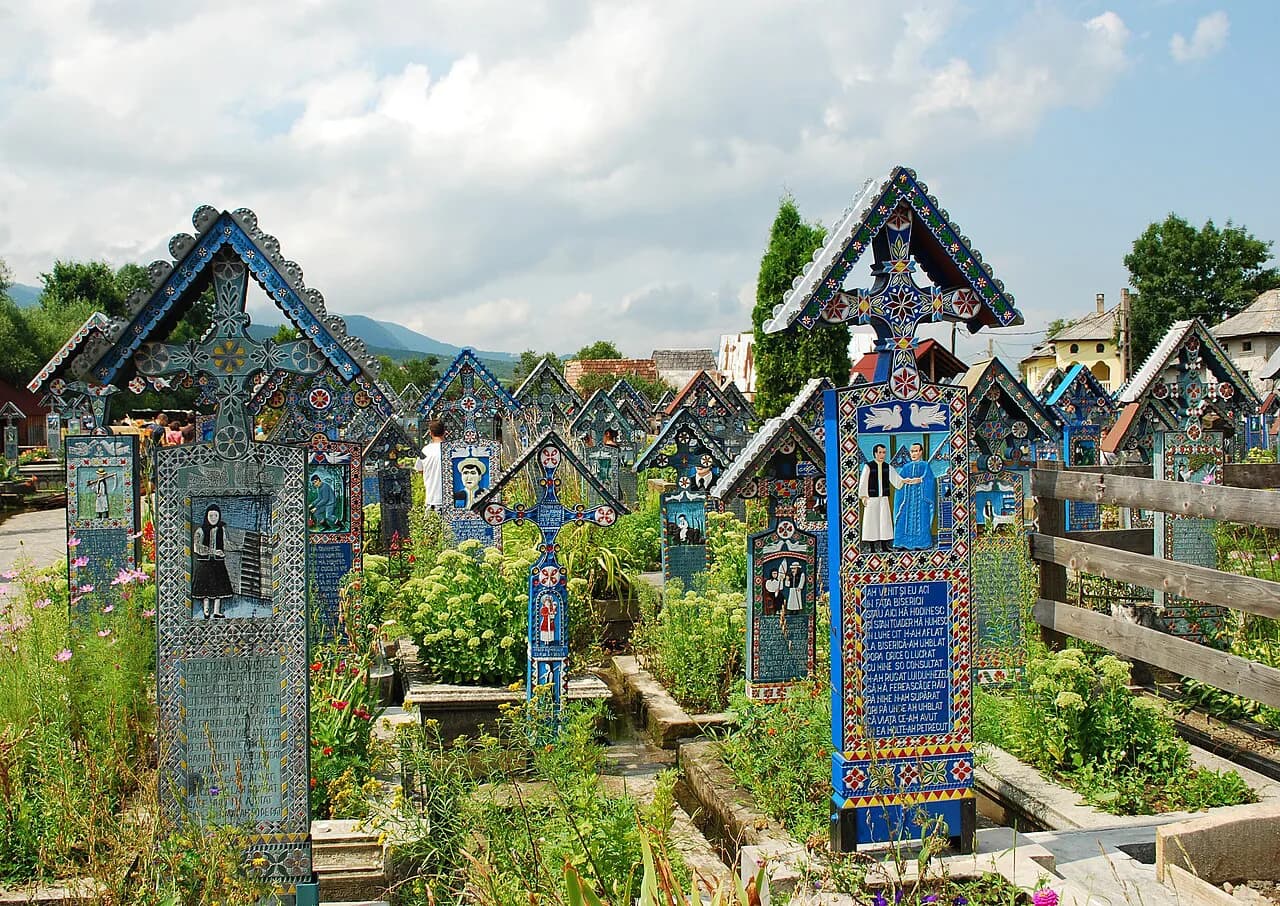
Baia Mare works as a gateway for the western side of Maramureș, with villages such as Breb and Budești within reach by road. As a base it competes with Sighetu Marmației, which sits closer to the northern villages and the Merry Cemetery (Cimitirul Vesel) at Săpânța.
The practical trade-off is simple: use Baia Mare for the town and the nearer villages, and shift base east if Săpânța and the Iza valley are the priority. Check current train and bus connections to Baia Mare before booking, since timetables change and are not given here.
A car makes the villages far easier; without one, pick a single village served by transport rather than trying to string several together in a day. Local buses and shared transport can reward flexible plans, so keep the shape of the day loose rather than tightly scheduled.
Where Baia Mare fits in a wider Romania trip
On a Romania itinerary, Baia Mare belongs between Cluj-Napoca and the Maramureș villages rather than as a city break in its own right. Two nights gives you an afternoon in town, a full day in the villages and an easy departure.
If you are heading north, Sighetu Marmației and the Ieud and Botiza area follow naturally, with the Mocănița steam train as an optional half-day. Do not try to fit Baia Mare and the far north of the county into one day; the driving eats the daylight.
Is Baia Mare worth a stop?
Yes, as a half-day town stop with a tower, three small museums and parks, provided the rest of the trip is the villages. If your only reason to be in the region is the wooden churches and Săpânța, base yourself at Sighetu Marmației and give Baia Mare a morning on the way through.
Confirm museum opening days and tower access locally before you travel, because those are the details that decide whether the day works. Then build the day around Saint Stephen Tower and the Museum of Mineralogy, and let the parks fill the gaps.
Explore more Maramures guides
Sources
Useful notes for your next trip
Optional updates to our guides.
You might also like
Continue reading
More guides you'll find useful