Târgu Mureș: City Guide to the Palace of Culture and Rose Square
Plan a short break in Târgu Mureș: the Palace of Culture, Rose Square, the Teleki Library and the Art Nouveau centre, with how long you need and how to get in.
On this page
Târgu Mureș is worth a focused half-day to full day if you like Secession architecture and interior sights more than big-ticket castles. Its central cluster — Rose Square, the Palace of Culture, the Teleki Library and the Orthodox Cathedral — sits around Piața Trandafirilor and within a short walk, so you can cover the headline sights on foot without doubling back.
This guide covers what each building offers, a walking order from Piața Trandafirilor, how long to allow, and how the city connects to Brașov, Sighișoara and Bucharest. The trade-off is straightforward: the best sights are largely indoors, so a wet day gives you better value here than a sunny one.
What Târgu Mureș is and why it earns a stop on a Transylvania trip
Târgu Mureș is a bilingual city where Romanian and Hungarian are both spoken on the streets, and that mix shapes its cultural life. Expedia calls it the 'city of roses' because of its many flower-filled gardens, and most of the city's attractions sit around its central square, Piața Trandafirilor. Visitors come for the Secession architecture and the library rather than for a castle on a hill.
On a wider route through Transylvania the city makes sense as a cultural stop between the Saxon towns and the Székely Land, rather than as a base for castle-hunting. If you are mapping a longer loop through the region, use this Transylvania map to see how Târgu Mureș sits relative to the main towns and passes.
Where the centre sits: Piața Trandafirilor (Rose Square) as the anchor
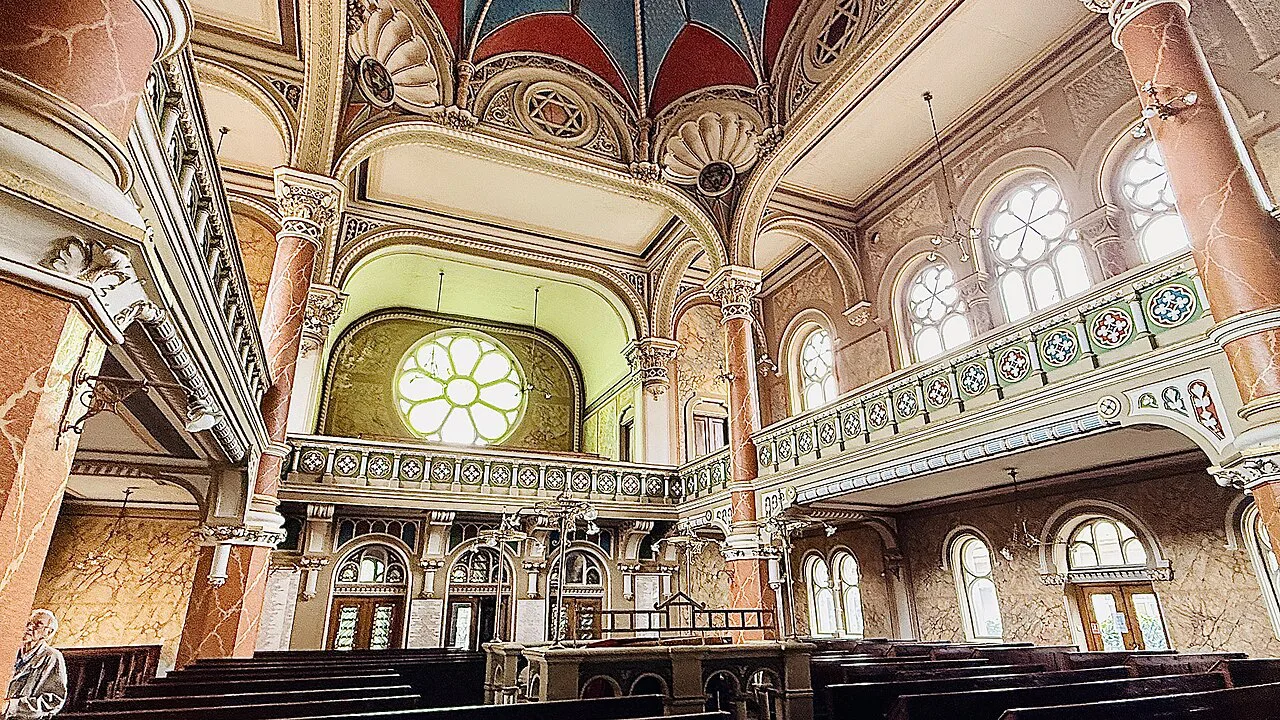
Rose Square, Piața Trandafirilor, is the anchor for any visit: most of the city's attractions cluster around it, including the Cultural Palace and the Art Museum. Start here, orient yourself with the square, then work outwards on foot. The streets around it carry the Art Nouveau and Secession facades that give the centre its character.
Because the sights are so close, there is no need for a bus or taxi between them; you can cover the core on foot in a couple of hours at an unhurried pace. The main decision is not how to get around but how long to linger inside each building, especially the library and the museum.
Palace of Culture: the Secession building, the Art Museum inside and the Prefecture Building spire next door
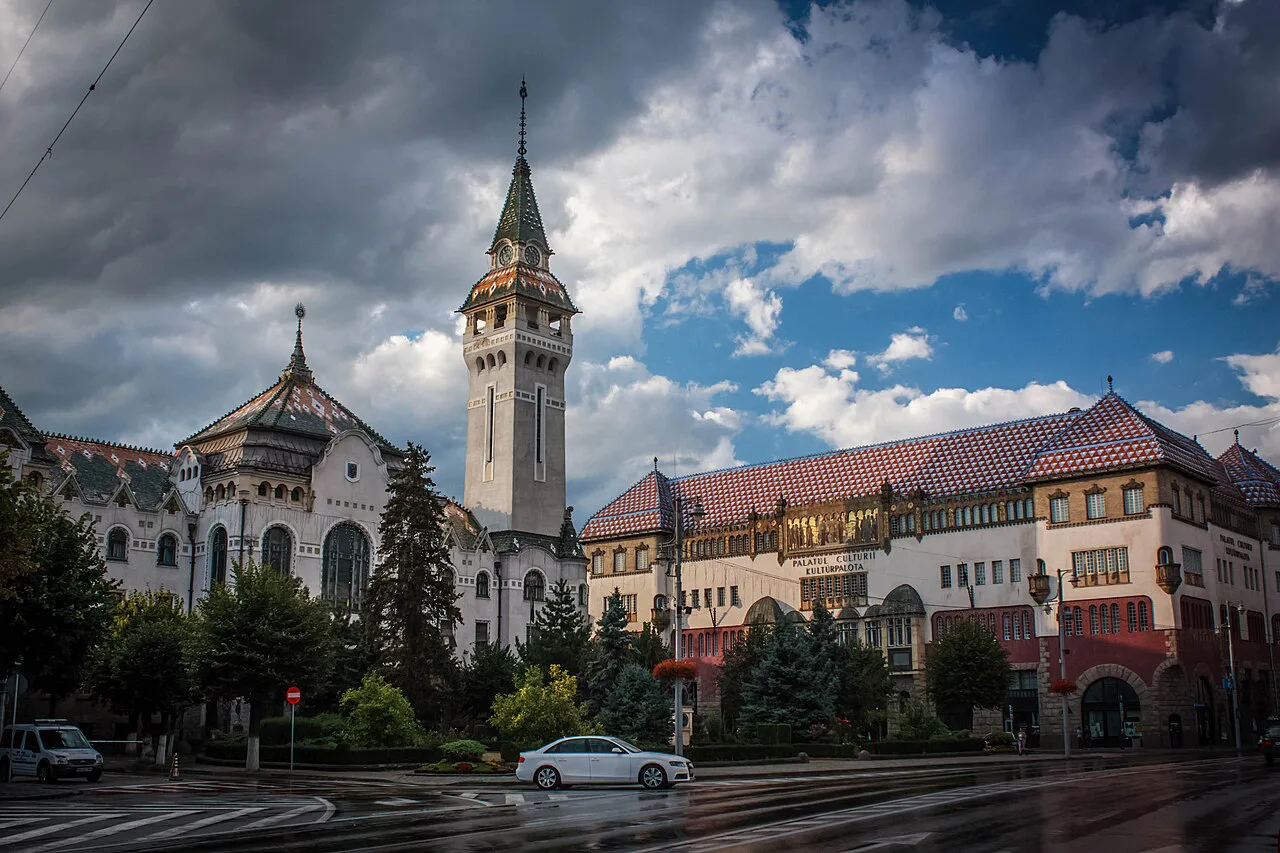
The Cultural Palace, or Palace of Culture, is the city's showpiece: Expedia describes it as a blend of Viennese Secessionism and local folk art. Inside, the Art Museum holds Hungarian Revival works from the late 1800s and 1900s, so allow time to look at the paintings as well as the building. The neighbouring Prefecture Building has a 58-metre spire that once served as a watchtower over the town.
The building is a short walk from Rose Square, so you can see the palace, the museum and the spire in one pass. Plan to look up at the facade details — the folk-art motifs and the Secession lines — as much as at the exhibits. Opening hours and ticket prices are not listed here; check the museum's own information before you go.
Teleki Library: what is on the shelves and why it is worth the detour
The Teleki Library was founded in the late 18th century by Count Samuel Teleki, chancellor of Transylvania, and holds more than 250,000 rare books. Its shelves include first translations of the Bible into Romanian and Hungarian, plus works by French Enlightenment philosophers. For anyone interested in Transylvanian history and science, it is the quiet highlight of the city.
The library is a few blocks from the Cultural Palace, so it fits naturally after the palace visit. It rewards slow looking rather than a quick photo stop, so budget at least twenty minutes if you want to see the reading room and the collections. Opening days at the Teleki Library can vary, so it is worth checking ahead on the day you plan to go.
Ethnographic Museum in the Toldalagi Palace: the Baroque house and the costume and craft displays
The Ethnographic Museum is housed in the Baroque Toldalagi Palace, which dates back to 1762. Inside are displays of traditional costumes, crafts and everyday items, many labelled with English-language descriptions, so you can follow the exhibits without a guide. Plan on around an hour for the displays.
The museum sits a few blocks northeast of the Cultural Palace, making it a natural next stop after the palace. If you are travelling on to the Székely Land, the costumes and crafts here give useful context for the region you will pass through next, which is covered on our Székely Land page.
The Orthodox Cathedral and the mural that divides opinion
The neo-Byzantine Orthodox Cathedral reflects some of the tensions that have existed between the city's Romanian and Hungarian populations. Inside, look for a controversial mural depicting Jesus as a Romanian peasant being whipped by nobles dressed in traditional Hungarian clothing. The cathedral is an active place of worship, so visit respectfully and keep the mural in context rather than treating it as a sight to tick off.
Walking the Art Nouveau streets: what to look up for and how long the loop takes
The centre is compact enough to walk in a loop: start at Piața Trandafirilor, see the Cultural Palace and Prefecture Building, then the Teleki Library, the Ethnographic Museum and the cathedral. Look up at the facades for the Viennese Secession and folk-art details that mark the palace, rather than only at street level. Allow around two to three hours for the walk itself, plus interior time.
Because the buildings are close together, you do not need to plan transport between stops. If you are building a longer town-and-castle trip, this route pairs naturally with other towns on our best towns in Transylvania list, but Târgu Mureș itself is best done on foot.
How long Târgu Mureș needs: half a day versus a full day
Half a day covers Rose Square, the Cultural Palace exterior, the Teleki Library and the cathedral at a brisk pace. A full day lets you add the Art Museum inside the palace and the Ethnographic Museum without rushing, and leaves time for a slower look at the Art Nouveau streets. The weather should decide your priority: the standout sights are mostly interiors, so a rainy day gives better value here than a sunny one.
The city is also a practical stop on a longer Transylvania itinerary, and you can combine it with Sighișoara or Sovata if you have a car or use buses. Use our Transylvania itinerary page to see how a half-day here slots into a wider loop without turning the trip into a blur.
Getting there and onward: airport shuttle, and buses to Brașov, Sighișoara and Bucharest
Târgu Mureș Airport is 14 kilometres southwest of the city centre, with a shuttle bus into town. The city is also connected by bus to Brașov, Sighișoara and Bucharest, which makes it a workable stop on a bus route. Fares and timetables change, so check current details before travelling.
Where Târgu Mureș fits a Romania route: pairing it with Sighișoara and Sovata
Târgu Mureș sits between the Saxon towns and the Székely Land, so it pairs well with Sighișoara to the south and Sovata to the east. Buses connect it to Brașov and Sighișoara, making a town-to-town route feasible without a car for those two links. If you want to explore the surrounding region, use our Transylvania guide to see where the city fits.
Common mistakes: treating it as a Budapest-to-Bucharest blur, and skipping the library
The most common mistake is to pass through Târgu Mureș on the way between Budapest and Bucharest without stopping, when the compact centre rewards a few hours. The second is to skip the Teleki Library because it looks like a minor stop; its 250,000 rare books and Enlightenment works make it the most distinctive interior in the city. Plan your walking order around Rose Square so you do not double back, and check opening times for the museums and library before you arrive.
Is Târgu Mureș worth the stop?
Târgu Mureș earns a stop if you want Secession architecture, a historic library and a bilingual city centre in a compact area. It is less compelling if you are chasing castles and mountain scenery, which are better served elsewhere in Transylvania. Half a day works; a full day lets you see the interiors properly.
To decide how it fits your route, compare it with the other towns on our Transylvania holidays page and book your transport once you know your dates.
Explore more Transylvania guides
Frequently Asked Questions
Is Târgu Mureș worth visiting?
Yes, for a focused half-day to full day if you like Secession architecture, historic libraries and a lively bilingual square. The main sights — Rose Square, the Palace of Culture, the Teleki Library and the Orthodox Cathedral — are close together and easy to walk. It is less of a priority if you are mainly after castles and mountain scenery.
What is Târgu Mureș nicknamed?
It is nicknamed the 'city of roses', a name the city guide links to its many flower-filled gardens. You will see the name reflected in Piața Trandafirilor.
Do you need a car in Târgu Mureș?
No, not for the city centre. The main sights are within walking distance of Rose Square, and the airport is 14 kilometres southwest with a shuttle bus into town. A car is useful only if you plan to pair the city with nearby towns such as Sovata or Sighișoara.
Sources
Useful notes for your next trip
Optional updates to our guides.
You might also like
Continue reading
More guides you'll find useful