Fortified Churches of Transylvania: Which to Visit and How
How Transylvania's Saxon fortified churches were built and defended, which villages to visit, and how to reach them on a short trip from Brașov or Sibiu.
On this page
Plan on two or three fortified churches in a day by car, or one if you rely on trains and buses. Around 160 of these defended village churches still stand in southern Transylvania, and they are spread across the rolling farmland and river valleys between Brașov, Sibiu and Sighișoara rather than clustered in one place. This guide explains what the defences were for, how to read them when you arrive, which villages to put first and how the journey between them works.
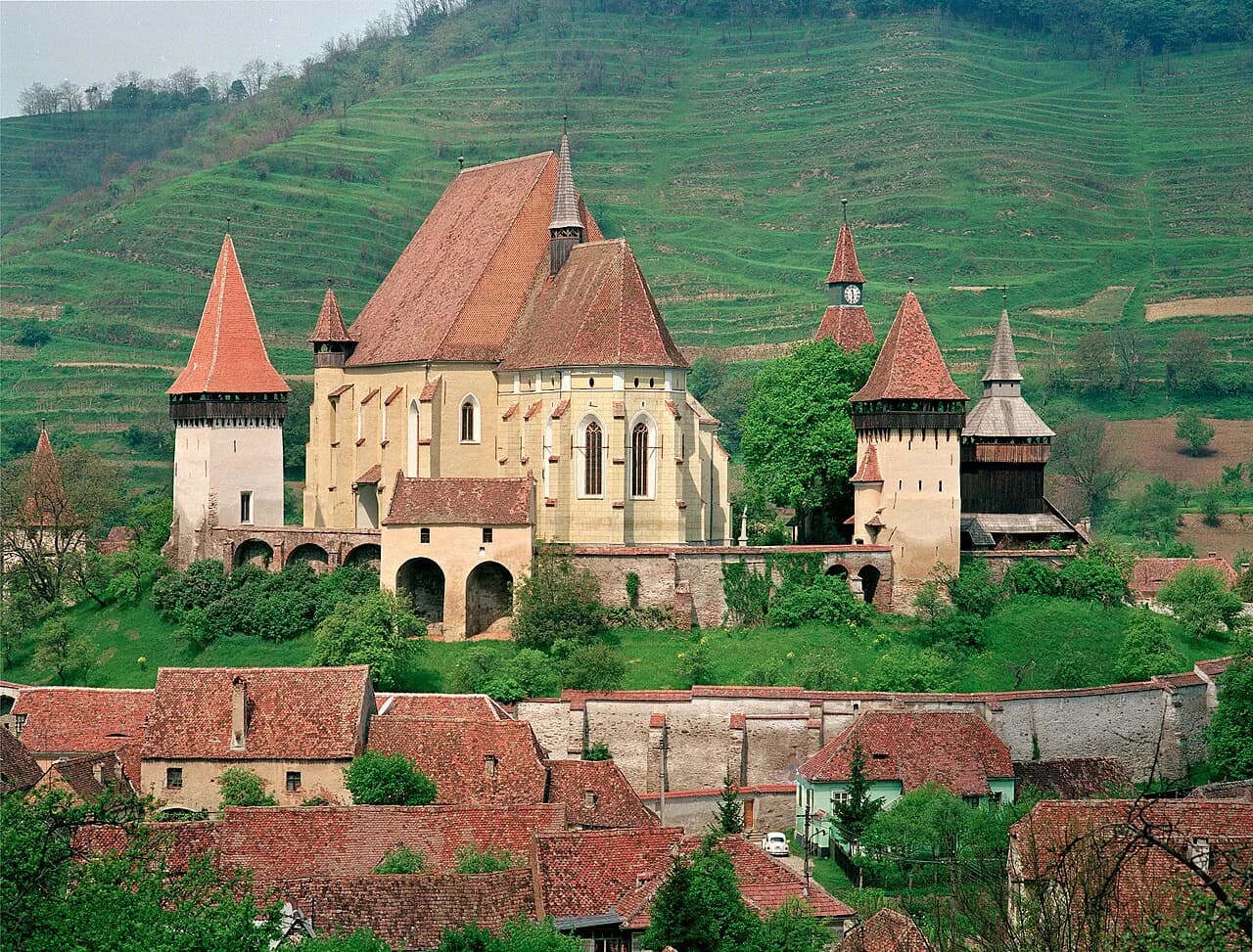
Treat each church as a small walled compound rather than a single building. The typical layout pairs a fortified enclosure with a church that may or may not have been strengthened for defence, so the walls, gate tower and storehouses often matter as much as the nave. That is the key to enjoying a visit: walk the perimeter first, then go inside.
What a fortified church actually is
A fortified church is a village church inside a defended enclosure, and the two parts need to be read together. The enclosure carries the ring wall, gate tower and towers; the church may be reinforced with a defence storey of its own, or may not have been strengthened for defence at all.
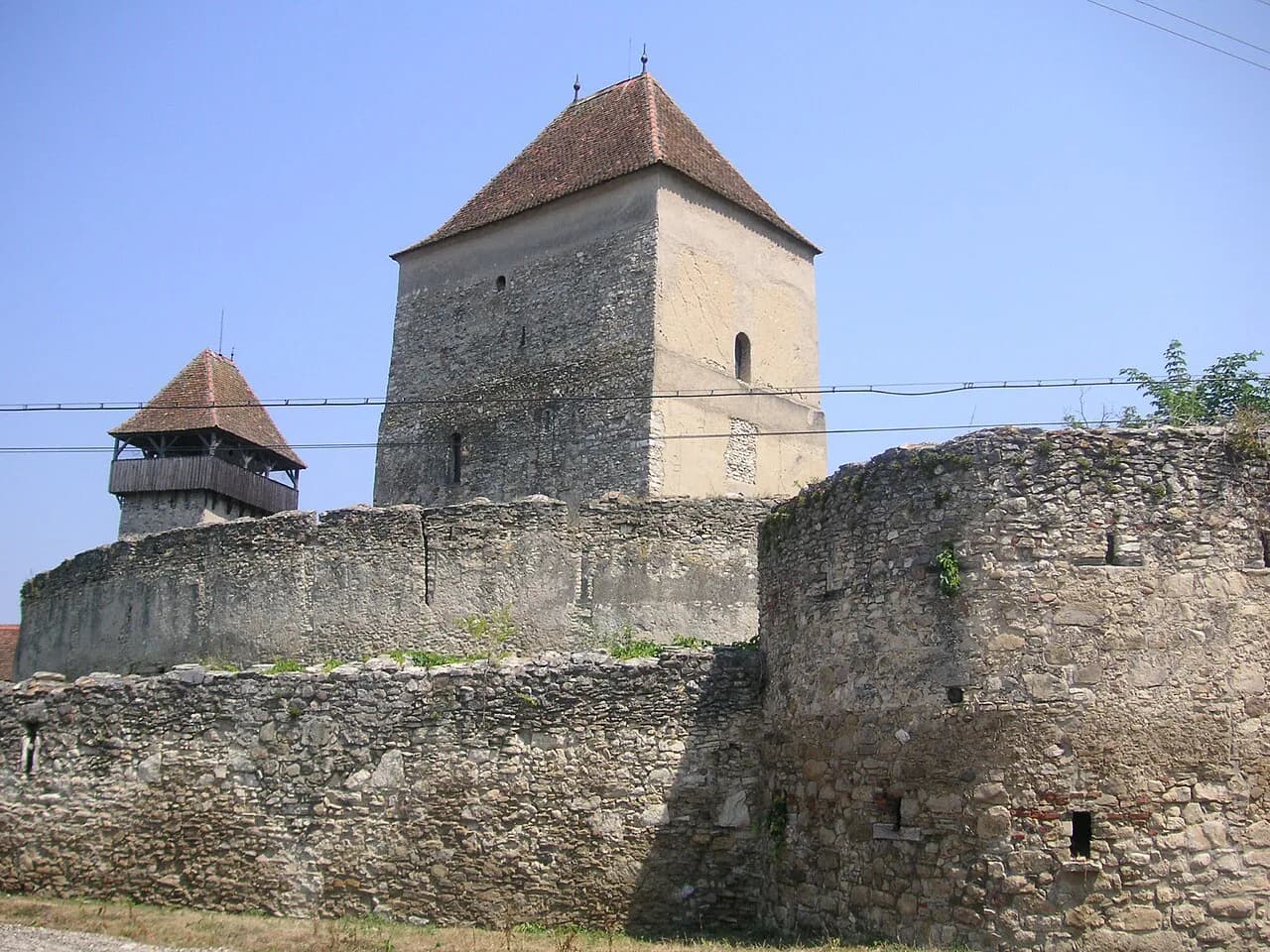
Expect less decoration and more engineering than in a town church. The interesting details are practical: the thickness of the wall at the base, the arrow slits, the beam holes for galleries, and the storehouses built against the inside of the ring. Bring binoculars if you like reading masonry from a distance.
Why the Transylvanian Saxons fortified their churches
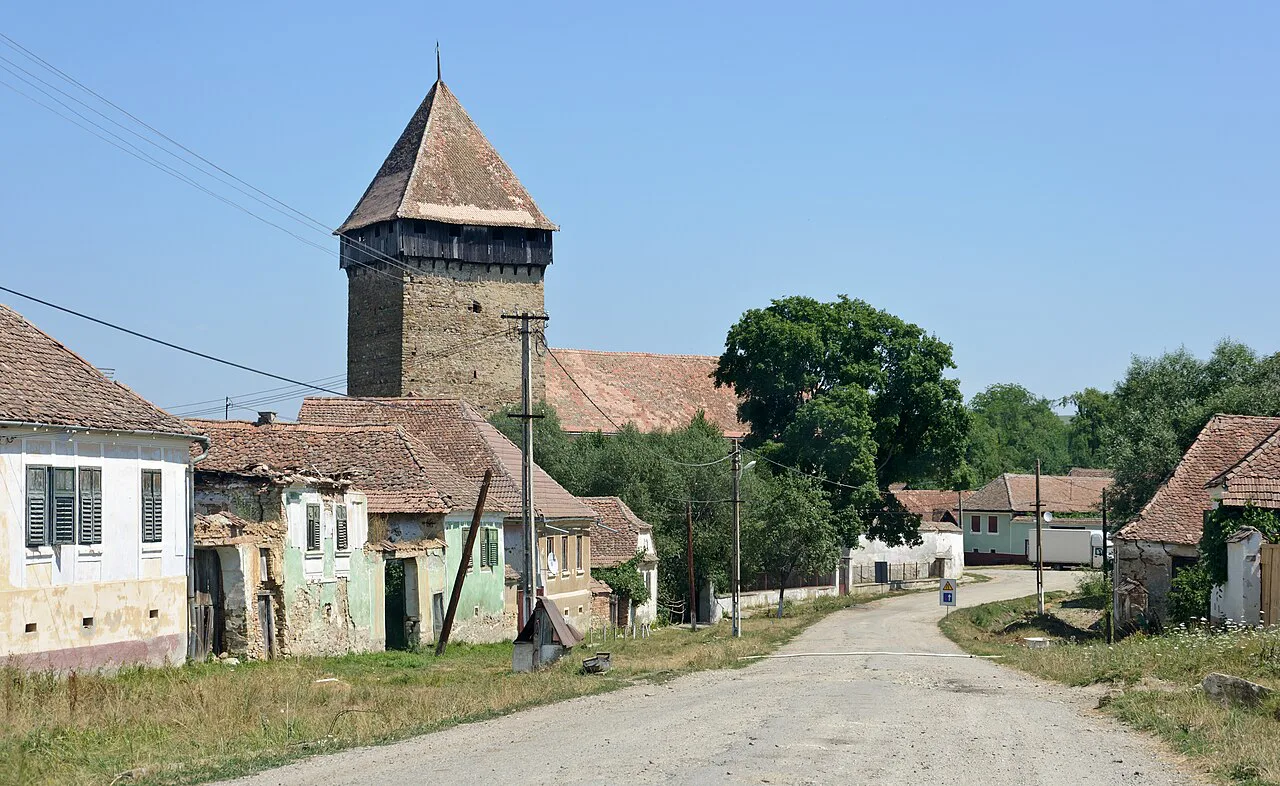
The Transylvanian Saxons began settling the region at the end of the 12th century, and fortifications followed the settlers. The Mongol invasion of 1241–1242 made defence a priority, and early refuges were castles on high ground; later, the village churches themselves were wrapped in ditches, ramparts and palisade fences.
The Ottoman raids that began in the early 15th century changed the building programme. Timber palisades gave way to ring walls with defensive towers, and inside the compound villagers needed fruit houses and storerooms so that families could shelter through a siege. When you see rows of lockable cells behind a wall, that is what they were for.
Defence was not uniform across the region. In the Țara Bârsei, the church buildings themselves were usually not fortified, with protection concentrated in the enclosure, whereas in the Târnava area and the Hârtibaciu Valley the apse and sanctuary also received tower-like superstructures with battlement galleries. That difference is a useful way to tell where you are as you drive between villages.
How the defences changed over three centuries
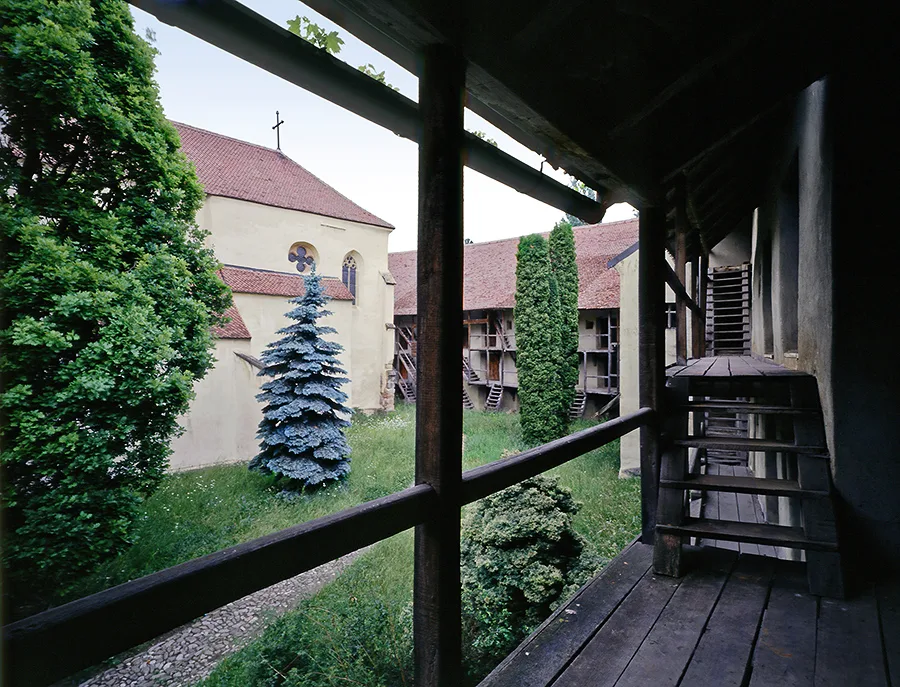
The defences evolved in stages, and the phases are visible in the fabric of a single church. A Romanesque basilica might begin with a timber fence, gain a raised west tower in the 13th century, then acquire an oval ring at the turn of the 14th century, followed by a brick rectangular wall with a gate tower and later still a complex system of defence works. The Saxon church at Dealu Frumos (Schönberg) is set out in exactly those stages, which makes it a good primer for reading other sites.
Two changes are worth looking for at any village you visit. Weir floors were inserted between the nave and the roof trusses, first in half-timbering and later built solidly on buttresses as weir arches, letting defenders fight from above the congregation. Main portals were also walled up and replaced with side entrances, so a church with an oddly blank west front and a modest door round the side is showing its military history.
The fortifications stopped being needed as peace returned at the start of the 18th century. In the 19th century some defences were dismantled, and several churches lost their ring walls even where defence towers survived as emblems of the community; the stone was often reused for schools, parish houses and community buildings. A free-standing tower beside a village church is usually a remnant of that process, not a planning error.
Where the surviving churches stand
The surviving churches sit in the countryside of southern Transylvania, in the river valleys and plateaus around Sibiu, Brașov and Sighișoara. They belong to villages rather than towns, so a visit means a drive or a bus ride out from a city base. The landscape itself, with its multiethnic mix of Romanian, Hungarian, German and Roma communities, is part of what the churches document.
Biertan, Viscri and Prejmer are the best known of the villages with fortified churches, and they are the three most travellers put on a first itinerary. Biertan and Viscri sit west and north-west of Sighișoara in the Târnava and Hârtibaciu country, while Prejmer lies north-east of Brașov in the Țara Bârsei.
Which villages to put first
Start with Biertan if you have one day and a car. The village sits in the Târnava country west of Sighișoara, and the church compound is substantial enough to occupy a proper visit rather than a photo stop. Read the practical detail on transport and visiting in the Biertan guide before you set out, since the village is small and the day's shape depends on the drive.
Put Viscri second, and give it time to walk the village as well as the church. It is reached by minor roads and rewards a slower pace, with the church on its low rise above the houses; the Viscri guide covers the church and the village streets around it. Combining Biertan and Viscri in one day is realistic by car but leaves little slack.
Choose Prejmer on a Brașov day rather than dragging it into a Sighișoara loop. It lies close to the city and pairs naturally with the Hărman fortified church nearby, so you can see two contrasting compounds in half a day. The Prejmer guide sets out the church and how the visit works, and the Hărman Fortified Church page covers the neighbouring site.
Outside those three, the UNESCO-listed villages of Câlnic, Dârjiu, Saschiz and Valea Viilor take you deeper into the countryside and usually mean fewer people around you. Each repays a dedicated detour rather than a rushed third stop on a tight loop; the Câlnic and Valea Viilor guides cover two of them in detail.
What you see inside a fortified church
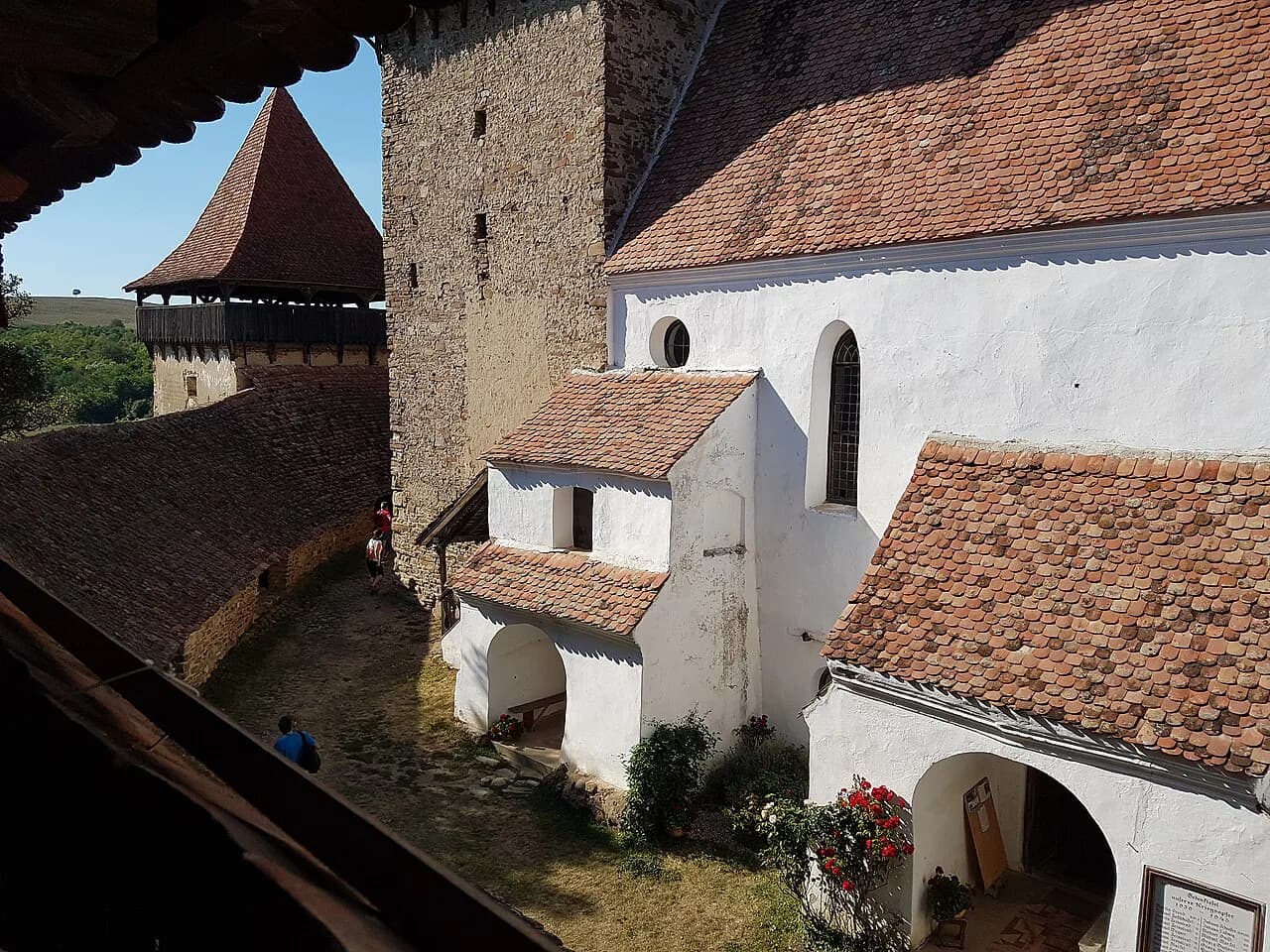
Inside the compound, look first at the ring of storage cells built against the wall. These fruit houses and storerooms were the practical reason villagers could hold out during a siege, and they give the place its barn-like rhythm.
The church interior itself carries the furnishings of a working parish rather than a museum. Pews, gallery, altar and painted ceiling are usually the things to look at, along with the defensive storey above your head if the building was strengthened. If you have already seen Prejmer and Hărman, you will start noticing how differently each village solved the same problems.
Visiting by car: linking two or three villages in a day
Two villages make a comfortable day and three is possible if you start early and keep the stops short. The trade-off is that the minor roads between the Saxon villages are slow, the villages are small, and parking is often on the verge or in a village square. Adding a third church usually means cutting the time you spend walking the compound, which is where the visit pays off.
Group your villages by geography rather than by fame. Biertan and Valea Viilor work as a pair out of Sighișoara and Sibiu respectively, while Viscri and Mălâncrav sit in the same Hârtibaciu country north-west of Sighișoara and make a natural loop with Sighișoara as the base. Mălâncrav is a smaller, quieter stop with its own church and village setting.
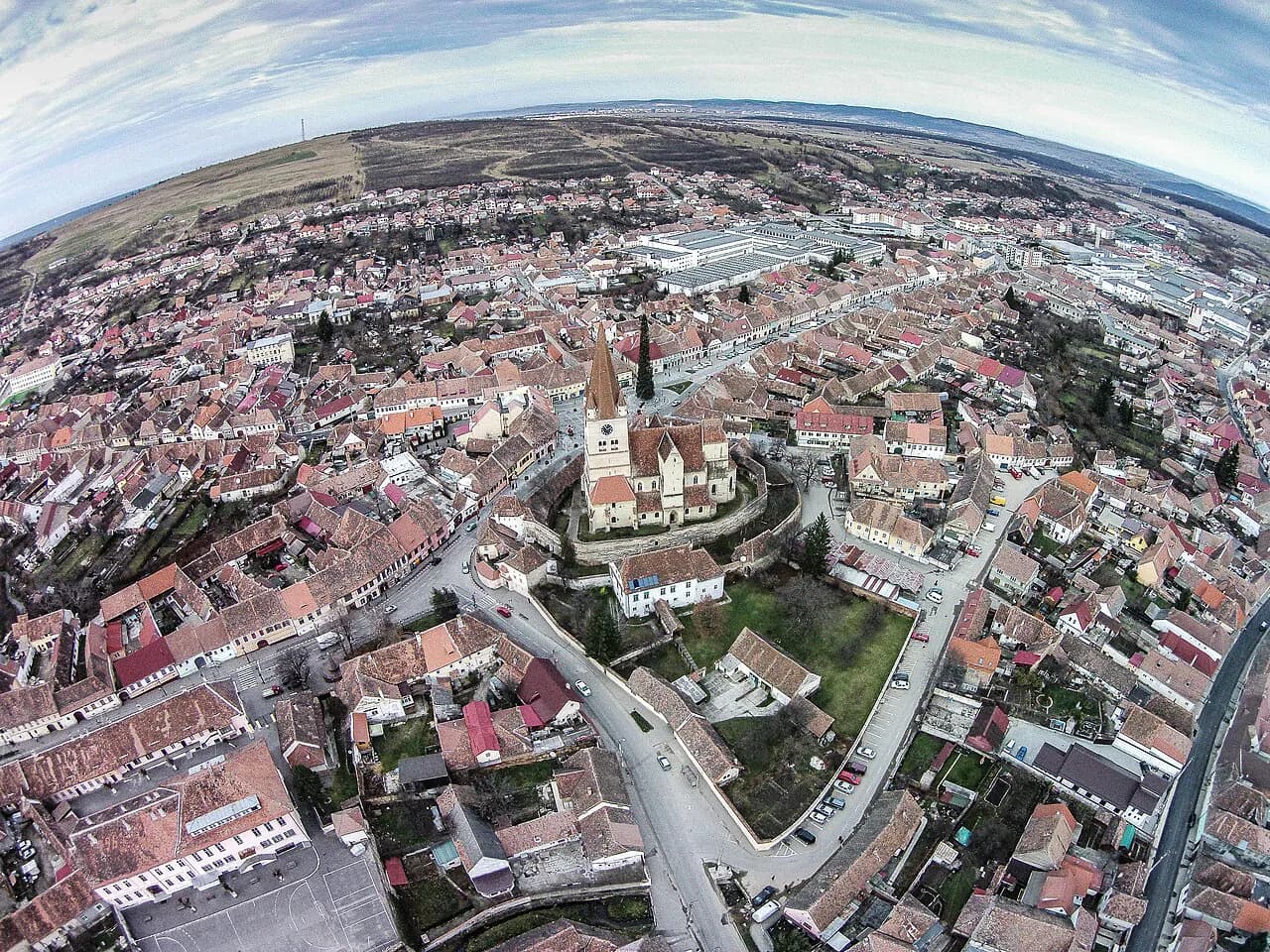
From Brașov, the logical pair is Prejmer and Hărman on the Țara Bârsei side, or Câlnic if you are heading towards Alba Iulia. Cisnădie, south of Sibiu towards the Cindrel mountains, gives you a different landscape again if you have already covered the Târnava villages. Allow a full day for any of these loops and drive the minor roads in daylight.
Visiting without a car: trains and buses
Public transport gets you to the towns near the villages, but not usually to the church gate. Brașov, Sibiu and Sighișoara are the practical rail and bus hubs, and the villages sit off the main lines, reached by local buses or a taxi from the nearest town. Check the Romanian national train operator and local bus operators directly for current timetables rather than relying on a printed guide.
The honest trade-off is that a car-free day gives you one village properly, not three. If you are relying on buses, choose Prejmer from Brașov or Biertan from Sighișoara and accept a slower day, or book a local taxi for the final leg and agree the return time in advance. Where a village is served only by a sparse local bus, the taxi fare back is the thing to confirm before you set off.
The key-holder system and opening arrangements
Opening arrangements vary from village to village, so build slack into the day and keep expectations flexible. The Kirchenburgen Foundation, based in Sibiu, runs the churches' roof and emergency programmes and its site is the place to check current contacts and church information.
If a church is closed when you arrive, keep a backup village in mind in case nobody is available. Opening arrangements and entry charges are set locally and can change, so allow for that when planning.
Two or three days based in Brașov, Sibiu or Sighișoara covers the main villages well. Sighișoara is the best base for Biertan and Viscri, Brașov for Prejmer and Hărman, and Sibiu for Valea Viilor and the Hârtibaciu villages. Compare the Transylvania city hubs before you book, since each gives a different set of day loops.
Which fortified church should you choose?
If you have one day and a car, take Biertan in the morning and Viscri in the afternoon from a Sighișoara base, and accept two churches rather than three. If you are based in Brașov, take Prejmer, which is close to the city; adding Hărman depends on having your own transport or a taxi.
If you are travelling without a car and without a taxi budget, choose a single village and give it the day: walk the ring wall, read the storehouses and the blocked west front, then sit in the village. The churches reward an hour of looking far more than an hour of driving between them.
Explore more Transylvania guides
- Biertan: A Guide to the Fortified Church and Saxon Village
- Cisnădie
- Câlnic Fortress
- Dârjiu Fortified Church
- Hărman Fortified Church
- Mălâncrav
- Prejmer Fortified Church
- Rupea Citadel
- Saschiz: the Fortified Church and Hilltop Citadel
- Transylvanian Saxons
- Valea Viilor
- Viscri: A Guide to the Fortified Church and Saxon Village
Sources
Useful notes for your next trip
Optional updates to our guides.
You might also like
Continue reading
More guides you'll find useful