Romanian Villages to Visit: Saxon, Székely and Shepherd Villages
A practical guide to Romanian villages worth visiting, from Saxon villages with fortified churches to Székely and shepherd villages, and how to reach them.
On this page
The Romanian villages most worth your time cluster in three distinct belts: the Saxon villages of southern Transylvania with their fortified churches, the Székely villages of eastern Transylvania with carved wooden gates, and the farming and shepherd villages in the Carpathian foothills around Sibiu. Choose by region and by how you will reach the village, not by a ranking, because a single stop rarely justifies the drive.
This guide names the villages that appear in reliable accounts, explains what you actually see in each type of settlement, and sets out the honest trade-offs of train, bus, car and guided tour. It also covers how to visit without turning a working community into a photo stop. Use the Transylvania map to see how the villages sit relative to Brașov and Sibiu before you commit to a route.
Which Romanian villages are worth visiting, and which region suits your trip
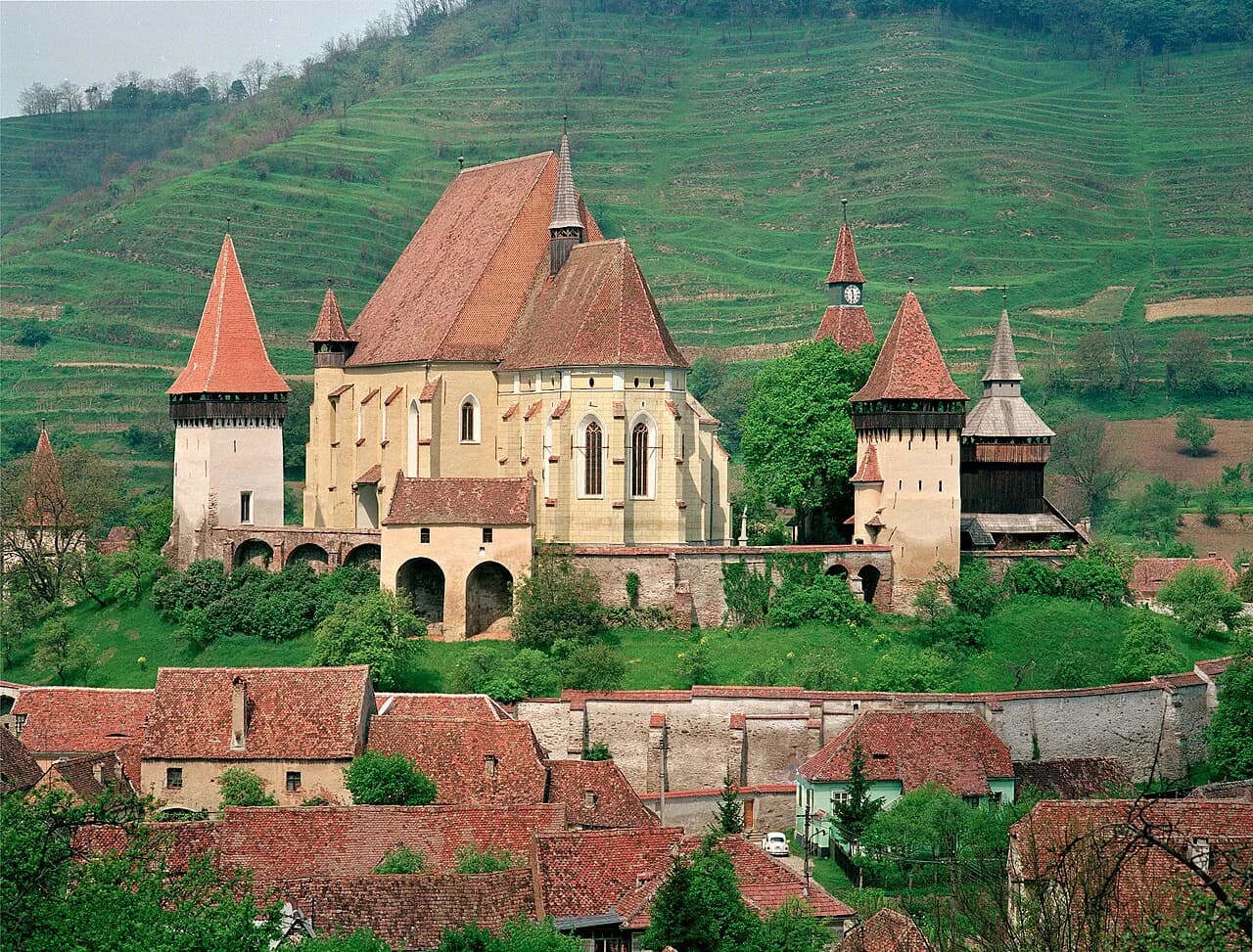
Southern Transylvania holds the densest cluster of villages that visitors come for: Viscri, Biertan, Prejmer and Hărman, each built around a fortified church. The villages sit within reach of Brașov, the original Saxon city in this part of Transylvania, where the Hungarian king Géza II invited Saxon traders to defend the region's borders in the twelfth century.
Eastern Transylvania, in Harghita county around Miercurea Ciuc and Odorheiu Secuiesc, gives you a different village type: Székely settlements with carved wooden gates rather than walled churches. Maramureș and Bucovina add wooden churches and painted monasteries, which make more sense folded into a wider church trip than as a standalone village stop.
If your base is Brașov, work the southern belt; if it is Sibiu, add the shepherd and farming villages of the Carpathian foothills. Travelling between the two cities and out to the villages takes real time, so pick one belt per trip rather than trying to collect villages across the whole region.
Saxon villages of southern Transylvania: Viscri, Biertan, Prejmer, Hărman and the fortified churches
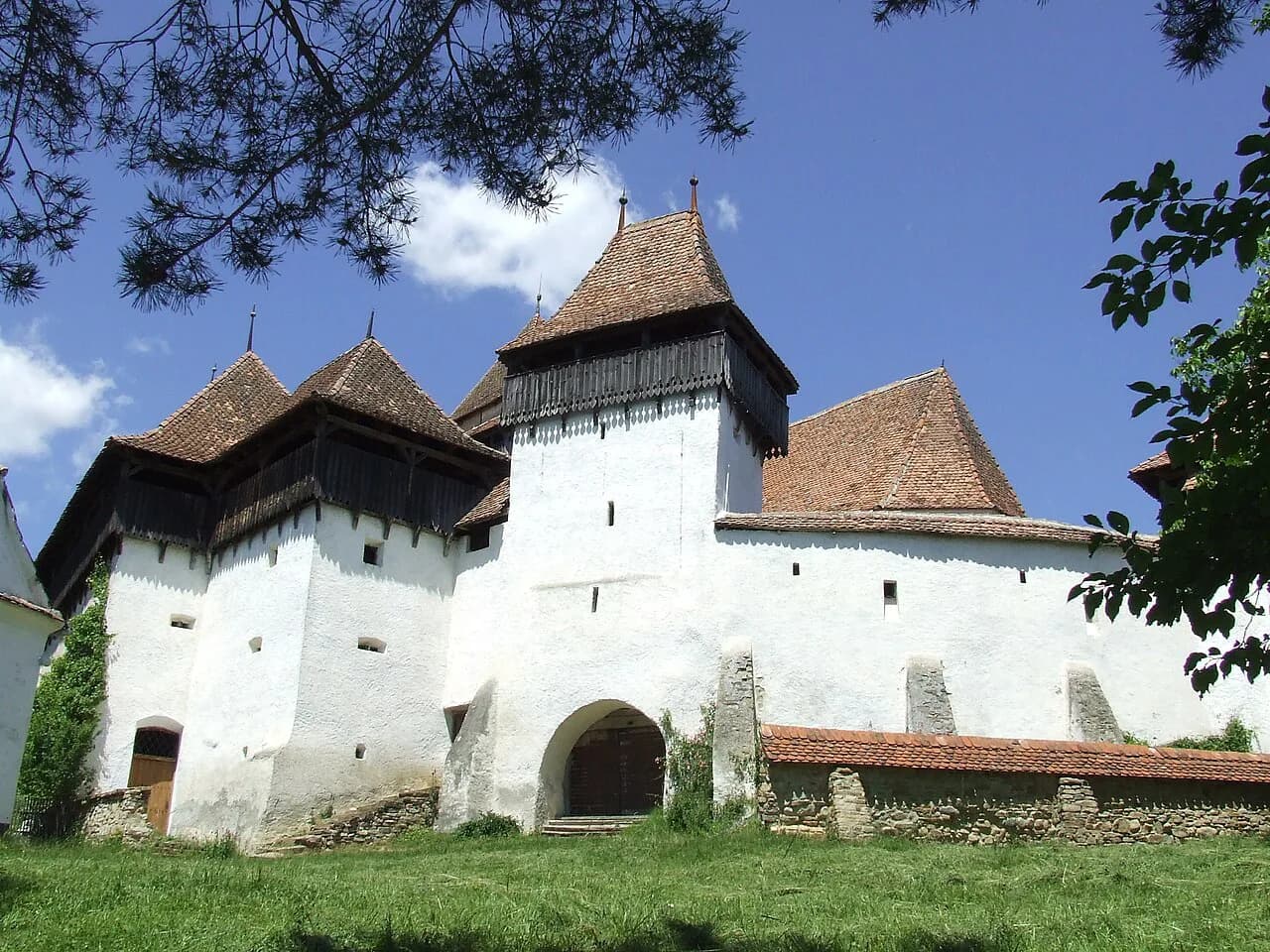
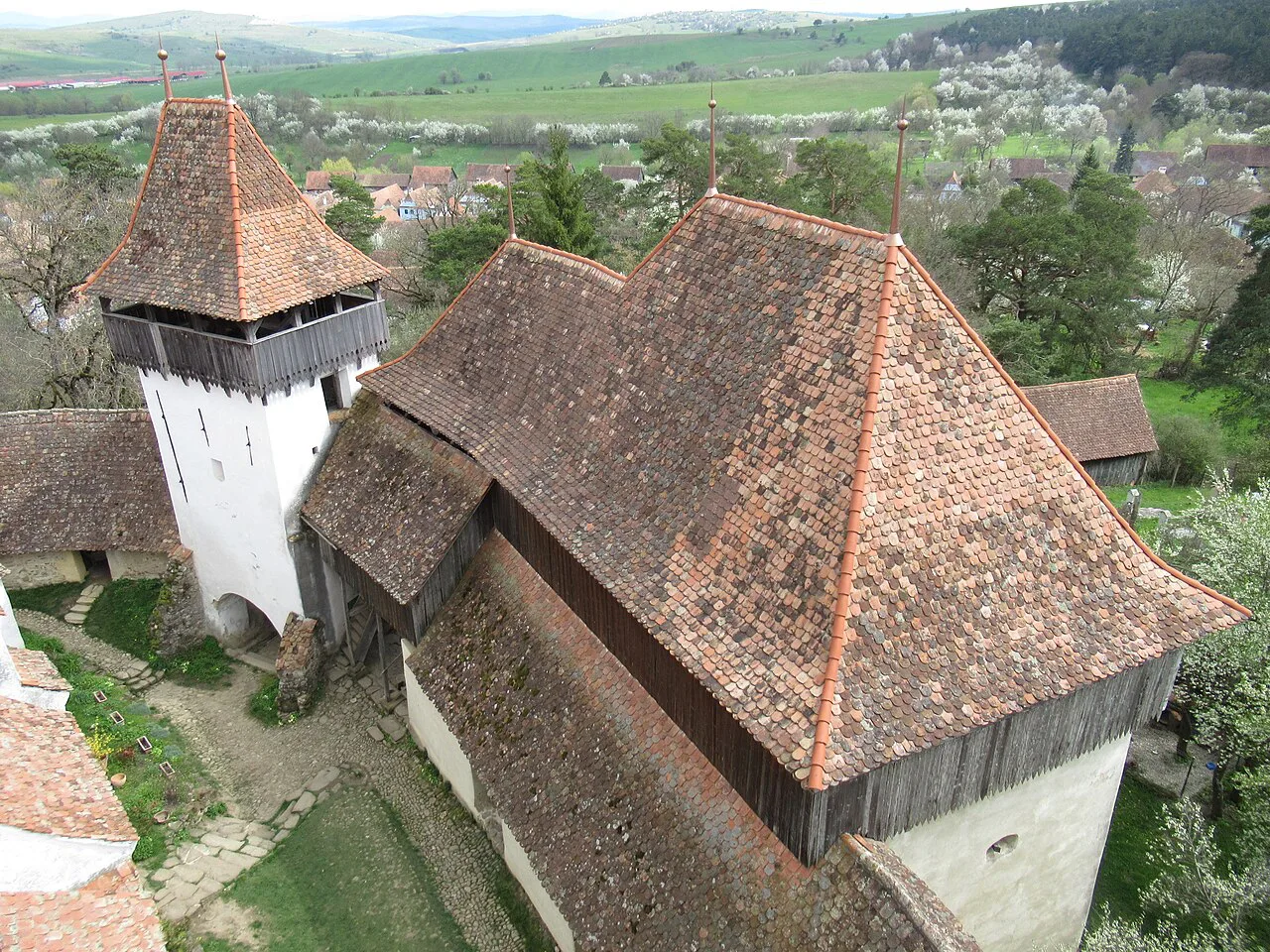
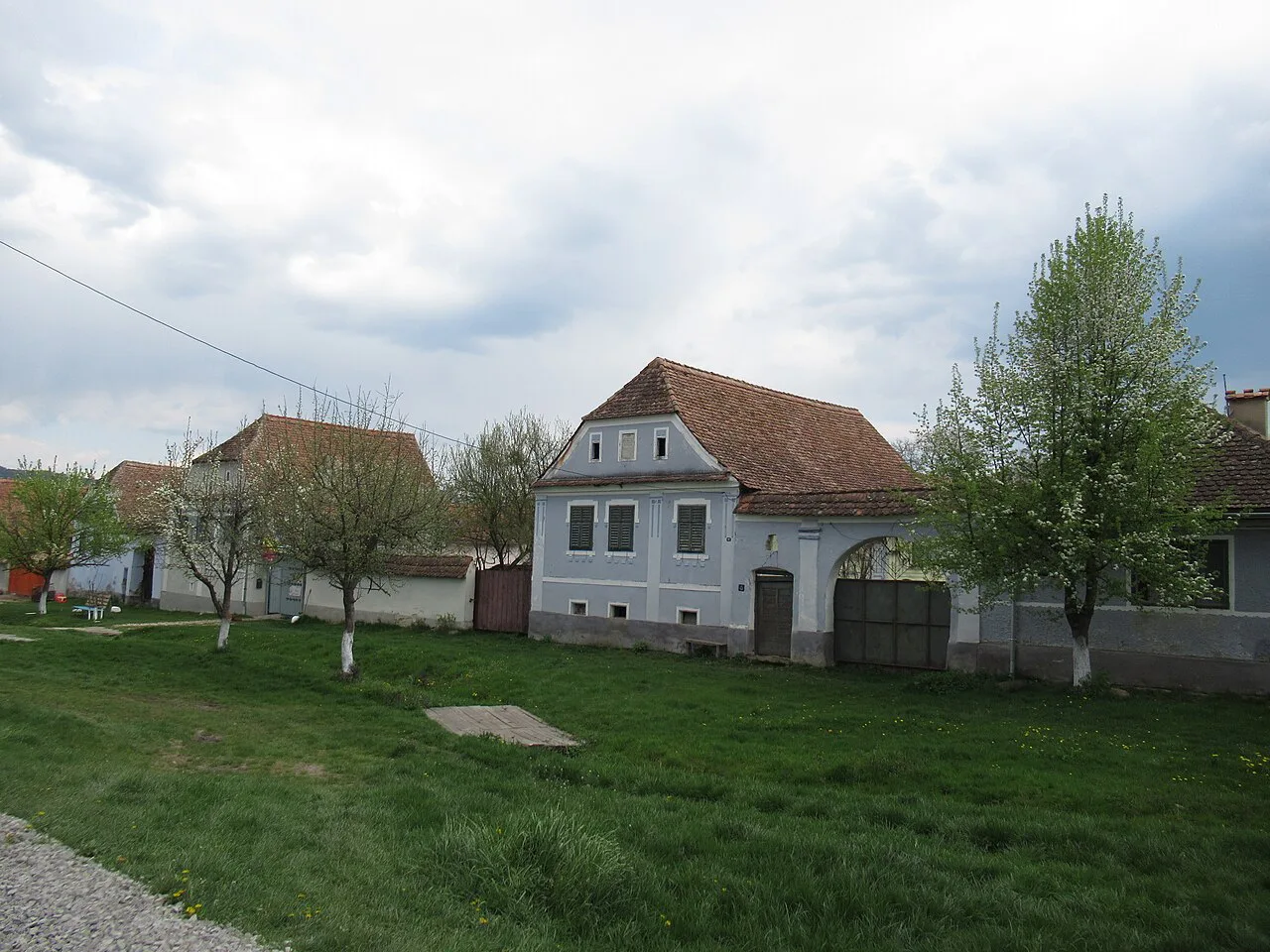
Viscri is the village most travellers name first. Its church was built for defence, with tower-topped walls, bastions, a second wall and labyrinthine corridors added over the centuries to shrug off marauding armies. The houses along the single dusty road are low-slung and pastel, the tell of medieval Saxon villages across southern Transylvania.
Biertan, Prejmer and Hărman belong to the same world of fortified churches and sit closer to Brașov, which makes them easier to combine in a single day by car. Treat each as a separate visit with its own church to see rather than a tick-box stop on a list.
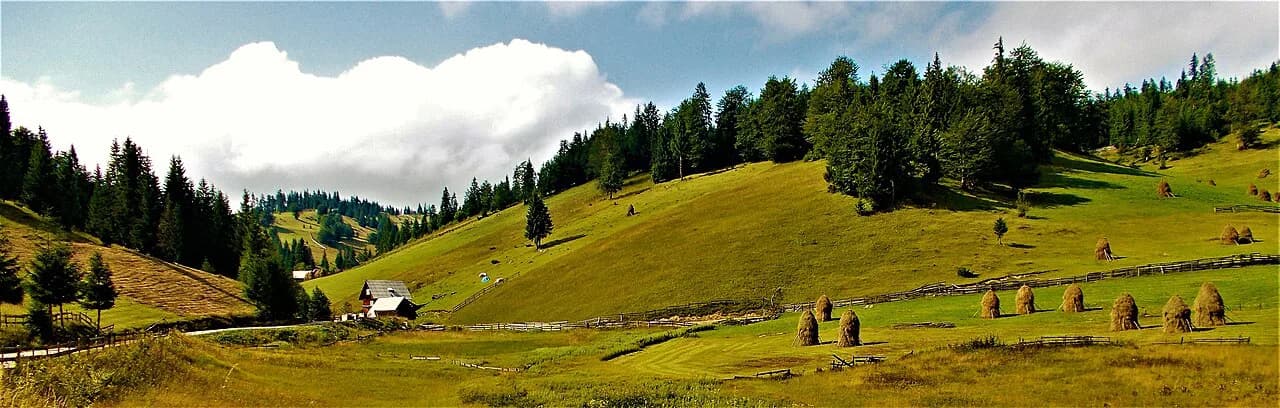
Rural life in these villages is not a reconstruction. Across the Romanian countryside, from the heights of the Carpathian Mountains to the rolling hills of Transylvania, Maramureș and Bucovina, farming traditions, wooden houses and tight-knit communities continue as everyday reality, and horse-drawn carts still pass along quiet roads, with haystacks rising in the summer fields.
What a fortified church visit involves, and why some are guided-only
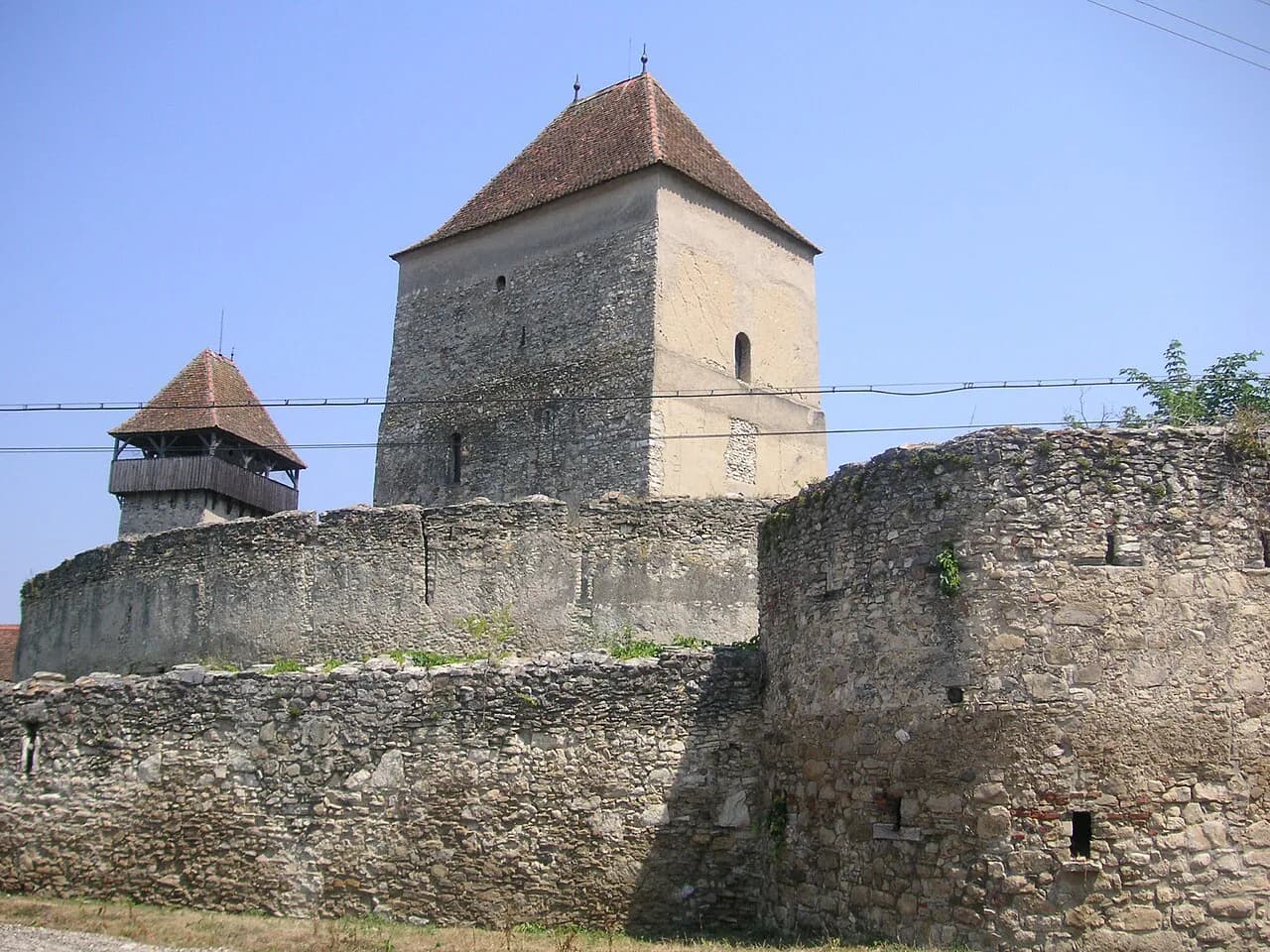
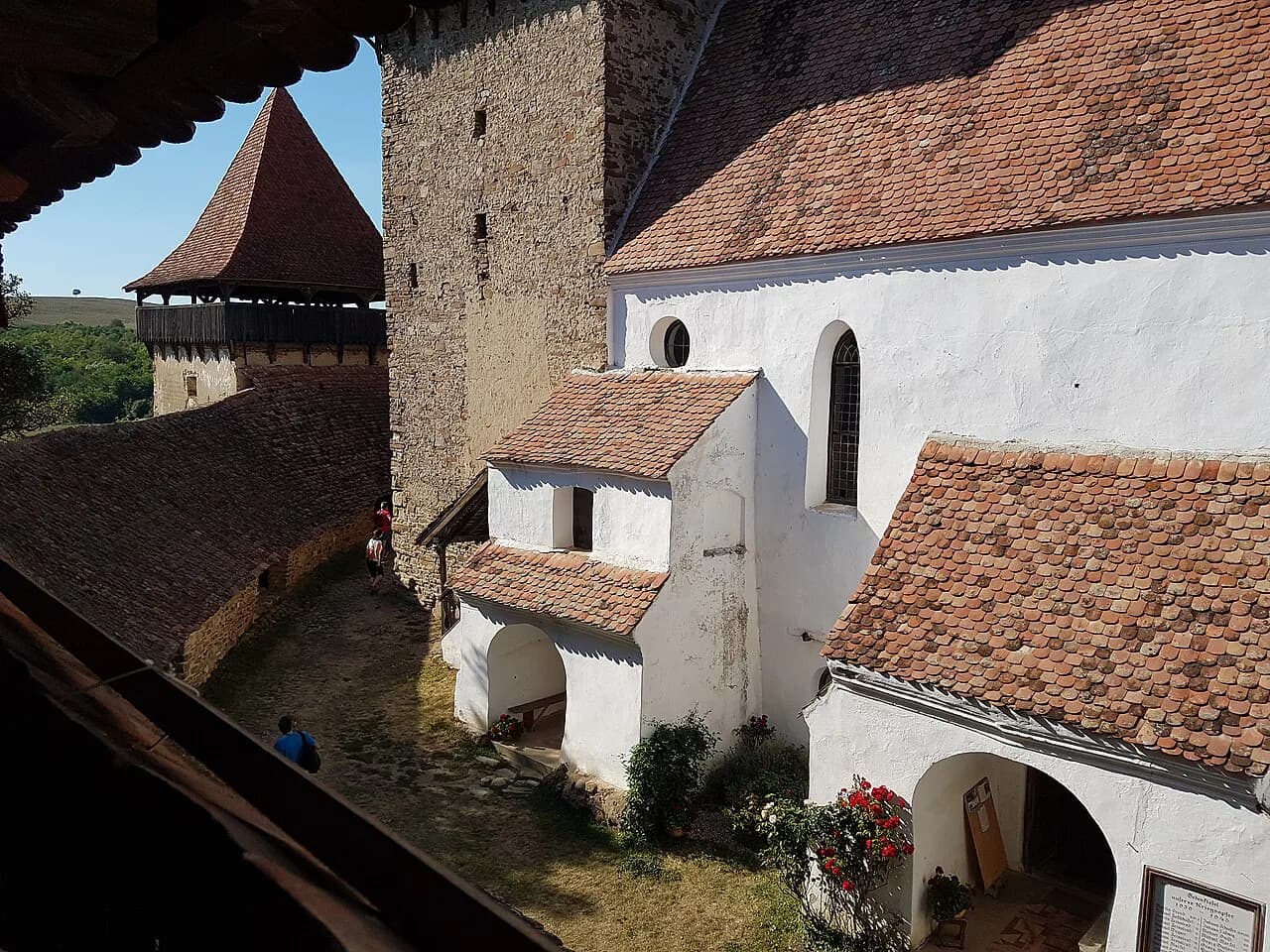
A fortified church is a walled compound, not just a nave: you pass through gates and bastions, and the interesting parts are the defensive layers built around the original church. Allow time to walk the perimeter and the corridors rather than looking in and leaving.
Access arrangements vary from village to village, and some churches open only for a custodian or guide. Local conservation bodies and organisers set the arrangements that apply, so confirm before you set out rather than assuming a church will be open when you arrive.
Several villages in the Saxon belt are communes rather than towns, which shapes what facilities exist when you arrive. Romania has 2,686 communes, and many of the villages travellers seek out fall into this category, so plan for limited services and bring what you need.
Viscri and the Mihai Eminescu Trust: restored houses, coach crowds and how to time a visit
Viscri's houses have been carefully restored through the work of the Mihai Eminescu Trust, an NGO conserving remote communities in Transylvania. The trust describes its aim as showing local people that well-kept houses and a traditional way of life are valued by Romanians and visitors alike, and developing communities economically while encouraging residents to keep their lifestyle.
That success brings pressure. Coaches have started passing through Viscri, slowing so that tour groups can photograph the village from behind glass, and local conservation staff see large numbers of incoming tourists travelling by big buses as something responsible tourism should regulate. Arriving independently, on foot or by horse-drawn cart, and spending money with village businesses does more for the place than a drive-through.
The trade-off is simple: Viscri is the most restored and most visited of the villages, so you get the best-kept streetscape alongside the most coach traffic. If you want quiet, go early in the day or choose a neighbouring village such as Mălâncrav or Moșna instead.
Beyond Viscri: Mălâncrav, Florești, Archita and Moșna in the Saxon village belt
Mălâncrav has a manor house where you can meet women who still use looms to weave curtains and carpets. Florești, known in Saxon German as Deutsch Branndorf, is associated with barrel makers, an essential part of producing țuică plum brandy, and men there have learned the craft from their fathers and grandfathers.
Archita, also called Arkeden, dates to the thirteenth century and has a tearoom run by some of the last Saxon descendants in the region, which serves herbs and jams. Moșna, or Meschen, has an organic farm where a family milks cows by hand for herby cream cheeses. A craft workshop or farm visit is a better use of your time than another church photo.
Building a small loop of these villages by car gives you more than a single stop, and the distances are short enough to combine two or three in a day. Use the Transylvania map to plot the order before you leave your base.
Székely villages and carved gates in eastern Transylvania
Eastern Transylvania is Székely country, centred on towns such as Miercurea Ciuc and Odorheiu Secuiesc in Harghita county. The villages around them are known for carved wooden gates and a distinctly different built landscape from the Saxon belt, so do not expect fortified churches here.
Base yourself in Miercurea Ciuc or Odorheiu Secuiesc and drive out to the surrounding villages rather than trying to reach them from Brașov in a day. The Ciuc Depression and the Târnava Mare valley are the two corridors to look at on a map before you choose.
If your trip already includes Târgu Mureș, the Székely villages sit naturally on the road east, so the town makes a useful base or staging point before or after the village loop.
Shepherd and farming villages around Sibiu and the Carpathian foothills
The foothills around Sibiu hold Romanian farming and shepherd villages rather than Saxon ones, with a landscape of hay meadows and smallholdings. They suit travellers who want to see working agriculture and the edge of the mountains without a walled church as the centrepiece.
From Sibiu you can also reach the Apuseni Mountains and the Western Carpathians, where villages sit among forested ridges. These are driving country, so plan a car or a guided day rather than relying on rural buses.
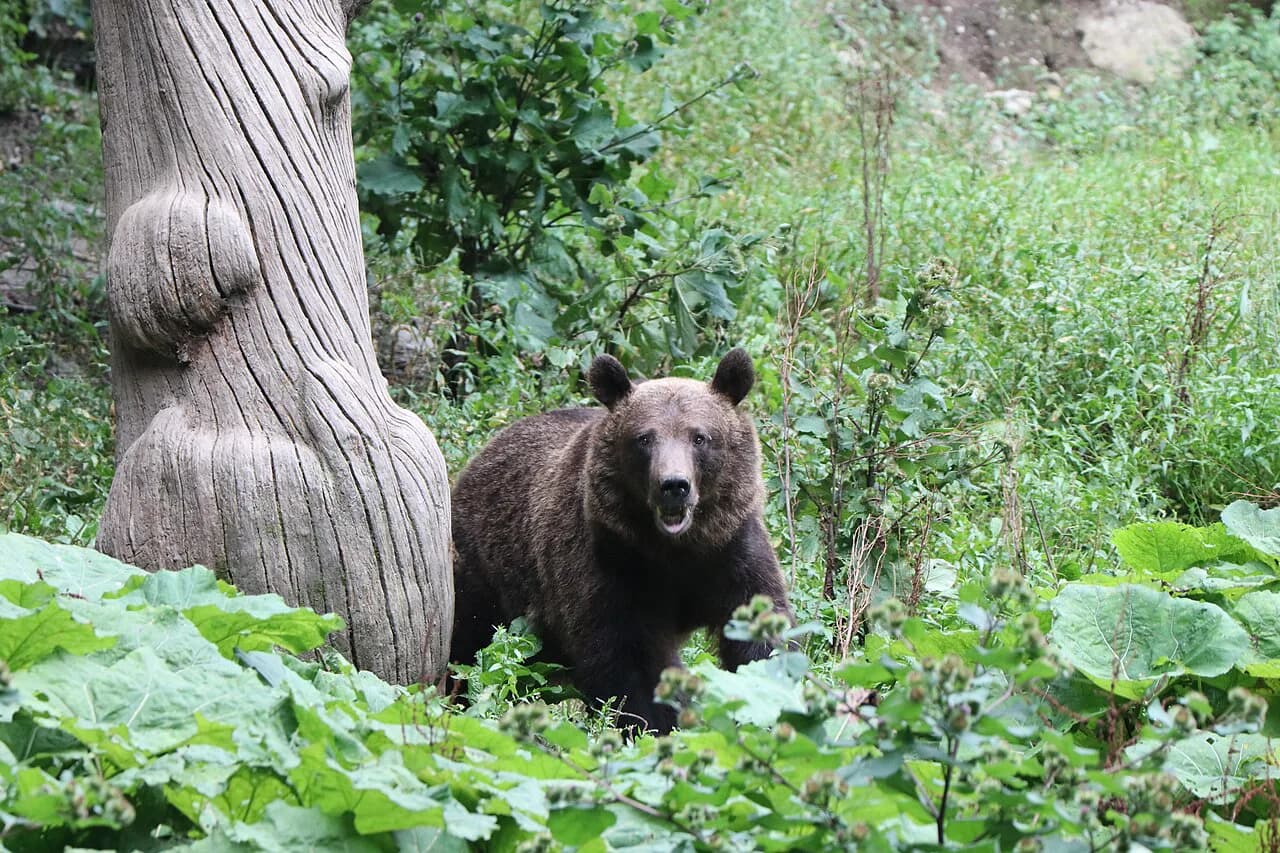
Wildlife is part of this landscape: the Carpathian Mountains hold Romania's bears, and the Libearty Bear Sanctuary Zărnești near Zărnești takes rescued animals. A visit there pairs naturally with a day in the villages south of Brașov.
Maramureș wooden churches and Bucovina painted monasteries: villages as part of a wider church trip
Maramureș is known for its wooden churches, and the villages there are best seen as part of a church-focused trip rather than a quick detour. The same applies to Bucovina, where the painted monasteries anchor the villages around them.
Both regions sit well north of the Saxon belt, so combining them with a Brașov or Sibiu base means long drives or an overnight move. If your time is short, pick either the southern villages or the northern churches, not both.
How to reach a village: train, bus, car or guided tour, and the honest trade-offs
A car gives you the most freedom in the Saxon belt, where villages such as Mălâncrav, Florești and Moșna are not on convenient rail lines. Driving also lets you time your arrival before coach groups build up at Viscri.
Guided tours remove the driving, and some include craft workshops, farm produce and horse-drawn cart transport, which fits the kind of visit the Mihai Eminescu Trust encourages. If you prefer a fixed itinerary, a Transylvania tour from Brașov or Sibiu covers the transport logistics for you.
Trains work for reaching the towns that serve as bases, not the villages themselves, and rural buses are slow and sparse. Factor a full day for any village loop from Brașov or Sibiu, and check the arrangements for each church before you go.
Visiting respectfully: what village life actually looks like and how not to treat it as a museum
These are living communities. The trust behind Viscri's restoration is interested in developing the communities economically while encouraging residents to keep their lifestyle, and wants to protect villagers' way of life without making an exhibition of them. It invites visitors instead to craft workshops, farm produce and transport by horse-drawn cart rather than viewing from a bus window.
In practice that means buying from village producers, joining a workshop rather than photographing people at work, and accepting that not every house is a visitor attraction. Rural Romania still matters because people live and farm there, and your visit should leave that intact.
If you are weighing up other bases in the region, our guide to the best towns in Transylvania sets out which towns make practical starting points for village days.
Which village belt should you choose?
For a first trip, choose the Saxon belt south of Transylvania: Viscri for the restored streetscape, then Mălâncrav, Florești or Moșna for a quieter loop, all reachable within a day of Brașov or Sibiu by car or guided tour. Accept the coach traffic at Viscri as the price of its conservation success.
Choose the Székely villages around Miercurea Ciuc and Odorheiu Secuiesc if you want carved gates and a different cultural landscape, and the Sibiu foothills if farming rather than fortifications is your interest. Maramureș and Bucovina reward a separate, longer trip built around churches.
Explore more Transylvania guides
Sources
Useful notes for your next trip
Optional updates to our guides.
You might also like
Continue reading
More guides you'll find useful