Hărman Fortified Church: What to See and How to Visit
Plan a visit to Hărman fortified church near Brașov: the medieval church, its circular wall, seven towers and frescoes, plus how to get there and what to see.
On this page
Hărman fortified church is worth half a day from Brașov, and the two things to prioritise inside the walls are the pre-Reformation frescoes in the Chapel Tower and the climb up the 56 m bell tower. The church stands in Hărman village, about 10 km from Brașov on the DN11 road, and the parish presents a church in use since 1240, wrapped in a medieval fortification with seven defensive towers.
This guide covers the church building itself, the defensive circuit of walls, towers and gates, the frescoes and fittings inside, the Sunday-service restriction that can cut opening hours, and the practical question of driving or bussing out from Brașov. It then sets out how long to allow and how to slot Hărman alongside its neighbour Prejmer in one trip.
Where Hărman sits and what you are visiting
Hărman, known in German as Honigberg, is a village in Brașov County reached by the DN11 road from Brașov, roughly 10 km out. The site is an Evangelical (Transylvanian Saxon) church inside a medieval fortification rather than a separate castle, so you walk through a gate into a walled enclosure with the church at its centre.
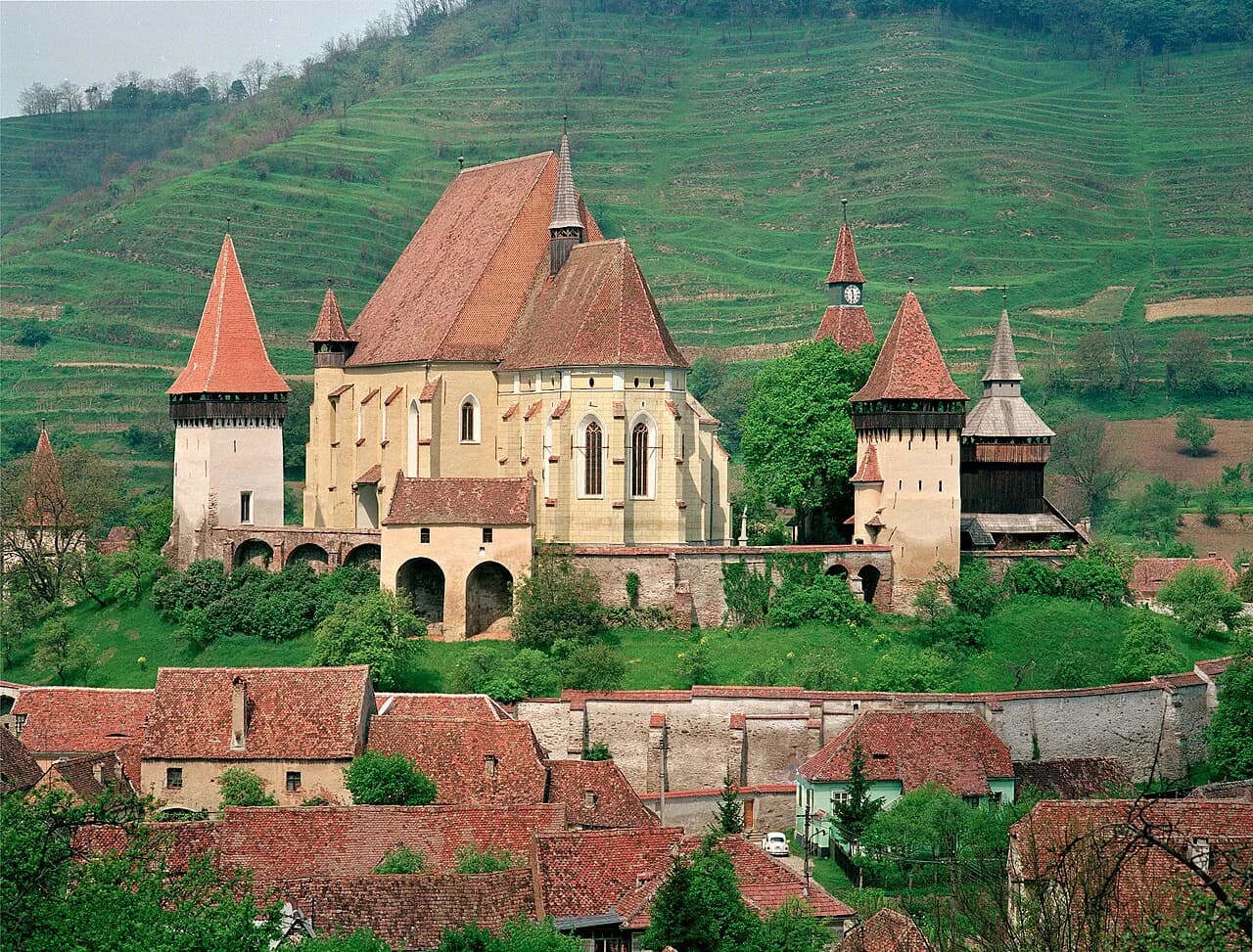
The church dates from the 13th century, and a document of 1240 donating it with other churches to the Cistercian Abbey of Carta is the first written mention of both village and church. If you are working through the wider circuit of [Fortified Churches of Transylvania], Hărman is one of the most convenient to reach from a city base.
The church: Saint Nicolas, Romanesque to Renaissance
The church is dedicated to Saint Nicolas and mixes late Romanesque, Cistercian-influenced Gothic and Renaissance elements rather than following one style cleanly. Look for the four-lobed windows and the two chapels around the choir as the Cistercian Gothic fingerprints, with the rest of the fabric reading as an eclectic overlay built up over centuries.
That layering is what makes the interior worth more than a quick look: the building was adapted repeatedly rather than rebuilt, so the fittings span several periods in one room. Budget time to read the panels and look up at the ceiling before you head for the tower stairs.
The defences: wall-walk, loopholes and seven towers
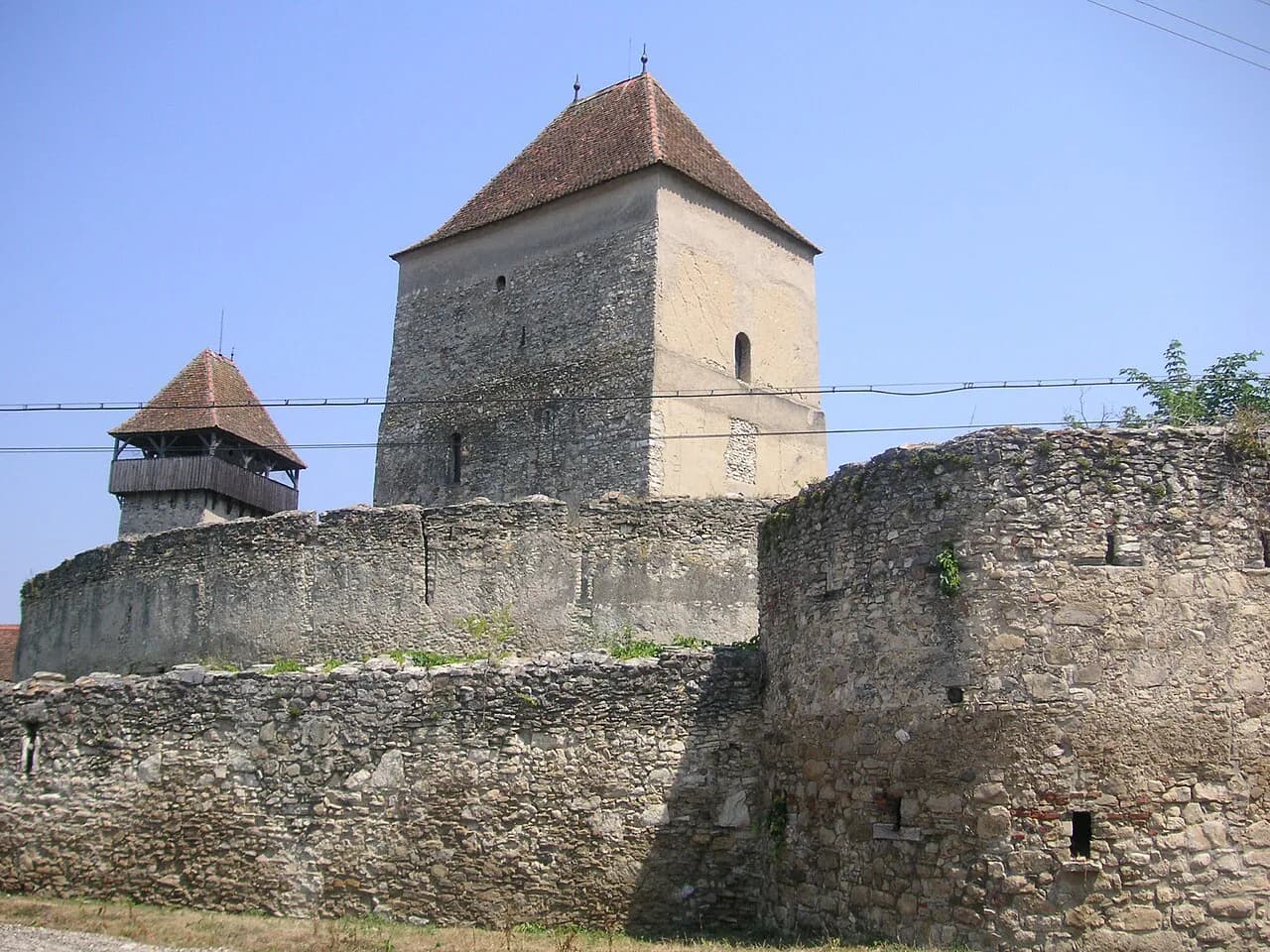
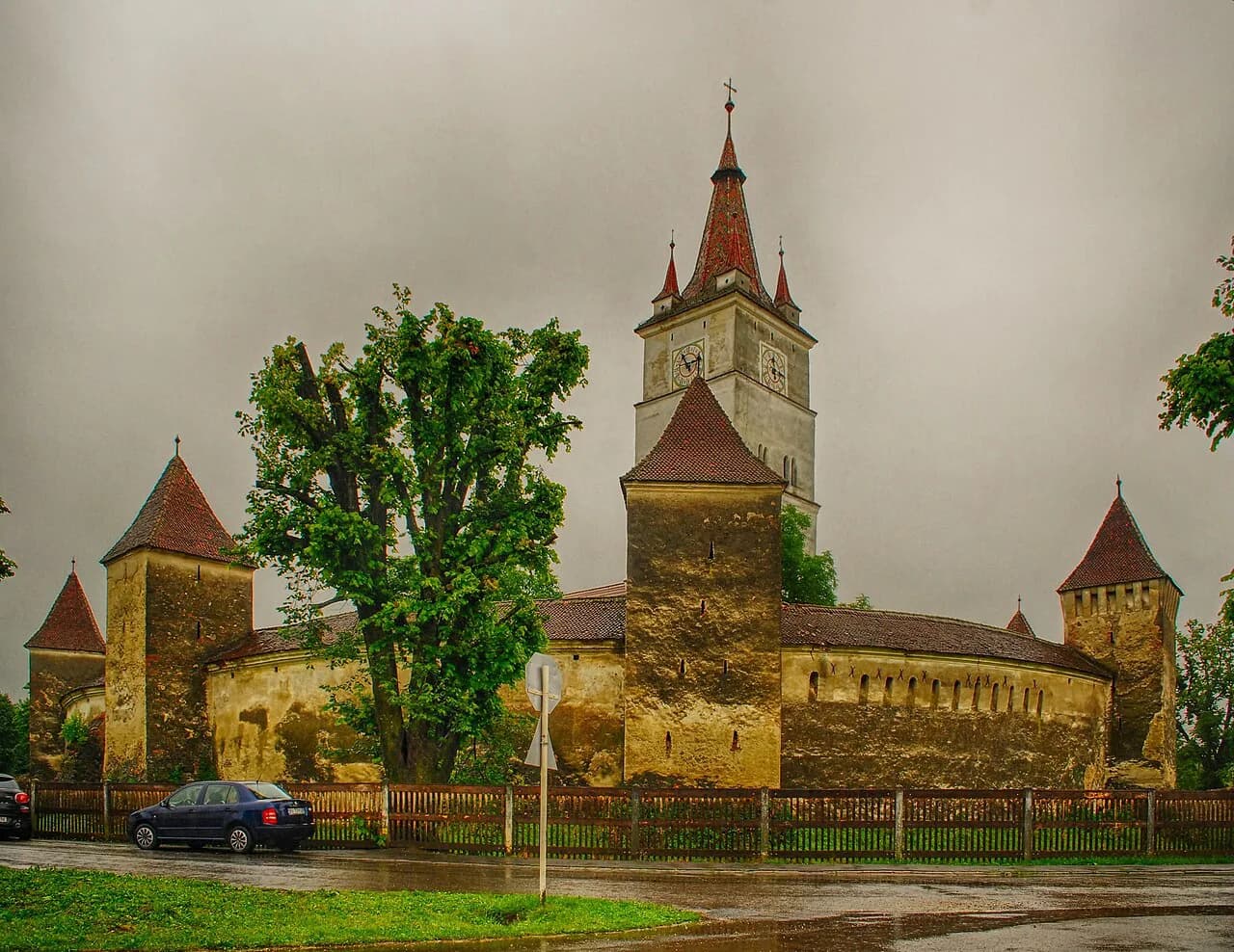
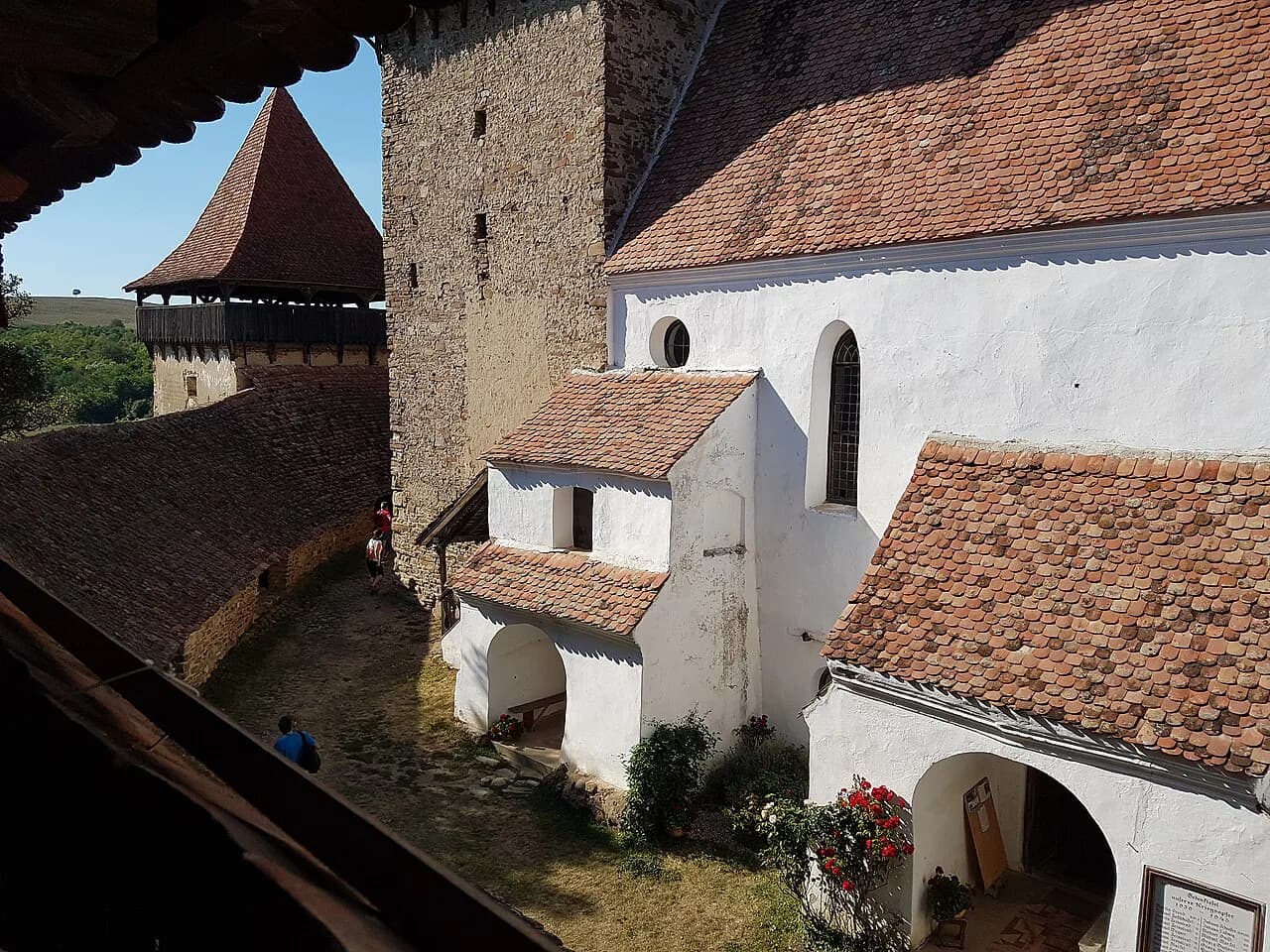
The fortification is a circular wall rising to 10-12 m, topped by a wall-walk pierced with loopholes, with seven towers of around 20 m standing around the circuit and gates with a portcullis. A moat 3-4 m deep once encircled the whole construction.
Inside, rooms were built against the inner face of the circular wall and directly onto the outdoor wall of the church, and the site could shelter up to 800 locals during an attack. Look at how those chambers tuck into the thickness of the defences, because that is the part most visitors rush.
The parish sums the ensemble up as a town-church with imposing walls, seven defensive towers and a bell tower visible from a distance. Knowing that vocabulary in advance makes the site easier to read: you are looking at a fortified church and its enclosure.
Climbing the 56 m bell tower
The bell tower reaches 56 m and is the tallest in the historical Bârsa region, and you go up by stairs inside the church. That single fact decides your itinerary: if you want the view, do the tower first while your legs are fresh and before a group arrives on the stairs.
Treat the climb as the physically demanding part of the visit and the frescoed Chapel Tower as the quiet part, then order them to suit the weather and the crowds. If you want the climb out of the way, do it first.
Inside: pre-Reformation frescoes and church fittings
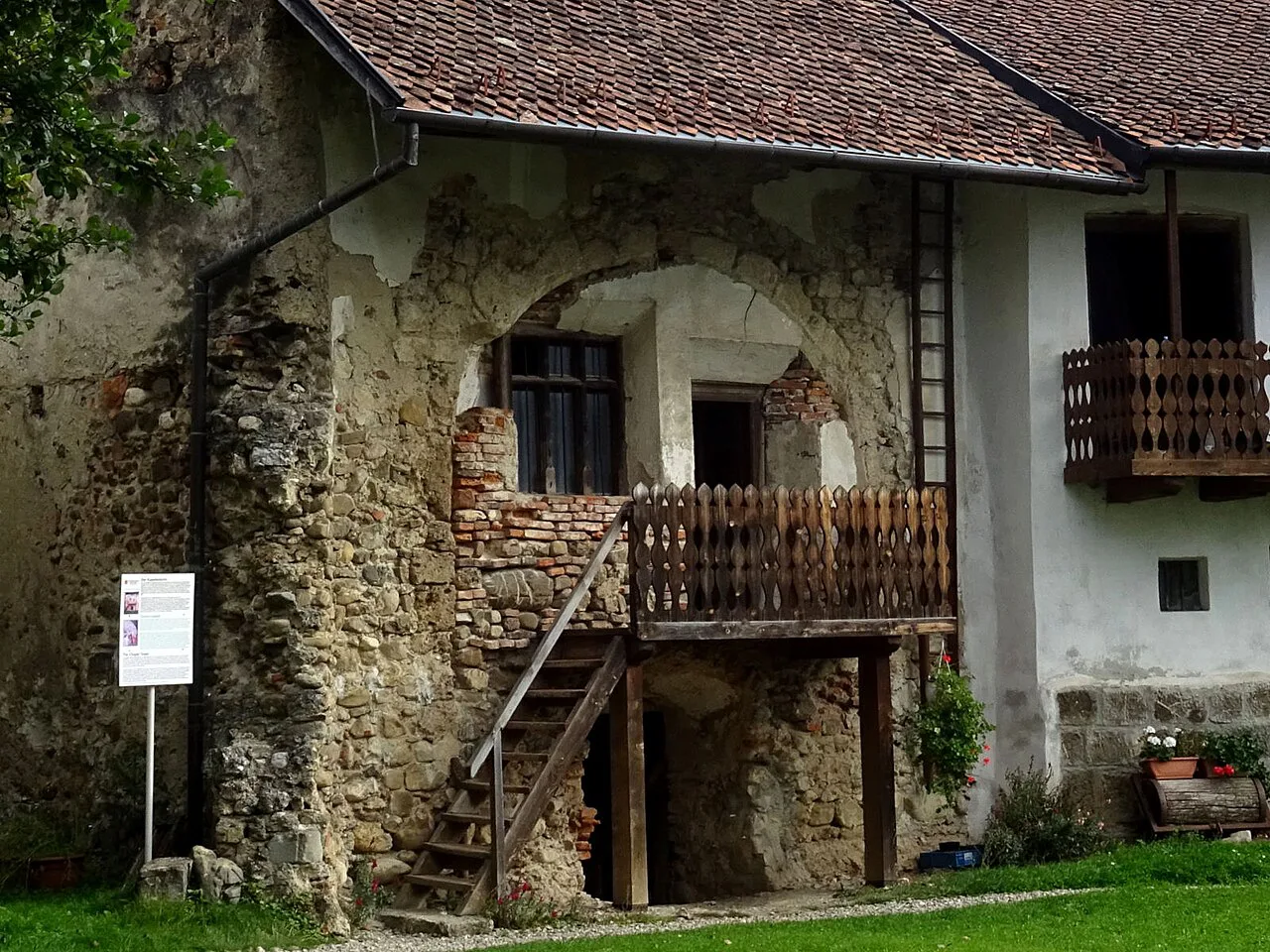
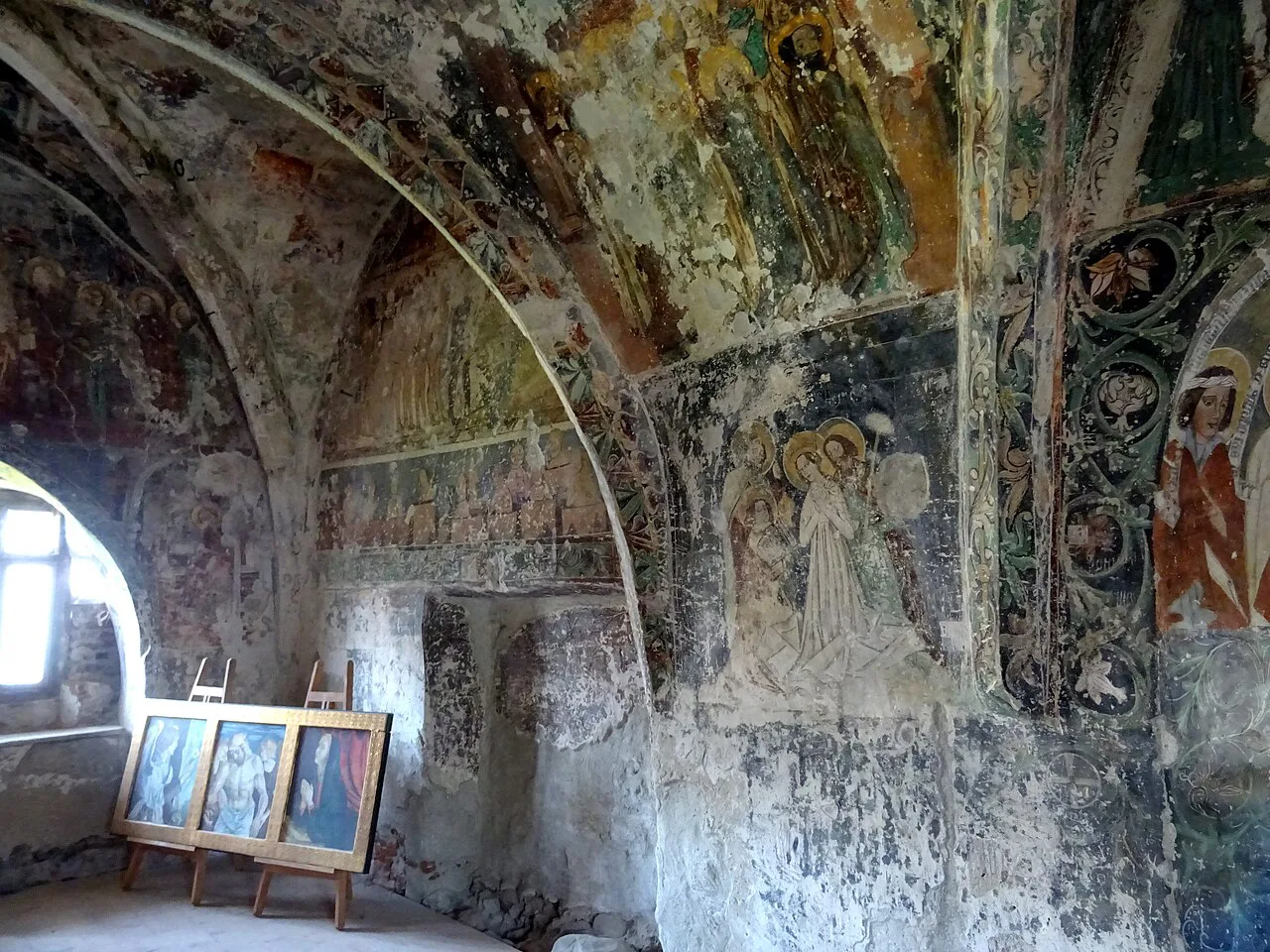
Hărman keeps pre-Reformation frescoes, a rarity among the region's churches, and you see them in the Chapel Tower, named for an older Catholic chapel incorporated into the circular wall. The Virgin Mary painting there is described as unique in the region, and the surviving scenes run through Bible stories, salvation and the Last Judgment with symbols of heaven and hell.
The rest of the interior holds a 19th-century organ and font, a small collection of Oriental carpets and a Baroque-style altar. The carpets are the detail most people photograph and few expect, so give them a minute rather than walking straight out.
If frescoes are your reason for coming, the same site points to Mălâncrav, the Church on the Hill in Sighișoara and Biertan as further places to see pre-Reformation painting. Build a short list rather than trying to cover them all in one day.
Opening, Sunday services and access
Check the parish's own site the day before you go, because a religious service can shorten opening: the Hărman parish has flagged a Sunday when the church opened only from 10:45 a.m. because of the service. Plan the visit around the service rather than a full day of access.
The parish publishes contact details for fortress visits on its site, so use those to confirm the day's hours and whether a group is expected before you set off from Brașov.
Getting there from Brașov
By car, take the DN11 from Brașov towards Hărman and Prejmer, a run of roughly 10 km to the church. The two villages are close enough on this road that they are regularly visited together.
Driving gives you the flexibility to stop at both churches and to arrive before the middle of the day; public transport ties you to whatever timetable the bus operators run. If you are also covering Prejmer, the short hop between the two is the reason this stretch of the DN11 works as a single outing. Check current prices or dates with the church before you set out.
How long to allow, and pairing Hărman with Prejmer
Give Hărman about an hour to ninety minutes: enough for the church interior, the wall-walk and the tower climb, without padding. Pair it with Prejmer for a half-day from Brașov, since the two fortified churches sit close together and reward the same kind of looking.
The trade-off is depth against breadth: two churches in one morning means less time at each, and the tower stairs at Hărman are the first thing to cut if you are running late. See the frescoes even if you skip the climb.
Other Saxon churches within reach
If Hărman whets your appetite, the wider circuit of Saxon fortified churches runs through Viscri and Saschiz, both further from Brașov and better done as a separate day. Valea Viilor in Sibiu county and Câlnic Fortress in Alba County extend the trail westwards.
Nearby, the Hărman and Prejmer botanical reserves are listed alongside the churches, so a nature-minded companion can be kept happy between visits. Beyond the churches, Rupea Citadel is another Brașov County fortification that fits a loop out of the city.
Should Hărman make your shortlist?
Yes, if you want one fortified church that is easy to reach from Brașov and gives you both frescoes and a tower climb in a compact visit. Go early, do the tower first, and check the parish site for a service that shortens the day.
Skip it only if your time in Transylvania is so tight that one church has to stand for all of them; in that case pick your single site deliberately rather than adding Hărman as an afterthought. If you have a morning free, pair it with Prejmer and you have used the time well.
Explore more Transylvania guides
Frequently Asked Questions
Do I need to book Hărman fortified church in advance?
The parish handles visits directly and publishes contact details for fortress visits on its site. Confirm the day's hours and whether a group is expected before you travel, especially on a Sunday when a service can delay opening.
Is the tower climb at Hărman difficult?
You reach the top by stairs inside the church, so expect a confined climb rather than a lift. Do it first if you want the view, and skip it if stairs are not your thing, because the frescoed Chapel Tower is at the same site.
Can I see Hărman and Prejmer in one trip?
They sit close together on the DN11 out of Brașov, which makes them a natural pair for a half-day. Allow about an hour to ninety minutes at Hărman and plan Prejmer as the second stop rather than squeezing both into a rushed hour.
Sources
Useful notes for your next trip
Optional updates to our guides.
You might also like
Continue reading
More guides you'll find useful