Transylvanian Saxons: Who They Were and Where to See Their Heritage
Who the Transylvanian Saxons were, what they built in Brașov, Sibiu and the villages, and where to see fortified churches and Saxon heritage on a trip.
On this page
The Transylvanian Saxons were a German-speaking population settled in Transylvania from the 12th century, and their legacy is what you actually see on a Saxon-themed trip: the old cores of Brașov and Sibiu, the fortified churches ringed by walls and bastions, and villages of low pastel houses along a single road. This guide covers where they came from, what they built, and how to see the villages by car, bus or guided tour.
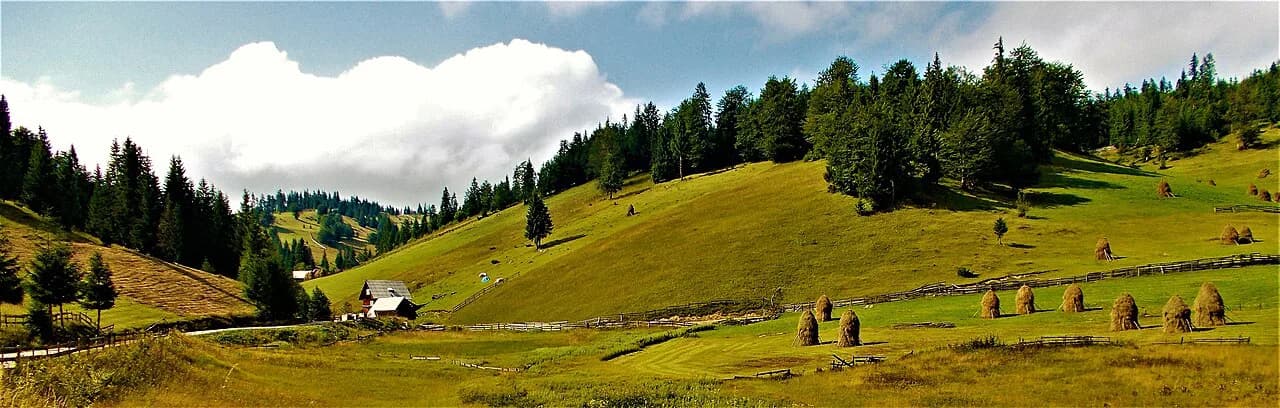
Expect a heritage trail rather than a single sight. The villages sit among the meadows and oak forests of southern Transylvania, and the best visits are slow ones that put you in craft workshops and farmyards rather than behind coach glass.
What the term Transylvanian Saxons means for a visitor planning a trip
For trip-planning purposes, treat the Saxons as the German-speaking communities who shaped the towns and villages of southern and eastern Transylvania, known in German as Siebenbürgen. Their story explains why a village church has battlements and why a market square looks Mitteleuropean rather than Balkan. The Saxons arrived in the 12th century and positioned themselves as craftsmen and well-off farmers, according to research quoted by National Geographic.
You do not need the history to enjoy the places, but it changes what you notice. A fortified church stops being a quaint photo stop and becomes a defensive system with a second wall, bastions and labyrinthine corridors added over centuries. If churches are your main interest, start with a dedicated overview of the fortified churches before you fix an itinerary.
Where the Saxons came from and when they arrived
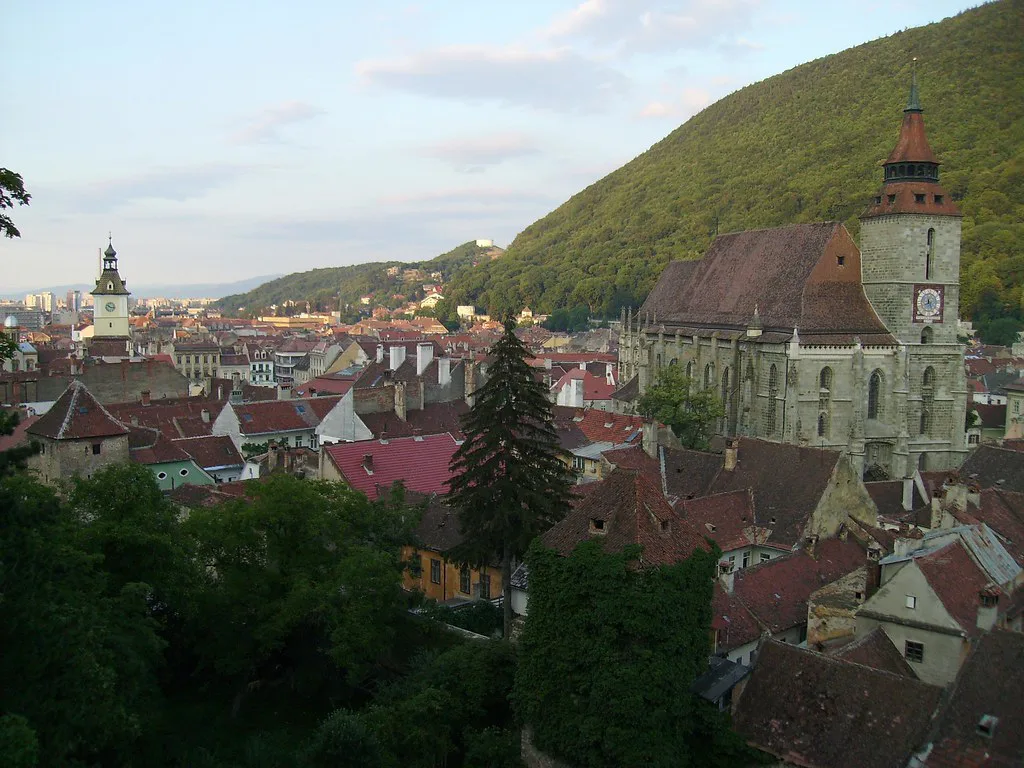
The Saxons came originally from the Rhein basin in western Germany, though labelling them simply as Germans in Romania is misleading, as the National Geographic article argues through the research of Francesco Magno. They arrived in the 12th century, when a Hungarian king invited Saxon traders to defend Transylvania's borders against invaders, and whole Germanic communities later moved east.
They brought their own culture and dialect to the Carpathian hillsides and developed local distinctions over time. That is why Saxon heritage in Transylvania has its own architecture, dialect and foodways rather than reading as transplanted German townscape.
One common confusion is worth clearing up before you go: Saxon in this context has nothing to do with the Anglo-Saxons of England. The Transylvanian Saxons were a continental German-speaking group who have lived in Transylvania since the Middle Ages and whose medieval history also extended into the neighbouring principalities of Wallachia and Moldavia.
Brașov as the original Saxon city and what survives in the old town
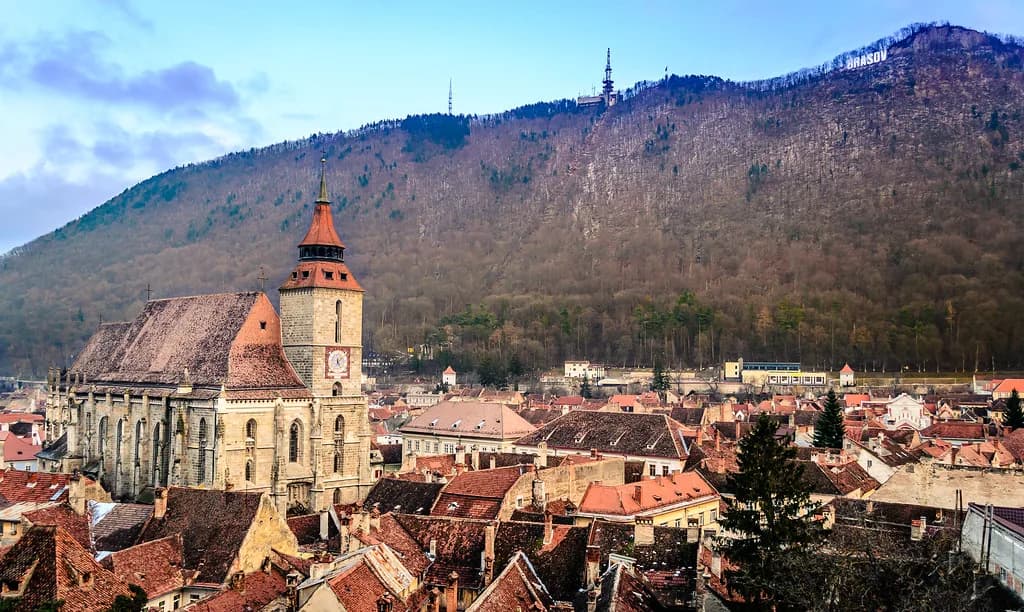
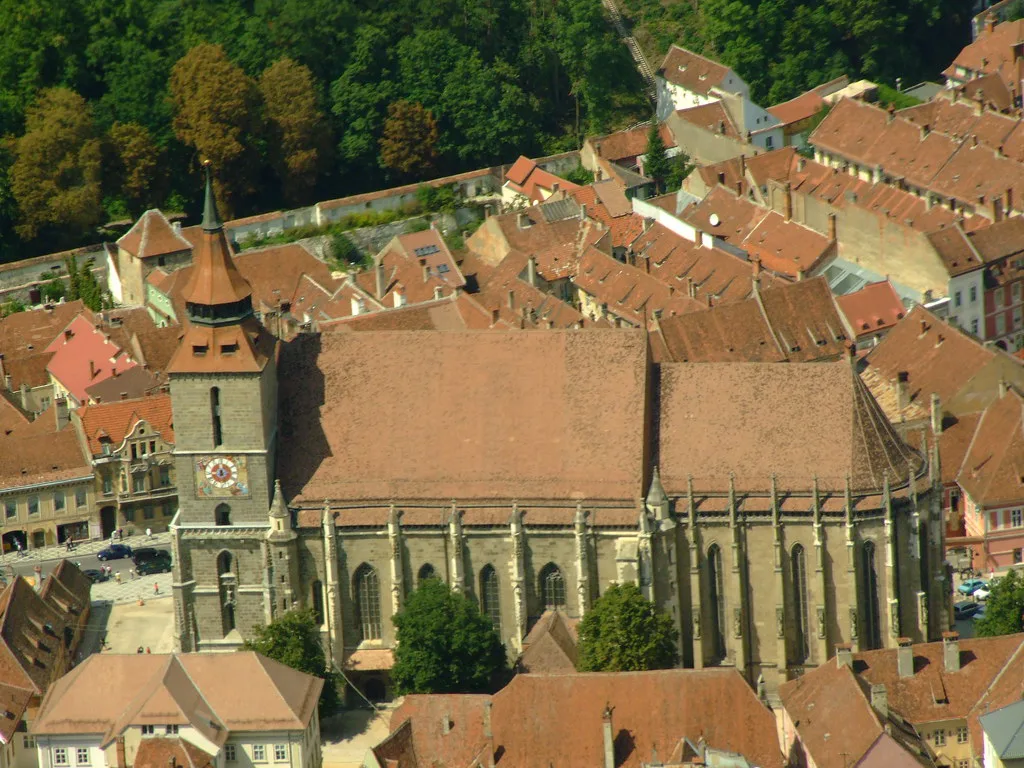
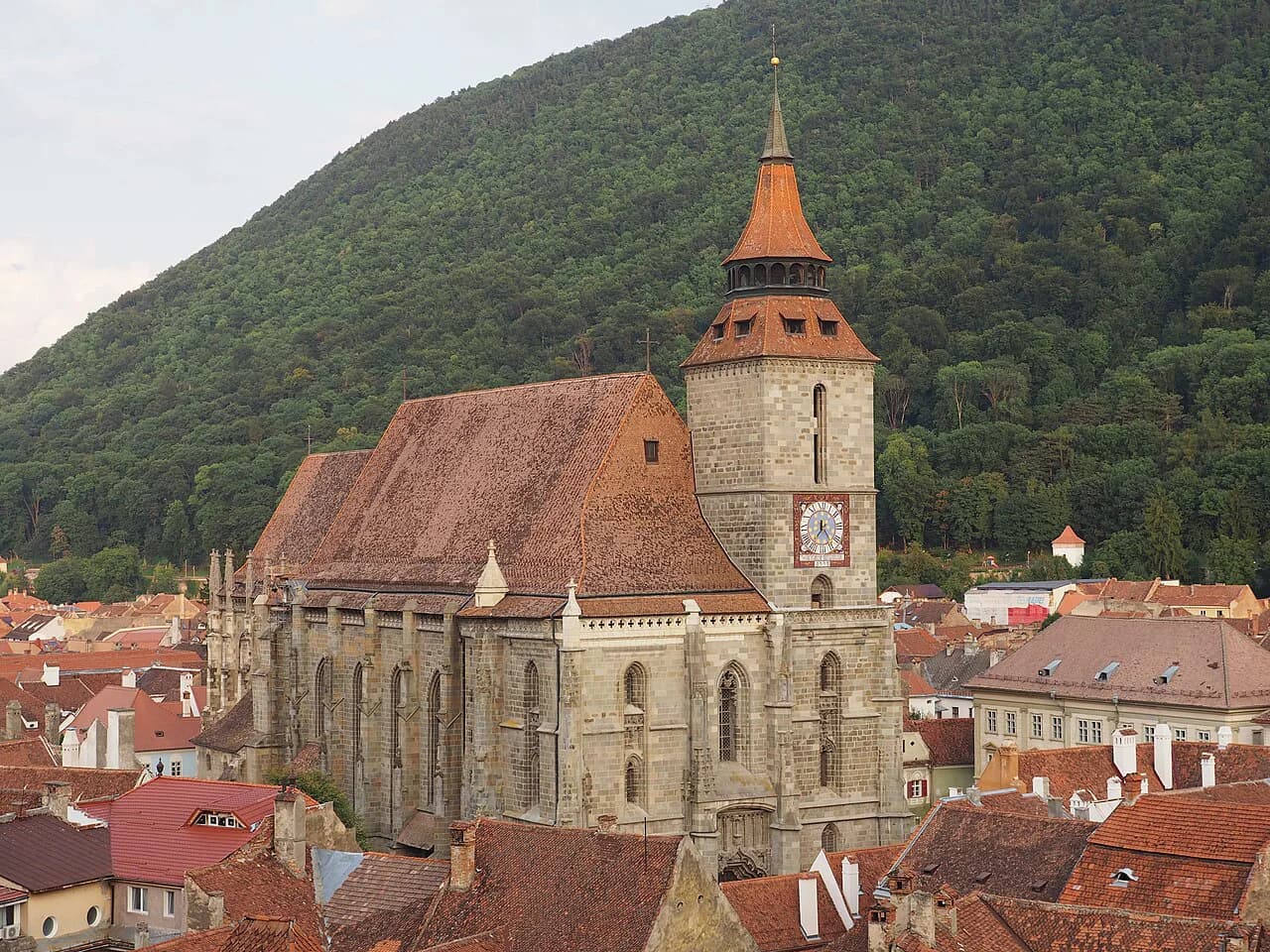
Brașov is the original Saxon city, and most Saxon-themed trips begin there. Its centre is Piața Sfatului, Council Square, the open square where the Saxon trading town organised its public life and where the Pied Piper story is said to surface in local retelling. Stand in the square and the street plan around it still reads as a merchant town, with the Black Church nearby as the landmark to orient yourself by.
Beyond the city gates, the mountains, meadows and gnarled oak forests hold some of the last living Saxon villages in Romania. That makes Brașov a practical base: you can spend a morning in the old town and an afternoon in a village without a long drive. Allow a full day for the town itself if you want the Black Church and the surrounding streets rather than a quick photo.
The Saxon legacy in Sibiu and the other towns of Siebenbürgen
Sibiu is the other town to build into a Saxon itinerary, with a compact old core that rewards a half-day on foot. The Saxon legacy across Siebenbürgen is urban as much as rural, so do not treat the towns as mere gateways to the villages. Several smaller towns with fortified churches, such as Cisnădie, work well as stops between Sibiu and the villages.
Plan the towns and villages as one loop rather than two separate trips. A workable shape is Brașov, then the Bârsa region villages, then Sibiu and the villages around it.
Fortified churches: why village churches were built like fortresses
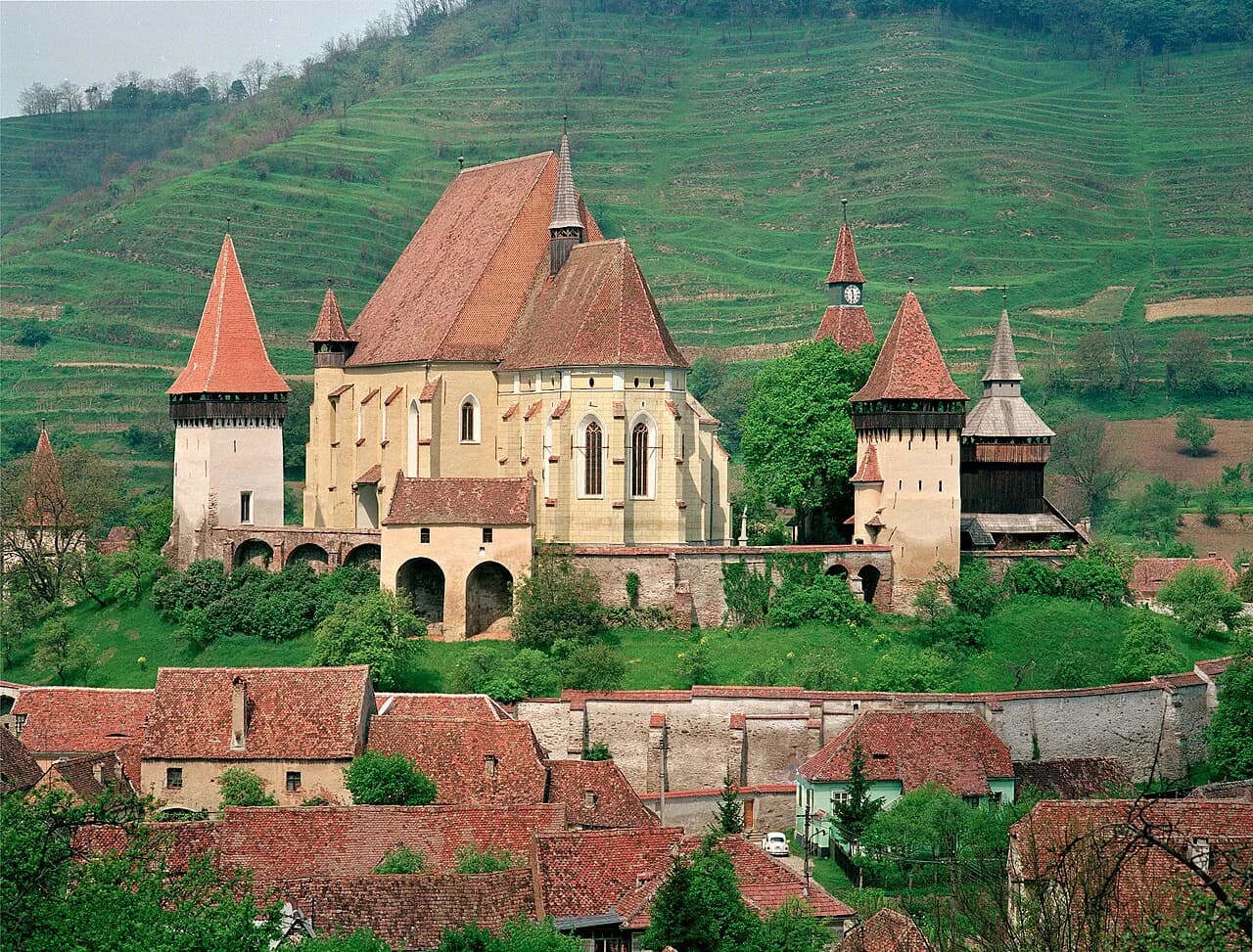
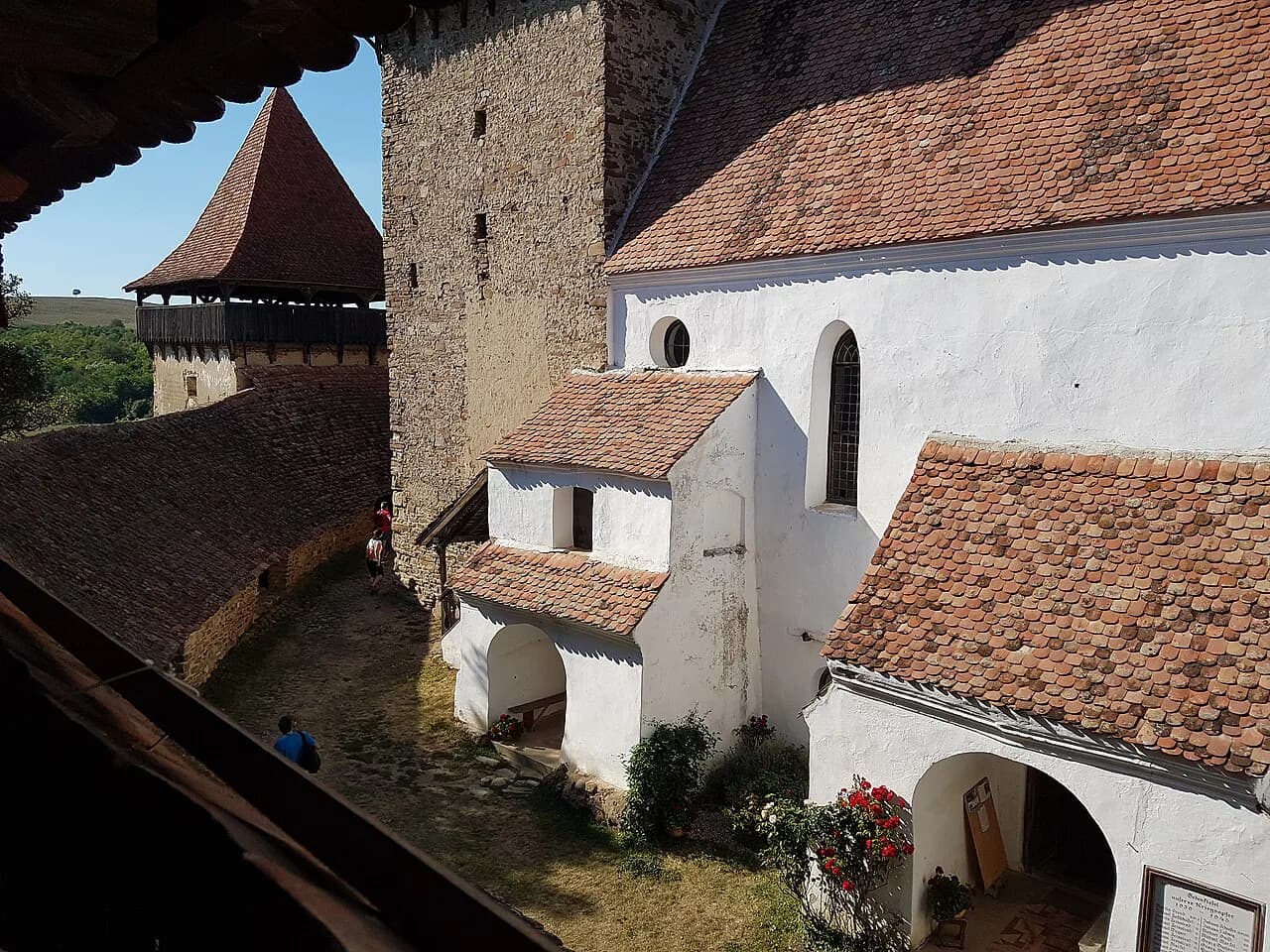
Village churches were built to be defended, not just prayed in. Viscri's church is the clearest illustration: tower-topped walls, bastions, a second wall and labyrinthine corridors were added century by century to shrug off marauding armies. Transylvania's position as a trading crossroads gathered together some of the most fortified villages in Europe, which is why tiny settlements have churches built like strongholds.
For a wider survey beyond one village, the fortified churches of Transylvania range from walled church complexes to hilltop citadels, and some are easier to visit than others. Good half-day stops include Prejmer and Hărman east of Brașov, while Saschiz pairs a fortified church with a hilltop citadel and Biertan sits in its own village with a walled enclosure.
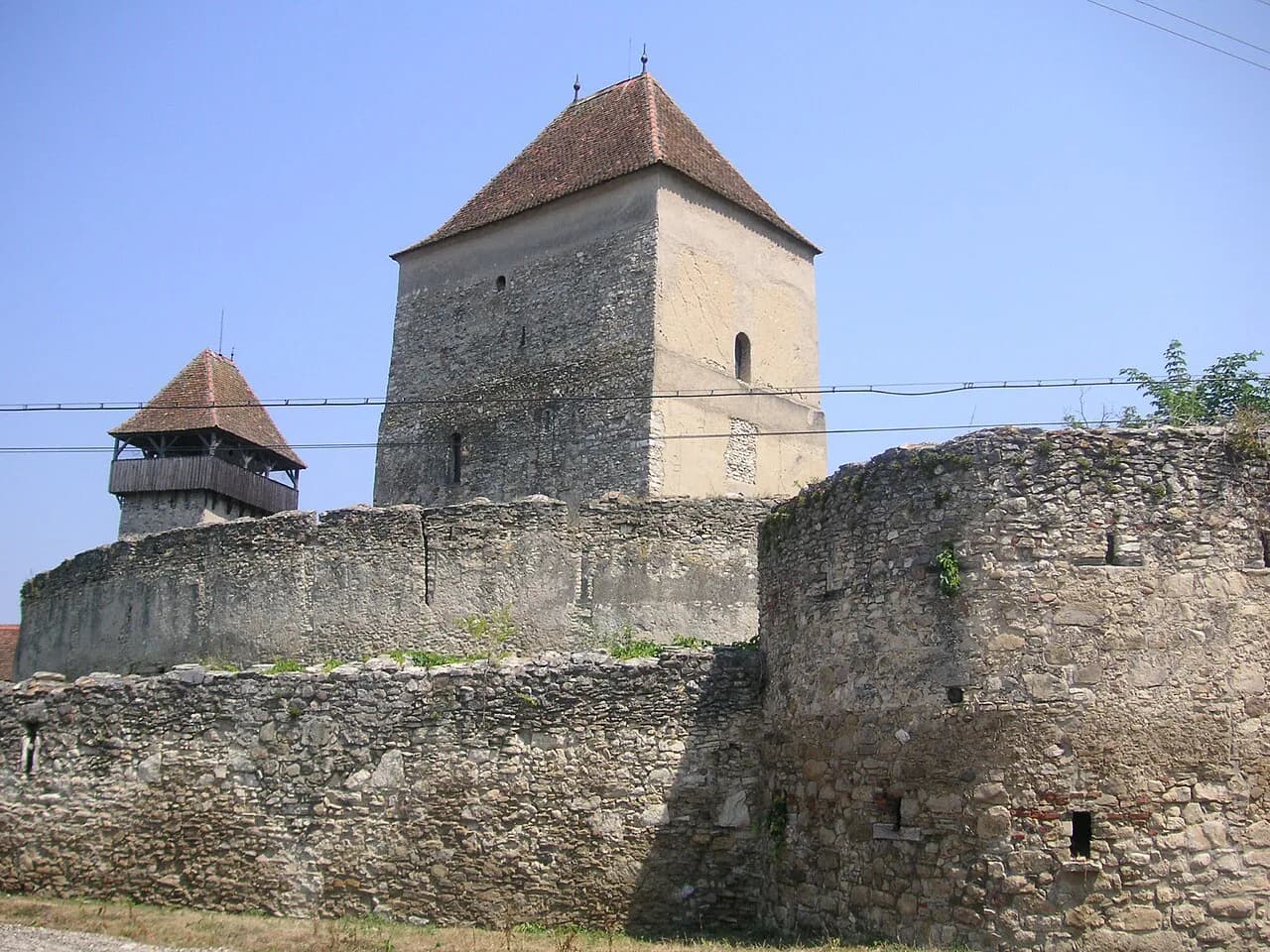
Two more are worth knowing if you are driving west. Rupea Citadel gives you a hilltop fortress above the village, and Câlnic Fortress in Alba County is a compact fortified complex rather than a parish church.
Viscri: the restored village, the church and the coach-tour problem
Viscri is the Saxon village most travellers have heard of, and its houses are impeccably restored where other Saxon villages are crumbling as residents struggle for income and government investment. The restoration has been the work of the Mihai Eminescu Trust, an NGO conserving remote communities in Transylvania. The trade-off is visible: coaches have started trundling through, slowing so that dozens of tourists can photograph the village from behind glass, which the trust sees as a warning sign for responsible tourism.
For a visitor, the decision is straightforward. Come on foot, buy something from a village producer and give the place an hour or two rather than twenty minutes. The single dusty road, the cows drinking from hollowed tree trunks and the pastel houses are the point, and they do not survive a drive-through.
Other Saxon villages worth the detour, from Richiș to Mălâncrav
Beyond Viscri, the villages spread across southern Transylvania and each has its own speciality. In the account given by the Mihai Eminescu Trust's partner guide, Mălâncrav has a manor house where women still weave curtains and carpets on looms, while Florești is known for its barrel makers, an essential craft for țuică plum brandy. Archita, documented from the 13th century, has a tearoom run by some of the last Saxon descendants in the area, and Moșna has an organic farm where a family milks cows by hand for herby cream cheeses.
Richiș is the village to seek out if you want the emigration story made personal. It is where Susanna Riemesch-Wachsmann was the last Transylvania Saxon to be married in her home village, in 1990, before she and her husband left for Germany, and the family still returns in summer. A commemorative service is held at the Saxon cemetery every other year, so treat any visit as a normal village day rather than an event.
These villages are small, often strung along one road with few facilities, so string two or three together in a day rather than expecting a full day out in each. If you want more options with churches and citadels, a wider Saxon Transylvania itinerary fills in the gaps.
Craft workshops, farm produce and how to visit villages without the big bus
The most rewarding village visits put you in contact with people who make things. Local guides introduce shepherds, carpet weavers, charcoal makers, bee keepers, barrel makers and pastry makers, and can root out B&Bs owned by a mix of Saxon Germans, Romanians including Roma communities, and ethnic Hungarians. That approach is what the Mihai Eminescu Trust argues for: visitors in craft workshops, on farm produce and on foot or in a horse-drawn cart rather than on a coach.
In practice, book a local guide or a small-group tour rather than joining a large coach. It costs more per person and takes longer, but it is the difference between meeting a barrel maker and photographing his gate from a bus window. If you are driving yourself, buy farm produce directly and keep to the village road rather than parking on verges.
How to reach the villages from Brașov and Sibiu: car, bus or guided tour
A car gives you the most freedom, because village churches sit away from the main towns and it is easier to string two or three together. From Brașov, the Bârsa region churches at Prejmer and Hărman make a straightforward half-day run, and Biertan and Saschiz can be worked into a loop that carries on towards Sibiu. From Sibiu, Mălâncrav, Richiș and Moșna are among the southern Transylvanian villages to aim for.
Without a car, a guided small-group tour is the practical way to see Viscri and the remoter villages, and it removes the guesswork about which church is open. Public transport to the villages is limited, so allow generous time rather than planning tight connections. Check the current opening arrangements for each church with the parish or a local guide before you commit a day to one village.
Who lived in a Transylvanian village and alongside whom
Visitors sometimes ask whether the Saxons were the region's original population. They were not: they were invited settlers who arrived in the 12th century, living alongside Hungarian landowners and Romanian peasants in the region's social hierarchy, as the National Geographic account describes. That layered population is why a single Transylvanian village can have a Saxon church, Romanian and Roma neighbours and Hungarian speakers.
The Saxon community today: emigration, return visits and what it means for travellers
Many Saxons left after the Second World War and during the Communist period, when the regime of Nicolae Ceaușescu expropriated many of them and encouraged them to seek refuge abroad. The community that remains is small and scattered, but descendants return in summer to villages such as Richiș, staying in family houses and attending services at the Saxon cemetery.
For travellers, that means the heritage you see is lived-in and partly maintained by NGOs and returning families rather than a museum set. Treat village churches and cemeteries as working religious sites, keep groups small and spend locally. Two further stops that reward a slower pace are Dârjiu, with its Unitarian fortified church, and the village of Valea Viilor.
Suggested Saxon itineraries for one, two or three days
If you have one day and no car, base yourself in Brașov and take a small-group tour to Viscri and one neighbouring village. With a car and two or three days, run Brașov to Sibiu through the Bârsa churches, Biertan and Saschiz, then use Sibiu for Mălâncrav and Richiș. Whichever you choose, build the day around a guide, a workshop or a farm stop rather than a list of churches photographed from the road.
Explore more Transylvania guides
Frequently Asked Questions
Do I need a guide to visit Saxon villages in Transylvania?
A guide or small-group tour makes a real difference in villages such as Viscri, where local guides introduce craftspeople and farm producers you would not otherwise meet. Driving yourself also works, though some churches are opened by arrangement and facilities in the villages are limited, so check arrangements ahead and allow generous time.
How much time should I allow for a fortified church?
Allow around an hour for a church and its walls, plus travel time between villages. Village churches sit away from the main towns, so two or three stops is a realistic day rather than a long list, and Viscri deserves a walk through the village as well as the church.
Sources
Useful notes for your next trip
Optional updates to our guides.
You might also like
Continue reading
More guides you'll find useful