Maramureș Wooden Gates: What They Mean and Where to See Them
Carved Maramureș gates show a family's standing, not its privacy. Read the motifs, walk Breb, Hoteni and Sârbi, and find the water mills on the same route.
On this page
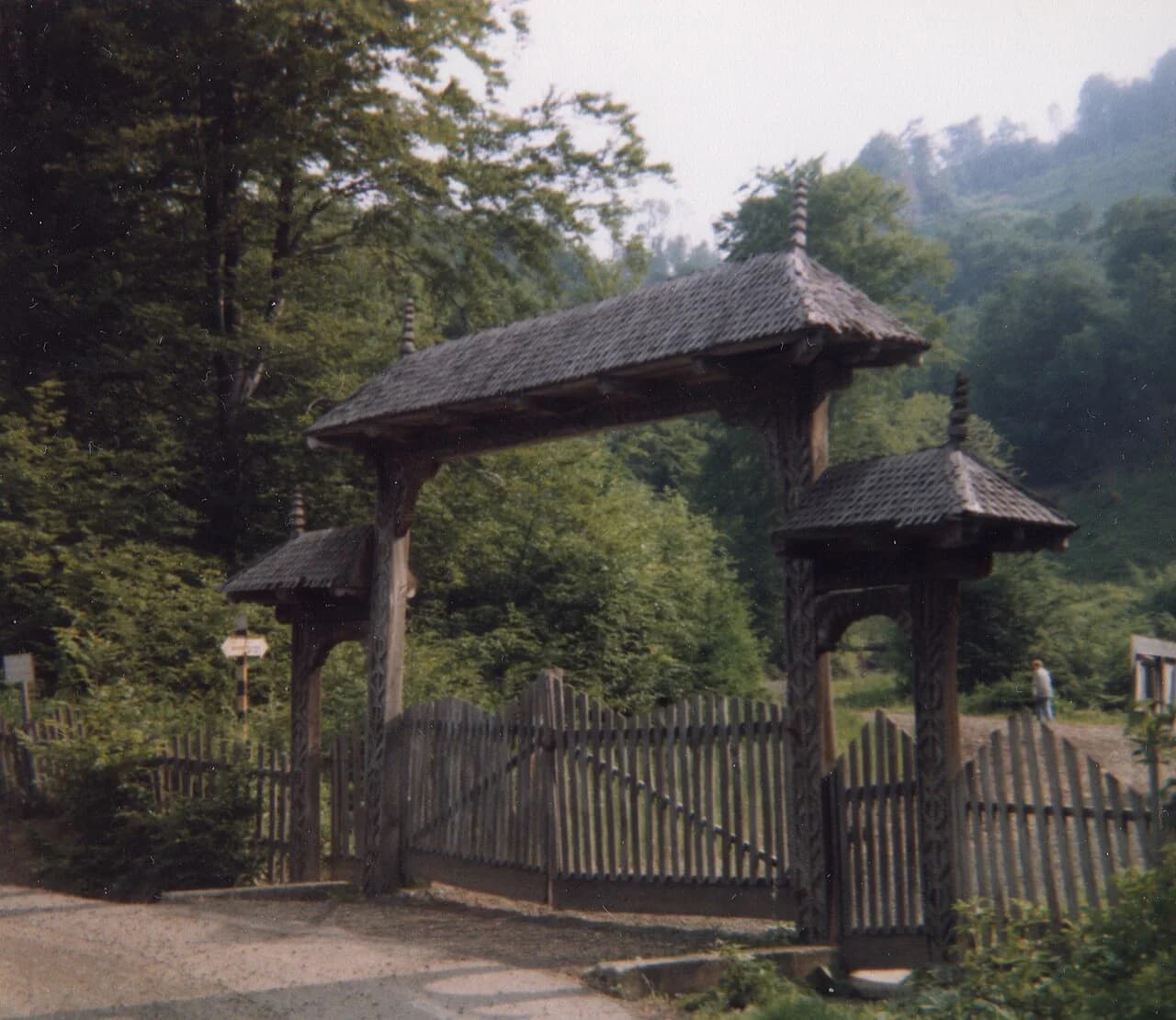
A Maramureș gate is a tall, carved wooden gateway standing in front of the house, and its job is to announce the family rather than to shut strangers out. The height and the carving carry the message; the short fences either side let a passer-by see straight into the yard. This guide explains what the symbols and inscriptions mean, which villages to walk for the best street frontages, and how the gates fit alongside the region's water-powered mills.
Expect an ordinary lived-in street rather than a ticketed sight. The gates line village roads in Breb, Hoteni, Sârbi, Budești and Călinești, so you plan a walk and take what the street gives you.
What a Maramureș wooden gate is
The gate is the most exposed symbol of a Maramureș household's pride, and it stands ahead of the house on the street line. It is built tall and carved with care, so the passer-by reads it before seeing anything else. The carved gateway announces the family; the house comes second.
Look at the fence as well as the gate. The fences are deliberately short, which lets anyone walking past see the house and its annexes. That openness is the point: the gate frames a household that expects to be looked at, not a compound built to keep people out.
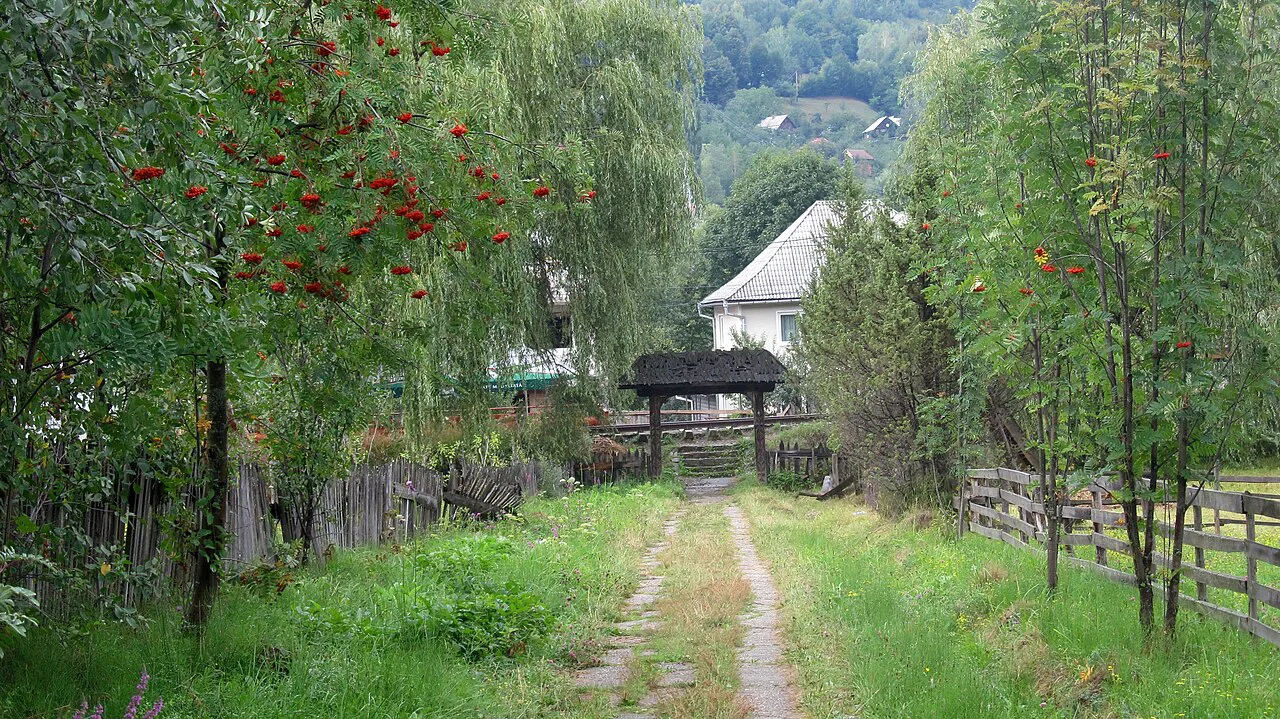
Why the gate, not the house, is the family's public face
In Maramureș, the carved gateway does the talking. Its height and the refinement of its carving say something about the people living beyond it, and the decoration is concentrated there rather than on the house front. Walking a village road, the gates give you the most immediate reading of the place.
The house itself is called the stătutul, the place where you simply stay, and it usually has three rooms under a high roof of draniță, wooden shingles. Annexes are grouped around it in the garden within a woven hazel fence, following unwritten local custom rather than a plan. A gate, in other words, is the entrance to a working yard.
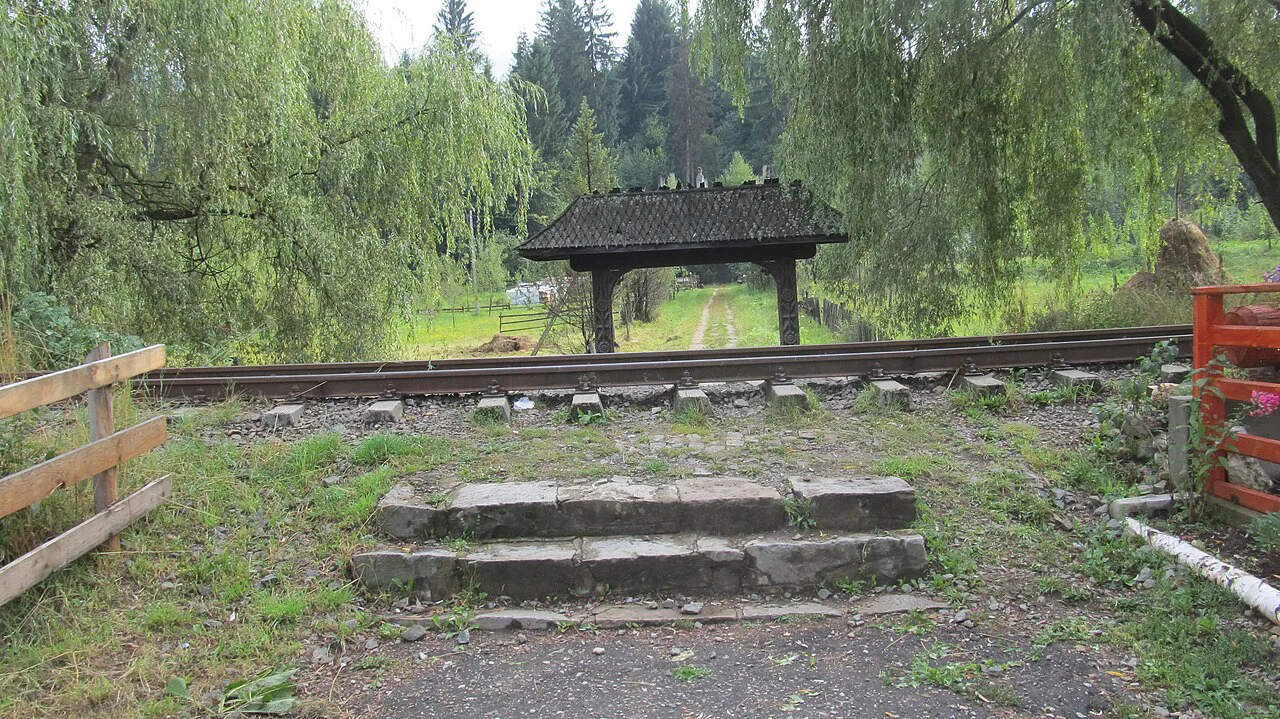
How to read a gate: year, occupations and motifs
Start at the top of the posts and work down. Above the carved symbols you will find the year of construction and information about the occupations of the family members who built it. That inscription is what turns a decorative gateway into a small dated document.
The carving itself uses solar, animal and religious symbols, worked into the wood alongside the inscription. Read them as a set rather than hunting for one meaning: the sun, the animals and the religious signs sit together above the year. Because households were built as each family saw fit and could afford, the programme varies from gate to gate.
You do not need a guide to read the year and the symbols, but you do need patience: gates are spaced along the street, not gathered in one place. Walk slowly, look up at the crossbeam, and step back across the road to see the whole gateway rather than the detail.
The household behind the gate
Through the gateway you see the yard, and the arrangement is orderly once you know the pattern. The stătutul house sits at the centre, the annexes cluster around it, and the whole is enclosed by the hazel fence. The openness of these households, as ethnographers describe it, is a deliberate part of how the yard is laid out.
People here are sociable, and a visitor standing on the street may be greeted and drawn into conversation. Treat the yard as someone's home: photograph the gate from the road, and accept an invitation only if one is offered.
Villages to walk for carved gates
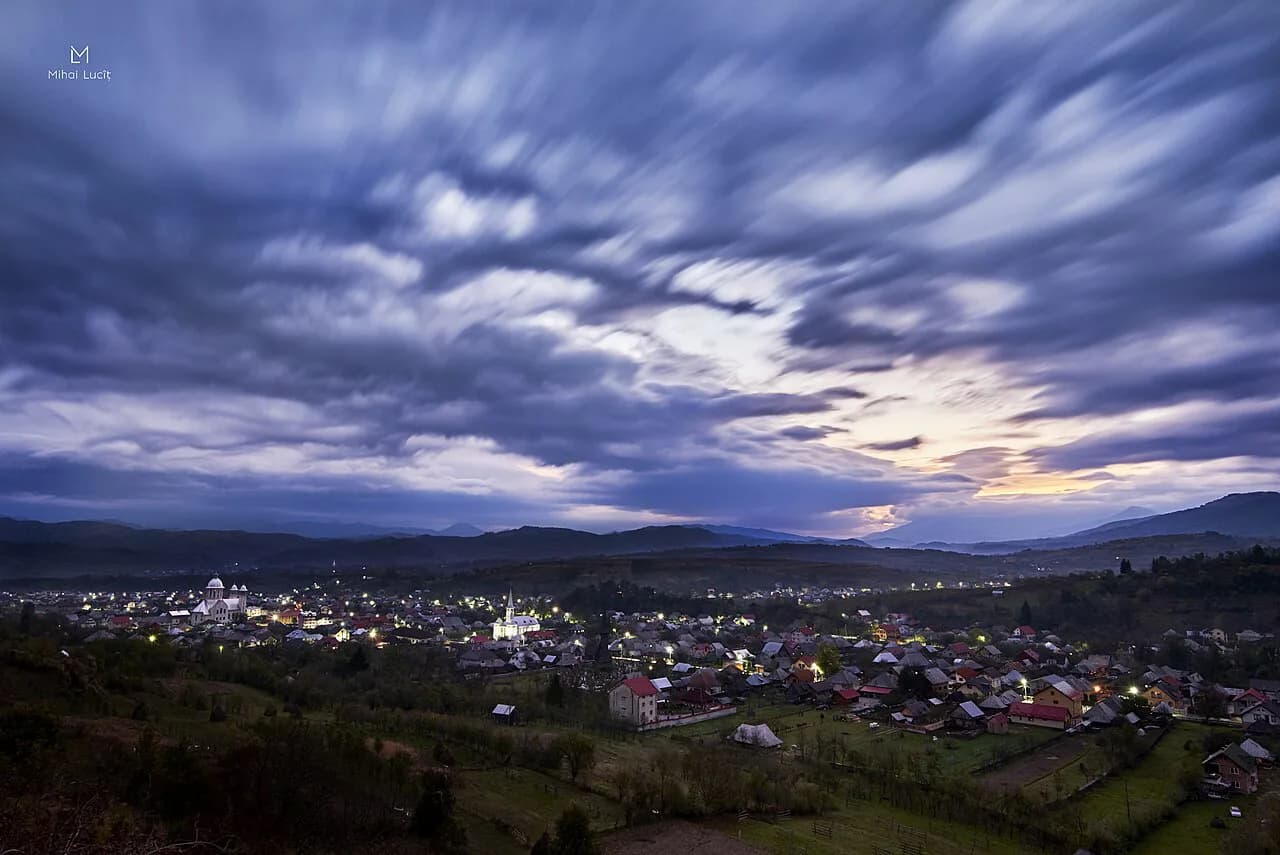
Begin with Breb, Hoteni and Sârbi, where the less-wandered streets still hold authentic houses with tall carved gates. Budești and Călinești are the next names to add, and both reward a slow loop away from the main road.
Each village is small enough to see on foot, but they are separate places, so pick two or three for a day rather than ticking off all five. Breb has its own lanes and footpaths worth a half-day on its own.
If you are based in the towns, Baia Mare and Sighetu Marmației are the practical starting points for these village roads in Maramureș.
Water mills, fulling mills and distilleries on the same walk
The same villages hold traditional technical installations powered by the Mara and Cosău rivers. In Sârbi you can see fulling mills, whirlpools, a thrasher, mill and horincă distilleries; Budești has a whirlpool, mills and distilleries; Văleni a mill and a whirlpool; and Chiuzbaia whirlpools. These were grouped into small complexes that shared one vertical water wheel, which made the work more efficient and turned the site into a social hub.
Plan the mills and the gates as one route rather than two outings, since they sit in the same villages. A morning of gate-walking in Sârbi pairs naturally with the installations on the valley side.
What a gate visit actually involves
The trade-off is simple: gates are scattered along ordinary streets, frontages are short, and much of what you see is viewed from the road. There is no single sight to stand in front of and no set circuit, which is why a car or a local driver makes the day easier than public transport between the villages.
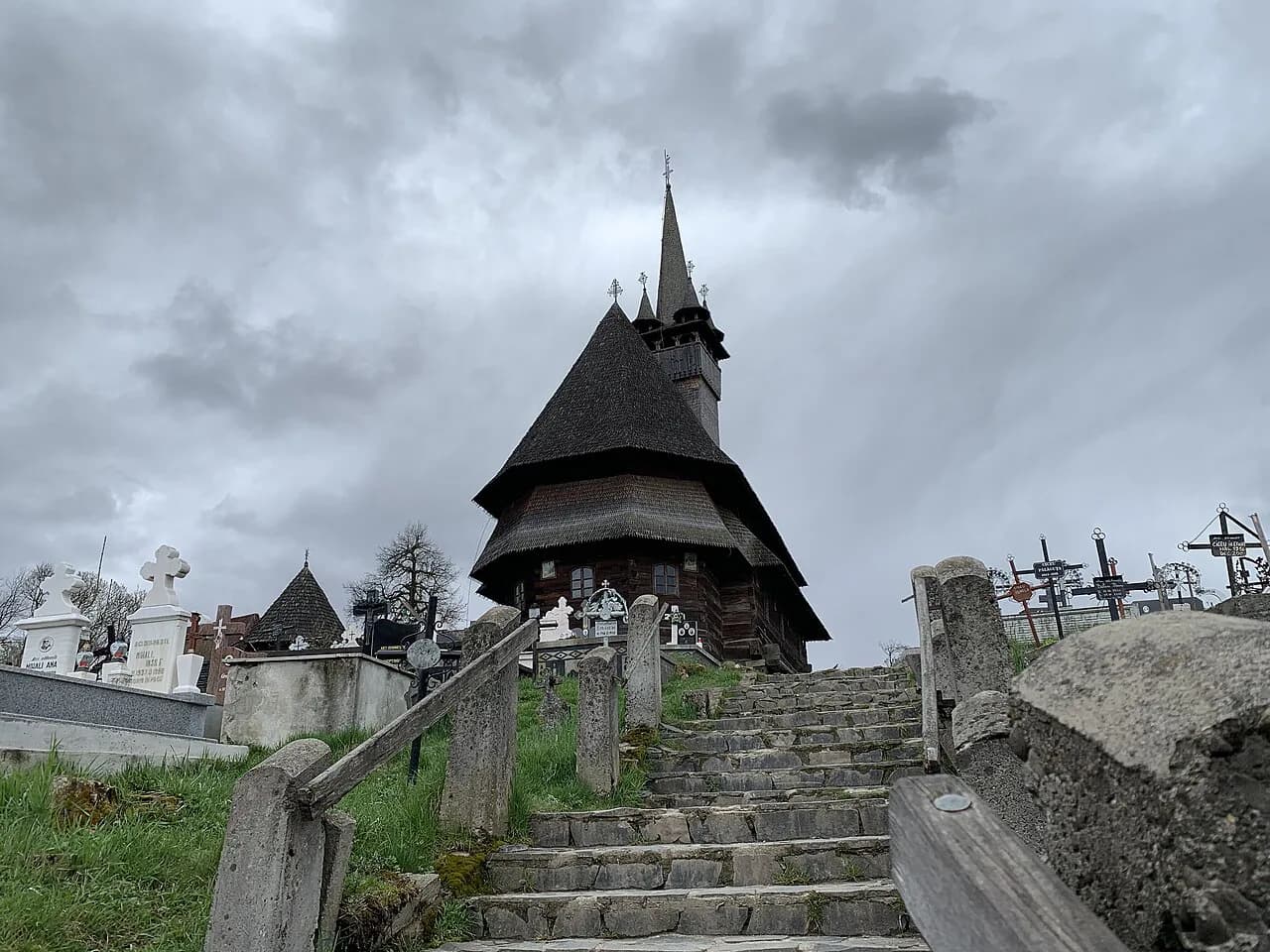
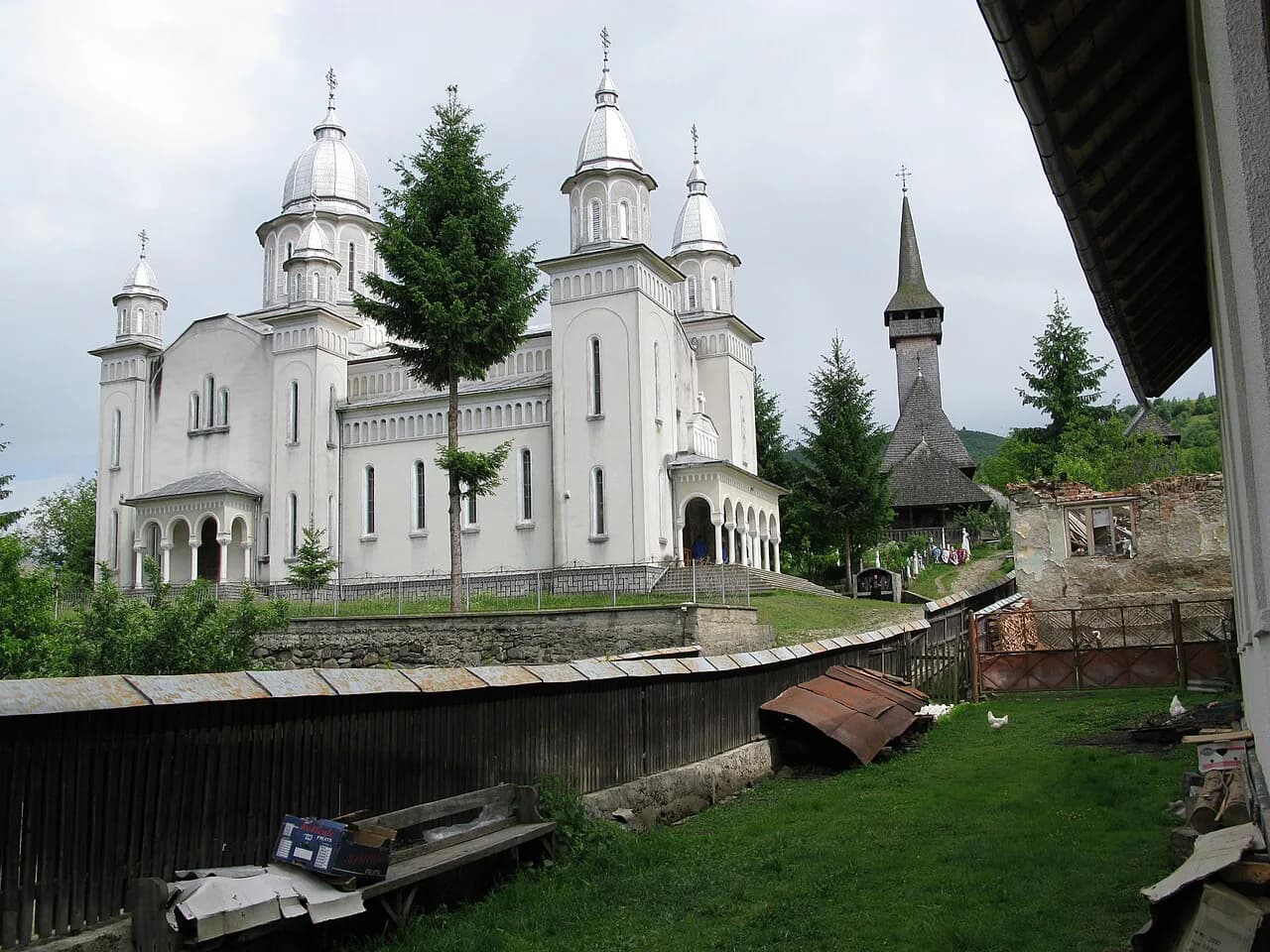
The best-known churches of the region are separate visits with their own access arrangements, and two of the wooden churches are listed as UNESCO heritage. Where you want a church interior, plan it as its own stop rather than folding it into a gate walk.
The yards are private family property, so view the gates from the road and treat the house and yard as someone's home. Any carving you commission or purchase is a separate arrangement with a craftsman, and you should agree the terms directly.
Check current access and opening times with local information centres before you set out, because village facilities change with the season. Beyond that, the gates are there whenever the street is.
Adding a town day to the village walk
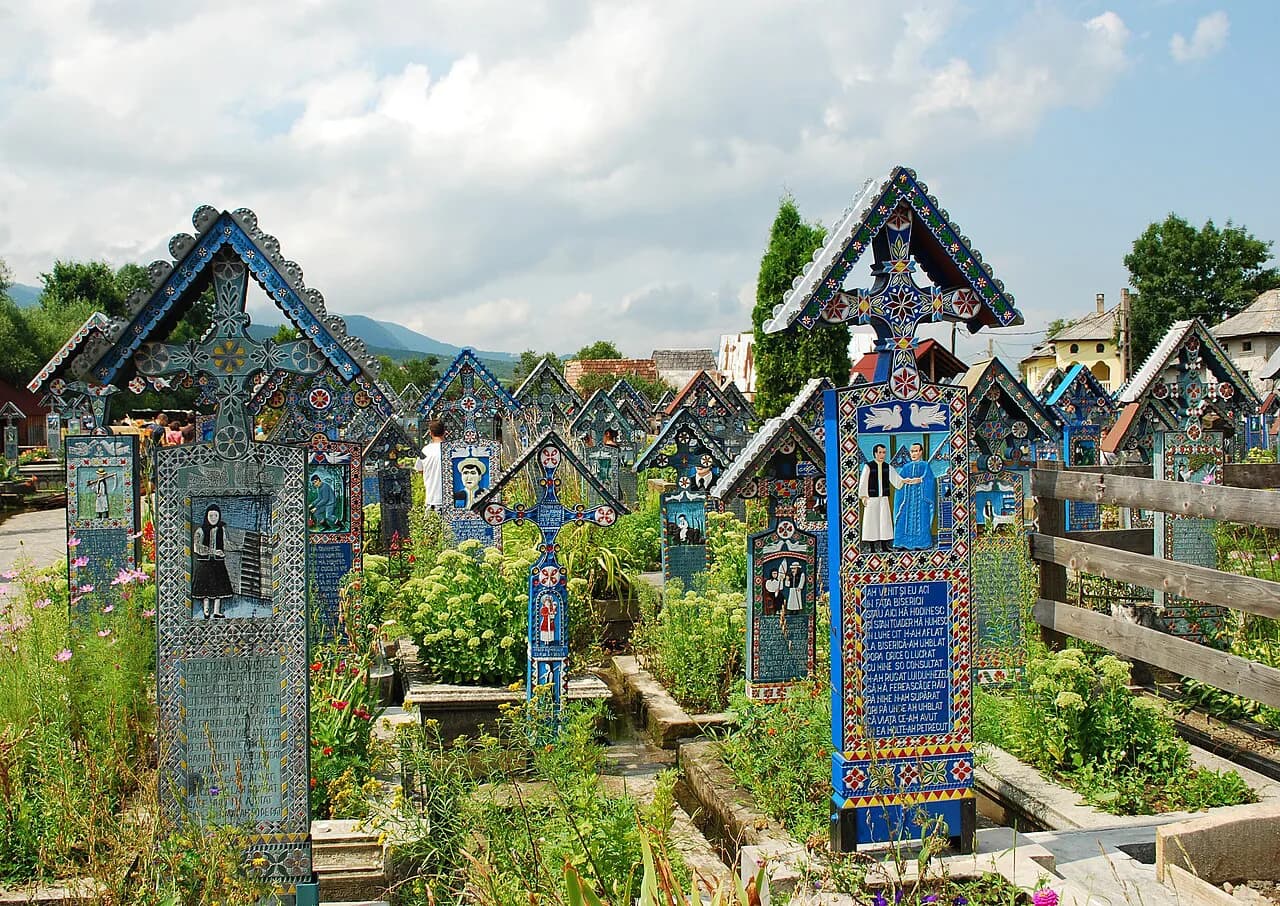
Sighetu Marmației makes a sensible base for the western villages. The Merry Cemetery (Cimitirul Vesel) at Săpânța is a short run from the town and works well as a half-day pairing with a gate walk.
For a different note, the Mocănița steam train gives a slow view of the landscape between village stops. Book it as its own outing rather than squeezing it into a gate day.
Nearby villages worth the detour
Botiza is a Maramureș village worth a stop if you are already on the Iza valley road. Ieud, on the same valley, adds another lane of houses to walk.
Desești and Șurdești both have wooden churches worth a look, and Șurdești sits within easy reach of the Baia Mare side. Treat them as church stops and keep the gate-walking separate.
Bârsana Monastery in Maramureș and Rohia Monastery are the two larger religious complexes in the area. Both make a calm counterpoint to a day of village streets.
Săpânța-Peri Monastery stands near the Merry Cemetery and can be fitted into the same outing. It is a short stop rather than a whole afternoon.
Which villages to walk first
Start with Sârbi or Breb if you want gates and water installations in one walk, and add Budești or Călinești if you have a second day. Two villages done slowly beat five done from a car window.
Check access with the local information centre before you go, and photograph from the road rather than the yard. The gates are a living street frontage, not a museum exhibit, and that is what makes them worth the detour.
Explore more Maramures guides
Sources
Useful notes for your next trip
Optional updates to our guides.
You might also like
Continue reading
More guides you'll find useful