Merry Cemetery, Săpânța: Painted Crosses and What to Expect
The Merry Cemetery at Săpânța has painted blue oak crosses with witty verses. Here is what you will see, how the crosses are carved, and what to plan around.
On this page
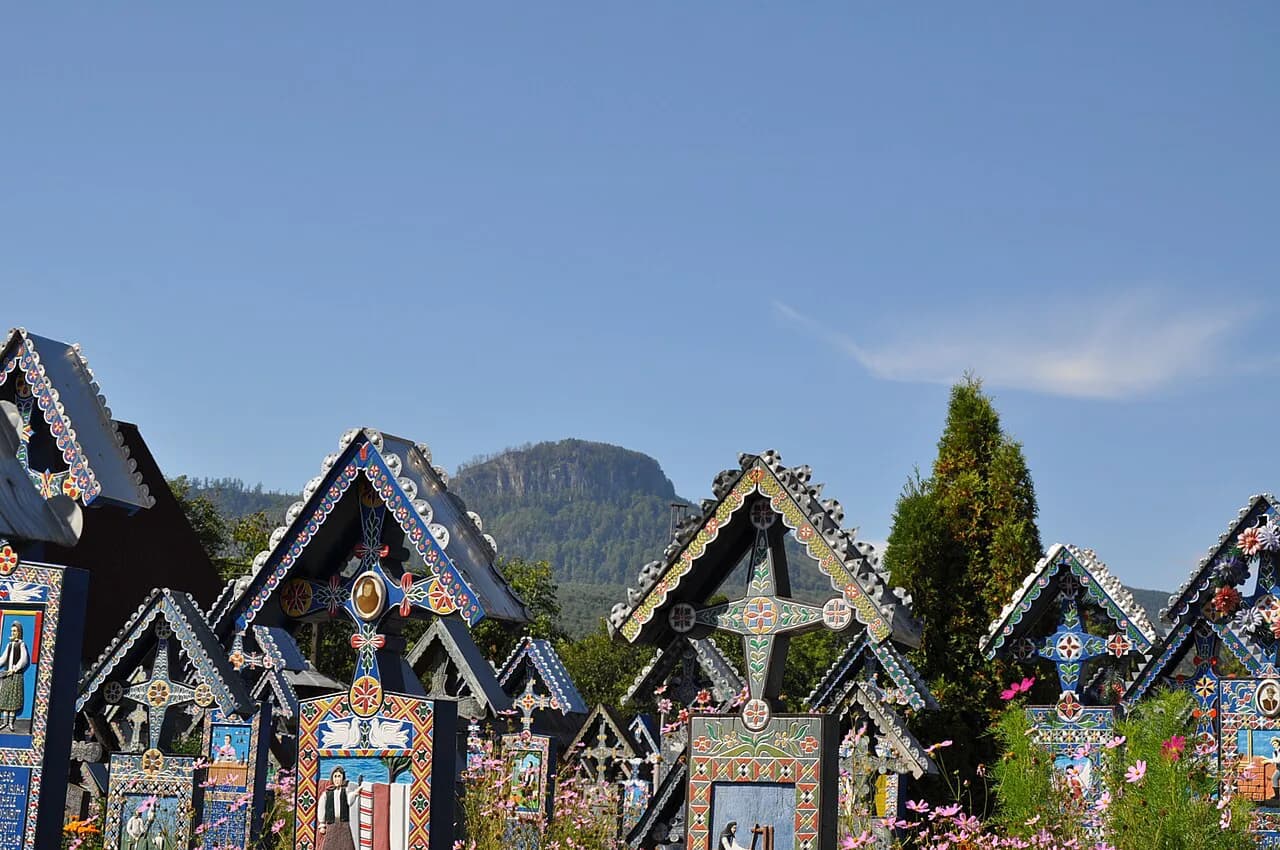
The Merry Cemetery at Săpânța is worth visiting for the crosses themselves: oak markers painted blue and carved with a scene from the dead person's life and a short verse. It sits in Săpânța village in Maramureș County, northern Romania, and it is an active cemetery rather than a museum display. This guide covers the crosses and epitaphs, how the woodwork is made, the workshop-museum, and how the visit fits a wider Maramureș trip.
Plan on half an hour to an hour among the graves, longer if you want to read the painted scenes properly or continue to the workshop-museum. Allow the journey there as the larger part of the day: Săpânța is a village stop, not a town you can wander into from a city centre.
What the Merry Cemetery is and where it sits
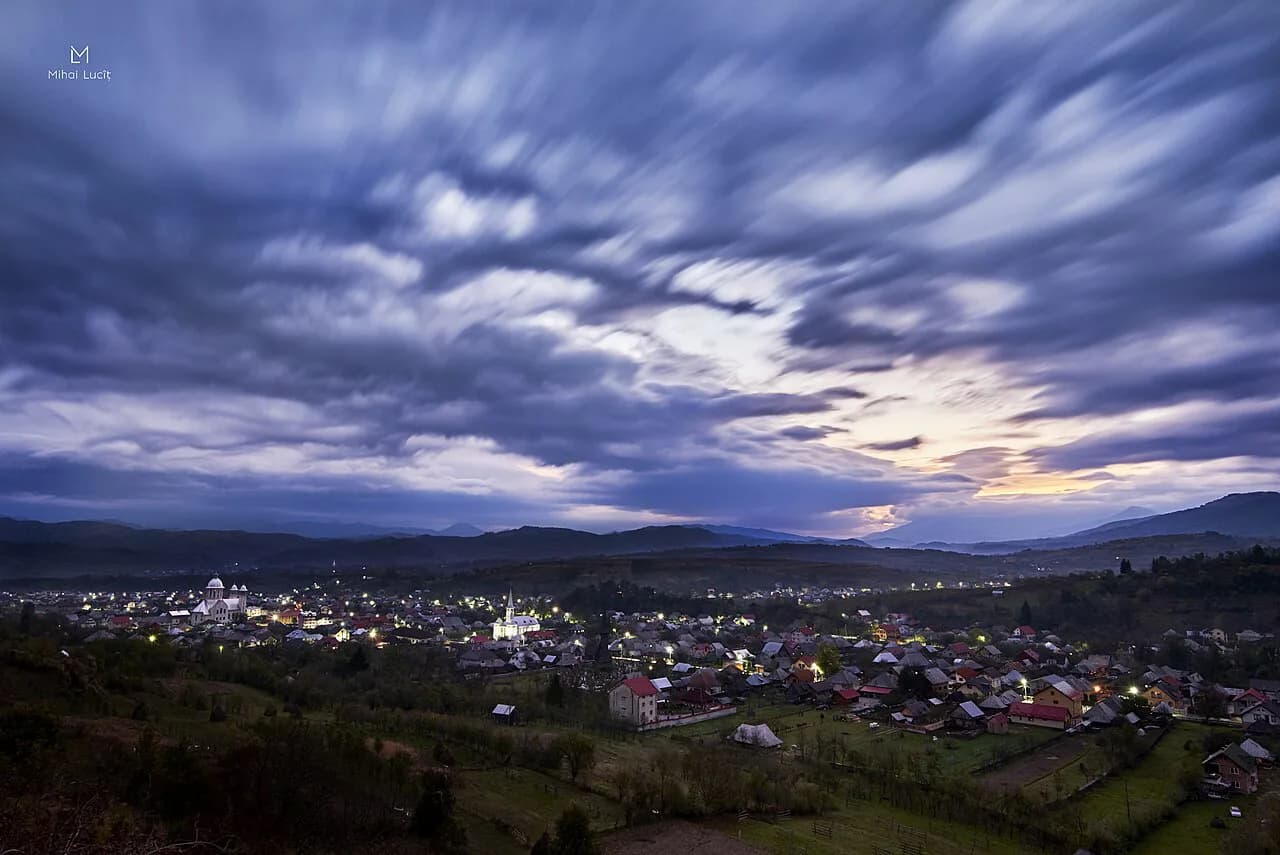
The cemetery, Cimitirul Vesel in Romanian, is in the village of Săpânța in Maramureș County, close to Romania's northern border. It is a village burial ground, so the setting is a churchyard and its surrounding lanes rather than an enclosed visitor attraction with a formal route through it. Visitors walk among the graves, and mourners still bury their dead here.
What distinguishes it is the decoration: most of the burial places carry naive paintings that describe, in a poetic and often comic way, the person laid to rest and scenes from their life. That combination of a working cemetery and painted, rhyming markers is what draws travellers off the main Maramureș roads.
Treat the visit as one stop in a Maramureș day rather than the whole day. The region rewards the same trip with its wooden churches, timber gates and village lanes, so pair Săpânța with neighbouring sights instead of driving out and back for the cemetery alone.
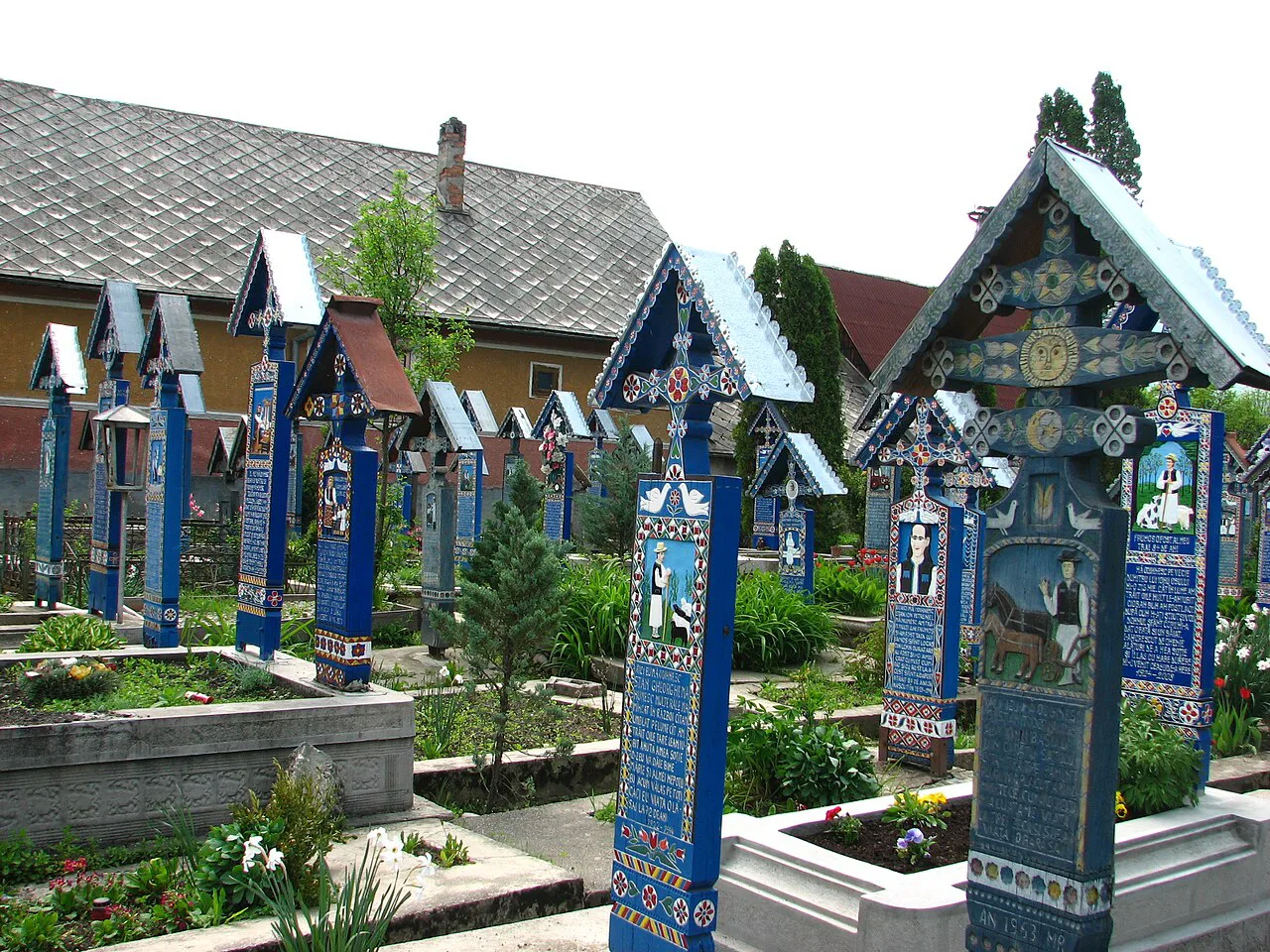
The painted blue oak crosses and what the epitaphs say
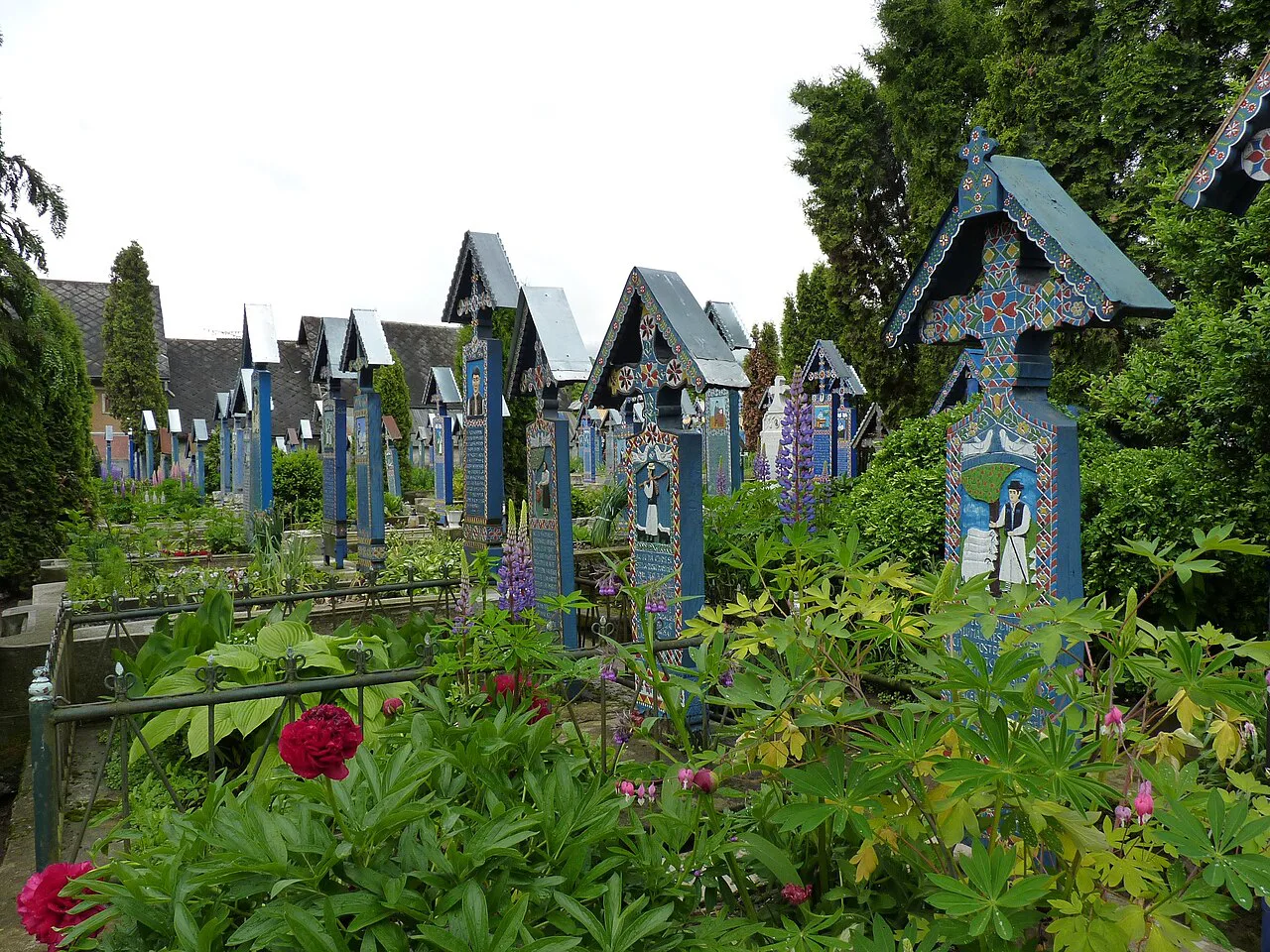
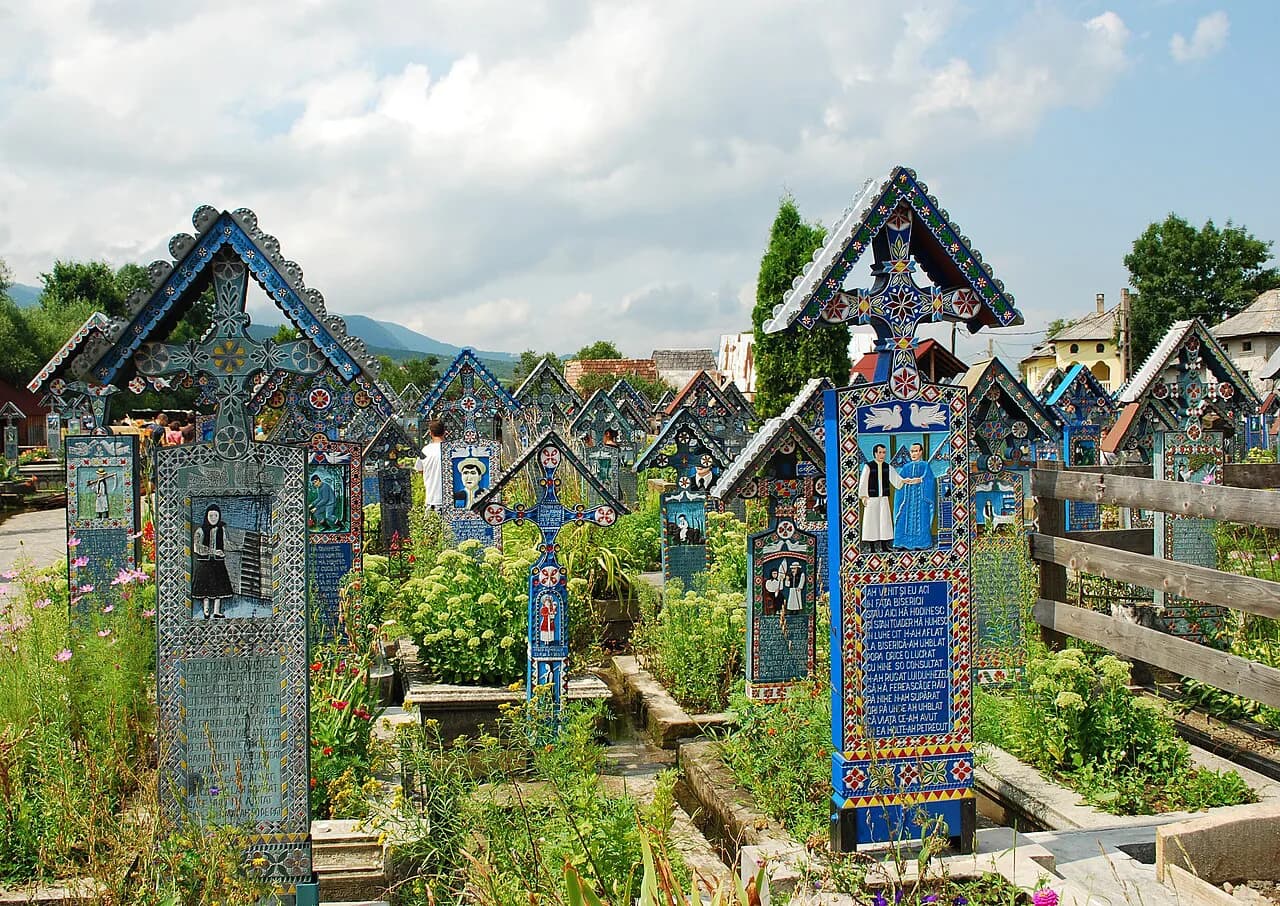
Every cross starts from a signature blue base known as Săpânța blue, with the decoration, scenes and lettering added in bright colours above it. The palette leans on red, yellow, green and Black, which in Maramureș carry meanings of passion, fertility, life and death. Look at the painting as well as the words: the figures, tools and animals in the scene usually tell you how the person lived or died.
The verses are comic but not cruel. They tell witty stories of infidelities, indiscretions and a fondness for alcohol, yet the poems do not mock the grave or the person in it, which is the distinction to hold on to when you read a funny epitaph aloud to your group.
The cemetery holds more than 800 of these markers, so you cannot read them all with any attention. Pick a handful whose painted scenes catch your eye, read the verse, and move on; the quality of the carving and the honesty of the stories land better in small doses.
Stan Ioan Pătraș, Dumitru Pop and the workshop-museum
Stan Ioan Pătraș, a Săpânța villager, founded the cemetery in the 1930s and began carving the colourful cross-shaped tombstones and writing epitaphs from 1935. He carved his own cross before his death in 1977 and left his house and business to his most talented apprentice, Dumitru Pop. Pop continued the work for three decades and turned the house into the cemetery's workshop-museum, which is the second half of a proper visit and the part quick stops miss.
Go to the Stan Ioan Pătraș Memorial House after the graves, not before. Seeing the tools, half-finished work and the house where the crosses were made explains what you have just walked past, and it gives the visit a natural end.
How a cross is made: oak, drying and the Săpânța blue palette
The crosses are carved from oak and nothing else in the traditional method. After the tree is cut, the wood is processed and left to dry for four to five years before it can be shaped into a cross.
Once the oak takes the form of the cross, the Săpânța blue is applied and then the decoration, rhymes, scenes from the deceased's life and the cause of death are added. All of the work is done by hand, which is why the line and lettering vary from cross to cross.
A carved cross costs in the region of $400 to $600 depending on the complexity of the work, which is the price of the carving rather than any entry charge. Entry charges and opening times for the churchyard are a separate question and best confirmed locally.
Visiting practicalities: what to plan around
The cemetery is a place of burial, so keep to the paths, keep your voice down and ask before photographing anyone who is visiting a grave. There is no fixed visitor route, and the crosses sit close together, so wear shoes you can stand and walk in on uneven ground rather than anything you would take to a museum.
Entry charges, opening times and any days when the site is closed to visitors are set locally and change between seasons. Check them with the cemetery or the Maramureș county tourism office before you set out, and confirm the same for the workshop-museum, which may keep different hours from the churchyard.
Bring cash in lei for smaller stops on the same day, since village sights and car parks in Maramureș are not reliably set up for cards. Avoid arriving in the middle of a funeral: if a service is under way at the church, wait or come back later.
Getting to Săpânța and how the visit fits a Maramureș trip
Săpânța is reached by road, and the practical bases for the area are Baia Mare and Sighetu Marmației. From either town, the drive is a half-day outing by car, so the honest trade-off is time in the vehicle against the hour you spend at the graves.
A car gives you the freedom to combine Săpânța with the surrounding villages, which is how most travellers see the region. Without one, a guided day tour from Sighetu Marmației or Baia Mare is the realistic option, and you should confirm what the tour includes and whether the workshop-museum is on the route.
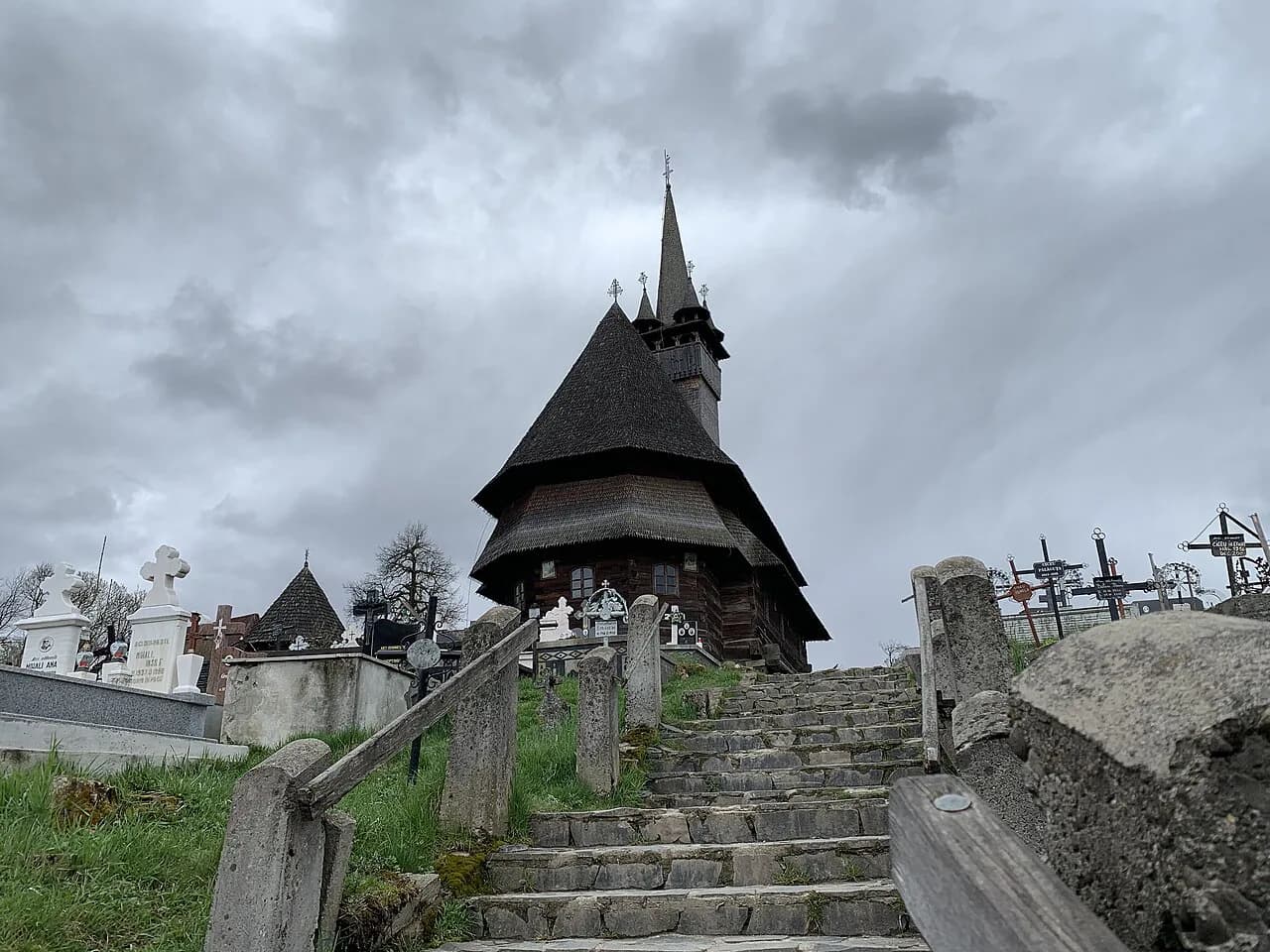
Build the stop into a loop that takes in the wooden churches of the Iza and Mara valleys, which sit on the same driving routes. Săpânța can also be paired with Bârsana Monastery, Maramureș gates along the Cosău valley, and the villages of Botiza and Breb, all of which reward a slower day.
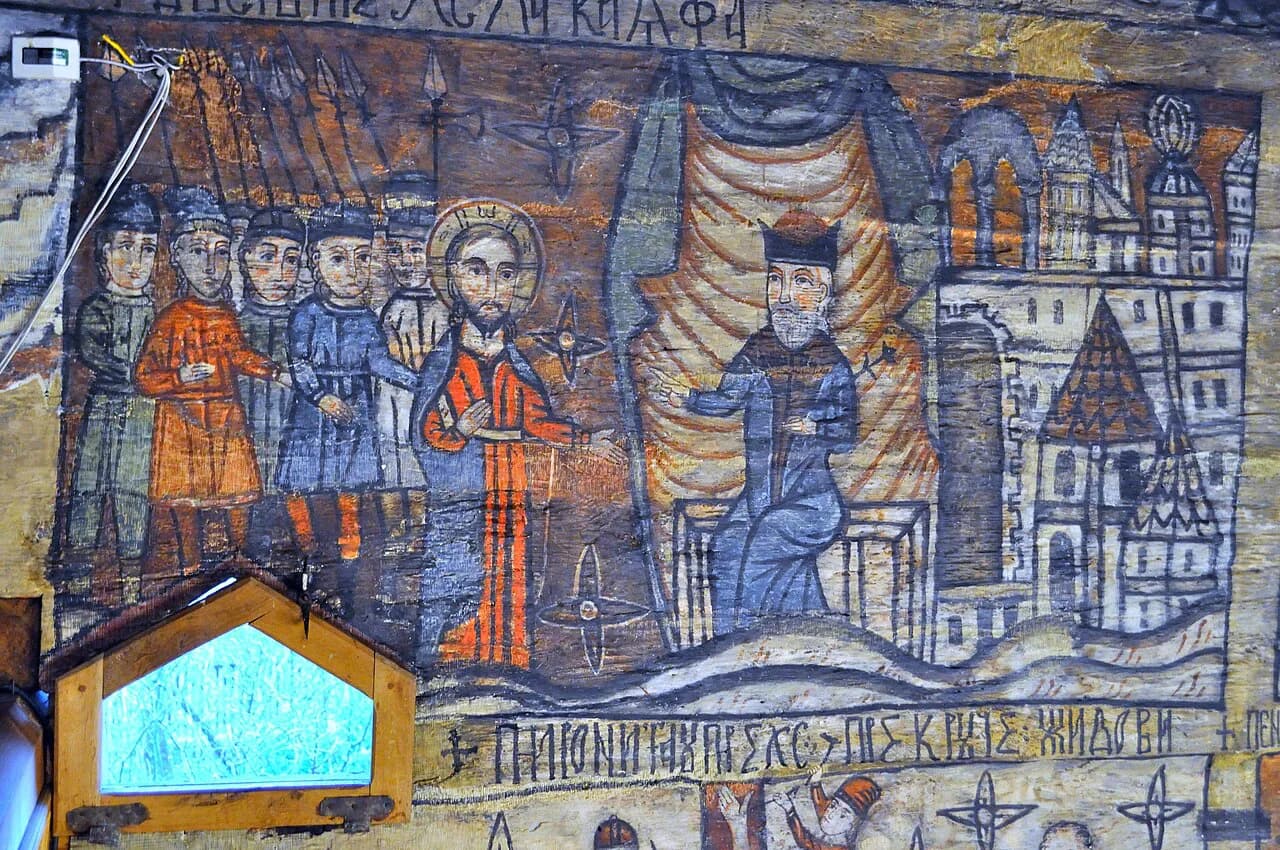
If you are collecting the region's UNESCO-listed churches, allow a full day for Săpânța, Ieud and the Iza Valley rather than squeezing them into an afternoon. The Mocănița steam train is a separate half-day, so choose between the two on a short trip instead of trying to do both.
Is Săpânța worth the drive?
Yes, if you are already spending time in Maramureș and can give the day to the villages around it. The cemetery is the main reason to come, but the workshop-museum and the surrounding wooden churches are what make the journey feel complete rather than a single stop photographed from the car park.
Build the day around one base, plan the driving time honestly, and check the opening arrangements for the cemetery and Memorial House before you go. If your trip is short, choose between Săpânța and the Mocănița rather than rushing both.
Explore more Maramures guides
Frequently Asked Questions
Do you need a guide at the Merry Cemetery?
No, the crosses stand in a churchyard and you can walk among them on your own. A guide helps with the Romanian epitaphs and with the drive between villages, but the visit itself needs no escort.
Can you visit the Merry Cemetery for free?
The cemetery is a village burial ground, and no published entry charge or opening times were available for this guide. Treat any charge as a local arrangement rather than a fixed ticket, and confirm the position for the churchyard and for the Stan Ioan Pătraș Memorial House with the Maramureș county tourism office before you travel.
How long do you need at the Merry Cemetery?
Budget half an hour to an hour among the graves, and add time for the workshop-museum at the Memorial House. The drive from Baia Mare or Sighetu Marmației takes up the rest of the half-day.
Sources
Useful notes for your next trip
Optional updates to our guides.
You might also like
Continue reading
More guides you'll find useful