Săpânța-Peri Monastery: What You See at Maramureș's Tall Wooden Church
Săpânța-Peri Monastery is a tall wooden church in Maramureș, built between 1998 and 2003. Here is what you see there and how it fits a visit to Săpânța.
On this page
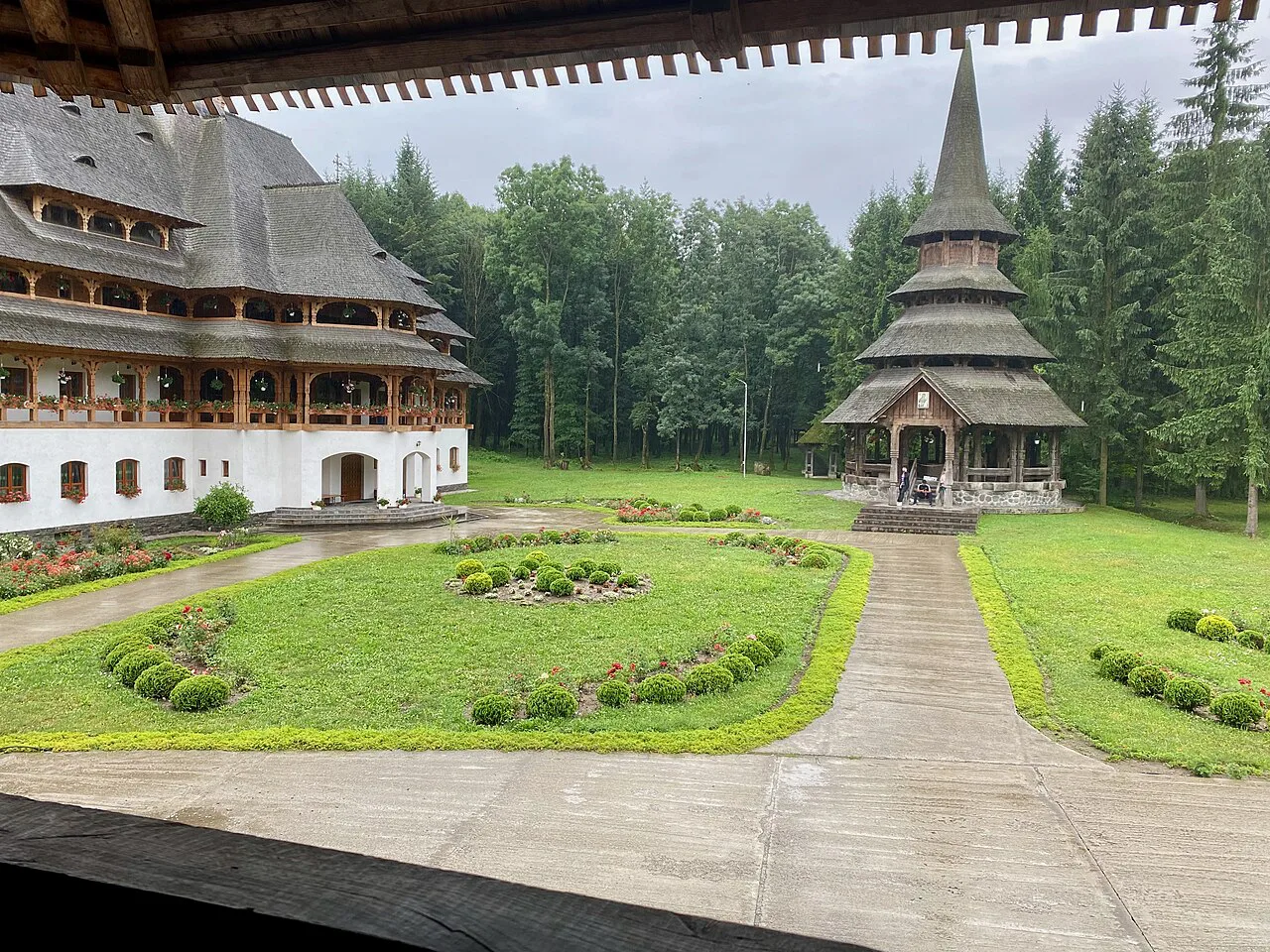
Săpânța-Peri Monastery is a working Orthodox convent in the village of Săpânța, Maramureș, and its headline sight is a Maramureș-style wooden church built between 1998 and 2003. Plan it as a short second stop after the Merry Cemetery rather than a destination in its own right, with time for the church and its setting.
The page covers what stands on the site, how the church is built and decorated, the scale of the tower and cross, the nuns who have run it since 2005, and its link to the older Peri monastery across the border in Ukraine. It also sets out how the visit fits a wider Maramureș itinerary and what a working convent asks of you.
What Săpânța-Peri Monastery is, in one answer
The site is an Eastern Orthodox complex founded in 1997 beside the Tisza in Săpânța, a village on Romania's northern border. The monastery was set up to revive the tradition of the old Monastery of St. Archangel Michael at Peri, which stands on Ukrainian territory, and a parish priest named Lutai led the foundation. The church itself was raised between 1998 and 2003.
Treat the visit as a look at a living religious house rather than a museum circuit, since the draw is the building itself and its border setting.
Where it sits in Săpânța, the border village in Maramureș
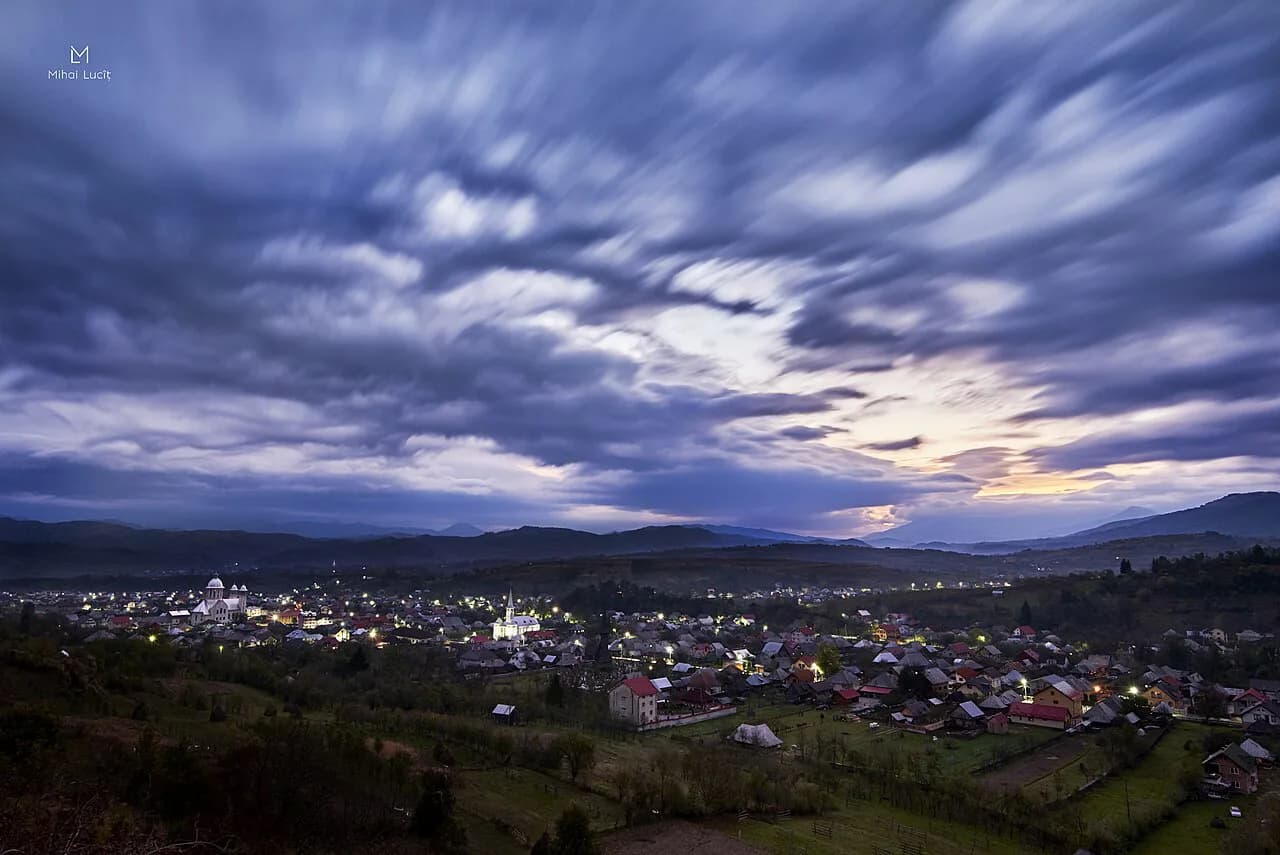
Săpânța lies in the far north of Maramureș, close to the Tisza and the Ukrainian frontier, and the monastery is linked with the village's other well-known sight, so it can be combined with the Merry Cemetery. For the wider region, see the guide to Maramureș.
Săpânța is a village in Maramureș County, and Sighetu Marmației is the nearest sizeable town in the county. No train or bus arrangements for the monastery are set out here, so confirm local transport or a car route through your accommodation in Sighetu Marmației before setting out.
The Maramureș-style wooden church and its gold-clad roof
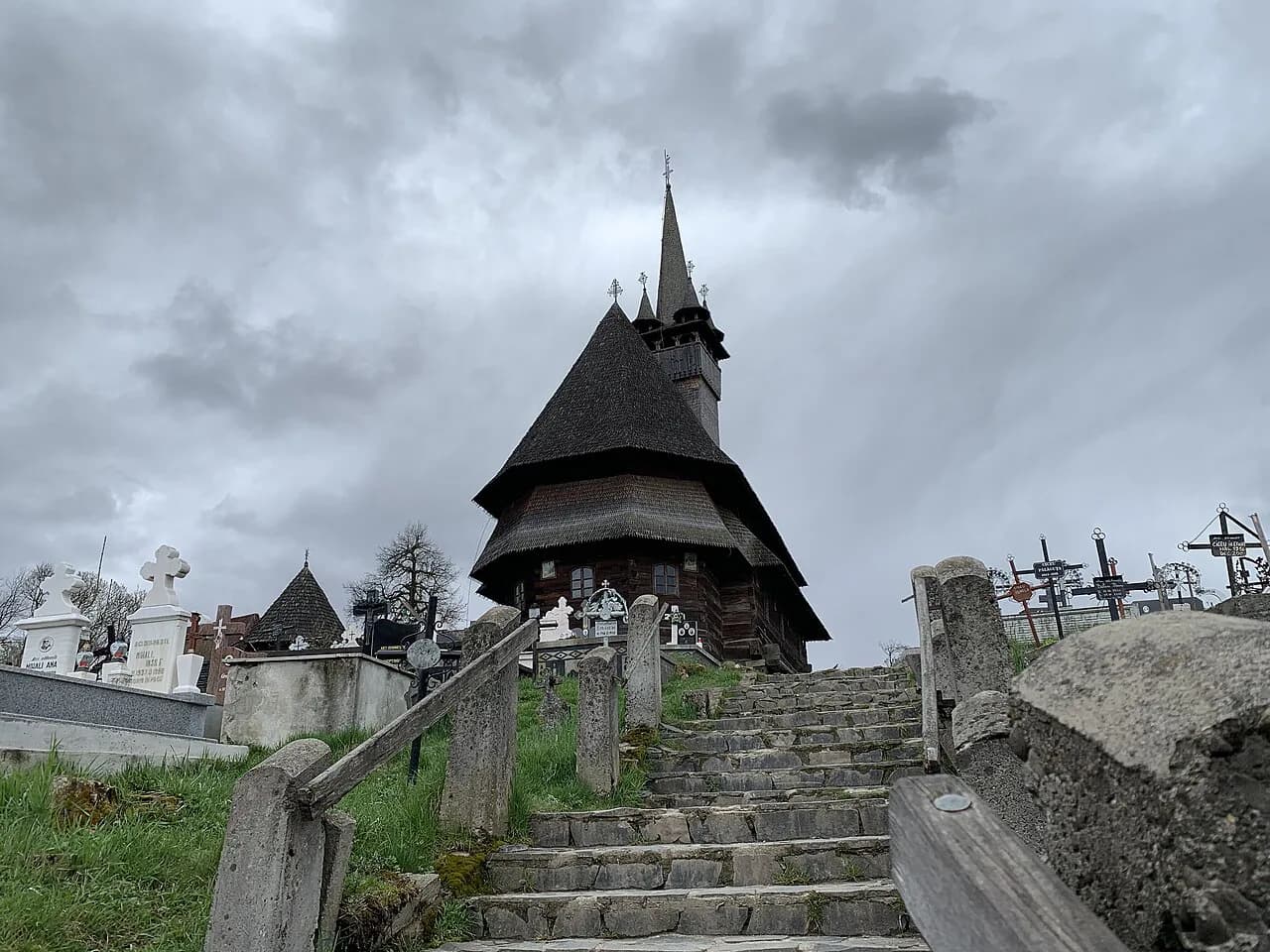
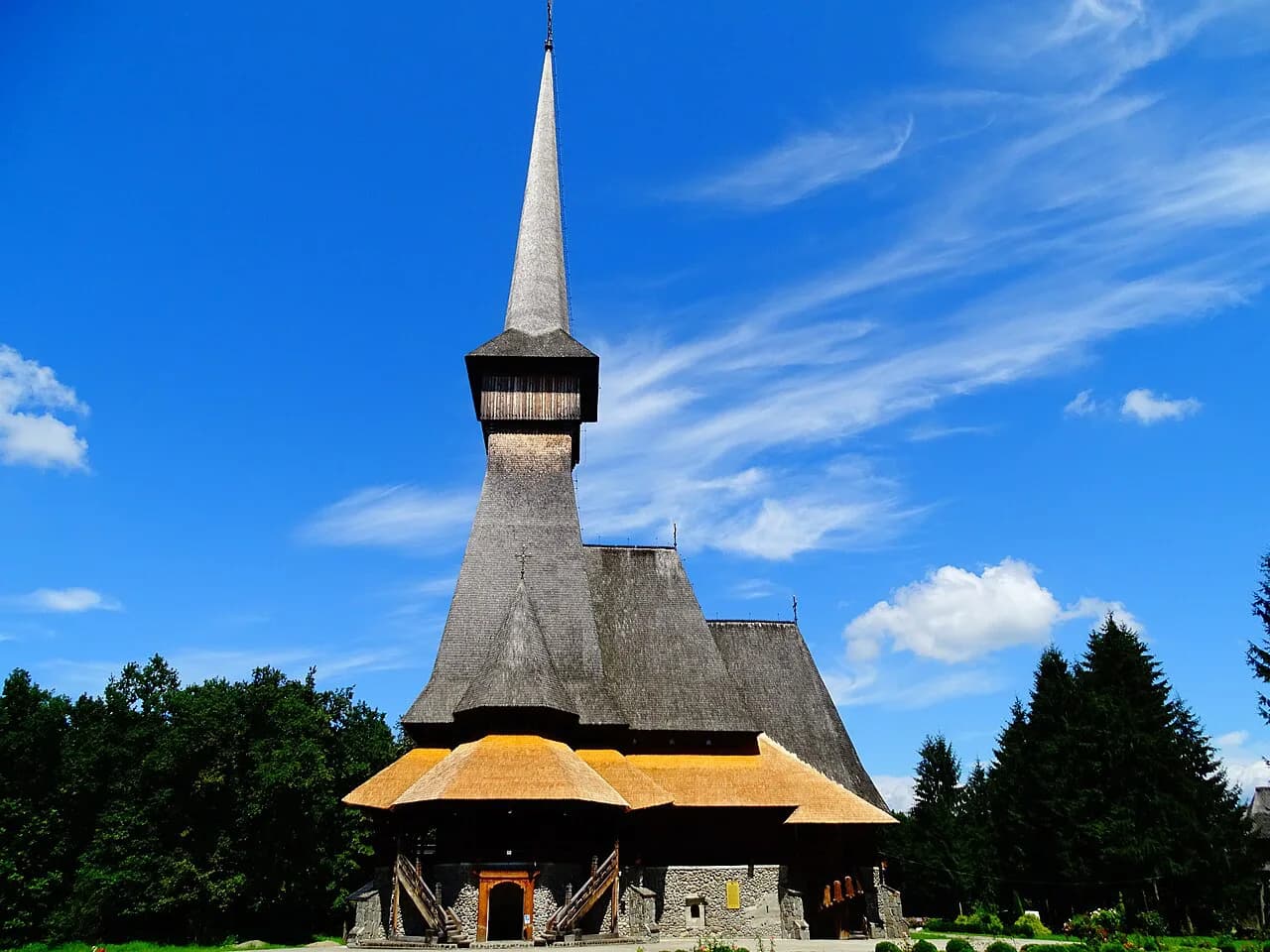
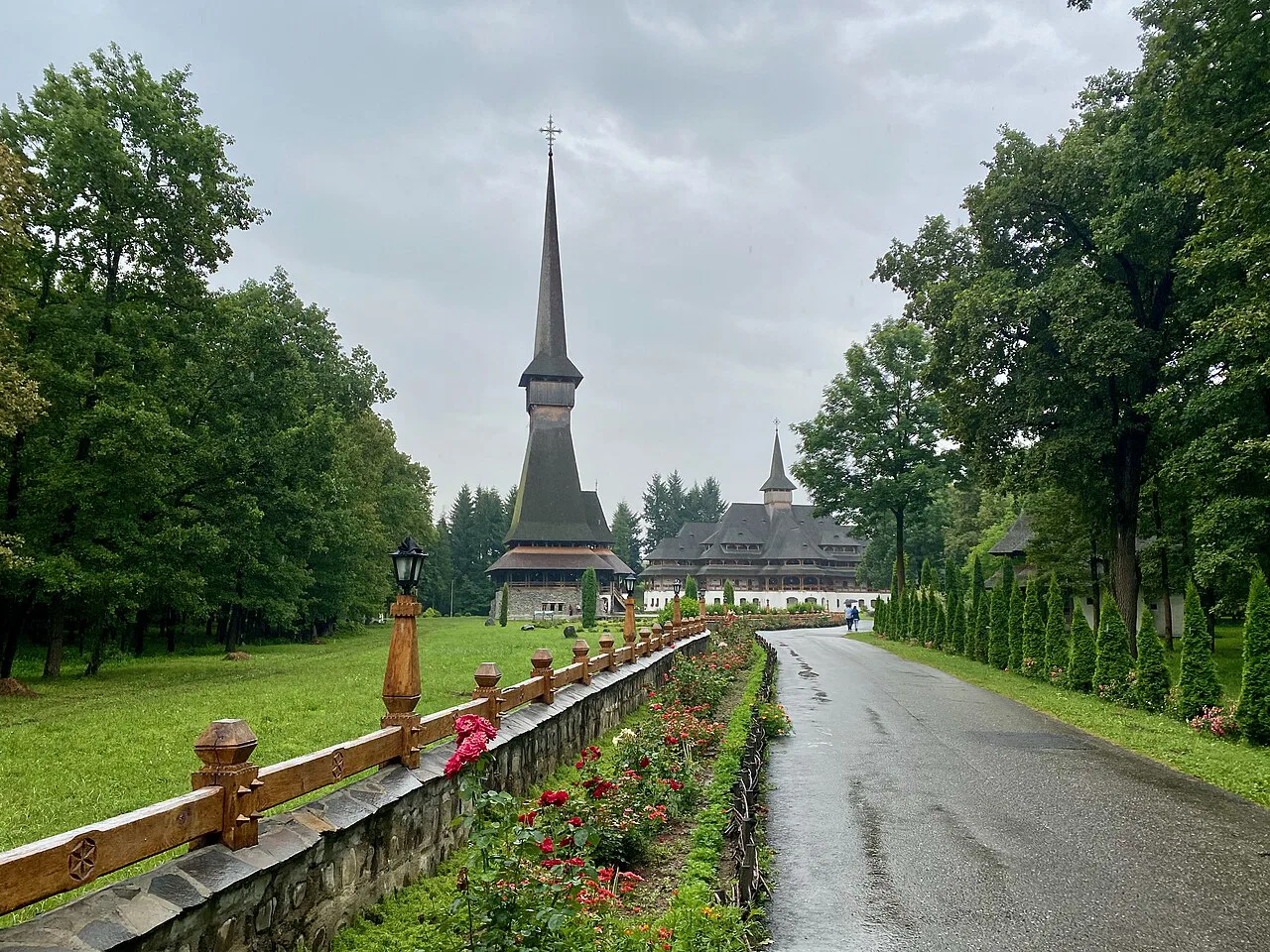
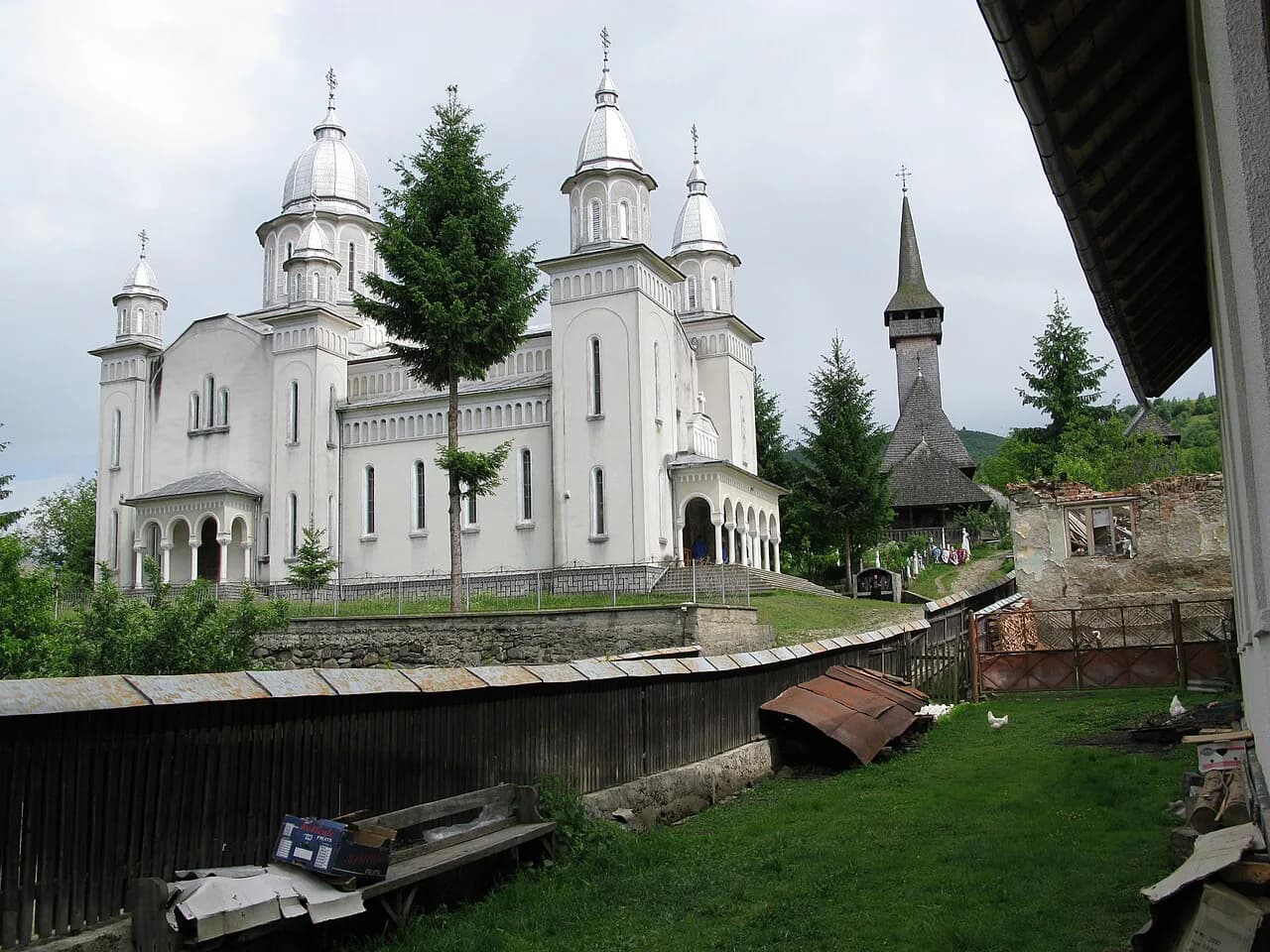
The church is built in the Maramureș manner, with the tall, steep-roofed silhouette and spire that define the region's wooden architecture. It was clad initially with 8.5 kg of gold.
The cross, seven metres high, is itself coated with four kilograms of gold, so the gold detail runs right to the top of the spire. This is a modern build, so place it after the region's older village churches rather than before them.
The 78 m tower and the seven-metre cross
The tower reaches a maximum height of 78 m, which makes it visible from around five kilometres away across the Tisza, and the cross alone stands seven metres tall, coated with four kilograms of gold. Those dimensions explain why the church dominates the skyline here and why the building is worth a deliberate stop even on a tight schedule.
Stand back along the approach to take in the full height, since close to the base the spire disappears out of frame. The scale also sets a realistic expectation: this is a build of 1998–2003, so come for the proportions and the setting rather than for centuries of wear.
The nuns' community that has run the site since 2005
A community of nuns took over the site in 2005 and continued the building work, with Abbess Agnia Ciuban leading the convent. Six nuns live there, which is the practical reason the place runs as a religious house rather than a heritage attraction.
That shapes how you behave on site: keep voices low, dress considerately and keep out of areas that are clearly in religious use. Visitor arrangements and services are not set out here, so ask at the gate or check current service times and access with your host in Sighetu Marmației if you want to attend a service.
How the monastery links to the old Peri monastery across the border in Ukraine
The foundation exists to carry on the tradition of the ancient Monastery of St. Archangel Michael at Peri, which lies on the Ukrainian side of the border in what the source calls the Transcarpathia region. That older house is why the new one bears the double name Săpânța-Peri, and its tower can be seen from across the Tisza by Romanians in Transcarpathia.
Crossing the border to the Ukrainian side is a separate undertaking, and approach the site as a new foundation that carries on the old house's tradition rather than as a reconstruction; the name on the gate will then make more sense.
Visiting alongside the Merry Cemetery in Săpânța
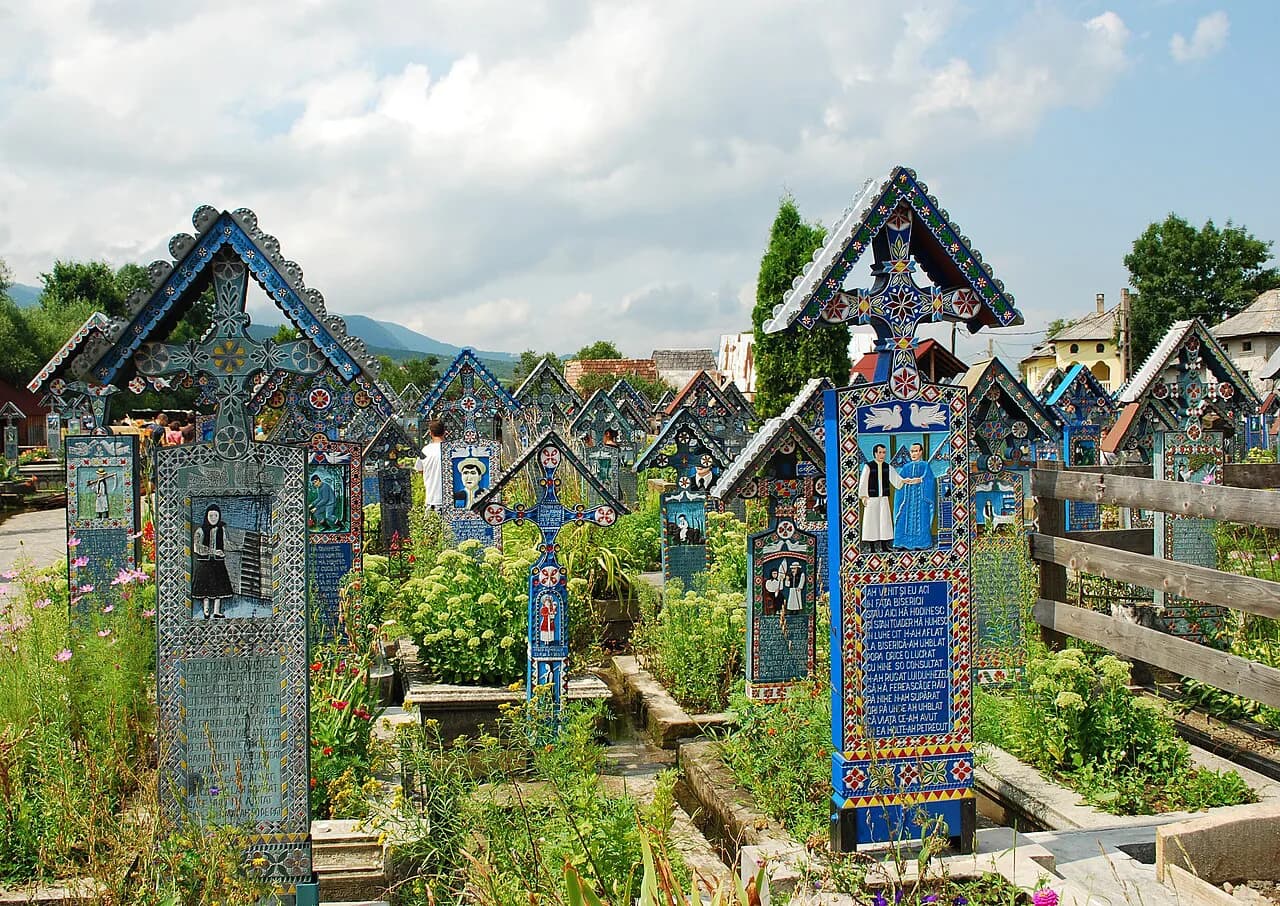
Pair the two Săpânța stops in one outing: the Merry Cemetery first, then the monastery, which keeps the day compact and avoids a second journey into the village. The cemetery is the better-known draw, so going early gives you quieter conditions before coach groups arrive.
Săpânța can be combined with Maramureș villages on a wider circuit, where the historic wooden churches reward a slower pace. The monastery then acts as a contrast stop on the same day rather than the main event.
What the visit asks of you: a working monastery, not a museum
Entry fees, opening times and access arrangements are not set out here, so come prepared to ask on arrival and to accept that access may be limited while the nuns are at prayer.
Keep the stop brief, take photographs without blocking the approach, and leave the grounds as you find them. If you want a fuller religious-house visit nearby, the Rohia monastery makes a more formal stop on another day.
Is Săpânța-Peri worth adding to a Săpânța visit?
Add it if you are already in Săpânța for the Merry Cemetery and want to see how the region's wooden church form has been rebuilt at scale; skip it if you are short of time or expect a museum. The 78 m tower and the gold-clad cross justify a brief stop, not a dedicated journey.
Build the day around the cemetery and keep the monastery as the second stop, and save the region's older churches for villages such as Ieud and Budești, where the timberwork is the historic article.
Explore more Maramures guides
Sources
Useful notes for your next trip
Optional updates to our guides.
You might also like
Continue reading
More guides you'll find useful