Rohia Monastery (Mănăstirea Sfânta Ana): Visiting Guide
Rohia Monastery, or Mănăstirea Sfânta Ana, sits on a wooded hill above Târgu Lăpuș in Maramureș. Here is what you see on the hill and how to get there.
On this page
Rohia Monastery, formally Mănăstirea Sfânta Ana, is a Romanian Orthodox monastery on Vineyard Hill above the village of Rohia in Maramureș County. Visitors come for the hilltop setting in beech and oak forest and for a compact group of named buildings around the church. This guide covers what stands on the hill, the short version of its foundation story, how Târgu Lăpuș works as the junction for the last stretch, and how to arrive by car or train.
What Rohia Monastery is and where it stands
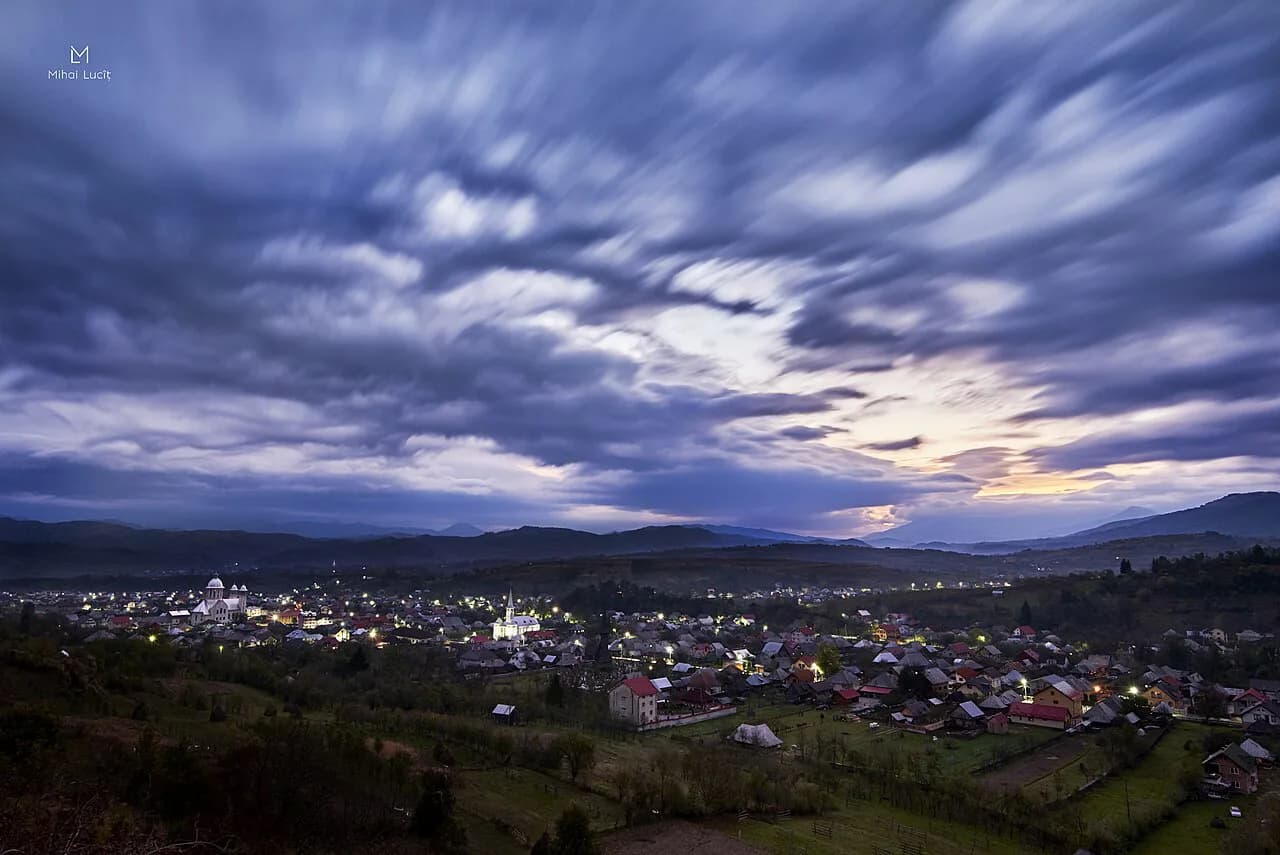
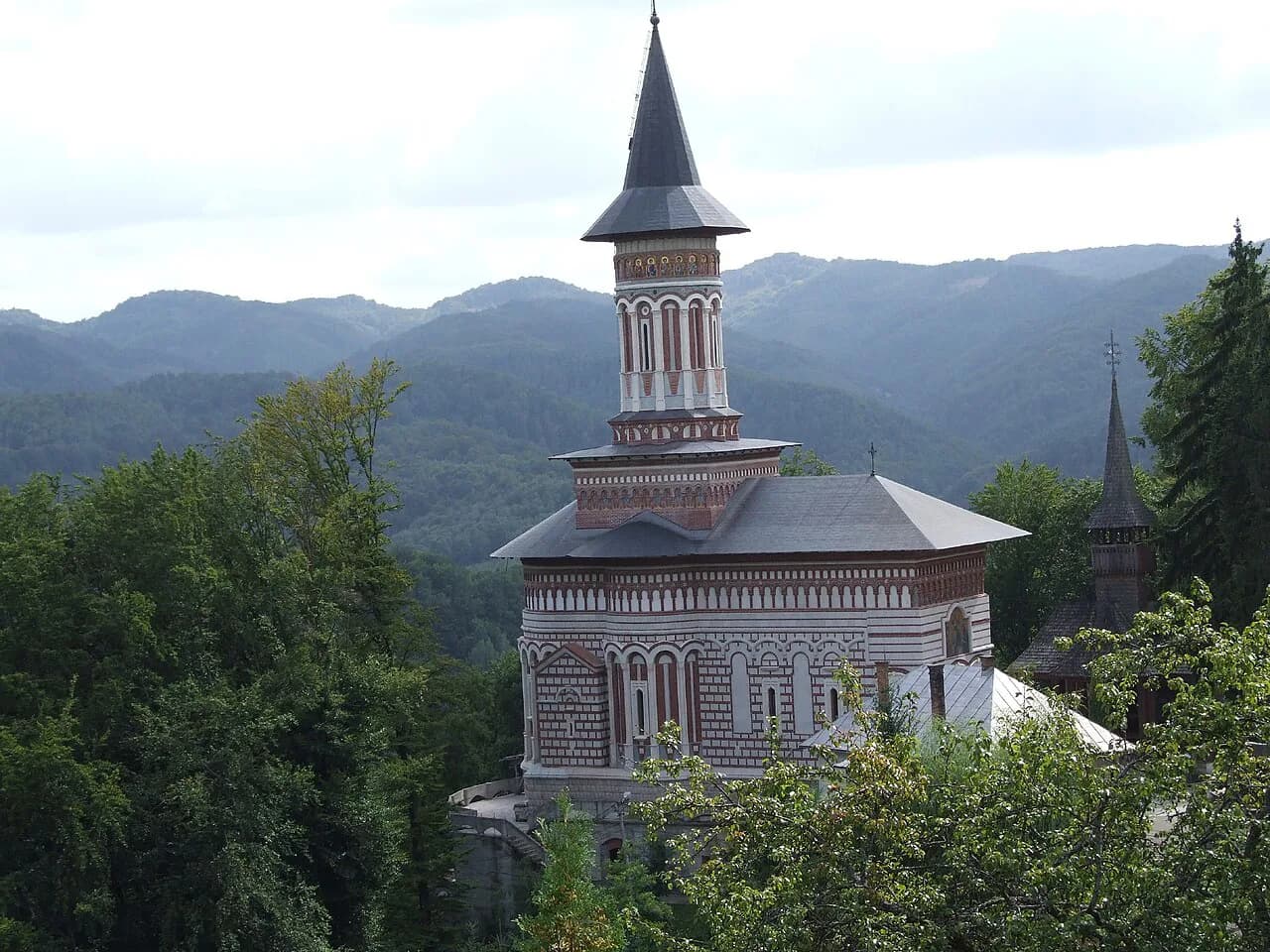
The monastery belongs to the Romanian Orthodox Diocese of Maramureș and Sătmar and sits in the Lăpuș region, about 50 km from Baia Mare and 43 km from Dej. It occupies the ridge of a hill called Vineyard Hill at roughly 500 m altitude, surrounded by beech and oak forest above the village of Rohia, which is part of Târgu Lăpuș. The regional route listing records it at Aleea Mănăstirii, no. 18, Rohia.
Rohia is not in the UNESCO-listed core of the Maramureș wooden churches and it is not a town stop on a standard Maramureș circuit; it is a working monastery in a rural corner of the county. Plan it as a half-day detour from Târgu Lăpuș or as a break on a drive between Baia Mare and Dej rather than as a stop you can slot into an hour.
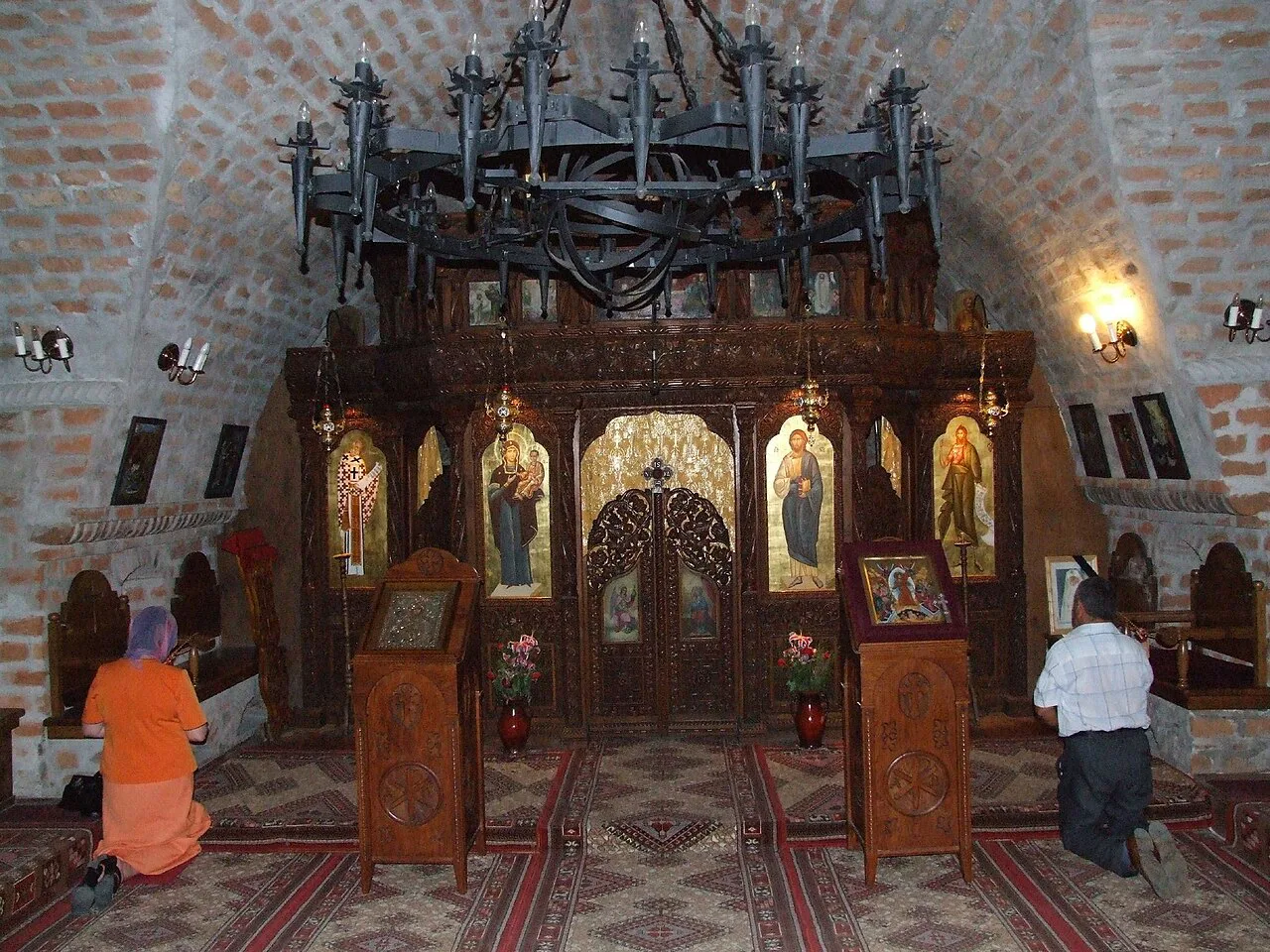
What you see on the hill: church, houses and gates
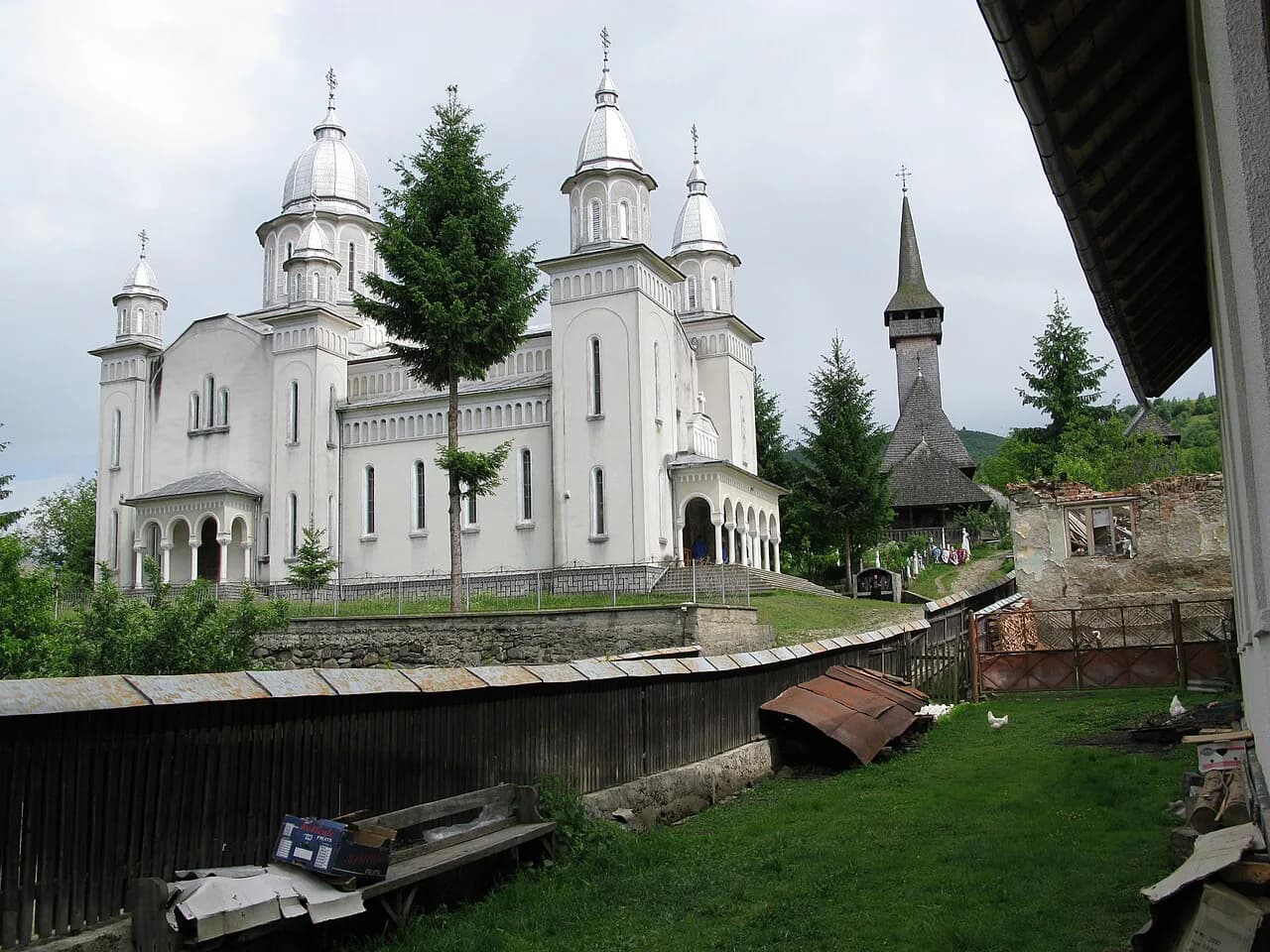
The visit is not a single church. The monastery grounds hold a sequence of buildings added over decades: the Oak House from 1965, the Priory House built between 1969 and 1972, the House with Chapel from 1973 to 1975, the Poet's House from 1977 to 1979 and the Summer Altar from 1980 to 1983. Later structures include the Maramureș Gate at the entrance, raised in 1988, the White House of 1988 to 1992 and the Village Gate of 1999 to 2001, as the monastery's published description sets out.
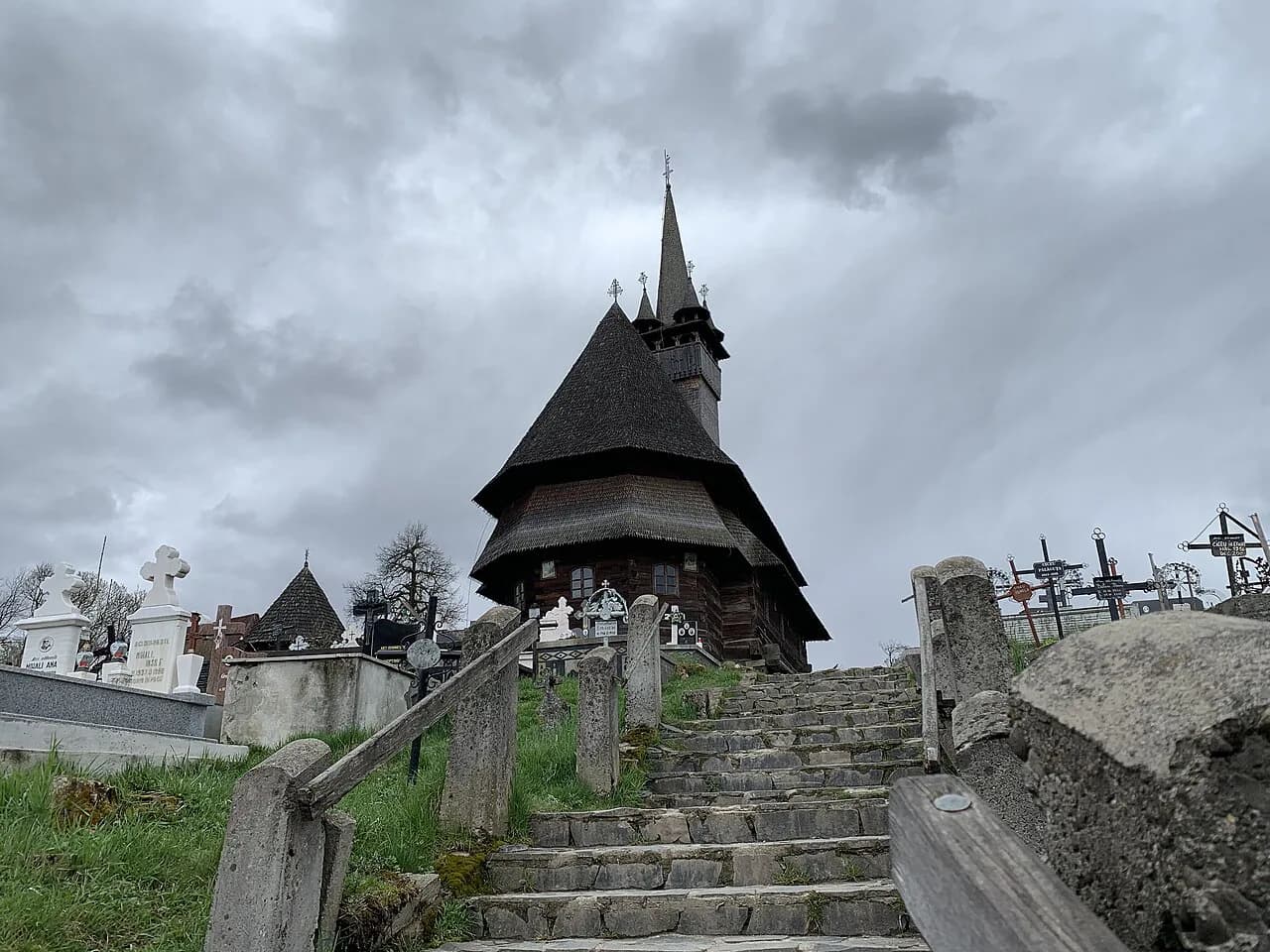
A Maramureș Corner made up of a house and a wooden church was added in 2001, so the hill gives you the carved gate and wooden building forms of the region without driving to the UNESCO church villages. Walk the grounds slowly and treat the buildings as the point of the visit: the ensemble is spread out, the setting is the attraction and there is no single exhibit hall to work through.
The church was built over roughly two years from 1923 and consecrated in 1926, which places the whole site in the twentieth century rather than among the county's historic wooden churches. If you are compiling a list of churches in Maramureș, Rohia is the modern, working monastery to set beside the older village churches, not a substitute for them.
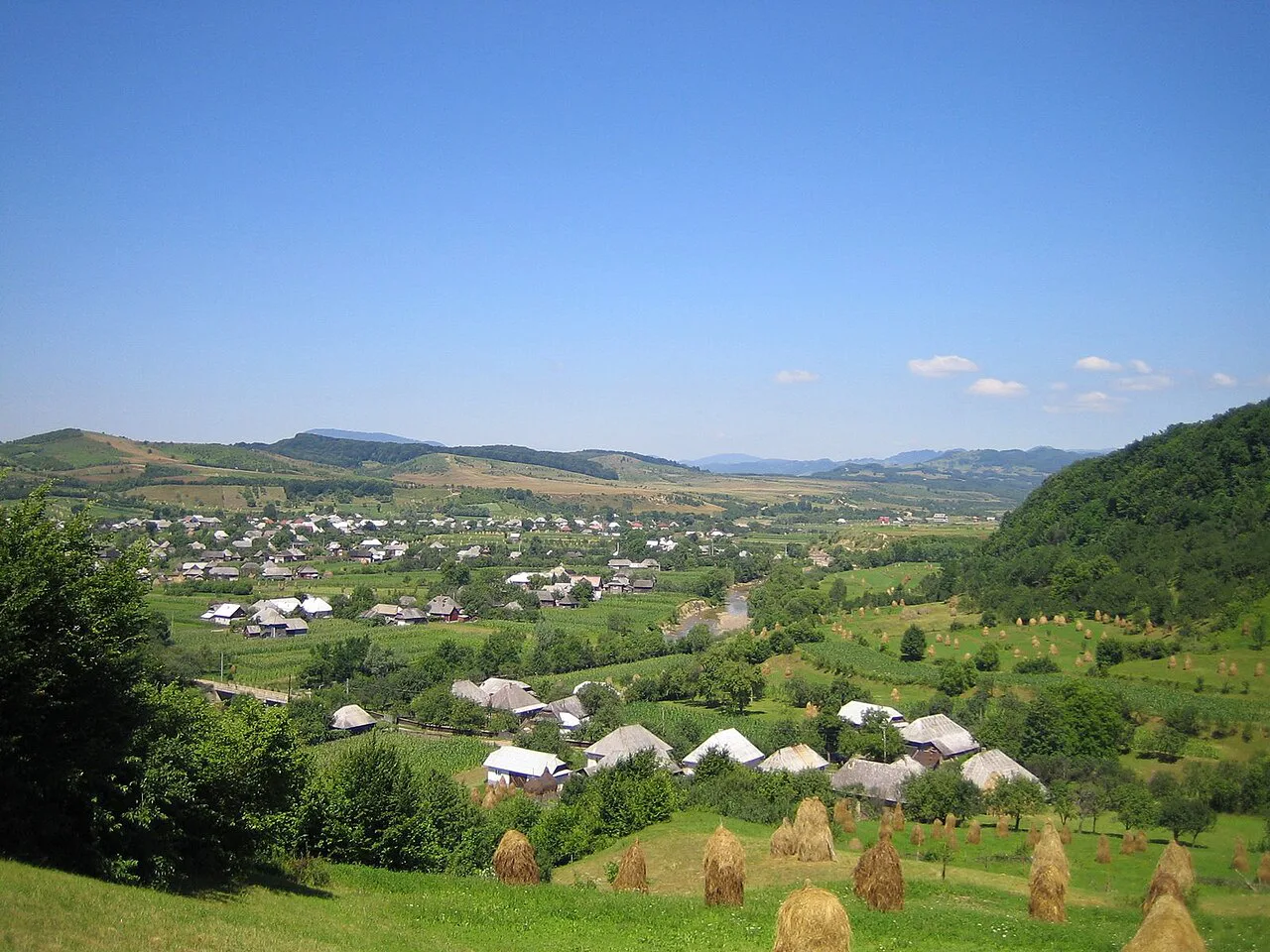
The story behind the foundation, briefly
The monastery is tied to Nicolae Gherman, the Orthodox priest at Rohia, who is said to have founded it in memory of his daughter Anuța, who died in November 1922 at the age of ten. The account that follows, of the child appearing to her father in dreams and asking for a house of the Virgin Mary, is the monastery's foundation story, passed down and published by the monastery and the regional route rather than a documented sequence of events.
A second episode in the same account has a cross placed on the chosen spot moved overnight to the cliff where the church now stands. Take both as tradition when you read the panels or hear them from a guide, and enjoy them as the site's own storytelling. Construction began in 1923, the modest church and a monastic house went up with the help of villagers, and Bishop Nicolae Ivan of Cluj consecrated the monastery on 15 August 1926, the Feast of the Assumption, which became its patronal day.
Development came late: the site remained hard to reach until the period after 1965 and especially 1970, when electricity arrived and the access road was laid out. That explains the mix of dates on the buildings and why the road up the hill feels engineered rather than old.
Getting there: Târgu Lăpuș as the junction
Treat Târgu Lăpuș, not Baia Mare, as the practical junction for the last stretch. The monastery is about 9 km from Târgu Lăpuș, and the connecting road to the monastery leaves from the town; the longer distances to Baia Mare and Dej describe the wider road network, not your final approach. Fuel up and pick up supplies in Târgu Lăpuș before heading up, because the last kilometres are rural.
Arriving by car on DN18B
By road, the approach is DN18B between Baia Mare and Târgu Lăpuș, from which you continue to Rohia on the local road. An alternative from the south runs via Dej and the Măgoaja road to Târgu Lăpuș, or from Dej towards Baia Mare as far as Gâlgău and then across to Târgu Lăpuș. Whichever way you come, the final climb from the town to the monastery is the part to plan for.
Allow for a slow final section: the monastery stands at around 500 m on a wooded ridge, and the access road only dates from the early 1970s. Driving yourself gives you the most control over timing, which matters because the hill is a detour from any main route. A car also lets you combine Rohia with the Maramureș villages in the same day if you start early.
Arriving by train via Baia Mare, Dej or Gâlgău
The railway stations with connections towards the monastery are Baia Mare, Dej and Gâlgău, the three the regional route lists. None of them is at Rohia, so the train gets you into the region and the last leg to Târgu Lăpuș and up the hill is by road. Check the current rail connections to those three stations and arrange the onward transfer before you set out.
If you are basing yourself in Baia Mare for the Maramureș sights, Rohia makes a reasonable inland counterweight to the Săpânța and Sighetu Mămăției run, and the town guide sets out how that base works. The monastery's address and contact details are published on its own website and in the regional route entry, and that is the place to confirm access arrangements for the day you plan to arrive.
How long to allow on site
Budget an hour to ninety minutes on the hill for the church, the houses and the gates, plus the drive up and back from Târgu Lăpuș. The buildings are spread across the grounds and the pleasure is in the wooded setting, so a rushed ten-minute stop misses the point. Because the site is a working monastery, keep your pace slow and your voice low around the church.
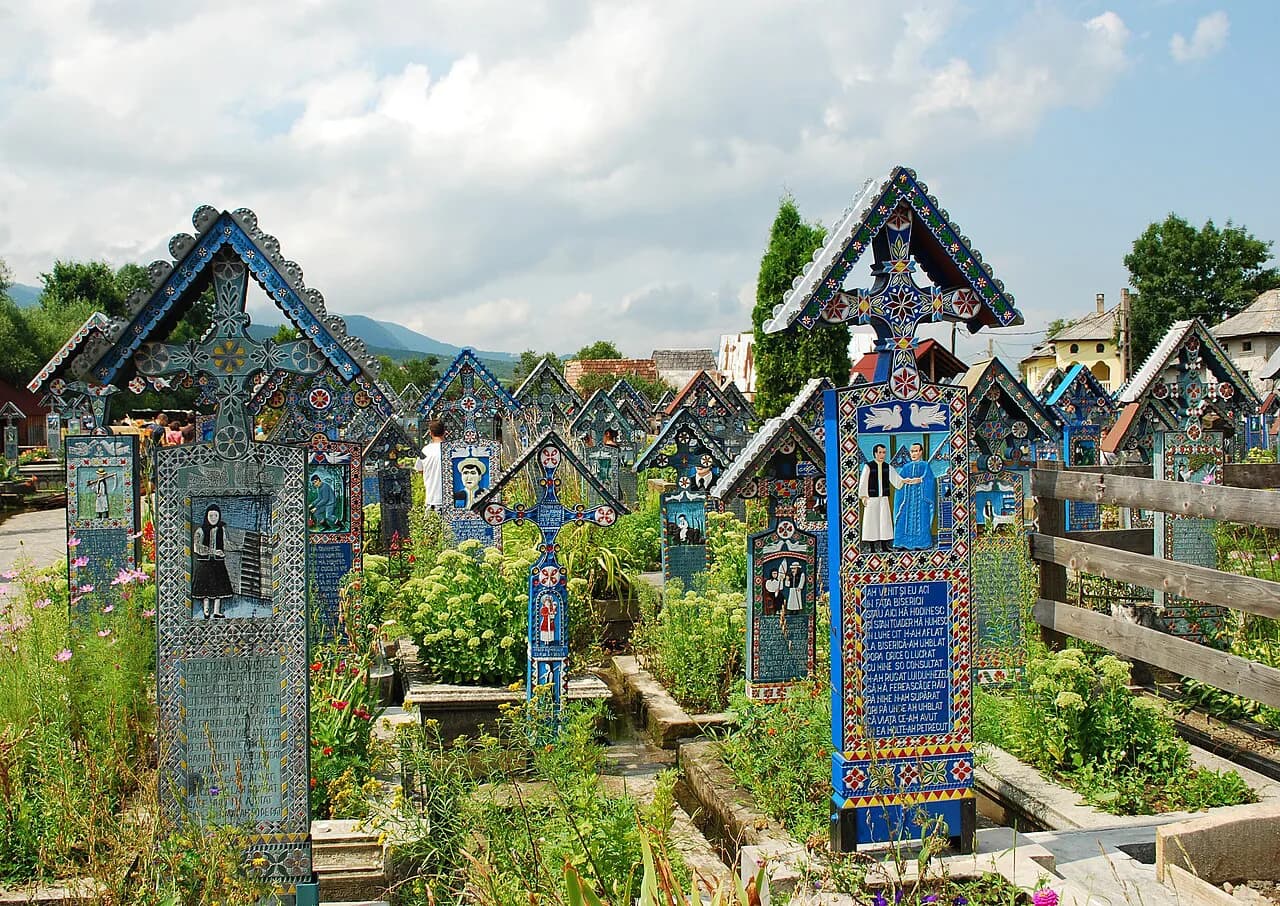
Half a day covers Rohia comfortably if you are staying in Târgu Lăpuș; from Baia Mare, treat it as a fuller outing with the drive each way. Pair it with a village church or the Merry Cemetery (Cimitirul Vesel) at Săpânța only if you have a car and a full day, since the distances across the county add up.
Practical points to confirm before you travel
The regional route entry and the monastery's own website give an address and contact details but no visitor timetable, so ask about opening times and any restrictions on the grounds before you drive up. This is an active Orthodox monastery, so dress modestly, cover shoulders and knees, and expect the church to be in use during services. Ask before photographing inside the church or of any monks you meet, and remember that the hilltop is exposed in bad weather even though the approach is through forest.
Is Rohia worth the detour?
Yes, if you are already in Maramureș with a car and want a quiet, wooded monastery stop that is not on the main wooden-church circuit. Skip it if your trip is a tight Baia Mare weekend built around Săpânța and Sighetu Mămăției, because the 9 km climb from Târgu Lăpuș plus the cross-county drive eats a half day.
Build the day around Târgu Lăpuș as your junction, arrive by DN18B or via Dej and Gâlgău, and ask the monastery about visiting times before you set off. The site rewards a slow hour among the gates and houses far more than a quick photo stop.
Explore more Maramures guides
Sources
Useful notes for your next trip
Optional updates to our guides.
You might also like
Continue reading
More guides you'll find useful