Sibiu History: What to Look For in the Old Town
Sibiu's history told through what survives: the Saxon founding, the two-tier old town, the Council Tower, the Lutheran cathedral and the Brukenthal collections.
On this page
Sibiu's history comes down to one structure you can walk in an afternoon: a Saxon-founded citadel divided into an Upper Town of squares and a Lower Town of narrow, steep streets, joined by the Bridge of Lies. This guide ties the dates to the buildings that carry them, so you know what you are standing in front of rather than reading a timeline in the abstract.
Expect a compact circuit rather than a museum queue. The squares, the towers and the surviving walls sit close together, and the two big collections, the Brukenthal National Museum and the ASTRA complex, are the only stops that need real time set aside.
A Saxon citadel in two tiers
Saxon settlers founded the city in 1190 on the site of a Roman settlement called Cibium, and it grew wealthy on the trade route between East and West. That commercial money, not a royal court, paid for the squares and the churches around them.
The old town divides into an Upper Town and a Lower Town. Above, you get three squares in sequence: Piața Mare, or Great Square, with its Baroque Roman Catholic church, Council Tower and late Baroque Brukenthal Palace; Piața Mică, or Small Square, lined with shops and cafés; and the square around the Evangelical Cathedral, where several Gothic buildings stand. Below, the streets turn rustic and steep.
The Bridge of Lies links the two levels as Romania's first wrought iron bridge. Treat it as a piece of urban geography rather than a monument in its own right: crossing it is how you move between the ceremonial Upper Town and the working Lower Town.
If you want the walking order settled before you arrive, the old town rewards a planned route because the levels mean you will climb either way. Our guide to Sibiu Old Town takes the same buildings square by square.
Piața Mare and the buildings around it
Piața Mare measures 142 metres by 93 metres and has been the city's main square since the 15th century. Three buildings frame it: the Brukenthal Palace at the north-west corner, the Jesuit church on the north side, and the Council Tower, which is also the way through to Piața Mică.
Stand in the middle and the square reads as a record of who paid for the city: Gothic, Renaissance and Baroque fronts on the same paved floor, with the palace as the grandest private house on it. Give the circuit of the square twenty minutes before you start climbing anything.
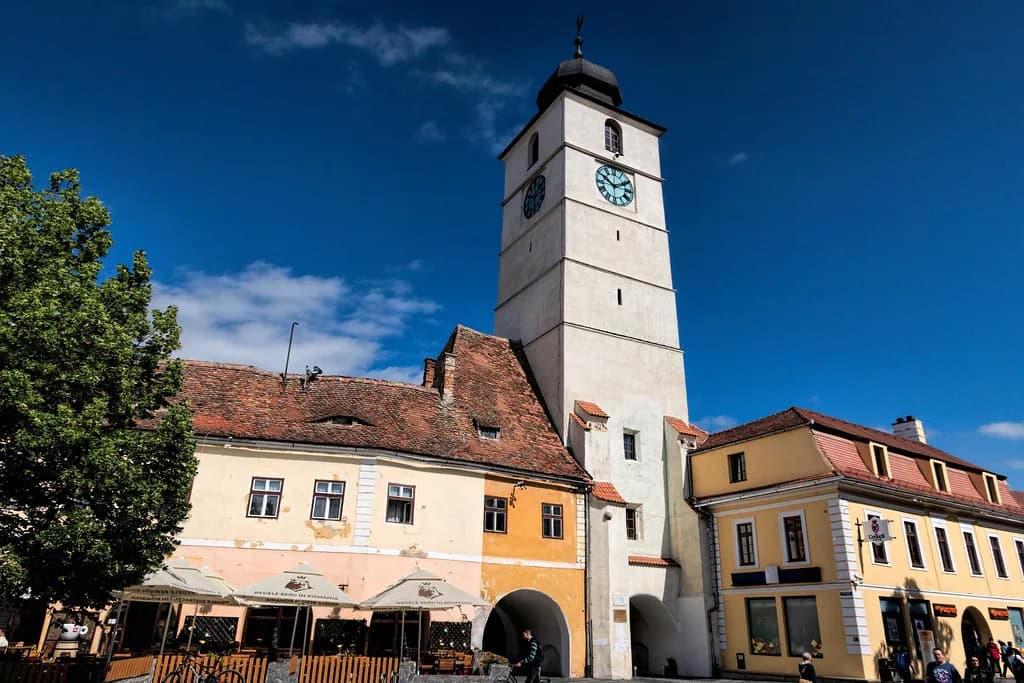
Turnul Sfatului, the Council Tower
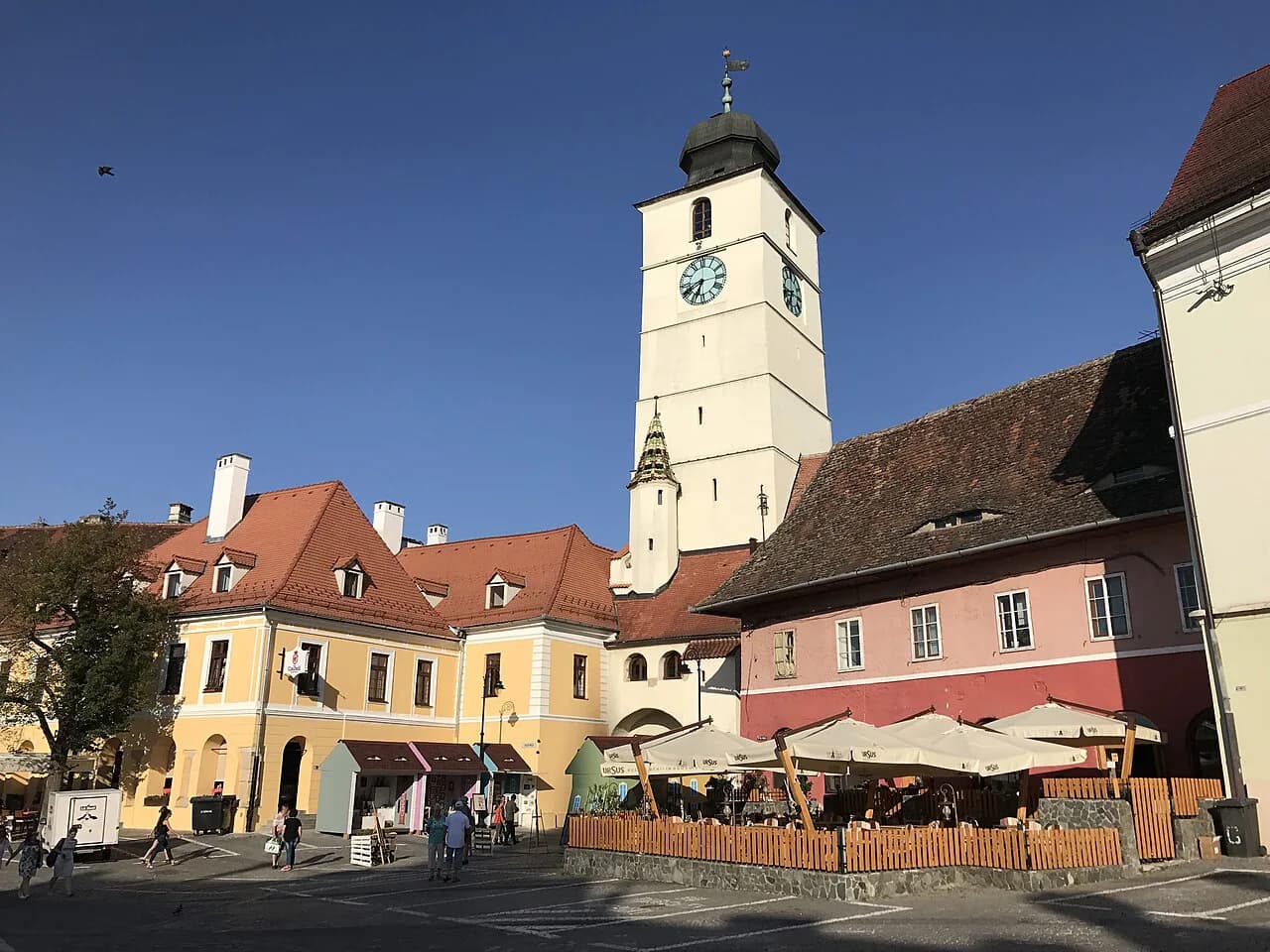
Turnul Sfatului stands at the centre of the old town and dates from the 13th century, when it served as the gateway to the second line of the city's fortifications. The structure you see has been rebuilt several times, most recently in 1962, so it is a gate tower in origin and a rebuild in fabric.
Today it holds exhibitions and works as one of the city's best viewing terraces. From the top you look across the roofs of Sibiu with the Făgăraș Mountains behind them, which is the clearest way to understand how the Upper Town sits against the plain.
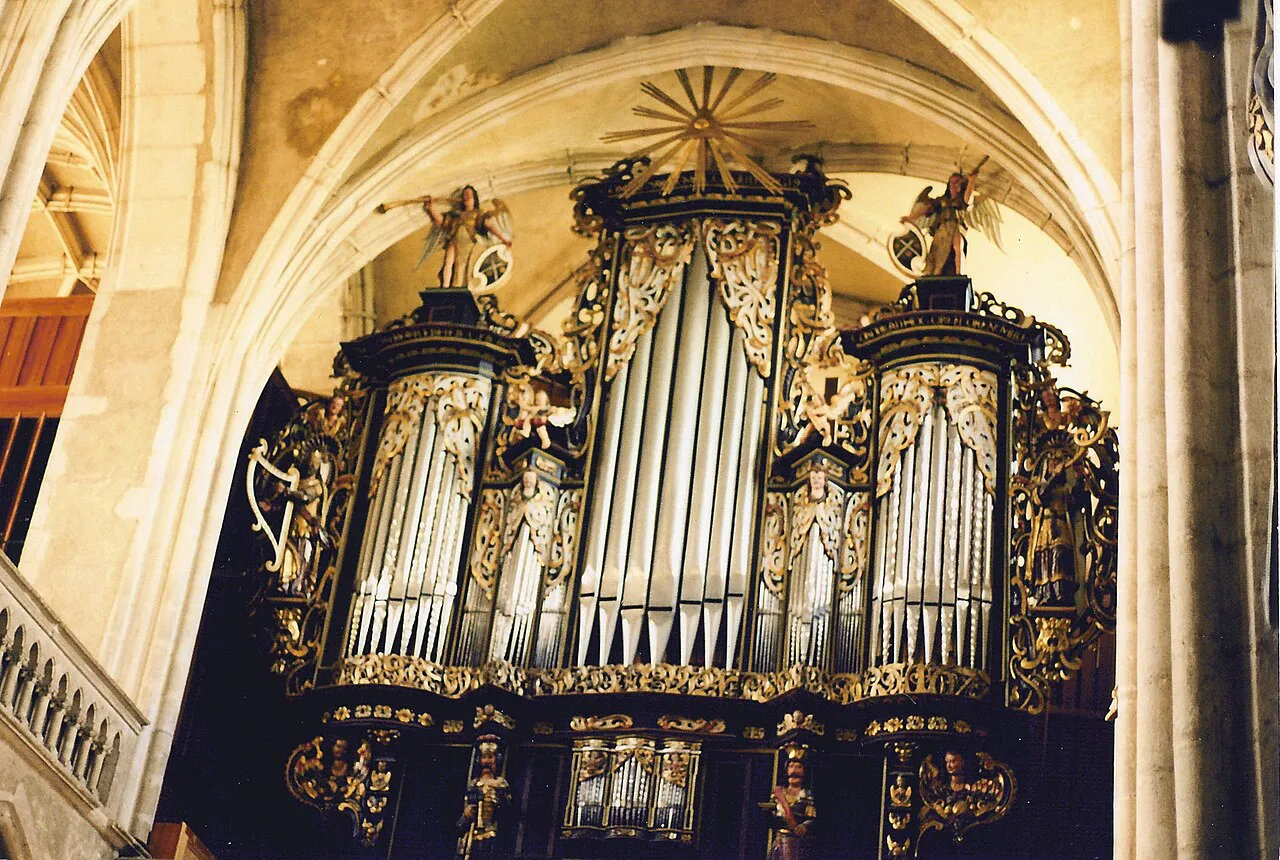
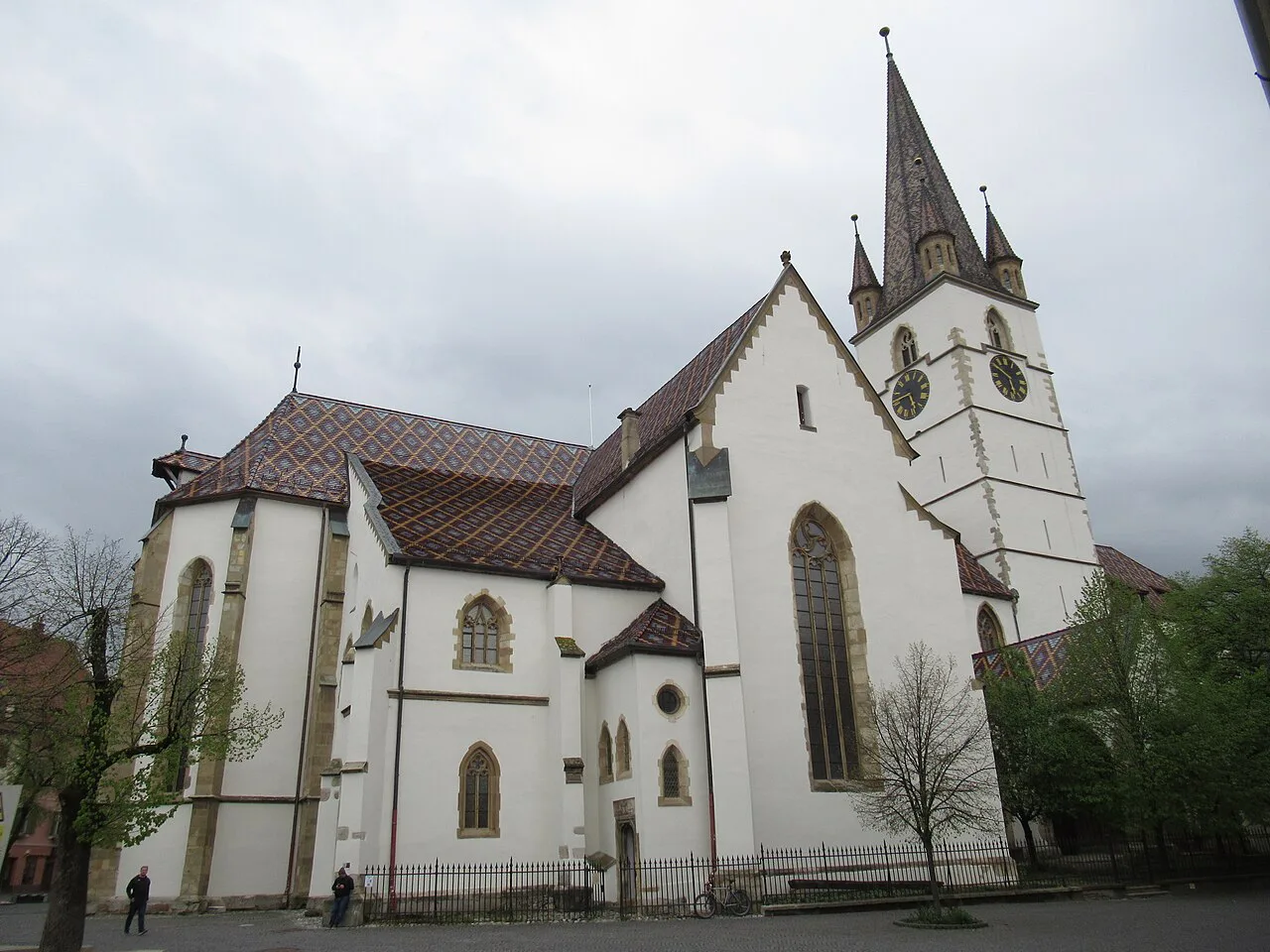
The Lutheran Cathedral of St Mary
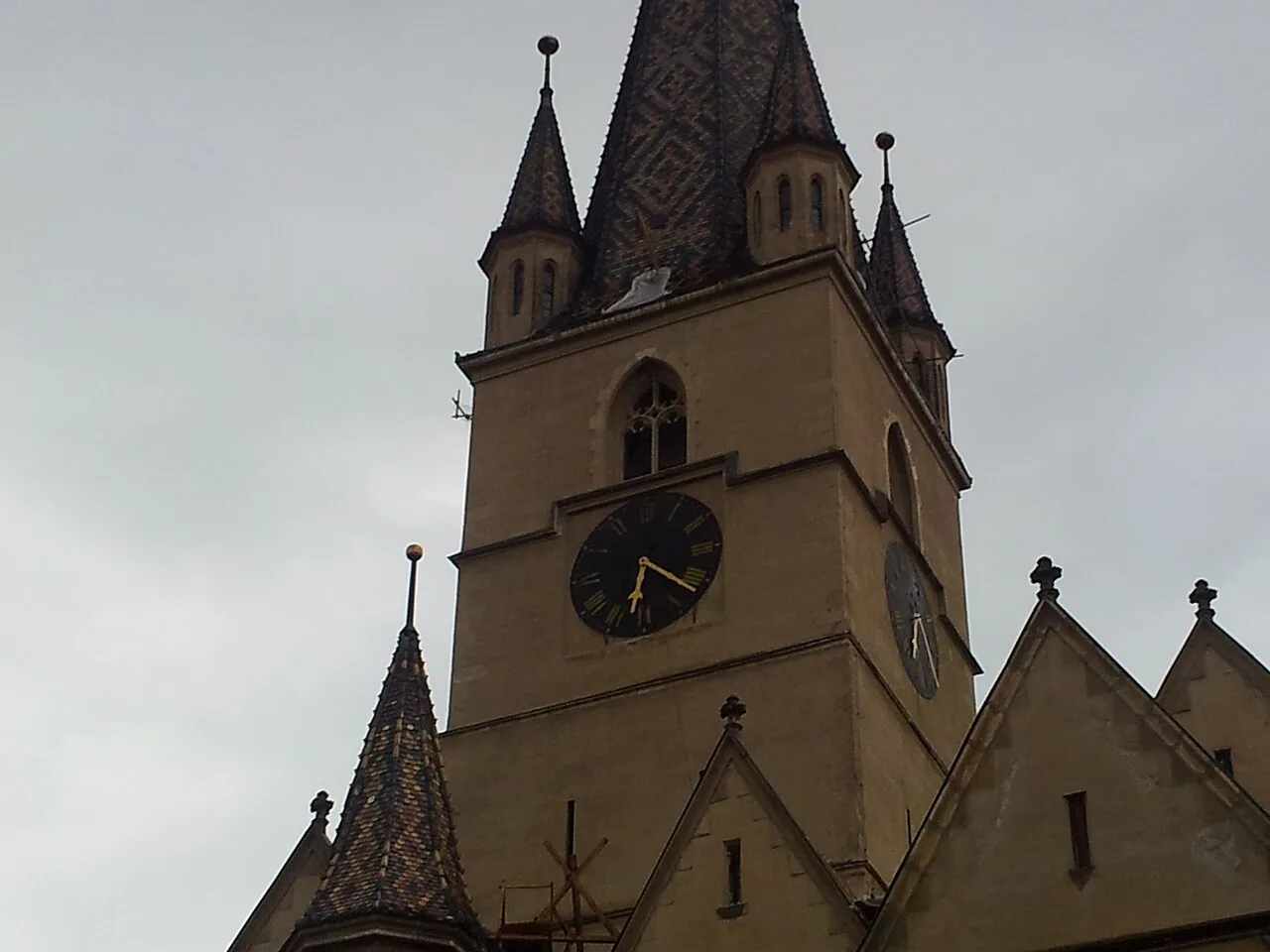
The Lutheran Cathedral of St Mary dates from the 14th century and is the city's most famous Gothic church, with a bell tower standing over 70 metres high. Look up at the four small towers built on the peak: they signalled that the city held the right to execute prisoners, so the roofline carried a legal message to anyone approaching.
The interior was the burial place of the city's leading figures, mayors and bishops among them, for three centuries. The practice was forbidden in 1796, then an exception was made in 1803 for Baron Samuel von Brukenthal, the German governor of the Principality of Transylvania.
The building is usually called the Evangelical Cathedral locally, so both names point to the same church on Piața Albert Huet. If churches are your main reason for coming, our guide to the cathedral covers the interior in more detail.
Where to see the walls
Sibiu's fortifications came in several lines of wall around the historic centre, many built from clay bricks. The best-preserved stretch is on the south-east side, where all three parallel lines are still visible at once, and the structures connect through a network of tunnels and passages.
Aim for that south-east section rather than hunting for fragments around the whole ring. Seeing three lines together is what makes the defensive logic clear: successive barriers, each one bought and built as the city's wealth grew.
Brukenthal Palace and the museum wings
The Brukenthal National Museum dates from the late 18th century and occupies Brukenthal Palace on Piața Mare. Its main wing is the art gallery, with around 1,200 works from Flemish, German, Italian and French schools, plus bas-reliefs, coins and minerals.
The same building houses the Brukenthal Library, which holds over 300,000 books including rare manuscripts and early works in Old Romanian. Other wings hold the History Museum, the Pharmacy Museum, the Natural History Museum and the Weapons and Hunting Trophies Museum.
Choose by appetite: one gallery wing is a solid half-day, while hopping between all six wings in a single visit leaves little of any of them. If you want help picking, our round-up of museums in Sibiu sets the collections side by side.
ASTRA and the villages beyond the walls
The ASTRA National Museum Complex holds an open-air museum of Romanian peasant life spread over 96 hectares, with more than 400 traditional structures including mills, wooden churches and houses. It sits outside the historic centre, so it takes a separate block of your day rather than fitting between squares.
If the walls leave you wanting more rural architecture, the villages around Sibiu make the obvious next step. Our guide to Avrig covers the village as a separate outing from the city.
2007 and the restored centre
Sibiu shared the title of European Capital of Culture in 2007, and the designation brought a large-scale restoration of its historic squares and buildings. Much of the tidy frontage you walk past today dates from that programme rather than from the medieval city.
Sibiu lies roughly 270 kilometres north-west of Bucharest, reached by train from the capital and then a trolleybus into the centre. Knowing that shapes a short break: the historic core is small enough to cover on foot once you arrive.
How long does the history circuit need?
Give the historic core a full day: the squares, the Council Tower and the cathedral in the morning, then one collection in the afternoon, either the Brukenthal gallery on Piața Mare or the ASTRA open-air museum if the weather holds. Two days lets you add the south-east walls at a relaxed pace.
Tickets, opening days and tower access change through the year, so confirm them with each venue before you set out. Our Sibiu attractions hub gathers the individual guides in one place.
Explore more Sibiu guides
Frequently Asked Questions
Is Sibiu worth visiting for its history alone?
Yes, if you want a compact, legible old town. The 13th-century Council Tower, the 14th-century Lutheran cathedral with its four corner towers, three parallel lines of wall on the south-east side and the Brukenthal collections all sit within a short walk of each other. One full day covers the core; two days let you add the ASTRA open-air museum at a more relaxed pace.
Why are there four small towers on the cathedral?
They signalled that the city held the right to execute prisoners. The detail is worth knowing because it turns the roofline into a statement of civic authority rather than decoration, and it is visible from outside the church.
Sources
Useful notes for your next trip
Optional updates to our guides.
You might also like
Continue reading
More guides you'll find useful