Sibiu Itinerary: A Two-Day Plan by Square and Street
A two-day Sibiu itinerary grouping Piața Mare, the Council Tower, the Lutheran Cathedral and ASTRA by area, with walking order and ticket prices in lei.
On this page
Two days is the right amount of time for Sibiu: day one covers the Upper Town squares and the stair passages down to the Lower Town on foot, and day two adds the Brukenthal National Museum and the open-air ASTRA complex. The old town is compact, so the work is in the order you walk it, not in the distance. This itinerary sets out that order square by square, with the tower and cathedral climbs, the galleries and the prices the sources give.
Everything below sits within a short walk of each other in the Upper Town, apart from ASTRA, which needs its own trip out. The plan also gives the one-day cut for anyone passing through, and an honest look at whether a castle or village day out fits alongside the town. If you want the wider list first, the guide to things to do in Sibiu covers sights beyond this route.
Where the itinerary starts: the Upper Town squares and Strada Nicolae Bălcescu in one loop
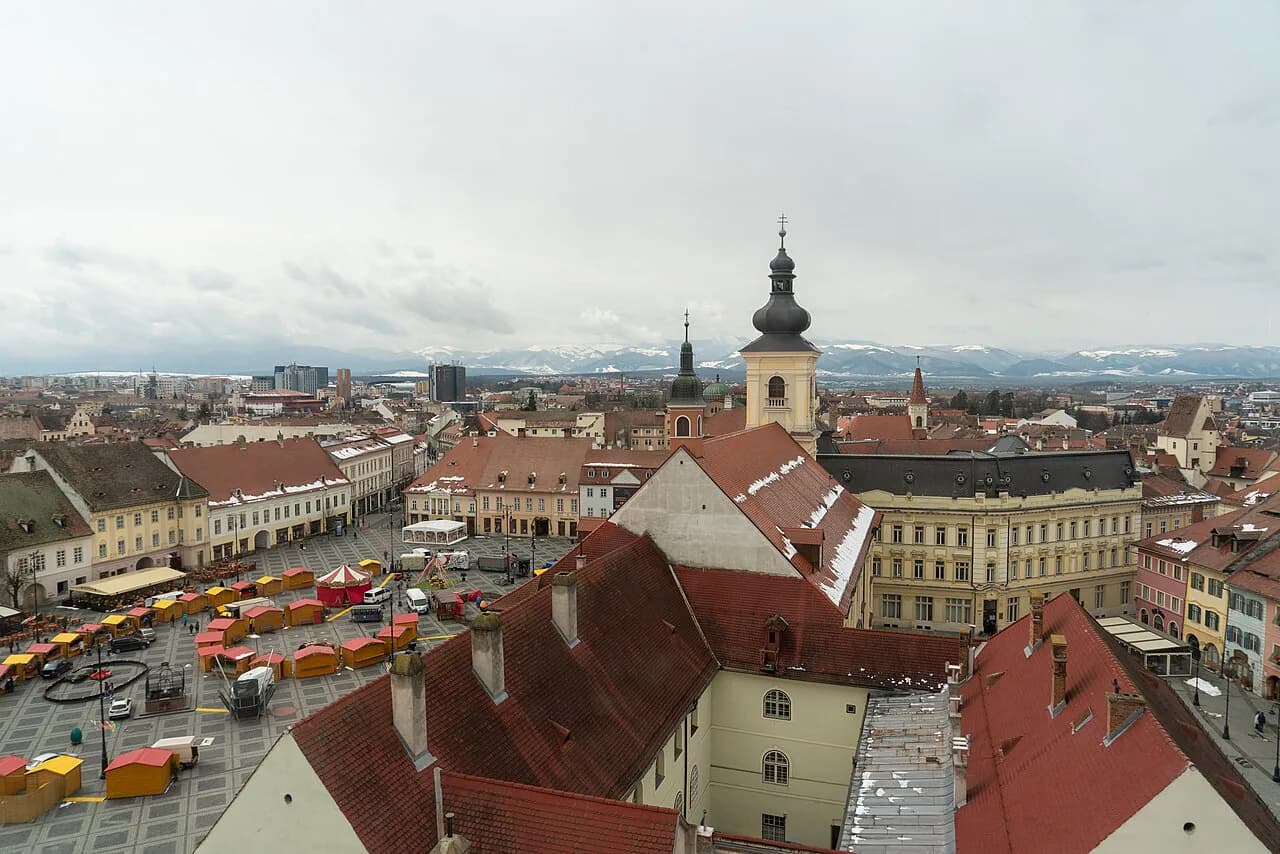
Start at Piața Mare, the Large Square, which sits at the centre of the Upper Town and is ringed by protected Art Deco buildings. The old town is small enough to cover on foot, and the three squares plus Strada Nicolae Bălcescu form a natural loop: Piața Mare, then Piața Huet behind it, then Piața Mică on the far side. Walk the loop once in that order and you will not retrace your steps.
Strada Nicolae Bălcescu is the main pedestrian street, lined with pastel merchant houses and flowered balconies, and most of the historic centre is closed to cars. Use it as your spine: sights sit off it rather than along it, so duck down side streets rather than walking end to end. The old town page sets out the geography of this circuit in more detail.
Day 1 morning: Piața Mare, the Council Tower and the Lutheran Evangelic Church in Piața Huet
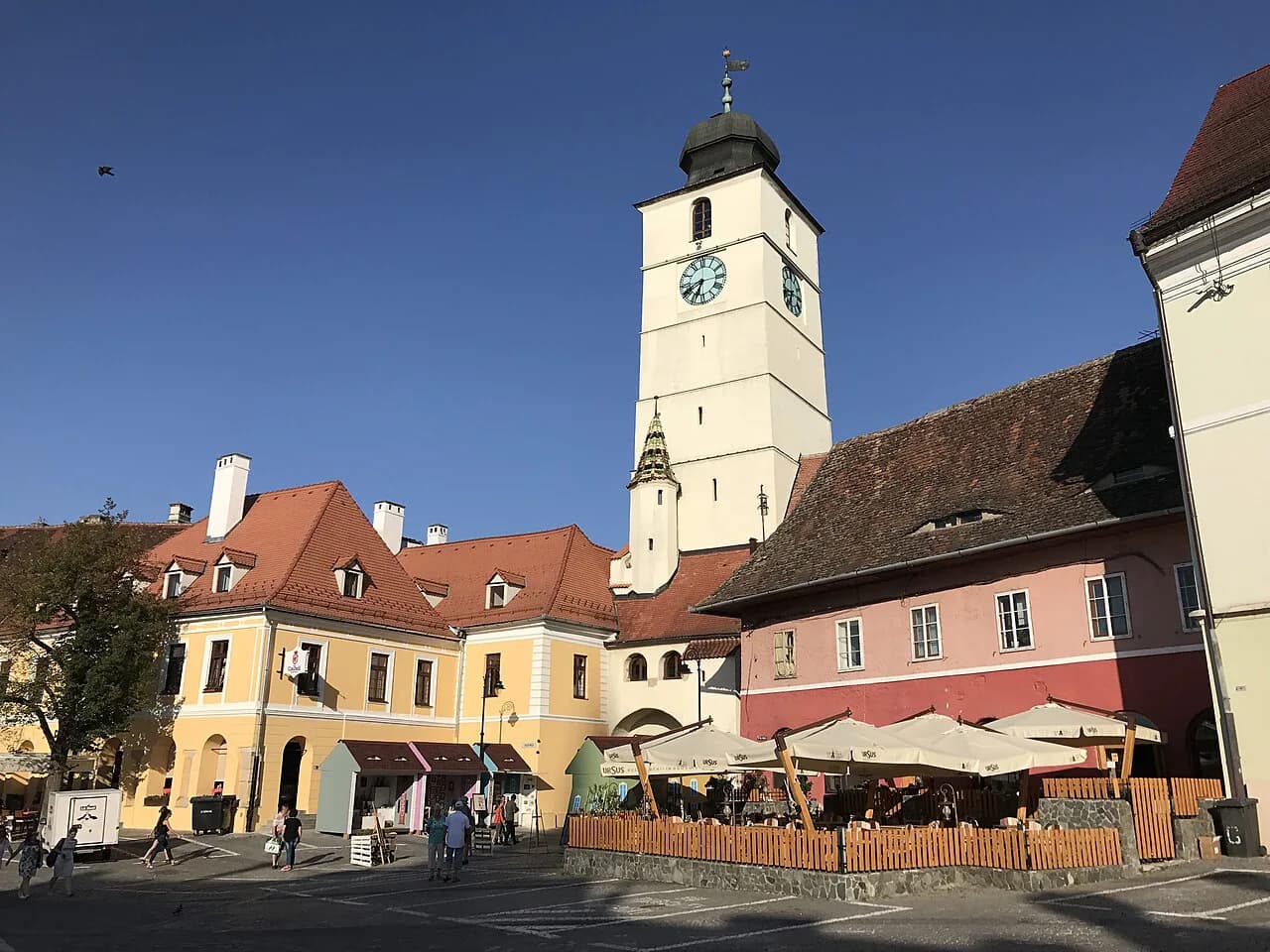
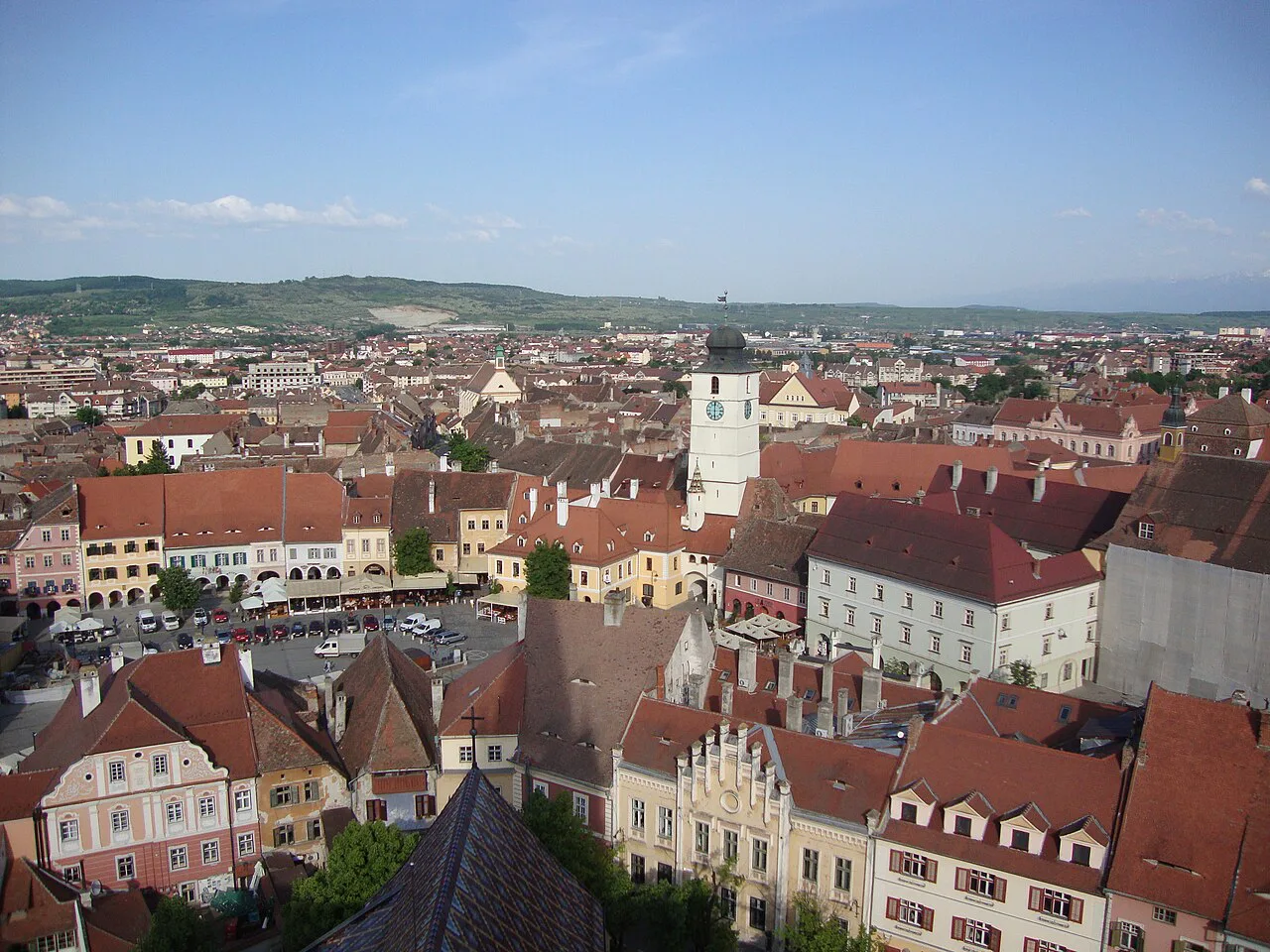
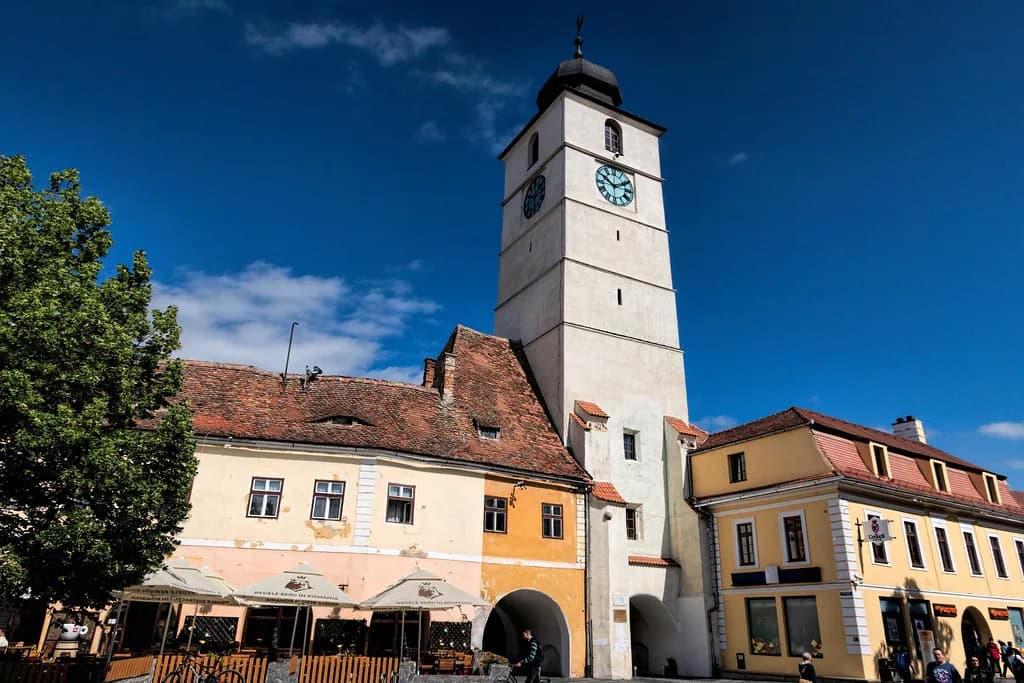
Give Piața Mare an unhurried half hour before climbing anything. The square has hosted markets since the 15th century and is where festivals are held, so at busy times the open space tells you how the rest of the day will go. From there, walk to the Council Tower (Turnul Sfatului), entered from Piața Mică; its entrance is round the back, up the steps, where the ticket office sits.
The tower was built in the 13th century to protect the entrance of the former town hall, and its viewing deck looks over Piața Mare, the Lutheran Church roof and Piața Mică. Tickets were 2 lei and the tower was reported open daily between 10:00 and 20:00. The deck is glassed in and the glass can be grubby, so allow time to find a clear spot and do not plan a long stay.
Next is the Lutheran Evangelic Church in Piața Huet, a quieter square than the two main ones. Inside, the climb up rickety stairs feels like ascending a bell tower, and the reward at the top is the view back over the town. The sources give different admission figures of 1 lei and 8 lei, and the opening reported is 10:00 to 18:00 in summer and 11:00 to 16:00 in winter. Treat both figures as indicative and pay at the door.
Day 1 afternoon: Piața Mică, the Bridge of Lies and the stair passages down to the Lower Town
Walk from Piața Huet into Piața Mică, the Small Square, which links the Upper Town to the Bridge of Lies. The bridge dates from 1859, and the legend attached to it says it would creak and shift when someone told a lie on it. It is a short crossing, so pair it with the square rather than treating it as a destination.
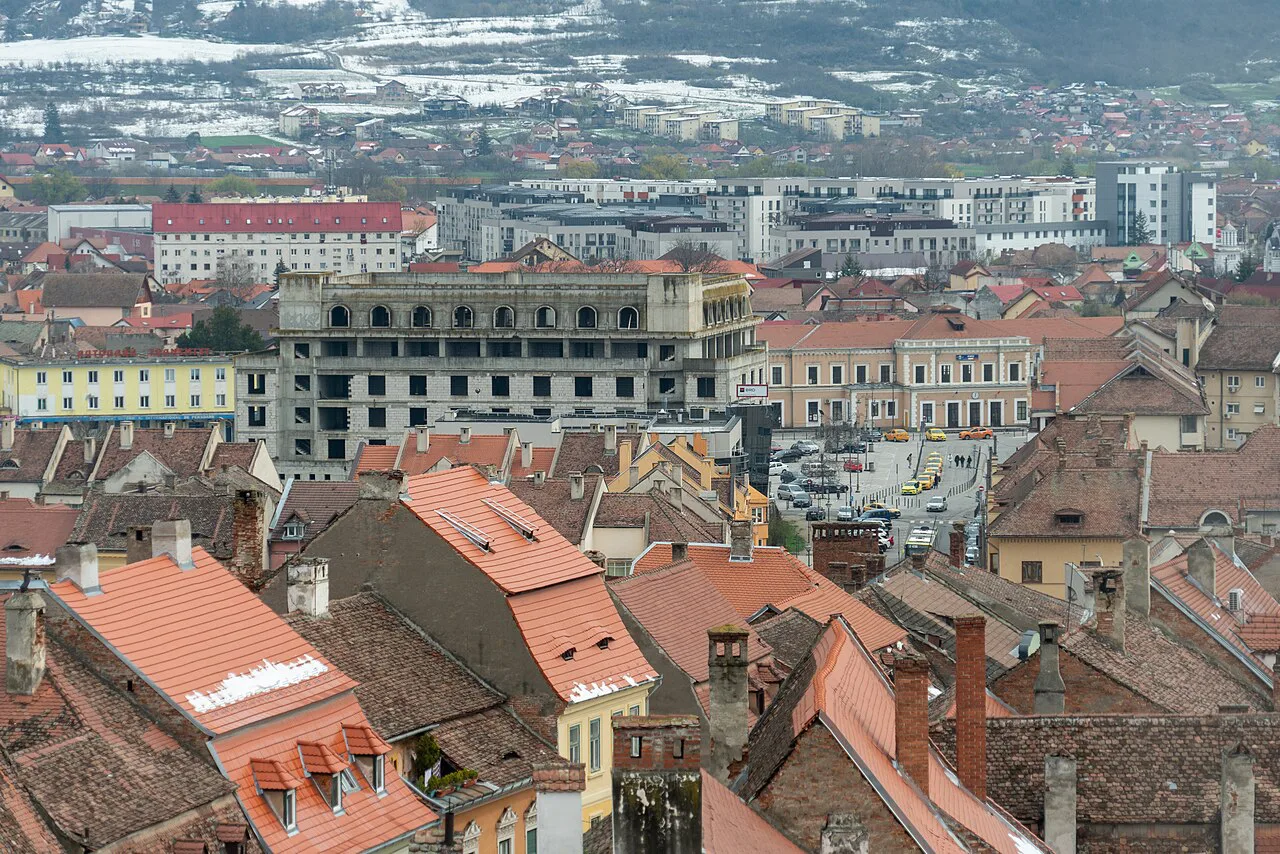
The historic centre divides into Orașul de Sus, the Upper Town, and Orașul de Jos, the Lower Town, linked by the pasaje, the medieval stair passages between the two levels. Rather than taking the path down at the Bridge of Lies, use a passage; Pasajul Scării is the finest of them. Walking down through a passage and back up through the streets is the best half hour of the day.
Budget roughly two hours for the square-to-square loop and the descent, more if you linger at the tower. Wear shoes you can climb stairs in, because the passages and tower steps are worn stone. For the wider set of options in the centre, the guide to Sibiu Attractions puts each sight on its own page.
Day 1 evening: a walk back through Piața Mare and the Orthodox Holy Trinity Church
End the day with a slow pass back through Piața Mare as the light drops and the square empties. Then look in at the Orthodox Holy Trinity Church, whose interior is covered in blue frescoes. Dress respectfully: women are advised to carry a scarf to wrap round shoulders or legs before going in.
If you would rather follow a set route than improvise, a guided walk covers the same squares with commentary on what you are passing. A Sibiu walking tour is the easier choice when you have only an evening and want the layout explained once.
Day 2 morning: the Brukenthal National Museum on Piața Mare and what each gallery ticket covers
The Brukenthal National Museum occupies an 18th-century palace at Piața Mare 4–5, once the residence of the Transylvanian governor. It holds both a European art department and a Romanian one, and each gallery is ticketed separately: 20 lei for the European Art Gallery and 12 lei for the Romanian Art Gallery, with other sections priced individually and discounts available. It opens Wednesday to Sunday from 09:00 to 17:00 and closes on Mondays and Tuesdays, so check the day before you build the morning around it.
Pick one gallery rather than buying everything: the European collection suits a two-hour visit, and the Romanian gallery fits a shorter stop. If you want to compare it with the city's other collections before committing, the guide to museums in Sibiu sets them side by side.
Day 2 afternoon: ASTRA National Museum Complex, how long the open-air park takes and the walk between buildings
ASTRA National Museum Complex at Strada Pădurea Dumbrava 16–20 is an open-air park of traditional buildings gathered from different regions of Romania, from farms to churches. It is a large site, so plan a half day, wear proper walking shoes and expect to cover ground between the buildings rather than stand still. Tickets were 17 lei per person, and it was reported open every day from 08:00 to 20:00.
This is the part of the itinerary that needs the most planning, because it sits away from the old town and cannot be slotted between two squares. Go after lunch, take water, and treat the return as part of the outing. If you would rather keep the afternoon indoors, swap ASTRA for a second Brukenthal gallery and keep the day in the centre.
Adding a castle or village: what a Sibiu-based day out costs you in travel time
Sibiu sits northwest of Bucharest, west of Brașov and south of Cluj-Napoca, and the drive times reflect that spread: about four hours and fifteen minutes from Bucharest, two and a half hours from Brașov and two hours forty-five minutes from Cluj-Napoca. Public transport is slower, at roughly six hours from Bucharest, two and a half from Brașov and at least four and a half from Cluj-Napoca. Those figures matter when you are deciding whether to spend a day travelling out to a castle or village or staying in town.
Sibiu has its own airport but not always with direct flights, and flying into Cluj-Napoca and hiring a car there is the usual workaround. A guided tour is the alternative if you are in Sibiu for a single day without a car, though a private tour from Bucharest makes for a very long day. Closer options include Cisnădioara and Avrig, both covered by their own guides.
If you only have one day: which squares and sights to keep and which to drop
With one day, keep the Upper Town loop: Piața Mare, the Council Tower, the Lutheran Church in Piața Huet, Piața Mică and the Bridge of Lies, finishing with a descent through Pasajul Scării. Drop ASTRA first, since it eats an afternoon on its own, and drop the Brukenthal unless the weather turns. Both museum stops are the flexible parts of the plan, not the squares.
Climb the tower early in the day, when the glass is more likely to be clear and the deck less crowded, and keep the afternoon free for the Lower Town. That version fits comfortably into a single day without rushing.
Where the itinerary sits in a longer Transylvania trip, and how many days Sibiu needs
Two full days covers Sibiu properly; a third lets you add a village or a castle without squeezing the town. Coming from Bucharest by train takes six to eight hours, which is why many travellers treat Sibiu as a stop on a wider Transylvania circuit rather than a standalone break, and why the centre stays quieter than Brașov's. Build the town days first and add the day out afterwards.
If you are sequencing several towns, place Sibiu between Brașov and Cluj-Napoca rather than doubling back to Bucharest. For a straight list of what to see once you are here, work from the things to do in Sibiu guide.
Which version of the itinerary fits your trip
Take the two-day plan if Sibiu is the point of the trip: squares and climbs on day one, the Brukenthal and ASTRA on day two, with the second museum swapped for the open-air park if the weather is kind. Take the one-day cut if Sibiu is a stop between Brașov and Cluj-Napoca, and save the castle or village for a trip with a car.
Prices and opening times change, so confirm the Brukenthal's gallery tickets and the church and tower hours before you go. The Order of play matters more than any single sight: walk the squares in one loop and the town gives you its layout in an afternoon.
Explore more Sibiu guides
Frequently Asked Questions
Is Sibiu worth visiting on a Romanian trip?
Yes, if you want a walkable old town with a coherent shape. The Upper Town squares, the Council Tower, the Lutheran Church and the stair passages to the Lower Town fit into a single day, and the Brukenthal and ASTRA justify a second.
How do you get to Sibiu from Bucharest or Brașov?
By car it is about four hours and fifteen minutes from Bucharest and two and a half hours from Brașov. Public transport is slower, at roughly six hours from Bucharest and two and a half from Brașov. Sibiu also has an airport, though direct flights are not guaranteed, so some travellers fly to Cluj-Napoca and drive.
Do you need a car for the ASTRA museum?
No, but it is not on the old town loop, so set aside a half day and sort out the return trip before you go. The site is large and outdoor, so shoes matter more than transport here.
Sources
Useful notes for your next trip
Optional updates to our guides.
You might also like
Continue reading
More guides you'll find useful