Bicaz Gorge: Driving Cheile Bicazului and Where to Stop
Plan the Bicaz Gorge drive on the DN12C between Bicaz and Transylvania: the narrow cliffside road, realistic timing, safe stops and the season to go.
On this page
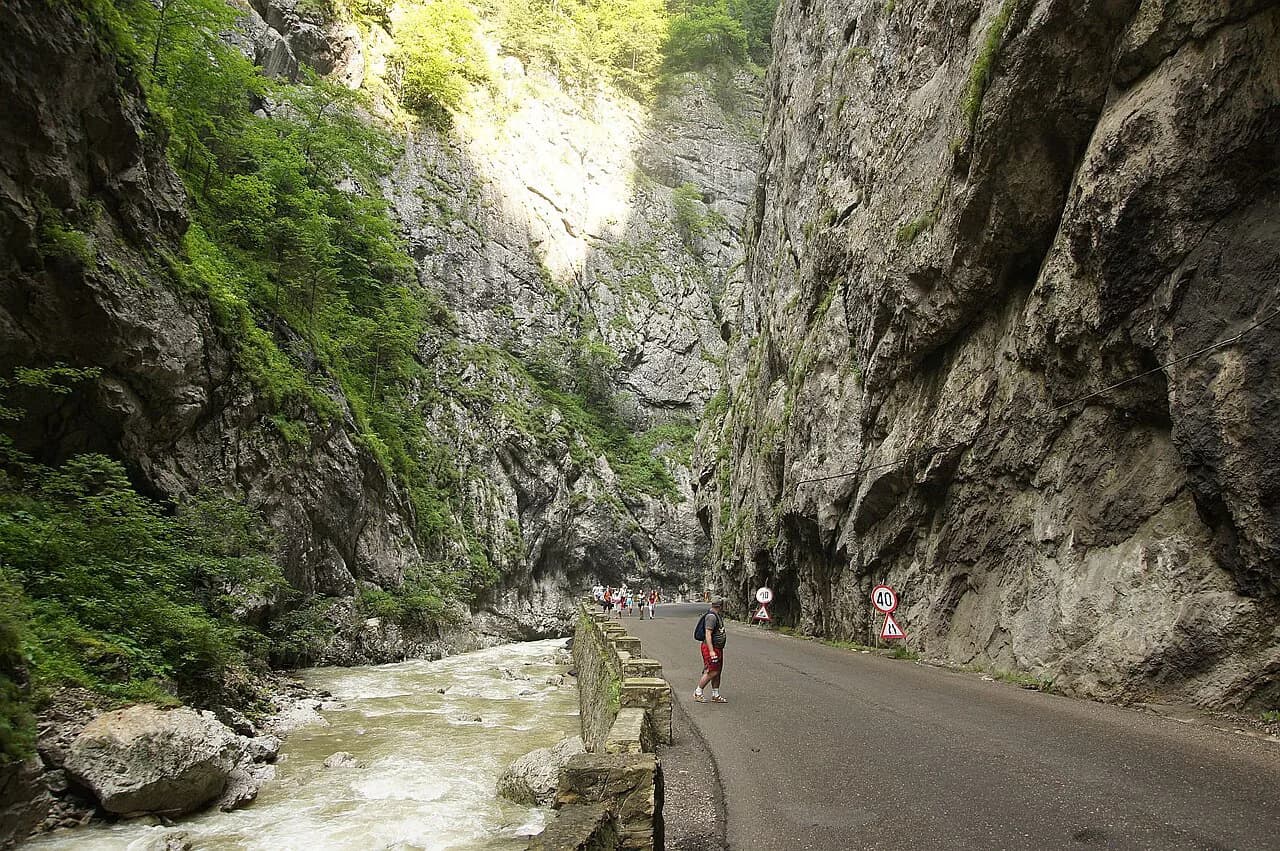
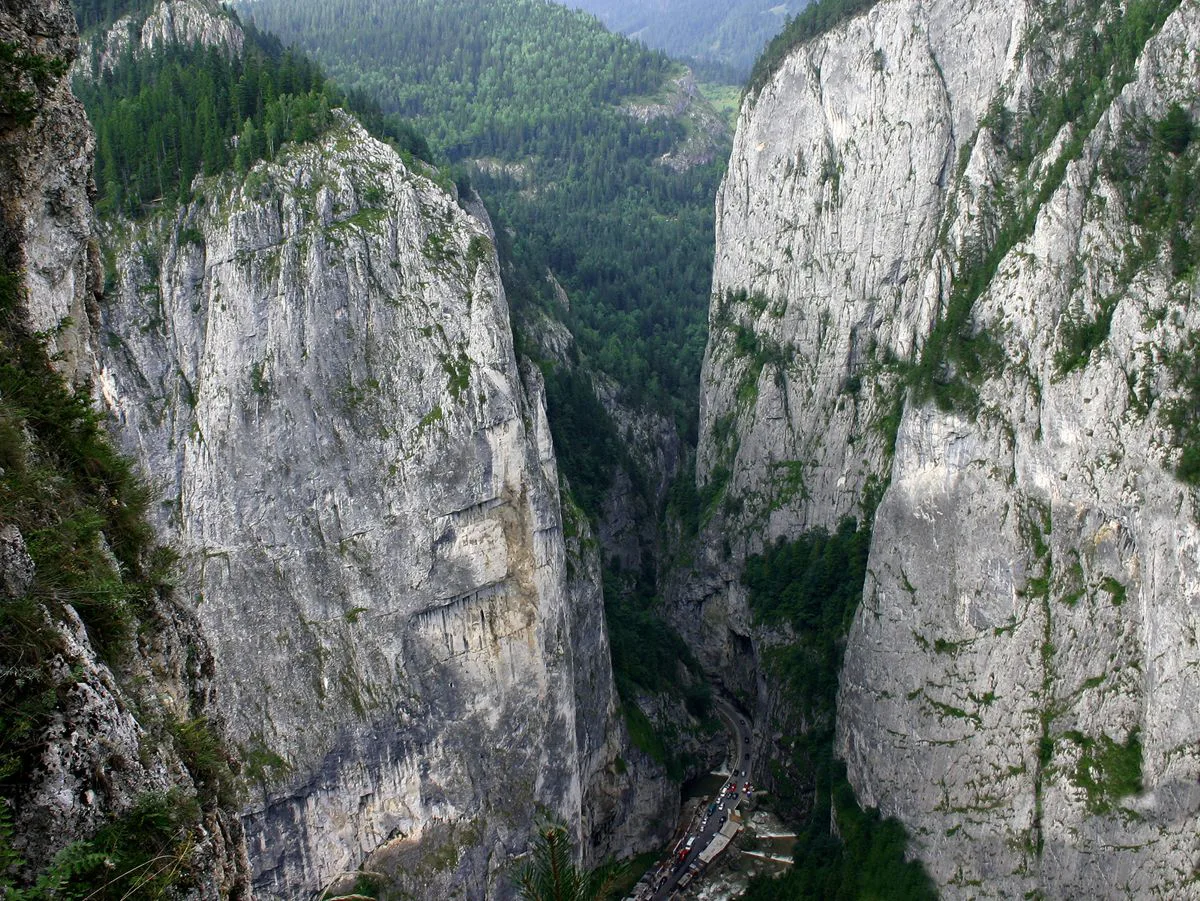
The Bicaz Gorge is best treated as a road experience rather than a stop. The DN12C threads a narrow limestone canyon between Bicaz in Neamț county and the Transylvania border, with rock walls rising close on either side, and the gorge stretch itself runs for roughly 8 kilometres. This guide covers what the drive involves, how much time to budget, where stopping is realistic and when the road is in reasonable condition.
The gorge sits on the Moldova side of the mountains, alongside Lake Bicaz (Izvorul Muntelui), a large reservoir at the foot of the Ceahlău massif, so the drive can be paired with the lake rather than standing alone. For the wider context of what else these ranges offer, our guide to the Carpathian Mountains sets out the main areas and how they connect.
What the Bicaz Gorge is and where it sits
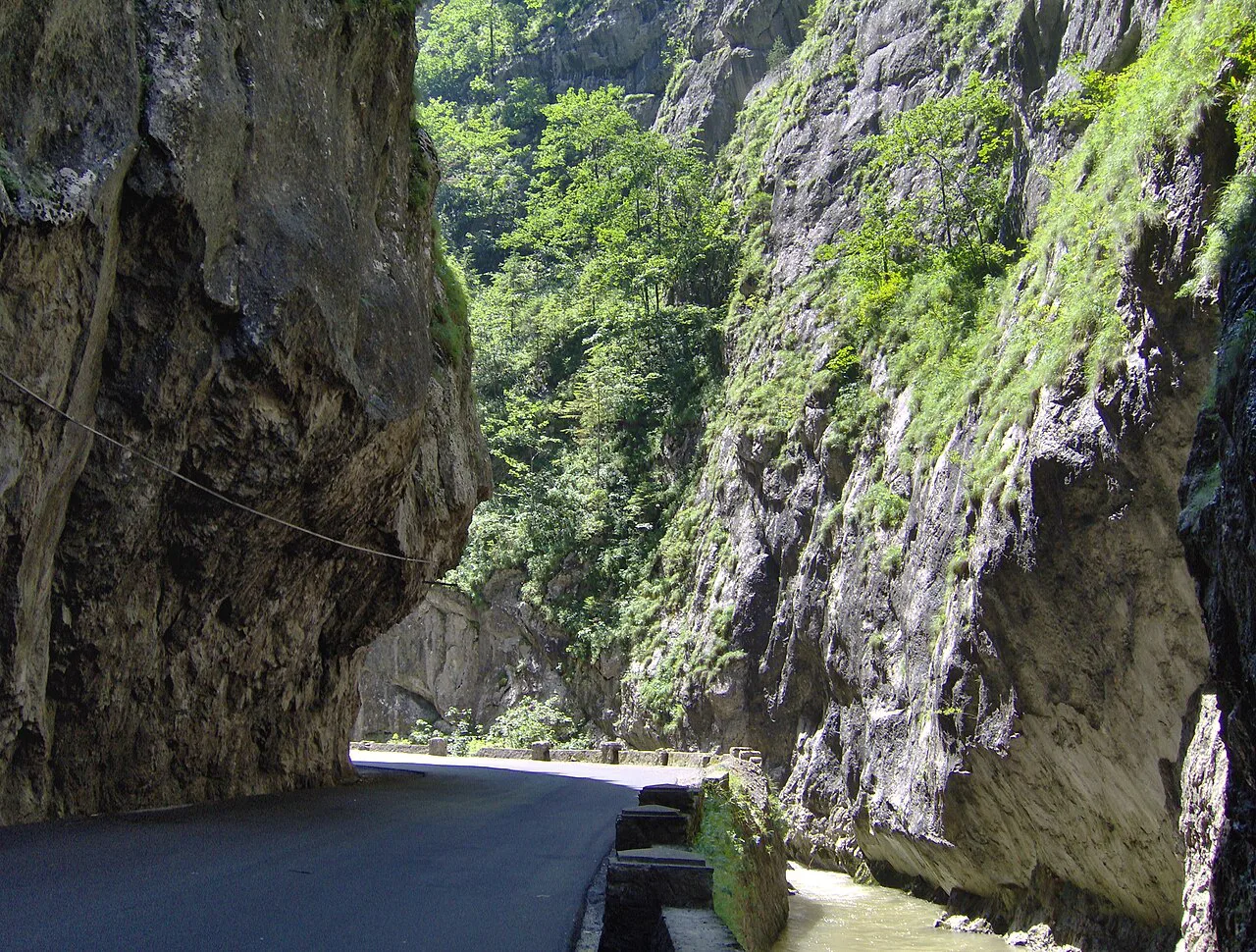
The gorge, known in Romanian as Cheile Bicazului, carries the DN12C through a limestone canyon walled by sheer rock on both sides. It lies between Neamț county and Transylvania, which makes it a natural crossing point rather than a destination you loop back from. Drivers heading between Moldova and Transylvania pass through it as part of the route, not as a detour.
Because the road is the attraction, there is no gate, ticket desk or opening time to plan around. You decide when to drive it, and the practical constraints are the road width, the traffic in front of you and the weather. Treat any stop as something you take when a safe space appears rather than a fixed itinerary of viewpoints.
The drive on the DN12C: how long the gorge stretch takes
Allow generous time rather than treating the gorge as a quick transit. The road narrows with limited passing space in places, so progress depends on what is ahead of you, and the drive and stops together are realistically a one-to-two-hour affair rather than a few minutes. Add that to your total journey time between Bicaz and Transylvania instead of assuming the distance alone.
That time budget is the single most useful planning decision here. If you are driving through in one day, the gorge eats into the day more than the map suggests, and arriving after dark removes most of the reason for the route. Build the gorge into daylight hours and keep the rest of the day's driving realistic.
Lake Bicaz (Izvorul Muntelui) at the foot of the Ceahlău massif
Lake Bicaz, also called Izvorul Muntelui, is a large reservoir at the foot of the Ceahlău massif and adds a further layer of scenery to the drive. Approaching from the Bicaz side, the lake comes first and the canyon follows, so the two work as one stretch of road rather than separate outings. For the mountain above the water, our Ceahlău guide covers the massif and the national park around it.
If reservoirs and mountain water are what you are after across the country, the wider survey of lakes in Romania puts Lake Bicaz in context with other stops. It is a useful way to decide whether the lake deserves an hour of your day or just a look from the car.
The lake is also why many drivers continue to Red Lake (Lacu Roșu), with the DN12C running from Bicaz towards the Transylvania border. Our guide to Red Lake (Lacu Roșu) covers that stop separately if you want to plan both ends of the drive.
Stopping for viewpoints: narrow road, limited passing space
The road is narrow, with limited passing space in places, so stopping needs care. A viewpoint stop works when there is a clear pull-off or a wide shoulder; it does not work on a blind bend with a car behind you. The practical rule is to drive past anything that looks marginal and take the next safe space, accepting that you may see less than you hoped.
That constraint shapes the whole visit. Two brief stops with a clear view beat five attempts at roadside parking, and the drive itself is the point. If you want a day of walking rather than driving, this is the wrong road, and the mountains in Romania guide points you towards areas that suit that instead.
The gorge as the link into Transylvania
The strongest reason to drive the gorge is that it is the natural route between Moldova and Transylvania. If your trip runs from Moldova towards Transylvania, the DN12C puts you through the canyon without a detour, so the scenery comes as part of the journey. Route planning should start from that logic rather than from a list of photo stops.
Seen that way, the gorge is a drive of an hour or two with a couple of pauses, not a destination in its own right. It also borders the Cheile Bicazului-Hășmaș National Park, the wider protected area around the canyon, so the road is the corridor through a larger mountain landscape. Our Romania national parks overview helps if you want to add other protected areas to the same trip.
Drivers building a longer mountain route often compare this corridor with the Southern Carpathians, where Retezat National Park and the roads around Hunedoara county offer a different kind of mountain day. Those are separate trips, but worth knowing about when you decide how much of the Carpathians to cover.
When to go: late spring to autumn, and winter conditions
Late spring through autumn is the sensible window for the gorge drive; the road can be icy or partly closed in winter, which is enough to make the route unreliable for a fixed itinerary. If your trip falls outside the warmer months, plan the gorge as optional and have an alternative road in mind.
Road conditions are one of the few details worth confirming shortly before you drive, alongside the weather on the day.
What the Bicaz Gorge is not
This is a road to drive rather than a hike or a full day out. It is not covered here as a trail network, and waterfall walks and climbing routes in the area are outside the scope of this drive. Keeping the gorge in its proper place saves you from expecting a full day where there is an hour or two of road.
If waterfalls are the reason you are in the mountains, our waterfalls in Romania guide covers the named falls and canyon walks elsewhere. For cave visits in the same ranges, the caves in Romania guide is the better starting point.
Wildlife is another reason people come to these mountains, and wolves are part of that wider picture. Our guide to Romania's wildlife explains how the country's animals sit in the landscape, though sightings from a gorge road are not something to plan around.
Should the gorge be on your route?
Drive the Bicaz Gorge if your route already runs between Moldova and Transylvania, and give it a generous one to two hours including stops. If it would mean a detour, the canyon is not worth building a day around; the road is the experience, and it rewards drivers who are passing through anyway.
Plan for late spring to autumn, keep your stops to safe pull-offs, and check the road condition close to your date in winter. Do that, and the DN12C becomes one of the more memorable stretches of a Romanian mountain trip without turning into a logistical problem.
Explore more Romania guides
Sources
Useful notes for your next trip
Optional updates to our guides.
You might also like
Continue reading
More guides you'll find useful