Romanian Folk Costume: The Ie, Regional Styles and What to Look For
A practical guide to the Romanian folk costume: the ie blouse, aprons and cămașă, how styles differ by region, and what to check before you buy.
On this page
A Romanian folk costume is a belted shirt or chemise in hemp, linen or wool, worn with an apron by women and with white trousers, a belt, hat and waistcoat by men. The embroidery, the shirt length and the hat shape change from village to village, so you can often place a piece on a map before you know anything else about it. This guide covers the named components, the regional variations that matter when you look at an old photograph or a garment for sale, and what to check before buying.
Two things shape every buying decision: whether the piece is complete and what condition the handwork is in. The various pieces of a costume went out of use at different times during the twentieth century, so a paired blouse and apron is far more common than a full outfit with trousers, waistcoat and overcoat. Where no listing confirms a material or a component, ask the seller directly rather than inferring from a photograph.
The shirt is the base garment
The basic garment for both men and women is a shirt or chemise made from hemp, linen or woollen fabric, tied round the waist with a fabric belt. Women's versions historically reached the ankles, while men's shirts were shorter and worn over trousers or over leggings made from strips of fabric. The cut of the chemise is similar for men and women, which is why a single vocabulary — cămașă for the men's white shirt, ie for the women's blouse — covers what looks like two different costumes.
Start any appraisal at the waist and the hem. The belt was a narrow band for women and a wider one for men, and the way it is attached tells you whether the shirt is complete or has been altered. If a seller shows only the embroidered chest and sleeve, ask for the full garment laid flat, or you are judging the front panel alone.
Women's pieces: the ie, the belt and the aprons
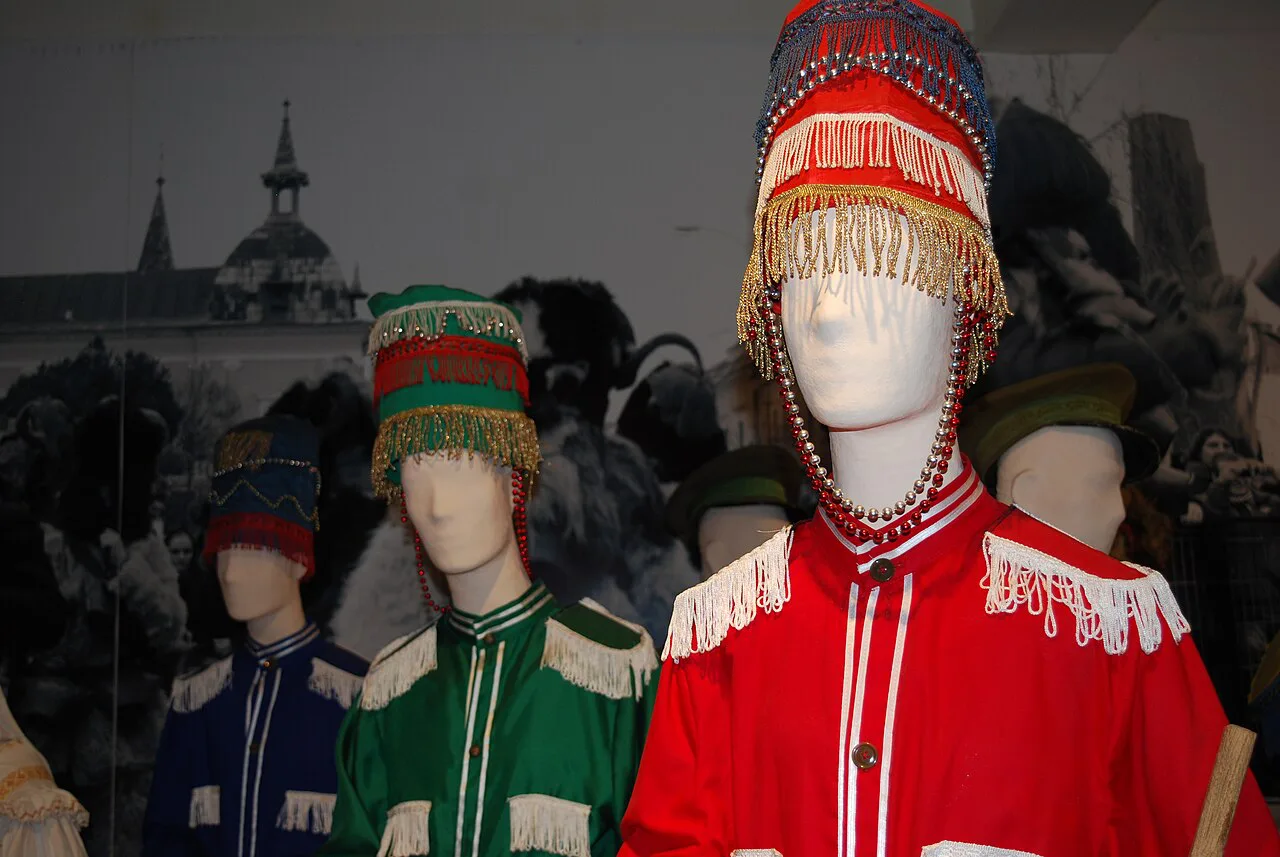
Over the chemise, women wear an apron. In eastern and south-eastern Romania this was a single piece of cloth wrapped round the lower body and secured by the belt, a form still seen in those areas; in Transylvania and the south-west it became two separate aprons, one worn at the front and one at the back. That single-versus-double apron distinction is the quickest way to narrow down where a set comes from, and it holds even when the blouse has been replaced.
What is the traditional dress worn in Romania called? The base garment is a shirt or chemise, called cămașă for the men's white shirt and ie for the women's embroidered blouse. Women wear an apron over it, tied with a fabric belt, and men wear white trousers, a belt, a hat and a waistcoat or overcoat.
What is a folk costume? A folk costume is the locally distinctive dress of a community, built from a set of named garments rather than a single piece. In the Romanian case the shirt is common to men and women, and local identity shows in the shirt length, the embroidery, the trouser cut and the hat shape.
How can I tell where a costume comes from? Check the apron arrangement first: a single wrap apron points to eastern and south-eastern Romania, while two aprons worn front and back point to Transylvania and the south-west. Then look at the shirt length, embroidery placement, hat shape and waistcoat decoration.
The ie is the embroidered women's blouse that most buyers picture, and it is sold on its own as well as within full costumes. The online catalogue at Ieromâneasca lists a peasant blouse from Oaș and also lists complete regional costumes, including one from Bukovina described as handcrafted, so you can buy a single blouse or a full set.
Read a listed price as that retailer's shop price on the day you look, not as a market rate for the region or the craft. The Ieromâneasca catalogue prices its five Folk Costumes items between 389 and 890 euro, shows only the Oaș blouse as in stock and marks the rest as out of stock. That availability pattern matters more than the numbers: a sold-out regional costume tells you nothing about how quickly modern pieces come onto the market.
Men's pieces: cămașă, trousers, belt, hat and overcoat
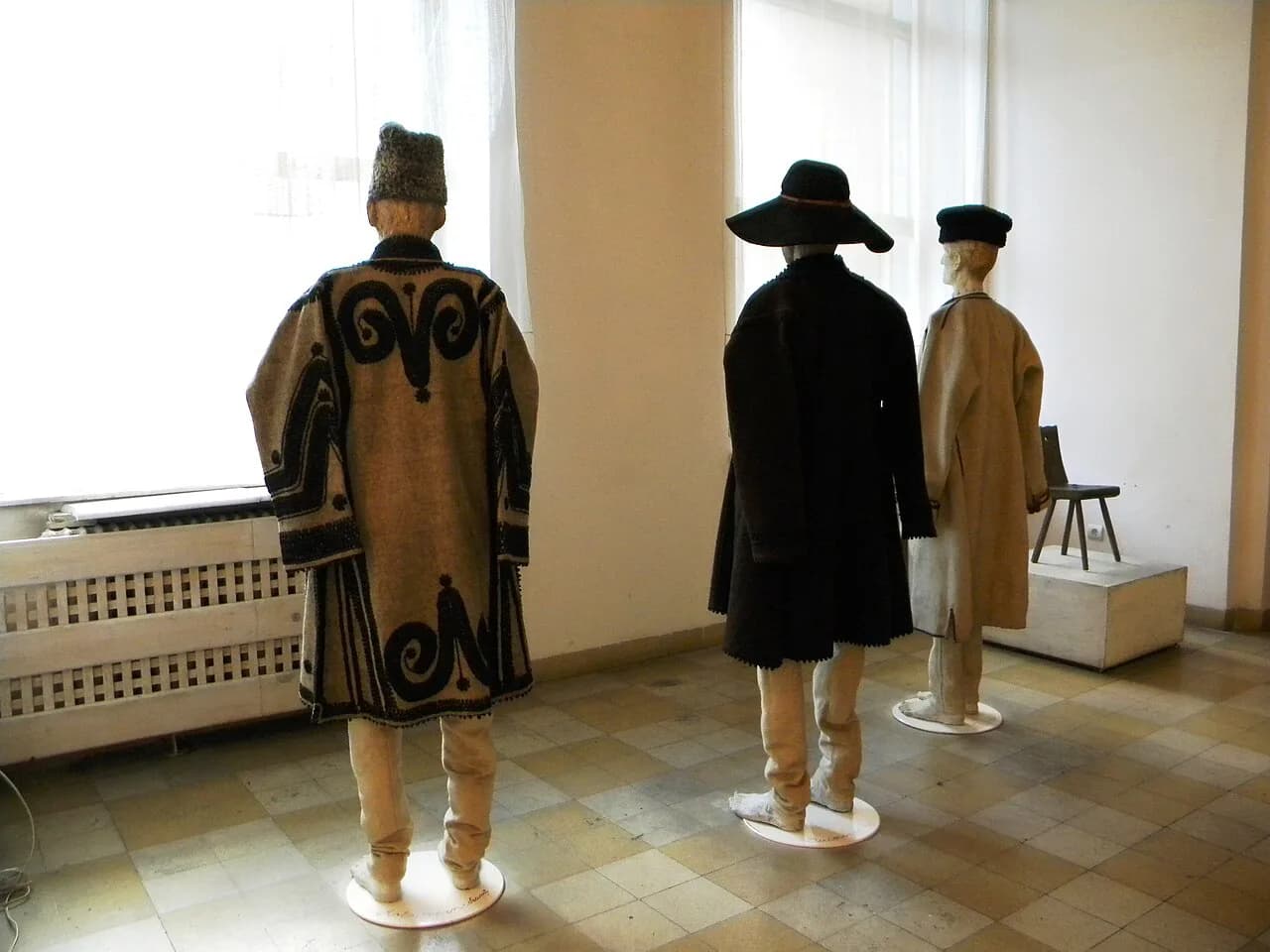
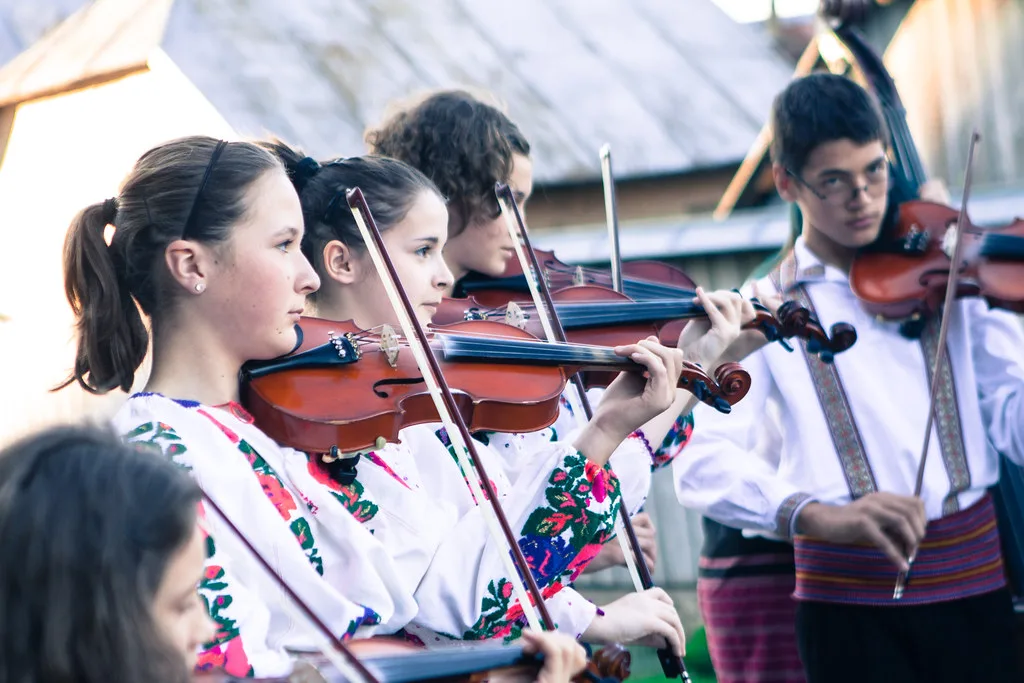
Across Romania, men's traditional dress is a white shirt, white trousers, a hat, a belt and either a waistcoat or an overcoat. Variation between villages shows in the shirt length, the type of embroidery, the cut of the trousers, the shape of the hat and the decoration on the waistcoat, rather than in a wholly different outfit. In most areas the shirt is worn outside the trousers, which is the older arrangement.
Hungarian and Saxon men living in Romania wore trousers with a more modern cut, often in dark material rather than white. The sources read that as closer ties and more frequent contact with western fashions, and it is a useful marker when you are trying to identify the wearers in an old village photograph. Men's and women's outer garments were broadly similar, usually sheepskin or felted wool decorated with leather applique and silk embroidery, with differences in cut and decoration following the region.
Why the embroidery changes from region to region
Local difference runs through the details rather than the structure: the length of the shirt, the density and placement of the embroidery, the shape of the hat and the decoration applied to the waistcoat. Because the underlying outfit is common across the country, a single surviving piece can still be placed reasonably well from these signals. Compare a photographed sleeve or hem against the regional descriptions before you accept a seller's label.
Day wear and festive wear were similar in cut, with the festival and wedding versions more richly embroidered. In poorer areas, basic clothing with little or no embroidery was normal, so a plain blouse is not necessarily a worn or unfinished one. Bridal headwear followed especially ornate local styles, which is the piece most often lost from a handed-down set.
The same logic of local pattern applied to painted decoration on other household objects, which is why travellers often meet these motifs twice: once in a costume collection and once on an Easter egg. If pattern is what draws you in, the guide to Romanian Easter eggs explains how motifs and dyeing techniques vary by area, including the use of onion skins.
Where the costume is still worn
In remoter areas of Romania some older people still wear items of traditional clothing: a gathered Black skirt or dark wraparound for women, with a blouse of local cut, with or without a leather waistcoat. This is everyday dress rather than a performance, and it is the reason a piece in the family can look plainer than a museum display.
In Oaș and Maramureș, even young girls often wear the local costume on Sundays, made from brightly coloured material: a dress in Oaș, a skirt in Maramureș. The contemporary pieces are worn with the latest fashions added, so a Sunday outfit is not a frozen replica of a nineteenth-century one.
For the wider picture of how these traditions are displayed and kept up, the Romanian traditions hub gathers the threads: painted eggs, glass icons, costume and the craft villages behind them. Read it before you build an itinerary around craft, because it shows which traditions cluster in which parts of the country.
What happened to the costume in the twentieth century
The components fell out of use at different times. Leather peasant sandals, opinci, were often the first item to disappear, though they reappeared in poorer villages in the years just after the communist regime fell. Men's traditional trousers were largely replaced by factory-made trousers by the middle of the century, and jeans later became universally common in rural areas.
Traditional outer garments became an expensive luxury, with new pieces bought mainly by people in wealthier villages. In many areas the jacket makers have died with few new artisans trained to carry on, which is why a good overcoat is the hardest part of a costume to replace. That makes the overcoat the piece to inspect most closely on a vintage set.
Buying a Romanian folk costume: a checklist
Before comparing prices, list the components: chemise or blouse, apron or aprons, belt, and, for men, trousers, waistcoat or overcoat. The Ieromâneasca catalogue splits its stock between blouses, men's clothing and accessories as well as full Folk Costumes, so you can buy one honest piece rather than a partly assembled outfit. Check which of the named parts a listing actually includes, then confirm current stock and shipping with the shop before ordering.
Judge handwork from close, well-lit photographs of the embroidery, the seams and the inside of the garment. The listed Ieromâneasca pieces name Moldova, Oaș and Bukovina as their areas and describe the Bukovina costume as handcrafted, which gives you a region to check the pattern against. Vague region labels and no detail shots are the two things to push back on.
If you want to see historic pieces in context before buying, costume and rural building collections are the place to start, and the guide to Romanian folk art sets out which collections hold what. Treat it as a calibration exercise: look at several costumes from one region before deciding what a listing's embroidery should look like.
Tips for buying a vintage or second-hand ie
The vintage Oltenia costume listed on Etsy names cotton, linen, wool, silk and metal as materials, and says the set includes a hand-embroidered Romanian blouse. That is the level of detail worth asking for: fibre content per piece, plus a component list. If a listing gives neither, ask before you commit.
Metal thread and silk are the components most likely to have suffered, so ask for images of the embroidered areas in raking light rather than front-on. Check whether the belt, apron and blouse were made as a set or assembled later; mixed sets are common and not a fault, but they should be described as mixed. Confirm the return terms in writing, because vintage sellers often differ from new-stock retailers.
Which piece should you buy first?
Buy the blouse or shirt first, not the full outfit. The chemise is the garment everything else hangs from, and a good ie with a documented region is easier to check and easier to wear than an incomplete set with a missing belt or apron. Add the aprons and belt later once you know the region you are matching.
Fix the region, the components and the fibre content first, then look at price, and you will be comparing like with like across the different retail offerings. Check the currency shown on each listing — Ieromâneasca displays a euro/USD/GBP/RON selector — before you compare one shop's figure with another's.
Explore more Romania guides
Frequently Asked Questions
What is the traditional dress worn in Romania called?
The base garment is a shirt or chemise, called cămașă for the men's white shirt and ie for the women's embroidered blouse. Women wear an apron over it, tied with a fabric belt, and men wear white trousers, a belt, a hat and a waistcoat or overcoat. The whole outfit is usually described simply as the Romanian folk costume.
What is a folk costume?
A folk costume is the locally distinctive dress of a community, built from a set of named garments rather than a single piece. In the Romanian case the shirt is common to men and women, and local identity shows in the shirt length, the embroidery, the trouser cut and the hat shape. The apron arrangement, single wrap or two pieces front and back, is one of the clearest regional markers.
How can I tell where a costume comes from?
Check the apron arrangement first: a single wrap apron points to eastern and south-eastern Romania, while two aprons worn front and back point to Transylvania and the south-west. Then look at the shirt length, embroidery placement, hat shape and waistcoat decoration. Compare those details against the regional descriptions before accepting a seller's label.
Can I still see folk costume being worn?
Yes. In remoter areas some older people still wear elements such as a gathered Black skirt with a locally cut blouse. In Oaș and Maramureș, young girls often wear the local costume on Sundays, in bright colours, a dress in Oaș and a skirt in Maramureș.
Sources
Useful notes for your next trip
Optional updates to our guides.
You might also like
Continue reading
More guides you'll find useful